Home Blog Page 84

Chinese Investors Blame Bureaucracy for Mining Violations

0

Chinese investors operating in Zimbabwe’s mining sector are blaming red tape and bureaucratic delays for some of the violations that have drawn sharp criticism from the government.

By Ryan Chigoche

They argue that, in many cases, delays in acquiring work permits and getting projects operational are forcing companies into non-compliance.

Speaking at the China-Zimbabwe Business Cooperation Roundtable held in Harare recently, Steve Ke Zhao, CEO of the China-Zimbabwe Exchange Centre, said that while the government’s concerns are valid, Zimbabwe’s own administrative inefficiencies are frustrating genuine efforts by investors.

“Unfortunately, at the moment, Chinese companies are facing a lot of trouble. After investing huge amounts like US$5 million or US$10 million, they’re facing challenges,” Zhao said.

“Some get ZIDA certificates but can’t get work permits. Machinery is sitting idle. It can’t be installed. They can’t operate. They end up doing something illegal—not because they want to, but because the system delays,” he added.

His comments follow growing public and government frustration over the conduct of some Chinese-owned firms, particularly in the gold and granite mining sectors, where allegations of environmental damage, labour violations, and cultural insensitivity have persisted.

Also speaking at the roundtable, Tafadzwa Muguti, Secretary for Presidential Affairs in the Office of the President and Cabinet, delivered a stinging rebuke. He accused certain Chinese companies of operating outside formal structures, violating laws, and disregarding Zimbabwe’s cultural heritage.

“We are noticing that some Chinese companies are going and digging up our ancestors’ graves to extract granite or gold. There are some of them picking up the bones, putting them aside, and starting to dig. That’s the greatest disrespect to any person, even in your culture,” Muguti said.

Authorities have also raised the alarm over foreign nationals, particularly Chinese visitors, entering the country on tourist visas and later engaging in business activities without proper permits. To address this, Muguti announced that all Chinese visa and investment applications would now require a letter of acknowledgment from the Chinese Ambassador—a move aimed at strengthening oversight.

Zhao, however, pushed back on the narrative that all misconduct is intentional. He said many Chinese investors face delays even after obtaining licenses from the Zimbabwe Investment and Development Agency (ZIDA), leading to stalled projects and, in some cases, unintentional breaches of the law.

He also acknowledged that some Chinese investors arrive without a clear understanding of Zimbabwe’s legal, labour, or cultural expectations.

To bridge that gap, his organisation has begun running workshops in partnership with local banks and regulatory agencies.

Meanwhile, the government has stressed that compliance alone is no longer sufficient.

Authorities want mining companies to support Zimbabwe’s industrialisation agenda by adding value to the country’s mineral resources.

A ban on raw mineral exports—especially lithium—is now being enforced as part of this beneficiation strategy.

The recently tabled Mines and Minerals Amendment Bill is expected to give legal force to this beneficiation drive by tying licence approvals and renewals to value-addition targets.

As Zimbabwe attempts to balance its push for accountability with the need to attract long-term foreign capital, Zhao’s remarks underscore a growing tension between policy ambition and investor frustration.

Whether the two sides can find common ground—before delays lead to further non-compliance or disinvestment—remains to be seen.

Caledonia Raises 2025 Output Target Following a Record Q2 at Blanket Mine

0

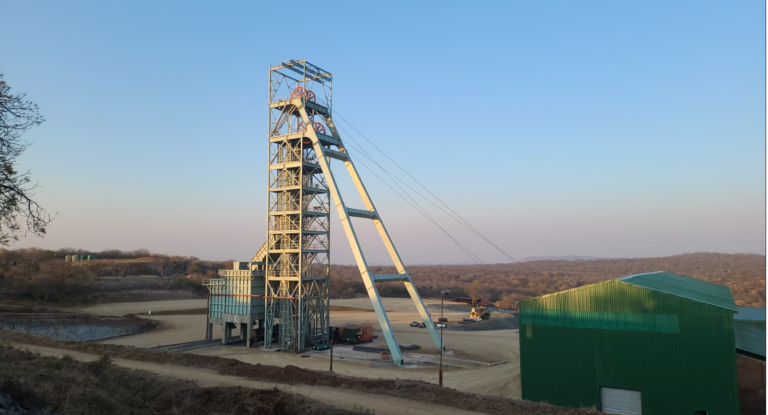
Caledonia Mining Corporation Plc has reported a strong Q2 2025 at its Blanket Mine in Zimbabwe, delivering 21,070 ounces of gold—a new second-quarter record, up from 20,773 ounces in Q2 2024.

By Ryan Chigoche

This impressive production performance follows H1 2025 output of 39,741 ounces, a 5.1% increase over the 37,823 ounces produced in H1 2024.

Based on these results, Caledonia has raised its 2025 gold production guidance to 75,500–79,500 ounces.

Commenting on the results, Chief Executive Officer Mark Learmonth said:

“Production in the first half of 2025 was excellent and has exceeded our expectations. As a result of this strong performance, we are increasing our annual production guidance. This performance is a testament to the dedication and hard work of our team.

“Blanket Mine continues to provide a solid foundation for growth. As we move forward, we are confident that it will continue to be a cornerstone of our success, driving value for our shareholders.”

All figures are reported on a 100% basis and reflect final assays from the refiner.

Blanket Mine continues to underpin Caledonia’s Zimbabwe operations, reinforcing its status as a cornerstone asset in the company’s portfolio.

Located in Zimbabwe’s Matabeleland South Province, Blanket Mine is one of the country’s longest-running underground gold operations. Acquired by Caledonia Mining Corporation Plc in 2010, the mine has steadily increased production through a combination of exploration, underground development, and process optimisation.

The mine exploits a series of gold-bearing quartz veins hosted within the Sebakwe Greenstone Belt, with mineralisation typically occurring in narrow, steeply dipping lodes. Blanket operates multiple underground stopes accessed via a decline system, supported by modern mining and processing infrastructure.

Meanwhile, shares in Caledonia Mining were up 4.3% at 1,590.00 pence in London on Wednesday morning.

Mining sector refines young talent – its most valuable resource

0

The mining industry is reimagining itself, empowering the youth as a precious asset for the future. Across the sector, stakeholders have committed to attracting young people and unlocking their full potential.

As a critical economic sector committed to inclusive growth, the mining industry is evolving rapidly, building partnerships across the economy and across society to unlock value and opportunities for all role players. Clear evidence of this is the growing cohort of young people in the industry.

This year’s flagship mining-sector event, Investing in African Mining Indaba 2025, saw a strong youth presence, with an entire day of the event dedicated to a Young Leaders Programme. The programme featured a keynote speech by South African Deputy Minister of Minerals and Petroleum Resources Phumzile Mgcina, as well as panel discussions and networking sessions for current and prospective young mining professionals.

Well-attended panel discussions saw young Africans sharing their vision for the industry, and how to unlock the continent’s full youth potential. A group of more than 10 PhD students in mining-related fields were also integrated into the programme, bringing more youth perspectives to the event.

‘Speak our language’

A recurring theme has been that to empower young people in the sector, mining must speak the language of young Africans, on issues they can relate to. In many cases, that is about inclusivity and sustainability.

“Young professionals are looking for purpose-driven careers that offer impact, growth, innovation and inclusivity,” says recent mining graduate Nomvula Mahlangu, currently completing her internship at Sibanye Stillwater’s Gold Division.

Mahlangu, 26, believes the mining sector can bring more young people into the industry by continuing to create flexible learning pathways, mentorship structures, and platforms for innovation and leadership.

The broader industry has shown growing enthusiasm to create such platforms. The R400-million Junior Mining Exploration Fund, for instance, established by the Industrial Development Corporation, the Department of Mineral and Petroleum Resources and The Council for Geoscience, gives junior mining businesses access to significant funding.

In terms of the culture of the industry, Mahlangu says there has been some progress in attracting young people into the business and hearing their voices.

“I’ve been fortunate to access platforms like AfriMine and the Mining Indaba Influencer initiative, where my voice has been heard, valued, and supported. However, in traditional spaces, young professionals still have to prove themselves before being taken seriously,” she says. “The sector is learning to trust fresh perspectives, but we must continue building inclusive environments that actively invite young professionals and listen to them.”

Mahlangu sees a growing number of young people entering the industry, but says they are yet to reach the level of representation where they can meaningfully start shaping the future of the sector.

“There is a visible rise in young professionals entering the mining industry — from technical roles to policy and ESG. However, we haven’t reached a critical mass yet,” she says. “We need stronger pipelines for young talent, mentorship programmes, and youth involvement in innovation hubs and industry strategy.”

‘Tell mining’s positive stories’

Echoing Mahlangu’s views about purpose-driven careers is Murendeni Makhado, 35, a corporate water specialist at Impala Platinum Holdings.

“Young people want to work in environments that are inclusive and forward-thinking, and which offer opportunities for growth and leadership,” she says.

Makhado says that to truly attract young people to the industry, it must use compelling storytelling that clearly describes the value of mining in society and its role in the renewable and technology economy.

“The mining sector is evolving and it does create positive opportunities, but there is a gap in how it communicates these opportunities,” says Makhado. “To attract more young talent, the industry must invest in storytelling, mentorship, and platforms that showcase the meaningful impact mining can have on communities and the ecosystems.”

Makhado says her role in the water and ESG space has given her a good insight into the positive impacts that mining can have.

 “For young people passionate about sustainability, engineering, or community development, mining provides a platform to make a real difference,” she says. “It’s an industry where you can see the tangible results of your work, influence policy, and drive change at scale.”

An industry vision

Both Makhado and Mahlangu are optimistic about the industry and its moves to integrate young people into its strategic structures. The two young mining professionals are part of the Mining Indaba 2026 Influencer Campaign — an initiative to amplify authentic voices shaping the future of mining in Africa.

The campaign aims to showcase stories of innovation, sustainability and impact across the mining value chain, in line with the Mining Indaba 2026 theme: “Stronger Together: Progress Through Partnerships.”

““The next generation of mining professionals aren’t just the future of mining, they are the game-changers who are driving its evolution,” explains Mining Indaba’s content and communities director, Laura Nicholson. “Mining Indaba offers the youth platforms to empower emerging talent to learn, experiment, and articulate a bold vision for the industry. In challenging periods, new perspectives are a powerful investment in a future built on ingenuity, resilience and ambition.”

As for what that vision would look like, Makhado looks forward to building a mining industry that is regenerative, inclusive, and deeply integrated with the global sustainability agenda.

“My contribution lies in advancing water stewardship, ESG integration and cross-sector collaboration”, she says. “The goal is to ensure that mining not only extracts value, but also creates it – socially, environmentally and economically.”

For Mahlangu, mining is about powering economies, advancing technology, and creating real-world impact.

“Mining can uplift communities, fund education, and support green transitions. It offers a wealth of careers – everything from medicine to robotics and data analytics, engineering and ESG to tech and community development. For young people who want to be part of a global, future-facing, and diverse industry, mining offers endless possibilities.”


Ten Highest Paying Minerals for Artisanal and Small-Scale Miners in 2025

0

In 2025, Artisanal and Small-scale miners (ASM) continue to play a vital role in global mineral production. While still frowned upon, the sector plays a critical role producing 60% of the total gold output in countries like Zimbabwe.

While ASM operations typically lack large-scale machinery or heavy capital investment, there are still highly profitable minerals accessible to small-scale operators—with many offering strong market prices, low barriers to entry, and government support for formalisation.

Here are the Top 10 Highest Paying Minerals that ASM miners can profitably target in 2025.


1. Gold

  • Avg Price: $2,300–$2,450/oz

  • Why it’s valuable: Gold remains the most accessible and profitable mineral for ASM globally. It is easy to process using traditional methods and has a ready market with high global demand. Many governments support ASM gold formalisation.


2. Tantalite / Coltan

  • Avg Price: $120–$150/kg (depending on grade)

  • Use: Mobile phones, electronics, defence

  • Why it’s valuable: Found in pegmatite zones in Central and Southern Africa, tantalum-rich ores are in high demand for tech. ASM miners in countries like Zimbabwe and the DRC often dominate this sector.


3. Lithium (Petalite, Spodumene in Ore Form)

  • Avg Price: $400–$800/tonne (ore)

  • Why it’s valuable: As EV demand rises, ASM lithium producers are gaining access to global supply chains. Zimbabwe’s Bikita and Kamativi regions offer opportunities, though beneficiation is done externally.


4. Gemstones (Emeralds, Rubies, Sapphires)

  • Price: Varies; High-quality stones can fetch thousands per carat

  • Why it’s valuable: Small-scale miners in countries like Zambia, Mozambique, and Madagascar can extract high-value gems with hand tools. Market access remains a challenge, but margins are strong.


5. Chrome Ore

  • Avg Price: $200–$250/tonne (depending on grade)

  • Why it’s valuable: Easily mined near surface and used in steel production, chrome is a staple for small-scale miners in Zimbabwe and South Africa. High-grade lumpy ore brings premium prices.


6. Wolframite (Tungsten Ore)

  • Avg Price: $20,000–$25,000/tonne (WO₃ content)

  • Why it’s valuable: In demand for aerospace and defense, tungsten is mined artisanally in Rwanda and Uganda. Processing is basic, but value is high due to scarcity.


7. Manganese

  • Avg Price: $200–$300/tonne (depending on grade)

  • Why it’s valuable: Used in battery tech and steel alloys, manganese can be surface mined. ASM operations in Ghana and Zimbabwe are increasingly tapping into this market.


8. Copper Ore (High-Grade Surface Ore)

  • Avg Price: $8,000–$9,500/tonne (refined equivalent)

  • Why it’s valuable: Copper prices remain strong due to green tech demand. In countries like Zambia and DRC, ASM players access shallow ore bodies or mine waste piles.


9. Fluorspar

  • Avg Price: $300–$500/tonne (depending on grade)

  • Use: Chemicals, steelmaking, refrigeration

  • Why it’s valuable: Found in areas like Kenya and South Africa, fluorspar can be extracted by small-scale miners with proper market linkage and beneficiation support.


10. Quartz (for Silicon and Jewelry)

  • Avg Price: $80–$200/tonne (industrial), more for gem-grade

  • Why it’s valuable: Though not always top-tier in value, high-purity quartz is critical for silicon production and solar tech. Gem-quality quartz also sells well in niche markets.


In 2025, the global market continues to reward ASM miners who focus on minerals tied to clean energy, tech, and infrastructure development. However, profitability is not just about high prices—it also depends on access to fair markets, proper safety practices, and formalisation.

With rising interest in mineral traceability and ESG (Environmental, Social, Governance) standards, ASM communities that organise and align with these goals are likely to see higher returns and global partnerships.

As China’s Rare Earth Exports Jump Over 21%, US Pricing System Aims to Break Beijing’s Grip

0

A new chapter is unfolding in the global rare earths race as China’s rare earth exports surged in June, signalling a potential trade war thaw, just as the United States prepares to launch a rare earth pricing system designed to challenge Beijing’s longstanding dominance in the critical minerals market, Mining Zimbabwe can report.

By Rudairo Mapuranga

According to China’s customs data, rare earth exports rose to 5,598 metric tons in June 2025, up 21.6% from the previous month and 13.3% year-on-year. This spike in exports may reflect easing trade tensions and renewed industrial demand amid global clean energy and defence supply chain pressures. China, which controls over 85% of global rare earth refining capacity, has long been the world’s dominant force in the market for these vital materials used in electric vehicles, wind turbines, and military systems.

However, across the Pacific, the United States is moving aggressively to reduce dependence on Chinese supply chains. According to recent reports, US-based Rare Earths Inc. will begin publishing weekly prices for key rare earth elements such as neodymium, praseodymium, dysprosium, and terbium. This pricing system, the first of its kind in the West, is expected to bring transparency and reduce volatility in rare earth markets currently influenced heavily by Chinese pricing structures.

“This is not just about pricing—it’s about sovereignty and supply chain security,” a Rare Earths Inc. executive told reporters. The company believes that transparent, independent pricing will help level the playing field for Western miners and manufacturers, while attracting investment into alternative supply chains outside of China.

The US initiative is being closely watched by allies, including the European Union and Japan, who have also faced supply risks due to China’s strategic control over rare earth exports. Historically, Beijing has restricted exports of these minerals during times of geopolitical tension, such as in the 2010 dispute with Japan and, more recently, during escalating trade frictions with Washington.

Despite the current jump in Chinese exports, many analysts see the move as China regaining leverage, rather than relaxing its grip. By maintaining control over pricing and supply, China can continue to influence global technology supply chains, even as countries like the US attempt to diversify.

A Global Shift in Critical Mineral Strategies

The global battle over rare earths reflects the broader geopolitical realignment around critical minerals essential to the green energy transition and national security. For developing countries like Zimbabwe, which also hosts rare earth deposits, the power struggle between China and the US presents both risks and opportunities.

Industry experts say Zimbabwe should now prioritise transparent licensing, beneficiation policies, and global partnerships that allow it to leverage its rare earth potential without falling prey to the dominance of a single power bloc.

A Market in Motion

As China’s rare earth exports rise and the US moves to implement a Western pricing benchmark, the global market for critical minerals is entering a transformative phase. Whether this shift leads to a true rebalancing of power—or simply a new form of competition—remains to be seen.

What is clear, however, is that control over rare earths is no longer just about economics—it is about global influence, national security, and the energy future of the planet.

Bikita Minerals Unleashes US$400 Million Smelter Vision as Sinomine Deepens Zimbabwe’s Beneficiation Drive

0

Bikita Minerals has announced plans to establish a US$400 million smelting facility—a move that signals the company’s firm commitment to deepening local beneficiation and capturing greater economic value from the country’s vast lithium and rare mineral resources, Mining Zimbabwe can report.

By Rudairo Mapuranga

Announcing on its official X (formerly Twitter) account, the company stated: “Exciting news! Bikita Minerals is planning to set up a $400 million smelting plant for further value addition! This will contribute to the local economy & support Zimbabwe’s economic development goals!”

This comes as Sinomine Resource Group, the Chinese owner of Bikita Minerals, continues to cement its status as one of the most transformative foreign investors in Zimbabwe’s mining sector. The company has already commissioned a series of world-class mineral processing plants—including the world’s first Caesium Flotation Plant (CFP)—positioning Bikita as a critical mineral beneficiation hub on the African continent.

From Petalite to Processing Powerhouse

Once known simply for petalite extraction, Bikita Minerals has undergone an industrial renaissance since Sinomine acquired it in February 2022. The mine, located in Masvingo Province, now houses a suite of advanced processing facilities, including the Gravity Separation Plant (GSP) and Spodumene Flotation Plant (SFP)—each designed to process specific lithium-bearing minerals with increased efficiency and reduced waste.

The company has grown its resource base from 29.41 million tonnes to 113.35 million tonnes, a near fourfold expansion that justifies its current focus on vertical integration and in-country value addition. Now, with a US$400 million smelter in the pipeline, the final piece of Zimbabwe’s lithium beneficiation puzzle is falling into place.

The Cesium Gamechanger: A Global First for Zimbabwe

Among the many milestones at Bikita, the commissioning of the Cesium Flotation Plant in May 2025 stands out as a landmark achievement—not just for Zimbabwe, but for the world. The CFP is the first facility globally dedicated to recovering low-grade cesium ores, putting Zimbabwe on the map of high-tech mineral supply chains essential for defence, medical imaging, 5G, and aerospace industries.

What makes the CFP exceptional is its multi-mineral recovery strategy. Instead of focusing solely on pollucite—the primary cesium ore—the plant also extracts spodumene and lepidolite, ensuring maximum yield from every tonne mined. This integrated beneficiation model boosts profitability, reduces environmental waste, and creates a blueprint for responsible mining in Africa.

Spodumene Production Soars, Costs Plummet

Bikita’s SFP has become a symbol of smart mining economics. By deploying new flotation techniques and plant upgrades, the company has slashed spodumene production costs. Such cost control not only makes Bikita globally competitive, it also insulates it from low international lithium prices that have destabilised less efficient producers.

Powering Progress: Energy Infrastructure and Solar Backup

Beneficiation requires stable energy, and Sinomine is delivering. A new 132kV power line has been installed, linking Bikita to Masvingo, Nyika, and Zaka. The company is also constructing a 20MW solar project to future-proof its operations, ensuring energy security while lowering carbon emissions.

This infrastructure does more than power machines; it uplifts communities by strengthening grid resilience and powering schools, clinics, and water systems in surrounding areas.

Community Impact: ESG Beyond Compliance

Where other investors have promised and fled, Sinomine has built and delivered. The company has drilled over 36 community boreholes, improved roads, equipped clinics, and upgraded local schools. These initiatives earned Bikita national and international recognition, including the ESG Green Champion Award and the Responsible Mining & Clean Energy Champion Award in 2024.

This approach—where economic gain is matched with social impact—demonstrates a new model of foreign investment that aligns with Zimbabwe’s Vision 2030.

The Smelter: Completing the Value Chain

The proposed US$400 million smelter is the most significant step yet. While petalite and spodumene have been processed for export, smelting brings the potential for in-country production of battery-grade lithium hydroxide or carbonate—the high-value inputs needed in global battery and EV markets.

If implemented, the smelter will reduce Zimbabwe’s dependence on raw exports, increase forex retention, generate new jobs, and place the country on a more equal footing with lithium refiners in China, South Korea, and Europe.

From Mine to Market—On Zimbabwe’s Terms

Bikita Minerals, under Sinomine’s stewardship, is showing that Zimbabwe’s mineral wealth need not be a curse—it can be the cornerstone of local industrialisation, jobs, and energy transformation. With the $400 million smelter now on the table, and an existing backbone of beneficiation plants already in operation, Bikita is on track to become Africa’s most advanced lithium and cesium processing complex.

As the world races toward electrification, Zimbabwe must insist that its minerals drive not only global innovation but also national development. With the right policy support, transparency, and community accountability, Bikita’s trajectory could very well be the future of African mining.

Blanket Mine Solar Plant a Beacon of Sustainable Development – Minister Nguluvhe

0

The government has hailed the handover of the Blanket Mine solar power plant to CrossBoundary Energy as a milestone in Zimbabwe’s journey toward a greener, more resilient economy.

By Ryan Chigoche

The 12.2 MW plant, developed by Caledonia Mining Corporation to power its Blanket Mine operations, was officially transferred to CrossBoundary Energy last week.

The move aligns with national efforts to promote independent power production and expand access to clean energy across strategic sectors.

In a speech read on his behalf at the handover ceremony, Minister of State for Provincial Affairs and Devolution in Matabeleland South, Abedinico Nguluvhe, said the project stands as a powerful example of what can be achieved through coordinated action between government and private investors.

“This project exemplifies the power of collaboration between government, the private sector, and local communities to harness renewable energy for economic growth,” said the Minister.

He noted that the solar plant fits squarely within the objectives of National Development Strategy 1, Vision 2030, and global climate action frameworks. The government sees such projects as key enablers of provincial industrialisation, energy security, and economic inclusion.

Nguluvhe underscored that the benefits of the plant go far beyond powering a mine. It supports local development through infrastructure upgrades, skills training, and job creation, contributing to long-term resilience in the region.

“It powers local development, job creation, and economic resilience in our province,” he added.

The Minister called for similar models to be replicated across other districts and sectors, urging continued momentum in rolling out clean energy solutions that align with the government’s devolution and development agenda.

With energy supply remaining a critical enabler of mining and industrial growth, the government reiterated its commitment to supporting partnerships that promote sustainable infrastructure while unlocking the full economic potential of the provinces.

Namib Seeks US$400 Million Investment to Restart Jumbo and Redwing Gold Mines

0

Namib Minerals, freshly listed on the Nasdaq under the ticker NAMM, is looking to raise up to US$400 million as it accelerates plans to restart operations at the Mazowe and Redwing gold mines in Zimbabwe.

By Ryan Chigoche

The investment forms part of the company’s five-year capital programme, which earmarks between US$300 million and US$400 million for its Zimbabwean operations.

Preliminary work has already commenced at both sites, positioning the company for a swift return to production.

Mazowe and Redwing, which together host 3.7 million ounces of gold resources—1.2 million ounces at Mazowe and 2.5 million ounces at Redwing—were placed under care and maintenance between 2019 and 2020. Namib is now repositioning the assets to serve as a core growth driver within its African gold portfolio.

The Mazowe Mine, averaging grades of 8g/t gold, is expected to lead the restart due to its lower capital intensity and smaller operational footprint. In contrast, Redwing, with a larger resource base, presents greater long-term upside but demands a higher initial investment to resume full-scale mining.

Namib’s total capital outlay will cover mine rehabilitation, exploration, equipment acquisition, and processing plant upgrades. The company also intends to double its gold resource base and extend mine life through continued drilling across all three of its Zimbabwe gold assets, including the producing How Mine.

“We’re not just building a mining company, we’re building a platform for long-term value creation—both for our shareholders and the communities we operate in,” said Ibrahima Sory Tall, CEO of Namib Minerals, in a statement.

“Now, as a Nasdaq-listed company, we invite investors to join us at the ground floor of one of Africa’s most dynamic mining growth stories,” he added.

Namib Minerals positions Zimbabwe as a strategic pillar in its Africa-focused expansion strategy.

The relaunch of Mazowe and Redwing signals the company’s intent to unlock substantial value from its brownfield assets, backed by fresh capital and a clear development roadmap.

Gold buying prices per gram in Zimbabwe, 16 July 2025

Gold buying prices per gram in Zimbabwe today, 16 July 2025, from the official gold buyer and exporter Fidelity Gold Refinery (FGR).

SG 90% and ABOVE US$101.63/g.
SG ABOVE 89% BUT BELOW 90% US$100.55/g.
SG ABOVE 80% BUT BELOW 85% US$99.48/g.
SG ABOVE 75% BUT BELOW 80% US$98.40/g.
SAMPLE BELOW 10g BUT ABOVE 5g US$96.79/g.

Fire Assay CASH $102.16/g.

NB: Fire Assay cash price is for gold above 100g; no sample is deducted.

A sample of not more than 10g is deducted for the Fire Assay Transfer price.

A 2% royalty is charged on all deposits (Small-scale miners).

A 5% royalty is set for Primary Producers.

Gold Deliveries Surge by Nearly 46% in First Half of 2025, ASM Output Nearly Doubles

0

Gold deliveries to Fidelity Gold Refinery (FGR) for the first six months of 2025 have significantly increased, rising by 45.85% compared to the same period in 2024, Mining Zimbabwe can report.

By Rudairo Mapuranga

According to official data, Zimbabwe recorded 20,103.55 kg of gold deliveries from January to June 2025, up from 13,784.29 kg delivered during the same period last year.

The surge is largely attributed to the remarkable performance of artisanal and small-scale miners (ASM), who delivered 14,561.68 kg in the first half of 2025—a 96.31% increase from the 7,416.97 kg delivered in the same period of 2024. The improvement reflects growing confidence in the formal gold market, bolstered by timely payments and favourable pricing.

Fidelity Gold Refinery’s gold purchase price has risen to over US$105 per gram in recent months, incentivising miners—particularly those in the small-scale sector—to increase production and channel gold through formal channels.

On the other hand, large-scale mining houses recorded a 12.95% decrease, delivering 5,541.87 kg in 2025 compared to 6,367.33 kg in the previous year. Analysts point to restructuring within some major operations and ongoing infrastructure projects as possible reasons for the decline.

The strong showing by the ASM sector not only demonstrates its critical role in Zimbabwe’s gold industry but also reflects the importance of continued government support, fair pricing, and prompt payment mechanisms.

With the country targeting 40 tonnes annually, the improved mid-year performance provides a strong base to potentially exceed 2024’s full-year deliveries, especially if current gold prices and operational support are sustained.