

Home Blog Page 83

Government, Leaders Hail Shamva Mine’s Exemplary CSR

0

Kuvimba Mining House-owned Shamva Mine’s work in uplifting its host community continues to resonate across Mashonaland Central, with government, local authorities, and legislators all uniting in praise of the mine’s corporate social responsibility (CSR) footprint, Mining Zimbabwe can report.

By Rudairo Mapuranga

Speaking at the recent Chaminuka Rural District Council Service Delivery Equipment Commissioning Ceremony, officials spoke passionately about the mining giant’s contribution to critical infrastructure and social services, saying its example sets a new standard for community development in Zimbabwe’s mining districts.

The Minister of State for Provincial Affairs and Devolution, Hon. Christopher Magomo, was among the first to acknowledge the mine’s role in transforming Shamva District. In his address, he called on other corporates to emulate Shamva’s deliberate efforts in supporting local development.

“I call upon other companies to emulate Shamva Gold Mine’s example,” he said. “By combining internal revenue mobilisation, government support, and corporate investment, Chaminuka RDC is setting a high standard for inclusive and sustainable local development. Let me also commend the hardworking spirit of Shamva leadership.”

That leadership has been tested and proven through genuine partnerships on the ground. The Chairperson of Chaminuka Rural District Council, Mr. S. Matibairakupusa, singled out the Wadzanai Township sewer rehabilitation project as a tangible marker of Shamva Mine’s commitment. With visible pride, he detailed the progress made so far.

“Through our strategic partnership with Shamva Gold Mine, we have managed to trench up to 85% of the 620 metres required, and already 365 metres of piping has been laid,” he said. “This progress, which now stands at 48%, would not have been possible without Shamva’s contribution of US$22,000 for the procurement of pipes. The Council added US$9,000, covering manpower and accessories. As a local authority, we deeply appreciate Shamva Mine’s support, and I invite you, Honourable Minister, to witness the progress on the ground.”

The partnership between the mine and the RDC has become a symbol of what happens when business and local government pull in the same direction.

Also adding her voice was Senator Monica Mavhunga, who represents Shamva District and doubles as the Minister of Veterans of the Liberation Struggle. “There is nothing more important than the dignity of health and the security of clean water,” she said. “Through Shamva Mine’s work in sanitation and hospital upgrades, lives are being protected and futures safeguarded. A healthy community is the foundation of development, and Shamva has recognised this truth. Their investment is not just in infrastructure, it is in the lives of women, men, children, and the elderly who call this district home.”

Her words highlighted what has become the hallmark of Shamva’s CSR model: projects that touch everyday lives. Whether it is rehabilitating a hospital ward, refurbishing ablution facilities, or maintaining the Shamva–Bindura Highway, the mine has consistently invested in initiatives that go beyond mining outputs to strengthen the very fabric of the community.

Behind these efforts stands Engineer Gift Mapakame, General Manager of Shamva Mine, who has long stressed that CSR is not about charity but about strategy. He insists that the mine’s success depends on its ability to secure a social licence from the communities it operates in — a licence that must be renewed not through promises but through action. Guided by four pillars — health, empowerment, education, and environmental stewardship — Shamva’s CSR work is a blueprint for sustainable mining in Zimbabwe.

It is therefore no surprise that at the commissioning ceremony, speaker after speaker stood to recognise the mine’s contributions. The sense of appreciation was unanimous, from government ministers to council leaders and community representatives. Shamva has demonstrated that mining companies can and should be partners in local development, not just extractors of wealth.

In the past two years alone, the mine has invested over US$500,000 in CSR projects across Shamva District — a sum that tells its own story of commitment. From sewer lines to hospital wards, from roads to wellness outreach, that investment has been woven into the daily lives of thousands.

It is for this reason that Shamva Mine was not just thanked at the ceremony; it was celebrated. Celebrated as a company that understands mining is not only about ounces of gold but about building stronger, healthier, and more resilient communities.

RioZim Halts US$21m Mines Sale Following Court Setback

0

Troubled Zimbabwe Stock Exchange-listed mining company RioZim has been forced to halt the planned sale of its gold mines after the High Court granted interim relief to unions opposing the transaction, Mining Zimbabwe can report.

By Ryan Chigoche

RioZim, which operates several struggling gold mines, is now appealing the court decision.

The company had been in advanced talks with prospective investors to secure US$21 million in working capital in exchange for a majority stake.

However, the Zimbabwe Diamond and Allied Workers Union (ZDAMWU), together with other interested parties, approached the courts, arguing that only a court-supervised corporate rescue process could revive RioZim while protecting workers’ interests.

Faced with this legal challenge, RioZim announced that it has frozen the transaction pending the outcome of the appeal.

“The action taken by the Zimbabwe Diamond and Allied Workers Union has prevented the company from taking these much-needed initiatives to restart mining operations and alleviate the current hardships being faced by the workers, as well as to ease operational pressures. The company has, at this stage, taken a decision to put on hold all transactions contemplated in the cautionary statement referred to above, pending the outcome of the appeal.”

In a recent interview with Mining Zimbabwe, ZDAMWU stressed that it is not blocking recapitalisation efforts but instead pushing for a structured and transparent process.

The union maintains that only a court-appointed corporate rescue practitioner can provide credible oversight, safeguard workers and creditors, and prevent further mismanagement.

RioZim’s troubles have deepened in recent years. In 2024, the miner’s gold output plunged by 54%, leaving it unable to capitalise on record-high global bullion prices.

Stronger Together: Mining Community Voices to Power Progress at Mining Indaba

JOHANNESBURG, August 2025 — In 2026, Mining Indaba will once again place grassroots voices at the heart of Africa’s most influential mining event. Through its Mining Community Voices platform — delivered in partnership with The Impact Facility — Investing in African Mining Indaba (MI26) will ensure that the perspectives of mining-affected communities stand shoulder to shoulder with industry leaders, investors, and policymakers.

The message is clear: the future of mining must be co-created. It cannot be shaped in boardrooms alone — it must include those living the realities of mining every day. Under the 2026 theme “Stronger Together: Progress Through Partnership”, MI26 will challenge the sector to move beyond symbolic gestures and embrace genuine collaboration as an imperative part of the mining value chain.

“At Mining Indaba, we believe the future of mining is forged through genuine partnership — where communities, indigenous peoples, industry, and government come together as equal voices,” says Laura Nicholson, Content and Communities Director for Investing in African Mining Indaba. “MI26’s theme, ‘Stronger Together: Progress Through Partnership, challenges us to move beyond tokenism and foster deep, inclusive collaboration. By centering the perspectives of those most affected, we can unlock innovative solutions that drive equitable growth and sustainable impact across Africa’s mining sector. We are proud to amplify these voices across the entire event, ensuring that community and indigenous representatives actively contribute to conversations that will define the future of mining in Africa.”

The Mining Community Voices initiative has already proven its power to inspire, influence, and drive tangible change. At MI25, five community representatives shared personal accounts of the challenges and opportunities in their regions. Their words cut through the noise — transforming discussions on sustainability, artisanal mining, post-mining livelihoods, and safety into actionable solutions.

At MI25, community voices sparked cross-border collaborations, strengthened advocacy efforts, and launched initiatives that continue to deliver real change across the continent.

From Zimbabwe to Nigeria, those voices have since sparked cross-border collaborations, strengthened advocacy efforts, and launched initiatives that continue to deliver real change.

Faith Mutete, Founder and CEO of Women in Mining Zimbabwe, said the platform “brought unprecedented visibility to the struggles and resilience of women in mining communities.”

Sonwabo Modimoeng, Director of Faded Black Innovations, called it “a proof point of how partnerships with industry leaders can turn shared challenges into community-driven solutions.”

Others, like Omaojor Ogedoh of The MOG Foundation, used the platform to launch lasting initiatives: “It brought visibility and credibility to our work, inspiring partnerships that are still driving progress today.”

MI26: Creating a lasting impact on communities

With Africa’s mining sector under mounting pressure to deliver both economic growth and sustainable development, MI26 will elevate the people who can speak most authentically about what works — and what doesn’t — on the ground.

This is not just about storytelling. It is about influencing policy, protecting cultural heritage, safeguarding the environment, and ensuring that growth is equitable and sustainable for generations to come. By prioritising mutual respect, open dialogue, and inclusive decision-making, MI26 reinforces its long-standing commitment to a mining future built on partnership, resilience, and shared prosperity.

Call for video submissions

The 2026 campaign is now open for short, original video submissions (3–5 minutes) on the theme “Stronger Together: Progress Through Partnership”.

We want to hear your voice — in English or French — on:

  • The challenges your community faces from mining activities
  • Opportunities for more equitable, inclusive engagement
  • Stories of resilience, innovation, or collaboration
  • Ideas for how governments, companies, and communities can work together more effectively


SUBMIT YOUR VIDEO BY SUNDAY, 29 SEPTEMBER 2025, AT 23:59 GMT!

Submit your video here: https://miningindaba.com/page/attend-communities

Up to 10 selected participants will attend MI26 in Cape Town with flights, accommodation, and delegate passes fully covered — and may have the opportunity to speak on official panels or workshops. Selections will be made by a jury of civil society leaders and past MI25 winners.

Your voice matters. Be heard. Let’s drive progress — together.

MI25 proved that when community voices are amplified, they can move industries and inspire lasting change. MI26 will go further — building partnerships that deliver real impact where it matters most.

Your story could be one of them. Submit your video today.

Shamva Mine Invests Over Half a Million in CSR for Shamva District

0

In an effort to ensure that the community it operates in benefits meaningfully from the resources extracted from its soil, Shamva Mine has in the past two years invested over US$0.5 million into a wide range of corporate social responsibility (CSR) initiatives in Shamva District, Mining Zimbabwe can report.

By Rudairo Mapuranga

From rehabilitating roads to upgrading hospital facilities, from township sanitation projects to mobile health outreach, the mine is deliberately positioning itself not just as a gold producer but as a development partner whose footprint extends far beyond the pit.

Speaking at the commissioning of Chaminuka Rural District Council Service Delivery Equipment, Shamva Mine General Manager Eng Gift Mapakame said the approach is neither accidental nor purely philanthropic. It is rooted in a deliberate understanding that mining, while driven by production targets and profitability, is ultimately dependent on the goodwill of the people whose land, heritage, and environment play host to extraction. Without that social licence, a mine can be rich in ore but poor in prospects.

It was against this backdrop that Engineer Mapakame addressed the Chaminuka Rural District Council Service Delivery Equipment Commissioning Ceremony. Standing before local leaders, community members, and national officials, Mapakame underscored the mine’s resolve to align its corporate goals with community priorities.

“We are guided by a CSR strategy anchored on four pillars: health, empowerment, education, and environmental stewardship,” he said. “This approach is rooted in the recognition that mining is only sustainable when the people who host it share in its benefits.”

Shamva Mine is a subsidiary of Kuvimba Mining House, part of its Gold Cluster, operating under the custodianship of the Mutapa Investment Fund, Zimbabwe’s sovereign wealth fund. This ownership structure has been crucial in reviving and stabilising operations.

“The history of Shamva Mine has been a rollercoaster,” Mapakame reflected. “We have traversed through changes in ownership, the highs and lows of productivity, and challenging times that tested our resilience. Today, we stand as an emblem of this district thanks to the commitment of our workforce, the support of our stakeholders, and the strategic vision of Kuvimba Mining House.”

To understand Shamva Mine’s CSR thrust, one must first understand the unique structure of Kuvimba Mining House (KMH) and its parent, the Mutapa Investment Fund. KMH is not just another mining operator. It is a diversified group with assets across gold, energy, platinum group metals (PGMs), and base minerals. This clustering allows for shared expertise, economies of scale, and the cross-deployment of resources across operations.

Under the Mutapa Investment Fund, Zimbabwe’s sovereign wealth vehicle, KMH’s model includes acquiring distressed or underperforming assets and resuscitating them into productive, revenue-generating operations. This model has been applied successfully in several mines, and Shamva is a flagship example.

For Shamva, being part of such a group means access to capital, technical support, and operational oversight that might otherwise be beyond reach. It also means being aligned with a shareholder, the sovereign wealth fund, whose mandate goes beyond profit to include national economic development.

Mapakame was quick to credit national leadership for the environment in which mines like Shamva have been able to stabilise.

“Our honour is due to His Excellency, the President of the Republic of Zimbabwe, for visionary and transformative leadership that has placed our mines at the centre of Zimbabwe’s economic growth and sharpened our regional and international competitiveness,” he said.

This alignment between national policy, corporate objectives, and community welfare is at the heart of Shamva’s CSR. By embedding CSR into its business strategy, the mine ensures that its contributions are not ad hoc donations but part of a coherent plan that reinforces both operational sustainability and community resilience.

Over the past two years, the mine’s CSR expenditure, exceeding US$500,000, has been channelled into projects that address pressing needs in infrastructure, health, and sanitation.

1. Road Rehabilitation and Maintenance

The Shamva–Bindura Highway is not just a road. It is a vital artery linking the district to the provincial capital and beyond. By keeping it serviceable year-round in partnership with local authorities and the parent ministry, the mine supports economic activity that boosts the provincial GDP. This is not charity; it is strategic investment in a logistical lifeline that also benefits the mine’s own operations.

2. Sanitation Upgrade in Wadzanai Township

Phase one of the Wadzanai Township sewer upgrade is another standout project. Designed to overhaul the township’s wastewater management system, it addresses a longstanding public health risk. Proper sewage collection and treatment will help prevent waterborne diseases like cholera and typhoid, protect local water sources, and preserve the district’s ecosystem. The project has both immediate and long-term benefits, from reducing disease outbreaks to safeguarding environmental integrity.

3. Hospital Support and Health Infrastructure

Shamva Mine

Shamva District Hospital serves as the referral centre for 20 clinics. Recognising its centrality to district health, the mine has invested in expanding the mortuary, upgrading wards, and refurbishing ablution facilities. These improvements have enhanced patient care and operational capacity.

The Shamva Gold Mine Clinic also runs a mobile wellness outreach programme, bringing primary healthcare to remote and underserved communities. In a district where distances and transport costs can prevent access to care, such initiatives have a profound impact.

These projects illustrate a deeper principle: that the social licence to operate is not granted once and forgotten. It must be renewed continually through actions that demonstrate respect for, and investment in, the host community. For Shamva, this has meant not only spending money but also building partnerships with local authorities, community leaders, and residents.

As Mapakame put it: “We are privileged to be part of this resilient community. We work together, in partnership, to develop Shamva.”

Zimbabwe’s Vision 2030, to become an upper-middle-income society, relies heavily on mining as a driver of economic growth. But it also emphasises that growth must be inclusive and sustainable. Shamva Mine’s CSR agenda aligns neatly with this vision, demonstrating how a mining operation can be both profitable and developmental.

In the broader context, the mine’s initiatives also support the United Nations Sustainable Development Goals (SDGs), particularly those related to health, clean water and sanitation, infrastructure, and partnerships.

Of course, CSR is not without its challenges. Economic headwinds, fluctuating gold prices, and operational demands can all put pressure on CSR budgets. Mapakame acknowledged that while the mine is “distant from achieving all its priorities” due to various constraining factors, it remains committed to its strategic pillars.

Looking ahead, the mine plans to expand its CSR footprint, particularly in youth empowerment and environmental management. This could include vocational training programmes, support for small-scale agriculture, and more robust environmental rehabilitation efforts.

Shamva’s example is particularly significant in a country where the mining sector’s relationship with local communities has at times been strained. By demonstrating that mining revenues can be reinvested locally in ways that visibly improve quality of life, the mine sets a standard for others to follow.

The model is clear:

  • Embed CSR into corporate strategy.

  • Align projects with both community needs and operational priorities.

  • Partner with local institutions for sustainable delivery.

If more mines adopted this approach, the narrative around mining in Zimbabwe could shift decisively from one of extraction and displacement to one of shared growth and development.

The gold extracted from Shamva may fill national coffers, but the benefits flowing into the district are building something equally valuable: a stronger, healthier, and more resilient community. By aligning corporate strategy with community development, Shamva Mine is proving that the social licence to operate is not an abstract concept but a living commitment, one measured in kilometres of road, litres of clean water, hospital beds, and healthier lives.

In the words of Engineer Gift Mapakame: “We work together, in partnership, to develop Shamva.” That, ultimately, is the gold standard for mining in Zimbabwe.

MTE Expo Returns to Gweru and Ngezi, Showcasing Premier Mining and Industrial Expertise

0

MTE is set to host its highly anticipated second Mining and Technical exhibitions at Mulota Hill Golf Course in Ngezi and Sheashem Golf Club in Gweru, targeting Zimbabwe’s leading platinum producers, gold miners, among many other industry players.

The events happening in Ngezi on the 19th of August and Gweru on the 21st of August 2025, both from 12:00hrs to 17:00hrs, promise a comprehensive showcase of cutting-edge mining, industrial, and engineering solutions from leading suppliers and manufacturers.

MTE expo ngezi and gweru

Attendees will gain access to decades of expertise across a broad range of sectors, including:

  • Conveyor tensioning with over 40 years of experience
  • Air filtration solutions
  • Conveyor belting and rubber manufacturing
  • Cranes and hoist systems
  • Electrical engineering services
  • Fuel handling, oil dispensing, and garage equipment
  • Hazardous and industrial lighting solutions, including LED experts
  • Pump supply and distribution across Southern Africa
  • Industrial valves, laboratory equipment, and mechanical engineering solutions
  • Mining engineering, screening and grinding media, and heavy-duty pump solutions
  • Heat-transfer products and compressor maintenance
  • Mining equipment, infrastructure solutions, parts, and service
  • Grinding mills and aftermarket support services from NCP Africa
  • OEMs for VSDs and soft starters, with energy-optimising power, motion, and control systems
  • Measurement instruments for pressure, temperature, level, flow, and force
  • Adhesives, waterproofing solutions, cement additives, and building chemicals
  • HDPE-lined steel pipe suppliers and transformer partners
  • Underground utility vehicles, rock support, and ventilation systems
  • Fuel management solutions and volumetric calibration services

MTE Zimbabwe expo

The MTE Expos provide a unique opportunity for industry stakeholders to engage directly with suppliers and manufacturers offering the latest technologies and solutions for the mining and industrial sectors.

It connects suppliers, engineers, and industrial experts with key decision-makers at major mining operations, offering unmatched insight into the latest technologies and solutions shaping Zimbabwe’s mining and industrial landscape.

US Unveils $1B Bold Critical Minerals Initiative

0

The U.S. Department of Energy has announced a sweeping US$1 billion funding plan to accelerate domestic mining, processing, and manufacturing of critical minerals. The move comes just days after China intensified restrictions on exports of rare earths and other strategic materials to the U.S. market.

By Ryan Chigoche

In earlier coverage, we reported how Beijing’s latest measures—adding seven heavy rare earths to its export control list, tightening licensing rules, and restricting shipments of gallium, germanium, graphite, and antimony—have rattled global supply chains.

These curbs have slowed deliveries to industries ranging from electric vehicle makers to defence contractors, prompting warnings from manufacturers over potential production halts.

Faced with this threat, U.S. Energy Secretary Chris Wright emphasised the initiative’s strategic importance.

“For too long, the United States has relied on foreign actors to supply and process critical materials essential to modern life and national security.”

Under the plan, US$500 million will scale up domestic critical mineral processing, battery manufacturing, and recycling through the Office of Manufacturing and Energy Supply Chains (MESC).

An additional US$135 million is earmarked to support the refining and recovery of rare earths from mine tailings, while US$250 million will fund projects that extract valuable mineral byproducts from coal and other industrial processes.

The initiative also includes US$50 million to advance the refining and alloying of strategic elements such as gallium, germanium, and silicon carbide, which are essential for semiconductors and high-performance magnets.

This comprehensive funding strategy is a direct response to China’s export curbs and is squarely focused on strengthening domestic industrial and defence supply chains while reducing reliance on foreign sources of critical materials.

China, which refines roughly 90% of the world’s rare earths, has consolidated the sector, merged private producers, enforced stricter environmental and national security regulations, and cracked down on smuggling.

In July 2025, U.S. imports of antimony and germanium fell by over 80% compared with earlier in the year, and licensing delays for rare earths now stretch into months, with some suppliers receiving no permits at all.

Automakers and electronics firms in the U.S. and Europe have warned of potential production disruptions, highlighting the strategic leverage China now wields. Industry observers say Washington’s funding plan signals a determined effort to counter this leverage and reshape global supply chains.

While the U.S. strategy is focused on building domestic capacity, the global scramble for critical minerals underscores the urgent need for countries like Zimbabwe to develop their own critical minerals strategy.

With significant deposits of lithium, graphite, and rare earths, Zimbabwe could position itself as a reliable alternative supplier to international markets.

By investing in value-added processing and refining, the country could attract partnerships and investment, supplying minerals to global industries while complementing, rather than competing with, the U.S. domestic strategy.

Mines Bill fails to uphold key industry recommendations – Chamber

0

The Chamber of Mines of Zimbabwe (CoMZ) has said the Mines and Minerals Amendment Bill (HB 1 of 2025), gazetted on 25 June 2025, resembles the 2022 version that failed to pass through Parliament and leaves some of the industry’s previous recommendations and concerns unaddressed, Mining Zimbabwe can report.

By Rudairo Mapuranga

In its Q2 2025 Quarterly Members Brief, the Chamber noted that while the Bill introduces amendments to Zimbabwe’s principal mining legislation, it does not fully address the issues industry stakeholders raised during earlier legislative processes.

The Chamber said the 2025 Bill “resembles the 2022 version (to some extent),” a draft that did not make it through Parliament. The earlier version was criticised within the industry for provisions seen as unclear or potentially uncompetitive, and CoMZ says certain recommendations from that period remain outstanding.

“Some of our previous recommendations and concerns remain unaddressed,” the Chamber noted in its Q2 2025 Quarterly Members Brief.

Chamber’s Response and Next Steps

To respond formally, the Chamber has:

  • Initiated the development of a comprehensive position paper on the Bill.
  • Presented a preliminary report to Parliament and the ZANU PF Committee on Mines and Energy.
  • Circulated a detailed position and engagement strategy to members to guide participation in the upcoming consultations.

Parliament has indicated that a comprehensive stakeholder consultation process will be undertaken, giving the industry an opportunity to further present its positions before the Bill progresses.

The Chamber emphasised that it will continue engaging with legislators and policymakers throughout the consultation process to ensure the final law addresses the needs of the mining sector and reflects best practices.

While CoMZ did not call for the withdrawal of the Bill, it made clear that without changes to address outstanding concerns, the legislation risks repeating the shortcomings of its 2022 predecessor.

Gold Reaches $3,299 Driven by Global Uncertainty and Strong Local Supply

0

Gold prices in July 2025 edged up 0.3%, closing at US$3,299 per ounce, supported by tariff-driven inflation expectations and geopolitical tensions, according to the Gold Return Attribution Model (GRAM).

By Ryan Chigoche

Despite a stronger US dollar limiting wider gains, gold’s year-to-date return stands at 26%, underpinned by momentum factors that offset currency pressure.

Global gold ETF inflows remained strong, reaching US$3.2 billion (23 tonnes) in July. North America led with US$1.4 billion (12 tonnes), Europe contributed US$1.7 billion (11 tonnes), and Asia added a modest US$0.1 billion (0.8 tonnes).

Minor outflows of 1 tonne were recorded elsewhere.

COMEX net longs have risen since April lows, reflecting investor appetite amid tariff fears and broader market uncertainty. Fundamentals such as a weaker dollar, persistent geopolitical risks, and expectations of lower policy rates continue to support gold.

Weak US labour data for August hints at potential easing, which could reduce real yields and further underpin prices. Rising swap rates also signal growing inflation concerns, adding to gold’s appeal.

While international demand and macroeconomic factors drive much of the price action, local supply is playing an increasingly important role.

In the first half of 2025, gold deliveries to Fidelity Gold Refinery surged by nearly 46% to 20,103 kg compared to 13,784 kg in the same period in 2024.

The increase was largely driven by artisanal and small-scale miners, whose deliveries almost doubled to 14,562 kg. Large-scale miners delivered 5,542 kg, down slightly from last year.

This growth highlights improving confidence in formal marketing channels, with Fidelity offering competitive prices that encourage miners to sell legally.

Strong local deliveries not only reinforce Zimbabwe’s contribution to global gold flows but also support domestic liquidity, complementing the momentum seen in international markets.

COMEX and ETF investors historically respond sharply to shifts in yields, with a 100-basis-point change often translating to around 20% adjustments in positions.

With a softer dollar, lower interest rates, and persistent risks, inflows could continue, sustaining gold’s momentum even if central bank buying slows.

While near-term risks remain from potential dollar strength, gold’s outlook is positive, underpinned by both global dynamics and strengthening domestic supply.

Gold buying prices per gram in Zimbabwe today, 15 August 2025

Gold buying prices per gram in Zimbabwe today, 15 August 2025, from the official gold buyer and exporter Fidelity Gold Refinery (FGR).

SG 90% and ABOVE US$101.59/g.
SG ABOVE 89% BUT BELOW 90% US$100.51/g.
SG ABOVE 80% BUT BELOW 85% US$99.44/g.
SG ABOVE 75% BUT BELOW 80% US$98.36/g.
SAMPLE BELOW 10g BUT ABOVE 5g US$96.75/g.

Fire Assay CASH $102.13/g.

NB: Fire Assay cash price is for gold above 100g; no sample is deducted.

A sample of not more than 10g is deducted for the Fire Assay Transfer price.

A 2% royalty is charged on all deposits (Small-scale miners).

A 5% royalty is set for Primary Producers.

Fall of Ground Incidents Remain Leading Cause of Mining Fatalities

0

The mining sector recorded 59 fatal accidents between January and May 2025, compared to 58 during the same period in 2024, with the incidents resulting in 70 fatalities, just slightly down from the 72 recorded in the corresponding period last year, Mining Zimbabwe can report.

By Rudairo Mapuranga

According to the Chamber of Mines of Zimbabwe’s Q2 2025 Members’ Brief, Fall of Ground (FoG) accidents remain the leading cause of fatalities, accounting for 37% of all deaths in the sector during the review period. Shaft-related accidents were the second most prevalent at 18%, followed by accidents involving falls into excavations.

The Chamber’s data shows that despite ongoing safety training and enforcement measures, FoG incidents continue to dominate fatality statistics year after year. This hazard is particularly prevalent in underground gold mining operations, where rock bursts, ground instability, and inadequate support systems can cause sudden collapses.

Historical Context: Early 2024 Snapshot

Earlier data from the first two months of 2024 gives insight into the scale and nature of such accidents. Official statistics from that period recorded 37 incidents, resulting in 33 fatalities and 27 serious injuries.

Of the 33 deaths:

  • 15 were due to fall-of-ground incidents.
  • 8 from shaft accidents.
  • 5 from miscellaneous (sundry) causes.
  • 3 from gassing and blasting.
  • Single fatalities were recorded for hoist rope failure, slippery ground, TAT (Time and Attendance system-related), fall from height, tracking and tramming, and accidental detonation.

These early 2024 FoG incidents occurred across multiple operations, including Mazowe Gold Fields, Rosa J, Jim 6, Bibibi 3, Peace Mine, Cambridge Mining Syndicate, J&M Mining Syndicate, Master Cecil, Dalny Mine, Imperani 7, Black Bird North, Mimosa Mine, and Haygold Nee.

Provincial Trends in Early 2024

The January–February 2024 data also showed that fatalities were spread across several provinces:

  • Mashonaland Central: 4 fatalities across Mazowe Gold Fields, Rosa J, and Botha Mine.

  • Mashonaland West: 9 fatalities and 7 serious injuries across mines such as Cam and Motor, Dalny, One Step 16, and Imperani 7.

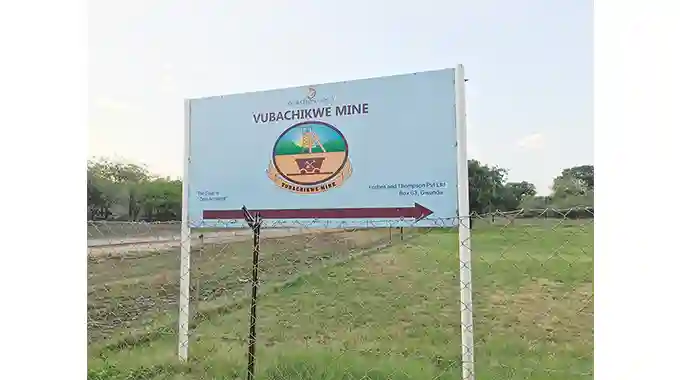
  • Matabeleland South: 3 fatalities, including incidents at Atlas 11 and Vumbachikwe.

  • Midlands: 12 fatalities, with multiple incidents at Jim 6, Peace Mine, and Chengxie Mine.

  • Mashonaland East: 3 fatalities and 18 serious injuries, including at Cambridge Mining Syndicate and Beatrice Mine.

  • Matabeleland North: 2 fatalities at Master Cecil Mine.

  • Manicaland: No incidents recorded in the first two months.

The Chamber of Mines continues to emphasise safety training, mine support systems, and strict adherence to ground control protocols. Fall of Ground incidents, it notes, are preventable through improved mine design, adequate support installation, and continuous ground monitoring.

However, the persistence of FoG as the leading cause of death underscores the need for more aggressive interventions, including:

  • Wider adoption of modern rock bolting and mesh systems.

  • Real-time seismic and ground movement monitoring.

  • Strengthened enforcement of safe mining depths and stope dimensions.

While total fatalities in the first five months of 2025 remain similar to last year’s figures, the continued dominance of FoG in accident statistics signals an urgent need for industry-wide focus on underground safety. The lessons from early 2024 and the latest Chamber data both point to the same conclusion: tackling Fall of Ground incidents is key to saving lives in Zimbabwe’s mines.