Home Blog Page 90

Gold buying prices per gram in Zimbabwe, 2 July 2025

Gold buying prices per gram in Zimbabwe today, 2 July 2025, from the official gold buyer and exporter Fidelity Gold Refinery (FGR).

  • SG 90% and ABOVE US$101.75/g.
  • SG ABOVE 89% BUT BELOW 90% US$100.67/g.
  • SG ABOVE 80% BUT BELOW 85% US$99.59/g.
  • SG ABOVE 75% BUT BELOW 80% US$98.52/g.
  • SAMPLE BELOW 10g BUT ABOVE 5g US$96.90/g.

Fire Assay CASH $102.28/g.

NB: Fire Assay cash price is for gold above 100g; no sample is deducted.

A sample of not more than 10g is deducted for the Fire Assay Transfer price.

A 2% royalty is charged on all deposits (Small-scale miners).

A 5% royalty is set for Primary Producers.

No Survey-Grade Coordinates, No Mine Registration – Ministry Enforces New Pegging Rule

0

In a major policy shift aimed at curbing rampant mining boundary disputes, the Ministry of Mines and Mining Development has officially begun turning away miners and peggers who submit claims or applications without survey-grade coordinates.

By Rudairo Mapuranga

The Ministry is now enforcing a strict directive requiring all prospecting, pegging, and registration applications to be accompanied by coordinates produced by a registered and certified surveyor.

This move, which is already being implemented nationwide, effectively bans the use of handheld GPS devices for pegging claims — a practice long associated with imprecise boundaries and overlapping titles that have fueled disputes, double allocations, and in some cases, violent confrontations among miners.

According to officials, miners must now engage licensed surveyors who are registered in the Ministry of Mines database and are paid-up members of the Association of Mine Surveyors of Zimbabwe (AMSZ). This ensures accountability, professional standards, and integration with Zimbabwe’s evolving digital mining cadastre system.

Miners and peggers who approach provincial offices without proper coordinates are being turned away and told to return only after obtaining surveyor-authenticated data.

“I bought a prospecting licence and thought I was ready to submit my paperwork,” said Tafadzwa Chikowore, an artisanal miner. “To my surprise, the Ministry officer said I must bring coordinates signed off by a surveyor from their list. I had to go back and find a registered surveyor from AMSZ — it’s serious now.”

Sources from within the Ministry say the move is part of efforts to sanitize the sector, improve the security of tenure, and create a reliable and conflict-free digital cadastre for Zimbabwe’s mining operations.

“We’ve seen too many disputes due to inaccurate boundary markings and speculative pegging,” said a Mines Ministry official. “From now on, we’re not processing anything unless the coordinates are traceable to a professional surveyor who is on our system and affiliated with AMSZ. It’s about order and accountability.”

The use of handheld GPS units, though convenient and previously common, has been found to produce inaccurate and inconsistent location data. In a mineral-rich country like Zimbabwe, where claims often lie close together, even a 10-meter error can lead to a serious legal dispute or loss of investment. The new approach ensures all claims are accurately pegged, registered, and digitally mapped in alignment with Zimbabwe’s national geospatial systems.

The Association of Mine Surveyors of Zimbabwe (AMSZ) has welcomed the enforcement of the rule, saying it affirms the importance of professionalism and raises the standard of practice in the sector.

“We commend the Ministry for recognizing the role of professional surveyors in bringing integrity to pegging processes,” said AMSZ President Stewart Gumbi. “Our members are qualified and trained to provide precise geospatial data. This decision also protects miners — it ensures their claims are legally defensible and georeferenced in the national system.”

While some small-scale miners have raised concerns over the additional costs involved in hiring licensed surveyors, stakeholders say the benefits far outweigh the short-term inconvenience.

“Yes, it’s a bit more expensive now,” said Chikowore. “But at least I know my claim is secure and will not be contested because of incorrect pegging. In the long run, this saves us from bigger losses.”

The development is part of the Ministry’s broader push to modernize and formalize mining activities, particularly in the Artisanal and Small-Scale Mining (ASM) sector. Officials believe that proper mapping and surveying are critical to unlocking investment and building investor confidence in the sector.

The Ministry is also planning to strengthen enforcement mechanisms and introduce stiffer penalties for individuals caught pegging claims without surveyor-authenticated coordinates.

“This isn’t a suggestion. It’s now mandatory. If you want your paperwork processed, make sure your coordinates come from someone who’s registered and recognized by the Ministry and AMSZ. Otherwise, you’re wasting your time,” a Ministry official said.

As Zimbabwe pushes forward with mining reforms and the rollout of a digital cadastre, the insistence on survey-grade coordinates marks a turning point for governance in the sector. It signals the end of an era dominated by informal practices and boundary confusion — and the beginning of a more professional and transparent mining environment.

Gold buying prices per gram in Zimbabwe, 1 July 2025

Gold buying prices per gram in Zimbabwe today, 1 July 2025, from the official gold buyer and exporter Fidelity Gold Refinery (FGR).

  • SG 90% and ABOVE US$99.88/g.
  • SG ABOVE 89% BUT BELOW 90% US$98.82/g.
  • SG ABOVE 80% BUT BELOW 85% US$97.76/g.
  • SG ABOVE 75% BUT BELOW 80% US$96.70/g.
  • SAMPLE BELOW 10g BUT ABOVE 5g US$95.12/g.

Fire Assay CASH $100.40/g.

NB: Fire Assay cash price is for gold above 100g; no sample is deducted.

A sample of not more than 10g is deducted for the Fire Assay Transfer price.

A 2% royalty is charged on all deposits (Small-scale miners).

A 5% royalty is set for Primary Producers.

Students Embrace Mine Surveying as a Vital Profession for the Future

0

As Zimbabwe’s mining industry continues to adopt advanced technologies to improve productivity and operational efficiency, mine surveying students are stepping up with confidence and renewed enthusiasm to shape the future of the profession, Mining Zimbabwe can report.

By Rudairo Mapuranga

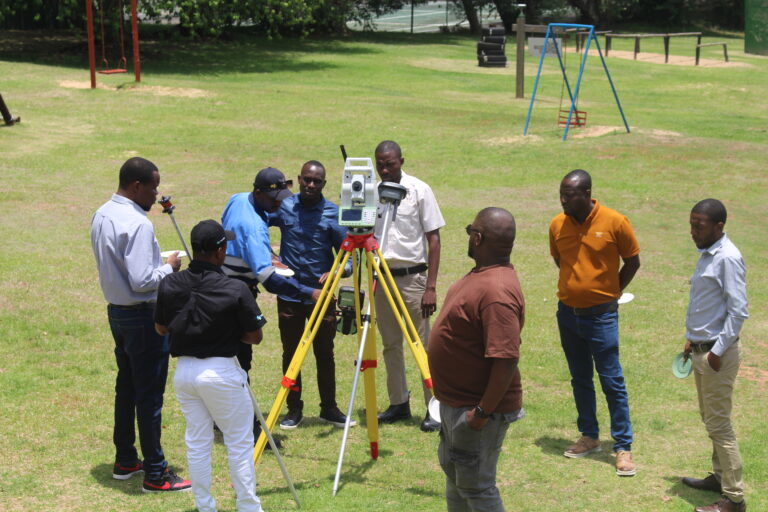
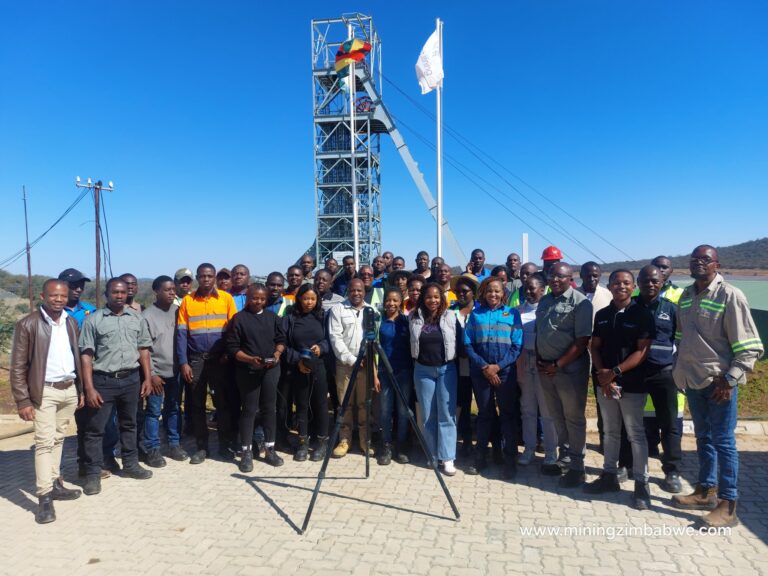
This was clearly demonstrated during the Association of Mine Surveyors of Zimbabwe (AMSZ)’s recent technical visit to Blanket Mine, where surveying students from the Zimbabwe School of Mines (ZSM) engaged with professionals and witnessed firsthand how innovation is driving the future of mining.

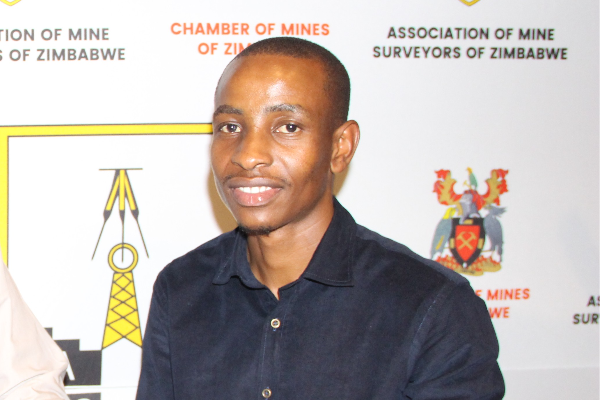
One of the standout voices from the student delegation was Tafara Bingandadi, a third-year mine surveying student at ZSM, who shared his reflections after the tour, expressing how the experience opened his eyes to the vast opportunities and evolving relevance of the surveying field in Zimbabwe’s mining sector.

“Today I had the opportunity to visit Blanket Mine, where we had a great day learning a lot of things. I was previously attached to a surface mine at Bikita Minerals, so I had limited exposure to underground operations. This visit has helped me understand both surface and underground methods and the technologies now in use,” said Tafara.

With growing calls for local surveyors to modernise their craft, students like Tafara are embracing the transition away from traditional methods towards modern surveying systems. He highlighted the use of technologies such as laser scanners, drone surveys, and other digital solutions Blanket Mine is implementing to enhance accuracy and efficiency.

“They are now moving away from old methods. They are improving the accuracy of their work through new technologies. This visit helped us realise that software and tech-driven surveying is the future. It has inspired us to focus more on understanding these tools as part of our studies,” he explained.

The technical visit, organised by AMSZ, was not just a learning exercise but also a moment of motivation and reassurance for the students.

“You hear people say all mines have been surveyed—what’s the point of studying surveying? But today, after seeing what’s on the ground and engaging with professionals, I’m convinced our role is more relevant than ever,” Tafara noted.

He encouraged young Zimbabweans to consider mine surveying as a career, especially in light of the evolving demands of the sector. Tafara also urged fellow students and young professionals to join AMSZ to remain connected with the industry and stay updated on current trends and technologies.

“I want to thank AMSZ and Blanket Mine for such opportunities. I also encourage others to join the Association so we grow together and show the industry how competent we are,” he said.

As the mining sector transitions into an era defined by digital mining and spatial data, students like Tafara Bingandadi represent the new wave of professionals who are not only enthusiastic but also technically prepared to drive Zimbabwe forward.

The visit follows growing industry recognition of the importance of investing in human capital, particularly in technical fields like mine surveying.

2025 Minimum Wage Rates for the Mining Sector

0

The new minimum wage rates for the period 1 January to 31 December 2025 have been agreed upon and pegged in US Dollars. The agreement, reached on 17 April 2025, was made between the Employees’ Party, represented by the Associated Mine Workers Union of Zimbabwe and the Zimbabwe Diamond & Allied Minerals Workers Union, and the Employers’ Party, represented by the Chamber of Mines of Zimbabwe (CoMZ).

The revised wage schedule, which covers mining grades 1 to 13, is expected to be submitted to the Ministry of Labour and Social Services for official registration and publication.

Statutory Amendment

The changes amend Clause 1 (a) and 1 (b) of Schedule E in the Principal Agreement Statutory Instrument 152 of 1990, replacing them with:

“The basic minimum earnings payable to employees for the period 1 January 2025 to 31 December 2025 shall be as per the attached Schedules.”

The agreement is subject to periodic review under Section 3(2) of the same statutory instrument, depending on prevailing economic conditions in the mining industry.

Exemption for Non-Forex Generating Firms

An exemption clause has also been included in line with Clause 6 of the principal agreement, allowing non-foreign currency-generating companies to pay the agreed USD wages in ZiG equivalent, provided they are granted approval and use the official Reserve Bank of Zimbabwe (RBZ) interbank rate.

Encouragement to Pay Above Minimum

While the new rates provide a baseline, financially capable employers are encouraged to pay more than the minimum wages set by the National Employment Council (NEC) to better support employees amid ongoing economic challenges.

This agreement reflects ongoing collaboration between workers’ unions and industry leaders and reaffirms the shared commitment to fair remuneration and economic sustainability in Zimbabwe’s vital mining sector.

Download the wage rates below:-

NEC Mining Industry Wage Rates 2025.

Peggers Call for Phased Survey Rollout and Empowerment

0

As Zimbabwe intensifies efforts to formalise mining titles and enforce coordinate accuracy, the Zimbabwe Prospectors Association (ZPA) has urged the Ministry of Mines and Mining Development to adopt a phased, conflict-sensitive approach to surveying and re-coordination of mining claims, Mining Zimbabwe can report.

By Rudairo Mapuranga

ZPA President Timothy Chizuzu says that while the push for modern surveying is welcome, rushing into blanket implementation could fuel more disputes and strain limited technical resources.

Speaking after a recent technical engagement, Chizuzu cautioned against a one-size-fits-all model, proposing that the government prioritise areas with existing disputes as pilot zones for the new surveying regime.

“We think the government needs to do this in segments or stages. Start with claims that already have disputes and survey those first. That way, we’ll see how effective the process is before applying it nationwide,” said Chizuzu.

This call comes amid policy shifts mandating that all mining claims must now be surveyed using survey-grade instruments under the supervision of registered professionals—a move meant to eliminate disputes caused by inaccurate handheld GPS coordinates.

Surveying: Foundational, Not Optional

In line with the Ministry’s directive, surveyors are now central to claim validation, with handheld GPS banned as of 1 July 2025. The shift recognises that without accurate coordinates, there can be no secure title, no compliance, and ultimately, no sustainable mining.

As highlighted recently, surveying is no longer a back-end support service but a core strategic function linking legal title, production efficiency, environmental compliance, and investor confidence.

“Surveying is the heart of a mine. Everything starts and ends with a coordinate, and only professionals should handle that responsibility,” noted the Association of Mine Surveyors of Zimbabwe (AMSZ) Secretary General Takunda Paul Mubaiwa during a technical tour of Blanket Mine.

Boosting Survey Capacity: Prospectors Must Be Upgraded

Chizuzu noted that Zimbabwe faces a critical shortage of registered mine surveyors to meet the demand for re-coordination under the new law. He proposed that the government should not only train more surveyors but also upgrade and certify experienced prospectors, particularly the claim pickers who have long served at the grassroots level.

“The government must upgrade the prospectors already doing the work. With proper training, they can complement the few surveyors we have and help carry out the work faster and more cost-effectively,” he said.

This aligns with calls by AMSZ and other stakeholders for inclusive capacity building. Empowering existing actors—especially those in ASM spaces—will ensure faster implementation of the survey reforms without excluding the very people the policy aims to assist.

Managing Change Without Creating Chaos

Chizuzu emphasised that poorly sequenced implementation could inflame tensions, especially in high-activity gold zones where claim overlaps are already common.

“If we overhaul all mining claims at once, we risk creating more disputes than we solve. It’s better to manage change step by step so that we can apply it smoothly and avoid unnecessary conflicts,” he added.

The ZPA’s proposal highlights a pragmatic approach: start with problem areas, test the process, evaluate results, then gradually roll it out nationwide with lessons learned and capacity scaled.

Coordination Must Balance Precision and Practicality

Zimbabwe’s shift toward professionalised surveying is a welcome and necessary step. However, the pace and structure of its rollout will determine whether it brings lasting order or adds to confusion in the sector.

With mining contributing billions to the economy and ASM dominating gold production, any changes to claim management must be technically sound, socially sensitive, and logistically realistic.

As both the government and associations like AMSZ and ZPA push for order, the future of Zimbabwe’s mining title system lies in accuracy—but also in access, empowerment, and proper sequencing.

BREAKING: Small-scale miners to hold a workshop to scrutinise the Mines and Minerals Bill

0

In response to the gazetting of the long-awaited Zimbabwe Mines and Minerals Bill, 2025, the country’s biggest body that represents artisanal and small-scale miners (ASM), the Zimbabwe Miners Federation (ZMF), has announced plans to convene a high-level stakeholder and technical workshop to critically analyse the implications of the Bill—particularly for the ASM sector, Mining Zimbabwe can report.

By Rudairo Mapuranga

ZMF President Ms. Henrietta Rushwaya confirmed that the federation has assembled a specialised technical and legal team tasked with unpacking the Bill clause by clause. The team will focus on areas that directly affect grassroots miners who contribute significantly to the country’s gold output and rural economic empowerment.

“First and foremost, I would like to commend the Government of Zimbabwe for gazetting the much-awaited Bill. As the Zimbabwe Miners Federation, we have assembled a technical and legal team which will analyse the Bill in detail,” said Rushwaya.


Key Focus Areas for the ZMF Technical Team

Among the top agenda items to be interrogated is the proposed simplification of mining titles, which seeks to reduce the existing classes to just three, supported by the establishment of a Mining Cadastre Register—a digital system intended to streamline and centralise mining title administration.

Other areas of concern include the composition of the Mining Affairs Board, which, while more inclusive than the previous structure, still raises questions about equitable representation of ASM interests.

Additionally, the Bill introduces new environmental obligations and civil penalties, particularly through the Mining Industry Environmental Protection Fund (MIEPF). These provisions could impose heavy compliance burdens on ASM operators if not tailored to their scale and capacity.


Strategic Minerals and Foreign Access to ASM Land

One of the most contentious issues flagged by ZMF relates to Clause 6 of the Bill, which introduces the designation of strategic minerals and special conditions attached to their exploitation. While the Bill provides a pathway for small-scale miners to mine strategic minerals, it also grants the Minister significant discretionary power to determine access—including for foreign investors—through special agreements.

“What exactly are we saying about strategic minerals? Does the Bill give exclusive entitlement and authority to the Minister to issue titles? These are the questions that need clarity,” Rushwaya queried.

Furthermore, Rushwaya raised concerns about potential contradictions within the Bill, particularly around land size allocations. Although the Bill intends to preserve smaller mining blocks (under 40 hectares) for citizens and permanent residents, it allows foreigners access to these areas under certain conditions—specifically if they can demonstrate the intent to scale up to ordinary mining leases.

“Clause 31 says EPLs below 40 hectares are for citizens or permanent residents only, but there is a provision allowing foreigners who prove they will operate beyond small-scale to access the same land. That’s a contradiction we need to interrogate,” she said.


Advocacy for Inclusivity and Accessibility

The ZMF president further highlighted high licensing costs, bureaucratic hurdles, and technical barriers that ASM operators face, particularly around environmental certification, staking, and inspection requirements.

“Are these issues addressed in the Bill? If not, then we must advocate for adjustments to ensure ASM players can operate without being overburdened by red tape,” said Rushwaya.

The workshop will also scrutinise the lack of a defined tier system in the Bill. While the draft Bill simplifies mining title categories, it does not explicitly distinguish between artisanal, small-scale, and large-scale operations—a gap that risks subjecting all miners to uniform regulations despite stark differences in their operational capacity.


Gender, Youth, and Disability Inclusion

ZMF will also evaluate whether the Bill adequately addresses the inclusion of women, youth, and persons with disabilities in mining. Rushwaya noted the importance of affirmative measures to ensure these groups are not left behind in the formalisation and modernisation of the sector.

“Have these issues been addressed? Gender, youth, people with disabilities, and the farmer–miner land conflicts? These are the realities our miners face daily,” she noted.


Call for Affirmative Action and Simplified Processes

Rushwaya concluded by urging policymakers to ensure that the Mines and Minerals Bill becomes a tool for inclusive development, not exclusion.

“This Bill marks a positive step for Zimbabwe’s mining sector, but its success hinges on balancing modernisation with inclusivity and access. We urge government to reduce compliance burdens, clarify tiers, and protect small-scale and indigenous interests,” she said.

The upcoming stakeholder workshop, which will bring together miners, policymakers, legal experts, and civil society stakeholders, aims to consolidate the ASM sector’s official position for submission to Parliament during the public consultation process.

As the leading voice of Zimbabwe’s ASM sector, ZMF’s proactive engagement shows a commitment to ensuring that the final legal framework governing the country’s mineral wealth is inclusive, practical, and empowering for all Zimbabweans.


Bikita Minerals to Host Free Healthcare Outreach with Chinese Medical Team

0

Bikita Minerals is set to host a Free Medical Consultation and Treatment Session in collaboration with the Chinese 22nd Medical Team, Mining Zimbabwe can report.

By Rudairo Mapuranga

The two-day health outreach will take place on July 1–2, 2025, at the Bikita Minerals Clinic and will be open to employees, their immediate family members, and the surrounding local community.

This initiative is part of Bikita Minerals’ ongoing Corporate Social Responsibility (CSR) agenda, which places strong emphasis on inclusive development, particularly in rural and mining-affected communities. With healthcare access still a challenge for many in remote parts of Zimbabwe, the event is expected to provide critical medical support and education to hundreds of people — at no cost.

The Chinese 22nd Medical Team, known for their expertise and humanitarian work across Africa, will deliver comprehensive health services ranging from general medical consultations, diagnostics, dental check-ups, and basic treatments, to health education sessions aimed at promoting preventative care and long-term wellness. Medicines will also be distributed to those in need, further easing the burden of healthcare expenses.

According to Bikita Minerals Public Relations Officer, Mr. Collen Nikisi, the outreach represents the company’s enduring commitment to the well-being of both its workforce and the local population.

“We believe that mining must go hand-in-hand with development that benefits the communities we operate in. Good health is foundational to that. This is not just a one-time event — it’s part of a broader drive to improve lives.”

The event will kick off at 8:00 AM on both days, and residents from nearby villages and communities are being encouraged to attend with their families. Notices have already been circulated, and anticipation is growing, especially among those who rarely get the chance to see a medical professional due to distance or cost.

“Access to quality healthcare should not be a privilege,” said Mr. Nikisi. “We want our community to know that we care about them, not just as a company operating in the area, but as a committed development partner.”

Many residents have welcomed the upcoming outreach. For people living in Bikita and nearby areas, where the nearest hospital or well-resourced clinic may be several kilometres away, the chance to receive medical attention close to home is both convenient and vital. The initiative is expected to benefit vulnerable groups such as the elderly, children, and those living with chronic conditions who often struggle with access to care.

This initiative is especially timely given the current socio-economic challenges facing many Zimbabweans, particularly in rural settings. Inflation, transport costs, and limited healthcare infrastructure often force people to delay or forgo treatment. The upcoming outreach, therefore, serves not just as a health intervention, but also a major morale booster.

Beyond medical treatment, the outreach will focus on health education, including awareness of hygiene, nutrition, chronic disease management, and mental health. By empowering people with knowledge, Bikita Minerals and its partners aim to foster a more proactive approach to health in the community.

The collaboration with the Chinese 22nd Medical Team reflects the strengthening of bilateral ties between China and Zimbabwe, especially in areas of health, education, and infrastructure development. Chinese medical teams have been working in Zimbabwe for years, offering vital support in hospitals and health institutions, often in underserved regions. This initiative is a continuation of that goodwill, now being channelled through strategic partnerships with private sector players like Bikita Minerals.

Bikita Minerals, owned by Sinomine Resource Group, has rapidly become one of Zimbabwe’s flagship lithium producers. With rising global demand for lithium — a key mineral in battery production for electric vehicles and renewable energy storage — the company is playing a major role in the country’s mining growth trajectory. However, it has also made it clear that its success must translate into shared value for local communities.

This upcoming medical outreach is just one among several development initiatives the company has pledged to undertake in the Bikita area. Others include road improvements, school support, and water infrastructure projects. By taking a holistic approach to CSR, Bikita Minerals is working to redefine what it means to be a responsible miner in Zimbabwe.

Zimbabwe Banks on Exploration and Policy Certainty to Unlock Mineral Wealth

0

Zimbabwe is stepping up efforts to unlock the full potential of its vast but under-utilised mineral resources by prioritising increased exploration and creating a stable, investor-friendly policy environment.

By Ryan Chigoche

Mining remains a vital pillar of the economy, contributing about 12 percent to GDP and nearly 80 percent of export earnings. The government sees the sector as key to achieving economic growth targets under Vision 2030.

Yet, limited exploration and insufficient capital investment have so far hindered the country from fully tapping its mineral wealth.

At the London Indaba 2025, Mines and Mining Development Minister Winston Chitando highlighted the need for greater exploration.

He noted that while Zimbabwe has over 60 recorded minerals, only about ten are actively mined, mainly due to inadequate exploration.

“In Zimbabwe, we have good geology and a competent skills base, but not sufficient capital commensurate to unlock the mineral potential in the country,” he said.

The minister emphasised Zimbabwe’s open and inclusive mineral policy, stating: “Zimbabwe tries to be a friend to all and an enemy to none. As far as our mineral policy is concerned, we are concentrating on ensuring maximum extraction of minerals and maximum value addition in partnership with various investors from all corners of the world.”

Beyond these fundamentals, Chitando stressed that a stable and predictable legal framework is critical for attracting investment.

The government has committed to maintaining consistent, competent legislation that endures changes in government and budget cycles, giving investors confidence for the long term.

Clear and consistent policies are essential not only to boost exploration and mining but also to promote beneficiation where commercially viable. The minister pointed to progress by platinum and lithium miners, who have conducted feasibility studies for refinery and processing capacity in collaboration with consultants.

Private sector investment is also growing in related industries, including carbon steel production, which is expected to expand into stainless steel manufacturing. Additionally, local companies are increasing lithium sulphate production alongside concentrate output, signalling a push towards more downstream mineral processing.

These remarks come as Zimbabwe advances efforts to diversify mineral production, increase value addition, and position itself as a competitive mining investment destination in the region.

Mine Survey Students Tipped to Shape the Future of Surveying in Zimbabwe

0

Young people studying mine surveying have been tipped to play a central role in shaping the future of the profession in Zimbabwe, with the Association of Mine Surveyors of Zimbabwe (AMSZ) calling for more student participation as it builds a stronger, forward-looking industry, Mining Zimbabwe can report.

By Rudairo Mapuranga

Speaking on the sidelines of a well-attended AMSZ technical visit to Blanket Mine in Gwanda on Friday, AMSZ Secretary General Takunda Paul Mubaiwa said students are not only the future of surveying but the carriers of innovation, energy, and modern ideals that can help elevate Zimbabwe’s mining industry—provided they are guided and empowered by industry veterans.

“We rely on young people for growth, continuity, innovation—even for the energy they bring. We prioritise students to the core,” Mubaiwa said.


From Learners to Leaders: AMSZ Opens Doors for Survey Students

Mubaiwa said AMSZ is committed to ensuring that Zimbabwean students receive training that matches international standards, with a deliberate focus on closing the gap between academic learning and practical application.

“As students go through attachments and industrial training, we want them to gain the best practices—not just textbook theory, but knowledge from those already on the ground,” he said.

Through AMSZ events, students are given rare access to industry networks, exposure to modern technologies, and practical insights that can define their career paths early on. Mubaiwa said this platform gives students direct guidance on the various streams within surveying—from mine planning to resource modelling, equipment procurement, and even compliance.


More Than Just Jobs: Opening the Path to Innovation and Entrepreneurship

Mubaiwa challenged students to think beyond employment, noting that mine surveying is evolving and no longer just about working underground or producing plans. With digitalisation and data science increasingly driving decisions in mining, Mubaiwa said the youth can lead in developing software, hardware, and new tools for the sector.

“Some students still think the diploma ends in a job. But we are saying, you can go into consultancy, you can develop software, you can manufacture survey-grade tools and drones. AMSZ will help you connect with those already doing it—locally and regionally,” he said.


The Future Surveyor: From Data Collectors to Decision Enablers

Today’s surveyors are expected to do more than generate plans—they must collect, process, and integrate data into systems that influence the financial bottom line of mining operations. Mubaiwa said that’s why students must engage early with professionals, systems, and tools that define modern practice.

He cited Blanket Mine’s integration of JSWIC, a software system that pools data from multiple departments, as a great example of how mine surveyors are central to real-time decision-making and cost control.

“Surveyors now influence business outcomes. It’s no longer just coordinates. It’s about how the data you generate feeds into planning, production, and dollars.”


A Call to Action

Mubaiwa said AMSZ is actively encouraging more student membership, noting that students who join benefit from:

  • Exposure to current technologies through field visits

  • Mentorship from seasoned professionals

  • Early access to career pathways and entrepreneurial support

  • Opportunities to attend local and regional conferences

“The advantages are plenty,” Mubaiwa said. “You get to learn from the people who are already doing what you want to do. Some of the most valuable knowledge is not in books—it’s in the stories, systems, and mistakes of those who’ve gone before you.”

As Zimbabwe’s mining sector becomes more competitive, data-driven, and regulated, the role of the surveyor will only grow in importance. Students willing to engage early—through organisations like AMSZ—will not only be better prepared for the future but positioned to lead it.