Home Blog Page 94

Caledonia Shows the Way in Responsible Handling of ASM

0

At a time when the mining industry is grappling with how to responsibly integrate artisanal and small-scale mining (ASM) into broader economic and regulatory frameworks, Caledonia Mining Corporation has stepped forward with a structured and sustainable approach, Mining Zimbabwe can report.

By Rudairo Mapuranga

Highlighted in its 2024 Environmental, Social, and Governance (ESG) report, Caledonia’s strategy sets an example of how formalisation, compliance, and partnership can transform ASM from a risky informal activity into a legitimate contributor to local development.

Rather than relying on punitive enforcement to curb illegal mining, Caledonia supports formalisation through legal tribute agreements as outlined in Zimbabwe’s Mines and Minerals Act (Chapter 21:05). These agreements allow registered mining claim holders to grant mining rights to other parties under clearly defined and regulated conditions. Typically, the tribute miner pays 5% of their proceeds as royalties to the claim holder. This process not only ensures a legal route for ASM operations but also enhances transparency and economic inclusion.

Caledonia’s approach ensures that all ASM activities conducted on its claims are formally registered with the Ministry of Mines and Mining Development. This legal recognition is a crucial step in ensuring accountability and safety within the ASM sector. Tribute miners operating under this model are required to adhere strictly to Zimbabwe’s Mines and Minerals Act and the Environmental Management Act, thereby meeting the country’s minimum standards for labour, safety, and environmental protection.

Importantly, Caledonia maintains no direct operational or financial involvement in ASM activities. The company does not manage, oversee, or fund these operations, with all oversight remaining the responsibility of the Ministry of Mines. In addition, Caledonia has taken a firm stance by not purchasing gold from artisanal miners. This decision is aimed at preventing the risks associated with unregulated supply chains, such as illicit trade and non-compliant gold production.

Central to Caledonia’s strategy is a collaborative mindset. The company recognises that lasting solutions in ASM require the active involvement of government authorities, community representatives, and environmental agencies. By engaging these stakeholders, Caledonia ensures that ASM operations align with regional socio-economic goals while minimising ecological harm.

As the conversation around ASM in Zimbabwe and the wider region continues to grow, Caledonia Mining Corporation offers a model that balances economic opportunity with responsibility. Its transparent, structured, and legally compliant approach demonstrates that it is possible to support local livelihoods while maintaining the integrity of Zimbabwe’s mining sector.

Caledonia is not only extracting gold—it is helping reshape how small-scale mining is integrated into the future of sustainable mining in Africa.
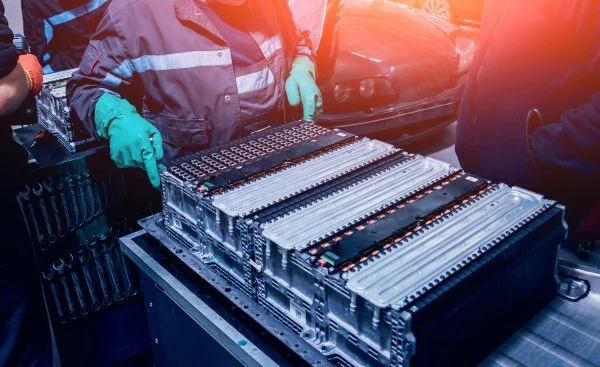

EV Battery Raw Material Use Surges Year-on-Year Despite April Slowdown — Adamas

0

Electric vehicle uptake remained on an upward path in April 2025, with global passenger EV sales—including battery electric vehicles (BEVs), plug-in hybrids (PHEVs), and hybrid electric vehicles (HEVs)—reaching 2.16 million units.

By Ryan Chigoche

Although that marked a 13% decline from March, the figure was still 28% higher than in the same month last year, reflecting sustained market growth despite short-term headwinds.

Asia-Pacific led the market by volume, where sales dropped 11% month-on-month but surged 31% compared to April 2024. Europe recorded a steeper 24% monthly fall but still posted 22% growth on a yearly basis.

In the Americas, EV sales declined by 4% from the previous month but rose 21% year-on-year.

Battery deployment trends closely tracked vehicle sales. According to Adamas Intelligence, 77,615 megawatt-hours (MWh) of battery capacity were installed globally in newly sold EVs during April.

This represented an 11% monthly decline but a 30% year-on-year increase. Chinese cell supplier CATL led the market with 23,208 MWh, while BYD remained the top automaker, accounting for 12,341 MWh.

The average battery capacity per vehicle increased by 2% year-on-year, supported by stronger growth in BEV and PHEV sales than in HEVs.

The rise in overall battery capacity translated into higher demand for key battery metals, although some materials saw monthly declines in volume. Lithium deployment totalled 44,756 tonnes of lithium carbonate equivalent (LCE), comprising 65% carbonate and 35% hydroxide.

The total was down 11% from March but 27% higher than a year ago. CATL and BYD led among suppliers and manufacturers, respectively. The average lithium used per EV stood at 20.7 kg, slightly down from April 2024.

Nickel use followed a similar pattern, with 26,259 tonnes deployed globally—a 14% monthly drop but still 8% up year-on-year.

CATL was again the leading cell supplier, while Tesla led among automakers with 2,636 tonnes.

On average, nickel content per EV battery fell 15% year-on-year to 12.1 kg, pointing to a gradual shift towards chemistries that require less of the metal.

Cobalt volumes showed a rare year-on-year decline. In April, 4,620 tonnes were deployed in EV batteries globally, down 12% from the previous month and 1% lower than April 2024.

CATL remained the top supplier, while Tesla led among automakers with 293 tonnes. The average cobalt intensity per vehicle fell sharply, dropping 23% over the year to 2.1 kg.

Deployment of manganese stood at 5,771 tonnes, reflecting both an 11% month-on-month and 1% year-on-year decline. CATL deployed the most among suppliers, while Volkswagen led among EV makers. Manganese intensity per vehicle dropped 22% year-on-year to 2.7 kg.

Graphite was the exception to the downtrend in monthly volumes. A total of 72,699 tonnes of synthetic and natural graphite was deployed in April, down 11% from March but up 32% compared to the same month last year.

CATL again led suppliers with 21,942 tonnes, and BYD accounted for the most among automakers at 12,844 tonnes. With BEVs accounting for a larger share of total sales, average graphite content per vehicle rose 3% year-on-year to 33.6 kg.

Despite the month-on-month declines across several metrics, the report reinforces the broader trend of accelerating EV adoption and battery raw material consumption.

Chinese firms continue to dominate key segments of the value chain, while year-on-year growth across most materials points to a market still firmly in expansion mode.

At the same time, declining material intensity in key inputs like cobalt, nickel, and manganese suggests that battery chemistries are evolving quickly to meet cost, performance, and sustainability goals.

RBZ Collects US$402 Million from Exporters in Five Months, Bolstered by Mining Sector

0

The Reserve Bank of Zimbabwe (RBZ) has collected US$402 million from exporters between January and May 2025 through the compulsory foreign currency surrender mechanism.

By Ryan Chigoche

This inflow, largely driven by the mining sector, is part of the central bank’s broader strategy to stabilise the local economy and strengthen the ZiG, Zimbabwe’s gold-backed currency.

Under the current policy framework, exporters are required to surrender 30% of their foreign currency earnings to the RBZ in exchange for the ZiG.

This initiative is aimed at enhancing liquidity within the interbank foreign exchange market and ensuring that the central bank retains greater control over the management and distribution of hard currency.

In February, the RBZ implemented a key policy change by reducing the foreign currency retention threshold from 75% to 70%.

This move formed part of a broader package of monetary reforms introduced to consolidate the strength of the ZiG and bring more foreign currency under the central bank’s direct supervision.

By increasing the surrender portion, the RBZ aims to better manage currency flows, support the official forex market, and maintain exchange rate stability.

The mining sector plays a pivotal role in this process. As the country’s leading source of foreign currency, mining contributes about 70% of Zimbabwe’s total export earnings.

With mineral exports exceeding US$5 billion annually, the 30% surrender requirement means that miners alone are expected to contribute over US$1.5 billion in forex inflows to the central bank each year.

This makes the sector indispensable to the RBZ’s strategy of reserve accumulation and currency stabilisation.

Governor John Mushayavanhu has emphasised that the surrendered funds are being strategically allocated to meet pressing national needs.

A substantial portion is being used to fulfil government obligations that require foreign payments.

Another significant share is being channelled into the interbank market to satisfy demand from companies and individuals who require forex for imports and other international transactions. A smaller, yet vital, portion is being directed toward building up the nation’s foreign currency reserves.

As of May 2025, Zimbabwe’s total reserve holdings had risen to nearly US$700 million, a level that marks a significant improvement in the country’s financial buffers.

Of this, US$352 million is held in gold, providing a tangible and widely accepted store of value. An additional US$258 million is held in cash and nostro balances—foreign currency accounts maintained by the RBZ in overseas financial institutions.

The remaining reserves are composed of other diverse assets. This reserve composition is critical in underpinning the credibility of the ZiG and boosting investor and public confidence in the currency’s long-term viability.

At the Chamber of Mines conference earlier this year, Governor John Mushayavanhu underscored the importance of compliance within the mining sector, stating:

“Since miners are the major contributors to foreign exchange in this country, they should comply… where is this country going to get forex?”

His remarks reflect the RBZ’s reliance on mining as the foundation of Zimbabwe’s forex ecosystem and its efforts to anchor monetary policy on solid export fundamentals.

Through a combination of policy tightening, increased centralisation of forex inflows, and strategic reserve management, the RBZ is working to entrench the stability of the ZiG and create a more predictable and sustainable economic environment—with the mining sector at the heart of this transformation.

Mnangagwa Backs Gold-Based Currency and Recognises Artisanal Miners as Economic Drivers

0

In a powerful declaration of Zimbabwe’s economic direction, President Emmerson Dambudzo Mnangagwa has reaffirmed his government’s commitment to anchoring the national currency in physical gold reserves—while simultaneously acknowledging the crucial role of artisanal and small-scale miners (ASM) in achieving this vision, Mining Zimbabwe can report.

By Rudairo Mapuranga

Addressing the nation through a news interview, the President emphasized that a stable and respected national currency must be backed by tangible wealth, particularly gold.

“A country to be solid, even a currency to be respected, it must have backing of solid gold. We didn’t have this before, and we decided to have it — and physically, here it is,” said President Mnangagwa.

“I believe our currency will now stand on solid ground because it is backed. We cannot continue to have a currency that goes up and down.”

The President’s comments come in the wake of the April 2024 introduction of Zimbabwe’s new structured currency, the Zimbabwe Gold (ZiG), which is backed by reserves in gold, precious minerals, and foreign currency held by the Reserve Bank of Zimbabwe (RBZ). The central bank reported in May that Zimbabwe held $285 million in gold and foreign currency reserves, supporting the initial rollout of the ZiG currency.


From Criminalisation to Contribution: Embracing ASM

In a shift that has drawn praise from across the mining sector, the President also signalled a new policy direction regarding artisanal and small-scale miners—often pejoratively labelled as “makorokoza.”

“Instead of us identifying them as criminals, we are taking them on board as Zimbabweans who are contributing to the economy of the country. We need only to regularise what they are doing and put them into the mainstream of gold production,” he stated.

This landmark statement aligns with ongoing discussions around the formalisation and legitimisation of ASM operations. According to Fidelity Gold Refinery, ASM players account for over 60% of Zimbabwe’s gold deliveries, producing an estimated 22 tonnes in 2023 alone out of the total 38.5 tonnes of national output.


Miners for Economic Development Applaud Vision

Miners for Economic Development (Miners for ED), a national body representing small-scale miners and mining stakeholders, has lauded the President’s remarks as “visionary and patriotic.”

In a statement released by Edmund Dru Kucherera, the organisation’s Vice Chairperson and Spokesperson, Miners for ED expressed unequivocal support:

“We fully support the President’s recent statements recognising the vital importance of artisanal and small-scale miners (ASM) to Zimbabwe’s economic future,” said Kucherera.

“We particularly applaud his decisive plan to anchor the national currency in physical gold reserves, viewing this as a crucial move towards achieving economic stability and fostering national pride.”


Formalising ASM: A National Imperative

Miners for ED outlined the benefits of integrating artisanal miners into the formal economy, a stance that aligns closely with government goals:

  • Boosting transparent and sustainable gold output

  • Increasing tax and royalty contributions to the fiscus

  • Improving mine safety and environmental standards

  • Reducing poverty through job creation and economic empowerment

The organisation also called on financial institutions, government agencies, and communities to rally behind efforts to support ASM and ensure they have access to financing, equipment, legal mining claims, and electricity.


A New Era for Economic Stability

The gold-backed ZiG currency, supported by growing gold reserves from both large-scale and ASM producers, is already generating confidence in economic circles. Analysts note that tying the value of money to physical assets such as gold can curb inflation, reduce currency volatility, and promote savings.

The ZiG replaced the embattled Zimbabwe dollar (ZWL) at an exchange rate of 1 ZiG to 2,498 ZWL, and the RBZ has committed to maintaining a 100% reserve backing to defend its value.

Kucherera added:

“This strategy marks the beginning of a new era where Zimbabwe’s currency, grounded firmly on tangible gold reserves, can achieve lasting stability. This will encourage investment, promote savings, and safeguard citizens’ purchasing power.”


Harnessing Zimbabwe’s Mineral Wealth

Zimbabwe is home to more than 60 gold belts and over 4,000 recorded gold deposits, many of which remain underdeveloped or are exploited through informal mining. By investing in exploration, geological data, and ASM formalisation, Zimbabwe could significantly expand its gold output—potentially reaching the long-term national goal of 100 tonnes annually, as envisioned by the Chamber of Mines.

President Mnangagwa’s commitment to building a gold-backed currency and recognising the role of ASM signals a deliberate step toward inclusive, resource-based economic growth.


A Shared Responsibility

As Miners for ED concluded in their statement:

“Supporting artisanal miners is both an economic necessity and an act of patriotism. We commend the President’s visionary leadership and pledge our full commitment to realising this promising path forward.”

The message is clear: Zimbabwe’s path to economic stability and national pride is paved not just with gold—but with the hands that mine it. By embracing artisanal miners and placing real gold behind its currency, Zimbabwe is asserting a bold new model for home-grown development.

Gold buying prices per gram in Zimbabwe, 20 June 2025

Gold buying prices per gram in Zimbabwe today, 20 June 2025, from the official gold buyer and exporter Fidelity Gold Refinery (FGR).

  • SG 90% and ABOVE US$102.35/g.
  • SG ABOVE 89% BUT BELOW 90% US$101.27/g.
  • SG ABOVE 80% BUT BELOW 85% US$100.18/g.
  • SG ABOVE 75% BUT BELOW 80% US$99.10/g.
  • SAMPLE BELOW 10g BUT ABOVE 5g US$97.48/g.

Fire Assay CASH $102.89/g.

NB: Fire Assay cash price is for gold above 100g; no sample is deducted.

A sample of not more than 10g is deducted for the Fire Assay Transfer price.

A 2% royalty is charged on all deposits (Small-scale miners).

A 5% royalty is set for Primary Producers.

Gold buying prices per gram in Zimbabwe, 19 June 2025

Gold buying prices per gram in Zimbabwe today, 19 June 2025, from the official gold buyer and exporter Fidelity Gold Refinery (FGR).

  • SG 90% and ABOVE US$103.04/g.
  • SG ABOVE 89% BUT BELOW 90% US$101.95/g.
  • SG ABOVE 80% BUT BELOW 85% US$100.86/g.
  • SG ABOVE 75% BUT BELOW 80% US$99.77/g.
  • SAMPLE BELOW 10g BUT ABOVE 5g US$98.13/g.

Fire Assay CASH $103.58/g.

NB: Fire Assay cash price is for gold above 100g; no sample is deducted.

A sample of not more than 10g is deducted for the Fire Assay Transfer price.

A 2% royalty is charged on all deposits (Small-scale miners).

A 5% royalty is set for Primary Producers.

AMSZ Set to Tour Blanket Mine in Push to Sharpen Technical Skills

0

The Association of Mine Surveyors of Zimbabwe (AMSZ) is set to conduct a technical visit to Blanket Mine this Friday, as part of its commitment to strengthening practical skills, promoting continuous learning, and aligning the profession with modern underground mining standards.

By Ryan Chigoche

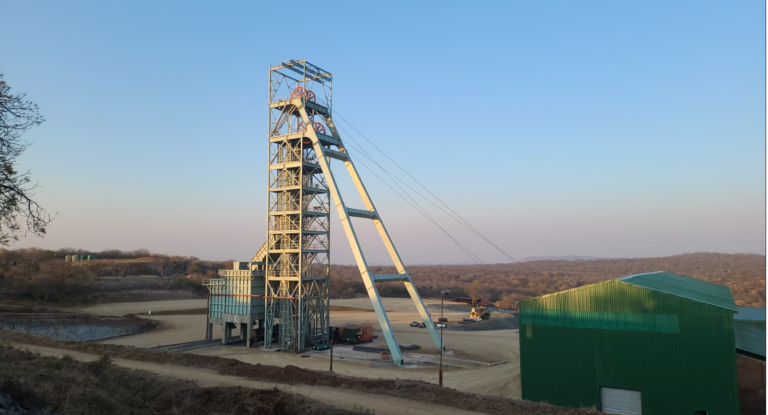
Blanket Mine, located in Gwanda and operated by Caledonia Mining Corporation, is one of Zimbabwe’s longest-running and most established underground gold operations.

Its complex underground infrastructure and use of modern surveying tools make it an ideal site for hands-on learning and professional engagement.

Speaking to Mining Zimbabwe, AMSZ President Stewart Gumbi said the visit is expected to expose members to real-time underground survey practices and stimulate the adoption of new ideas in their respective operations.

“This visit will give our members practical exposure to the realities of underground mine surveying, including how modern technologies are being integrated on the ground. We believe the lessons learned here will translate into better standards, accuracy, and efficiency across the mines our members work at,” Gumbi said.

He added that the visiting group includes both experienced professionals and trainees from mining operations across the country.

“Surveying in an underground mine like Blanket presents unique challenges—from limited visibility to the need for precise alignment and control. Our members will get a chance to see how advanced techniques are applied in such conditions, which is valuable for anyone working or planning in similar environments. We expect participants to take back new perspectives and practices that can help improve efficiency, safety, and accuracy at their respective mines,” Gumbi said.

The itinerary will include guided underground access, technical briefings, and interactive discussions with Blanket Mine’s survey team, creating space for peer-to-peer learning and dialogue around best practices.

As the mining sector continues to embrace digital transformation, AMSZ is positioning itself to support its members in adapting to new roles and responsibilities.

One of its strategic objectives is to shift the perception of mine surveyors from being purely technical specialists to becoming strategic advisors in mine planning, resource governance, and operational sustainability.

With growing expertise in technologies such as drones, GIS, and 3D modelling, mine surveyors are increasingly central to the mining value chain.

In this rapidly evolving landscape, their role is more crucial than ever, ensuring that Zimbabwe’s mining industry not only adapts to technological change but actively leads it.

RBZ Suspends Gold Coin Sales After Final Stock Clearance Amid Soaring Gold Prices

0

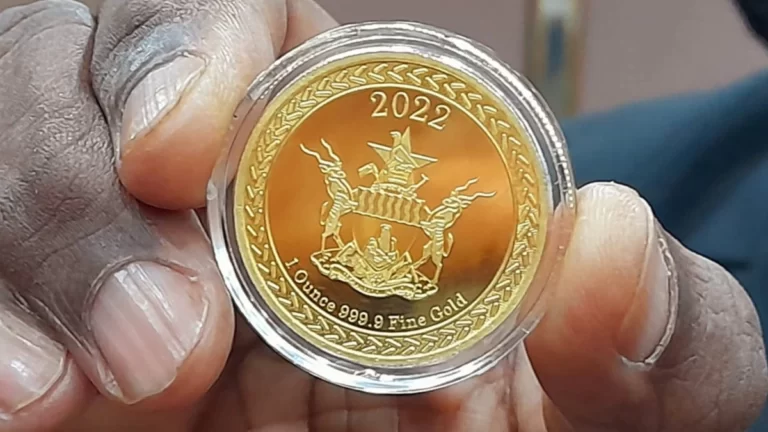
The Reserve Bank of Zimbabwe (RBZ) has officially suspended the sale of gold coins with effect from June 16, 2025, after clearing out the remaining stock through a final mop-up exercise. This move brings to a pause one of the country’s most notable monetary policy tools, launched in 2022 to combat inflation and stabilize the currency.

By Ryan Chigoche

The suspension comes at a time when global gold prices are climbing sharply, further strengthening the case for many investors to hold on to their coins rather than return them. Since their introduction in July 2022, gold prices have risen from around US$1,700 per ounce to over US$2,400 per ounce by mid-2025—an increase of more than 40%.

According to the World Bank’s April 2025 Commodity Markets Outlook, gold prices are expected to surge by another 30% this year, driven by heightened global economic uncertainty, central bank demand, and investor appetite for safe-haven assets.

This outlook helps explain the reluctance of holders to redeem their coins, reducing the central bank’s ability to recirculate them and prompting the current sales suspension.

The final sales conducted by the RBZ did not involve the minting of any new coins. Production had already been halted in April 2024, and the recent transactions were limited to clearing existing inventory, including previously redeemed coins.

In a statement, the central bank indicated that any future sales would depend on the return and accumulation of a significant number of coins, which, in the current climate, seems increasingly unlikely.

Launched in July 2022, the gold coin program was part of a broader monetary stabilisation package designed to offer investors an inflation-proof store of value amid a collapsing local currency. The coins were made available in various sizes and denominations, appealing to both institutions and ordinary citizens, and were also used to mop up excess liquidity in the economy.

Their introduction was timely. Zimbabwe faced acute inflationary pressures in 2022, and confidence in the Zimbabwean dollar was at a low. The gold coins quickly became a popular investment choice, allowing holders to preserve value without resorting to informal foreign currency markets.

However, as inflation moderated and broader monetary reforms took shape—particularly under the new structured currency, ZiG—the RBZ began phasing out the coin program. Still, the global gold rally has extended the utility of the coins for many holders, some of whom view them as appreciating assets rather than short-term liquidity tools.

The RBZ has confirmed that all gold coins currently in circulation remain valid, tradable, and redeemable through authorized financial institutions. However, the slowdown in redemptions, fueled by expectations of continued price increases, has left the central bank with fewer options to resupply the market, reinforcing the decision to pause further sales.

This suspension forms part of a broader shift in Zimbabwe’s monetary policy framework. The RBZ is now focused on introducing new financial instruments that align with the country’s long-term reform goals, rebuild trust in the financial system, and support a savings culture under the ZiG regime.

While the gold coin initiative has served its purpose during a period of volatility, its temporary exit from the market underscores both the success and the limits of policy tools that rely on dynamic global commodity trends.

With gold expected to continue its upward trajectory, the coins may still prove valuable—not just for individual investors, but as a lasting reminder of how alternative monetary assets can function in times of crisis.

High Court Halts Chrome Mining in Zaka Over Villagers’ Rights and Sacred Land

0

A chrome mining company operating in Chiromo Village, Zaka, has been ordered to shut down operations after the High Court ruled in favour of local villagers who argued that the mining activities threatened their homes, livelihoods, and sacred ancestral sites, Mining Zimbabwe can report.

Bailzone Mining (Pvt) Ltd, which held 60 mining certificates covering vast swathes of the rural village, was forced to down tools following a legal challenge mounted by villagers who said their constitutional rights were being violated by the company’s presence.

The applicants in the case—Gideon Rushinga, John Rushinga, Million Rushinga, and Pride Garauzive—successfully argued that Bailzone’s mining operations were encroaching on their homesteads, agricultural fields, grazing land, and graveyards. These sites, they said, were not only vital for their economic survival but also held deep traditional and spiritual significance.

The villagers also challenged the legal standing of the mining company’s operations, citing the Minister of Mines and Mining Development and the Sheriff of Zimbabwe as respondents in the matter. They demanded the cancellation of Bailzone’s certificates of registration, which were issued by the Provincial Mining Director for Masvingo.

In addition to questioning the legality of the mining claims, the villagers called for the nullification of the Environmental Impact Assessment (EIA) report that was approved by the Environmental Management Agency (EMA). They insisted that no mining activities should be allowed in Chiromo without community consultation, consent, and a proper assessment of environmental and cultural impact.

Court documents revealed that Bailzone’s attempt to obtain a court order barring villagers from interfering with its operations had earlier been dismissed, setting the stage for the more decisive case that followed. The court found that the mining company had failed to produce any evidence proving it had the legal authority—or the consent of the Zaka Rural District Council—to prospect or operate in the area.

Riding on the momentum of that ruling, the villagers escalated their legal fight, this time targeting the EIA reports and seeking a declaration that the chrome mining operations were both unlawful and socially disruptive.

Bailzone Mining contested the villagers’ arguments, claiming its mining certificates were still valid and had not been withdrawn by the Ministry. However, the court remained unmoved, siding with the community’s demand for protection of land rights, heritage, and their right to development in dignity and peace.

The judgment has been welcomed by many within Zimbabwe’s rural communities as a landmark decision highlighting the growing tension between rural landholders and mining companies in the country. It also reinforces calls for more responsible mining practices that respect environmental laws, traditional land uses, and the rights of rural citizens to free, prior, and informed consent.

As Zimbabwe pushes to boost investment in the mining sector under the US$12 billion target, the ruling is a timely reminder that development must not come at the expense of people’s homes, heritage, and fundamental rights.

World Bank Flags Global Slowdown and Falling Commodity Prices, Casting Shadow Over Zimbabwe’s Mining Prospects

0

Zimbabwe’s mining sector, a cornerstone of the national economy, faces increasing headwinds as the World Bank projects global economic growth to slow to 2.3 per cent in 2025—the weakest rate since the 2008 financial crisis. This slowdown comes amid a sharp decline in commodity prices, placing considerable pressure on export revenues, investor confidence, and the viability of key mining projects.

By Ryan Chigoche

Emerging markets and developing economies (EMDEs), including Zimbabwe, are particularly exposed to these risks due to their heavy reliance on commodity exports. The World Bank’s latest Global Economic Prospects 2025 report notes:

“In regions with a large number of commodity exporters, including Sub-Saharan Africa, growth is anticipated to face drags from the weakening outlook for external commodity demand. Against the backdrop of a deteriorating global environment, growth forecasts for 2025 have been downgraded in all EMDE regions relative to January projections.”

For Zimbabwe, minerals such as platinum group metals (PGMs), chrome, ferroalloys, lithium, and gold form the backbone of mining exports. These commodities have experienced volatile price movements that reflect the uncertain global economic environment.

Notably, lithium prices remain subdued after a sharp drop in 2023 due to oversupply concerns and weaker-than-expected electric vehicle uptake in major consumer markets like China.

Commodity prices plunged sharply in early April 2024, reflecting deteriorating growth prospects alongside rising trade tensions. Oil prices were hardest hit following a notable production hike by OPEC+ nations, despite a muted outlook for oil demand growth.

Brent crude is forecast to average $66 per barrel in 2024 and decline further to $61 in 2025. This decline not only affects energy exporters but also impacts mining operations in Zimbabwe by raising fuel and transport costs, thereby squeezing profit margins.

Base metals, essential to industrial manufacturing, also suffered significant price drops. Prices for copper, aluminium, nickel, and other key metals fell amid expectations of slowed global industrial activity caused by trade disruptions and weakened demand. Although some recovery occurred later in the year, the World Bank expects metals prices to drop by approximately 5 percent in 2025 and soften further in 2026.

As a result, the broader commodity price index is forecast to decline by 10 percent in 2025 and another 6 percent in 2026. These downward trends reflect persistent global trade uncertainties, policy unpredictability, and slower industrial investment across both advanced and developing economies.

This gloomy outlook presents a potential challenge for Zimbabwe’s mining ambitions, particularly at a time when the government is counting on large-scale investments and beneficiation projects to drive economic transformation.

Flagship projects like the Manhize steel plant, Karo Platinum’s development, and several lithium processing initiatives by Chinese investors were structured under assumptions of sustained or rising commodity demand.

The combination of falling prices and slower global growth threatens to reduce export earnings and government royalties, constraining public resources needed to support mining infrastructure, exploration incentives, and community development programs.

Furthermore, tighter global credit conditions and rising borrowing costs are likely to dampen foreign direct investment, which is critical for the expansion of mining capacity and downstream processing.

Opportunities for Zimbabwe According to the World Bank: Diversification and Value Addition

Despite these challenges, the World Bank highlights opportunities for Zimbabwe to mitigate the impact of global headwinds. One key recommendation is diversifying trade partners and strengthening regional integration.

The African Continental Free Trade Area (AfCFTA), by creating a larger, more integrated market, offers Zimbabwe the chance to reduce reliance on traditional export destinations and build resilience against global shocks.

Locally, investing in value addition through beneficiation is critical. Moving beyond raw ore exports to processing minerals domestically can capture more value, create jobs, and stabilize revenues even when commodity prices fluctuate internationally, the World Bank noted, among a cocktail of other opportunities to counter these challenges.

Several mining companies have initiated such projects, but scaling these efforts will require improved infrastructure, particularly a reliable power supply, transport networks, and streamlined regulatory frameworks.

In addition, policy consistency and governance reforms are crucial to rebuilding investor confidence. Past uncertainties around mining royalties, indigenization policies, and environmental regulations have often discouraged long-term commitments.

Clear, stable policies, coupled with efforts to reduce bureaucratic hurdles, can attract fresh investment and support ongoing operations.

Meanwhile, mining companies in Zimbabwe will need to optimize operational efficiencies, control costs, and adapt to the tighter global environment. Some firms may delay or scale back expansion plans, while others will seek to innovate through new technologies or partnerships.

Ultimately, Zimbabwe’s mining sector stands at a critical juncture. The global economic slowdown and commodity price softness underscore the fragility of overreliance on external markets. Success will depend on how well the country can diversify markets, deepen regional trade, accelerate beneficiation, and create a supportive investment climate.

The road ahead is challenging, but with strategic reforms and focused action, Zimbabwe’s mining industry can build resilience and remain a key driver of economic growth amid an uncertain global landscape.