



While Zimbabwe’s liberation war heroes fought for a responsible government that would protect and serve its people, the same spirit now demands that our mineral wealth be harnessed with equal responsibility, Mining Zimbabwe can report.
By Rudairo Mapuranga
As the nation marked its 45th Heroes Day at the National Heroes Acre, President Emmerson Mnangagwa reminded the country that responsible mining is not a luxury but a necessity, a duty owed to the host communities who live with the mines, to the workers who dig the minerals, and to future generations who will inherit the land we leave behind.
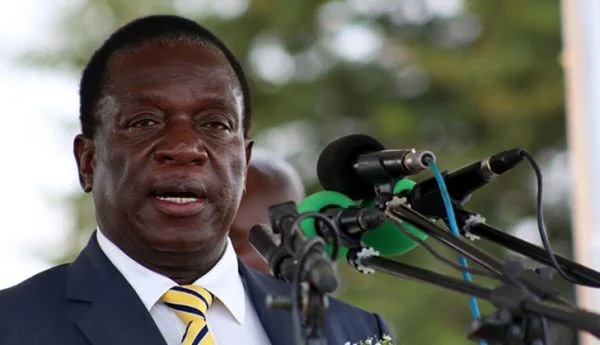
President Mnangagwa, speaking at the 45th Heroes Day commemorations at the National Heroes Acre on Monday, reminded the nation that while Zimbabwe’s land is blessed with gold, diamonds, platinum, and a catalogue of other minerals, the true value of these resources will only be realised if they are mined responsibly, with communities at the heart of the benefits.
“As a nation richly endowed with mineral resources, we are determined to ensure that these should be complemented by responsible mining and empowerment of host communities. This should translate into economic benefits for all citizens, full compliance to environmental and labour laws, as well as our cultural norms and values,” he said, his voice carrying a message that was as much a challenge to the mining industry as it was an affirmation of government’s expectations.
In recent years, Zimbabwe’s mining sector has been caught between two competing realities. On one hand, there is a drive to attract investment and expand production in pursuit of the US$40 billion mining economy target. On the other, there are the persistent cries of host communities who, despite living side by side with billion-dollar deposits, still walk on dusty roads, send their children to under-resourced schools, and fetch water from unprotected sources. The President’s words were a reminder that mining cannot simply be about digging and exporting; it must be about transforming lives.
Responsible mining, as called for by Mnangagwa, is not just about ticking boxes for glossy corporate reports or showing compliance when inspectors visit. It is about a deeper commitment, ensuring that every ounce of gold, every carat of diamond, every tonne of coal leaves behind more than just an empty pit. It is about rehabilitation of mined-out land so that communities are not left with dangerous, open shafts. It is about fair treatment and safe conditions for mine workers, with wages that reflect the value they help create. It is about respecting cultural sites and traditional leadership structures so that mining is not seen as an act of displacement but as a partnership.
Across the country, there are examples that underline the urgency of this message. In Marange, artisanal miners continue to operate around abandoned pits, while communities still question whether diamond wealth has truly improved their livelihoods. In Hwange, environmental concerns over coal mining have long been voiced, from dust pollution to fears over water contamination. In Penhalonga, gold mining has brought jobs to some but left others complaining about land degradation and unsafe working conditions. These are the very gaps Mnangagwa’s call for responsible mining seeks to close.
His reference to the empowerment of host communities speaks to a long-standing demand from mining towns and rural areas that mining companies must not only employ locals but also invest in projects that will outlast the life of the mine. This means schools, clinics, clean water systems, roads, and sustainable businesses that remain viable even when the last tonne of ore has been hauled away. It means giving communities a seat at the table when decisions are made about the land they have lived on for generations.
By also emphasising our cultural norms and values, Mnangagwa was making a point that mining should not bulldoze heritage in pursuit of profit. Zimbabwe’s cultural identity is tied to the land, and ancestral graves, sacred mountains, and historical sites are part of who we are. Mining operations that ignore this risk not only incur the loss of social licence to operate but also the erasure of irreplaceable history.
The country has already made policy moves in this direction. The Diamond Policy, for example, restricts diamond mining rights to four companies, ZCDC, Anjin, Alrosa Zimbabwe, and Murowa Diamonds, as part of an effort to better regulate the sector and ensure value addition. But as is often the case, the effectiveness of such measures depends on consistent enforcement, transparent reporting, and a willingness by both government and the private sector to go beyond compliance and embrace genuine accountability.
Heroes Day is a symbolic backdrop for such a message. The freedom fighters who lie at the National Heroes Acre did not sacrifice for a Zimbabwe where wealth is extracted without benefit to its people. The President’s call is, in essence, a modern continuation of that liberation struggle, a demand that our natural resources must serve Zimbabweans first, and that mining must be a tool for development, not exploitation.
The challenge now lies in whether this vision can be translated from the podium to the pit. Can mining companies, both local and foreign, rise to the occasion and integrate responsible practices into their core operations? Can the government enforce environmental, labour, and cultural safeguards without fear or favour? And perhaps most importantly, will host communities see the tangible benefits they have long been promised?
As the dust settles on the Heroes Day speeches, Zimbabwe’s mining sector faces a clear choice to either take the President’s words as another ceremonial call to be forgotten in boardrooms or to treat them as a blueprint for a mining industry that truly serves its people. The country’s minerals are finite, but the impact they leave behind does not have to be.

