

They said the mine offered no benefits. But from a crammed taxi to a vendor’s second stall, I discovered an economy transforming not by handout, but by heartbeat.
By Rudairo Mapuranga
The dust from the official bus was the first insult.
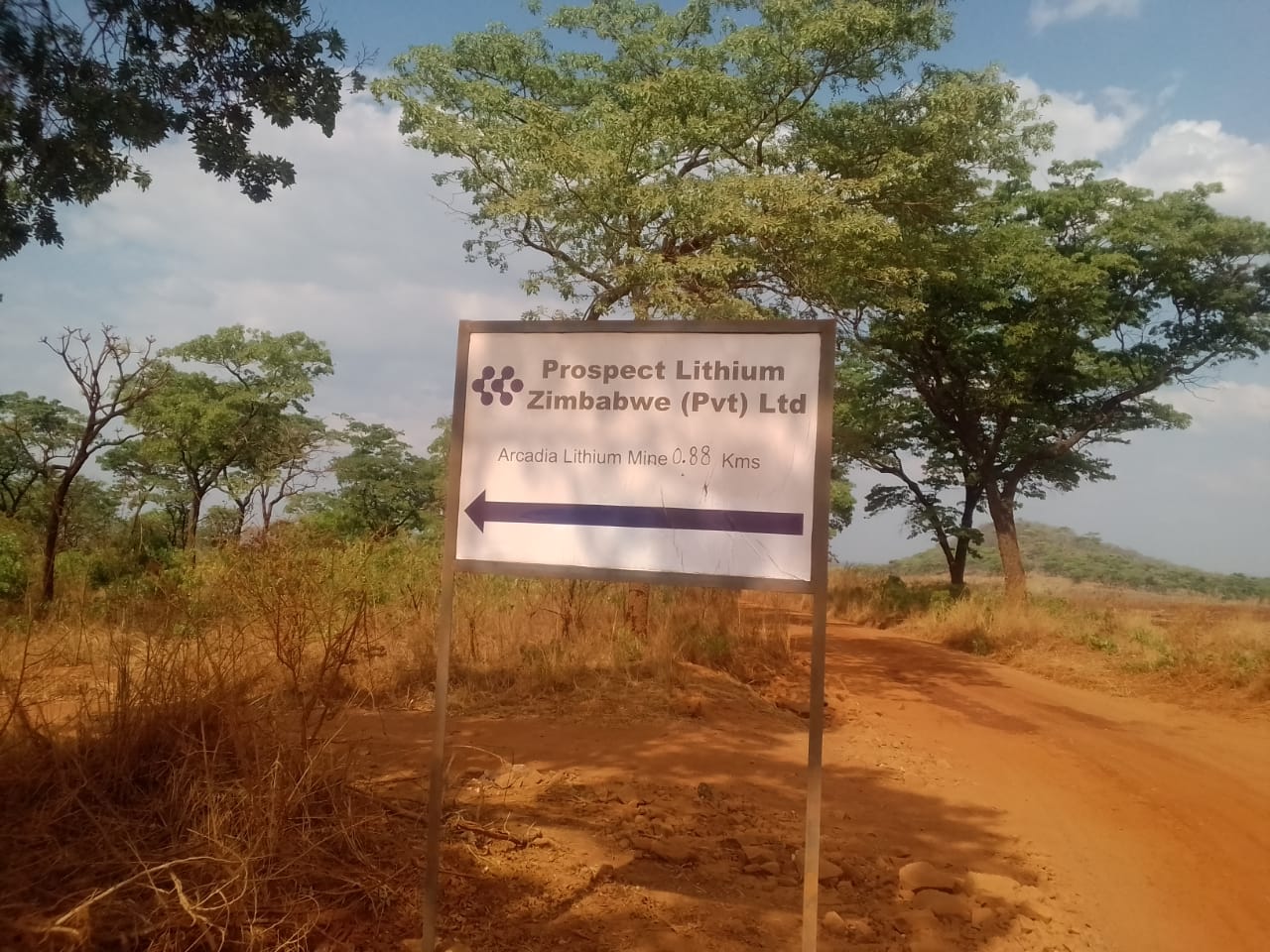
I stood there, on the hot tarmac of Ruwa, watching the taillights of the mine’s press transport vanish into a shimmering haze. It was a clean, air-conditioned capsule carrying my colleagues towards the sanitised spectacle of a ministerial visit to the Arcadia Lithium Mine. Honourable Winston Chitando would be bust touring the Mine. Photographs would be taken. Speeches would be made. And I was late.
A cocktail of panic and professional despair curdled in my stomach. This was the story — the official narrative of investment, progress, and national potential — and I was about to miss it. But as the dust settled, a colder, more compelling thought emerged: what if the real story wasn’t at the mine at all? What if it was in the spaces in between?
So, I made a decision that would define my day. I turned my back on the main road, hoisted my bag, and stuck out a thumb. I would hitchhike to the future. I would travel to Arcadia not as a shielded journalist on a corporate bus, but as a passenger in the rattling belly of the very community the mine was meant to transform.
My first chariot was a battered white Toyota Hiace, its suspension sighing with the weight of too many lives. The kombi to Goromonzi was a mobile confessional, a tin can of swirling opinions and the thick scent of sweat and hope. I squeezed in between a woman clutching a live chicken and a man whose eyes held the tired wisdom of the land.
“The mine?” I ventured, my voice competing with the engine’s groan. The initial response was a chorus of dismissive grunts — a symphony of “Hazvina betsero” – “It’s of no benefit.”
An elderly man in a frayed jacket fixed me with a stare. “They dig up the white gold, ship it to China, and what do we see? Dust. More dust. And the promises that blow away with it.”
It was the expected refrain — the headline everyone knows by heart. But headlines rarely tell the whole story. I turned to the man in the most powerful seat in Zimbabwe — the kombi driver. His name was Tinashe, his knuckles white on the gearstick.
“And you, brother? Has the dust brought you anything?”
He laughed, a short, sharp bark. “What can the mine do for me? I fight this steering wheel every day.”
But I pressed. “Before the mine, this route… was it like this?”
A flicker of something crossed his face. A crack in the wall of cynicism. He downshifted, the van lurching. “This road,” he said, gesturing to the pothole-riddled track, “was a bone-shaker. A car-breaker. The mine brought their graders. They patched the worst parts. Not for us, for their trucks. But my tyres last longer now.”
He paused, as if admitting a secret. “And the people… before, I would make this trip half-full. A loss. Now?” He gestured with his chin at the packed van. “Now, every trip is full. People going to the mine, people selling to people who work at the mine. Last year, I bought a second kombi. My younger brother drives it. His wife no longer nags him about being a burden.”
The statement landed with the weight of a revelation. Two families fed. Two homes stabilised. Not from a direct job, not from a corporate handout, but from the simple, inexorable mathematics of increased economic activity. The first ripple.
Majuru Growth Point: The Calculus of a Second Restaurant
At Majuru Growth Point, the air was thick with the smell of frying kapenta and the buzz of commerce. I found a group of women vendors, their wares spread on colourful cloths. I was the city man with the notebook, and they were ready with their grievances.
“The Chinese eat their own food from their own kitchen,” one said, her arms crossed. “They don’t buy our tomatoes. What benefit?”
It was the same song, second verse. I zeroed in on a woman, her face etched with the resilience of a life spent hustling. She ran a small, makeshift restaurant, a pot of sadza steaming over a charcoal burner.
“Sister,” I began, “your restaurant here… is business the same as before the mine?”
She shrugged. “It comes and goes.”
“Have you tried to take your business closer to the source of the hunger?”
For the first time, her defensive posture softened. She looked away, towards the distant, unseen mine. A slow smile touched her lips. “I have a second place,” she confessed, her voice dropping. “Near the main gate. For the workers, the security, the drivers. The sadza there… it finishes fast. It is… better.”
“Better” is a relative term. But in the lexicon of survival, “better” can mean school fees paid. It can mean a new roof. It can mean a future that isn’t a daily struggle. She hadn’t received a benefit; she had seized an opportunity created by the mine’s gravitational pull. The mine didn’t give her a business; it gave her a market. The second ripple.
The final leg of the pilgrimage required a different kind of faith. It was a black Toyota Wish, a car designed for seven souls but now a steel womb carrying ten. I was the last to squeeze in, my spine wedged against the door frame, my knees kissing the seat in front. The air was a solid thing, thick with breath and the shared, unspoken acceptance of collective discomfort. This was the true artery to the lithium dream: overburdened, hot, and moving forward out of sheer necessity.
The driver, a young man with intense eyes and a grip on the wheel that promised he knew every inch of the road’s treachery, introduced himself as Blessing. The name felt like a prayer.
He wrestled the overloaded car, its suspension groaning in protest as we plunged into craters that felt like geological events. Each jolt was a communal experience, a sharp intake of ten breaths.
“And this road,” I managed to grunt, my voice vibrating with the car’s shudder, “surely it is your enemy?”
“Today, yes,” Blessing said, his focus never wavering from the battle ahead. “But look. Just there.” He risked a quick point through the dusty windshield. Ahead, a phalanx of graders and workers was a hive of activity, laying the black ribbon of a new, tarred road right alongside our punishing path. “They are building the future. The company. When that is finished, this… this suffering will end. My car will become a car again, not a patient in a mechanic’s ward. The trip will be twenty minutes, not one hour. I will use less fuel. I can lower my price for the people.”
He then offered the final, unassailable truth, his voice cutting through the grumbles of the other passengers. “But let me be clear. Before the mine, this road led to fields and a few scattered homesteads. I would never have come out here. There was no ‘blessing’ on this route. There was no reason. Now, it leads to a place where money changes hands. Where people are. That is why I bought this car.”
His business — this overloaded Toyota Wish groaning with human cargo — was born from the mine’s existence. His entire livelihood was a direct consequence of the lithium buried in the hills. Yet, in the discomfort of the moment, his initial complaint, like all of ours, was about the state of the road. The disconnect was staggering — a testament to how the most profound changes are often felt before they are understood.
When I finally spilt out of Blessing’s Toyota Wish at the gates of Arcadia, my body aching, my clothes dust-powdered, the ministerial circus was in full swing. The suits were pristine, the speeches echoed with words like “value addition” and “economic empowerment.” I looked at the polished presentations and then back down the brutal, soon-to-be-tarred road I had just travelled.
My observations were no longer just observations; they were convictions forged in the heat and press of that overcrowded taxi. The most profound story of Arcadia is not the lithium itself. It is the second kombi. It is the second restaurant. It is the overloaded Toyota Wish that represents a new route, a new livelihood, where none existed before. It is the slow, deliberate tarring of a road that connects an isolated community to the bloodstream of the national economy.
These are the ripples. They are quiet, easily dismissed by the loud drumbeat of legitimate grievances about direct employment and corporate social responsibility. The people living them often don’t even name the source — feeling the current but not seeing the stone that dropped into their pond.
The official bus I missed was a metaphor. It was the fast, comfortable, direct route to the official story. My journey — the one of cramped bodies, shared discomfort, and probing questions in a black Toyota Wish — was the path to the human story. It is a story not of grand benefaction, but of slow, organic, and often unrecognised growth — a growth so real you have to cram ten people into a seven-seater to truly feel its weight.
As other mines follow this infrastructural lead, the lesson is clear: the true, lasting benefit of Zimbabwe’s mineral wealth may not be measured solely in tonnes exported or direct taxes paid, but in the countless, quiet victories of a second kombi, a second restaurant, and a road that no longer leads to nowhere, but to a future, however slowly, being built.

