



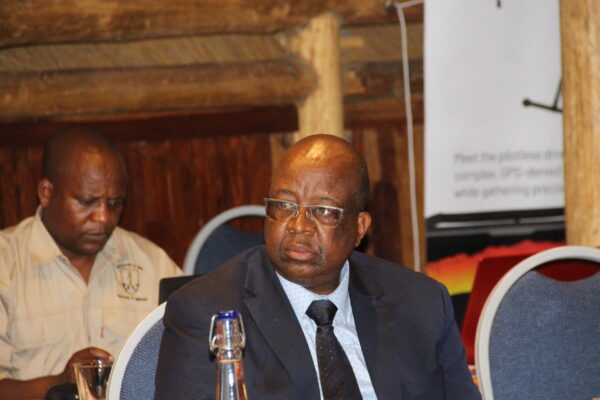

The Chief Director in the Ministry of Mines and Mining Development, Eng. Charles Simbarashe Tahwa, has urged women in the mining sector to actively participate in the legislative process as the new Mines and Minerals Amendment Bill enters a critical phase in Parliament, Mining Zimbabwe can report.
By Rudairo Mapuranga
Speaking at an event organised by the Zimbabwe Women in Mining Association (ZAWIMA) last month, Eng. Tahwa confirmed that the bill is no longer under executive review but is now formally under parliamentary consideration.
“It’s now under the parliamentary process,” Eng. Tahwa said. “It will go through its first reading. It will go through its second reading, where comments will be required to be submitted.”
He stressed that organisations and individuals must not be passive observers.
“Please, don’t lose that opportunity,” he added. “As an organisation, you are also free to put your comments in respect of the area that you want to address.”
The proposed legislation, gazetted in June 2025 as H.B. 1, 2025, seeks to replace the Mines and Minerals Act of 1961. The current law has been widely criticised by stakeholders as archaic and misaligned with Zimbabwe’s economic aspirations under Vision 2030.
President Emmerson Mnangagwa highlighted the bill during his 2025 State of the Nation Address, noting that it is expected to be finalised during the current parliamentary session.
The draft bill introduces several radical shifts in mineral rights and community engagement, which include:
Strategic Minerals Clause: The bill empowers the Minister to declare specific minerals “strategic,” requiring investors to commit a minimum of US$1 million or enter into structured partnerships with the government.
Landowner Rights: For the first time, the legislation explicitly allows farmers and landowners to negotiate benefits, including potential equity shares in mining companies, before relocation or mining commences. Deputy Minister of Mines and Mining Development, Dr. Caleb Makwiranzou, recently told the Senate that this aims to end long-standing conflicts between miners and rural communities.
Digitisation: The bill provides for a modern Mining Cadastre Register to replace the current manual systems, aiming to enhance transparency, reduce corruption, and secure tenure for small-scale and women miners.
While the bill modernises operations, analysts warn that its gender-neutral language may inadvertently sideline women. A recent Gender Impact Assessment Report noted that women face specific barriers, such as access to financing, land ownership rights, and exposure to toxins like mercury, that are not explicitly addressed in the current draft.
Eng. Tahwa’s call to action suggests that the second reading is the optimal time for ZAWIMA and other bodies to submit amendments addressing these specific gaps.
The parliamentary calendar for the second reading has not yet been announced, but stakeholders are advised to prepare submissions. Once the bill passes the second reading, it proceeds to the committee stage for clause-by-clause amendments before the third reading.
“We are charting a decisive path,” Eng. Tahwa said, emphasising that the door for input is still open but will not remain so indefinitely.