



Zimbabwe’s new Mines and Minerals Bill has come under scrutiny for failing to address two critical issues — the formalisation of artisanal and small-scale miners, and the reduction of mercury use in gold processing — despite the country’s commitments under the Minamata Convention on Mercury, Mining Zimbabwe can report.
By Ryan Chigoche
Planet Gold Zimbabwe, which has been leading efforts to promote responsible and mercury-free mining, says the Bill misses a key opportunity to modernise the country’s mining framework in a way that reflects the realities of its expanding small-scale mining sector.
These concerns are drawn from Planet Gold Zimbabwe’s forthcoming publication, “Strengthening the Mines and Minerals Bill: Advancing Reforms for the Benefit of Artisanal and Small-Scale Gold Miners in Zimbabwe.” The report outlines major policy gaps and offers practical recommendations for a more inclusive and environmentally aligned mining regime.
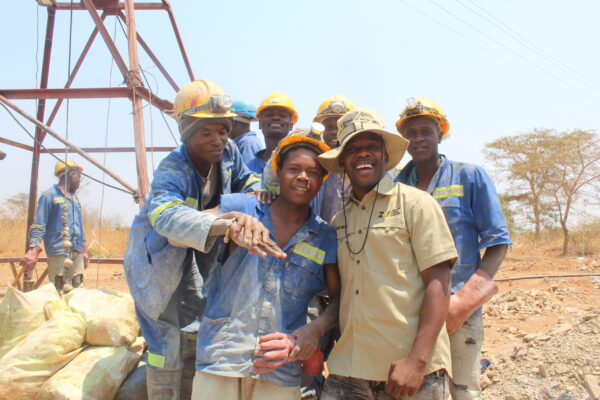
Speaking during a recent media dialogue hosted by Planet Gold Zimbabwe, the organisation’s ASGM Technical Specialist, Mollyn Siwella, said that while the Bill represents a progressive step toward updating the outdated Mines and Minerals Act of 1961, it overlooks key issues affecting small-scale miners, who now contribute more than 60 percent of the country’s gold output.
“The Bill does not adequately reflect the operational, economic, and social realities of artisanal miners,” Siwella explained. “It doesn’t speak directly to the artisanal element of the sector, yet this is where much of the country’s gold production comes from.”
Siwella noted that the Bill’s demand for upfront compliance could push many miners further into informality rather than bringing them under regulation.
According to a recent Planet Gold Zimbabwe study, ASM operators indicated that the formalisation process remains complex, costly, and poorly aligned with their daily realities. Many miners cited overlapping statutory requirements, long approval delays, and excessive compliance costs as major deterrents to joining the formal economy.
In light of these findings, the stakeholders called for a phased formalisation model supported by financial assistance, technical training, and improved market access to help build the sector’s capacity and unlock its full potential.
Siwella added that inefficiencies within the current system create barriers to formalisation, undermine environmental protection, and reduce accountability in the sector.
Another major concern raised by Planet Gold Zimbabwe is the Bill’s silence on mercury use, despite Zimbabwe being a signatory to the Minamata Convention on Mercury — a global treaty aimed at protecting human health and the environment from mercury pollution.
“Given Zimbabwe’s international obligations under the Minamata Convention, we had expected the Bill to include clear provisions on mercury reduction, including incentives and technical support for the uptake of safer processing technologies,” said Siwella. “This was a missed opportunity.”
Planet Gold Zimbabwe is implementing a five-year initiative to reduce mercury use by nearly five tonnes within the ASM sector. Research by the organisation shows that about 96 percent of artisanal miners still rely on mercury for gold processing, with some sites using up to 100 kilograms per month.
Through partnerships with the Ministry of Mines and Mining Development, the National Metallurgical Laboratory, and the University of Zimbabwe, the project has identified 72 mine sites across 11 districts where mercury-free gold recovery technologies will be piloted. The initiative includes the establishment of both mobile and stationary demonstration plants to show that miners can recover more gold without using mercury.
“We are testing different mercury-free technologies tailored to Zimbabwe’s mining conditions,” said Siwella. “The goal is to show that clean mining is not only safer for people and the environment but also more profitable.”
Planet Gold is also developing a Mining Academy to train artisanal miners in financial management, technical skills, and sustainable practices.
Upcoming research will focus on tracking mercury supply chains, examining how mercury enters and circulates within Zimbabwe, and exploring incentives for gold buyers to pay a premium for mercury-free gold.
Siwella said these initiatives are meant to complement policy reform, but they can only succeed if the legislative framework recognises the ASM sector as a legitimate and vital part of Zimbabwe’s mining economy.
“Formalisation should not be about punishment or exclusion,” she said. “It should be about building capacity, protecting livelihoods, and ensuring that Zimbabwe’s gold is produced responsibly.”
As stakeholders await the implementation of the new law, Planet Gold Zimbabwe says it will continue advocating for an inclusive framework that bridges the gap between policy intentions and miners’ lived realities, ensuring that formalisation, environmental protection, and cleaner technologies move forward together.

