



Another dark cloud has hung over Mazowe District following the death of six artisanal miners at Starlake Mine on Friday, adding to the mounting number of mining-related tragedies in the area, Mining Zimbabwe can report.
By Rudairo Mapuranga
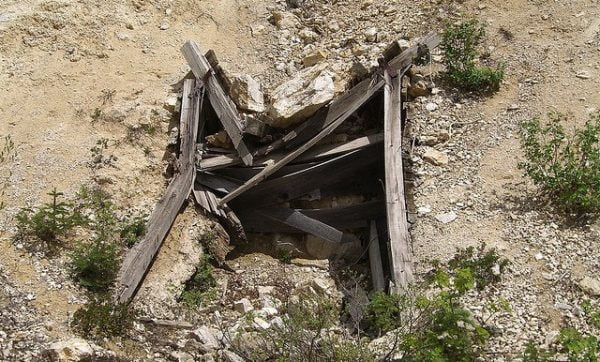
The accident, confirmed by the Zimbabwe Republic Police (ZRP), occurred around 10:00 AM when a hoist used to extract miners from a 45-metre-deep shaft snapped, sending the bucket hurtling downwards with its human cargo. Four miners died instantly, while two others died shortly after admission at Concession District Hospital. Four more sustained injuries.
The deceased—Sebastian Dzaingwa (33), Tawanda Nyandoro (41), Edger Magenya (30), Milton Trust Ngonzwe (25), Elvis Kasaira (38), and Abel Majangara (25)—hailed from villages as far apart as Sanyati, Gokwe, Kwekwe, Nyanga, Mutoko, and Buhera. These were men who left their homes to seek a livelihood underground but returned in body bags. Their deaths, as with many others in recent weeks, highlight an industry that continues to thrive at the cost of human life.
Just days before this incident, two men were killed at Kwayedza Investments Mine, also in Mazowe, when an explosion erupted while they sat beside a fire to keep warm on a bitterly cold winter night. One man died on the spot; the other succumbed to his injuries at Concession Hospital. Police are still investigating the cause of the blast.
If that wasn’t enough, three more miners perished at Jumbo Mine—again in Mazowe—after the shaft they were working in collapsed, trapping and crushing them. Their colleagues and police retrieved their bodies hours later. No names were released, but the community’s collective grief has been loud and continuous.
Mazowe is no longer just a mining district—it’s become a death zone for Zimbabwe’s artisanal and small-scale miners. The tragic trio of incidents—at Starlake, Kwayedza, and Jumbo Mines—reveals a bitter truth: we are normalising preventable deaths in the name of gold.
There’s a pattern here: collapsing shafts, faulty hoists, unregulated explosives, and nonexistent safety protocols. Each new body pulled out of the ground is met with official condolences and temporary murmurs of outrage, only for the mining operations to resume without consequence. It’s a vicious cycle. The mines keep running. The profits keep coming. And the miners keep dying.
Most of these mines operate under rudimentary and dangerous conditions. Safety isn’t just lax—it’s often nonexistent. The equipment used is outdated. The hoisting systems are makeshift. Explosives, in some cases, are stored and used in total violation of safety protocols. Ventilation is poor. Training is minimal. And regulatory oversight? A ghost.
The Ministry of Mines and Mining Development, together with agencies like the Environmental Management Agency (EMA), must shoulder part of the blame. While there’s been an uptick in efforts to formalise the artisanal mining sector, enforcement of safety protocols has lagged behind. The tragedy at Starlake Mine, in particular, exposes a failure to enforce basic mechanical and structural standards in shaft mining.
For every mining fatality reported, dozens more go undocumented in the chaos of the bush. In Mazowe, miners speak in hushed tones about colleagues buried in unmarked graves after failed rescue efforts. The ones lucky to escape with injuries usually return underground within days—driven by poverty, desperation, and the fear of starving more than dying.
“We are dying trying to survive,” one miner at Jumbo said. “These are not just accidents. They are avoidable deaths.”
His words echo louder than ever.
Civil society organisations and mining unions have started to raise their voices, demanding immediate action. Some are calling for the Ministry to suspend mining operations at any site where safety protocols are not being followed. Others are urging a full district audit of small-scale mining operations—particularly those relying on vertical shafts, hoists, or on-site explosives.
Funerals are being planned across the country—from Buhera to Kwekwe, from Nyanga to Mutoko—as families bury their loved ones. These are not just miners; they are breadwinners, parents, sons, and husbands whose only mistake was chasing Zimbabwe’s minerals with their bare hands and hopeful hearts.
Their deaths demand more than just mourning. They demand change.
How many more shafts must collapse before someone is held accountable? How many more explosions must rock the night before safety becomes non-negotiable? How many more Starlake Mines, Jumbo Mines, and Kwayedza Mines must take lives before government, mine owners, and regulators wake up?
Mazowe is bleeding. The time for condolences has long passed. What we need now is accountability, enforcement, and a renewed national commitment to protecting the lives of miners—before the earth swallows more sons.

