

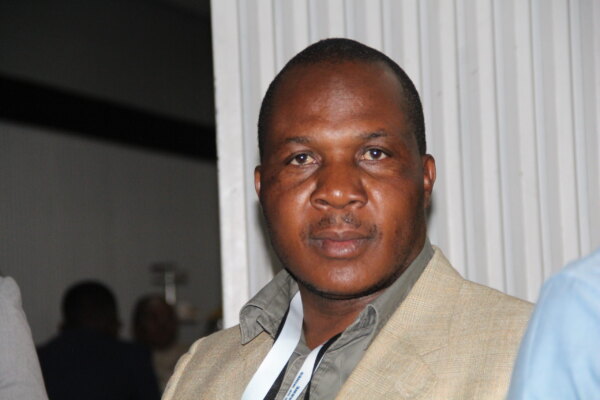

Junior Chamber of Mines of Zimbabwe Secretary General Dosman Mangisi has challenged SADC governments to move beyond exporting raw minerals and build regional value chains capable of turning the bloc’s mineral wealth into industrial development, Mining Zimbabwe can report.
By Rudairo Mapuranga
Mangisi made the call on Wednesday during the MSU–SADC ASM Mining Symposium being held at Midlands State University in Gweru from September 23 to 25, where he presented on “Economic Development and Mining Value Chains.”
He argued that while SADC countries possess significant deposits of critical and strategic minerals, the region continues to capture only a limited share of the economic value generated after those minerals leave the ground.
“SADC is richest in minerals but poorest in benefits,” Mangisi said, arguing that the region must develop the capacity to process, refine and manufacture products from its own mineral resources.
He cited figures in his presentation showing that SADC accounts for substantial shares of global platinum, cobalt, gold, manganese, chrome and lithium resources, but said much of the region’s mineral production continues to leave the continent in relatively unprocessed form.
Mangisi used Zambia’s copper industry to illustrate the problem, noting that despite the country’s significant copper resources, it still imports copper wires from China.
For him, the challenge is therefore not simply increasing mineral production, but ensuring that more of the value created along the mining chain remains within the region.
“SADC will remain a quarry without beneficiation. With beneficiation, we become a factory,” he said.
Mangisi called for SADC countries to develop regional rather than purely national value chains, arguing that individual countries may not possess all the resources, infrastructure, markets and technical capacity required to establish complete mineral-to-product industries on their own.
He also called for investment in reliable power and infrastructure, skills development and financing for artisanal and small-scale miners, alongside measures to discourage the export of unprocessed minerals.
The presentation placed ASM within a much broader economic value chain, covering exploration, mine development, extraction, processing, beneficiation, refining, marketing and mine rehabilitation.
Mangisi said value can be created or lost at each stage, making it important for governments to develop policies that enable local businesses and mining communities to participate beyond the extraction stage.
He also highlighted the economic contribution of mining in the region. Citing figures presented at the symposium, Mangisi said diamonds account for a significant share of Botswana’s economy and exports, while mining contributes substantially to Zimbabwe’s economy and gold remains a major source of export earnings.
He said ASM in Zimbabwe also supports hundreds of thousands of livelihoods directly and indirectly, underlining the need for the sector to receive greater access to skills, technology, finance and formal markets.
Mangisi pointed to infrastructure associated with major mining operations, including developments around Unki, Mimosa and Hwange Colliery’s Dinson Cement Road, as examples of how mining investment can generate wider economic activity.
However, he cautioned that mineral wealth and mining investment do not automatically translate into development for surrounding communities, pointing to the experience of Marange as an example of unmet expectations.
The regional beneficiation question, he said, should ultimately be viewed through the products that mineral resources can support.
Using the Ford T6 as an illustration, Mangisi argued that minerals produced in SADC can ultimately form part of sophisticated manufactured products that are imported back into the region at substantially higher values.
His argument was that the region should not remain primarily a supplier of the raw materials required by industries elsewhere while importing the finished products those minerals help produce.
The MSU–SADC ASM Mining Symposium, organised by Midlands State University and the Open Society Foundation, has brought together policymakers, academics, miners, financiers, civil society organisations and development partners to examine ways of strengthening artisanal and small-scale mining across the region.
Discussions are focusing on sustainable capacity building and the role of ASM in the development of critical mineral supply chains, including lithium, nickel, chrome, copper and cobalt.
For Mangisi, the central challenge is now to ensure that SADC’s mineral endowment becomes the foundation for processing, manufacturing, jobs and broader industrial development rather than simply a source of raw materials for external markets.