



Mining companies have been urged to involve laboratories in their operational planning to avoid capacity constraints, unpredictable analytical costs and delays in obtaining results critical to exploration and production decisions, Mining Zimbabwe can report.
By Rudairo Mapuranga
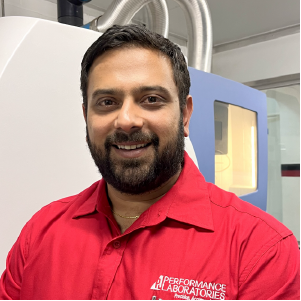
Speaking at the Association of Mine Managers of Zimbabwe (AMMZ) 54th Annual Conference and AGM in Nyanga, Performance Laboratories Managing Director Kiran Desai said mines often plan production volumes, equipment requirements and workforce needs without giving laboratory services the same level of attention.
He argued that laboratories should be treated as strategic operational partners rather than service providers brought in only when samples are ready for testing.
“Every mine manager in the industry manages the balance between time, cost and quality. You want faster decisions, you want lower costs, and you want high-quality outcomes,” Desai said.
“My message today is quite simple. The mining industry can achieve better turnaround times, competitive pricing, and high-quality analytical data—but only if laboratories are brought into the planning room.”
Desai said the volume and timing of samples expected from mining and exploration programmes should be communicated to laboratories in advance, allowing them to plan staffing, equipment availability and testing requirements.
For exploration companies, timely assay results are important in interpreting drilling results and determining subsequent exploration priorities. In operating mines, reliable analytical data supports resource evaluation, metallurgical assessments and decisions on ore processing.
He said the laboratory sector faces many of the same planning challenges as mining operations, particularly when demand fluctuates unexpectedly.
Capacity Cannot Be Expanded Overnight
Desai warned that laboratories cannot immediately accommodate significant increases in sample volumes or introduce new testing capabilities without advance preparation.
Expanding capacity can require additional analytical instruments, recruitment and training of personnel, method development, validation and accreditation, a process he said typically takes three to six months.
“When significant work arrives unexpectedly, and unfortunately that is the situation we find ourselves in today, only three things can happen. Either time is affected, or cost is affected, or the forbidden one, quality is affected. And nobody in this room wants to see any of those outcomes,” he said.
The challenge, according to Desai, is that laboratories must maintain the same balance of turnaround time, cost and analytical quality expected by their mining clients, despite fluctuations in demand.
Advance communication of exploration schedules, anticipated sample volumes and required analytical methods would therefore allow laboratories to allocate resources more effectively and provide greater certainty on service delivery.
A More Collaborative Approach
Desai called on mining companies to extend the same planning discipline and contractual engagement they apply to mining contractors to their laboratory service providers.
“Treat your laboratory partner the same way you treat your mining contractor,” he said. “You are all doing planning.”
Performance Laboratories, established in Ruwa in 2011, provides commercial assay and analytical testing services and holds ISO 17025 accreditation through SANAS and SADCAS.
Desai said the company was working towards providing accredited analytical results, sustainable pricing and a turnaround time of 10 working days, although achieving this would require a six-month implementation period.
“Quality accredited results, sustainable pricing, and a turnaround time of ten working days. Give us six months to implement this,” he told delegates.
The proposed turnaround time represents a service commitment the company intends to implement, with its delivery dependent on the capacity and planning adjustments outlined in his presentation.
The discussion highlighted the importance of aligning technical service providers with mine operational schedules as Zimbabwe’s mining industry expands its exploration and production activities.
The AMMZ conference, held under the theme “From Time to Performance,” brought together mine managers and industry service providers to examine ways of improving operational efficiency and performance across the mining sector.