

Home Blog Page 11

Mutapa to Develop Elvington Mine to Former Production Glory Through Phased Strategy

0

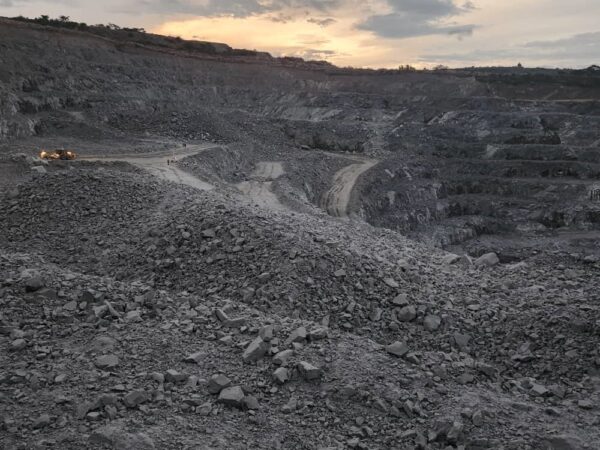
In an effort to develop the country’s former mines to their former glory and unlock Zimbabwe’s underground wealth, Mutapa Gold Resources is implementing a pragmatic and phased strategy for the historic Elvington Mine in Chegutu, transitioning the asset from a site of informal mining activity into a future cornerstone of formal, large-scale production, Mining Zimbabwe can report.

By Rudairo Mapuranga

Outlining the plan at the Kuvimba Mining House (KMH) press conference, which saw the end of KMH, Mutapa Gold Resources CEO Trevor Barnard detailed a unique transitional model currently in place.

“We’re running on the basis of a contract mining agreement where we’re supporting the artisanal miners that are there at the moment,” Barnard stated.

He said it is an equitable structure between Mutapa, the company responsible for processing, and the artisanal miners.

“All the gold that they’ve produced is then split equitably between ourselves, them, as well as the processor. And that gold all goes through the selling through Fidelity.” This ensures immediate, legal revenue generation for all parties and the state while maintaining order.

According to Barnard, this interim partnership paves the way for a significant long-term investment.

“Our long-term plan with Elvington obviously is to develop that mine to its former production capacity again,” Barnard confirmed. However, this major undertaking is strategically placed within Mutapa Gold’s broader project pipeline.

Barnard clarified the sequence: “Our project pipeline is first of all Shamva. As soon as Shamva is well on the go, then we’ll follow up with the development of Jena. Those two will run to an extent concurrently, and then once those are operational, it’s then to take the next step and develop Elvington to its full extent.”

This phased approach is rooted in the mine’s geology. Barnard noted that while artisanal miners work near the surface, “the main portion of Elvington’s resource is actually sitting underground below where the artisanal miners can actually access. And that’s our focus for the future.”

This move by Mutapa Gold Resources represents an intelligent and necessary evolution in managing complex legacy assets. Historically, Elvington has been a flashpoint, suffering from illegal incursions that led to safety hazards and operational standstills. Previous strategies often veered towards confrontation, attempting to forcibly clear such sites.

Mutapa’s genius lies in its three-stage model:

  1. Formalisation & Stability: The contract mining agreement avoids conflict, formalises informal activity, injects immediate capital into the local economy, and secures Mutapa’s operational control and social licence on the ground.

  2. Revenue Generation & De-risking: The model turns a liability into a cash-flow-positive asset. The revenue from the shared gold sales helps fund care, maintenance, and preliminary work, de-risking the future major investment.

  3. Strategic Sequencing: By placing Elvington’s full-scale development after Shamva and Jena, Mutapa ensures it can deploy concentrated capital and management focus when the time is right, without overextending its resources.

This strategy underscores the effectiveness of Mutapa Investment Fund’s new vertically focused structure. Mutapa Gold Resources can apply specialised expertise to navigate the unique challenges of reviving gold assets, turning a historically problematic site into a planned engine of future growth and formal employment.

Mimosa Production Declines 5% in First Half of FY 2026 on Power, Ore Challenges

0

Zimbabwe’s second-largest platinum group metals (PGM) producer, Mimosa Mining Company, has reported a 5 per cent decline in 6E concentrate production for the six months ended 31 December 2025, attributing the drop to intermittent power interruptions and increased processing of challenging ore types, Mining Zimbabwe can report.

By Rudairo Mapuranga

According to a production update released by its major shareholder, Impala Platinum Holdings Limited (Implats), Mimosa’s output fell to 123,000 ounces for the first half of its 2026 financial year. This performance reverses the positive momentum from the comparable period in 2024, which saw a 5 percent year-on-year increase to 122,639 4E ounces.

The half-year result consolidates a challenging start to the financial year, following a reported 6 percent production dip in the first quarter (July–September 2025). The primary causes remained consistent throughout the period: processing instability due to unscheduled power cuts and lower recoveries associated with treating higher volumes of oxidised ore as mining advances toward the extremities of the orebody.

This decline marks a significant shift from Mimosa’s performance in the 2024 calendar year, where strategic plant optimisations drove an 8 percent quarterly production boost and positioned the mine as a global low-cost producer. The current challenges highlight the vulnerability of even the most efficient operations to Zimbabwe’s infrastructural constraints and natural orebody progression.

“The recent results underscore a persistent dichotomy for Mimosa,” noted a local mining analyst. “The mine has demonstrated world-class efficiency through its optimisation projects, but these gains are being systematically eroded by external power instability and internal geological factors. The increased oxidised ore is a finite mining challenge, but the power issue is a recurring tax on productivity.”

The 5 percent half-year production drop has tangible economic ramifications. Based on recent basket prices, the lost output likely represents several million dollars in unrealised export earnings for Zimbabwe. As a major foreign currency earner, Mimosa’s performance directly impacts national revenue.

The operational setbacks at Mimosa occur against a fragile global PGM pricing environment. While platinum has found some support from industrial and hydrogen economy applications, palladium and rhodium prices remain under severe pressure due to the accelerated adoption of electric vehicles and thrifting in the automotive sector. This low-price environment amplifies the financial impact of production declines, squeezing producer margins and making cost control and operational stability paramount.

Despite the current headwinds, the joint venture between Implats and Sibanye-Stillwater is expected to continue leveraging its low-cost base and completed capital projects, such as the new tailings storage facility, to navigate the difficult period. The focus will remain on mitigating the impact of oxidised ore through metallurgical adjustments and pursuing possible interim solutions to power reliability.

For Zimbabwe’s mining sector, Mimosa’s experience reinforces the urgent need for permanent solutions to the national power crisis. As global markets demand consistent and cost-competitive supply, the country’s ability to address its infrastructural deficits will be a critical determinant of its future share in the global PGM industry.

Gold buying prices in Zimbabwe per gram/ ounce, 10 February 2026

0

Gold buying prices in Zimbabwe per gram/ ounce, 10 February 2026, from the official gold buyer and exporter Fidelity Gold Refinery (FGR).

1 oz = 31.1035 g

Here you go — converted neatly into USD per troy ounce (oz) using 1 oz = 31.1035 g.

CategoryPrice ($/g)Price ($/oz)
SG 90% and above152.894,755.71
SG 85% and above but below 90%151.274,705.40
SG 80% and above but below 85%149.664,655.09
SG 75% and above but below 80%148.044,604.78
Sample 5g and above but below 10g145.614,529.19
Fire Assay CASH153.704,781.07


Note: The Fire Assay cash price applies to gold above 100g, with no sample deduction.

A sample of not more than 10g is deducted for the Fire Assay Transfer price.

Full House at the Caledonia Mining-Hosted Zimbabwe Mining Forum in Cape Town

0

Cape Town — A packed hall attendance marked the Caledonia Mining-hosted Zimbabwe Mining Forum in Cape Town, underscoring strong interest in Zimbabwe’s mining sector on the sidelines of the Investing in Africa Mining Indaba.

Held at the Radisson Collection Hotel on the V&A Waterfront, the high-level forum brought together senior government officials, mining executives, financiers, and investors for a focused discussion on opportunities, policy direction, and the realities of doing business in Zimbabwe’s mining industry.

Opening the session, Caledonia Mining Executive Director Victor Gapare welcomed delegates and highlighted the importance of candid engagement between government and industry at a time when Zimbabwe is repositioning itself as a competitive mining destination.

The keynote address will be delivered on behalf of the Minister of Mines and Mining Development, Honourable Dr. Eng. Polite Kambamura, in absentia, who is expected to outline government priorities around mineral exploration, value creation, and investment facilitation. His speech is expected to outline the administration’s commitment to restructuring the mining sector to support sustainable growth and improved investor confidence.

Permanent Secretary in the Ministry of Finance, Economic Development and Investment Promotion, George Guvamatanga, will follow with remarks on macroeconomic reforms and fiscal discipline, stressing the role of mining as a cornerstone of Zimbabwe’s economic recovery and long-term development agenda.

A lively panel discussion titled “Zimbabwe Mining: Perception vs Reality” will form the centrepiece of the forum. Chaired by Gold Fields Non-Executive Director Michael Rawlinson, the panel featured senior industry leaders including Caledonia Mining CEO Mark Learmonth, Zimplats CEO Alex Mhembere, Mimosa Mining Managing Director Fungai Makoni, Valterra Platinum’s Colin Chibafa, Karo Mining Holdings Managing Director Bernard Pryor, and Kavango Resources’ Alex Gorman.

Panellists are expected to address investor concerns ranging from policy consistency and infrastructure to capital availability and operational performance, while also highlighting success stories and ongoing expansions across gold, platinum, and base metals operations in Zimbabwe.

The extended question-and-answer session is also expected to reflect strong engagement from the audience, with delegates probing regulatory reforms, project pipelines, and opportunities for new capital deployment.

The full house at the forum sent a clear signal that Zimbabwe remains firmly on the radar of global mining investors. With government and industry leaders presenting a unified message in Cape Town, the Caledonia Mining-hosted event reinforces Zimbabwe’s push to reset perceptions and position itself as an open and investable mining jurisdiction.

Mutapa Investment Fund Courts Global Capital Following Landmark Mining Restructure Policy and governance tone

0

The Mutapa Investment Fund (MIF) has descended on the Investing in Africa Mining Indaba in Cape Town armed with a restructured portfolio and a direct invitation to global capital, framing its participation as a decisive break from past models, Mining Zimbabwe can report.

By Rudairo Mapuranga

The sovereign wealth fund’s Chief Investment Officer, Simba Chinyemba, confirmed the high-level delegation’s plans, stating their intent to pursue partnerships and project financing with a newly streamlined and focused corporate architecture.

“It’s not just the world, but Zimbabwe is also descending to the Mining Indaba,” Chinyemba said, emphasising the coordinated national effort. “If you are interested in investing in Zimbabwe, Zimbabwe is open for business. We will be there. Come, let us talk, and we will present the projects and the potential investments that are available in our country.”

This invitation follows the Fund’s landmark decision to dissolve its legacy holding structure, epitomised by Kuvimba Mining House, and reorganise its mining assets into five distinct, commodity-specific verticals. The move, described as the most significant strategic shift in Zimbabwe’s state-linked investment landscape in a decade, is designed to eliminate inefficiencies, sharpen management focus, and align with global best practices to attract investment.

Chinyemba explained that the delegation will showcase a mix of advanced and new ventures. “These projects, some of them we already have partners, but some of them we are looking for financing,” he noted. “We will be speaking to various investors who are interested in investing in Zimbabwe.”

Gone is the previous “spiderweb of various entities,” as Chinyemba termed it. In its place, MIF has established five dedicated verticals, each with appointed leadership:

  • Mutapa Gold Resources, led by CEO Trevor Barnard
  • Mutapa Base Metals, led by CEO Godwin Gambiza
  • Mutapa Energy Minerals, led by CEO Innocent Rukweza
  • Mutapa Platinum Group, led by CEO Munashe Shava
  • Mutapa Frontier, dedicated to rare earths and strategic minerals (CEO to be announced)

“This is neither unique nor experimental,” Chinyemba stated, citing global giants like Rio Tinto and BHP. “It simply reflects how the world’s leading mining houses organise themselves to be effective, accountable, and aligned with long-term shareholder outcomes.”

The restructuring is the cornerstone of MIF’s 2026 FIRE strategy — Fix, Revive, Strengthen, and Extract value. By creating specialised verticals, the Fund aims to tailor capital allocation and technical oversight to the unique cycles of each commodity, from gold and platinum to lithium and coal.

To deepen engagement at Indaba, Mutapa will co-host a dedicated symposium with the Ministry of Mines and Mining Development. This side-event will drill down into specific sector opportunities.

“We will speak a lot more around the specific opportunities that are available in Zimbabwe,” Chinyemba added.

The combined presence of the restructured sovereign fund and the Ministry signals a coordinated national strategy to attract mining investment. The clear message is that the Mutapa Investment Fund now offers international partners a more transparent, focused, and professionally managed gateway to Zimbabwe’s mineral sector, which is pursuing ambitious growth under the National Development Strategy 2 (NDS2).

The Fund’s final word to the global mining finance community was an unequivocal call to action: “So if you are an investor, see you in Cape Town next week.”

Gold buying prices in Zimbabwe per gram/ ounce, 9 February 2026

Gold buying prices in Zimbabwe per gram/ ounce, 9 February 2026, from the official gold buyer and exporter Fidelity Gold Refinery (FGR).

1 oz = 31.1035 g

Here you go — converted neatly into USD per troy ounce (oz) using 1 oz = 31.1035 g.

CategoryPrice ($/g)Price ($/oz)
SG 90% and above152.084,730.61
SG 85% and above but below 90%150.484,680.85
SG 80% and above but below 85%148.874,630.78
SG 75% and above but below 80%147.264,580.71
Sample 5g and above but below 10g144.844,505.23
Fire Assay CASH152.894,755.81

P

Note: The Fire Assay cash price applies to gold above 100g, with no sample deduction.

A sample of not more than 10g is deducted for the Fire Assay Transfer price.

Critical Analysis of the Mines and Minerals Bill 2025

0

After taking a deep insight into the gazetted Mines and Minerals Bill, I shall be writing, in series, the said analysis, bordering both on the policy perspective and clause-by-clause analysis.

i. To begin with, the amendment of the Bill has taken so much time and state financial resources without a tangible return for several years (value for money concept). It would be noble that the provisions of the Bill that are too contentious be set aside for further debate, while those that are progressive are retained and the amendments proceed. Some things that have been recycled in the series of Bills are gradually being overtaken by technological advancement, and no one is taking notice. There are key areas such as taxes and farmer–miner issues that cannot wait in abeyance for another five (5) years or so, waiting for an opportunity for a perfect Bill to come by.

ii. The second issue is the absence of a national mining policy. We will continue to be a reactionary nation instead of planning ahead and learning from other jurisdictions. A national policy belongs to the nation, and we determine what constitutes the mining policy, but to remain without a policy altogether is nothing but detrimental to the growth of the mining sector and the economy. The mining policy would give a general sense of certainty as it relates to investment, a clear integrated roadmap with other local administrative structures, and value addition and beneficiation strategy.

iii. Besides the proposed Cadastral system, the provisions of the Bill do not seem to cater for new innovations and the evolution of technology, for example, airborne exploration. There has to be a clear embracing of new technology and also applicable restrictions. Casting a blind eye while technology is advancing will only place us in a reactionary mode without any legal basis to enforce restrictions, compel the release of information, or impose penalties, because without a doubt there are some components of illegal airborne exploration happening around the globe. A balance between embracing and restricting airborne surveys must be clearly spelt out in the current Bill.

iv. There is a need for clarity as to the roles of the PMD and the Mining Cadastral Registrar. Lessons learnt from other jurisdictions show that the current PMD title is absorbed as the Cadastral Registrar, who works with the support of other technical personnel, including ICT. The Cadastral Registrar is the actual issuer of titles that fall under his or her jurisdiction and refers other applications to the relevant issuing authorities. It is not possible to have both the Cadastral Registrar and PMD. The Registrar does not have to be an ICT person, but purely an administrator with support staff. This person reports to the Secretary.

The system is automated on a first-come, first-served basis. If compliance requirements are met and, according to the computerised system, the ground is open to pegging and prospecting, the applicant should get the licence without any hassles. The computer will recommend issuance, and the Cadastral Registrar will sign and upload the certificate. There is no basis for having both PMD and Cadastral Registrar. It is also disastrous to suggest that the Secretary becomes the Cadastral Registrar. Inasmuch as the Secretary cannot be the PMD or a Mining Commissioner (as they were previously known), the Secretary cannot be the Cadastral Registrar.

The Cadastral system is the movement from the use of paperwork to uploading the said paperwork into soft-copy versions, creating a platform where all users can interface with the dashboard and track applications. The computerised system blocks ground not open to pegging and automatically rejects applications over ground that is already occupied. If it is a reservation, the computer will advise, and the Registrar, through his or her team, will refer the application to the relevant issuing authority. If a block is overdue for payment of levies or licence renewal, the dashboard will report this and an automated abandonment will be recorded after the prescribed grace period has lapsed.

There is nothing in the digitalisation process that requires the Secretary to become the Cadastral Registrar. Zimbabwe would be the first country with such a setup. Further, the post simply requires someone with administrative capabilities, not necessarily an ICT technical expert. The critical role ICT plays is to ensure that the system is effectively maintained and always operational, not to evaluate submitted documents, assess compliance, or sign off mining licences. Once coordinates of registered blocks, reserved areas, and special features such as rivers and game parks are entered into the system, there is no further role for ICT beyond system maintenance and monitoring.

v. As it stands, PMD is already issuing titles even under the present Bill, while the Secretary issues a certain class of Special Grants and plays a key oversight role, with powers to correct mistakes made by the PMD. This should continue under the computerised system. Currently, despite the PMD having powers to administer the Act, the Secretary remains the custodian of the Act, balancing administrative issues and liaising with the political executive arm, being the Minister’s office. The Secretary remains the Accounting Officer and has, for all these years, been accountable for the actions taken by officials, albeit under manual systems. The Cadastral Registrar remains a subordinate of the Secretary (for example, in the court system, neither the Chief Justice nor the Secretary for Justice is the Registrar, even after the introduction of IECMS). Role clarity should be considered more seriously than mere title designation.

The general expectation was that the proposed Bill would tackle some of the real issues fuelling mining disputes, beyond merely realigning sections.

vi. Issues around the resurrection of forfeited or old blocks by some registered prospectors (peggers) and individuals with financial muscle, with the assistance of some officials, remain problematic. There are several court cases against registered peggers who register blocks to unsuspecting prospective miners. These peggers either provide incorrect coordinates and later register the block in their own names or to third parties at a price. Some peggers demand exorbitant amounts outside agreed service payments; failure to comply may result in the pegger creating a mining dispute, either as a boundary issue or complete ownership issue, after resuscitating an ancient block.

vii. The proposed Bill, instead of repeating the same forfeiture terms provided in the current Act—which are clearly not working—should have introduced a practical solution. Unfortunately, when the claim holder goes to court, the onus is placed on the miner to prove forfeiture by supplying a forfeiture notice. This is often impossible because the notice is the property of the Ministry, placed on a notice board and removed only by the Ministry. It is also often impossible for the Ministry to release forfeiture notices, especially where there is connivance. Additionally, due to manual record-keeping, documents are misplaced over time, or locating them becomes too burdensome for officials.

This leaves the title holder with nothing to support the claim except a certificate or licence clearly endorsed as a “re-peg.” In court, the Ministry of Mines is not compelled to explain why the certificate is so endorsed. In most cases, the claim holder loses on technical grounds.

Proposal
Introduce automatic abandonment for failure by any registered miner to pay for inspection certificates, which form the basis of keeping licences current. This removes the obligation on the Ministry to issue forfeiture notices. It would also eliminate claims that blocks registered decades ago remain current without activity or ownership claims until profits emerge. Courts should require the Ministry to prove inspection fee payments and inspection reports for previous years and address compensation for new title holders who invested in good faith.

Mining should be considered a business at all production levels, and each miner must ensure their licence remains current. Failure to do so within the prescribed period should be deemed abandonment, and mining rights automatically cancelled. This position will be reinforced by the Cadastral system, which automatically flags non-compliance and opens blocks to pegging after grace periods lapse.

viii. It takes too long for the Ministry of Mines to conduct pre-registration and confirmation surveys due to lack of resources. This results in overlapping applications, especially in provinces where the Cadastral system is ineffective or electricity is unavailable, allowing later applications to overtake earlier ones.

Proposal
The Bill should provide for miners to make payments for travel costs. Officials are currently hesitant to accept fuel payments, yet the status quo renders the Ministry ineffective and leads to wasted time resolving disputes or attending court.

ix. Internal dispute resolution processes should have been addressed more extensively. Currently, appeals presided over by the Minister are limited to those under section 50 of the Act. Many disputes require review mechanisms. Ministerial intervention, supported by technical staff, can resolve disputes faster than prolonged court processes that often return matters to the Ministry. Courts rely heavily on PMD submissions, which may not always be accurate. An internal review process would improve reliability and reduce court congestion.

Proposal

  1. Formally establish a dispute hearing committee in the Bill to advise the Minister.
  2. Properly constitute the committee with competent persons, including outsourced expertise if necessary.
  3. Provide for changing technical teams during field investigations, including private surveyors paid by interested parties, subject to Ministry notification.
  4. Create a register of approved survey companies as alternatives to registered peggers.
  5. Remove section 345(1) of the current Act, which allows parties to deny provincial court jurisdiction without cause.
  6. Re-evaluate the practice of the same PMD presiding over matters after issuing licences, except for boundary disputes. Establish a circuit court system with appropriate technical expertise.

x. Another cause of disputes is abuse of power by current or former employees with historical company information, who purport to represent companies during PMD hearings and obtain favourable orders after resuscitating old claims without current inspection certificates. Often, companies are aware that claims were forfeited, but lack direct communication from the Ministry prevents intervention.

Proposal
Require annual updates of company contact details, including directors, executives, and mine managers, ensuring hearing notices reach all relevant parties. Representation should require a signed resolution, failing which claims are deemed unauthorised.

xi. The progressive provision restricting EIA certificates to operationalised licences should be acknowledged. The previous legal position caused losses due to conflicting statutory requirements. The new provision addresses this gap.

xii. Farmer–miner conflicts remain contentious. While the Bill extends protections, several issues persist.

Proposal

  1. Clarify limits on mining activities within farms based on size.
  2. Cap the number of miners per farm unless consent is obtained.
  3. Gazette minimum compensation payments.
  4. Adopt best practices from other jurisdictions.
  5. Merge new Bill proposals with existing Part V provisions.
  6. Restrict unreasonable withholding of consent and clarify state intervention mechanisms.
  7. Recognise judicial precedents reserving portions of farms for consent-based mining.

xiii. Inspections based on works rather than payments require clarity. Mining differs from farming; not all blocks can be worked simultaneously. Definitions of “works” must be clearly articulated to avoid arbitrary cancellation.

Proposal

  1. Limit claim hoarding by restricting block numbers per individual or entity.

  2. Enforce levy collection provisions already in law.

  3. Allow the Ministry to retain a portion of generated income for inspections and verification.

xiv. Converting Special Grants into mining leases requires ensuring original reservation purposes no longer apply.

xv. Clause 3(2) should clarify that issuance of mining titles does not confer land ownership or rights to erect permanent structures without landholder consent.

xvi. Clause 4(1) lacks definitions such as “work” and “Cadastral System.” Approved cultivation schemes should include board oversight. The clause requires review for missing details and critical definitions.

xvii. To be continued – Part 2 in the making.


This document is the intellectual property of the author and may not be used, in whole or in part, without her consent. Authored by Thammary Brenda Vhiriri, a legal practitioner with extensive experience in the mining sector and land issues, having worked for the Ministry of Mines and the Zimbabwe Land Commission as Legal Counsel.
Contact: +263 772 979 277 | [email protected]

Mining Indaba: A Missed Golden Opportunity to Market Zimbabwe’s Tourism Potential

0

The largest mining investment event on African soil, Mining Indaba, is here. It is a globally renowned event that brings together mining investors from across the globe, generating millions for the local economy and life-changing deals that see the emergence of new players and the boosting of already established or struggling ones.

Zimbabwe’s progressive mining players have also gone all out. Mines like Caledonia, Karo and Freda Rebecca participate in the Mining Magazine to be distributed at the event with the Minister of Mines and Mining Development, Dr Polite Kambamura, set to present Zimbabwe’s mining potential to a global audience.

Whilst the event may seem to be only mining-focused, it also presents a five-star opportunity to market Zimbabwe’s tourism potential to a global audience.

With the country being home to the Seventh Wonder of the World, this was a big opportunity for the Zimbabwe Tourism Authority and many in the hospitality sector to showcase what the country has to offer to a very financially sound audience.

Attendees at Mining Indaba include Conglomerate shareholders, directors, chief executive officers, mine owners, engineers, decision makers in the mining manufacturing industry and services, in a nutshell, people who potentially run and are actively involved in the operations of million-to billion-dollar companies. These are people who have real money to spend, so taking advantage of the Mining Indaba was potentially going to be beneficial.

For years, the event has been happening, yet the tourism and hospitality sector seems not to notice, save for VTU Platinum, which advertised in the Mining Zimbabwe edition that will be distributed to attendees at the event.

The Zimbabwe Tourism Authority and the hospitality sector must widen their scope and monitor well-funded sectors like mining. It’s where the money is!

Actively participating in well-oiled sectors like mining will no doubt boost potential. Most people globally want to visit Victoria Falls. All they need is visibility and a nudge to inspire them via exhibition, trade publications like Mining Zimbabwe or word of mouth, and Mining Indaba holds that opportunity.

Mutapa Energy Minerals Unveils Aggressive Lithium Strategy at Sandawana: Concentrator First, Carbonates Next as Prices Rebound

0

CEO of the freshly minted Mutapa Energy Minerals has laid out a decisive, phased roadmap for the flagship Sandawana lithium mine, placing a firm bet on the metal’s price recovery and Zimbabwe’s beneficiation agenda, Mining Zimbabwe can report.

By Rudairo Mapuranga

Speaking at a Kuvimba Mining House (KMH) press conference, the CEO, Mr Innocent Rukweza, confirmed that the first critical step—the construction of a major lithium concentrator plant at Sandawana—is on track to begin within months, with a hard deadline to start building by June 2025. This move is the operational cornerstone of the broader Mutapa restructuring, which dissolved the Kuvimba Mining House model into focused verticals.

Rukweza’s outline reveals a clear, two-phase strategy aligned with national policy:

  1. Concentrate Plant (Immediate Priority): “We are hoping that before the half-year this year, around June latest, we would have started constructing a lithium processing plant which does concentrate,” he stated. This aligns with previous announcements that the US$270 million facility, with a 600,000-tonne annual ore capacity, will be built under a Build-Operate-Transfer (BOT) model with Chinese partners Zhejiang Huayou Cobalt and Tsingshan Holding Group. Commissioning is targeted for early 2027.

  2. Sulphate and Carbonates (The Strategic Leap): The ultimate goal is to move beyond concentrate to battery-grade materials. “From concentrates we go to the next stage to do lithium carbon and just battery-making material,” Rukweza said, explicitly naming lithium carbonates as part of the future plan. However, he acknowledged the complexity of the leap to sulphate, noting the government’s 2027 deadline to ban concentrate exports presents a “very difficult timeline.” Mutapa Energy Minerals will seek “a little bit of dispensation” while aggressively pursuing partners to make the full supply chain a reality. “We are very much seized with that idea,” he emphasised.

The accelerated push for Sandawana’s development is being catalysed by a favourable shift in the global market. After a brutal two-year slump that saw prices drop nearly 90%, lithium prices have shown a steady recovery since December. This rebound, driven by sustained long-term demand forecasts for electric vehicles and battery storage, validates Mutapa’s strategic timing.

Rukweza’s plan effectively rides this nascent wave. By aiming to have the concentrator operational by 2027—a date previous Kuvimba CEO Trevor Barnard directly linked to a price recovery forecast—Mutapa Energy Minerals is positioning Sandawana to capture value from an expected tighter market.

“Our forecast is that lithium prices will recover sometime in the year 2027, right at a point in time when we expect the concentrator plant to be in production,” Barnard had earlier noted.

The current price uplift adds immediate credibility and urgency to the investment.

Rukweza firmly anchored the strategy within Zimbabwe’s national development frameworks.

“We are aware of the deadline, and obviously, in line with the National Development Strategy 2 (NDS2), we need to beneficiate as much as we can,” he said.

The Sandawana project is a direct manifestation of this policy, transforming Zimbabwe from an exporter of raw ore to a producer of concentrated, and eventually refined, battery-grade material.

The project is poised to become a central pillar of the country’s Vision 2030, aiming to elevate Zimbabwe to upper-middle-income status. By controlling the entire value chain from its wholly owned national asset, Mutapa Energy Minerals seeks to ensure that the wealth generated from this strategic mineral fuels broader economic development.

With the plan firmly set, Rukweza signalled that the door is open for further collaboration. The pursuit of partners for both the concentrate and sulphate stages indicates a pragmatic approach to financing and expertise. As the mining world converges at the upcoming Investing in African Mining Indaba, Sandawana and the Mutapa Energy Minerals vertical will likely be presented as a premier investment proposition—a nationally owned, strategically timed project with a clear path to integrated battery material production.

The challenges are significant. Meeting the aggressive construction timeline, securing final regulatory and Cabinet approvals, and navigating the technical complexities of sulphate and carbonate production are formidable tasks. However, under the new, focused leadership of the Mutapa Energy Minerals vertical, freed from the old conglomerate structure, the path is clearer.

Sandawana is no longer just a mine; it is the proving ground for Mutapa’s new specialist model and for Zimbabwe’s lithium ambitions. With a concentrator rising on the horizon, lithium prices on the rebound, and carbonates in the strategic plan, Mutapa Energy Minerals is staking its claim in the global energy transition, one tonne of beneficiated material at a time.

10 Misconceptions About Investing in Zimbabwe’s Mining Sector

0

Zimbabwe’s mining industry remains one of the most misunderstood investment destinations globally. Persistent myths, often rooted in outdated policy frameworks or selective narratives, continue to shape external perceptions, sometimes overshadowing the country’s undeniable geological endowment and evolving regulatory environment.

By Kelvin Sungiso

As global demand for critical minerals intensifies, particularly those linked to the energy transition, Zimbabwe’s mining sector is once again in sharp focus. Yet investors often approach the market with assumptions that do not reflect present realities.

Below are ten common misconceptions about investing in Zimbabwe’s mining sector and why they deserve re-examination.

1. Zimbabwe’s mining sector is entirely state-controlled

While the state plays a strategic role in certain assets, the sector is predominantly driven by private and joint-venture operations. Major mines across gold, platinum, lithium, and chrome are privately operated, with legally binding investment structures and shareholder protections. Major South African companies like Impala Platinum, Sibanye-Stillwater, Tharisa and Valterra are currently doing exceptionally well in the platinum sector.

2. Foreign investors cannot repatriate profits

Mining is classified as a priority sector for generating foreign currency. Existing investment laws permit profit repatriation, dividend remittances, and offshore debt servicing, subject to standard regulatory processes.

3. Indigenisation laws still require 51% local ownership

The blanket 51% indigenisation requirement was repealed years ago. Today, mandatory local ownership applies mainly to diamonds, and even then, through negotiated arrangements rather than rigid statutory thresholds.

4. Zimbabwe’s mineral potential is largely exhausted

Zimbabwe remains significantly underexplored. Vast tracts of prospective geology—particularly along the Great Dyke and greenstone belts offer substantial upside. Lithium, platinum group metals, gold, chrome, and rare earths continue to attract exploration capital.

5. Policy changes occur without warning or consultation

While policy inconsistency has historically been a concern, recent fiscal and regulatory changes increasingly involve engagement with industry stakeholders, including the Chamber of Mines, Zimbabwe Miners Federation (ZMF) and sector-specific working groups.

6. Power shortages make mining unviable

Energy supply constraints are real, but they have not halted mining investment. Many operations rely on captive power generation, imports, or hybrid energy solutions. Renewable energy projects linked to mines are also gaining traction.

7. Only multinational corporations can succeed

Small- and medium-scale investors play a vital role, particularly in gold and industrial minerals. With the right technical expertise and cost discipline, mid-tier operators have demonstrated strong commercial viability. In fact, Small players generate 60% pf gold submissions to the country’s Refinery, Fidelity Gold Refinery (FGR).

8. Zimbabwe is closed to new mining investors

On the contrary, the government continues to actively court new investment, offering incentives such as duty rebates, capital allowances, and special economic zone benefits for qualifying projects. Investors are warmly welcomed, and with thorough exploration, successful discoveries are almost guaranteed.

9. Regulatory risk outweighs geological reward

Every mining jurisdiction carries risk. In Zimbabwe’s case, many investors weigh regulatory challenges against exceptionally high-grade deposits, shallow ore bodies, and low geological uncertainty, factors that materially enhance project economics.

10. Mining investment ends at extraction

Zimbabwe’s mining policy increasingly prioritises beneficiation and value addition. Opportunities now extend beyond extraction into processing, refining, logistics, manufacturing, and mining services, aligning with broader industrialisation goals.

Rethinking the Narrative

Zimbabwe’s mining sector is not without challenges. However, many prevailing perceptions are anchored in outdated realities rather than current conditions. For investors willing to engage with the market on its present terms, the country offers a compelling combination of scale, grade, and strategic relevance, particularly as global competition for critical minerals accelerates.

As the sector evolves under the National Development Strategy 2 and broader continental frameworks such as the Africa Mining Vision, Zimbabwe’s mining investment narrative is increasingly one of opportunity rather than exception.