Home Blog Page 152

Mutapa announces new Kuvimba board

0

Mutapa Investment Fund-owned Kuvimba Mining House (Private) Limited (KMH) has announced the appointment of a new board, with Mr Justin H. Mupamhanga retaining Chairmanship, Mining Zimbabwe can report.

By Rudairo Mapuranga

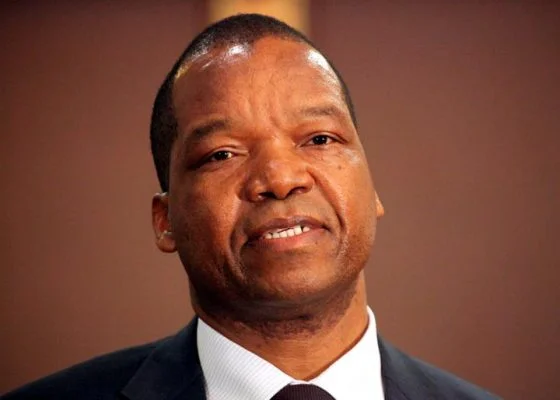
The appointments, effective October 1, 2024, were made by the Chief Executive Officer of the Mutapa Investment Fund, Dr. John Panonetsa Mangudya, as announced in the Government Gazette.

Mupamhanga and his team will serve a four-year term.

This leadership overhaul is part of Kuvimba’s ongoing efforts to strengthen its position as a key player in Zimbabwe’s mining sector and across the entire mining value chain.

Joining Mupamhanga on the board is Eng. Getrude Mavis Bema, who has been appointed Vice Chairperson. Other distinguished members include Trevor M. Barnard, the current Group CEO of Kuvimba, Colin Bird, Ernest Denhere, Craig Meerholz, Andrew Pascoe, and Varaidzo Zifudzi.

A supplementary announcement confirmed the addition of Mr. Innocent Rukweza, the current CFO of KMH, further enhancing the board’s breadth of experience.

Kuvimba Mining House has emerged as one of Zimbabwe’s leading mining entities, managing a vast portfolio of assets that includes gold, platinum, chrome, and nickel operations. As a state-controlled company, Kuvimba plays a vital role in the country’s mineral production, particularly in gold mining, which remains one of Zimbabwe’s most valuable exports.

Kuvimba owns Zimbabwe’s biggest gold producer Freda Rebecca a gold mine that currently operates a hybrid operation of both Open-cast and underground. It also owns Shamva mine, one of the decade’s successfully revived mines and Jena gold mines in Silobela.

The new board, however, faces challenges with some of its assets, including the country’s biggest Nickel producer, Bindura Nickel (BNC), which is currently under care and maintenance due to plummeting prices. The company was also significantly affected by falling Lithium prices at one of its most promising ventures, the Sandawana mine.

Kuvimba is also a shareholder of former steel-making giant ZISCOSTEEL.

Renco Mine Workers Denounce RioZim’s 50% Pay Offer, Threaten Legal Action

0

The Zimbabwe Diamond and Allied Minerals Workers Union (ZDAMWU), representing Renco Mineworkers, has rejected Rio Zim’s decision to pay only 50% of workers’ salaries for the period they were on strike, threatening legal action against the company.

By Ryan Chigoche and Hazel Gara

Over 1,200 workers at Renco Mine went on strike on October 9, demanding payment of outstanding salaries that had been unpaid since July. After the workers dissolved their internal Workers Union, which was allegedly aligned with the company, RioZim escalated the matter to court. The court ruled that the workers must return to work by November 2.

Following their return, RioZim Group HR Manager Jasmine Njanike informed the workers that the company was not obligated to pay salaries for the strike period, as the court had deemed the strike unlawful. Njanike stated that, as a goodwill gesture, the company would pay 50% of the salaries for the strike period, citing Section 12A(6)(a) of the Labour Act Chapter 25.01.

In response, ZIDAMWU Secretary General Justice Chinhema told Mining Zimbabwe that the union would file for contempt of court, arguing that RioZim’s actions violate the court order requiring the workers to return to work.

“What RioZim has done contradicts the court order, which clearly outlined the terms for resolving the dispute. If they are dissatisfied, they should appeal, not impose arbitrary measures. Workers will not accept this, and we will file for contempt of court,” Chinhema said.

The court had declared the strike unlawful but also mandated that RioZim pay all outstanding salaries by December 10, 2024. RioZim’s decision to pay only 50% for the strike period directly contradicts this ruling.

This move has exacerbated tensions among workers, who are already frustrated by delayed payments and ongoing disputes with Renco Mine management.

As previously reported by Mining Zimbabwe, a petition signed by 716 workers and delivered on November 5, 2024, called for changes in management, citing issues such as persistent salary delays, alleged financial mismanagement, and theft. Despite these concerns, RioZim has opted to retain the current management team.

Chinhema emphasized that ZIDAMWU would escalate the matter to Parliament if necessary.

“Workers have raised serious allegations against management. Under normal circumstances, directors and shareholders should act transparently, initiate investigations, and disclose the outcomes. If this does not happen, workers are prepared to involve Parliament. For years, employees have endured financial hardships caused by management’s failure to pay salaries on time. This cannot continue. We will take all lawful measures to protect our members,” he said.

For more than five years, Renco Mine workers have voiced concerns about delayed salary payments despite meeting production targets. This ongoing issue has led to significant financial hardship and low morale among employees.

As tensions continue to rise, the future of Renco Mine’s operations and leadership remains uncertain. The resolution of this dispute is expected to have far-reaching implications for both RioZim and its workforce.

Bridging the Skills Gap in the Mining Industry

0

The mining industry across Africa is evolving rapidly, driven by the growing demand for smart mining solutions and technological advancements. However, a significant challenge remains: the shortage of adequately skilled human capital to manage and implement these technological systems, Mining Zimbabwe reports.

By Rudairo Mapuranga

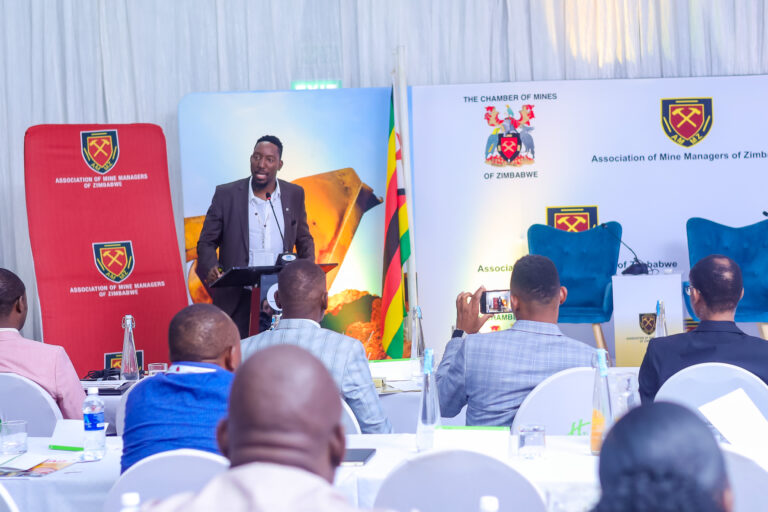
Speaking at the recent Association of Mine Managers of Zimbabwe (AMMZ) Annual General Meeting, industry leaders emphasized the need for a long-term strategy to develop human resources capable of advancing mining operations in the future. Ian Chauke, from Anglo-American’s Amandelbult Complex in South Africa, highlighted the urgency of investing in human capital to support technological growth in the sector.

Chauke identified the primary barrier to smart mining as not just the availability of technology but the lack of skilled personnel to operate and maintain it. He pointed out that across Africa, including Zimbabwe, the shortage of mining engineers with expertise in implementing advanced technologies remains a pressing issue.

“Even though this is a barrier to achieving the smart mining and technology we aspire to, it also presents an opportunity,” Chauke said.

Brain Drain and the Skills Gap

The issue is exacerbated by financial hardships and limited local opportunities, which push many students from Zimbabwe and similar regions to seek education abroad. Many do not return, perpetuating a cycle of brain drain and leaving a skills gap in local mining industries.

Chauke emphasized the need for a long-term approach to human capital development. He called on mining companies to establish stronger partnerships with universities and educational institutions, enabling students to gain practical training and exposure to industry technologies.

“Mining companies must engage with universities. While there are efforts to support students, there is no formalized structure for these collaborations,” he said.

One example of an effective partnership, highlighted by Dr. Beny Chisonga from DataMine, is their provision of free software access to students at Midlands State University in Zimbabwe. However, Chisonga noted that this is only part of the solution. Mining companies must also invest in hands-on training, such as mine planning, to prepare students for real-world applications.

Zimbabwe’s Unique Opportunity

Chisonga also highlighted Zimbabwe’s unique position, where local stakeholders are heavily involved in decision-making for mines. In many other African countries, key decisions are often made by foreign investors. This local control gives Zimbabwe the flexibility and incentive to invest in its youth and ensure future generations possess the skills required to drive the mining industry forward.

Commenting on Chisonga’s remarks, Chauke urged the mining sector to prioritize long-term human capital development over short-term fixes.

Addressing Educational Gaps

The discussions at the AMMZ AGM also raised concerns about the alignment of scholarships with industry needs.

“We are seeing students being awarded scholarships by mines, but they lack the correct subject combinations for mining studies,” said Mrs. Rejoice Moyo, Chairperson at Midlands State University. This underscores the importance of aligning educational programs with the sector’s requirements.

To address this, participants emphasized the need for partnerships between academic institutions and mining companies to focus on curriculum enhancement and the integration of smart mining concepts into education frameworks. Mining companies were encouraged to actively collaborate with institutions to ensure graduates are equipped with the skills needed for the modern mining environment.

Industry-Academia Partnerships

A key challenge identified by Zimbabwe Institute of Rock Engineering (ZINIRE) Vice President Omberai Mandingaisa is the academic system’s lack of practical application. Lecturers often enter academia directly after completing their studies, with little or no industry experience. This disconnect can hinder the training of future mining professionals.

Wits University’s Head of the School of Mining Engineering, Professor Musingwini, proposed secondment programs as a solution. These would enable academic staff to gain practical experience in the mining industry. To retain these professionals, the industry must also contribute to their remuneration to prevent a brain drain from academia to industry.

Gold buying prices per gram in Zimbabwe 29 November 2024

These are the official gold buying prices per gram in Zimbabwe today 29 November 2024, from the official gold buyer and exporter Fidelity Gold Refinery (FGR).

SG 90% and ABOVE US$80.26/g
SG ABOVE 85% BUT BELOW 90% US$79.41g
SG ABOVE 80% BUT BELOW 85% US$78.56/g
SG ABOVE 75% BUT BELOW 80% US$77.71/g
SAMPLE BELOW 10g BUT ABOVE 5g US$76.44/g

Fire Assay CASH $80.69/g

NB: Fire Assay cash price is for gold above 100gs, no sample is deducted.
For the Fire Assay Transfer price, a sample of not more than 10g is deducted
A 2% royalty is charged on all deposits (Small-scale miners)
A 5% royalty is set for Primary Producers

Cash available. Fidelity Gold Refinery prices will be changing daily to match world market prices.

Ncube Projects 5.6% Growth for Mining Sector on the Back of Improved Commodity Prices

0

Zimbabwe‘s 2025 National Budget, presented by Finance and Investment Promotion Minister Mthuli Ncube, projects a 5.6% growth in the mining sector, driven by an anticipated surge in global commodity prices.

By Ryan Chigoche

This marks a sharp recovery from 2024, where subdued platinum group metal (PGM) prices had limited growth to a modest 2.3%. The anticipated rebound in prices for key minerals such as gold, chrome, and diamonds is expected to significantly boost production and enhance sector performance.

Minister Ncube noted that the mining sector has faced challenges in recent years, primarily due to volatile mineral prices. However, with prices for gold, chrome, and diamonds forecast to rise, the sector is poised for a strong recovery in 2025.

The government’s ongoing efforts to stabilize the energy sector, including the construction of new power plants, are also expected to support growth by ensuring a reliable power supply for mining operations.

“The expected rise in global mineral prices, particularly for gold, along with improvements in power supply, will drive the growth of our mining sector,” Ncube said.

This positive outlook extends beyond 2025, with projected growth rates of 5.5% in 2026 and 5% in 2027 as commodity prices remain favorable and energy challenges ease.

Contribution to Economic Recovery

The mining sector is set to play a pivotal role in Zimbabwe’s broader economic recovery. By 2027, it is projected to contribute 13.3% to the national GDP, underscoring its importance in driving long-term development.

To support this growth, the government has prioritized mineral value addition and beneficiation.

Key initiatives announced in the budget include:

  • Mines to Energy Park in Mapinga: This facility will process lithium and graphite.
  • Gold Centers: Establishment of new centers to enhance gold deliveries to the Fidelity Gold Refinery.

These initiatives aim to boost production, create jobs, and retain more value from Zimbabwe’s mineral resources within the country.

Focus on Beneficiation

Zimbabwe has long advocated for its PGM miners to refine platinum locally instead of exporting raw concentrates. The government argues that beneficiation will create jobs, stimulate the local economy, and maximize the value of the country’s platinum reserves.

A Promising Future

With rising mineral prices, strategic investments in energy, and a focus on value addition, Zimbabwe’s mining sector is on track for a promising 2025. These developments lay the groundwork for a strong and sustainable recovery in the years ahead.

Salene Chrome Maintains Care and Maintenance Status

0

Salene Chrome Zimbabwe (Private) Limited, a subsidiary of Tharisa, remains on care and maintenance as of the financial year ending 30 September 2024. Despite delays in the start-up of operations, Salene Chrome is maintained as a key future project and continues as an ongoing concern.

By Ryan Chigoche

Tharisa has determined that no additional impairment is required beyond the previously assessed value of US$2.3 million for its Salene Chrome Cash Generating Unit (CGU).

In mining, impairment refers to a reduction in the carrying value of an asset or group of assets when their recoverable value falls below their recorded value on the company’s balance sheet. This usually occurs due to prolonged operational delays, significant drops in commodity prices, or changes in market conditions that impact the asset’s ability to generate future cash flows.

For Salene Chrome, regular impairment assessments are conducted, especially when operational environments change, such as delays in start-up or fluctuations in chrome demand.

As of 30 September 2024, the company conducted an impairment review to evaluate whether the carrying value of its Salene Chrome CGU, standing at US$2.3 million, should be adjusted.

The impairment test focused on two primary metrics:

  • Value in Use: The present value of future cash flows expected from the asset, considering projected income, expenses, and the time value of money.
  • Fair Value Less Costs to Sell: The estimated price obtainable from selling the asset in its current condition, minus associated costs such as transaction fees and taxes.

In this case, the fair value of US$2.3 million exceeded the value in use, validating the carrying value and eliminating the need for further impairment adjustments. This suggests that, despite operational challenges, Salene Chrome’s assets retain sufficient value to justify their current valuation.

Salene Chrome holds significant mining rights in Zimbabwe’s Great Dyke region. In May 2018, the company was granted several special mining grants on the eastern side of the Great Dyke, covering 11,900 hectares. It also holds licenses for 12,400 hectares on the western side of the Dyke. These grants are located within Zimbabwe’s Special Economic Zone (SEZ), which offers key investment incentives such as duty-free importation of raw materials, reduced tax rates, and freedom to export and import capital.

These SEZ incentives create a favourable environment for mining operations and attract foreign investment, positioning Salene Chrome strategically within Zimbabwe’s mining sector.

Tharisa has already invested US$2 million in Salene Chrome’s initial exploration and metallurgical test work. An internal discounted cash flow model projects a net present value (NPV) of US$6.9 million for the eastern mine, assuming a seven-year life of open-pit mining. These projections highlight the project’s long-term potential despite delays in starting full-scale operations.

In addition to Salene Chrome, Tharisa owns Karo Resources, a major platinum group metals (PGM) exploration company in Zimbabwe. Together, Salene Chrome and Karo Resources form a key part of Tharisa’s strategy to diversify and expand its mining footprint in Zimbabwe.

While Salene Chrome’s operations remain temporarily halted, Tharisa maintains a positive outlook for the project. Its strategic location within Zimbabwe’s SEZ, coupled with a significant resource base in the Great Dyke region, provides a strong foundation for future operational success.

Furthermore, Tharisa’s dual focus on chrome and platinum through Salene Chrome and Karo Resources positions the company to capitalize on growth opportunities in both sectors in Zimbabwe.

Tharisa continues to monitor developments and will make adjustments as necessary to ensure the long-term viability of its Zimbabwean assets.

Tharisa is a leading integrated chrome producer with operations in South Africa and Zimbabwe. Through Salene Chrome Zimbabwe, the company holds valuable mining rights in Zimbabwe’s mineral-rich Great Dyke region.

ZMF’s ESG Vision Realized Through Murasta Mining’s Community and Educational Investments

0

The Zimbabwe Miners Federation (ZMF) has achieved a significant milestone in its Environmental, Social, and Governance (ESG) strategy through the efforts of Mrasta Mining, which has incorporated ZMF’s tailor-made ESG framework for the artisanal and small-scale mining (ASM) sector. This was revealed by ZMF President Ms Henrietta Rushwaya in an interview with Mining Zimbabwe.

By Rudairo Mapuranga

The ZMF President commended Mrasta Mining’s Managing Director, Johane Sithole, for his company’s impactful contributions to the community, particularly in the education sector.

According to Rushwaya, Mrasta Mining’s recent investments in local schools exemplify the practical implementation of ZMF’s ESG strategy, specifically designed for the ASM sector. She praised the company’s dedication to responsible mining and community development, emphasizing its alignment with the Federation’s vision for sustainable and socially responsible mining in Zimbabwe.

“This is very encouraging, especially when it’s coming from a miner—let alone a former student of the school. As part of our ZMF ESG strategy, he has successfully incorporated the social aspect, which focuses on an organization’s impact on people, including staff, learners, and the community. Well done, Mrasta Mining,” she said.

ZMF has been proactive in crafting an ESG strategy tailored to Zimbabwe’s ASM sector. This strategy, unveiled at the recent ZMF Annual General Meeting (AGM) and Conference in Harare, aligns with international standards and government efforts to promote responsible mining. During the conference, Rushwaya emphasized that ZMF’s ESG strategy prioritizes human rights, safety, environmental preservation, and community impact—all essential for ensuring mining activities contribute to sustainable national development. Murasta Mining’s initiatives in Sanyathi District, Mashonaland West, are a prime example of this vision being realized.

Mrasta Mining, led by Johane Sithole, has made significant strides in aligning its operations with ZMF’s ESG framework. The company recently invested over US$25,000 in Dubungwani Primary School, constructing a state-of-the-art administration block, installing solar power, providing new furniture, and drilling a borehole to supply clean water to the school.

These efforts have received widespread acclaim from the local community. At the handover ceremony, Dubungwani Primary School headmaster Mr. Munashe Mashizha expressed his gratitude for Mrasta Mining’s contributions.

“Today, we are very happy and grateful to have Mrasta Mining here. The new administration block will transform our operations, providing a better working environment for staff and a space to effectively manage the school,” said Mashizha. He also highlighted the solar-powered block’s role in enabling the school to introduce information and communications technology (ICT) tools, enhancing learning for students in this rural area.

Ward 8 Councillor Freedom Matawa echoed these sentiments, noting that Murasta Mining’s contributions align with President Mnangagwa’s vision of national development driven by local initiatives.

“We commend Mrasta for ploughing back into the community, following the President’s vision that the country should be built by its own people,” Matawa remarked.

Local resident Vongai Chipfombo Mavedzengi also praised Murasta’s investment in education, urging other small-scale miners to follow suit.

“We want to thank Murasta Mining and Johane Sithole for building this state-of-the-art administration block. Other nearby schools envy what has been done here. We urge other small-scale miners to improve education in rural areas,” Mavedzengi said.

Mrasta Mining’s efforts in Sanyati District reflect ZMF’s broader ESG strategy, which addresses the unique challenges faced by Zimbabwe’s ASM sector. During the ZMF AGM, Rushwaya noted that the government, led by President Emmerson Mnangagwa, has initiated a Responsible Mining Audit to ensure mining activities are conducted in a way that protects the environment and the communities in which they operate.

Rushwaya stressed that responsible mining is essential to achieving national goals, such as delivering 40 tonnes of gold to Fidelity Gold Refinery (FGR). She emphasized the need for small-scale miners to prioritize environmental safety and sustainability, such as properly collaring shafts and ensuring effective drainage systems.

“To achieve responsible mining, Zimbabwe’s ASM sector needs an ESG strategy tailored to its specific challenges. This includes a focus on decarbonization, water stewardship, and human dignity in mining operations,” said Rushwaya.

ZMF’s ESG strategy also promotes responsible sourcing of minerals, aligning with international frameworks such as the European Union’s RE-SOURCING project, which emphasizes mitigating social and environmental impacts throughout the mining value chain.

Murasta Mining’s Managing Director, Johane Sithole, believes mining companies, particularly in the ASM sector, have a responsibility to give back to their communities.

“Education is the foundation of development. By investing in the education of children today, we are creating a skilled and knowledgeable workforce for tomorrow,” Sithole said.

Sithole’s vision for Mrasta Mining extends beyond resource extraction, aiming to leave a lasting, positive legacy that contributes to the long-term social and economic development of the community.

His efforts align seamlessly with ZMF’s ESG vision, which emphasizes investments in local communities, particularly in education, health, and infrastructure. By following this model, other small-scale miners can also contribute to the well-being of their communities while ensuring sustainable and responsible mining practices.


Ministry of Mines Allocated US$22.16 Million in 2025 Budget

0

The Ministry of Mines and Mining Development has been allocated ZiG$664.8 million, equivalent to approximately US$22.16 million, as part of the 2025 budget announced by the Minister of Finance and Investment Promotion, Prof. Mthuli Ncube, Mining Zimbabwe reports.

By Rudairo Mapuranga

However, on the alternative black market, this allocation amounts to a significantly lower figure of around US$14.45 million. This discrepancy underscores the challenges faced by the ministry and other sectors in maximizing budgetary effectiveness amid persistent currency volatility.

During his budget presentation, Finance Minister Prof. Ncube highlighted that the allocation is part of broader efforts to “facilitate mining activities through the implementation of legislative and administrative reforms” aimed at fostering a more conducive environment for mineral exploration, extraction, and beneficiation. Additionally, the funds will be used to enhance mobility and provide tools for audit personnel at the provincial and district levels, improving oversight and driving the sector’s development.

Despite these measures, the Ministry of Mines and Mining Development’s allocation is modest compared to other key ministries in the 2025 budget. For instance, the Ministry of Health and Child Care received a substantial ZiG$28.3 billion (US$943.33 million at the official rate), reflecting the government’s prioritization of public health. Similarly, the Ministry of Home Affairs and Cultural Heritage was allocated ZiG$16.1 billion (US$536.67 million), while the Ministry of Defence received ZiG$18 billion (US$600 million), demonstrating significant government focus on security and defence.

In stark contrast, the Ministry of Energy and Power Development, critical to the mining sector’s power requirements, received only ZiG$259.8 million (US$8.66 million). This raises concerns about whether the Ministry of Mines and Mining Development has been adequately resourced, given the pivotal role of mining in driving economic growth and earning foreign currency.

Minister Ncube reiterated the centrality of mining to Zimbabwe’s economy but acknowledged the challenges posed by limited funding.

“We are committed to building resilience for sustained economic transformation, and the mining sector remains central to this goal,” said Prof. Ncube.

Nonetheless, with only US$22.16 million officially allocated, there are doubts about the sector’s ability to sustain its growth momentum without greater efficiency and prioritization of critical projects within the ministry.

The mining sector remains one of Zimbabwe’s largest foreign currency earners, significantly contributing to the national GDP. However, its allocation pales in comparison to sectors like agriculture, which received ZiG$22.9 billion (US$763.33 million). With increasing demands for mining reforms, equipment upgrades, and infrastructure to support mineral beneficiation, the ministry’s budget may fall short of meeting the sector’s urgent needs.

The disparity in budget allocations, particularly compared to ministries such as Defence and Agriculture, suggests that more needs to be done to prioritize mining as part of Zimbabwe’s broader economic transformation agenda.

Still, Prof. Ncube expressed optimism about the allocated funds’ potential impact.

“We will continue to ensure that every dollar allocated delivers value, particularly in creating an enabling environment for investment and mineral production,” he emphasized during his address.

Given mining’s critical role in generating foreign currency, stakeholders will be closely monitoring how the Ministry of Mines and Mining Development utilizes its limited allocation to sustain growth and attract future investments.

Zim man and a South African busted with gold worth R15 million

0

South Africa’s Gauteng Hawks’ Serious Organised Crime Investigation team arrested two suspects identified as 33-year-old Joacham Chivayo and 20-year-old Ayanda Brian Gungwa, a South African citizen.

According to a Media Statement released by the South African Police Service, the two were arrested on-site and charged with illegal possession of gold under the Precious Metals Act, Act 37 of 2005.

The operation, meticulously planned and executed on Tuesday, 26 November 2024, at approximately 13:15, led to the apprehension of the suspects at Helderwyk Estate in Brakpan, South Africa. The individuals were caught attempting to sell six bars of unwrought gold, valued at around R15 million.

The case has been registered at Brakpan Police Station, and the suspects made their first court appearance on Wednesday, 27 November 2024. Currently, the two remain in custody as investigations continue to trace the origin of the gold and identify other possible suspects involved in the illegal trade.

Brigadier Paulina Sekgobela, Acting Provincial Head of the Hawks in Gauteng, praised the team for their exceptional efforts.

“The Gauteng Hawks remain steadfast in our commitment to uphold the law and protect our nation’s valuable resources. The diligence and coordination demonstrated by all team members in this operation are highly commendable,” said Brigadier Sekgobela.

Investigations are expected to shed more light on the network behind this illegal operation.


Murasta Donates and Commissions New Infrastructure at Dubungwani Primary School

0

In an effort to promote education in marginalized communities, small-scale mining company Murasta Mining has invested over US$25,000 in a state-of-the-art administration block and a water facility at Dubungwani Primary School in Shanyathi District, Ward 8, Mining Zimbabwe reports.

By Rudairo Mapuranga

The donation, which includes furniture and a 3KVA solar power system, aims to uplift educational standards in this rural area and enhance the learning environment for both students and teachers. This initiative is expected to further improve the school’s pass rate, which rose from 0% to 29% in 2023, following over a decade without a recorded pass rate from 2012 to 2022.

Speaking at the commissioning ceremony, Murasta Mining’s Chief Financial Director, Mr. Chenjerai Makonese, emphasized the company’s commitment to bridging the gap between rural and urban schools.

“The main reason we invested here is to uplift our local communities, especially the rural ones, so that learners in rural schools have the same opportunities as those in urban areas,” said Makonese.

He expressed confidence that the school would achieve further progress, with an expected pass rate increase to between 60% and 75%.

In addition to the administration block, Murasta Mining has installed a borehole at the teachers’ hostels to provide clean and reliable water for staff. The company also plans to enhance living conditions by installing solar energy at the hostels in the near future.

Murasta Mining’s Managing Director, Mr Johane Sithole, highlighted the importance of supporting educators in remote areas.

“We saw it fit to construct the administration block and install a borehole at the teachers’ hostels. In the future, we also hope to power the hostels with solar energy to make the teachers more comfortable in this very remote area, where six teachers manage nine classes, from ECD A and B to Grade 7,” said Sithole. He added, “If you make a teacher happy, they will excel in their role.”

This investment is part of Murasta Mining’s broader corporate social responsibility strategy, aimed at reimagining mining to improve the lives of surrounding communities. By focusing on education, Murasta hopes to positively impact the region by reducing crime rates, lowering instances of child marriages, and increasing productivity through an educated and empowered population.

The infrastructure project at Dubungwani Primary School marks a significant milestone in Murasta Mining’s commitment to sustainable development, proving that even small-scale mining companies can play a transformative role in marginalized communities.