Home Blog Page 201

Intrachem Back at Eureka: Revolutionising Zimbabwe’s Mining Sector with Superior Explosives

0

In the heart of Zimbabwe’s mining landscape, a familiar name is making waves once again. Intrachem, once plagued by quality concerns, has returned to Dallaglio Holdings’ Eureka Gold Mine in Guruve with a vengeance, armed with an arsenal of world-class explosives. This resurgence marks a turning point not only for Intrachem but for the entire mining sector in Zimbabwe.

Rudairo Mapuranga

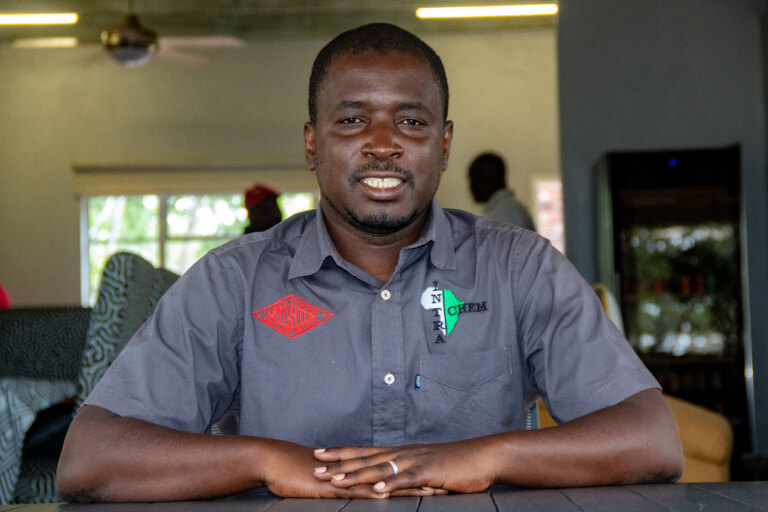
According to Intrachem Operations Manager Mr. Walter Madzimure, Intrachem has undergone a technical revival, he speaks candidly about the company’s journey of redemption. “On quality issues, previously, a couple of years ago, we had some issues with our emulsion, which was mainly to do with product application that cost us reputational damage and, temporarily, a sizable chunk of the market and created a poor name tag for Intrachem’s emulsion, Hydrox,” Madzimure reflects.

Madzimure said Intrachem continuously seeks to add value to its offerings by leveraging the latest technological advancements and innovations.

“We have since worked on ourselves through extensive training programs and strengthening ourselves in terms of complete product understanding.” The Intrachem Operations Manager said, “This commitment to self-improvement has paid dividends for Intrachem.”

“Our product has attracted only good reports from the multitude of customers who have put their trust in Intrachem supplying a good quality product. We have since gone past the bumpy patch, from where we took multiple learnings, and are performing well,” Madzimure proudly asserts.

According to Madzimure, the proof lies in the results – successful blasts at renowned sites like Eureka and most of Zimbabwe’s premier open pit mines, bear testament to Intrachem’s resurgence.

Nelson Banda, General Manager of Eureka Mine, echoes Madzimure’s sentiments. “We have a main contract with a different supplier, but Intrachem does supply us from time to time as a stop-gap measure. Their product seems to be working” Banda acknowledges.

This vote of confidence from a key industry player speaks volumes about Intrachem’s newfound credibility.

Intrachem’s return to prominence is not merely a tale of redemption; it’s a story of innovation and resilience. Madzimure emphasizes, “We looked inward at ourselves, reflected on what we did and found out where the root cause was and worked around to address the problem and how to continuously improve. So, yeah, I can say it is here and we are coming out in full force to help, support and improve supply and service to the Zimbabwe customer.”

With each successful blast and each satisfied customer, Intrachem solidifies its position as a driving force in Zimbabwe’s mining sector. As they continue to push the boundaries of excellence, one thing is clear – Intrachem is back at Eureka, and they’re here to stay.

RioZim Achieves 1% Production Increase Despite Major Shareholder Death

0

Zimbabwe Stock Exchange-listed diversified mining company RioZim, despite the loss of the company’s major shareholder’s representatives and four executives in a fatal plane crash, recorded a 1 per cent increase in gold production during the year ended 31 December 2023.

In a statement released on Tuesday, 14 May 2024, Chairman S.R. Beebeejaun noted that the year began on a positive note, with an upward review of the foreign currency retention from 60% to 75%, which was a welcome boost to the group as this partially alleviated the foreign currency shortages. The increased nostro retention was complemented by favourable gold prices that experienced an upward trend from the beginning of the year, contributing to the revenue growth for the year.

The RioZim chairman, however, said that the period was characterized by rising production costs driven by inconsistent power supply and spiralling exchange rates, which persisted throughout the year. As a result, the group recorded a net loss for the year.

“The group’s financial year was marked by the sad loss of the company’s major shareholder’s representatives and four of the company’s executives in a fatal plane crash involving one of RZM Murowa Aviation’s planes. This unfortunate accident cast a dark cloud over the 2023 financial year for the company, and we continue to mourn these dear departed colleagues.

“Production for the year was 940 kg, which was a slight 1% increase from the prior year’s production of 928 kg. The subdued production volumes were due to persistent plant breakdowns largely experienced at Cam & Motor Mine, which struggled with breakdowns in its milling section resulting in reduced throughput,” Beebeejaun said.

According to Beebeejaun, Renco Mine adopted a strategy of maximizing milled throughput, resulting in a commendable 10% increase in production to 441 kg. Despite power supply challenges, investments in additional generator capacity are underway to mitigate production obstacles.

He said Cam & Motor Mine faced setbacks due to mill section breakdowns, leading to a 5% decline in production to 499 kg. Efforts to refurbish mills and address delayed pit development are ongoing.

Dalny Mine remained under care and maintenance, focusing on regulatory approvals for small-scale operations to alleviate cash flow impacts.

Base Metals Business

The refinery, under care and maintenance, contributed revenue partially funding its costs. Efforts are directed towards revitalizing the oxygen generation section to generate additional income.

Chrome Business

Legal disputes concerning chrome claims in Darwendale persist, with the company committed to pursuing an amicable resolution.

Diamond Business

Production at RZM Murowa declined by 3% to 414,000 carats, attributed to suspended mining activities. Despite challenges, the group remains dedicated to finding solutions.

Energy Business

Energy projects, notably the 178 MW Solar Projects, are in the funding stage after obtaining regulatory approvals. Engagement with potential funding partners is ongoing to achieve financial closure.

Outlook

RioZim remains optimistic about stabilizing production and returning to profitability through strategic initiatives. Efforts at RZM Murowa focus on extending the life of the mine, while Cam & Motor Mine prioritizes improving plant uptime. Addressing power supply challenges at Renco Mine is imperative, with a focus on alternative sources and capacity expansion. Despite adversities, RioZim’s future looks promising as initiatives are set to stabilize production and drive profitability.


This article first appeared in the Mining Zimbabwe Magazine Edition 73

Dinson Iron and Steel Company Commences Pig Iron Production

0

Dinson Iron and Steel Company (Disco) has successfully commenced pig iron production from its blast furnace at the Manhize steel plant near Mvuma.

The development, which took place on Wednesday afternoon, marks a historic moment in Zimbabwe’s journey toward industrial revitalization and economic recovery.

The successful launch of pig iron production is a pivotal step for Zimbabwe, signalling the potential for substantial growth and development within the nation’s industrial landscape.

The Minister of Mines and Mining Development heralded this achievement, stating, “We are witnessing the dawn of a new era in Zimbabwe’s industrial landscape. DISCOSTEEL’s success is a clear indicator of what can be achieved through dedication, strategic planning, and investment in technology.”


Zim Alloys Resuscitating Chrome Concentrator and Washplants

0

Through its subsidiary Zim Alloys, Kuvimba Mining House (KMH) is reviving its chrome concentrator and washplants across Zimbabwe to boost the country’s chrome production.

KMH Group CEO Trevor Barnard highlighted the group’s strategic move to capitalise on the current chrome boom.

According to Barnard, with Zim Alloys’ strategic resuscitation efforts, Zimbabwe is poised to strengthen its position in the global chrome market, ensuring greater economic benefits and a more robust chrome industry.

“We’re busy resuscitating more of the chrome concentrator plants and washplants we have around Zimbabwe. This is definitely part of our strategy. As we progress, we’ll announce the resuscitation of each plant. This is our current strategy moving forward,” Barnard said.

Zim Alloys, holding the largest chrome reserve and being the biggest producer of chrome concentrate in Zimbabwe, is set to enhance the country’s production capabilities significantly.

Globally, only six countries have the capacity to produce more than one million tonnes of chrome ore annually namely South Africa, Turkey, Kazakhstan, India, Finland, and Zimbabwe. In 2022, these countries produced 18 million tonnes, 6.9 million tonnes, 6.5 million tonnes, 4.2 million tonnes, 2.2 million tonnes, and 1.5 million tonnes respectively.

South Africa dominates the market with 72% of the world’s commercially accessible chrome reserves and produces almost half of the global output annually. Zimbabwe, despite having 12% of the world’s chrome ore reserves, currently contributes less than 4% of the global output due to sector challenges.

Countries with fewer reserves, such as Turkey, Kazakhstan, India, and Finland, are outpacing Zimbabwe’s production. Turkey, for instance, produces more despite having smaller reserves.

Zimbabwe faces several issues in the chrome value chain. Local miners, particularly small-scale miners, sell their high-grade chrome for much less compared to South African miners. In January 2023, South African chrome ore was priced at around US$281 per tonne, while Zimbabwean miners received just US$70 per tonne. This disparity persists despite Zimbabwean chrome being comparable to higher-priced Turkish chrome, which sold for around US$350-US$360 per tonne in the same period.

Over 90% of the world’s chrome output is used to make ferrochrome, an alloy of chrome and iron ore, produced through high-temperature smelting. Ferrochrome, containing 50%-70% chrome by weight, is a crucial component in manufacturing stainless steel.

Zimbabwe gold buying prices per gram 12 June 2024

Fidelity Gold Refinery (FGR) official gold buying prices/ gram. See the Zimbabwe gold buying prices per gram today 12 June 2024.

SG 90% AND ABOVE US$70.38/g
SG ABOVE 85% BUT BELOW 90% US$69.63g
SG ABOVE 80% BUT BELOW 85% US$68.89/g
SG ABOVE 75% BUT BELOW 80% US$68.14/g
SAMPLE BELOW 10g BUT ABOVE 5g US$67.02g

Fire Assay CASH $70.75/g

NB: Fire Assay cash price is for gold above 100gs, no sample is deducted.
For the Fire Assay Transfer price, a sample of not more than 10g is deducted
A 2% royalty is charged on all deposits (Small-scale miners)
A 5% royalty is set for Primary Producers

Cash available. Fidelity Gold Refinery prices will be changing daily to match world market prices.

Zimplats Records Zero LTIs

0

The country’s biggest platinum group metals (PGMs) producer ZIMPLATS recorded zero lost-time injuries (LTIs) during the quarter ended 31 March 2024, demonstrating the Group’s commitment to worker safety.

By Rudairo Mapuranga

The record from this quarter marked an improvement from the previous quarter ended on 31 December 2023, where two lost-time injuries were recorded. Implementing recommendations from the accident investigations resulted in the current zero LTIs.

Zimplats is committed to zero harm and has been working to ensure that its workers’ safety is the number one priority. The company previously recorded over 5 million fatality-free shifts and is regarded as a benchmark in Safety, Health, and Environment (SHE) practices.

Zimplats’ board and management remain dedicated to ensuring a safe working environment for all employees and contractors.

In 2021, Zimplats was certified to the comprehensive ISO 45001 international standard for occupational health and safety management, reflecting its commitment to achieving the zero-harm target.

According to the platinum group parent company, Impala Platinum Holdings (Implats), Zimplats and two other Implats-owned platinum-producing firms were certified as part of the effort to ensure all its platinum operations are certified by 2024.

“In 2021, Zimplats, Marula, and Impala Springs were certified to the comprehensive ISO 45001 international standard for occupational health and safety management. Our objective is to have all our managed operations certified by 2024.”

ISO 45001:2018 specifies requirements for an occupational health and safety (OH&S) management system and guides its use to enable organisations to provide safe and healthy workplaces by preventing work-related injury and ill health, as well as by proactively improving their OH&S performance.

Lost Time Injury (LTI)

A lost-time injury is an injury that results in time lost from work of a day’s shift or more. LTI include injuries that result in fatality or permanent disability. LTIs are useful for concluding the factors that contribute to lost productivity, including inadequate injury prevention.

Kuvimba’s Gold Output Reaches 300 kg Monthly, Eyes Further Expansion

0

The country’s biggest operational asset holder, Kuvimba Mining House (KMH), is making waves with its impressive gold production, averaging 300 kilograms of gold per month from its three gold mines.

By Rudairo Mapuranga

KMH is also setting its sights on expanding its resource base through new exploration projects, according to KMH Group CEO Trevor Barnard.

Kuvimba currently operates three key gold mines namely Freda Rebecca Gold Mine, Shamva Gold Mine, and Jena Mines. Despite already achieving significant output, the company is not resting on its laurels.

“Currently, we are producing around 300 kilograms of gold per month, which is the target we are aiming for. However, we are also exploring further projects in the gold sector to increase our resource base. This will help ensure long-term stability. We are developing several new projects to increase our production and improve efficiencies in our current operations,” Barnard stated.

The KMH Group CEO said that with a robust strategy and a keen eye on future opportunities, Kuvimba Mining House is poised to further solidify its position in the gold sector, ensuring continued growth and stability.

Barnard highlighted the strategic importance of gold to KMH, particularly in light of rising gold prices. He emphasized the company’s ongoing efforts to secure additional gold claims to maximize benefits from the lucrative market conditions.

“Gold has been very beneficial for us and is one of the key assets in our portfolio. We are currently managing three successful operations.

“As for the potential of further acquisitions, that possibility is always on the horizon. It depends on the value those acquisitions can bring and whether we can unlock additional value from them. It is still a bit early to provide specific details on that front,” Barnard said.

Government Pushes for Self-Sufficiency in Power Generation for Mining Sector

0

The Government of Zimbabwe has underscored the critical need for self-sufficiency in power generation within the mining sector, particularly as the industry experiences substantial growth driven by the rapidly increasing lithium mines.

Energy and Power Development Minister Edgar Moyo emphasized the significant surge in power demand and highlighted the necessity for collaboration between the government and the private sector to meet the increased demand.

“We recognize that the mining sector is growing, particularly with the coming of the lithium mines. The demand for power has surged phenomenally,” said Minister Moyo. “And, as the government, we cannot adequately provide power alone, we need to do it with the private sector,” Moyo told the chronicle.

To address this challenge, the government has approved a policy mandating that miners, especially those in the ferrochrome sector who benefit from substantial subsidies, develop their own renewable energy generation plants.

“We have approved a policy that these miners, particularly the ferrochrome miners who are heavily subsidized, should develop their own generation plants from the renewable side,” Moyo said.

The policy sets a clear timeline for implementation.

“We gave ferrochrome miners two years to set up their own generation plants. The time frame begins this year, and we expect that by 2026 they should have set up their own generation plants,” Minister Moyo added.

This move is part of a broader government strategy to boost the country’s power output. In recent years, significant attention has been given to expanding electricity production, most notably with the commissioning of Hwange Units 7 and 8 last year. These units have added a robust 600MW to the national grid, solidifying Hwange Thermal as the country’s major electricity supplier.

The proactive approach in mandating self-sufficiency in power generation for the mining sector is expected to alleviate the pressure on the national grid while promoting sustainable energy solutions.

Bravura to Power Kamativi with 6MW Diesel Generators

0

Bravura has acquired and delivered a 6MW generator to be used at its Kamativi lithium site.

This move aims to facilitate the commencement of operations by late this year or early next year.

Bravura received the dump processing lease for Kamativi in February this year and has been working rapidly to set up the necessary infrastructure. Acquiring the 6MW generator is a significant step in ensuring that the plant has a reliable power supply once production commences.

Eng. Chris Pouroullis, Chairman of Manhattan, the company responsible for manufacturing the state-of-the-art lithium TSF processing plant, provided insights into the power requirements and setup.

“We’re looking at between three and four megawatts of power for the plant. The generators have a capacity of six megawatts. We need to have enough capacity for the generators to run the plant effectively. There are four 1.5 MVA generators. When the plant is operating, we plan to run it with three generators, ensuring that we have enough capacity to start the plant and perform maintenance. One generator can be taken offline for maintenance without affecting the plant’s operation.”

“This strategic setup allows Bravura to maintain continuous operations while ensuring that maintenance activities do not disrupt production. The redundancy provided by the four 1.5 MVA generators means that even if one generator is offline for maintenance, the remaining three can keep the plant running smoothly,” said Bravura Group General Manager Gbenga Ojo.

The Kamativi dump processing project is a key component of Bravura’s expansion strategy. The site, which has significant lithium deposits represents a valuable asset in the company’s portfolio. By leveraging advanced technology and robust infrastructure, Bravura aims to maximize the efficiency and output of the processing plant.

The decision to utilize diesel generators also highlights the challenges faced by mining companies in securing reliable grid power in remote locations.

Zimbabwe gold buying prices per gram 11 June 2024

Fidelity Gold Refinery (FGR) official gold buying prices/ gram. See the Zimbabwe gold buying prices per gram today 11 June 2024.

SG 90% AND ABOVE US$70.01/g
SG ABOVE 85% BUT BELOW 90% US$69.27g
SG ABOVE 80% BUT BELOW 85% US$68.53/g
SG ABOVE 75% BUT BELOW 80% US$67.79/g
SAMPLE BELOW 10g BUT ABOVE 5g US$66.67g

Fire Assay CASH $70.38/g

NB: Fire Assay cash price is for gold above 100gs, no sample is deducted.
For the Fire Assay Transfer price, a sample of not more than 10g is deducted
A 2% royalty is charged on all deposits (Small-scale miners)
A 5% royalty is set for Primary Producers

Cash available. Fidelity Gold Refinery prices will be changing daily to match world market prices.