

Home Blog Page 224

PLZ produced nearly 300k tonnes of lithium concentrate in 2023

0

Prospect Lithium Zimbabwe (PLZ) owned Arcadia lithium mine in Goromonzi produced around 280 000 tonnes of concentrate in 2023 and plans are underway to double production in 2024. The company has plans to double production in 2024 but is facing challenges due to softening commodity prices. Despite this, PLZ remains optimistic about its future prospects.

Rudairo Mapuranga

Speaking to Mining Zimbabwe PLZ General Manager Henry Zhu said his PLZ was still working on a 2024 plan but it was being affected by softening commodity prices.

“We produced around 280000 tons of concentrate. We are working on the 2024 plan. But it’s a big challenge because of the low price,” Zhu said.

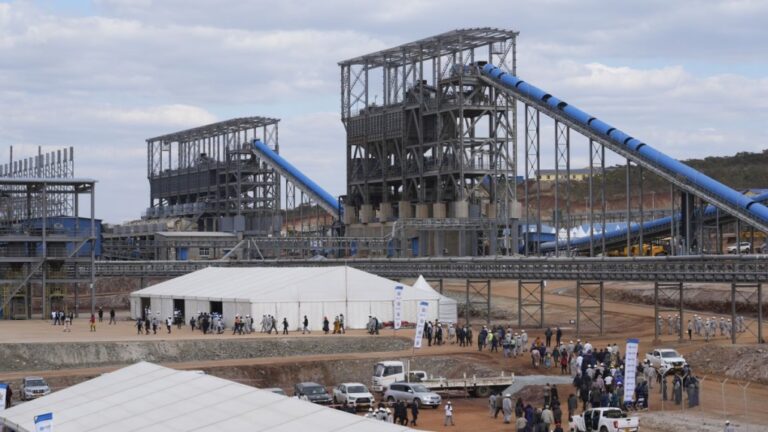
Following the successful conclusion of a US$377,8 million upfront cash consideration last year under a share sale agreement from Prospect Resources by China’s Huayou International Mining for an 87 per cent stake in Prospect Lithium Zimbabwe, a US$300 million processing plant was built at the mine before the asset started exporting lithium concentrate towards the end of April of last year.

PLZ processing plant can process 4,5 million tonnes of lithium ore per year, producing 450,000 tonnes of concentrate. Currently, PLZ employs over 2 500 local Zimbabweans including contractors and sub-contractors.

The company has used an excess of US$700 million to buy and develop the mine and is expecting to start profiting from its investment in the next 3 years.

On the Corporate Social Responsibility (CSR) front, PLZ is embarking on community health intervention programmes to enhance access to health facilities in Goromonzi and the country at large.

PLZ is also undertaking sustainable environmental management initiatives to minimise lithium mining and processing impacts on the environment.

Mr Henry said his organisation decided to invest in Zimbabwe with the major contributing factor being the enabling investor-friendly policies established by the government.

The policies fast-tracked the acquisition, establishment, and development of the project on record.

Manufacturing of batteries in Zimbabwe

PLZ intends to manufacture Lithium batteries in Zimbabwe as part of its efforts to contribute towards the government’s vision to see the country becoming an upper middle-income economy by 2030.

PLZ director in the general manager’s office Mr Yu Long said they will look into manufacturing lithium batteries in Zimbabwe after the company finishes the process to produce battery-grade lithium.

“As PLZ we will follow the procedure step by step. Firstly, we need to finish the concentrate then we go to another step of making lithium sulphate and we continue up to furthering our activities to the manufacturing of batteries,” Long said.

Speaking at the official commissioning of PLZ’s Arcadia lithium mine processing plant in Goromonzi last year PLZ Dr George Feng said his company was going to fulfil the government’s condition for it to produce battery-grade lithium with works to start construction of the plant in its initial stages.

PLZ head of Corporate Social Responsibility Paul Chimbodza told Mining Zimbabwe that the company was considering creating a lithium-grade manufacturing plant to attract battery manufacturers to come and set up their factories at the source.

“…you may have heard Dr George Feng already alluded that feasibility work has already started to interrogate the process of doing value addition, either in the way of lithium carbonates or lithium sulphate. The aspiration is that with these battery-grade lithium products being readily available in Zimbabwe, we think that it will be easier to attract battery manufacturers to come and set up at the source,” Chimbodza said.

The government of Zimbabwe wants lithium miners operating in the country to work towards producing battery-grade lithium locally and could impose a tax on exports of lithium concentrate in future.

Last year, Zimbabwe banned the export of unprocessed lithium ore to stop rampant extraction and smuggling of the mineral by artisanal miners, ordering that only lithium concentrates could be exported.

It now wants miners to go beyond the production of concentrates, which are shipped for further processing outside the country, mostly to China.

“Obviously, what the government wants is to move up the value chain, but it won’t happen overnight,” the former Minister of Mines and Mining Development Hon Winston Chitando said in an address at an Event.
Liliin Ngono Represents Zim’s Mining Industry at International Graduation Ceremony

0

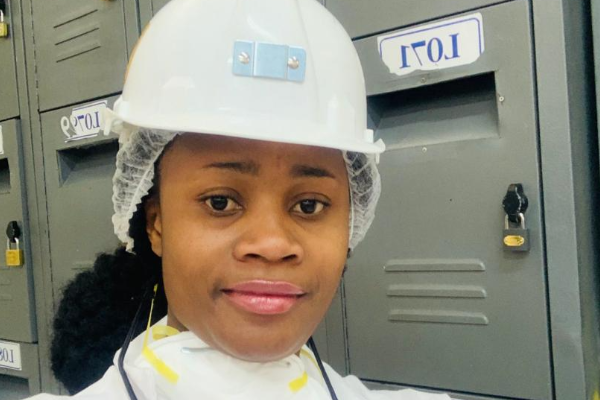
Liliin Ngono, an Integrated Planner at AngloAmerican’s Unki Mine, is set to represent the Zimbabwe Mining Industry at an esteemed international graduation ceremony hosted by Università degli Studi Guglielmo Marconi in Italy, in collaboration with Eaton Business School in the UAE.

The ceremony will see the graduation of 200 global professionals from various sectors and executives hailing from 31 different countries.

Ngono and other fellow graduates will be capped for the International Master of Business Administration specializing in Business Analytics at the ceremony, marking the culmination of their academic journey. This rigorous program equips students with the skills and knowledge necessary to excel in the dynamic field of business analytics, a crucial aspect of modern business management.

Ngono will also have the opportunity to attend a leadership workshop were she will present an abstract of her thesis, adding a technical perspective to the discourse on mining practices. The thesis is entitled “An Evaluative Study of the Applicability of Mining 4.0 Technologies in determining mining value chain capability.”

In addition to the prestigious MBA degree, Ngono and her fellow graduates will also receive a Certified Manager Qualification, a highly regarded credential awarded by the Cambridge International Qualification.

Among the notable graduates sharing the stage with Ngono is Christopher Setuke of Royal Bafokeng.

Furthermore, representing Zimbabwe alongside Ngono is Patience Musonza, the General Manager of Cresta Hotels, and three other women Executives who have made significant contributions to their respective industries in Zimbabwe.

Eureka Gold Mine Shines with Impressive Results

0

Dallaglio Investments, a leading player in the gold mining industry in Zimbabwe, has been making waves at its Eureka gold mine.

The mine, located in Guruve, has been producing impressive results over the past few years, achieving a 93 per cent gold recovery rate at Eureka.

According to the Eureka Mine General Manager, Eng Nelson Banda, the mine started off at 420 kg in 2021, leapt to 1617 kg in 2023, and is forecasted to produce 1660 kg in 2024.

Eureka gold mine was officially commissioned in 2021 after a 20-year hiatus, producing a total of 420 kg of gold, setting the stage for a successful operation. The output for that year was from September to December.

The following year, in 2022, the production skyrocketed to 1420 kg, showcasing the potential of the mine and the expertise of Dallaglio Investment in maximizing its output. This significant increase in production was a result of various improvements in mining techniques and the best technology from its CIL plant, which is rated as one of the best in Africa.

In 2023, the Eureka gold mine continued its winning streak, producing a total of 1617 kg of gold. This steady growth in production over the years has not only solidified Dallaglio Investment’s position in the industry but also proven the sustainability and profitability of the Eureka Mine.

Looking ahead to 2024, Banda said the mine has forecasted to produce 1660 kg of gold.

EUREKA FAST FACTS

  • 1906-1995: various phases of small-scale UG mining (to 4-Lvl; <120m). 12,220oz (380kg) @3.8g/t
  • 1995-2005: Delta Gold. Open pit, Heap Leach operation. Mined to <50m from surface. 1 millions tons was processed @ 1.78g/t yielding 57,228oz (1,780kg) Closed due to gold price & deteriorating stability. Placed on Care & Maintenance in 2003.
  • 2005-2018: Shaft-Sinkers (Mmakau Mining/IDC): Deep drilling for UG mining (22 holes; 9,407m). Installation new shaft down to 2-Lvl. Processed old ROM boulders and re-treated the HL. Placed on Care & Maintenance in 2006.
  • 2018: Dallaglio purchased Delta Gold which owned Eureka Mine from Mmakau Mining and the IDC of South Africa in April
  • 2018 with CTC approval granted in March 2019.
  • Total of 46 RC holes drilled, totaling 4,000 metres and a total of 133 diamond core holes totaling 21,000 metres (21kms).
  • A total Resource (including Inferred) of 16.6 million tons at an average grade of 2.24 g/t, delivering 1,199,080 ounces (to a depth of 650 m).
  • A total Measured and Indicated Resource of 12.9 million tons at an average grade of 2.29 g/t delivering 945,807 ounces.
  • In-pit reserves of 0.75g cut off 6,922,883 tonnes at 1.87g/t totaling 12,923 kgs or 415,468 oz down to a pit depth of 230 metres.
  • The Special Grant has been converted into 53 Mining Blocks and 6 Registered sites
  • 5 competent persons reports have been done since the 1990s, with the latest one completed in 2012 by TWP Projects. Dallaglio have reviewed and verified these reports.
  • The extent of the ore body has only been explored to a depth of 650m (open ended beyond 650m)
  • Eureka will initially be operated as an open-pit mine
  • The plant will have a processing capacity of 100,000 tons/month.

Illegal Miners Threaten Safety at Eureka Gold Mine

0

While they have always been known to be a menace in shutdown mining operations or those under care and maintenance, illegal miners are at it again at Dallaglio-owned Eureka Gold Mine in Guruve, posing a serious risk to themselves, mine workers, communities, and the environment.

Rudairo Mapuranga

On Thursday, the Deputy Minister of Mines and Mining Development, Engineer Polite Kambamura, visited Eureka Mine for a fact-finding mission on how illegal miners are invading part of the mine.

The illegal miners, who reportedly come in large numbers to the mine, are said to be vandalizing security fencing and tailings storage facilities, beating up outnumbered security personnel, and at times going into the open-pit mine soon after blasting.

What is really happening?

According to Eureka Mine General Manager Nelson Banda, the illegal miners who are encroaching into the mine are looking for waste from the mine operations to process at nearby hammer mills.

While to Eureka it will be waste, the miners are now causing serious Safety, Health, and Environment (SHE) risks by going under trucks offloading waste, digging through Tailings Storage Facility (TSF) thereby weakening it, and also going into open-pit operations soon after blasting.

“Our waste is mineralized, that is why it is attracting a lot of illegal miners.

“They are vandalizing our TSF.

“There is a danger of drowning because they are coming through water,” Banda said.

What should be done?

These illegal miners should be stopped from invading any part of the mine, which is creating threats to the environment by vandalizing TSF, which can spill into the Dande River.

These illegal miners under normal circumstances should not be engaged (because they are thieves) but be prosecuted heavily for trespassing into the mine.

How is the matter being handled?

Eureka Mine has taken note that most of the miners who are coming in are doing so due to high levels of unemployment in the country, therefore, the mine believes a diplomatic approach should be employed.

According to Banda, the mine was looking at establishing a project that was going to employ the majority of the local community.

He said the first priority was to engage the community and look at ways of giving them the waste in an orderly and safe manner, at the same time coming up with a long-term project.

According to the Deputy Minister of Mines and Mining Development, Hon Dr. Engineer Polite Kambamura, the government was going to help Eureka engage the community to stop the potential risk caused by these miners.

“We came here to do an assessment and fact-finding. We will be coming back to engage the miners so that we address this issue,” Engineer Kambamura said.

Yes the Mashwest Ministry duo have been arrested for corruption, but…

0

Mashwest Deputy Provincial Mining Director (PMD) Junior Mudyawabikwa and former surveyor Robson Farayi Chinanayi, who were arrested by ZACC for extorting US$5000 from a man identified as Mr. Mombeshora to facilitate the quick processing of a Mining Certificate, are expected back in Chinhoyi magistrate court today.

Mudyawabikwa and Chinanayi appeared before Chinhoyi magistrate Rumbidzayi Tshuma, who remanded them in custody to Thursday (today) for a bail ruling.

BUT, Many may wonder, but what is causing this problem.

Mining Certificates take years to come out in Mashonaland West, mainly attributed to the lack of capacity to timely process the certificates.

According to sources, Mashwest currently has about 13,000 mining title applications. The applications can only be approved after inspection on the grounds of the application. However, the province only has two vehicles that should be used to service the 57,441 square km province, which is a very tall order for even the hardest workers.

A typical example is when an inspector/surveyor has to visit the ground for inspection at the Chilimba business centre. It is 476 km from the provincial office, and according to Google, it takes approximately 7 hours to get to the business centre. The Mines official will likely arrive after 15:00 hrs and will need to rest before commencing work. This means this process alone may take a minimum of two days to complete (that’s if the vehicle does not break down).

The rate at which one title is being processed, with the pending 13,000 Mining Title applications, it is not surprising why many are tempted to illegally mine or pay to get the title quicker.

This leaves room for corruption from both Ministry workers and desperate miners who would want to have their Title (Certificate) applications sped up.

While corruption should be resisted and desisted according to the Zimbabwe Anti-Corruption Commission (ZACC), much should be done to treat the fertile ground on which it can rapidly grow.

Capacity building and the introduction of the Cadastre system will go a long way to eliminate the temptation of corruption in the Ministry.

Mashwest Ministry of Mines needs vehicles, lots and lots of them. 

The 12 billion mining industry also depends on the efficiency of the key Mines and Mining Development Provincial Offices like the Mashwest office.

Panoda kugadziriswa apa/ lokhu kudinga ukulungiswa/ this must be fixed!

Foundry retooling and effects of sanctions

0

In an endeavor to achieve the upper middle-income economy vision by 2030, Zimbabwe has been emphasizing the Metal Casting industry’s retooling, adoption of new technologies and fostering innovation, which is a pillar of industrialization.

The country’s value addition and beneficiation drive focus has been to harness new technologies and drive import substitution, placing the foundry industry at the forefront of the national development agenda. However, economic sanctions on the country seem to have been a stumbling block to the total retooling of the foundry industry.

Are sanctions the reason for the decline of the industry?

According to former Zimbabwe Institute of Foundry (ZIF) President Mr Itai Zaba, sanctions have been a stumbling block in metal foundry retooling.

Zaba also said that the country is also considered high risk due to the lack of trust in governance systems and programs.

“The sanctions are a real stumbling block in lines of credit and international business deals. In my view and experience, the international perception of the country is that of high risk and a lack of trust in our systems and programs,” Zaba said.

Andrew McFarlane said despite sanctions being a major stumbling block to retooling, lack of consistency and clarity on policy has also been a reason for the decline in the sector.

“The sanctions have affected the economy of Zimbabwe in a serious way. The sanctions themselves are not the root of the decline in economic activity of the country,” McFarlane said.

What should the government do to ensure the foundries grow regardless of the sanctions?

The critical need for retooling initiatives emphasizes the importance of forging partnerships with financial institutions to secure funding for sectoral development.

The government should ensure that the sector gets enough funding and that policy provisions are put in place for the sector to survive despite hostile international relations.

According to Zaba, the government should give new players in the foundry industry incentives to operate without a host of policies and taxes affecting their operations.

“The government should set up a revolving fund to support retooling, import substitution, and exports generation by our foundries. At the moment, we are being left alone in financing our way through a very difficult operating environment. I also plead that the government reduces the barriers to entry into the sector by waiving or eliminating some statutory requirements for startups. It would be helpful if we could agree to an incubation period before the stringent requirements currently in place are enforced,” he said.

McFarlane said the government was to ensure that the country’s economy is market-free and that the currency is freely floating and tradable and guarantee other freedoms in the economy for the foundry to thrive.

“The challenge for the government regardless of the sanctions is to attract highly skilled people with high GDP per capita to the country again. This can only be done by guaranteeing various freedoms one finds in free market economies. Low-skilled or low GDP per capita individuals do not drive economic growth and thus won’t cause foundry sector growth,” he said.

What should the foundry sector themselves do to help realize the government’s vision for growth?

The former ZIF President said, “The foundry sector should implement good corporate governance, programs for environmental compliance, quality management systems, and scheduled import substitution and export enhancement programs.”

However, according to McFarlane, there is not much the foundry can do when the government is not laying out a conducive environment for businesses to grow.

“I don’t think the foundry sector can do much as the skills required are high and these are leaving Zimbabwe,” he said.

What did the Rhodesian government do to grow despite having UN sanctions that our current can still do?

According to Zaba, the Rhodesian government was open to ideas from the sectors affected and ensured that they grew in a free-market space. He said there was a continuous engagement between the sector and the government leading to production success.

“They worked closely with the Chamber of Commerce and the industrialists to create home-grown solutions which included import substitution and employment creation. If my research serves me right entities such as RISCOM (now ZISCO) and Rhodesia Railways (now NRZ) picked in performance during the UDI and the pre-independence sanctions period. Let’s have continuous rapport between the government and the foundry sector as well as the general manufacturing sector in order to work together and monitor each other towards Vision 2030.

“International sanctions gave a second boost to industrialization in the 60s and early 70s and these same sanctions forced a liberal free market UDI government to become very interventionist in assistance to the industry,” Zaba said.

McFarlane added on, saying that the Rhodesian government due to their open-door policies attracted skilled individuals who managed to help with ideas for economic growth.

“I think the Rhodesian government attracted these high-skilled individuals and ensured the skills remained in the country. There may be other things despite the poor treatment of black Zimbabweans.

Gvt to introduce mining extension services to monitor operations

0

In an effort to ensure safety standards, responsible mining and sustainable mining development in Artisanal and Small-scale Mining (ASM) the government is going to introduce mining extension services to monitor mining operations closely, Minister of Mines and Mining Development Hon Zhemu Soda said.

Rudairo Mapuranga

According to Hon Soda, safety is of concern in the ASM sector therefore the government was prepared to take necessary measures to promote safety and responsible mining as part of the government agenda to adopt and promote issues to do with Environment, Social and Governance (ESG).

Soda said the government is already carrying out Safety, Health and Environment (SHE) awareness campaigns to promote responsible mining at the same time carrying out regular inspections to check for compliance.

He said gold service centres would also be introduced where there will be shared resources in terms of human capital providing technical know-how to surrounding operating mines.

“The government carries out regular SHE awareness campaigns, promotes responsible mining methods and carries out regular inspections to check for compliance with safety standards as well as enforcement of such standards. Going forward, the government is targeting the formalisation of the small-scale mining sector to enhance the environmental, social and governance framework for this important sector. The government will also introduce mining extension services to closely monitor mining operations. Gold Service Centres will also be introduced where there will be shared resources in terms of human capital providing technical know-how to surrounding operating mines, enhancing the visibility of government at mining operations. The Government will periodically issue precautionary statements in the media as a measure to increase safety awareness and encourage responsible mining,” Hon Soda said.

Official figures show that, in 2019, 116 accidents occurred resulting in 182 fatalities, in 2020, 158 accidents occurred resulting in 161 fatalities, in 2021, 121 accidents occurred resulting in 139 fatalities, and in 2022, 170 accidents occurred resulting in 185 fatalities.

These statistics also show that one miner died every week on average over the past five years, 185 were killed over the year 2022 indicates a persistent trend. These statistics indicate that the majority of these accidents (83%) occur in the non-chamber affiliated mines category, that is to say mostly in the artisanal and small-scale mining sector.

Amplats Records Zero Fatalities for Two consecutive Years

0

Unki Platinum Mine’s parent company, Anglo American Platinum (Amplats), in 2023, and for the second consecutive year, recorded zero fatalities at its mines, which include Mogalakwena Mine, Amandelbult Mine, Mototolo Platinum Mine, Kroondal Platinum Mine, Modikwa Platinum Mine, and Shurugwi-based Unki Mine.

Rudairo Mapuranga

The two-year period is Amplats’ longest fatality-free period to date and reached a record low total recordable case frequency rate (TRCFR) of 1.61 per one million hours worked. This represents a year-on-year improvement of 31 per cent and an improvement of 85 per cent since 2012.

Amplats’ Mogalakwena, Mototolo, and Unki Mines have reported more than 11 years of fatality-free mining, with Amandelbult Mine recording 9.6 million fatality-free shifts.

In terms of employee health and well-being, the group established wellness initiatives across our operations that cover HIV, Tuberculosis (TB), and chronic diseases for employees and contractors. In 2023, we continued to focus on mental health, gender-based violence (GBV), along with alcohol and drug abuse.

“All employees with chronic conditions are monitored regularly through our occupational health clinics to minimize associated risks. Based on our assessments in 2023, 20.1 per cent of our workforce had hypertension, and 5.5 per cent had diabetes mellitus.

‘Our heart-health program gained traction, with 99 per cent of employees receiving their heart-health score, in 2023,” THE GROUP said in part.

Unki is one of the leading three Platinum miners in Zimbabwe.

Police arrest 55 illegal miners at Battlefields

0

The Zimbabwe Republic Police (ZRP) arrested 55 illegal miners in Battlefields, Kadoma, under Operation Clean Up, meant to bring sanity to the artisanal and small-scale mining sector.

Rudairo Mapuranga

Posting on its Twitter page, the Zimbabwe Republic Police (ZRP) said the 55 suspects were arrested for illegal mining activities.

“The ZRP confirms the arrest of 55 suspects at Empress Turn-off, Battlefields, Kadoma, in connection with illegal mining activities during Operation Clean Up,” the statement said.

The operation clean-up is also meant to ensure that accidents and fatalities that have been on the rise in the ASM sector are reduced by weeding out illegal elements in the industry.

Illegal miners have been accused of tainting the ASM industry through unruly behaviour, from usually deadly violence to extremely unsafe mining.

Scott speaks on Gold Buyers License Renewal Hurdles

0

In Zimbabwe, the renewal of Fidelity Gold Refinery (FGR)‘s issued gold-buying licenses has become a challenging process for many buyers, with a significant number failing to meet the set targets, resulting in non-renewal.

The issue has sparked discussions about the common pitfalls faced by buyers and the strategies necessary to navigate these challenges successfully.

In an interview with Mining Zimbabwe, when questioned about the reasons behind this trend, the country’s leading gold buyer and Better Brands Founder Mr Pedzisai “Scott” Sakupanya emphasized the importance of consistent communication between permit holders and the Refinery.

Scott highlighted that there is a need for transparent communication about the challenges buyers encountered in gold purchasing is crucial to avoid surprises during the renewal process.

“Like with any relationship, it is of paramount importance that gold-buying permit holders regularly communicate with Fidelity Gold Refinery about the challenges they would be encountering in buying gold, to avoid last-minute surprises,” stated the leading gold buyer.

One common mistake he identified was the failure of some buyers to anticipate and address challenges throughout the permit period. Waiting until the renewal stage to highlight issues can result in complications and may lead to the non-renewal of the monthly licenses.

“When it comes to renewal, one must avoid trying to bring forth challenges at the eleventh hour,” advised Sakupwanya.

“Instead, buyers should adopt a proactive approach, addressing issues as they arise and seeking guidance to prevent potential pitfalls,” he opined.

In addition to communication and proactive problem-solving, adherence to regulations and meeting set targets were emphasized as key factors for successful license renewal. Buyers were encouraged to familiarize themselves with regulatory requirements and consistently strive to meet or exceed the prescribed targets to maintain their licenses.

In 2022 when Mining Zimbabwe visited the Masvingo province with the Edmond Mkaratigwa-led Parliamentary Portfolio Committee on Mines and Mining Development, FGR revealed that only a single gold buyer was licensed in the province. The province at the time submitted an average of 87kgs of gold monthly.

READ THE FULL INTERVIEW HERE