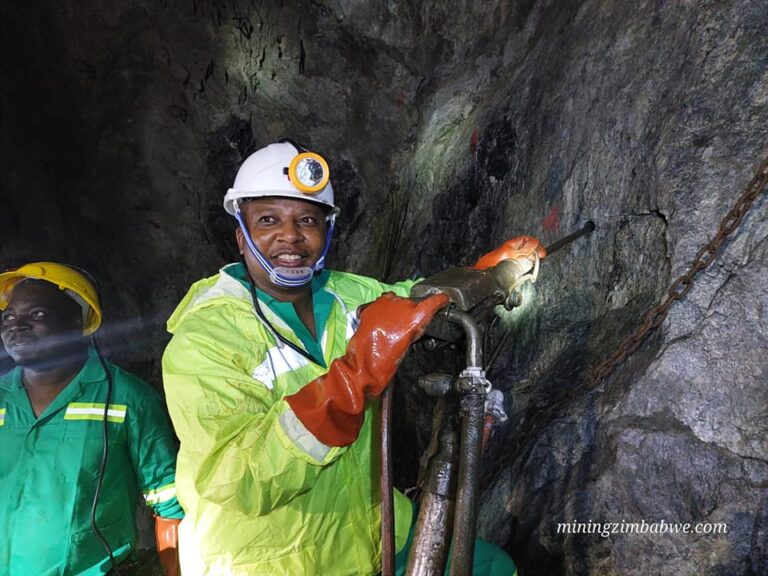
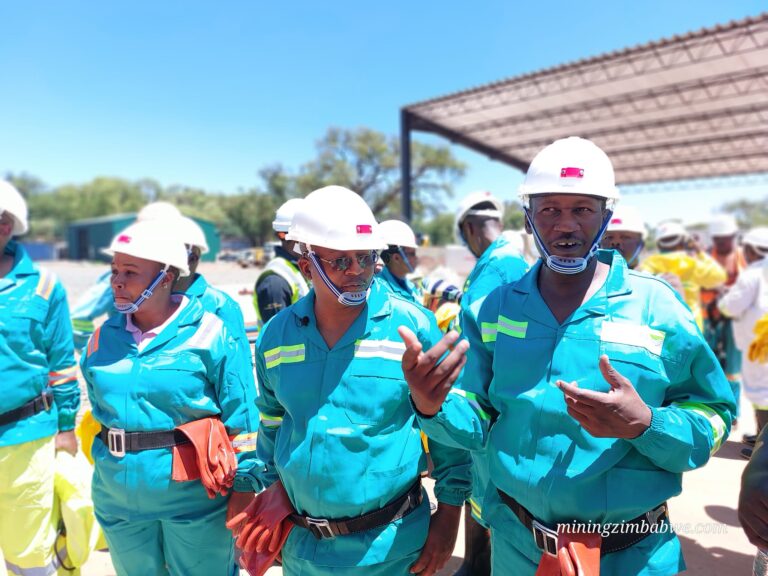
The Deputy Minister of Mines and Mining Development Engineer Polite Kambamura has urged the mining industry to mine sustainably drawing lessons from previous owners of the Pickstone Peerless Mine in Chegutu where Operations were able to be resumed despite the mine having been shut down due to low grades then.
Rudairo Mapuranga
Speaking to Mining Zimbabweon the sidelines of a Ministerial visit to the Pickstone Peerless underground project, Kambamura encouraged miners to mine sustainably to enable future generations to benefit.
“The old miners mined this mine sustainably that is why the current investor was able to resuscitate this mine because it was mined in a sustainable manner.
“So we urge other miners to mine sustainably so that the future generation can also benefit. In the future a grade of 0.5 grams per tonne might also be sustainable,” Dr Kambamura said.
The Deputy Minister also commended Dallaglio for reopening closed Mines which echoes President Emmerson Mnangagwa’s vision for the country to become an upper middle-income economy by 2030.
“This is a high-grade low volume as compared to Eureka which is a low-grade high volume. 2030 vision is built by contributions from different sectors of the economy, in this sector its all about opening new and old Mines through intensive exploration. So what Pickstone and Peerless have done is to reopen this mine which was closed. It was closed long back because it had low grades which are basically high grades in this era,” Engineer Polite Kambamura said.
Speaking to Mining Zimbabwe Pickstone Peerless General Manager Engineer Alfred Madowe said the development of Pickstone underground operation has created 550 new jobs.
He said the mine was still running its open pit and intending to close early next year but one of the pits will continue to end of next year to support the underground operations with an Outlook to produce an average 100 kgs a month.
The Mine according to Engineer Madowe, Pickstone will next year expand its CIL plant to help the mine process 42 000 tonnes a month.
“This operation is now employing about 550 people. We are still running the open pit, we are closing one of the pits early next year but one of the pits is continuing hopefully to the end of next year basically to support underground as we are ramping up underground production. We also want to ramp up the tonnes we are processing, in terms of outlook we would want to get to about 100 kgs a month. From June next year we would have expanded our CIL plant. At the moment we have extended an additional mill so we now have 4 mills capable of doing 42 000 tonnes but we can’t do 42 000 because of the limitation on our tanks but after expanding on our tanks we can now go to 42000 tonnes per month,” Engineer Madowe said.
Zimbabwe Institute of Foundries (ZIF), says the local foundries sector needs funding to the tune of US$ 100 million for retooling purposes to boost competitiveness which comes from inefficiencies on the back of obsolete and outdated technologies the sector is currently using, Mining Zimbabwe can report.
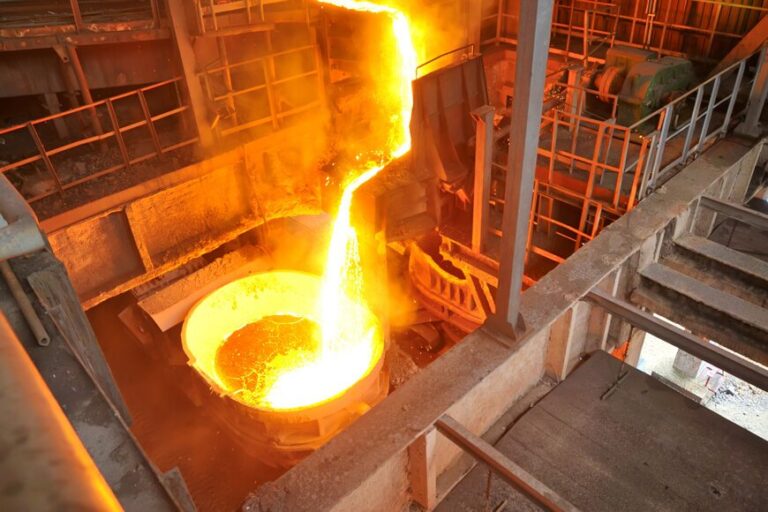
A foundry is a metal casting manufacturing facility where metals are cast into shapes by melting them into a liquid, pouring the metal into a mould, and then removing the mould material once the metal has set and cooled. Aluminium and cast iron are the most commonly treated metals.
Foundry casting offers several major advantages over other metal-forming processes. First and foremost, it’s an incredibly cost-effective way to create large numbers of parts quickly and efficiently. With one mould, hundreds or even thousands of identical parts can be produced in just a few hours a task that would otherwise require significant time and labour to complete. Adding to that foundries can create complex parts that would be difficult or impossible to make using other methods.
The foundry sector plays a crucial role in Zimbabwe’s industrial landscape, serving as the backbone of various industries like mining, agriculture, and manufacturing. It provides essential components and equipment, making it vital for the country’s economic growth and development. They produce diverse cast components, including iron, steel, and aluminium castings, with an annual production estimated to be around 40,000 tonnes.
However of late the local foundries sector has been in a deplorable state facing a myriad of bottlenecks among them the availability of raw materials and the country’s unreliable power supply which have all affected production. Chief amongst them the insufficient investment in modern technology and infrastructure, which have limited production capacity as many local foundries still rely on outdated methods, hindering their efficiency and competitiveness.
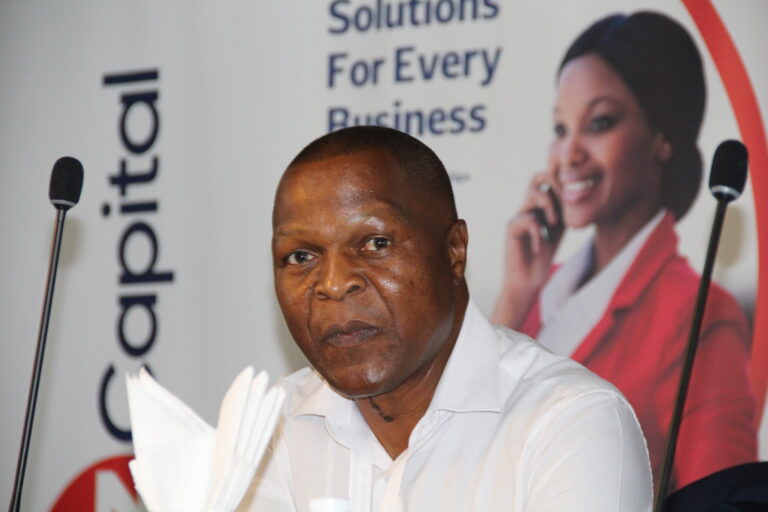
Speaking to Mining Zimbabwe on the sidelines of a ZIF summit held in the capital recently ZIF Chief Operations Officer Dosman Mangisi said for the sector to be competitive US100 million is needed for retooling and investment in modern technology.
”The foundries that have expressed the need of funding the money is around 15 million USD but retooling of the sector in full scale there is need of US$100 million to say we have a foundry with the whole value chain and latest technologies,”
”The challenges the foundries sector right now apart from raw materials is on the retooling side. Old equipment our casting ratio with other world is way low for example, South Africa is at 1:10, India is at 1:60, Europe 1:40 China 1:50. The Government should look into retooling and assist in technology. If we look elsewhere the Britain government gave money to the foundries for retooling, upgrading to new technology and efficient use of energy. There is an urgent need to change the technology and equipment that we are using because we are using 3 times more energy. As a result, we need funding to get new efficient technology and working capital as well,” Mangisi said.
Over the years the modern foundry industry has been rapidly evolving, with new technologies emerging that can significantly improve efficiency, productivity, and quality. Some of the key modern technologies that are essential for a competitive foundry in today’s market include Computer-Aided Design (CAD) and Computer-Aided Manufacturing Automated manufacturing processes, for example, the 3D modeling software. As labour is one of the biggest cost drivers in the industry investment in robotics and automation reduces labor costs which will increase the foundry’s profitability.
Meanwhile, the industry is currently battling an influx from imports competition from imported castings, particularly from South Africa, which is cheaper due to economies of scale. However, despite the challenges, the Zimbabwean foundry sector holds immense potential for growth with increased investment, technological advancements, and improved resource management.
According to industry experts, the sector can increase production capacity and efficiency through modernizing equipment and adopting new technologies can significantly boost production output and reduce costs. The sector also has the potential to expand into new markets. Through focusing on quality and niche markets, foundries can explore export opportunities and diversify their customer base.
Also, there is potential for export to regional markets which is currently being affected by the government ban on the export of scrap metals. Prior to the ban, the country exported approximately 40,000 tonnes of scrap metal annually, generating millions of dollars in revenue. However, the export also contributed to a shortage of scrap metal for local foundries, forcing them to either ration their production or import raw materials at higher prices.
As ZIF is pushing for import substitution Mangisi implored the government to address policy issues chief amongst the the import substitution as increased local production of castings can help reduce reliance on imported components, saving foreign exchange and promoting self-sufficiency.
”We also call on the authorities to address the issues to do with policy remember we were of domestic pricing the minister spoke of subsiding and took it as a serious issue. There is also the issue of import substitutions government is paying attention but they should quickly look into that and also open doors for this key critical industry of metals so that we have enough time to sit down and share,” he said.
The government, through the Ministry of Mines and Mining Development, is considering imposing a new tax on miners, with the proceeds going toward a fee to promote the revival of the country’s foundry sector, which is a vital supplier to the mining industry.
This was said by Minister Soda Zhemu at a recent event in the capital while analyzing alternative ways to fund the retooling of the key sector, which is competing with far cheaper imports from regional competitors who benefit from economies of scale.
The mining sector is one of the biggest customers, as foundries produce a wide range of machinery and parts used in mining operations, such as crushers, grinding mills, conveyor belts, and mining trucks vital components which ensure efficient and safe extraction of minerals.
According to the Zimbabwe Institute of Foundries (ZIF), US$100 million is required for the sector to produce efficiently and become competitive against regional and global players.
Faced with this challenge, Minister Soda Zhemu mulled a tax against the miners as an option in financing the retooling of the foundries sector so that it may improve on efficiencies and ultimately compete in the global market.
“We have to create the money for us to consume that same money. Currently, there is no policy on subsidies, so we have to levy it. We have to be innovative as to how the fund can be created. It can be a tax against the miners, and then we can levy, which will then be channelled towards the foundries sector,”
”We need to continuously engage so that we come up with a ready mechanism as to how you can get a fund that is specifically for the development of your industry. I will have a discussion with the Minister of Finance to see if we can come up with mechanisms to deal with the retooling issue, and once you have retooled, obviously, you can achieve the required efficiencies and economies of scale,” Zhemu said.
The Minister added that improving on efficiencies is key going forward as the government can no longer provide the protection that used to be available in the past to put some embargo for some products as the world has now become a global village.
”You shall always have those products being manufactured in China competing with your local products,” Zhemu added.
While it might come as pleasant news to players in the foundries sector, if it comes to fruition, this will be another tax on the already heavily taxed miners.
The high tax burden on miners has been a source of concern for the mining industry, arguing that it discourages investment and hinders the growth of the sector. On several occasions, they have called on the government to review its tax regime and create a more attractive environment for investment.
The government, on the other hand, has argued that taxes are necessary to generate revenue for essential services and infrastructure projects. They also argue that the government needs to ensure that it receives a fair share of the profits from the country’s mineral resources.
Gold-focused miner, Dallaglio Holdings through its Pickstone Peerless Mine underground project has created 550 new jobs with a potential to create a similar number by developing its open pit mine to underground with feasibility studies currently underway.
Rudairo Mapuranga
The study is for a second underground operation on the Peerless orebody. This is the orebody that is lower grade but has a wider orebody.
Speaking on the sidelines of a Ministerial visit by the Deputy Minister of Mines and Mining Development Engineer Polite Kambamura, Pickstone Peerless Mine General Manager Engineer Alfred Madowe said the underground operation took an investment of US$22 million with a further US$27 million committed towards its expansion. This in total created 550 new jobs.
He said the mine was still running its open pit and intended to close early next year but one of the pits will continue to end of next year to support the underground operations as the mine ramps up underground production with an Outlook to go to an average 100 kgs a month.
The Mine according to Engineer Madowe will next year expand its CIL plant to help the mine process 42 000 tonnes a month.
“This operation is now employing about 550 people that are going underground, those are 550 new jobs that this operation has created. We are still running the open pit, we are closing one of the pits early next year but one of the pit is continuing hopefully to end of next year basically to support underground as we are ramping up underground production. We also want to rampup the tonnes we are processing, in terms of out look we would want to go to about 100 kgs a month. From June next we would have expanded our CIL plant, at the moment we have extended an additional mill so we now have 4 mills capable of doing 42 000 tonnes but we can’t do 42 000 because of the limitation on our tanks but after expanding on our tanks we can now go to 42000 tonnes per month,” Engineer Madowe said.
Eng Madowe said that work was in progress for the development of the open pit project to underground with conceptual studies already concluded showing a potential underground operation with a bigger ore body than the current underground operation but with slightly Lower grades.
He said the mine was now moving to feasibility study where a 40 metres decline is going to be established below the pit and then further drilling and exploration commencing to define size and type of the body.
“What we started by doing is a conceptual study, it took the exploration drilling that we did for the surface operation, it extended about 60 to 100 metres below the pit bottom. We used that information to estimate the shape and size of the ore body further down, the indication are that we a potential underground operation. Its a bigger ore body, slightly Lower grades than Pickstone but because of the volume it will be able to sustain underground operation. We are now moving to the feasibility study ,what we want to do is put a decline and then go about 40m below the pit and start drilling further down and do exploration. On the base of that exploration we can then define the size, and type of underground, it’s an underground we can actually mechanise,” Engineer Madowe said.
SG 90% AND ABOVE US$61.56/g
SG ABOVE 85% BUT BELOW 90% US$60.91g
SG ABOVE 80% BUT BELOW 85% US$60.26/g
SG ABOVE 75% BUT BELOW 80% US$59.61/g
SAMPLE BELOW 10g BUT ABOVE 5g US$58.63/g
Fire Assay CASH $61.89/g
NB: Fire Assay cash price is for gold above 100gs, no sample is deducted.
For the Fire Assay Transfer price, a sample of not more than 10g is deducted
A 2% royalty is charged on all deposits (small-scale miners)
A 5% royalty is set for Primary Producers
Cash available. Fidelity Gold Refinery prices will be changing daily to match world market prices.
Rescue workers in Zambia have pulled out the first survivor of a December 1 landslide that inundated an open-pit copper mine and trapped at least 25 people working there, the disaster management unit said on Wednesday.
The rescue team also retrieved one body which had yet to be identified, Zambia’s Disaster Management and Mitigation Unit said in a statement posted on Facebook.
“The Search and Rescue Team has in the last 3 hours managed to retrieve one more body bring the total number of dead bodies retrieved to 2 and one person rescued alive. The operation is currently ongoing,” Disaster Management and Mitigation Unit said.
“A 49-year-old man has been rescued from the collapsed mine slug dump site in Chingola after being trapped with several other miners,” it said, adding that he was being treated in hospital.
Zambia’s President Hakainde Hichilema said on Tuesday he was still hopeful that the trapped miners, who were working there without a permit, were still alive, as rescue efforts continued.
The miners at Seseli mine in Chingola, about 400km (250 miles) northwest of Lusaka, were trapped in three locations and heavy rains had flooded the pit, the government said.
The mine was previously owned by Vedanta’s Konkola Copper Mines (KCM) but is now in the hands of a local company that has yet to start mining operations as it awaits safety and environmental approvals.
It was still not clear how many miners had been trapped but mines minister Paul Kabuswe said on Monday 25 families had so far come forward to claim missing relatives who were working when the accident happened.
Rescue workers, including military personnel and others from large-scale mining companies, were being cautious due to soft ground, slowing down the operation.
The stance by the government to implement beneficiation tax during the first quarter of next year will squeeze mining growth, the Chamber of Mines of Zimbabwe has hinted.
Speaking at the Business Post Budget analysis Breakfast meeting held in the capital Chamber of Mines President Mr Thomas Gono said due to softening commodity prices, implementing a beneficiation tax would affect the growth of the mining industry.
He said the mining industry growth has been relying on its own resources due to failure to attract external capital therefore softening commodity prices might lead many mines to fail to reach targets to beneficiate lithium to lithium carbonates due to lack of funding.
Gono said as the Chamber of Mines they understand that governance is a fiscal position. He however said that productive sectors, including the mining sector, require supportive measures in light of the unfolding and softening of the commodity prices.
“We submitted that taxes and royalties be moderated. While lithium companies are expected to provide beneficiation plans, we hope that the agreed roadmaps must be flexible to accommodate peculiar gestation periods and life of mines of the projects. In addition, we were also expecting the budget to align beneficiation tax from the platinum group metal concentrates to the agreed beneficiation roadmaps for the PGMs.
“We are of the view that the projects in the economy will squeeze the capacity for organic growth. It’s very difficult to mobilize funding from outside. So what is there for us is actually to use only funding for organic growth. Thus the medium-term prospects for the economy will be on the downside. There is a need for the government to support productive sectors to restore viability and generate impetus for increased activities in the outlook,” Gono said.
Speaking on the sidelines of the event, the Chamber of Mines CEO Mr Isaac Kwesu said the expectations and position of the chamber was specifically for the government to consider supporting the mining sector during this difficult phase by giving some form of reprieve that reduces cost.
“As you are aware, our mining industry is currently going through a difficult phase of commodity slowdown. The prices are very, very low. The cost structure has not been helping. We have seen the cost of doing business mining being propelled up in the past 12 months. So from the budget statement, our expectations and position of the chamber was specifically for the government to consider supporting the mining sector during this difficult phase by giving some form of reprieve that reduces cost. This includes possibly the royalties for specific minerals such as PGMs and minerals. Lithium, which went up, as well as the cost of electricity. The tariff also has gone up by more than 40%,” Kwesu said.
The second edition of the Metal Casting and Engineering Summit and Awards will run under the theme, “Value addition and beneficiation of metals- Developing local markets for metal casting engineering.”
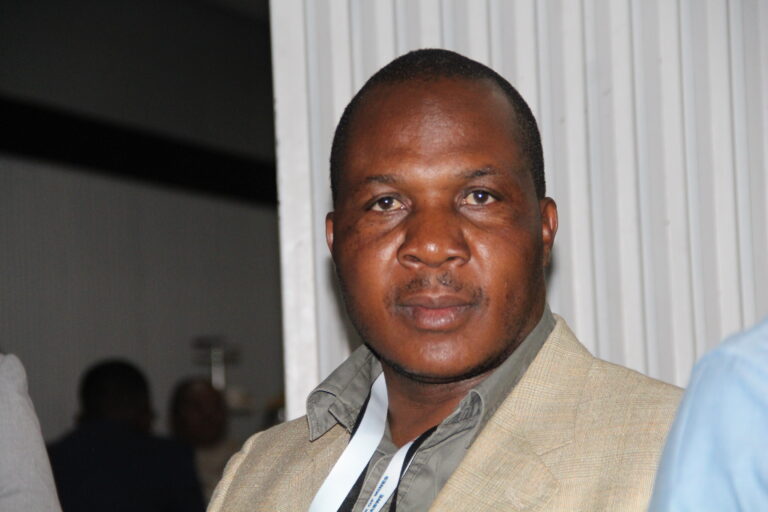
According to ZIF COO Dosman Mangisi, the Summit has come at a time when the country is on massive development and growth therefore it was of importance to ensure the foundry industry takes centre stage in national development.
Mangisi said retooling through building bridges with Financial Institutions for the funding of the sector is going to be an important aspect at the Summit.
He also said that the foundry industry should be able to tap into the low-hanging fruits in different industries like mining, agriculture, transport, construction and structures among others to ensure that the country does not import equipment such as hammer mills, among others.
“The local foundry should be able to feed the local market and leverage the issue of import substitution. We have low-hanging fruits in different sectors, we need to be able to tap into that. Also enhancing quality control through retooling, we want to build bridges with the financial Institutions to provide working capital.
Mangisi said the awards will recognise companies, organisations and individuals that are working to see the growth of the sector.
“The issue of awards is to recognize people who are pushing the growth and development of the foundry industry,” Mangisi said.
THE FOLLOWING ARE KEY HIGHLIGHTS FOR the summit
Unveiling of retooling and working capital funding.
Shortlisting of Distributors of Raw materials (Dinson Iron Steel Distributorship in conjunction with ZIF).
Business partnerships with Banks,eg (order finance systems).
Presentation of Beneficiation and Value Addition Awards Dinner.
An opportunity to visit Dinson Iron and Steel company in Manhize, Mvuma.
Business Networking with key stakeholders and government principals.
FOR MORE INFORMATION CONTACT 0712033025/0772942473. VENUE: Chapman Gold Club, HARARE. DATE 07 DECEMBER 2023.
SG 90% AND ABOVE US$61.47/g
SG ABOVE 85% BUT BELOW 90% US$60.82g
SG ABOVE 80% BUT BELOW 85% US$60.17/g
SG ABOVE 75% BUT BELOW 80% US$59.52/g
SAMPLE BELOW 10g BUT ABOVE 5g US$58.54/g
NB: Fire Assay cash price is for gold above 100gs, no sample is deducted.
For the Fire Assay Transfer price, a sample of not more than 10g is deducted
A 2% royalty is charged on all deposits (small-scale miners)
A 5% royalty is set for Primary Producers
Cash available. Fidelity Gold Refinery prices will be changing daily to match world market prices.
ESG, which stands for Environmental, Social, and Governance, has become a crucial aspect of the Global mining industry. With increasing concerns about climate change, human rights, and corporate responsibility, mining companies are now focusing on integrating sustainable practices into their operations.
Environmental considerations involve minimizing the impact of mining activities on ecosystems, reducing carbon emissions, and conserving water resources. Social factors include ensuring the safety and well-being of workers, respecting local communities, and promoting diversity and inclusion. Governance entails transparency, ethical decision-making, and accountability.
By incorporating ESG principles, mining companies can not only mitigate risks but also enhance their reputation and attract responsible investors. They can implement measures such as using renewable energy sources, adopting advanced technologies for efficient resource utilization, and engaging with stakeholders.
Mining Zimbabwespoke to Shakeelah who gave us an insight into how one of Zimbabwe’s mining giants, Dallaglio is handling ESG. Here is our interaction.
Can you please tell us about your background and your position at Dallaglio?
My name is Shakeelah KassimI, I am a Chemical Engineer with experience in the development, implementation and monitoring of Quality, Environmental, Occupational Health and Safety (OHS), and Risk Management systems in Zimbabwe. My current role at Dallaglio primarily involves the development of systems and processes to understand, monitor and report on ESG-related issues across our operations.
The world is looking forward for mining companies to prioritize issues of Environment Social and Governance (ESG) what is Dallaglio’s strategy for ESG issues?
The foundation of Dallaglio’s ESG Strategy is built on taking the time to fully understand the expectations and priorities of our stakeholders, both internal and external. This understanding of what issues are most important to our Business and stakeholders has informed and will continue to inform the individual elements of our ESG strategy. This approach also allows us to prioritize high-impact areas and effectively identify and monitor our ESG-related risks.
We currently have systems in place to monitor our ESG metrics and are in the process of collecting sufficient data to help us fully understand and establish a baseline for Dallaglio’s ESG performance. This baseline will be used to set targets specific to our operations going forward, with the aim to continuously improve.
Our strategy is also guided by international reporting and disclosure standards, such as those outlined in the Global Reporting Initiative (GRI), the Task Force on Climate-Related Financial Disclosures (TCFD), the International Financial Reporting Standards (IFRS) and relevant International Council on Mining and Metals (ICMM) guidelines and frameworks.
In terms of mine rehabilitation strategy, what has Dallaglio prepared to ensure the Environment is safe and usable after mining?
Rehabilitation has been considered at all stages, from Mine development to operation, all the way through to closure, and rehabilitation plans are in place for all our operations. Progressive rehabilitation is also being done where possible, for example, the new Tailings Storage Facility (TSF) at Eureka was designed and is operated drawing from guidelines in the Global Industry Standard on Tailings Management (GISTM) set up by the ICMM.
In 2023, what is Dallaglio’s CSR Strategy and how much has been invested by the company?
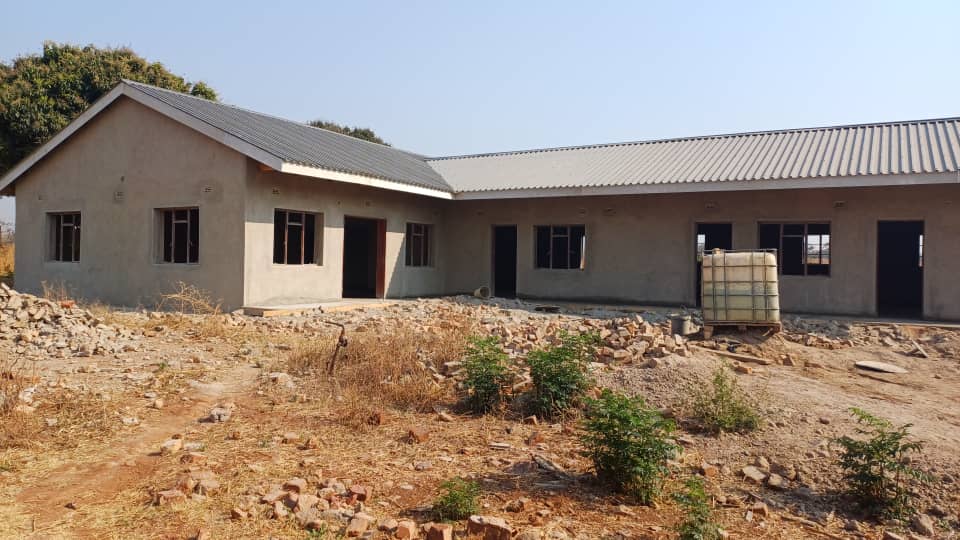
In 2023, we aim to place more focus on measuring and understanding the effectiveness of the CSR programs that we currently have in place to identify opportunities for improvement. At the end of Q2 2023, close to US$50,000 was invested in Community-related initiatives, including the rehabilitation of roads and commissioning of boreholes for nearby Villages, as well as the continued construction of the Mafuti Maternity Clinic at Pickstone Mine. A further investment of over US$100,000 is planned for the remainder of the year.
Mafuti Mother’s Clinic Construction Progress Pickstone September 2023
What has been the response of the communities regarding the ESG initiatives your company is currently undertaking?
The response from the surrounding communities has been largely positive as our operations bring not only employment opportunities but also the development of infrastructure in the surrounding areas, including schools and health facilities.
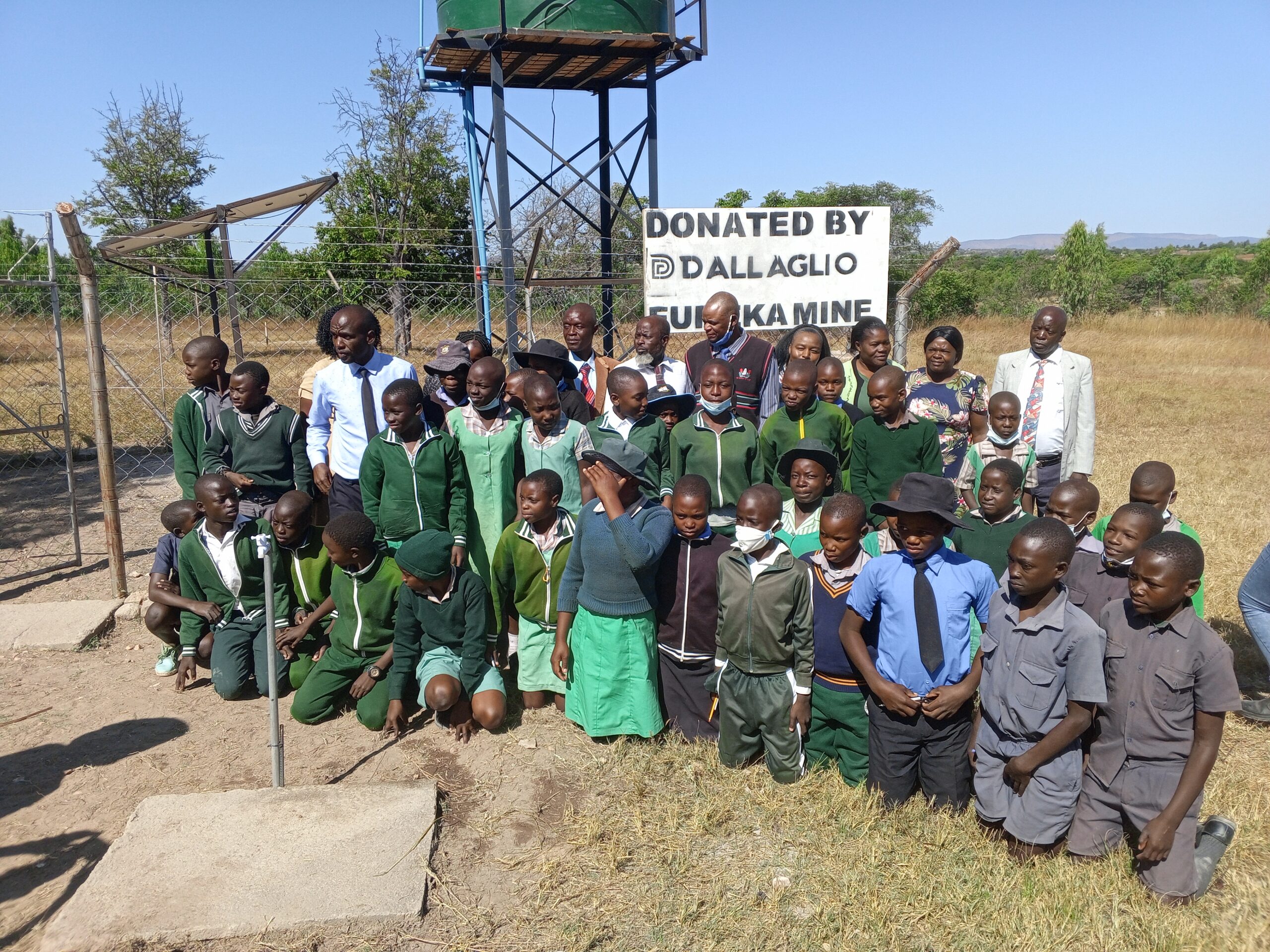
Commissioning of Borehole at Muzika Primary School Eureka Mine
Do you have a mine closure strategy and what does it say in strategy?
We do have Mine closure strategies in place for both of our mines and these are constantly being adjusted and updated according to any developments in our operations. The primary objectives of our closure plans are as follows:
To ensure the mine, processing site and associated infrastructure are returned to a state as close as possible to the original.
To ensure any mine infrastructure, and associated impacts not completely returned to their original state have the potential to be of use to the local community and stakeholders for socially or economically viable activities.
To ensure the site is made safe for humans and animals.
To ensure the site is left physically, chemically, and biologically stable.
Closure is achieved efficiently and cost-effectively with minimal social and economic upheaval.
To ensure sufficient funds are available to achieve the closure objectives.
Can you please give us a list of Dallaglio’s ESG initiatives since its inception?
Dallaglio’s Initiatives are as follows:
The establishment of Pickstone Milling Centre for the small-scale mining community in the area, where ore from tributed claims is brought to the milling centre by the small-scale miners. The company crushes and mills this ore, and the miners retain the free gold, while the company benefits from processing of the remaining sands.
Construction of a Mother’s Shelter at Mafuti Clinic near Pickstone to provide delivery beds, prenatal beds and other facilities for pregnant women awaiting delivery with the aim to reduce the mortality rate of mothers and their babies.
Rehabilitation of the main road in the Grey City- Muroiwa and Mazhambe villages near Guruve, as well as grading of the Pickstone-Chegutu Road.
Installation and commissioning of solar and manual boreholes at health facilities, schools and villages in the communities near Pickstone and Eureka.
Donations of learning materials, including stationery and textbooks, to primary and secondary schools in the communities surrounding Pickstone and Eureka.
Grading of school grounds at local schools.
Repair of infrastructure and facilities in local areas, including construction of adequate ablution facilities at schools and clinics.
Ad hoc donations to local government, including ZRP and traditional leadership, to assist in carrying out duties and for traditional ceremonies.
As far as possible, there is priority employment of people from surrounding communities.
Internal graduate programs for training and employment of young, local talent.
What do you think needs to be done for mining companies to adhere to ESG initiatives?
In my view, commitment from the Board and senior leadership is required to ensure a solid foundation for effective ESG programs, I believe adherence will then follow. At Dallaglio, we are privileged to be guided by a Board and senior leadership team who fully understand and accept the extent of our social responsibility as a mining company and play a key role in driving our ESG initiatives forward.
To provide the best experiences, we use technologies like cookies to store and/or access device information. Consenting to these technologies will allow us to process data such as browsing behavior or unique IDs on this site. Not consenting or withdrawing consent, may adversely affect certain features and functions.
Functional
Always active
The technical storage or access is strictly necessary for the legitimate purpose of enabling the use of a specific service explicitly requested by the subscriber or user, or for the sole purpose of carrying out the transmission of a communication over an electronic communications network.
Preferences
The technical storage or access is necessary for the legitimate purpose of storing preferences that are not requested by the subscriber or user.
Statistics
The technical storage or access that is used exclusively for statistical purposes.The technical storage or access that is used exclusively for anonymous statistical purposes. Without a subpoena, voluntary compliance on the part of your Internet Service Provider, or additional records from a third party, information stored or retrieved for this purpose alone cannot usually be used to identify you.
Marketing
The technical storage or access is required to create user profiles to send advertising, or to track the user on a website or across several websites for similar marketing purposes.