

Home Blog Page 24

“Africa Will Either Supply the Transition or Co-Own It”: Minister Kambamura Makes Powerful Case for Value Addition Financing

0

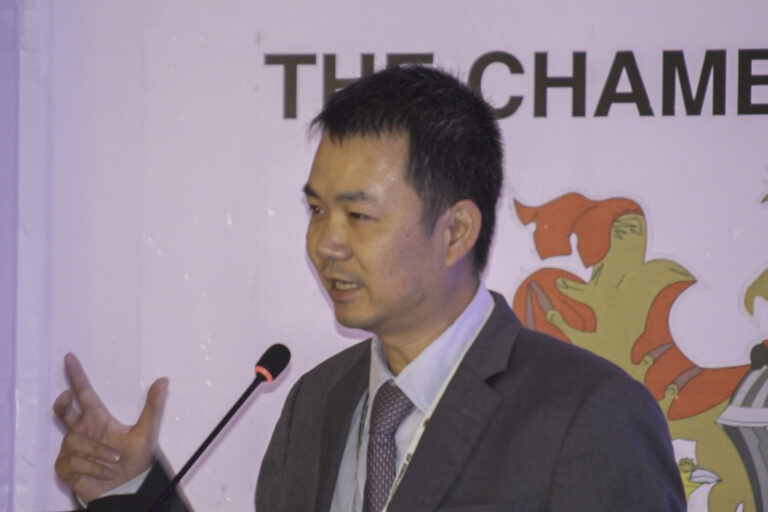
CAPE TOWN – In a stirring address that framed the continent’s critical minerals endowment as both a responsibility and an opportunity, Zimbabwe’s Minister of Mines and Mining Development, Hon. Dr Polite Kambamura, has challenged Africa to move decisively from being a raw material supplier to a co-owner of the global energy transition, Mining Zimbabwe can report.

By Rudairo Mapuranga

Speaking at the Sustainable Energy for All roundtable on Financing Value Addition in Africa, held on the sidelines of the Investing in African Mining Indaba, the Minister delivered an unvarnished assessment of the continent’s position in global value chains and a clear prescription for change.

“The reality is that there is no global energy transition without African minerals,” Kambamura stated. “The question is whether Africa will simply supply the transition—or co-own it.”

The Minister painted a sobering statistical picture of Africa’s underweight position in global trade. Drawing from UNCTAD data, he noted that while Africa’s population share is rising to approximately 16% of the world’s total, the continent accounts for less than 3% of world trade as of 2024.

“The gist of the lesson is very clear: Africa is a major future market but still sits too low in global trade and value chains,” he said.

Yet he pointed to green shoots of recovery. FDI inflows to Africa jumped 75% to US$97 billion in 2024, representing about 6% of global FDI. “Again, the message is very clear: Africa is investable,” Kambamura asserted. However, he cautioned that investment patterns remain “heavily concentrated on specific projects and remain deal-driven,” calling for the deepening of “repeatable value-adding pipelines, not celebrating one-offs.”

“The central constraint we must confront is finance—not just the availability of capital, but the right kind of capital, deployed at the right stages of the value chain and aligned with national and regional industrial policies,” he explained.

From early-stage exploration to processing facilities, manufacturing plants, and enabling infrastructure, Dr. Kambamura argued that each segment of the mining value chain “requires tailored financing solutions and risk-sharing mechanisms.”

In a departure from conventional narratives that look exclusively outward for capital, the Minister spotlighted two largely untapped domestic sources:

Remittances: Citing World Bank estimates, he noted that Sub-Saharan Africa remittances reached US$56 billion in 2024. “The good news is that these remittances are not charity; they are patient capital,” Kambamura said. He urged the conversion of these flows into savings, mortgages, mining project value chain finance, and infrastructure funding.

African Sovereign Wealth Funds: While GlobalSWF reports that African state-owned institutions manage nearly US$1 trillion in assets, African sovereign wealth funds account for only 1% of global SWF assets. “The key message is that Africa has meaningful domestic pools—in the form of pensions, central banks, and SWFs,” he stated. “The opportunity is to mobilise them into the development of mining value chains, infrastructure, trade finance, and industrial capacity—with proper risk instruments.”

For Zimbabwe, the Minister positioned these continental ambitions within ongoing domestic reforms. “We are implementing deliberate policy reforms to promote local beneficiation, value addition, and investment in downstream industries, while strengthening transparency, governance, and sustainability,” he said.

He acknowledged that unlocking these opportunities at scale “demands closer collaboration between governments, development finance institutions, export credit agencies, and private investors.” Blended finance, catalytic capital, and de-risking instruments, he argued, “must move from theory into practice.”

The roundtable, convened by Sustainable Energy for All, the Council for Critical Minerals Development in the Global South, and UNIDO’s Global Alliance for Responsible and Green Minerals, provided a platform to interrogate framework conditions that attract long-term investment.

Kambamura urged participants to remain focused on practical outcomes: “how we mobilise capital, how we align finance with industrial policy, and how we ensure that Africa emerges not as a peripheral player, but as a competitive and indispensable partner in global clean energy supply chains.”

His closing message was both a challenge and an invitation: to translate Africa’s mineral wealth into jobs, industries, and shared prosperity—not as a passive supplier, but as an equal architect of the green energy future.

Mining Zimbabwe Distributes Edition 85 at Mining Indaba 2026

0

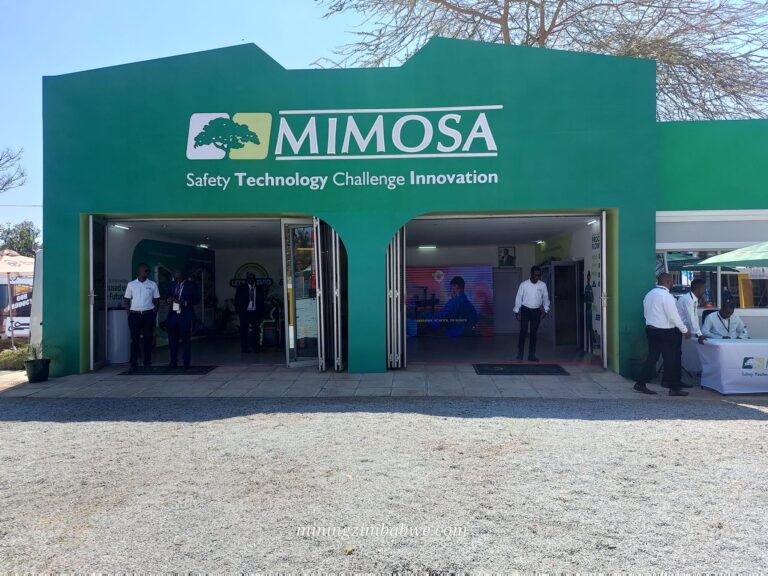
CAPE TOWNMining Zimbabwe made a strong impression at the Investing in African Mining Indaba 2026 after successfully distributing Edition 85 of its flagship publication to delegates from across the globe.

The latest edition was circulated during one of Africa’s most influential mining gatherings, ensuring Zimbabwe’s mining narrative was positioned directly before international investors, policymakers, mining executives, and service providers gathered in Cape Town.

Edition 85 carries in-depth coverage of Zimbabwe’s evolving mining policy landscape, investment opportunities, current projects, exploration prospects, and sector performance, reinforcing Mining Zimbabwe’s role as a leading voice in the country’s extractives industry.

The distribution formed part of a broader strategic push to elevate Zimbabwe’s mining brand on the global stage, aligning with ongoing efforts by both government and private sector players to attract foreign direct investment into the sector.

Speaking on the sidelines of Indaba, Timelison Media Managing Director Keith Sungiso said the platform remains committed to ensuring Zimbabwe’s mining story is told accurately and competitively in international markets.

“Mining Indaba is where capital meets opportunity. As Mining Zimbabwe, our responsibility is to ensure that Zimbabwe’s mining reality, reforms, and investment potential are visible in those rooms,” said Sungiso.

“Edition 85 is not just a magazine; it is a strategic communication tool. We are deliberate about positioning Zimbabwe as a serious mining jurisdiction with real projects, real production, and real opportunity.”

Sungiso also emphasised the significance of the publication’s formal role at the event.

“As a media partner of Mining Indaba, we are not just observers — we are active participants in shaping the African mining conversation. Our partnership allows us to amplify Zimbabwe’s voice within a global investment community and connect our local industry to international capital and innovation.”

Delegates at the Zimbabwe pavilion and across various networking events welcomed the publication, with many acknowledging the importance of credible, sector-focused media (also known as trade publications) in bridging information gaps between investors and on-the-ground operators.

Over the years, Mining Zimbabwe has consistently used the Indaba platform to expand its regional footprint, strengthen media partnerships, and deepen engagement with international stakeholders. The distribution of Edition 85 continues that trajectory, reinforcing the publication’s growing influence beyond Zimbabwe’s borders.

As global capital becomes increasingly selective, platforms that provide verified insights, policy clarity, and operational updates are becoming critical in shaping investment decisions. Through its presence at Mining Indaba 2026, Mining Zimbabwe once again demonstrated that everything mining is its business — and that Zimbabwe’s mining story is firmly part of the continental conversation.

Gold buying prices in Zimbabwe per gram/ ounce, 11 February 2026

0

Gold buying prices in Zimbabwe per gram/ ounce, 11 February 2026, from the official gold buyer and exporter Fidelity Gold Refinery (FGR).

1 oz = 31.1035 g

Here you go — converted neatly into USD per troy ounce (oz) using 1 oz = 31.1035 g.

CategoryPrice ($/g)Price ($/oz)
SG 90% and above153.234,766.29
SG 85% and above but below 90%151.614,715.91
SG 80% and above but below 85%149.984,665.21
SG 75% and above but below 80%148.364,614.83
Sample 5g and above but below 10g145.934,539.25
Fire Assay CASH154.044,791.48


Note: The Fire Assay cash price applies to gold above 100g, with no sample deduction.

A sample of not more than 10g is deducted for the Fire Assay Transfer price.

Indigenisation Not Synonymous With Compulsory Equity – Government Clarifies

0

CAPE TOWN — In an effort to demystify one of the most debated aspects of Zimbabwe’s investment policy, the government has provided fresh clarity on its indigenisation framework, assuring miners it prioritises partnership over prescriptive ownership, Mining Zimbabwe can report.

By Rudairo Mapuranga

The Permanent Secretary for the Ministry of Mines and Mining Development, Mr Pfungwa Kunaka, delivering a speech on behalf of the Minister, Hon. Dr Polite Kambamura, at the Zimbabwe Mining Breakfast in Cape Town, directly addressed investor concerns by redefining the policy’s core objective.

“It is vital to remember that the mining industry is so critical that nations in Africa, Latin America, Europe, and Asia have their own versions of indigenisation — what differs is just the terminology used and the stipulated thresholds,” Kunaka stated, reading the Minister’s speech.

He moved to dispel long-held apprehensions by explicitly separating the policy from mandatory shareholding demands.

“In Zimbabwe, indigenisation is not synonymous with compulsory equity thresholds,” he declared.

The Minister’s speech outlined a broader, more flexible vision for economic empowerment, aligning it with global norms of local content and development.

“Our empowerment framework is broad-based and outcome-focused,” he explained. “It encompasses local procurement that supports Zimbabwean suppliers and enterprises, beneficiation and value addition that create jobs and industrial linkages, skills development and employment that build local technical and managerial capacity, and community development through investment in host communities.”

On the specific issue of equity, which has been a primary source of investor uncertainty, the Minister offered a clear, conciliatory position.

“Equity participation is one component of this framework, but it is applied flexibly and through mutual agreement,” he said. “The emphasis is on genuine partnership rather than rigid formulas.”

This clarification signifies the substantial evolution of Zimbabwe’s empowerment policy. The original Indigenisation and Economic Empowerment Act, enacted in 2008, once mandated that all businesses, including mines, be 51% owned by indigenous Zimbabweans. This prescriptive approach was a significant deterrent to foreign investment.

The policy was significantly amended, most notably through the 2022 Finance Act, which repealed the 51/49% indigenous ownership requirement for most sectors of the economy. For the mining sector, the law now reserves specific minerals for empowerment partners: diamonds are exclusively mined through joint ventures with the state, while platinum projects require a 15% non-contributory shareholding for designated entities. Crucially, for all other minerals, including gold, lithium, and copper, foreign investors are permitted 100% ownership, a point the Minister reaffirmed in his address.

The move away from rigid equity mandates aligns with a global shift where a miner’s “social licence to operate” is increasingly built on Environmental, Social, and Governance (ESG) performance and responsible sourcing, not just ownership structures. The Minister’s redefinition of indigenisation to focus on “community development,” “skills development,” and “local procurement” directly mirrors the “S” and “G” in ESG frameworks.

This modern approach positions Zimbabwe to attract capital from international funds mandating strong ESG compliance. It signals that the government seeks investors committed to responsible mining — creating shared value, upholding environmental stewardship, and investing in host communities — as the foundation for long-term partnership and national benefit.

Fidelity Gold Refinery (FGR) Adopts Live Global Pricing

0

In a significant move set to enhance competitiveness and transparency, Fidelity Gold Refinery (FGR) has announced an immediate shift to live market spot prices for all its gold purchases and settlements, Mining Zimbabwe can report.

By Rudairo Mapuranga

A key update to this new pricing structure is the method for setting the daily fixed price. Previously benchmarked against the previous day’s closing price, FGR will now set its daily fixed price using a live morning benchmark. This crucial change ensures the starting point for the day’s trading is more responsive to real-time overnight global market movements, giving producers a fairer and more current valuation from the market’s opening.

The change is designed to ensure that Zimbabwean gold producers, from large-scale operations to artisanal miners, receive the most current value for their deliveries, directly aligned with volatile international markets.

The announcement comes at a pivotal moment in the global precious metals landscape.

Gold prices have quadrupled in the past decade, recently hitting an all-time high near $5,600 per ounce in January 2026 before experiencing significant volatility. This environment underscores the critical importance of a responsive and transparent pricing mechanism for producers.

In its press release, FGR stated the update is part of its “ongoing commitment to providing the most competitive and transparent gold trading in Zimbabwe.” By transitioning its primary pricing reference to live spot prices, the refinery ensures its partners benefit from real-time market movements.

“This shift ensures that our valued partners… receive the most current value for gold deliveries. Our pricing remains accessible and verifiable, aligned with international trading standards,” FGR noted.

This modernized approach is crucial because, as financial experts explain, the gold spot price—the current market price for immediate delivery—changes every 15 seconds. It is influenced by a complex matrix of factors, including supply and demand, geopolitical tensions, currency movements (especially the US dollar), and high-frequency trading activity.

The global gold market has recently demonstrated extreme volatility. Analysts have observed unprecedented swings, with one report highlighting a staggering “$3+ trillion wiped out from gold and silver in minutes” following record highs. While attributed by many to profit-taking and speculative trading, such events highlight the market’s sensitivity and the need for local sellers to have clear, real-time pricing benchmarks. Benchmarking the daily price to the live morning market specifically addresses this, ensuring the fixed price reflects the most immediate market conditions.

For miners, understanding how their gold is valued is key. The value is determined by two core factors: weight (measured in troy ounces, where 1 oz t = 31.1035 grams) and purity (measured in karats, with 24K being pure gold). FGR’s adoption of a live morning benchmark for its daily fixed price means the base value of their product will now reflect the exact price at the day’s outset, as traded on global exchanges, before refinery premiums and costs are applied.

The move is widely seen as a positive step toward modernizing Zimbabwe’s gold trading ecosystem. By directly linking the daily fixed price to a live morning global benchmark, FGR reduces potential informational gaps and builds trust with producers. This fair and efficient pricing model can incentivize production and formalization within the sector, a cornerstone of the national economy.

“Our goal remains to ensure that the Zimbabwean gold industry thrives through fair, efficient, and modern trading practices,” FGR’s statement concluded.

For Zimbabwean miners, the change simplifies and modernizes the valuation process. The fixed daily price they receive will now be pegged to a more timely and verifiable international standard, set using live morning data rather than yesterday’s close.

How Zimbabwe’s Mining Reality Confronts Global Risk Perceptions

0

CAPE TOWN — At the heart of Zimbabwe’s push for large-scale mining investment lies a critical divide: the solid, operational reality on the ground versus the entrenched risk perceptions held by international financial institutions, Mining Zimbabwe can report.

By Rudairo Mapuranga

This gap was laid bare by Bernard Pryor, Managing Director of Karo Mining Holdings, who detailed the challenge of financing billion-dollar projects in a country whose geological wealth is often overshadowed by financial caution.

Speaking at the Zimbabwe Mining Forum on the sidelines of the Investing in Africa Mining Indaba, Pryor articulated the dual reality facing project developers.

“We all sit here. We know the reality. We know what works,” he stated. “The perception of lenders is quite often the reverse. It’s all risk, all risk, Zimbabwe risk.”

For Pryor, the “reality” is that Zimbabwe’s premier mining projects, like Karo’s platinum operation on the Great Dyke, meet the essential criteria sought by developers.

“On the project side, I would say there are four things,” he outlined. “One is, is the resource there? Well, that’s on the Great Dyke, quite easy. Is there water? Yes. Is there power? And what about people to execute? So I think we are very comfortable. We can sell that very easily — tick, tick, tick, tick — on the project side.”

This confidence is reflected in the continued activity across the sector. Companies like Invictus Energy are advancing a major gas project, Premier African Minerals is developing lithium assets, and Kavango Resources is exploring for gold and base metals, all betting on the underlying mineral endowment.

The formidable challenge, Pryor explained, emerges when seeking “conventional project finance” from international banks, rather than equity or development finance. For these lenders, the assessment shifts from physical resources to financial security.

“The lenders need fiscal stability so that they’re going to get their money back. And then their goalposts don’t move,” Pryor said, highlighting the first major concern. He welcomed recent government assurances on stable fiscal policy but identified the second, more complex issue: “the currency.”

Lenders providing U.S. dollar loans require repayment in dollars and take security over all project assets.

“The asset is not only the physical assets, but all the bank accounts, all the U.S. dollars, and all the local currency,” Pryor noted.

Zimbabwe’s retention policy, which converts 30% of export earnings to the local currency (ZiG), creates a perceived security risk for financiers.

“How do they view that risk profile of the 70-30 conversion? And lenders look at that differently.”

In response to this environment, mining firms are deploying innovative, hybrid financing models that bypass sole reliance on traditional international banks:

Karo also raised $36.8 million through a dollar-denominated bond on the Victoria Falls Stock Exchange (VFEX), a key platform for accessing capital comfortable with the local framework.

Other companies like Invictus and Kavango have leveraged their listings on international exchanges (ASX, LSE) to raise equity, while simultaneously engaging with development finance institutions (DFIs) that have a higher risk tolerance for frontier markets.

Pryor indicated that resolving the impasse requires direct dialogue.

“We’re looking at that now with the government and with lenders and trying to bridge that gap so everybody is happy.” This involves aligning Zimbabwe’s legitimate economic policies with the non-negotiable security requirements of international project finance.

The government’s recent focus at Indaba on clarifying fiscal terms and outlining a measured path to currency reform is a direct effort to address these perceptions. The success of companies in raising capital through alternative routes demonstrates that investment is flowing where structures mitigate perceived risk.

The core of Zimbabwe’s mining narrative is no longer just its geology, but its ability to creatively solve the financing puzzle, turning its tangible on-ground reality into a bankable proposition for the global capital needed to unlock it.

Zimbabwe Offers Safe Haven for Mining Investors Amid Rising African Resource Nationalism

0

At a time when resource nationalism is gathering pace across the continent, Zimbabwe has presented itself as a friendlier and more predictable mining environment, transparent as the country courts serious, long-term investors, Mining Zimbabwe can report.

By Ryan Chigoche

This was highlighted by the Permanent Secretary in the Ministry of Finance and Investment Promotion, George Guvamanga, at the ongoing Investing in Africa Mining Indaba 2026.

Across the region, rising resource nationalism has unsettled mining investors. In Mali, the government recently increased state participation in mining projects and temporarily took control of a major gold mine, raising concerns over regulatory stability.

In Burkina Faso, authorities have pushed for greater local ownership in gold operations, prompting some foreign investors to reassess their commitments.

Against this backdrop, Guvamanga, speaking at the Indaba, promised a stable, predictable alternative, with abundant mineral wealth and a transparent, pro-investment framework, as he called for quality investors to partner with Zimbabwe.

“In a global environment characterised by rising resource nationalism and regulatory uncertainty, Zimbabwe offers a compelling alternative mining destination. We offer world-class geology, competitive operating costs, and a legislated, transparent fiscal regime… However, Zimbabwe is not seeking speculative capital. We are seeking long-term, technically competent, and well-capitalised investors committed to responsible and profitable mining.”

To support this vision, Zimbabwe has deliberately structured its mining fiscal framework to encourage long-term, capital-intensive investment.

Incentives are designed to make projects bankable and attractive, including full deductibility of capital expenditure, indefinite carry-forward of mining losses, accelerated capital allowances, preferential corporate tax rates for strategic projects, VAT deferment on imported mining equipment, customs duty exemptions, and equal treatment for resident and non-resident investors.

Recent adjustments following the 2026 National Budget, such as suspending limits on the carry-forward of mining losses and maintaining flexible capital expenditure rules, signal the government’s intent to provide policy stability and reinforce investor confidence.

Beyond fiscal measures, the government is actively promoting local beneficiation, particularly for strategic minerals like lithium.

Export taxation has been aligned to encourage downstream processing and integration into global battery supply chains, while gold royalties are structured to ensure fair sharing of windfall gains without undermining mine viability.

Over the past year, Zimbabwe’s extractive sector has remained a key driver of the economy, contributing 14.5% of GDP and nearly two-thirds of total exports.

The country boasts more than 60 commercially exploitable minerals, including gold, platinum group metals, chrome, lithium, diamonds, coal, nickel, and tin. Ongoing exploration continues to uncover additional resources, including rare earth elements, reinforcing Zimbabwe’s growing strategic importance on the global mining stage.

With its rich mineral endowment, investor-friendly policies, and strategic location in Southern Africa, Zimbabwe is sending a clear message to the international mining community: this is a country for serious, long-term investors, not speculators.

RBZ Drops Fixed Mono-Currency Timeline, Adopts Conditions-Based Transition

0

…As they assure investors of capital repatriation and forex availability

The Reserve Bank of Zimbabwe (RBZ) has moved to adopt a conditions-based transition to a mono-currency, abandoning the 2030 fixed-date target, as authorities simultaneously build sufficient foreign currency to allow investors to repatriate their capital and earnings, Mining Zimbabwe can report.

By Ryan Chigoche

For years, Zimbabwe has signalled a long-term intention to return to a single currency as part of efforts to restore full monetary sovereignty after more than a decade of multi-currency use dominated by the U.S. dollar.

However, repeated policy shifts, currency volatility, and past episodes of rapid local currency depreciation have left investors wary, reinforcing Zimbabwe’s reputation as a high-risk environment for fiscal stability.

The previously muted 2030 timeline for a mono-currency transition did little to ease these concerns.

Investors and lenders are primarily focused on two issues: fiscal stability, ensuring that the “goalposts don’t move” and project returns are protected, and currency risk. While lenders may extend loans in U.S. dollars, repayment offshore can be complicated, and they often require security over the asset and all associated financial accounts, including local and foreign currency holdings.

Recognising these concerns, the RBZ has moved to a more flexible, market-driven approach.

Farai Masendu, RBZ Director of Financial Surveillance, told delegates at the Zimbabwe Mining Forum during the ongoing Investing in Africa Mining Indaba that the transition to a single domestic currency will be guided by conditions on the ground, while guaranteeing investors the ability to repatriate their capital and profits.

“When we talk about a mono-currency, it is not about a specific date such as 2030, but about meeting certain conditions. The process must be market-driven and not imposed. Once we achieve durable single-digit inflation, exchange rate stability, adequate foreign currency reserves, fiscal discipline, and a stable financial system, the transition will occur naturally,” Masendu said.

He added: “Let me also assure investors that Zimbabwe continues to uphold the principle of ‘capital in, capital out’. Investors are free to repatriate dividends, profits, and invested capital. The willing-buyer willing-seller foreign exchange market is functioning efficiently, with sufficient liquidity to meet external obligations, and foreign currency is no longer a constraint.”

The RBZ underscored that the transition will depend on meeting key macroeconomic benchmarks, including durable single-digit inflation, exchange rate stability, adequate foreign currency reserves, fiscal discipline, and a stable financial system, showing that the move will be gradual and carefully managed.

The Conditions Precedent for Zimbabwe to Move to a Mono-Currency

To provide more clarity, the Reserve Bank of Zimbabwe has outlined a conditions-based pathway to a single domestic currency, anchored on achieving sustained macroeconomic stability before any transition is undertaken. Central to this framework is the need to maintain durable single-digit inflation.

While inflation has eased to around 4.1%, the RBZ stresses that stability must be sustained over time before it can be considered firmly contained. Closely linked to this is the requirement for exchange rate stability, which is essential to build market confidence and preserve the value of investments.

“We believe we are on the right trajectory in terms of price and exchange rate stability. As we continue along this path, preservation of value becomes critical. Let me now address the issue of the roadmap to a mono-currency,” Masendu said.

Another critical pillar is the accumulation of adequate foreign exchange reserves to support external obligations and investor confidence.

As the economy gradually moves toward greater use of the local currency for domestic transactions, exporters are expected to convert part of their proceeds to meet local obligations through market mechanisms.

The willing-buyer, willing-seller foreign exchange market continues to play a central role, with the RBZ indicating it is functioning efficiently and currently showing stronger supply relative to demand.

At the same time, reserve accumulation remains a priority, with the apex bank targeting six months of import cover to provide a buffer for dividend repatriation, external payments, and imports of goods and services. Current import cover levels remain below this benchmark, estimated at between 1.2 and 1.5 months.

The RBZ also expects growing demand for the local currency as more domestic transactions shift toward it.

However, the transition to a mono-currency is not expected to eliminate Foreign Currency Accounts, with exporters continuing to retain them for external obligations while accessing local currency through market conversion when required.

Progress on Inflation, Exchange Rate, and Financial Stability

Since the introduction of a new monetary framework in April 2024, the Reserve Bank of Zimbabwe has pursued a structured approach built on three pillars: price stability, exchange rate stability, and financial system stability.

The framework was designed as a return to basics, enabling the central bank to focus on its core mandate.

According to the RBZ, significant progress has been made on all three fronts. Inflation has eased to 4.1% year-on-year as of January, providing a more stable environment for business planning and investment.

On the exchange rate, the introduction of a gold-backed currency has helped maintain stability, with the rate holding at around 26 to 1 against the US dollar.

This stability is particularly important for exporters, ensuring the value of the 30% of proceeds surrendered from export earnings is preserved.

“We are clear, as monetary authorities, about the conditions precedent that must be in place before we can move to a mono-currency. From a policy perspective, like other countries, we require our own domestic currency. We have made false starts in the past, but this time we are guided by past experience and international benchmarks,” Masendu concluded.

Caledonia Hails Government’s Responsiveness, Says Fiscal Stability Key but Achievable

0

Caledonia Mining Corporation, a top gold producer, has praised the Zimbabwean government for responding to industry concerns, however, noting that the need for fiscal stability remains key but achievable, Mining Zimbabwe can report.

By Ryan Chigoche

Zimbabwe’s fiscal environment has long been a concern for international lenders, who worry about policy predictability and currency risks. Even U.S. dollar loans can face repayment challenges, often requiring security over both local and foreign accounts.

A recent example of this unpredictability was the proposed hike in gold royalties. Caledonia challenged the plan, which initially set a 10% rate for gold above US$2 501 per ounce, up from 5%.

Following backlash from miners, the government later amended the gold royalty proposal to apply only above US$5 000, highlighting both the risks and the responsiveness within Zimbabwe’s fiscal landscape.

Speaking on a panel at the Zimbabwe Mining Forum, held on the sidelines of the Investing in Africa Mining Indaba, Caledonia CEO Mark Learmonth emphasized how the government’s responsiveness is helping address some of these long-standing fiscal concerns.

“The government is acutely aware of its investment environment and is working to attract mining investors. Zimbabwe offers strong legal protections, skilled personnel, a good registry, and adequate utilities. However, fiscal policy can be unpredictable. When the budget proposals came out on 27 November, it caused a scramble. The positive aspect is that the government listened when we explained the issues.”

He noted that while fiscal stability is crucial for attracting investors, he remains confident that it is achievable in Zimbabwe.

“International investors understand the fiscal risks, but they also see the potential rewards. Stability in fiscal policy is key, and we believe that is achievable in Zimbabwe,” Learmonth added.

Building on this confidence, Caledonia reported notable improvements in the country’s fiscal processes. Dollar inflows are now received within about 48 hours, allowing the company to reinvest locally, with any surplus available for export.

The 30% ZWL component is used to cover taxes and domestic expenses, and while some suppliers still resist accepting ZWL, occasionally raising costs, this is gradually improving. Caledonia also noted progress among partner companies in managing debts.

However, the company acknowledged that risks remain, as holding ZWL balances can expose them to losses if exchange rates shift suddenly.

Over the past 18 months, stability has improved, with the central bank implementing tighter controls.

Hedging continues to play a crucial role, with 70% of gold exported to enable offshore hedging and lending, adding financial stability in perceived risky environments.

Caledonia added that these measures contributed to its recent $150 million fundraising in the United States, reinforcing investor confidence in Zimbabwe’s mining sector.

Mutapa to Develop Elvington Mine to Former Production Glory Through Phased Strategy

0

In an effort to develop the country’s former mines to their former glory and unlock Zimbabwe’s underground wealth, Mutapa Gold Resources is implementing a pragmatic and phased strategy for the historic Elvington Mine in Chegutu, transitioning the asset from a site of informal mining activity into a future cornerstone of formal, large-scale production, Mining Zimbabwe can report.

By Rudairo Mapuranga

Outlining the plan at the Kuvimba Mining House (KMH) press conference, which saw the end of KMH, Mutapa Gold Resources CEO Trevor Barnard detailed a unique transitional model currently in place.

“We’re running on the basis of a contract mining agreement where we’re supporting the artisanal miners that are there at the moment,” Barnard stated.

He said it is an equitable structure between Mutapa, the company responsible for processing, and the artisanal miners.

“All the gold that they’ve produced is then split equitably between ourselves, them, as well as the processor. And that gold all goes through the selling through Fidelity.” This ensures immediate, legal revenue generation for all parties and the state while maintaining order.

According to Barnard, this interim partnership paves the way for a significant long-term investment.

“Our long-term plan with Elvington obviously is to develop that mine to its former production capacity again,” Barnard confirmed. However, this major undertaking is strategically placed within Mutapa Gold’s broader project pipeline.

Barnard clarified the sequence: “Our project pipeline is first of all Shamva. As soon as Shamva is well on the go, then we’ll follow up with the development of Jena. Those two will run to an extent concurrently, and then once those are operational, it’s then to take the next step and develop Elvington to its full extent.”

This phased approach is rooted in the mine’s geology. Barnard noted that while artisanal miners work near the surface, “the main portion of Elvington’s resource is actually sitting underground below where the artisanal miners can actually access. And that’s our focus for the future.”

This move by Mutapa Gold Resources represents an intelligent and necessary evolution in managing complex legacy assets. Historically, Elvington has been a flashpoint, suffering from illegal incursions that led to safety hazards and operational standstills. Previous strategies often veered towards confrontation, attempting to forcibly clear such sites.

Mutapa’s genius lies in its three-stage model:

  1. Formalisation & Stability: The contract mining agreement avoids conflict, formalises informal activity, injects immediate capital into the local economy, and secures Mutapa’s operational control and social licence on the ground.

  2. Revenue Generation & De-risking: The model turns a liability into a cash-flow-positive asset. The revenue from the shared gold sales helps fund care, maintenance, and preliminary work, de-risking the future major investment.

  3. Strategic Sequencing: By placing Elvington’s full-scale development after Shamva and Jena, Mutapa ensures it can deploy concentrated capital and management focus when the time is right, without overextending its resources.

This strategy underscores the effectiveness of Mutapa Investment Fund’s new vertically focused structure. Mutapa Gold Resources can apply specialised expertise to navigate the unique challenges of reviving gold assets, turning a historically problematic site into a planned engine of future growth and formal employment.