Home Blog Page 251

ZIDA matchmaking platform positively received in Australia

0

The Zimbabwe Investment Development Agency (ZIDA) says the matchmaking platform which was launched in late August has been positively received by Australian investors who are keen to invest in the country’s mineral and energy industry.

Rudairo Mapuranga

ZIDA officials attended the Africa Down Under Conference in Australia where key takeaways for Zimbabwe were centred on investment with the Investors showing interest in investing in the mining and energy sector of the country.

According to ZIDA Australians are interested in investing in the country’s mining industry but are concerned about issues of financial and asset security.

“Most Australian investors attended are former Zimbabweans who understand the mining and energy potentials and still have interests in reinvesting.

“Australian investors are interested in investing in Zimbabwe’s mining and energy sectors but are mainly concerned about financial and asset security issues.

“ZIDA mining claims matchmaking platform was well received by investors but more work needs to be done to build trust and confidence in the platform.

“More positive response is realised where actual projects are presented to potential investors rather than taking a more generalized approach,” ZIDA said in a statement seen by this publication.

The mining sector is advancing to achieve a US$12 billion mining economy by the end of this year, the gesture by ZIDA is in line with the Government’s vision to achieve an upper-middle-income economy by 2030.

The ZIDA mining claims investors’ matchmaking platform is a valuable resource for investors looking for opportunities to invest in the mining industry in Zimbabwe. The platform provides a convenient way to view registered mining claims and contact claim holders. The platform also helps to ensure that investors can find the right investment opportunities for their needs.

Speaking at the launch of the mining claim matchmaking campaign, ZIDA chief executive officer (CEO) Mr Tafadzwa Chinamo said the platform was created to the Zimbabwean brand an embodiment of excellence and a long-term partner for investors.

“Tonight, I’m excited to unveil our mining claims matchmaking platform. The platform allows claim holders to register their claims and specify the type of assistance they are seeking, such as technical assistance, tributary partnership, joint venture partnerships, debt funding, or a buyer for the mining claim. ZIDA will then market the claims to potential investors on the platform.

“To register on the platform, claim holders need to scan and upload their identification documents, claim registration certificate, valid inspection certificate, and site map and make a payment of US$500.

“On the other hand, our platform allows investors to connect with holders of mining claims in Zimbabwe and express their interest in investing in them. The platform is open to both local and international investors. To access the platform, investors need to register and submit relevant information, such as their contact details, investment objectives, and the type of mining claim they are interested in. Investors also pay a registration fee of US$1000,” Chinamo said.

Mines Bill must be concluded, President Mnangagwa

0

President Emmerson Mnangagwa has encouraged legislators to ensure that the mines and minerals amendment bill is concluded during the first session of the 10th Parliament.

Rudairo Mapuranga

Speaking during the official opening of the first session of the tenth Parliament at New Parliament House in Mt Hampden President Mnangagwa said Members of Parliament must speed up and conclude the mines and minerals amendment bill.

“The Mines and Minerals Amendment Bill, Public Finance Management Amendment Bill, Medical Services Amendment Bill, Insurance Bill and the Private Voluntary Organisation Bill, which were outstanding from the Ninth Parliament, must be concluded during the First Session of this Parliament,” Mnangagwa said.

The Mines and Minerals Amendment Bill, whose crafting is still in progress, was supposed to be passed into law before the end of the 9th Parliament, however, the parliamentary legal committee said some of the clauses in the Minerals Amendment Bill were going to violate the country’s Constitution which led to the halting of the whole process.

In 2018 the Bill made its way to the President who recommended that some issues be amended resulting in fresh consultations and further cleaning by Parliament and the Ministry of Mines and Mining Development.

A parliament Session is a year long.

In February this year, the Bill was subjected to public scrutiny and paved the way for stakeholder consultations by the Edmond Mkaratigwa-led Portfolio Committee on Mines and Mining Development countrywide. The committee travelled across the country for 2 weeks for public consultations which were mostly fully subscribed to with some venues fully packed to the point of having standing audiences.

Bayhorse Mine update: One more body retrieved

0

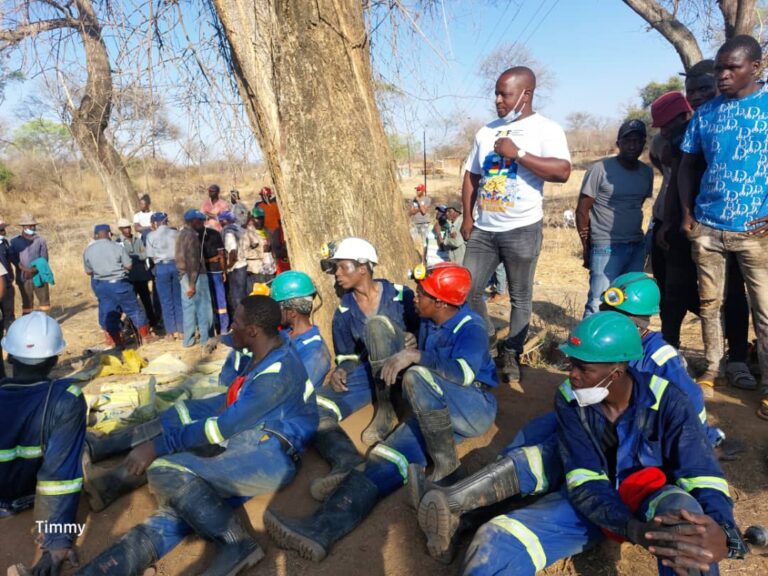
One more body was retrieved at Bayhorse Mine yesterday bringing the death toll to five after the tragic accident where over 30 people were trapped underground due to a fall of ground at the 150m deep mine shaft in Chakari, Chegutu.

Speaking to Mining Zimbabwe, Zimbabwe Miners Federation (ZMF) Mashonalandwest Chairperson Mr Timothy Chizuzu said whilst opening a separate tunnel in order to reach bodies trapped under a large rock efforts proved fruitful as the rescue team unexpectedly intercepted another body during the process of creating the tunnel.

“Rescue operations started around 6 AM today (yesterday) with the Rescue team opening up a separate tunnel to reach bodies under a large rock. Whilst opening the tunnel they intercepted another body which they successfully retrieved. Due to fatigue and underground odour, they decided to suspend operations late in the afternoon. The rescue operations ran for 9 hours and will resume tomorrow (today) morning,” Chizuzu told Mining Zimbabwe.

Meanwhile, Fidelity Gold Refinery (FGR) General Manager Mr Peter Magaramombe has expressed condolences and heartfelt sympathies to the grieving families affected by the tragic mine accident.

In a statement, Magaramombe also conveyed sincere hopes for a swift recovery to those who have sustained injuries.

“On behalf of Fidelity Gold Refinery (FGR) and on my own behalf, I would like to express our deepest condolences and heartfelt sympathies to all bereaved families affected by the recent mine accident at Beyhorse Mine in Chegutu. Our thoughts and prayers go out to the families of the deceased, and we extend our sincere wishes for a speedy recovery to those who have been injured.

“This Mine accident has undoubtedly caused immense pain and sorrow within the Zimbabwe mining community. As Fidelity, we stand in solidarity with you.

“We also want to acknowledge the spirited efforts of the rescue teams who are tirelessly working to rescue those who are still stuck underground,” Magaramombe said.

Geology and National Mining Museum, Uncovering loss, emergence and continuity

0

As opposed to the Natural History Museum in Bulawayo, The National Mining Museum seem not to be a rich repository of Zimbabwe’s mining heritage.  The National Mining Museum is located at Globe and Phoenix mine which happened to be the second largest gold producer in the country and was estimated to have produced 104.880.96 kilograms with a grade of 27.6 grams/ton. The mine takes names from 2 original ore bodies that were geologically explored namely Globe Reef Quartz vein enclosed in granite and Phoenix a complex network of quartz.[1]

By Nomsa Ngono

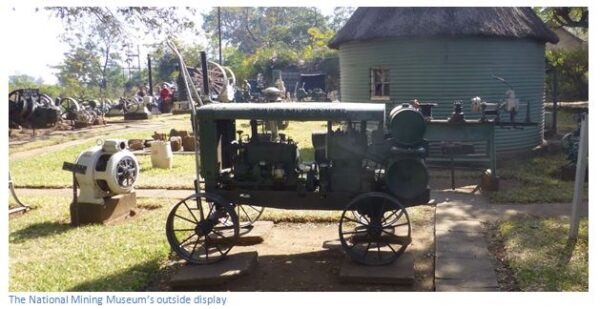
The National Mining Museum is equipped with an amazing unique relic which is a paper house. It was constructed in 1894 out of green paper and iron, imported from Britain and shipped to Kwekwe. It happened to be home for Piper who was Globe and Phoenix Mine’s first Director. The house also sheltered the famous Cecil John Rhodes, the imperialist whose ambition was to occupy Africa from Cape to Cairo. The Mining Museum exhibits mining tools and equipment dating from pre-colonial times to the modern period.[2] On display is mining equipment of the post-1900 era which includes stamp mills, belt-driven models powered by steam and later by electricity, pumps, compressors, crushers and rock drills. The Museum includes replicas of iron smelting furnaces, slabs of rock with dolly holes together with hammer stones. The curios displayed at the museum indeed represent the complexity of the exhumation of mineral resources from underground. The displays provide a profound insight into the technological advancement of mining machinery from the precolonial era to post 1900s era. However, modern-day machinery used in the fourth industrial revolution is to no avail for exhibition in the museum. The museum relics ought to demonstrate to the public the transition from traditional methods of mining to smart technologies applied in the fourth industrial revolution. Precolonial mining equipment on exhibition was donated by Rio Tinto Zimbabwe.[3]However modern-day equipment such as LHDs, drill rigs and rock bolters are unavailable for exhibition.  The problem lies in the limited sponsorship of modern-day geological specimens and mining equipment to showcase to the public. Mining companies and societies ought to donate more curios for exhibition to the mining museum to make it more lucrative.

Due to illegal gold mining activities within Globe and Phoenix mine, mining relics are said to be not in a safer space. Some of the relics were prone to theft due to inadequate physical security and storage space. According to Mahachi, two crucible furnaces were stolen in October 2000 and five more crucibles were stolen on 24 December 2001.[4]Given such scenarios, the preservation of mining heritage becomes a matter of controversy.  Mahachi further asserts that The National Mining Museum is evidenced by short of sound documentation.[5]Contrary to that, much documentation on geology is reposited at the Geological Survey of Zimbabwe which happens to be the archival pedestal for the mining sector. Documents on geological explorations were archived at the Geological Survey of Zimbabwe which gives it credit for sound documentation and storage of mining documentation. Hence restricting the National Mining Museum to display mining relics and geological specimens.

Disciplines such as geology, anthropology and archaeology played a critical role in the establishment of museums in Africa. Trained professionals in these disciplines had the sole task of building up the first museum collections during the colonial era.[6]Mining fraternities such as the Geological Society and Chamber of Mines play crucial roles in the continuous development of the National Mining Museum given their capacity in terms of funds and knowledge to preserve mining heritage and continuity.

The establishment of museums in the colonial era was intrinsically linked with clubs and societies of predominantly white colonial folks. The interests of these learned societies and club members were to understand the mineral wealth of the country with its flora and fauna.[7]There seems to be a discontinuity in auxiliary support from mining fraternities to revitalize the National Mining Museum for it to gain significance to the public.

The National Mining Museum lies in the same league with the Zimbabwe Natural History Museum in Bulawayo. The museum was established to create knowledge about natural resources particularly the mineral wealth in the colony. The Zimbabwe Natural History Museum was the first museum to be established in Rhodesia in 1902. This was a result of a special request from the Chamber of Mines. The museum was established to house ever ever-increasing collection of mineral specimens collected by prospectors around the country during that time. The first curator of the Natural History Museum being F.P.Mennel who was a geologist by profession. Given the special reference to the relationship between geology and the creation of museums dating back to the colonial era, one can deduce that geological societies and mining clubs owe vast contributions to the National Mining Museum of Zimbabwe.

Museums were developed in Zimbabwe with a specific interest in economic geology. Collections of minerals and rocks or geological specimens which were housed in museums allowed colonizers to appreciate mineral resources discovered in Zimbabwe.[8]Another silent discipline that contributes to the creation and development of museums is that of prospectors. They contribute through the repositioning of discovered geological specimens in the museum. However, the above-mentioned discipline’s point of convergence is on the exploration and extraction of mineral resources. Most disciplines limit themselves to contribution to knowledge to the public and the future generation. A discontinuity in curation once rooted in mining fraternities barricades the continual development and lucrativeness of the mining museum.

The paper goes further to unleash the units responsible for operating the National Mining Museum. The National Mining Museum is operated by the National Museums and Monuments of Zimbabwe. According to Chiwaura, Museums can be classified based on a criterion, like who runs them, what do they collect and what do they preserve among others.[9]The classification of the National Mining Museum is based on a collection of geological specimens and specialized mining tools and equipment. Therefore, the mining museum can be managed by the National Museums and Monuments of Zimbabwe and sponsored by mining fraternities to promote continuity, and restoration of neglected histories, past and present.

Mining fraternities such Chamber of Mines, the Association of Mine Managers of Zimbabwe AMMZ) and Geological Society need to sustain the mining museum to preserve mining heritage and contribute to knowledge for future generations. It is of great essentiality for Mining Companies to compel to donating displays and financial input for the growth and development of the National Mining Museum. Mining policies are subjected to review, upon recommendation that mining companies ought to contribute to the growth and development of The National Mining Museum.

[1]B.Cairncross,‘Kermisite: Globe and Phoenix mine Kwekwe District,” Rock and Minerals, Volume 95, Issue 5,2020

[2] M.Mawere etal, African Museums in the Making: Reflections on the Policies of material and Public Culture in Zimbabwe, Langaan Research and Publishing, Bamenda,2015, p.9

[3] Ibid,

[4] F.Chaterera, Beyond Regress, Museums Records management in Zimbabwe, Journal of South African Society of Archivists, Volume 47,2014,p.

[5] ibid

[6] M.Mawere etal, African Museums in the Making: Reflections on the Policies of material and Public Culture in Zimbabwe , Langaan Research and Publishing, Bamenda,2015,p.5

[7] Ibid,p.8

[8] Ibid,p.9

[9] Ibid
8 Days to Go: Association of Mines Surveyors of Zimbabwe AGM & Conference 2023

0

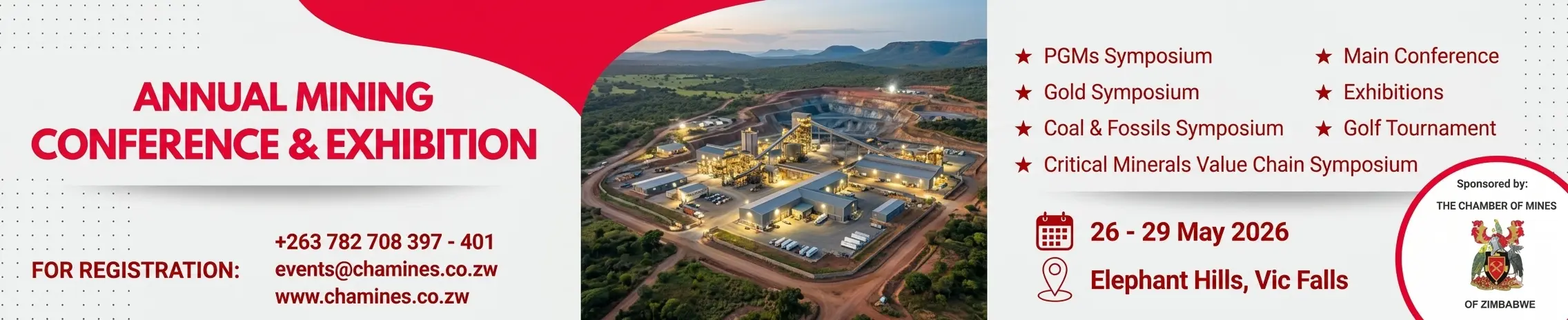
The Association of Mines Surveyors of Zimbabwe (AMSZ) is gearing up for its eagerly awaited Annual General Meeting (AGM) and Conference of 2023, set to take place in just 8 days.

The AGM, scheduled from the 11th to the 14th of October 2023, is a prestigious gathering of professionals and experts in the mining industry.

The AMSZ AGM & Conference is one of the prominent events on the calendar of the Mining sector in Zimbabwe and it brings together Mine Surveyors, Mining Engineers, Geologists, and other professionals involved in the surveying and mapping of Mines. Participants will have the opportunity to engage in discussions, share knowledge, learn and network with leading experts in the Survey field.

The AGM and Conference will be running under the theme, “Strengthening the Mining Innovation Ecosystem through Investment, Technology, Skills, and Collaboration”. It seeks to highlight the importance of accurate surveying and mapping in improving safety, efficiency, and productivity in all mining operations.

AMSZ President Mr Gabriel Mwale, said six key issues will be discussed at the event which include among others government mine Surveyor’s certificate of competency, lobbying for increased technology in Mine Survey Offices nationwide and plenary discussions.

“Key Issues to be discussed include the Mining Bill and the Role of Surveyors therein, Lobbying for increased technological investments in Mine Survey Offices nationwide, to enhance accuracy, efficiency and safety, Promoting the latest and cutting-edge global best practices and procedures, The Government Mine Surveyor’s Certificate of Competency, National Certification of Mine Survey Assistants to improve the accuracy of survey data collection and measurement and Plenary discussions on improving general services that Mine Surveyors provide to the industry,” Mwale said.

The three-day event will encompass a variety of activities, including keynote speeches, technical presentations, panel discussions, and workshops. Prominent speakers from the industry, both local and international, will be sharing their insights on topics such as 3D laser scanning, drone technology in mine surveying, GIS in mining, and data management.

Furthermore, the event will feature an exhibition area where leading companies and technology providers will showcase the latest geospatial tools, surveying equipment, software solutions and mining equipment in general. Participants will have the opportunity to interact with leading industry experts, explore innovative technologies, and witness live demonstrations of cutting-edge equipment.

About the Association of Mines Surveyors of Zimbabwe (AMSZ)

The (AMSZ) is an affiliate of The Chamber of Mines of Zimbabwe and was formed in 1985 as a Professional Non-Profit Body that represents the interests of the Mine Surveying Profession in Zimbabwe. It comprises of members from Mine Surveying Departments of various large-scale Mining Organizations, both local and from abroad, as well as other affiliate members from diverse technical fields related to Mine Surveying and the Mining Industry in general.

Objectives of the AMSZ

(a) to promote interest in  mine surveying and enhance the importance of the profession to the mining industry;
(b) to advance the science and practice of mine surveying thereby enhancing the status of its members.;
(c) to establish and enforce a system of grading of mine surveyors in relation to their qualifications;
(d) to enhance a high standard of performance and discipline among its members;
(e) to promote mutual interest with allied disciplines;
(f) to represent corporately the views and interests of its members to any Association or Institution;
(g) to do all things which further the attainment of the above objects or the interests of its members

With just 8 days to go, the countdown is on, and the mining community is readying itself for an event that will undoubtedly shape the future of mine surveying in Zimbabwe.


Contact ASSOCIATION OF MINE SURVEYORS OF ZIMBABWE (AMSZ )
20 Mount Pleasant Drive
Mount Pleasant
Harare, Zimbabwe
P.O. BOX 712, Harare
Mobile: +263 773 302 920
Mobile: +263 715 000 355

Zimbabwe gold buying prices/gram 3 October 2023

Fidelity Gold Refinery (FGR) official gold buying prices. See the Zimbabwe gold buying prices today 3 October 2023.

SG 90% AND ABOVE US$55.69/g
SG ABOVE 85% BUT BELOW 90% US$55.10g
SG ABOVE 80% BUT BELOW 85% US$54.51/g
SG ABOVE 75% BUT BELOW 80% US$53.92/g
SAMPLE BELOW 10g BUT ABOVE 5g US$53.04/g
FIRE ASSAY CASH US$55.98/g

NB: Fire Assay cash price is for gold above 100gs, no sample is deducted.
For the Fire Assay Transfer price, a sample of not more than 10g is deducted
A 2% royalty is charged on all deposits (small-scale miners)
A 5% royalty is set for Primary Producers

Cash available. Fidelity Gold Refinery prices will be changing daily to match world market prices.

9 Days to Go: Association of Mines Surveyors of Zimbabwe AGM & Conference 2023

0

The highly anticipated Association of Mines Surveyors of Zimbabwe (AMSZ) Annual General Meeting (AGM) and Conference of 2023 is just around the corner, with only 9 days left until the event kicks off in the resort town of Victoria Falls.

The eagerly-awaited gathering is set to take place from the 11th to the 14th of October 2023, with mine surveyors from the country and beyond eagerly preparing to attend. The AGM and Conference will be running under the theme, “Strengthening the Mining Innovation Ecosystem through Investment, Technology, Skills, and Collaboration”.

According to AMSZ President Gabriel Mwale, there will be six key issues that will be discussed at the event which include among others government mine Surveyor’s certificate of competency, lobbying for increased technology in Mine Survey Offices nationwide and plenary discussions.

AMSZ AGM and Conference 2023, Key Issues:

  1. The Mining Bill and the Role of Surveyors therein.
  2. Lobbying for increased technological investments in Mine Survey Offices nationwide, to enhance accuracy, efficiency and safety.
  3. Promoting the latest and cutting-edge global best practices and procedures.
  4. The Government Mine Surveyor’s Certificate of Competency.
  5. National Certification of Mine Survey Assistants to improve the accuracy of survey data collection and measurement.
  6. Plenary discussions on improving general services that Mine Surveyors provide to the industry.

The AMSZ AGM & Conference serves as a dynamic platform for mine surveyors, geospatial professionals, and industry leaders to come together, exchange knowledge, and discuss emerging trends, challenges and solutions in the field. It is a unique opportunity for professionals to expand their network, gain insights, and explore opportunities for growth and collaboration.

The event will bring together experts from various sectors, including mining, geomatics, engineering, and technology. With a diverse range of presentations, workshops, and panel discussions, participants can expect to gain valuable insights into the latest advancements in mining surveying techniques, equipment, and software. Additionally, attendees will learn about sustainable mining practices and professional development opportunities.

Furthermore, the event will feature an exhibition area where leading companies and technology providers will showcase the latest geospatial tools, surveying equipment, software solutions and mining equipment in general. Participants will have the opportunity to interact with leading industry experts, explore innovative technologies, and witness live demonstrations of cutting-edge equipment.

Roles of a mine surveyor

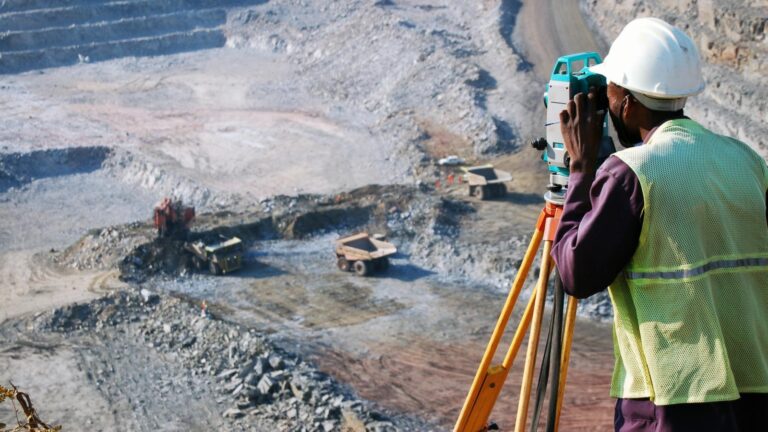
Mine Surveyors use scientific tools and surveying skills to map out mineral deposits and determine the commercial viability of potential and existing mines. They also create mine plans to accurately represent surface and underground mining activities.

Listed below are the primary duties of a mine surveyor:

  • certify the accuracy of underground surveys and surface mining plans
  • indicate the risks or dangers at a mining location on a mine plan sheet
  • carry out initial surveys and assessments on potential sites
  • chart surface areas using GPS
  • create 3D models of mining sites using digital imaging and design software
  • prepare mine plans and liaise with relevant authorities
  • use geographic information systems to create site maps, including mine structures and deposit layers
  • identify risks and the environmental effects of mining activities within a location
  • negotiate contracts to buy, lease or provide access to mining sites
  • review ownership rights or native titles
  • carry out a valuation of mineral deposits within a mine
  • update site maps and mine plans for ongoing mine development
  • advise mine owners and operators on how best to restore the landscape.

Mine surveyors are involved in the accurate measurement and recording of mine workings. They are critical to the design, planning and safety of surface and underground mining activities, which must be accurately represented on mine plans.


Contact: Mubaiwa Takunda Paul Secretary-General

ASSOCIATION OF MINE SURVEYORS OF ZIMBABWE
20 Mount Pleasant Drive
Mount Pleasant
Harare
Zimbabwe
P.O. BOX 712, Harare
Mobile: +263 774 460 911, Mobile: +263 773 302 920

[email protected]
www.amsz.co.zw

Gvt to collect records on hammer mills to curb side marketing

0

The Ministry of Mines and Mining Development has implored strategies to ensure all gold produced in the country is delivered to the country’s sole gold buyer and exporter Fidelity Gold Refinery (FGR) with the latest being to collect records on all hammer mills and mobile processing units which have become rampant in mining provinces.

Although there is no law in the country which supports the existence of hammer mills and mobile processing units, there has been a proliferation of these sites leading to the rampant side marketing of the yellow metal.

Speaking at the gold mobilisation deployment workshop in Harare on Monday, the Minister of Mines and Mining Development Hon Zhemu Soda said the government will continue to improve how gold mobilisation exercises are conducted to ensure responsible sourcing.

“As we continue to improve the manner in which we conduct the exercise, the teams should continue with innovative ways of inspecting plants at each stage of production across the whole value chain. It is also important to note that this time around teams will be required to collect records on all hammer mills and mobile gold processing units which have become rampant in the provinces. This will help the MMMD to account for the gold that these illegal operators are producing with the hope of ensuring that this gold also finds its way to FGR,” Hon Soda said.

In an effort to increase gold deliveries through official channels, the government on Monday deployed 10 teams to 6 provinces namely Masvingo, Matabeleland North, Mashonaland Central, Midlands, Manicaland and Mashonaland West to carry out the 2023 Third Quarter Gold Mobilization, monitoring and surveillance Exercise.

The country produced 35 tonnes of the yellow metal last year and is targeting to produce at least 40 tonnes this year, however, during the period January to August 2023 there has been a 13 per cent decrease compared to the same period last year.

“The gold sector in Zimbabwe has proved to be strategic to the mining industry and the national economy at large. Gold has remained one of the major foreign currency earners in Zimbabwe. In 2022 the gold deliveries to Fidelity Gold Refinery stood at 35.2 tonnes which was above the set target.

“The 2023 gold deliveries to FGR set target stand at 40 tonnes. The key to realising this target is the plugging of side markets which are a pariah to our efforts in the mining sector and to the development that we hope to see achieved. For 2023 from January to August, the gold deliveries to FGR sit at 19.335 tonnes against a target of 40t by the end of the year. In 2022 for the month of January to August a total of 22.29 tonnes was delivered, this represents a 13.2 % decrease. Hence, ladies and gentlemen, there is a need to employ strategies to decrease the rampant side marketing of gold,” Minister Soda said.

According to the Permanent Secretary in the Ministry of Mines and Mining Development Mr Pfungwa Kunaka, the send-off is going to profer strategies on how the government can encourage the sale of gold to the formal market.

“This send-off workshop is designed to bring together stakeholders from the gold industry to discuss the challenges of curbing gold leakage and to develop solutions. We will establish the scale and scope of the gold leakage problem, the factors that contribute to gold leakage and the best practices for curbing gold leakage,” Kunaka said.

Responsible Mining Audit to Enhance SHEQ in ASM – Minister

0

The Responsible Mining Audit Report will prepare a strategy for the Ministry of Mines and Mining Development to use in regard to Safety Health and Environment Quality (SHEQ) in the artisanal and small-scale mining industry, the Minister of Mines and Mining Development Hon Zhemu Soda has hinted.

Rudairo Mapuranga

Speaking to the media on the sidelines of the Ministry of Mines and Mining Development’s third Gold Mobilisation workshop on Monday, Minister Soda said the report will guide the government on steps that need to be taken to ensure sustainable mining by the Artisanal and Small-Scale Miners in the country.

The Minister said the report is well written and recommendations well elaborated as the Ministry of Mines had an opportunity to visit over 400 ASM-run mining sites to compile the report.

“On the 10th of May HE launched the responsible mining initiative. Following the launch the Ministry then conducted a responsible audit of our mines. About 422 sights were visited and a report has since been compiled and it will soon be tabled before the cabinet. It is that report which will inform the government on the next steps that need to be taken, to also give protection and assistance to the small-scale miners but our desire is whenever mining is taking place let’s put safety first,” Minister Soda said.

The Responsible Mining Audit was conducted countrywide between May and June this year to establish if mining companies were complying with requirements relating to the submission of production returns as required by law.

Furthermore, the audit also sought to establish a framework that fosters responsible mining practices while guaranteeing the well-being of the communities and environments where mining activities are taking place.

The Government has decided to increase oversight over all mining activities in the country to curb malpractices.

Recently, in a fall of-ground incident at BayHorse Mine in Chegutu a 150m Mine shaft collapsed with reports placing deaths at four.

Mine accidents in Zimbabwe have been on the rise with the country recording 125 accidents and 139 fatalities during the first 3 quarters of 2022.

Minister Soda blames BayHorse Mine accident on negligence

0

The Minister of Mines and Mining Development Hon Zhemu Soda has cited human negligence as the sole cause of a mine accident which happened at BayHorse Mine in Chegutu on Friday.

Rudairo Mapuranga

Speaking to the media on the sidelines of the Ministry of Mines and Mining Development’s third Gold Mobilisation workshop on Monday, Soda said the BayHorse Mine accident was a result of non-compliance with the mining company operating at the site working without a qualified mine Manager.

Minister Soda went on to blame human error and negligence for the mining accidents happening in all small-scale run mining operations.

“Small-scale mining is sustainable to the extent that the miners should be in compliance with the law. The accident happened as a result of non-compliance. We hear that at that mine there wasn’t a qualified Mine Manager who could also give guidance on the actual activities that could be undertaken in the shafts. Human error and noncompliance to us are the causes of Mine accidents that continue to rob us of our miners in various incidents,” he said.

Speaking to Mining Zimbabwe, the Zimbabwe Miners Federation (ZMF) Mashonaland West Chairperson Timothy Chizuzu said small-scale miners should adhere to safe mining practices and consult technical personnel on how to run mining projects safely and sustainably.

“My appeal to all small-scale miners is that they should adhere to safe mining practices and continuously consult technical personnel from the Ministry of Mines and also employ professional safety standards and personnel at their mines,” Chizuzu said.

Meanwhile, the Zimbabwe Miners Federation (ZMF) Mashonaland West has donated a beast to feed the bereaved who are awaiting the retrieval of their beloved ones at BayHorse Mine in Chegutu. The accident site is currently hosting many people who are awaiting the retrieval of their relatives from the collapsed shaft.