

Home Blog Page 253

Road construction workers accidentally discover large lithium deposits

0

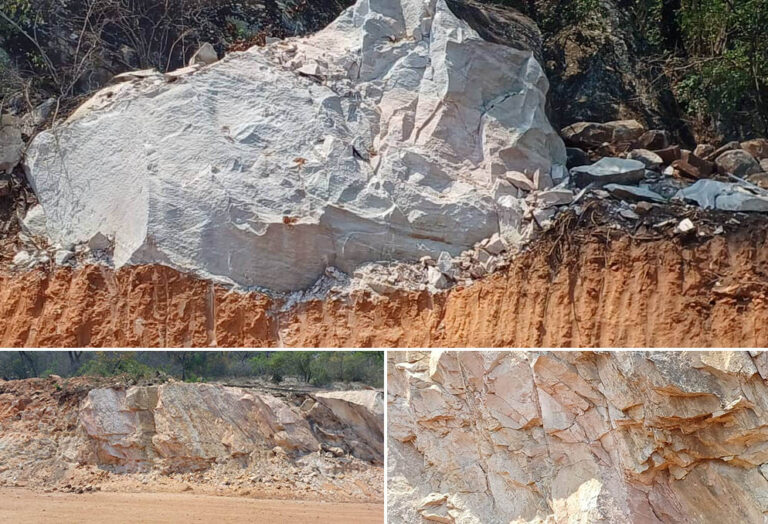
Road construction workers have stumbled on lithium deposits along the Harare-Beitbridge highway near Ngundu, a local Daily reported.

The accidental discovery was made between Ngundu and Runde by workers from Bitumen, one of the companies contracted for the 582km road upgrade.

A company source said: “As the workers were widening the road, they came to a section which is close to a mountain and they had to trim the side of the mountain a bit. That’s when they stumbled on the lithium ore.

“There are massive mountains there and the deposits must be huge.”

Officials from the Minerals Marketing Corporation of Zimbabwe (MMCZ) and the Ministry of Mines and Mining Development have been to the site and confirmed that the lithium ore deposits “could be significant,” according to the source.

Zimbabwe has the largest lithium reserves in Africa and has in recent years drawn investors in battery minerals from Canada, the United Kingdom and Australia, although China is the dominant player.

The country has been mining lithium for over 60 years, but it is only recently that worldwide demand has surged due to its increasing usage in the manufacturing of rechargeable batteries for mobile phones, laptops, digital cameras, military hardware and electric vehicles.

Other industrial applications include in heat-resistant glass and ceramics, lubricating greases and lithium-ion batteries.

The proliferation of lithium mining activities across Zimbabwe has put local populations at odds with miners who are accused of altering the landscape and desecrating their ancestral lands, including what some consider as “sacred” mountains.

To cash in on demand, Zimbabwe last year banned the export of raw lithium ore. In doing so, it joined countries like Indonesia and Chile that are trying to maximise their return on deposits of lithium, cobalt and nickel by requiring miners to invest locally in refining and processing before they can export.

The locally-produced concentrate is further processed into battery-grade carbonate when exported outside Zimbabwe. In 2022, the average price of battery-grade lithium carbonate was estimated at US$37,000 per metric ton.

Source: ZIMLIVE
Pickstone Peerless transitioning to underground mining 

0

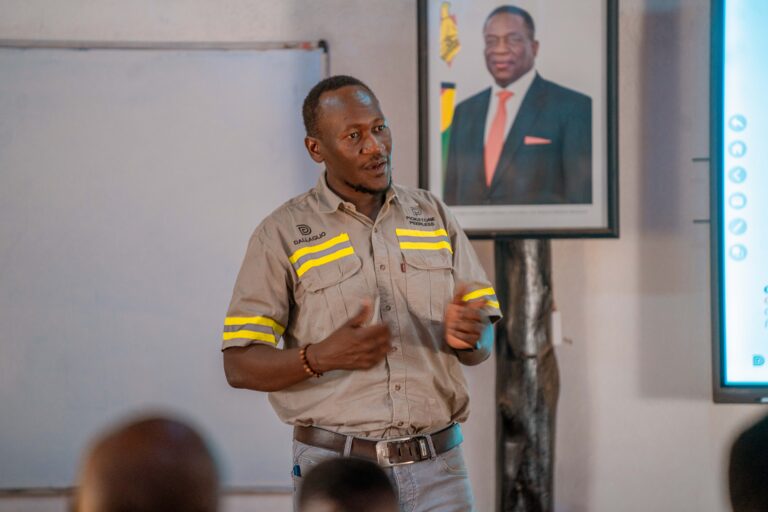
Pickstone Peerless Mine is transitioning from open pit mining to underground mining with enhanced grades, aiming at boosting its gold production, Pickstone Peerless Mine General Manager Eng Alfred Madowe told the Association of Mine Managers of Zimbabwe (AMMZ) gathering at the technical visit held at the Gold Mine last week.

The US$18 million underground mining project which was initially to be commissioned in April this year, was commissioned in August with its transition going to last up to June of 2024.

According to Eng Alfred Madowe, indicative underground grades range between 3 to 5 grams per tonne while the open pit grades are standing at an average of 1.8 grams per tonne.

He said since the commissioning of the underground project, production has increased significantly with the mine together with Eureka Mine in Guruve producing a combined 210 kgs per month with a focus to increase to 230 kgs per month next year and eventually 250kgs in 2025.

“In December 2021, Pickstone’s underground feasibility study was approved by the board. We started hoisting on the 25th of August.

“We are now producing a combined 210 kgs per month, we are looking to get to 230 kgs next year due to grade improvements and in 2025 we are looking to 250 kgs per month with Pickstone underground and Eureka Open pit,” Eng Madowe said.

According to Madowe, the mine which currently averages 70 per cent gold recoveries is looking to manage that by building 3 big CIL tanks to get maximum gold.

“We are looking to manage recoveries by adding CIL tanks. We had two ball mills, we added a third one and we have added the fourth one now. When we added the fourth, we didn’t add the tanks, so one thing affecting our recovery is our resident time. We have a total of 13 tanks and we need to add 3 big ones,” he said.

Eng Madowe said Pickstone will run as a hybrid mine up to June of 2024 and is building a new tailing facility to avoid a hazard on the current one which is now about 25 metres. He said the expansion of the tailing facility has been approved by the Environmental Management Agency (EMA).

“We have our tailings dam which has gone to a height of 25 metres. We are a bit worried about safety there because technically around such kind of height things start going too shacky, I mean you are basically storing mud in such a facility so we are buttressing it now with waste from the pit. We also have a tailing expansion which has just been approved by EMA. We are in the process of transitioning from open pit to underground, we are going to be running as a hybrid mine until about June next year.

Meanwhile, the AMMZ is holding its Annual General Meeting (AGM) and Conference from November 16th to 19th, 2023, in the resort town of Victoria Falls.

The event brings together mining industry professionals to advance the science and practice of Mining and supporting disciplines such as Survey, Geology, and Metallurgy.

Simply put, the AGM and Conference is the perfect time to engage with the experts and decision-makers who are on the ground actively overseeing the running of large-scale mines in Zimbabwe.

The must-attend event hosts the highest number of technical mining professionals and experts providing attendees with a chance to engage with them directly, strike deals and gain valuable insights.

The Registration fee for attendance at the event is US$600.00 per person.

Registration for the AGM and Conference is now open, and interested individuals are encouraged to secure their spot as soon as possible. To register, attendees can visit: https://protect-za.mimecast.com/s/Jm9MCg5DlAhqpj393cNLxvu?domain=forms.gle.

Prospecting licenses in Mashwest now available

0

The Ministry of Mines and Mining Development‘s Chinhoyi office finally has Prospecting licences in stock after going for a time without the document a situation that frustrated miners and prospective miners over the last months.

According to miners who spoke to the publication the issue of Prospecting licences might have been caused by unavailability of resources due to elections.

“The Prospecting licences might have been in short supply because Fidelity Printers which prints the papers was busy with election materials. We are happy that the election season is over we can start working and contribute to the US$12 billion economy,” a told Mining Zimbabwe.

Speaking to Mining Zimbabwe, the Zimbabwe Miners Federation (ZMF) Mashwest Chairperson Timothy Chizuzu said miners can now buy Prospecting licences and start working on getting Mining Certificates for them to operate formally.

“Miners were complaining to us about the licences and now that the Prospecting licences are there, it’s time for them to sort their papers to work formally,” Chizuzu said.

A holder of a Prospecting License automatically acquires the rights of prospecting and pegging mining claims in the provinces they would have purchased the license from.

When a Prospecting Licence holder has identified a mineral deposit that he/she is interested in, he/she appoints an agent or an Approved Prospector to peg on his/her behalf.

The agent is required to physically peg the area by marking the deposit with a Discovery Peg.  He/She should also post Prospecting, Discovery and Registration Notices on the ground.  The notices must be posted conspicuously to alert other prospectors.

Before posting these notices the agent is required to inform/or seek consent from the landowner of his intention to prospect.

Shamva Gold our next big project – Kuvimba

0

The country’s biggest mine asset holder Kuvimba Mining House (KMH) has said that the Shamva Gold project where the company is developing an open pit mine is the company’s next big project.

Rudairo Mapuranga

According to KMH CFO Innocent Rukweza, Kuvimba has put an initial investment of +US$ 100 million to develop the mine into a world-class Gold project.

He said the mine will be producing an average of 250kgs per month, 3 tonnes a year making the mine one of the biggest Gold-producing mines in the country.

“The Shamva project is our next big project where we are going to do an open cast mine and it will produce upward of 250 kgs per month because it is going to be an open pit and grades there are very good. The initial numbers for investment are an upward of USD100 million to do everything, the processing plants and the improvements and other things,” Rukweza said.

The Shamva Hill open-cast mining project has an expected life of mine of 14 years according to current exploration results with the project expected to be up and running in two years.

At the Shamva Hill open pit project Kuvimba Mining House is going to establish a 220 000 tonnes per month processing plant together with a tailing storage facility. Currently Shamva Gold Mine is producing an average of 670 kgs from its underground operations since it’s revitalisation in 2020.

This year the mine is targeting to produce 717 kgs of gold.

Before the KMH takeover, Shamva had halted operations as it struggled to raise capital to remain in business, despite having one of the largest untapped resources in the industry.

KMH, in its quest to rescue mothballed mines, has acquired several entities such as Bindura Nickel Corporation (BNC); Shamva, Sandawana; Tiger and Club; Globe and Phoenix; Great Dyke Investments (GDI) in Darwendale; and Zimbabwe Alloys (ZimAlloys) and Freda Rebecca Gold Mine in Bindura where ore from Shamva is currently being processed among others.

Zimbabwe Gold price/gram 25 September 2023

0

Fidelity Gold Refinery (FGR) official gold buying prices. See the Zimbabwe gold buying prices today 25 September 2023.

SG 90% AND ABOVE US$58.55/g
SG ABOVE 85% BUT BELOW 90% US$57.93g
SG ABOVE 80% BUT BELOW 85% US$57.31/g
SG ABOVE 75% BUT BELOW 80% US$56.69/g
SAMPLE BELOW 10g BUT ABOVE 5g US$55.76/g
FIRE ASSAY CASH US$58.86/g

NB: Fire Assay cash price is for gold above 100gs, no sample is deducted.
For the Fire Assay Transfer price, a sample of not more than 10g is deducted
A 2% royalty is charged on all deposits (small-scale miners)
A 5% royalty is set for Primary Producers

Cash available. Fidelity Gold Refinery prices will be changing daily to match world market prices.

Moti dismisses reports of fake Zim lithium project

0

South African businessman Zunaid Moti has dismissed investigative reports that the 10,000-hectare lithium project in Zimbabwe could ‘be just rock’, insisting it has a potential value of up to $1.4 billion.

The Organised Crime and Corruption Reporting Project and AmaBhungane reported this week how Moti Group executives enticed a Chinese partner to invest with them while privately discussing how the lithium project would collapse.

Lithium is used to make the batteries powering electric cars and has in recent years rapidly become a sought-after commodity, with mining companies scouring the earth for major deposits.

In a statement, Moti said the Chinese company they were in partnership with had brought its own lawyers and geologists to the site in Mashonaland East province in Zimbabwe to conduct their own assessments.

Dissatisfied with AmaBhungane’s investigation, Moti described it as “not only factually incorrect but almost laughably biased and discriminatory.”

“Contrary to amaBhungane’s deliberately negative framing of pieces of unverified and stolen documents and discussions, the Moti Group’s lithium project has received extremely promising valuations as evidence of its excellent long-term prospects, and exploration will be proceeding,” Moti said.

Moti also claimed amaBhungane’s journalists portrayed him “as a dupe” and the Moti Group “as thieves,” while intimating that the Chinese company is “stupid, careless, or naïve.”

Moti said the Chinese company’s leader, Pei Zhenhua, is one of China’s richest and most successful entrepreneurs, while the Moti Group is one of South Africa’s most successful black-owned firms.

“And it is indisputable that Zimbabwe is a country with massive mineral resources. In fact, the aforementioned Chinese company had brought its own lawyers and geologists in person to the site in the Mashonaland East province, where they spent extensive time conducting their own due diligence on just a minute portion of the reserve,” the businessman said.

“And in reality, the Good Days reserve mentioned by amaBhungane is worth millions of dollars alone. And so, while the terms of the company’s partnership with the Moti Group have changed, it has chosen to remain a minority shareholder.”

Moti accused amaBhungane of refusing to name their sources of information, outing them as Clinton van Niekerk and Frikkie Lutzkie, a former business partner with whom he said the Moti Group remains in litigation.

“In fact, the timing of this article is highly suspicious, given that it was published one day after another hearing in the matter between the Moti Group and Frikkie Lutzkie in the Pretoria High Court,” Moti said.

“Ultimately, this article is a clear example of media character assassination, obviously intended to further amaBhungane and Sam Sole’s personal vendetta. And it is outrageous that like so many black-owned businesses before, the Moti Group remains a priority amaBhungane target despite its inability to prove either myself or the Group guilty of any wrongdoing.”

The Zimbabwean

Zisco limestone project secures an offtaker

0

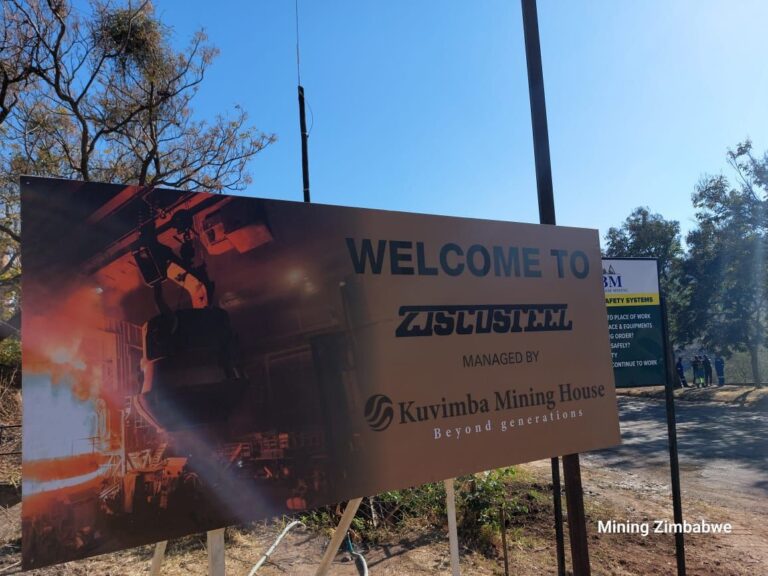
Zimbabwe Iron and Steel Company (Zisco)‘s limestone mining project which currently is at the dewatering stage has secured an off-taker to fund the mining and expansion of the pit.

Rudairo Mapuranga

According to Kuvimba Mining House (KHM) Chief Financial Officer Mr Innocent Rukweza, the off-taker will help finance the project by buying the limestone for Steel manufacturing pig iron.

The Redcliff-based company has so far invested US$2 million for limestone extraction with a production target of 20 tonnes per month.

Zisco board had anticipated the project or mining to commence by the end of August and produce 80 tonnes of limestone in 2023.

According to Rukweza, the Zisco limestone project is going to dewater 10 metres and start mining operations and the expansion of the open pit.

“The Zisco project is exciting, what has happened so far is we are in the process of dewatering. we already have an off-taker of the limestone who wants to do steel manufacturing pig iron. We have other users of limestone who are into agriculture, we are hoping that after the dewatering is done, it’s actually not going to be done but we going a little bit lower like 10 metres and we will start mining and we are also going to expand the pit. This is a low-hanging fruit for Zisco,” Rukweza said.

Platinum miners dominate National First Aid Competitions

0

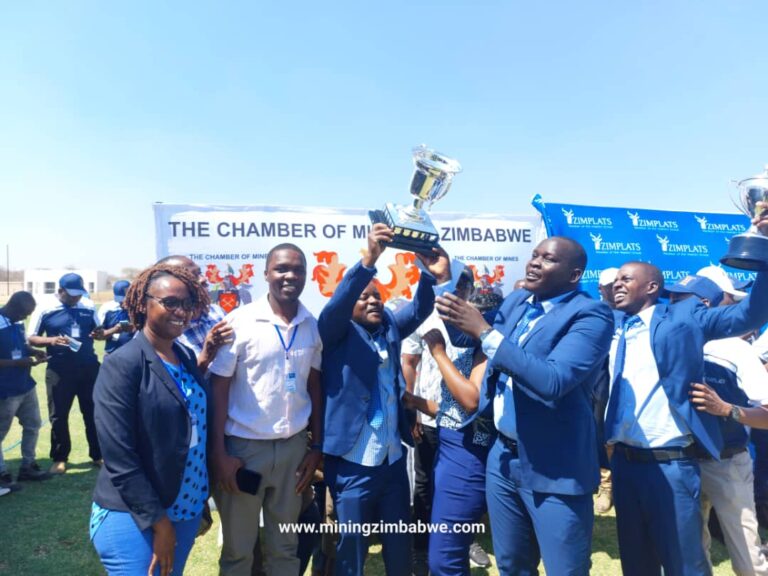
Mimosa Mining Company and Zimplats’ Mupani mine outshined other Mining companies in preparedness, and fitness as they dominated in the surface and underground categories at the Chamber of Mines of Zimbabwe National First Aid Competitions held in Ngezi on Friday.

Gold, Platinum, Coal, Diamonds and Nickel Miners converged at the heart of Platinum Giants Zimplats to battle, rather show commitment to ZERO HARM at the First Aid Competitions of 2023.

Mimosa dominated the Surface Competitions as it won in the Best Female First Aider, Best Captain and Best Position Surface categories whereas Bimha and Ngwarati both of Zimplats came in second and third places respectively.

Alice Dhlodhlo came first in the Best Female First Aider in the Underground category.

The drive to eliminate injuries in the industry gave birth to the Competitions which this year produced 20 teams both in the Underground and Surface categories. Fine Men and Women of the trade came prepared to showcase competence in handling safety and first aid challenges.

The noteworthy competition is organised by the Chamber of Mines of Zimbabwe and focuses on first aid and safety in the mining industry. The event is also an opportunity for the safety teams of various mining companies to exhibit their competence in handling safety and first aid issues.

Bimha, Freda Rebecca, How Mine, Hwange Colliery, Mimosa Mining Company, Ngwarati, Murowa Diamonds, SMC, Smelter and Bindura Nickel Corporation made up the Surface Contingent.

Bimha, Blanket Mine, Freda Rebecca, How Mine, Hwange Colliery, Mimosa, Mupani, Mupfuti, Ngwarati and Bindura Nickel Corporation made up the Underground Contingent.

Results

Surface

CategoryWinning Company
Best CaptainMimosa Mining Company
Best Female First AiderMimosa Mining Company
Best TeamMimosa Mining Company


Underground

CategoryWinning Company
Best CaptainMupani (ZIMPLATS)
Best Female First AiderNgwarati (ZIMPLATS)
Best TeamMupani (ZIMPLATS)


ESG in the Mining Industry: The Future of Responsible Business

0

(By Zimbabwe Innovation and Legal Tech Association) Environmental, Social, and Governance (ESG) factors are becoming increasingly important to the mining industry. Investors, consumers, and governments are all demanding that mining companies operate in a more sustainable and responsible manner.

There are a number of reasons why ESG is important in the mining industry. First, mining can have a significant impact on the environment. Mining operations can generate waste, pollute water, and damage ecosystems. ESG factors can help mining companies to reduce their environmental impact and operate in a more sustainable manner.

Second, mining can also have a significant impact on local communities. Mining operations can displace people, disrupt livelihoods, and damage cultural heritage. ESG factors can help mining companies minimize their social impact and work with local communities in a beneficial way.

Third, good governance is essential for mining companies to operate successfully. Mining companies need to have strong ethical standards and transparent corporate governance practices. ESG factors can help mining companies improve their governance practices and reduce the risk of corruption and fraud.

Here are some specific examples of how ESG factors can be applied in the mining industry:

  • Environmental: Mining companies can reduce their environmental impact by using more efficient technologies, reducing their greenhouse gas emissions, and conserving water. They can also work to restore ecosystems that have been damaged by mining operations.
  • Social: Mining companies can minimize their social impact by working with local communities to ensure that they benefit from mining operations. They can also provide compensation and resettlement assistance to people who are displaced by mining operations.
  • Governance: Mining companies can improve their governance practices by having strong ethical standards, transparent corporate governance practices, and independent oversight. They can also work to combat corruption and fraud.

There are a number of benefits to mining companies that adopt ESG practices. ESG practices can help mining companies to:

  • Attract and retain investors: Investors are increasingly looking to invest in companies that have strong ESG performance.
  • Reduce costs: ESG practices can help mining companies to reduce their environmental and social costs. For example, by using more efficient technologies and reducing their greenhouse gas emissions, mining companies can save money on energy costs.
  • Improve their reputation: Mining companies with good ESG performance have a better reputation among consumers and governments. This can lead to increased sales and improved access to markets.
  • Manage risks: ESG practices can help mining companies manage risks, such as the risk of environmental damage, social unrest, and regulatory scrutiny.

Overall, ESG is important in the mining industry because it can help mining companies to operate in a more sustainable and responsible manner. ESG practices can also benefit mining companies by attracting investors, reducing costs, improving their reputation, and managing risks. Mining companies that adopt ESG practices will be better positioned to attract investors, comply with regulations, and maintain a good reputation with communities and governments.

Please find as well the registration Link  ESG, LEGAL&REGULATORY COMPLIANCE IN THE DIGITAL AGE TRAINING


Zimbabwe gold buying prices 22 September 2023

0

Fidelity Gold Refinery (FGR) official gold buying prices. See the Zimbabwe gold buying prices today 22 September 2023.

SG 90% AND ABOVE US$58.18/g
SG ABOVE 85% BUT BELOW 90% US$57.56g
SG ABOVE 80% BUT BELOW 85% US$56.95/g
SG ABOVE 75% BUT BELOW 80% US$56.33/g
SAMPLE BELOW 10g BUT ABOVE 5g US$55.41/g
FIRE ASSAY CASH US$58.49/g

NB: Fire Assay cash price is for gold above 100gs, no sample is deducted.
For the Fire Assay Transfer price, a sample of not more than 10g is deducted
A 2% royalty is charged on all deposits (small-scale miners)
A 5% royalty is set for Primary Producers

Cash available. Fidelity Gold Refinery prices will be changing daily to match world market prices.