Home Blog Page 254

Takavarasha, ZMF Invited to Speak at planetGOLD Global Forum

0

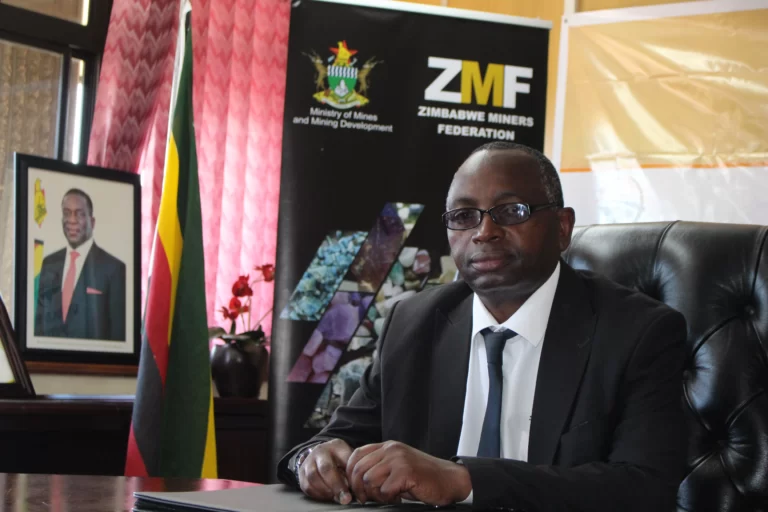
The Zimbabwe Miners Federation (ZMF) continues to gain international recognition, with its CEO, Wellington Takavarasha, invited to speak at the upcoming planetGOLD Global Forum.

This significant event, set to take place from June 3-5, 2024, in the Philippines, marks another milestone for ZMF as it seeks to expand its influence and foster global partnerships in the gold mining sector.

Takavarasha’s presentation will cover the financial aspects of Artisanal and Small-scale Mining (ASM) in Zimbabwe.

“My presentation will cover the financial aspects of ASM in Zimbabwe. What is Zimbabwe doing in this regard? Many countries are beginning to address this issue, so we’ll be taking notes. You will then encounter some recommendations on what the government is expected to do after the workshop. The focus is mainly on empowering miners through the financial sector. This involves developing policies that will enhance miners’ production achievements. Empowerment through the financial sector is a key aspect of the presentation. The main objective is to come up with policies that will support and enhance miners’ production capabilities.”

“As Zimbabwe, Kenya, and Uganda prepare to speak at this prestigious event, the participation of ZMF signifies a step forward in advancing the interests of Zimbabwean miners on a global platform. The forum promises to be an enriching experience, offering opportunities for learning, networking, and collaboration, which are essential for the sustained growth and development of the mining sector in Zimbabwe,” Takavarasha said.

ZMF was recently invited to participate in the China Gold Congress and Expo, highlighting the federation’s growing prominence on the international stage.

In a communication from Assietou Gaye, the coordinator for the planetGOLD Global Forum, Takavarasha was officially invited to participate as a speaker. Gaye emphasized Takavarasha’s nomination by Carmen Teichgraber, based on his extensive experience with planetGOLD Zimbabwe.

The forum session, scheduled for June 3, 2024, will focus on miners’ views, discussing challenges and success stories regarding access to finance and formal supply chains. This discussion is crucial as it aims to highlight the real-world experiences of miners, providing a platform for sharing insights and strategies for overcoming obstacles in the mining sector.

Zimbabwe gold buying prices per gram 27 May 2024

Fidelity Gold Refinery (FGR) official gold buying prices/ gram. See the Zimbabwe gold buying prices per gram today 27 May 2024.

SG 90% AND ABOVE US$71.17/g
SG ABOVE 85% BUT BELOW 90% US$70.42g
SG ABOVE 80% BUT BELOW 85% US$69.67/g
SG ABOVE 75% BUT BELOW 80% US$68.91/g
SAMPLE BELOW 10g BUT ABOVE 5g US$67.78/g

Fire Assay CASH $71.55/g

NB: Fire Assay cash price is for gold above 100gs, no sample is deducted.
For the Fire Assay Transfer price, a sample of not more than 10g is deducted
A 2% royalty is charged on all deposits (Small-scale miners)
A 5% royalty is set for Primary Producers

Cash available. Fidelity Gold Refinery prices will be changing daily to match world market prices.

Sinomine Resources Unveils Groundbreaking 132kV Power Project at Bikita Mine

0

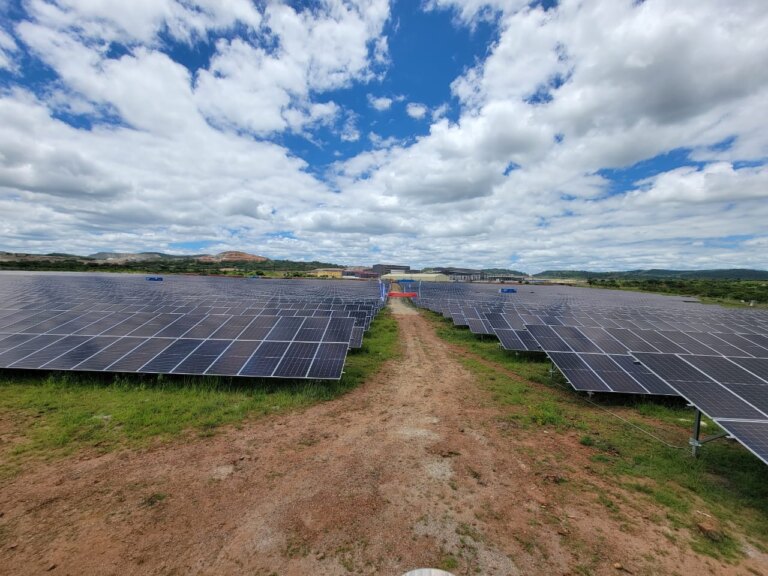
On March 21, 2024, Sinomine Resources Group held a grand electrification ceremony for the 132kV power transmission and transformation project at the Bikita mine in Masvingo Province.

The ceremony was attended by the Minister of State for Masvingo Province, Mr. Ezra Chadzamira, chiefs, and several members of Parliament.

Mr. Wang Pingwei, Chairman and President of Sinomine Resources, delivered a speech, while Mr. Gong Xuedong, Assistant President of Sinomine Resources and General Manager of Bikita Mine, represented the company.

The 132kV power transmission and transformation project, featuring 112 kilometers of power lines and the Bikita substation, was invested in and constructed by Sinomine Resources. It connects Zimbabwe’s TOKWE 330kV substation with the Bikita mine.

Construction began in May 2023, and the project successfully transmitted power on March 17, 2024, marking a record-setting 10-month completion time. This achievement was recognized as the fastest and highest-quality project of its kind in the past 20 years by the Zimbabwe Power Transmission and Transformation Company, establishing it as a model project.

Chairman Wang highlighted the strong support from the Zimbabwean government, the power sector, and the community. He emphasized that the new transmission line would significantly improve the power supply to Masvingo, Bikita, Nyika, Zaka, and surrounding areas, alleviating local power shortages.

For the Bikita Mine, the project enhances power security, reduces dependence on fossil fuels, and significantly lowers production costs. It is also a key component of Sinomine Resources’ commitment to carbon emission reduction, following their photovoltaic power generation project.

This initiative underscores Sinomine Resources’ dedication to ecological environmental protection and responsible business practices. The company looks forward to continued collaboration with the Zimbabwean government and society to further develop the Bikita mine and strengthen the bond between the people of China and Zimbabwe.

Delay in Tax Agreement and Softening PGM Prices Slows Down the Karo Project

0

The ambitious Karo Platinum project, spearheaded by Victoria Falls Stock Exchange-listed Karo Mining Holdings (KMH), a subsidiary of Tharisa, has hit a slowdown due to a delay in securing a tax agreement with the Zimbabwean government and the ongoing decline in platinum group metals (PGMs) prices.

By Rudairo Mapuranga

Tharisa, which will hold an effective 68% stake in the Karo Platinum Project upon completion of capital commitments, has decided to adopt a more measured approach to the project’s development.

The decision comes as the company navigates through a challenging financial landscape marked by a substantial drop in PGM prices.

This cautious stance was articulated by Tharisa CEO Phoevos Pouroulis during the company’s six-month financial results announcement, covering the period ending in March 2024.

“A measured decision was taken to slow the project timeline, continuing with smaller work packages, aligned with funding availability,” said Pouroulis.

“The Karo Platinum Project has progressed well despite the slowdown, and smaller work packages have been completed on time and within budget.”

While the PGM market has shown some signs of recovery since the beginning of the year, prices remain significantly lower compared to the same period last year. Tharisa’s report highlights a 39% year-on-year decline in the average PGM price, a stark indicator of the challenges facing the industry.

On the brighter side, the chrome market has exhibited resilience. Tharisa recorded an average metallurgical grade chrome price of $288 per ton for the six months, representing a 16.9% increase. Global chrome production also saw a 4% rise, even as port inventories in China were being depleted.

In terms of output, Tharisa achieved a 10% year-on-year increase in chrome production, totalling 865,000 tons. However, this was offset by a 7.7% decline in PGM production, which fell to 71,100 ounces. The decline in PGM output was partly due to the company purchasing third-party ore to feed its mill, a move necessitated by efforts to clear a backlog in waste stripping, which adversely affected PGM recoveries.

Financially, Tharisa faced a tough period. Despite higher chrome output and pricing, the sharp decline in PGM prices could not be offset. Unit costs rose by 17.8%, driven in part by the increased reliance on third-party ore, which accounted for approximately 29% of overall costs. Consequently, Tharisa reported a 29% year-on-year decline in taxed profit, which stood at $38.8 million for the six months. Headline share earnings dropped by 25% to 13.2 cents per share.

The company also reported a negative free cash flow of $27.9 million. Nevertheless, Tharisa CFO Michael Jones assured stakeholders that the balance sheet remained robust, with net cash falling from $112.7 million at the end of December to $86.3 million. Despite the financial strain, Tharisa declared an interim dividend of 1.5 US cents per share, albeit half of last year’s comparable payout.

Pouroulis remained optimistic about the company’s long-term prospects, despite the current headwinds. He pointed out the firm’s ongoing $5 million share buy-back program, which is expected to gain momentum in the coming months. “The PGM price is ignoring the schism between supply and demand, which, in our view, is only a matter of time before it corrects and a more balanced picture for PGM uses emerges,” he said.

Looking ahead, Tharisa maintained its PGM production guidance at 145,000 to 155,000 ounces for the year, with expectations for a stronger performance in the second half. Chrome production is forecasted to reach 1.7 to 1.8 million tons, in line with previous guidance.

The challenges faced by the Karo Platinum project underscore the volatility of the commodities market and the complexities of operating in a regulatory environment that can impact project timelines. As Tharisa navigates these challenges, the industry will be watching closely to see how the company balances strategic caution with its commitment to growth and shareholder returns.

Six New Large Mines Needed Annually by 2050 to Meet Global Copper Demand

0

A study by researchers at the University of Michigan and Cornell University has found that to meet the copper needs of electrifying the global vehicle fleet, as many as six new large copper mines must be brought online annually over the next several decades.

The paper, published by the International Energy Forum, examined 120 years of global data from copper mining companies and calculated how much copper the US electricity infrastructure and car fleet would need to upgrade to renewable energy. It found that renewable energy’s copper needs would outstrip what copper mines can produce at the current rate.

Copper is mined by more than 100 companies operating mines on six continents. The researchers drew data for global copper production back to 1900, which told them the global amount of copper mining companies had produced over 120 years. They then modeled how much copper mining companies are likely to produce for the rest of the century.

The researchers found that between 2018 and 2050, the world will need to mine 115% more copper than has been mined in all human history until 2018 just to meet “business as usual.” This would meet our current copper needs and support the developing world without considering the green energy transition.

“A normal Honda Accord needs about 40 pounds of copper. The same battery electric Honda Accord needs almost 200 pounds of copper. Onshore wind turbines require about 10 tons of copper, and in offshore wind turbines, that amount can more than double,” said Adam Simon, co-author of the study. “We show in the paper that the amount of copper needed is essentially impossible for mining companies to produce.”

“Renewable energy technologies, clean water, wastewater, electricity — they cannot exist without copper. So we then end up with tension between how much copper we need to build infrastructure in less developed countries versus how much copper we need for the energy transition,” Simon said.

“Our study highlights that significant progress can be made to reduce emissions in the United States. However, the current — almost singular — emphasis on the downstream manufacture of renewable energy technologies cannot be met by upstream mine production of copper and other metals without a complete mindset change about mining among environmental groups and policymakers.”

Zimbabwe’s largest copper mine, Mhangura, shut down in the late 1990s, due to falling prices on the world copper market.

Zimbabwe gold buying prices per gram 23 May 2024

Fidelity Gold Refinery (FGR) official gold buying prices/ gram. See the Zimbabwe gold buying prices per gram today 23 May 2024.

SG 90% AND ABOVE US$71.62/g
SG ABOVE 85% BUT BELOW 90% US$70.86g
SG ABOVE 80% BUT BELOW 85% US$70.10/g
SG ABOVE 75% BUT BELOW 80% US$69.34/g
SAMPLE BELOW 10g BUT ABOVE 5g US$68.21/g

Fire Assay CASH $72.00/g

NB: Fire Assay cash price is for gold above 100gs, no sample is deducted.
For the Fire Assay Transfer price, a sample of not more than 10g is deducted
A 2% royalty is charged on all deposits (Small-scale miners)
A 5% royalty is set for Primary Producers

Cash available. Fidelity Gold Refinery prices will be changing daily to match world market prices.

How Kuvimba Plans to Develop to World-Class Mining Operations

0

Kuvimba Mining House (KMH) is setting ambitious goals in the mining industry, aiming to transform its operations into world-class enterprises.

By Rudairo Mapuranga

Acting Group CEO Trevor Barnard has been at the forefront of articulating this vision, emphasizing the company’s long-term strategies and commitment to sustainable development. With a diversified portfolio and strategic focus on existing assets, KMH is poised to significantly impact Zimbabwe’s mining sector and the global market.

Vision and Mission: A Long-Term Horizon

Trevor Barnard stated, “The mission is to develop mineral resources to create value for shareholders, improve the livelihoods of Zimbabweans, and sustain improvements for future generations. It’s essential to understand that we’re not just working for the present; in the mining industry, our horizon is very long-term. We believe we are building a sustainable mining company that will generate value for future generations of Zimbabweans.”

This statement underscores KMH’s commitment to a forward-looking approach, where sustainability and long-term value creation are at the core of their operations. The focus is not merely on immediate gains but on building a legacy that benefits future generations.

Business Model: Supporting and Capitalizing Operations

Barnard elaborates on KMH’s business model:

“Our business model is that Kuvimba Mining is a mining investment company that supports, resuscitates, and capitalizes mining operations. We support these companies technically, financially, and operationally to improve efficiencies and ensure sustainability. We aim to transform mining companies into world-class, efficient operations.”

KMH’s approach involves a comprehensive support system for its portfolio companies, ensuring they have the necessary resources and expertise to achieve optimal performance. This support ranges from technical and financial aid to operational guidance, making KMH a pivotal player in the revival and advancement of mining operations.

Cluster Model: Diversified Portfolio

KMH operates a cluster model, organizing its diverse portfolio into four primary clusters:

1. Gold Cluster: This includes operating mines like Freda Rebecca, Shamva, and Jena mines. According to Barnard, “Our gold cluster makes us the largest gold producer in Zimbabwe.”

2. Base Metals Cluster: Focusing on iron, steel, and chrome through Zim Alloys. “Zim Alloys holds the largest chrome reserve and is the biggest producer of chrome concentrate in Zimbabwe,” Barnard noted.

3. Platinum Group Metals (PGM) Cluster: This cluster centers around Great Dyke Investments (GDI). Barnard highlighted that GDI “contains one of the largest and best-explored platinum resources on the Great Dyke.”

4. Energy and Minerals Cluster: Includes the Sandawana Mine and the Bindura Nickel Corporation. Sandawana hosts the largest lithium deposit in Zimbabwe, and KMH believes it will rank among the top 10 lithium mines globally after exploration is complete.

Sustainability Approach: Long-Term Viability

KMH’s sustainability strategy is multifaceted, focusing on exploration, beneficiation, innovation, workforce involvement, skills development, and community projects. Barnard outlined the company’s approach:

“Our sustainability approach includes focusing on exploration to extend the life of our mines and ensuring that we add value to all the products we export. We believe in innovation, workforce involvement, and skills development to improve efficiencies. We prioritize health, safety, and environmental stewardship, ensuring safe and healthy working conditions. We are also committed to sustainable community projects in health, education, empowerment, and environmental compliance.”

By investing in exploration, KMH ensures the longevity of its mining operations. The focus on beneficiation means that KMH is not just exporting raw ore but is adding value to its products, which enhances profitability and marketability. Innovation and skills development are crucial for maintaining operational efficiency and competitiveness. Additionally, KMH’s commitment to community projects demonstrates its dedication to corporate social responsibility.

Current Operations and Challenges

Bindura Nickel Corporation: This entity, listed on the Victoria Falls Stock Exchange, is under a reconstruction order due to low nickel prices and major equipment failures. “The administrator and management are compiling a business plan for its resuscitation,” Barnard explained. Despite these challenges, KMH remains optimistic about the future.

Gold Operations: Benefiting from stable and high gold prices, KMH’s gold operations are thriving. “We currently produce around 300 kilograms of gold per month and are developing additional projects to increase this production,” Barnard said.

Lithium Market: Despite a significant decrease in lithium prices from their peak, KMH remains confident in the long-term viability of the Sandawana Mine due to its high-grade resource. “We are exploring partnerships for further development and beneficiation,” Barnard noted.

Platinum Group Metals: For Great Dyke Investments, KMH is exploring various low-cost options to develop the mine and start producing platinum concentrate.

Chrome Operations: KMH is resuscitating chrome concentration plants across Zimbabwe as part of its ongoing strategy. This move aligns with the increasing demand for chrome and the company’s strategic focus on operational efficiency.

Strategic Focus on Existing Assets

KMH is actively seeking investment to advance its mining portfolios. Barnard highlighted that KMH’s primary focus is on operationalizing its existing projects rather than acquiring new ones or selling current assets.

“Currently, our main focus is on bringing our existing project portfolio into operation. We are not considering any further acquisitions in the immediate future; instead, we are prioritizing putting our current projects into operation as quickly as possible,” Barnard said.

This strategic focus is a clear indication of KMH’s commitment to maximizing the potential of its existing resources. Barnard was explicit about KMH’s stance on asset management:

“We are certainly not looking to sell our assets. We aim to develop these assets in partnership with potential investors. This is our strategy moving forward.”

By choosing not to sell its assets, KMH is retaining control over its valuable resources, ensuring that the benefits of development are kept within the company. This approach allows KMH to leverage its current assets effectively and build strong, strategic partnerships with investors who are interested in contributing to the development of these assets.

Integration with the Mutapa Investment Fund

A significant advantage for KMH is its incorporation into the Mutapa Investment Fund, Zimbabwe’s sovereign wealth fund. This relationship provides KMH with substantial support and cooperation from various government ministries and agencies, which is crucial for the successful implementation of its projects. “From their perspective, we have significant support since the Mutapa Investment Fund is Zimbabwe’s sovereign wealth fund. This relationship provides us with considerable backing and cooperation from various ministries and government agencies to help implement our projects and operations,” Barnard highlighted.

A Commitment to Long-Term Value Creation

Kuvimba Mining House’s strategy is centred around sustainable development, operational efficiency, and long-term value creation. By focusing on its existing assets and forming strategic partnerships, KMH is poised to become a major player in the global mining industry. Barnard’s vision for the company reflects a deep commitment to the economic and social development of Zimbabwe, ensuring that the benefits of its mining operations are felt for generations to come.

As Barnard aptly puts it, “We believe we are building a sustainable mining company that will generate value for future generations of Zimbabweans.” This forward-thinking approach positions KMH not just as a mining company, but as a key contributor to the country’s economic growth and development.

Premier African Minerals gets £1.25M for Zulu project

0

Premier African Minerals, a London-listed company, has raised £1.25 million for its Zulu lithium and tantalum project in Zimbabwe.

Patricia Rwafa

The funds will be used for ongoing mining operations and working capital. The company is also addressing technical challenges in its processing plant.

Premier raised £1,25m at 0.16p per share to fund the optimisation of the Zulu plant which has been dogged by delays and questions about the grade of its offtake.

Premier in March replaced the original contractor at the Zulu plant and says that, while the flotation circuit is now capable of running in a constant and stable state, it will take time to fully remedy the original design deficiencies in the overall plant and move from what, in many instances, are interim fixes to the final operating.

Contractors at Zulu have agreed to accept payment of 2 million dollars of invoices, in new ordinary shares of the company.

Accordingly, the company on 21 May settled a payment of US $2milion (equivalent to £1.57 million)in invoices through the issue of 983,500,000 new ordinary shares of the company at the price of 0.16 pence per order share. 

The company is optimistic about the mining operations and ore grades expecting quarterly production reports starting from Q3 2024 and is actively resolving technical challenges in its floatation circuit and ore sorting processes.

According to George Roach, CEO,

 “The Company provided a full discussion on the Zulu plant performance in our announcement of 8 May 2024. 

The Company expects that periodic updates will be provided on the overall plant performance until a steady state of continuance production has been achieved, Premier expects thereafter to begin providing quarterly production reports for Zulu from Q3 of 2024.

Over and above this, we are encouraged with mining operations and the ROM ore grades that consistently exceed our resource estimate and this is mitigating for the moment, the ore sorter deficiencies.

This also supports the review of overall operations and production costs and the likely reduced production costs discussed below. 

Inspections required as a prelude to export have commenced, and this precedes any export. We do not expect any delays regarding the export permits required. 

This was confirmed in recent meetings with the Government of Zimbabwe when the issue of RHA Tungsten Private Limited (“RHA”) was also discussed and we are encouraged that there is now a likely resolution to this issue. The rising price of Tungsten is noted“.

Gold Revenue Rises 10.17% in April

0

Zimbabwe’s gold sector has witnessed a significant upswing in revenue, with earnings from gold sales climbing by 10.17% in the first four months of 2024 compared to the same period last year. 

By Rudairo Mapuranga 

This growth, albeit impressive, could have been even more substantial if official purchases had been intensified to capitalize on the current gold price rally.

Revenue and Sales Data

According to data released by the Reserve Bank of Zimbabwe (RBZ), the nation gained US$400.02 million from gold deliveries between January and April 2024.

This figure marks an increase from the US$363.09 million recorded during the same period in 2023. A total of 6,462 kilograms of gold were sold, which presents an intriguing contrast to the 8,431.78 kilograms reported by Fidelity Gold Refinery (FGR) for the four months, potentially indicative of strategic selling or discrepancies in reporting.

Monthly Performance

April emerged as a particularly lucrative month, with gold prices soaring to US$70,350 per kilogram. This surge resulted in revenue climbing to US$148.51 million, reflecting a 9.25% year-over-year increase. January, however, stood out as the highest-earning month within this period, with revenues peaking at US$151.13 million. Despite these gains, a notable decline was observed in March, where revenues dropped to US$105.51 million, marking a significant 32.40% decrease from the previous year.

Annual Comparisons

For the entirety of 2023, Zimbabwe’s gold revenue was recorded at US$1.78 billion, down from US$1.99 billion in 2022. The fluctuating performance across different months and years underscores the volatile nature of the gold market and the challenges faced by the mining sector.

Gold Price Trends

April 2024 witnessed gold prices reaching unprecedented highs, driven by robust demand from Chinese buyers and central banks. The price of gold closed at US$2,331.45 per ounce at the end of April, up from US$2,158.01 in March and US$1,999.77 in April 2023. This represents an 8.04% increase from March and a substantial 16.59% rise from the previous year. These price dynamics underscore the favourable conditions in the global gold market, which Zimbabwe’s mining sector partially leveraged.

Surge in Gold Deliveries

Complementing the rise in revenue, gold deliveries to Zimbabwe’s sole gold buyer, Fidelity Gold Refinery (FGR), also surged significantly. In April 2024, deliveries rose by approximately 31.4% compared to the previous month, driven predominantly by contributions from artisanal and small-scale miners (ASM).

Monthly Delivery Breakdown

April’s gold deliveries totalled 2,386.9067 kilograms, marking a significant increase from the 1,816.5413 kilograms delivered in March 2024. Notably, ASM contributions skyrocketed by about 58% to 1,218.2045 kilograms in April, compared to 770.9838 kilograms in March. Deliveries from large-scale gold miners also saw an uptick, rising by 11.78% to 1,168.7022 kilograms from 1,045.5575 kilograms in March. For the first time in two months, ASM deliveries surpassed those of large-scale miners, accounting for approximately 51% of the total deliveries in April.

Quarterly Performance

The first quarter of 2024 closed with total gold deliveries of 6,044 kilograms, slightly lower than the 6,194 kilograms recorded in the first quarter of 2023. This is a significant decline from the 7,694 kilograms delivered in the first quarter of 2022, which was a record-breaking year for Zimbabwe’s gold sector. Large-scale miners delivered 51.995% (3,143.0683 kilograms) of the total in the first quarter of 2024, slightly surpassing ASM, which contributed 48.004% (2,901.8006 kilograms).

Historical Context and Challenges

Historically, ASM has primarily contributed to Zimbabwe’s gold deliveries to FGR, accounting for over 61% of the total. However, gold deliveries declined by 15% in 2023 due to several challenges, including rising costs, power shortages, and government currency policies. Total deliveries to Fidelity in 2023 were 30.1 tonnes, down from the record 35.6 tonnes in 2022.

The drop in deliveries was more pronounced among small-scale producers, who delivered just 18.6 tonnes in 2023, a sharp 23% decrease from the 24.1 tonnes in 2022, bringing figures back to 2021 levels. In contrast, output from large producers remained relatively stagnant at 11.4 tonnes in 2023, showing minimal growth from the 11.2 tonnes delivered in both 2022 and 2021.

Only Four Companies Submit Lithium Beneficiation Plans – Government Extends Deadline

0

The government of Zimbabwe, through the Ministry of Mines and Mining Development, has extended the submission deadline for beneficiation plans from lithium producers by two months. This decision comes after receiving only four proposals from large-scale lithium miners, according to Deputy Minister of Mines and Mining Development, Engineer Polite Kambamura.

The initial deadline for the submission of beneficiation plans was March 31, but miners requested more time from the Ministry to consult their head offices abroad and to incorporate beneficiation into their annual budgets.

This extension underscores the government’s commitment to transforming the local lithium industry from merely producing lithium concentrate to generating battery-grade lithium, which has a significantly higher value.

Eng Polite Kambamura stated, “There is no going back; the government has said lithium producers should bring their plans for beneficiation. They need to produce lithium salts, such as lithium carbonate and lithium hydroxide, which are better products for battery manufacturing in the country. We need to be prepared. We are not only going to end with concentrated lithium carbonates, but we also want batteries to be manufactured here so that Zimbabwe will be the hub.”

He added, “Yes, they are coming forward with the plans, but these are mostly long-term plans.”

Currently, four large-scale lithium producers have submitted their beneficiation plans.

“We are yet to sit down to consider their proposals. It’s still work in progress. We extended the period by another two months,” Dr. Kambamura noted.

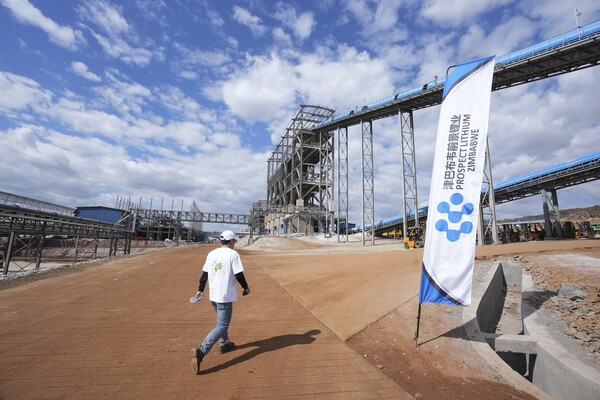
Zimbabwe hosts over ten large-scale lithium mining companies, including the Arcadia Lithium Mine, which is owned by Prospect Lithium Zimbabwe. Arcadia boasts the largest hard rock lithium processing plant in Africa and the second largest globally for lithium concentrates.

Other notable lithium mines include Sabi Star Lithium Mine owned by Max Mind Investments, Bikita Minerals owned by Sinomine, Sandawana Mines owned by Kuvimba Mining House (KMH), Gwanda Lithium Company, Mutoko Lithium Mine, and Kamativi Lithium Mine owned by Kamativi Mining Company (KMC).

The directive for lithium beneficiation is part of a broader strategy to boost government revenue and ensure that the country benefits more significantly from its vast mineral resources. Finance Minister Professor Mthuli Ncube has mandated that lithium companies submit beneficiation plans before receiving operating licenses. With numerous lithium mining projects underway, Zimbabwe, which holds the largest lithium reserves in Africa, is poised to become a key player in the global lithium market.

However, there are challenges. One significant impediment to the establishment of battery-grade lithium processing plants is the fluctuating price of lithium. Moreover, companies like Zhejiang Huayou Cobalt have expressed concerns about the local conditions for producing battery-grade lithium. Huayou pointed out that Zimbabwe lacks the necessary resources such as reliable renewable energy, natural gas, and sulphuric acid, which are critical for the production process.

Zimbabwe’s substantial hard-rock lithium reserves have attracted over $1 billion in investments from Chinese companies, including Zhejiang Huayou Cobalt, Sinomine Resource Group, Chengxin Lithium Group, Yahua Group, and Canmax Technologies. Despite this influx of investment, the establishment of local beneficiation plants remains a complex issue.

Last year, the value of lithium exports reached US$878.44 million, a figure that helped offset the decline in gold and PGM (platinum group metals) revenue, according to Zimstat data. In the first quarter of this year, lithium exports were valued at US$76.3 million. These figures highlight the potential economic benefits of developing a robust lithium beneficiation industry in Zimbabwe.

The government has long struggled to persuade PGM miners to refine their metals locally. These miners typically ship concentrates to South African refineries, citing insufficient local electricity and mineral supplies to support the significant capital investment required for building refineries. This situation has prompted a renewed focus on ensuring that the lithium sector does not follow a similar path.

As the government pushes for the beneficiation of lithium, the success of this initiative will depend on addressing the infrastructural and economic challenges that currently hinder the production of battery-grade lithium. The ongoing engagement with mining companies and the extension of the submission deadline are steps towards achieving this goal and positioning Zimbabwe as a central hub in the global lithium market.