

Home Blog Page 257

Investment into copper exploration critical as copper demand is set to surge

0

As the world shifts towards a greener and more sustainable future, the demand for copper is expected to skyrocket. Copper, a crucial component in renewable energy systems and electric vehicles, has become increasingly sought after in recent years. The global transition to clean energy production and transportation has highlighted the importance of this versatile metal, making investing in copper exploration critical. This gives Zimbabwe a wide-open chance to explore its copper potential to benefit from the transition.

The resuscitation of Zimbabwe’s biggest Copper Mine, Mhangura Mine, and further exploration for new copper resources will have a positive effect towards Zimbabwe becoming relevant in the green energy transition since the country is already one of the biggest suppliers of lithium which is one of the most sought after minerals for Electric Vehicles (EVs).

With countries around the globe committing to reducing greenhouse gas emissions and achieving net-zero targets, the demand for copper is only expected to skyrocket. Renewable energy sources, such as wind and solar power, require significant amounts of copper for efficient transmission and storage of electricity. Similarly, the rapid growth of electric vehicles necessitates copper in their batteries, motors, and charging infrastructure.

According to the International Copper Association, the demand for copper is projected to increase by 31% by 2030. This surge in demand will undoubtedly place immense pressure on global copper supplies. To meet this rising demand, increased investment in copper exploration is imperative. This opens up opportunities for Zimbabwe which has verified Copper deposits in Makonde, Kadoma, Mutare, Chirumanzu, Chegutu, Kwekwe, Shurugwi, Beitbridge, Gokwe, Bindura, Chipinge, Bikita, Insiza, Makonde, Harare, Bulawayo, Shamva, Chiredzi, Nkayi, Mudzi, Chegutu, Bindura, Kwekwe, Hurungwe, Bubi, Makonde, Bikita, Gwanda and Masvingo.

Investing in copper exploration not only addresses the upcoming surge in demand but also has the potential to spur much-needed economic growth. Exploration activities create job opportunities and stimulate local economies, particularly in regions rich in copper deposits. Furthermore, as the market value of copper continues to rise, investing in this sector can yield significant returns for investors.

However, the journey from exploration to production in the copper mining industry can be lengthy and complex. It involves conducting detailed geological studies, obtaining necessary permits and approvals, and investing in infrastructure and technology. To facilitate these processes, the Zimbabwean government and industry stakeholders must work together to ensure an efficient, conducive regulatory environment and provide necessary support in terms of infrastructure development and technological advancements.

Additionally, fostering innovation in the copper mining sector is crucial. Advancements in mining technologies and practices can improve efficiency, reduce environmental impact, and minimize extraction costs. This is essential not only for the viability of copper exploration ventures but also for the sustainability of the industry as a whole.

By investing wisely and harnessing the potential of this versatile metal, we can pave the way for a greener and more sustainable future reaping benefits in the process.


This article first appeared in the Mining Zimbabwe Magazine, issue 67 

Zimbabwe gold buying prices 4 September 2023

0

Fidelity Gold Refinery (FGR) official gold buying prices Monday 4 September 2023. See the Zimbabwe gold buying prices today.

SG 90% AND ABOVE US$58.95/g
SG ABOVE 85% BUT BELOW 90% US$58.33/g
SG ABOVE 80% BUT BELOW 85% US$57.71/g
SG ABOVE 75% BUT BELOW 80% US$57.08/g
SAMPLE BELOW 10g BUT ABOVE 5g US$56.15/g
FIRE ASSAY CASH US$59.27/g

NB: Fire Assay cash price is for gold above 100gs, no sample is deducted.
For the Fire Assay Transfer price, a sample of not more than 10g is deducted
A 2% royalty is charged on all deposits (small-scale miners)
A 5% royalty is set for Primary Producers

Cash available. Fidelity Gold Refinery prices will be changing daily to match world market prices.

Marula sends initial spodumene shipment to China

0

London-listed Marula Mining has secured a contract to make an initial trial shipment of high-grade lithium ore to a Chinese importer and exporter of metalliferous ores.

The contract involves the sale of 27.5 tonnes of material processed from historical stockpiles at the Blesberg lithium and tantalum mine in South Africa’s Northern Cape province. The material has a specification of 6% to 6.5% lithium oxide grade on a free-on-board basis from the Port of Cape Town.

The sales price is set at $3,000 per tonne, based on a minimum grade of 6% lithium oxide. The payment for the trial shipment will be made upon delivery of the material to Cape Town, which is expected within the next two weeks.

Marula‘s board sees the agreement as a positive step towards further direct sales into China. The company is also in negotiations to terminate a previous offtake agreement with Southern Jade Resources and is finalizing long-term offtake agreements for spodumene and lithium products with various commodity trading groups based in Europe.

Marula CEO Jason Brewer stated that the company has received interest from multiple Chinese groups in their lithium mining and processing operations, and this initial shipment will enable Marula to enter the Chinese market. However, Brewer emphasized that the focus remains on securing a long-term offtake agreement with a global commodity trading group for future production from the Blesberg mine.

“While this agreement with a Chinese importer and exporter of metalliferous ores has the potential to open up other opportunities in China for Marula, it is important to note that our focus remains firmly on concluding our negotiations on a long-term offtake agreement with one of several global commodity trading groups for the production of lithium from Blesberg.

“The negotiations with the global commodity trading groups for an offtake agreement are ongoing for all or part of the future production from Blesberg,” Brewer said.

US$45million Sabi Star lithium floatation plant commissioned

0

President Emmerson Mnangagwa on Thursday commissioned a US$ 45 million Sabi Star lithium floatation plant in Buhera, Zimbabwe.

Rudairo Mapuranga

Speaking at the official commissioning of the floatation plant President Mnangagwa commended Sabi Star Lithium Mine for moving with the government’s vision that will see the country begin positioned as a key player in the Lithium market.

“It is pleasing to note that Sabi Star has taken heed of the call by my Government to beneficiate and value-add minerals before exportation through the construction of the lithium (spodumene) flotation plant. My Government banned the export of raw lithium ores through Statutory Instrument 5 of 2023 which was then followed by Statutory Instrument 57 of 2023 meant to promote local beneficiation of the lithium ores.

“The lithium (spodumene) flotation plant we are witnessing here today represents a huge effort in Mineral Value Addition and Beneficiation which is in line with goals of the National Development Strategy 1 (NDS1) and Statutory Instruments I have mentioned above. The global demand for lithium is rapidly increasing, and the presence of our own processing facilities not only reduces our reliance on imports but also positions Zimbabwe as a key player in the lithium market,” Mnangagwa said.

Vice President of Zimbabwe Dr Constantine Chiwenga speaking at the same event said the lithium flotation plant will harness the lithium-rich mineral resources abundant in Buhera, tapping into the vast lithium reserves and transforming them into a higher value beneficiated product sought after in the global market.

“The collaborative efforts from Sabi Star have resulted in the successful completion of this processing plant through their investments in our country’s wide long-term investor-friendly opportunities. Through their dedication and passion, the country is establishing itself as one of the top lithium mining and processing hubs,” Dr Chiwenga said.

The Minister of Mines and Mining Development Hon Winston Chitando said the official opening of the Max Mind Sabi Star’s Flotation plant is a clear testimony that the strategies outlined in the National Development Strategy 1 (NDS1) are beginning to bear results.

“Today, we are launching this state-of-the-art lithium flotation plant set up by one of the major producers in the lithium subsector, Max Mind Sabi Star. I can assure you, Your Excellency, that this project has the potential to be a major contributor to the entire lithium mineral processing revolution by unlocking the full potential of our mineral resources. The plant will be capable of processing low-grade spodumene with high efficiency and output,” Chitando said.

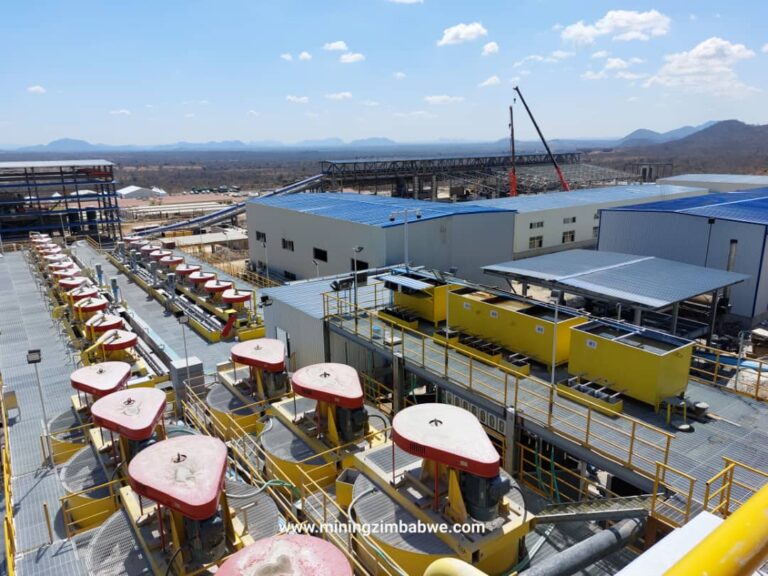
The construction of the Sabi Star plant required a capital injection of USD 45 Million and has the capacity to process 3,000 tonnes of lithium (spodumene) per day. Operation of the flotation plant will lead to direct employment of 450 employees, 85% of them being locals and another 400 contractors.

The declared resource at the mine is 6 million tonnes of Lithium and Tantalite ores. Exploration work commenced in 2018 and cost a total of USD 6 Million.

Earthworks for the processing plant were started in June 2022 with plant construction reaching 50 percent completion in December 2022, testing phase in May 2023, and full commissioning in August 2023.

During the construction stage, the Project employed over 1000 employees mainly from the local communities.

The construction of a 15 MW thermal power plant to supply power for all operations at the mine is now 40 per cent complete.

Mines Bill, AI, to highlight AMSZ AGM 2023

0

Issues to do with the Mining and Minerals Amendment Bill and Artificial Intelligence (AI) will be among the key topics to be discussed at the Association of Mine Surveyors of Zimbabwe (AMSZ) Annual General Meeting (AGM) to be held in Victoria Falls in October.

Rudairo Mapuranga

The AGM and Conference will be running under the theme, “Strengthening the Mining Innovation Ecosystem through Investment, Technology, Skills, and Collaboration” which will run from the 11th to 14th of October 2023.

According to AMSZ President Gabriel Mwale, there will be six key issues that will be discussed at the event which include among others government mine Surveyor’s certificate of competency, lobbying for increased technology in Mine Survey Offices nationwide and plenary discussions.

AMSZ AGM and Conference 2023, Key Issues:

  1. The Mining Bill and the Role of Surveyors therein.
  2. Lobbying for increased technological investments in Mine Survey Offices nationwide, to enhance accuracy, efficiency and safety.
  3. Promoting the latest and cutting-edge global best practices and procedures.
  4. The Government Mine Surveyor’s Certificate of Competency.
  5. National Certification of Mine Survey Assistants to improve the accuracy of survey data collection and measurement.
  6. Plenary discussions on improving general services that Mine Surveyors provide to the industry.

About the Association of Mine Surveyors of Zimbabwe (AMSZ)

The (AMSZ) is an affiliate of The Chamber of Mines of Zimbabwe and was formed in 1985 as a Professional Non-Profit Body that represents the interests of the Mine Surveying Profession in Zimbabwe. It comprises of members from Mine Surveying Departments of various Mining Organizations, both locally and abroad, as well as other affiliate members from diverse technical fields related to Mine Surveying and the Mining Industry in general.


Zimbabwe gold buying prices 31 August 2023

Fidelity Gold Refinery (FGR) official gold buying prices Thursday 31 August 2023. See the Zimbabwe gold buying prices today.

SG 90% AND ABOVE US$59.17/g
SG ABOVE 85% BUT BELOW 90% US$58.54/g
SG ABOVE 80% BUT BELOW 85% US$57.91/g
SG ABOVE 75% BUT BELOW 80% US$57.29/g
SAMPLE BELOW 10g BUT ABOVE 5g US$56.35/g
FIRE ASSAY CASH US$59.48/g

NB: Fire Assay cash price is for gold above 100gs, no sample is deducted.
For the Fire Assay Transfer price, a sample of not more than 10g is deducted
A 2% royalty is charged on all deposits (small-scale miners)
A 5% royalty is set for Primary Producers

Cash available. Fidelity Gold Refinery prices will be changing daily to match world market prices.

De Beers’ Diamond Revenues Drop

0

Anglo-American‘s diamond subsidiary, De Beers, has reported a significant decline in diamond revenues for its latest sales cycle.

Debeers announced that the seventh sales cycle of 2023, which took place between 14 and 29 August, generated only $370 million in sales. This is a drop from the previous cycle’s $411 million and $456 million, and a significant decline from the seventh cycle of 2022, which generated $638 million.

According to De Beers CEO, Al Cook, the decline in revenues can be attributed to the current macroeconomic environment, which has led to reduced demand for diamond jewellery in key consumer markets. Additionally, the traditionally lower levels of midstream trading during the summer period have also impacted sales.

De Beers operates diamond mines across Botswana, Canada, Namibia, and South Africa, and sells 90% of its stones through Sightholder sales. The remaining 10% of diamonds are sold through auctions. The company’s sales events, known as Sights, are held 10 times a year.

The decrease in diamond revenues comes as a blow to Anglo American, as the company had been hoping for a recovery in the diamond market following the impact of the COVID-19 pandemic. However, the cautious approach taken by buyers in light of the current economic climate has resulted in decreased sales.

Recently the Botswana Government increased its share in the Partly Debeers owned Debswana.

“We’re very happy with the outcome. It could have been better but you know with a partnership you’ve always got to give as you take,” Masisi said, adding that the deal will give Botswana 10 billion pula ($762 million) to diversify the economy and improve the diamond value chain as well as help impart skills to young people and create jobs.

Under the new agreement, Botswana’s state-owned diamond trader is set to receive a larger portion of the output from Debswana, the De Beers’ unit responsible for approximately two-thirds of the group’s annual production. The revised terms stipulate that the state-owned trader will now be entitled to 30% of Debswana’s output – a significant increase from the previous arrangement. Additionally, the government has announced a tentative agreement that holds the potential for this share to further rise to a maximum of 50% in the future. The deal also includes new 25-year mining licenses for Debswana.

Anglo owns Unki mine in Shurugwi.

Zimplats hailed for beyond-the-skin initiatives

0

The country’s biggest platinum group metals (PGM) producer Zimplats has been hailed for its initiative to donate creams, lip balms and sprayers to people with albinism.

Rudairo Mapuranga

Speaking to Mining Zimbabwe at the Zimplats exhibition stand at the Harare Agricultural Show on Tuesday, Bridget Chirenje a person with albinism said Zimplats should continue with its endeavour to ensure discrimination of people with albinism is at a minimum.

“We are thankful because of Zimplats and other organisations working with Zimplats. We are very grateful for some of us, buying these creams is a testimony because they are expensive to us. So encourage Zimplats to continue with this initiative as it will help many people,” Chirenje.

Portia Chiadzimu speaking to this publication said she was honoured to receive the cream donations from Zimplats and urged the mining giant to continue with its endeavour to help the albinism community.

“We are happy because Zimplats has donated skin creams, we urge them to continue doing this to ensure that our skin is protected so that we will not be discriminated in the communities that we come from,” Chiadzimu said.

Zimplats has an annual distribution of 20,000 sunscreens and lip balms to communities in Harare, Bulawayo, Matabeleland North, Mashonaland West, Masvingo and Mutare as part of the community albinism project.

Zimplats has been calling for the country to stand together and stop stigmatisation and discrimination against people with albinism.

“It’s time for us to stand together as a community and say no to stigmatisation and discrimination of people with albinism,” reads Zimplats motto.

WHAT IS ALBINISM?

Albinism is a rare group of genetic disorders that causes the skin, hair, or eyes to have little or no colour. Albinism is also associated with vision problems. In so many African countries, people with albinism are misunderstood and mistreated because of their skin colour.

CAUSES

  • A defect in one of several genes that produce or distribute melanin.
  • The defect may result in the absence of melanin production or a reduced amount of melanin production.
  • The defective gene passes down from both parents to the child.

SYMPTOMS OF ALBINISM

  • An absence of colour in the hair, skin or eyes
  • Lighter than normal colouring of the hair, skin or eyes
  • Patches of skin that have an absence of colour.

MYTH AND FACT ON ALBINISM

Myth

They are the results of inbreeding or incest, that is, breed from closely related people, especially over many generations.

Fact

Albinism is an inherited disorder. It is inherited as a recessive gene from both parents. As with all recessive conditions, the chances of two people carrying the same recessive gene increase if the two have recent common ancestors. Therefore, while albinism is not necessarily a result of incest, marriage between close relatives can increase the chances of a child being born with albinism. Therefore, having children with a relative is highly discouraged. The body of people living with Albinism has little or no ability to produce the colour of the skin, hair and eyes. This colour is called “melanin”.

Myth

People with albinism are sterile.

Fact

This is not true. Persons with albinism are fertile and can have children.

Myth

People with albinism cannot see during the day but see well at night.

Fact

People with albinism have eyesight problems due to a lack of ‘melanin’ pigmentation in the retina. They can see during the day and also at night, but they may either be short or long-sighted and may need sight aids.

Myth

Albinism is contagious.

Fact

Albinism is a genetic condition passed on by both parents. Each parent must be a carrier, and both must pass on an albinism gene for someone to be born with the condition. It cannot be caught and is not contagious.

People with albinism tend to have more developmental difficulties. True, but only because of vision problems and social pressures. When you can’t read the blackboard or you’re ostracized from society and can’t go to a normal school, you often fall behind academically. This will affect their grades thereby reducing their chances of being employed and opportunities for societal integration.

Myth

Albinism is a punishment or a curse from the gods or ancestral spirits due to wrongs done in the family.

Fact:

Albinism is a genetic condition that is passed on from parents to children. Many people are carriers of this recessive gene. Albinism is not a curse.

Myth

A person with albinism cannot have regularly pigmented children.

Fact

A person with albinism can give birth to regularly pigmented children if his/her partner is not a carrier of a similar recessive gene for albinism. The children may be carriers of the recessive gene but it will not be expressed in them.

Myth

People with albinism are not intelligent.

Fact

This is not true. Persons with albinism are intelligent and also perform well academically like other normally pigmented people. There are teachers, lawyers, politicians and musicians who are living with albinism.

Myth

The mother slept with a white man.

Fact

Children born with albinism may look ‘white’ due to absent or reduced pigmentation but are not products of cross-race sexual relationships.

Myth 

People with albinism cannot go outside during the day.

Fact

People with albinism can go outside at any time but need to take extra precautions when out in the sun. Protective clothing, sunscreen and a hat are required all year round to minimize the risk of skin damage from the sun.

Zimbabwe gold buying prices 29 August 2023

Fidelity Gold Refinery (FGR) official gold buying prices Tuesday 29 August 2023. See the Zimbabwe gold buying prices today.

SG 90% AND ABOVE US$58.63/g
SG ABOVE 85% BUT BELOW 90% US$58.01/g
SG ABOVE 80% BUT BELOW 85% US$57.39/g
SG ABOVE 75% BUT BELOW 80% US$56.77/g
SAMPLE BELOW 10g BUT ABOVE 5g US$55.84/g
FIRE ASSAY CASH US$58.94/g

NB: Fire Assay cash price is for gold above 100gs, no sample is deducted.
For the Fire Assay Transfer price, a sample of not more than 10g is deducted
A 2% royalty is charged on all deposits (small-scale miners)
A 5% royalty is set for Primary Producers

Cash available. Fidelity Gold Refinery prices will be changing daily to match world market prices.

SA Police on a mission to permanently thwart illegal mining

0

Following an August 18 update that revealed the dangers of illicit mining activities in the Florida community in South Africa, extra police operations were performed to address illegal mining.

Up until August 21, several units were deployed to multiple locations where suspected illegal mining took place. The focus points of these operations were illegal mining, illegal immigrants, robbery aggravated, second-hand goods, contact crimes, and drugs, and were executed in high-risk areas such as CRG Mines, Randleases Hostel, Fleurhof, New Canada, Jerusalema and Eitemal.

Several arrests were made.

About six illegal immigrants were arrested and illegal mining equipment was seized at Jerusalema, including one water pump, one electric motor, four pendukas, two stamper buckets and three stampers.

On August 17 two drug-related arrests were made. Forty brown-folded plastics with suspected heroin and nyaope were also confiscated.

On August 18 one drug-related arrest was made, and five Zimbabwean and Lesotho nationals saw their trip to South Africa cut short as they were arrested in connection with illegal immigration. The bomb disposal specialist unit uncovered 23 shock explosive tubes and five detonator cords. Illegal mining equipment was also seized during this operation in Jerusalema.

Several other arrests were made in connection with theft, firearm pointing, and armed robbery during stop and searches.