Home Blog Page 295

Gwanda miners die in mine shaft collapse

0

Three small-scale miners died in Gwanda after their mine shaft collapsed yesterday.

By the time of going to print yesterday, Police had retrieved two bodies in the afternoon while the search for the other continued.

Although Government official confirmation could not be obtained yesterday, the Matabeleland South chairman of the Small Scale Miners Philemon Mokuele confirmed in a message to Mat South miners.

“We had a fatal accident: one of our small-scale miners in the Dubane area, Gwanda, Three miners have been trapped underground, two bodies were retrieved, unfortunately, one body is still underground,” he said.

Mokuele said another miner, William Smith had provided an excavator to help retrieve the remaining body.

“The excavator doesn’t have fuel, we are kindly appealing for diesel donations for the excavator as a matter of emergency. Those who are willing to donate can contact the following numbers 0785732825,” said Mokuele.

Standard

Zim to reach seven million diamond carats in 2023

0

The country is well on course to reach seven million diamond carats thereby playing a significant role towards the achievement of the US$12 billion industry, Minister Winston Chitando has said.

Rudairo Mapuranga

According to the Minister of Mines and Mining Development, the country’s three active diamond producers are targeting to produce 7 million carats of diamonds in 2023 as the sector looks forward to the attainment of the US$1 billion annual revenue.

“The three active diamond producers are on course to reach seven million carats production by the end of 2023, and this will play a role in the attainment of the US$12 billion target from the increased production,” Minister Chitando said.

According to the diamond policy, only four companies are permitted to mine diamonds in Zimbabwe these are RioZim Murowa diamonds, Zimbabwe Consolidated Diamond Company (ZCDC), Alrosa Zimbabwe and Anjin.

Only Alrosa Zimbabwe is currently not producing diamonds.

In 2021, Zimbabwe’s diamond production amounted to 4.2 million carats. This was an increase of around 55.5 per cent compared to the previous year. The country ranked eighth among the world’s largest diamond producers by volume.

The mining sector in Zimbabwe has grown by 100 per cent as the government envisions to see the country fetching US$12 billion from the sector by the end of this year.

Zimbabwe earned a total of US$5.4 billion in 2022 from the extractive industry which is a 100 per cent increase compared to the size of the sector before the second Republic in 2017.

The Mining industry also nearly doubled earnings in 2021 fetching US$5.2 billion with projections by the Ministry of Finance indicating that mining earnings will reach US$7.3 billion in the year 2022, achieving 60.8 per cent of the US$12 billion target for 2023.

The mining sector, which is expected to anchor short to medium-term growth, generates more than three-quarters of the country’s annual export earnings. Zimbabwe has over 60 commercially exploitable miners.

Key minerals mined in mineral-rich Zimbabwe, apart from diamonds, include platinum group metals (PGMs), nickel, chrome, gold, coal and lithium, among others.

KP Chairmanship to help attainment of US$1 billion diamond industry

0

The attainment of the country’s vision to see the diamond industry fetching US$1 annual revenue by end of this year is well on course with the Kimberly Process (KP) Chairmanship expected to play a leading role in the attainment of the target, a government Minister has said.

Rudairo Mapuranga

As chair, Zimbabwe will oversee the implementation of the Kimberly Process Certification Scheme (KPCS) and operations of the working groups, Committees and administration that activate the KP. The Republic of Zimbabwe will be deputized by the United Arab Emirates who will be the KP Vice Chair for 2023.

According to the Minister of Mines and Mining Development Hon Winston Chitando leading the KPCS will see the country have an impact on the global diamond market thereby debunking the mysteries of diamond sourcing.

He said the assumption of the chairmanship is a positive step and a vote of confidence in the Zimbabwe mining industry.

“The diamond market is sensitive to the perceptions of the origins of the mineral, and, as such, Zimbabwe will benefit through a positive market perception of our diamonds.

“Leading the KPCS presents an opportunity for the country to have an impact on the global diamond market.

“The diamond sector in Zimbabwe will grow significantly from the opportunities the chairmanship of the KPCS will present to the country.

“The attainment of a US$1 billion diamond sector economy is well on course, with the KP chairmanship definitely going to help in the attainment of the target,” Hon Chitando said.

The KPCS is a global body created under the United Nations General Assembly Resolution 55/56.

It is responsible for the eradication of conflict diamonds from the global trade in diamonds.

The takeover of the KP Chairmanship will see the country leading the scheme in 2023. Zimbabwe has promised to leave a lasting legacy and a positive impact on the KP.

Stakeholders in the diamond sector have already expressed optimism about the country assuming the chairmanship of the KP stating that the assumption of the chairmanship will help in demystifying the mischievous agenda of trying to red-flag the country’s diamonds.

The year 2023 is the KP reform year where a host of changes are expected including conflict diamonds definition, implementation of tripartite arrangements in participating countries and strengthening of best practices for Artisanal and Small scale mining in diamond-producing regions among others.

Speaking to Mining Zimbabwe renowned Diamond Buying Consultant Cute Machekeche said the assumption of the chairmanship of the KP will have a positive effect on all stakeholders, and the country will significantly benefit from its God-given resource.

“The assumption of the chairmanship of the Kimberly process will impact positively on all stakeholders. Firstly it will demystify the mischievous agenda of categorizing our stones as blood diamonds. The direct impact of this will be increased competition leading to the realisation of market values on trades. The market value will stimulate the following benefits inter-alia;

“i. Increased production by miners leading to better economic performance and drive toward the target of 12 billion by 2030.

“ii. Increased foreign currency inflows which will resultantly oil the other sectors of the economy as well as enhance the country’s balance of trade.

“iii. Increased economic activity leading to increased inflows by way of taxes and royalties. This will augment the extensive national development agenda and drive towards turning Zimbabwe into a middle-income economy by 2030.

“iv. Increased potential investments and tourists as more diamond buyers will have a clearer view of the jewel that Zimbabwe is,” he said.

Blanket solar plant generating more power than anticipated

0

Victoria Falls Stock Exchange-listed gold-focused miner Caledonia Mining Corporation has announced that its 12 MW ac solar plant which was connected at Blanket Mine last year in November is operating better than expected and is generating slightly more power than was anticipated.

Rudairo Mapuranga

According to Caledonia CEO Mark Learmonth recognising the economic, environmental, and logistical challenges of running large-scale diesel generators for extended periods, Caledonia constructed a 12 MWac solar plant which is generating slightly more power than was anticipated, it currently provides approximately 27 per cent of Blanket’s average daily electricity demand.

He said in recent months there has also been a substantial improvement in the supply of power from the Zimbabwe grid which has substantially reduced the amount of diesel consumed and has reduced the frequency of interruptions to production.

“The completion of the solar project coincides with an improvement in the supply of power from the Zimbabwe grid which has substantially reduced the amount of diesel consumed. As an initial early-stage indicator, in January 2023, Blanket consumed 18,000 litres of diesel, which compares to approximately 120,000 litres per month for the whole of 2022. Whilst we can’t be certain that this quantum of improvement will be fully maintained as they ear progresses, we are confident that we will continue to see an ongoing meaningful reduction to our diesel us age month on month, fully justifying our investment in solar power and delivering on our ESG strategy,” Learmonth said.

Zimbabwe to start operating new coal power unit by March

0

Zimbabwe will start operating a new unit at its only coal-fired power plant by March, the country’s deputy energy minister, Magna Mudyiwa, said on Wednesday, 8 February, providing relief to millions of citizens rocked by frequent power outages in recent months.

The new unit of the Hwange power plant will lift the African nation’s installed capacity by more than 14% to 2,400 megawatts (MW). The next unit is expected to be commissioned soon after, Mudyiwa said, without giving a timeline.

Less than half of Zimbabwe’s 16 million citizens have access to electricity, and a global squeeze on funding new coal-fired capacity has limited the country’s ability to plug chronic power cuts that have lasted as long as 18 hours in recent days.

Electricity generation

“We have the capacity to generate up to 2,100MW from our power sources but at the moment we’re generating far less than that..about 1,000MW,” Mudyiwa told Reuters.

“But our demand for electricity is about 1,700MW so we have a serious deficit,” she said.

Deficient rainfall has led to a decline in hydropower generation, while the efficiency of the sole, decades-old coal-fired utility has dipped sharply over time while power demand has surged in recent years due to higher mining and agricultural activity.

The International Monetary Fund counts electricity shortages as one of the major factors weighing Zimbabwe’s growth prospects.

Lack of funding for coal-fired power is driving the mining and agriculture-dependent economy to import costly power from regional neighbours including Zambia and Mozambique.

BizCommunity

Court releases diamonds in custody of RBZ after 13years

0

AIM-listed Vast Resources says the High Court of Zimbabwe has ordered the release of its 129 400 carats of rough diamonds, which have been in the custody of the Reserve Bank of Zimbabwe (RBZ) since 2010.

In a statement last week, the company said the court had granted a default order against the country’s Mines minister relating to the diamonds.

“Despite taking longer than anticipated, I am very pleased to announce that after many years of hard work and discussion with the Zimbabwean government, the matter regarding the release of the historic parcel has now been amicably settled in a manner supported by order of the High Court of Zimbabwe,” Vast chief executive, Andrew Prelea, said.

“This demonstrates the Zimbabwe government’s and in particular … President E.D. Mnangagwa’s commitment to resolving legacy issues related to investment in Zimbabwe, in a transparent and legal manner for the mutual benefit of investors and the country,” Prelea said.

He further highlighted that the final quality assortment of the parcel will be determined when the stones are in the company’s possession and can be independently cleaned and valued.

Mining cadastre system to be online by December

0

The implementation of the Mining Cadastre Information Management System is expected to be done by the end of this year, the Minister of Mines and Mining Development Hon Winston Chitando has said.

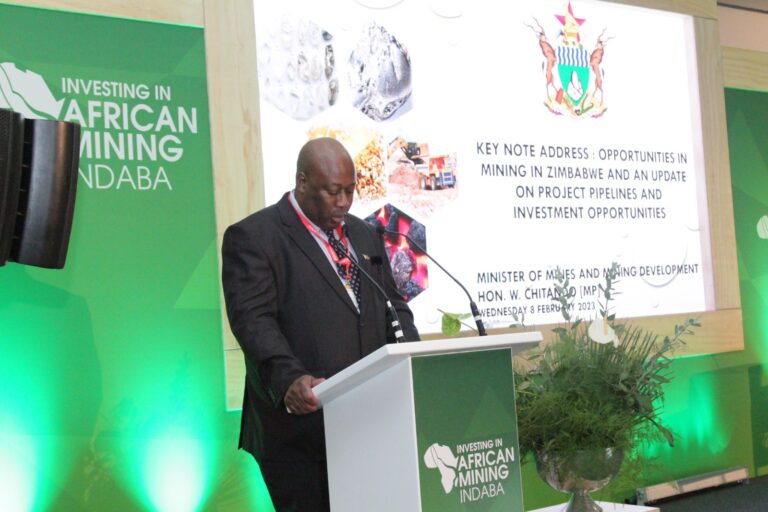
Speaking during the 2023 edition of the Investing in Africa Mining Indaba held in Cape Town, Hon Chitando said the government has made a commitment to issue the cadastre system by December 2023.

“The Ministry of Mines and Mining Development is almost complete towards migrating from the manual, to automation of the computerized Mining Cadastre Information System. This is part of the Government’s drive to add value and beneficiation in the mining sector and to underpin the sector’s vision to be a USD12 billion economy by 2023. As a Government, we have made a commitment to institute the digital system by December 2023. The Cadastre system is meant to expedite the process of mining administration and mineral accountability,” Minister Chitando said.

The Mining Cadastre Portal provides an e-Government platform for all stakeholders in the mineral sector to engage directly with the mining commissioners who issue mining certificates. The Portal aims to ensure international standards of transparency with an emphasis on improving the ease of doing business in Zimbabwe.

The computerized cadastre Portal will be open for registrations for existing mineral titleholders who will have a period to verify and validate their individual mineral titles. Once verified, registered users will be able to view their portfolios and provide feedback on title data. Online applications and other portfolio management functionality will commence after the inauguration of the system.

Currently, the Ministry of Mines and Mining Development is flooded with several running disputes caused by over-pegging and double allocation of mining titles which at times results in chaos in the sector.

The introduction of the new mapping system is therefore expected to bring sanity to Zimbabwe’s mining sector, the Southern African country’s single largest foreign currency earner, and spur growth through that economic segment.

Advantages of the cadastre system

The computer-based cadastre system is expected to enhance transparency and accountability in the administration of mining titles.

The cadastre system will have all records of interest in the land such as licence holders’ rights, restrictions and government activities.

The computerised mining register is also expected to be the central database for the storage of information on applications and licences.

It is also expected to reduce processing time for the issuance of mining titles and other mining services in line with best practices across the globe.

Currently, mining licence separations are marked on the ground by metal stakes, concrete beacons, or some other fixed points surveyed using conventional methods such as theodolite or archaic methods involving tape and chains. This method has been criticized for breeding corruption in the allocation of titles.

The cadastre system will therefore help curb corruption in the allocation of mining claims.

Zimbabwe mining industry in 100% growth – Chitando

0

The mining sector in Zimbabwe has grown by 100 per cent, Minister of Mines and Mining Development Hon Winston Chitando has revealed.

Rudairo Mapuranga

Speaking at this year’s edition of Investing in Africa Mining Indaba, Chitando said Zimbabwe earned a total of US$5.4 billion in 2022 from the extractive industry which is a 100 per cent increase compared to the size of the sector before he assumed the top position of the Ministry.

“A TOTAL OF USD 5.4 BILLION WAS RELEASED IN 2022, A 100% GROWTH INCREASE COMPARED TO USD2.7BILLION RELEASED IN 2017,” Hon Chitando said.

The mining industry also nearly doubled earnings in 2021 fetching US$5.2 billion, with projections by the Ministry of Finance indicating that mining earnings will reach US$7.3 billion in 2022, achieving 60.8 per cent of the US$12 billion target for 2023.

Zimbabwe has over 60 commercially exploitable minerals.

Key minerals mined in mineral-rich Zimbabwe, apart from gold, include platinum group metals (PGMs), nickel, chrome, diamonds, coal and lithium, among others.

Commenting on the feasibility of achieving the US$12 billion mining industry by 2023, as targeted by the Government, the Chamber of Mines Chief Executive Officer (CEO) Mr Issac Kwesu said the sector was doing all it could for the country to reach the set target.

“The industry is doing its best, to the maximum of its abilities. There has been some expansion, new mines being set up, and ramping up of production of existing mines all these are signs that we are committed to the US$12 billion. We will play our part because it is an all-stakeholder issue,” said Mr Kwesu.

The mining sector export earnings in 2021 reached US$5,2 billion, contributing more than 85 per cent to the national export value.

It has become Zimbabwe’s lynchpin in driving the economy during turbulent times across the globe through direct and indirect linkages with other key sectors of the economy.

Shamva Gold Mine Fresh Air Team commissioned

0

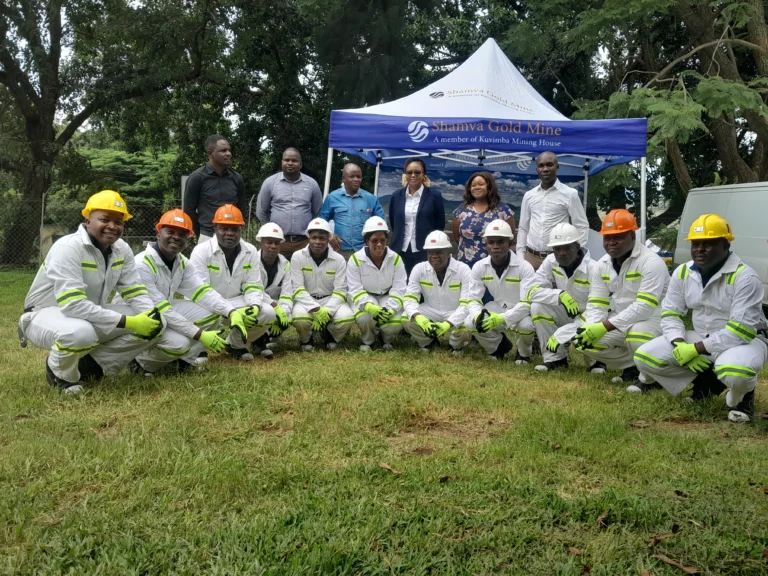
The Association of Mine Rescue of Zimbabwe has commissioned the Shamva Gold Mine Fresh Air team into the national body which specializes in mining rescue to ensure that fatalities in mining are on the decrease as more teams can carry out rescues when accidents erupt.

Rudairo Mapuranga

The Shamva Fresh Air Team will join over a dozen of fresh air teams and proto teams around the country from different mines such as Freda Rebecca, Zimplats, How Mine, Vumbachikwe, Mimosa, and Unki among many others.

Mine Rescue teams are the line of defence in emergencies as they provide immediate response in emergencies to save lives, and equipment and recover the mine to normal.  Most mine rescue teams are composed of miners who know the mine and are familiar with the mining machinery they may encounter during the rescue, the layout of workings and geological conditions and working practices.

Local and state governments may have teams on-call ready to respond to mine accidents.

Speaking at the commissioning of the Shamva team, the National Mine Rescue trainer Mr Michael Ruzvidzo said mine rescue teams must know the procedures used to rescue miners trapped by various hazards, including fire, explosions, cave-ins, toxic gas, smoke inhalation, and water entering the mine.

He said the Shamva Mine Fresh Air Team has been exceptional in its training and preparedness for commissioning getting over a 85 per cent pass mark.

“Today is a great day for the commissioning of Shamva gold Mine, this team has been doing some training from long back. At first, their initial training was theory, and workloads which were very successful. We have been waiting for so long for this team to be commissioned, it is now going to be incorporated into the Mining Rescue Association,” Ruzvidzo said.

Anselm Mapako Mine Rescue Association North Zone Coordinator said the commissioning of Shamva Gold Mine Fresh Air Teams was going to be significant for the mines around Mashonaland Central as it will be an addition to helping Freda Rebecca in responding to situations.

“As a zone, we are growing, with the addition of Shamva mine means we now have 5 teams, two Fresh Air teams and three Proto teams. The addition of Shamva means that the mine will attend some callouts earlier than other teams which are not from this side” Mapako said.

The Association National Coordinator Lameck Karikeka ensured that the coming of the fresh air team will help arrest and respond to situations arising from the small-scale and artisanal mining areas. He said the commissioning will have a positive effect on the safety of miners and the reduction of fatalities.

“Now we have commissioned Shamva Gold Mines as a fresh air team and hope that it will help us in terms of helping most of the small-scale miners around. As the Chamber of Mines, we are also happy that Shamva and Freda Rebecca will be helping each other in terms of rescue. In terms of safety we are going to improve because we have a team that has in-depth safety procedures” Karikeka said.

Investors enticed with Zim mining opportunities

0

Investors who attended the Investing in Africa Mining Indaba were charmed by the Minister of Mines and Mining Development Hon Winston Chitando’s presentation of the vast opportunities available in the mining sector in Zimbabwe.

Rudairo Mapuranga

The Minister in his speech presented the abundant opportunities available for investors from exploration, extraction, mineral processing, equipment and consumables supply among other mining-related opportunities.

He outlined the country’s geological mapping and provided all the geological potential for the Investors.

“Zimbabwe has excellent geology, which is unique and highly prospective. It has widespread greenstone belts rich in precious metals, precious stones, base metals and industrial minerals,” Minister Chitando said.

“The country also hosts the Great Dyke Precambrian sedimentary basins rich in placer gold and diamond deposits Karoo basins rich in coal, coal bed methane gas (CBM), natural gas and uranium Metamorphic belts rich in pegmatite minerals such as lithium, tantalite, rare earth elements,” he continued.

Chitando also represented the mineral potential highlighting that Zimbabwe has some of the richest greenstone belts in the world.

“The country has Over 4 000 recorded gold deposits, all of them located on ancient workings. More than 90% of gold deposits in Zimbabwe are associated with greenstone belts which are considered to be some of the richest in the world,” the Minister said.

“Zimbabwe hosts the second largest platinum group metals resource in the world on the great dyke. Potential outside the great dyke is still to be investigated,” he continued.

“The Zimbabwe craton is comparable to the Kaapvaal, the Siberia, the Slave, and the Congo cratons; and has huge potential for economic kimberlites. At least 160 kimberlites have been discovered in Zimbabwe, most of which are yet to be evaluated.

The Minister also indicated that there was a potential for Coalbed methane (CBM) development due to vast coal deposits.

“Zimbabwe has large reserves of both thermal and coking coal in the mid-Zambezi basin and the Save-Limpopo basin, with more than 26 billion tonnes of coal resource.

“The country’s deep-seated coal deposits offer huge opportunities for Coalbed methane (CBM) development. Conservative estimates for the Lupane area indicate gas resources in excess of 100 million cubic metres,” he continued.

“Zimbabwe hosts one of the world’s largest resources of high-grade metallurgical quality chromite along the Great Dyke and the Greenstone belts. Significant resources are also found in the Greenstone belts – Shurugwi, Belingwe, and Mashava,” said Hon Chitando.

He then touched on the most sort after mineral in Zimbabwe today, Lithium, outlining the current projects.

“The country hosts some of the world’s largest lithium deposits. Lithium Mining projects in the country include Bikita Minerals in Masvingo Province, Arcadia Lithium Project in Goromonzi, Mashonaland East Province, Zulu Lithium in Matabeleland South, Kamativi mine in Matabeleland North and Sabi Star in Buhera, Manicaland,” Chitando said on Lithium.

“The country has high nickel prospectively with more than 30 deposits having been discovered,” the Minister continued.

He also alerted the audience on the occurrences of huge commercial deposits of Rare Earth Elements.

“Zimbabwe has huge potential for REE. Though there has not been systematic exploration for REE, there are prospects with information suggesting possible occurrences of huge commercial deposits of REE.

The Minister also presented opportunities available in mineral processing and beneficiation.

“The main thrust is on mineral beneficiation along the mining value chain to convert the country’s mineral resources into a catalyst for economic growth. The country has huge mineral resource endowments to support the development of local value chains: Gold, Diamonds, Semi-precious Stones – Jewellery

“Manufacturing Chromite, Iron, Nickel, Carbon (from coal) – steel manufacturing and downstream engineering products Hydrocarbons (Coal+ CBM) – power generation, petrochemicals and fertilisers

“Graphite, Lithium – battery manufacturing industry ceramic industry Phosphates – manufacture of fertilizers.”

Hon Chitando said that the country has a highly diversified mineral endowment, therefore Investment opportunities exist across the entire mining value chain as follows,

Exploration – both brownfield and greenfield. The country is still under-explored and there is huge potential for new discoveries, particularly using modern exploration techniques.

Mining and Extraction – most of the mines are using antiquated machinery and require retooling to increase efficiency and productivity.

Across linkages with the entire economy – These include local value addition; support services such as supplies of mining equipment and consumables, financial services, management and consultancy.

This concluded the minister’s speech. Many interested prospects then lined up to learn more from the Minister who has had busy days since his appearance at the Indaba.

About Mining Indaba

Investing in African Mining Indaba (Mining Indaba) is solely dedicated to the successful capitalisation and development of mining interests in Africa. Succeeding for over 27 years, Mining Indaba has a unique and widening perspective of the African mining industry, bringing together visionaries and innovators across the entire value chain. Mining Indaba is the space for unmissable, high-impact networking, and creating opportunities and conversations to land deal after deal.