


Home Blog Page 298

ZRP concerned with the increase in ASM mine accidents

0

The Zimbabwe Republic Police (ZRP) has expressed concern over the increase in ASM mine accidents imploring the miners to take necessary measures to improve Occupational Safety, Health and Environment management.

Rudairo Mapuranga

In a statement, the police said it was concerned with increased accidents in ASM industry.

“The ZRP is concerned with increased incidents of mine accidents. Mine proprietors are implored to take necessary measures to improve occupational safety, health and environmental management.

“Police in Zvishavane are investigating a mine accident in which Tichaona Sithole (38) died on 24/01/23 at Altena 51 Mine. The victim fell on a rocky surface after slipping from a bucket which was being used to lower him down the mine shaft.

“Meanwhile, two artisanal miners, Anesi Tinotenda (24) and Jeremia Mutuda died after an underground mine shaft they were working on collapsed resulting in the victims being trapped at Juno K29 Mine, Chakari on 23/01/23,” ZRP said.

This has come days after the Environmental Management Agency (EMA) issued an order for one of the country’s big gold mines Redwing Mine to stop mining operations. The mine has been for the whole of 2022 operated by Better Brands Mining and other small-scale miners at an artisanal level. The mine has recorded a record of fatalities in 13 months, recording 21 deaths from January 2022 to January 2023 leading EMA to have no solution but order the mine to be closed so that it comes up with a strategy to create a solid SHE policy.
Lithium miners left with no market to sell their ores

0

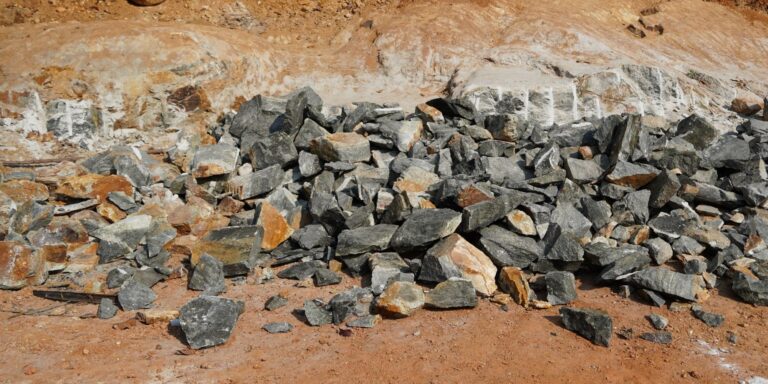
While restrictions to export raw lithium are noble and beneficial towards the achievement of the upper middle-income economy, the sudden introduction of the law has left many miners struggling to get a decent market for the product.

Rudairo Mapuranga

The ban on raw lithium export would lead to job creation and transfer of skills to local experts thereby creating a green energy future for Zimbabwe leading the country to be considered one of the top countries in the energy revolution. However, the ban came at a time when proper structures were not in place leading many to lose out on the current world appetite for the commodity.

Speaking to this Publication miners in Mtoko have expressed concern on the government’s decision to ban suddenly the export of raw lithium as this has led to a market bankruptcy and exploitation of miners. Lithium ores of less than 2 per cent content are currently being bought at US$30 per tonne on the ground leaving miners bleeding as few buyers have been given a leeway to export.

“Buyers used to buy these ores at around US$150 which are rendered useless nowadays. We are now selling at US$30 per tonne because we are desperate for money. If we take them ourselves to Harare, no one will even want to buy them. The decision to ban the export of the raw mineral was good but it was done too early, it’s affecting us big time,” a miner said.

“We just hope the government can create a market for us, buyers have now turned into bloodsuckers, we may soon die. We support the decision to ban but we also want markets. The government after banning, should be creating markets for us,” said another.

Miner Elisha Murengwa said the decision to ban was of importance but more time should have been invested in creating future markets after the raw ban for miners who are not producing concentrates yet.

“First we need to establish the objective for such a decision by the government since it has been endorsed by the relevant Minister. From the official statement released thus far by the permanent secretary, it alludes to governments’ need to safeguard such key minerals as they form part of economic growth enablers due to their current and future high demand on the international market thus such minerals should be ring-fenced and measures put in place to protect them. Then there is mention of the need to promote value addition and mineral beneficiation which again is a very noble decision as this ensures employment creation through industry/processing plants that would be opened but very importantly it also means more taxes on export which in turn means additional revenue to our fiscus. So when one considers such a position government does feel justified in pronouncing such bans though going back to your question “is it within our legal framework” to impose such a ban overnight becomes another question. We have seen such similar moves by the government when they banned lithium and chrome exports in the past using similar statutory instruments. As far as we know there hasn’t been any litigation from anyone outside to challenge such moves in court and one wouldn’t expect this to be different however we cannot rule out such a court challenge. I cannot delve into finer details of the law as I’m not a legal expert but as miners, we are not happy with such a decision because it simply worsens the plight of miners who in some instances had done explorations and invested their hard-earned money,” he said.

The Minister of Mines and Mining Development Hon Winston Chitando through section 3 (1) (a) of the base Minerals Export Control Act banned the export of raw lithium ore.

Secure supply, efficiency needed for mining growth

0

An important focus of this year’s Investing in African Mining Indaba will be on security and supply –and with good reason, according to Ralf Hennecke, Managing Director of Omnia Group company BME.

The pressure is building for the mining sector to re-set its production capability in the face of growing future demand – especially in those minerals critical to global decarbonisation trends. Not only will this require more exploration and mine development in the long term, but it will demand more predictability and efficiency across the value chain.

“The coming year will continue to bring challenges with regards to mining supply chains around the world,” said Hennecke.

“These obstacles have their origins in the economic lockdowns during the Covid-19 pandemic but have been compounded by the Russian invasion of Ukraine and the related disruptions.”

This has brought home the importance of secure supply chains in key inputs like explosives and blasting technology, on which mines rely to meet their daily output targets. PwC’s annual insight report SA Mine 2022 has also recently raised similar concerns about whether South Africa and other resource-rich countries will benefit fully from mineral demand growth. This will depend, argued PwC, on their ability to address bottlenecks in supply and mine-to-market infrastructure.

“As BME, we are always dealing with supply chain disruptions – caused by a range of factors from weak infrastructure to border efficiency,” he said.

“Our success in serving customers stems from ongoing investment in local infrastructure and skills, to strengthen local supply chains.”

Closer collaboration between mines and their supply partners was a key ingredient in building future stability in the sector, he asserted. Beyond supply chain issues, the pursuit of efficiency in mining remained a vital theme. This is because efficiency is directly relevant to energy saving efforts for decarbonisation, as well as for unlocking opportunities to gradually increase production levels.

“The digital age offers mining supply companies the ability to continuously develop our productive technologies,” he said.

“In our field – blasting and explosives – we have seen the significant impact that our technological development can have on mine safety and productivity, for instance.

”Hennecke highlighted that these efficiency improvements were important to the long-term sustainability of the sector – as they improved the commercial viability and longevity of every project. Greenfield projects to produce key commodities are scarce, he pointed out, and minerals like nickel, copper, cobalt and platinum group metals are likely to experience supply shortages if new projects are not initiated soon.

“It has become clear that more exploration – in battery minerals particularly – is going to be necessary to meet the needs of a lower carbon global economy,” he said.

“Being a high-risk endeavour, exploration needs optimal levels of confidence from the investment sector – so every efficiency gain will help.”

Zulu lithium to be a world class asset

0

London Stock Exchange listed mining junior, Premier African Minerals‘ Zulu Lithium and Tantalum project is close to becoming a World Class Mine which investors will be talking about having missed the chance to buy in early.

Rudairo Mapuranga

Recently Premier’s Chief Executive Officer (CEO) George Roach and Pei Zhenhua, the chairman of Suzhou TA&A Ultra Clean Technology Company visited the project to have first-hand information on the project’s growth strategy.

Premier secured US$35 million in pre-funding from Suzhou TA&A Ultra Clean Technology company to enable the construction and commissioning of a large-scale pilot plant. The project is developing at a rapid pace.

According to Roach, the project is posed to become a World Class asset and it will be a game changer to the Zimbabwe Mining industry especially with lithium becoming one of the most sought-after minerals Worldwide.

“Premier is the investment everyone will be talking about having missed the chance to buy in early. We’re going to be a world-class asset, so looking forward to the continued growth and all the great things this will bring to Zimbabwe and local communities,” he said.

Mr Pei said that the team at the Zulu lithium project was working significantly to achieve a world-class asset.

“I have observed that the local Zulu Lithium team is very hardworking and I am quite impressed. Zimbabwe is a safe investment destination and I am confident that this lithium project will be a success.”

Mr Pei is even considering expanding his investment in the country by exploring other opportunities.

“If you want to deliver a successful product you must first become a good corporate citizen and contribute, not only to the product but to the local community. Our team here has conquered many challenges and I believe the standards set are very high,” said Mr Pei.

Globally, industry investment in battery production and its value chain is increasing. This, in turn, is driving demand for underlying battery raw materials, including lithium, whose demand has overtaken that of non-lithium batteries. Chinese investors have shown tremendous interest in the country’s lithium.

Zimbabwe is recognised as one of the most prospective countries in Africa for pegmatite-hosted lithium.

Lithium is increasingly becoming a key mineral worldwide with its demand surging for use in the ceramics industry, mobile phone manufacturing, and the making of automotive batteries.

Gold: US$2,000 per ounce is now in sight

0

At the beginning of this week, the gold price was holding firm at just over US$1,920 per ounce. Already, one day in, it’s moved to above US$1,935 and may be set to go higher yet.

And, at just over £1,575 per ounce, the sterling price is also nudging at records, although there was a run-up towards current levels back in the spring of last year as the Russian invasion of Ukraine combined with chaos in UK domestic politics.

The flight to safe-haven assets is understandable. But there’s also a corresponding desire to build in some upside.

Which is why the more creative of UK investors haven’t just been buying physical gold or ETFs.

They’ve also been moving into equities.

The reasons are simple enough.

Most gold mining companies have cost bases which are reasonably fixed. Inflation can move things around a little bit, especially if companies are overly leveraged towards oil for their energy costs.

But in general, once the overall cost at which an ounce of gold is produced – the all-in-sustaining cost is established, it can often stay fairly stable.

And that means that at times when the gold price jumps up significantly – as it has done by almost US$300 per ounce since November – all the gains go straight to the margin.

Big gold miners, like Endeavour and Barrick, do well. But heavyweight investors are already well exposed to these.

It’s the mid-caps and smaller producers, like Caledonia Mining, Pan African Resources, Ariana Resources, Chaarat Gold, Resolute, Scotgold, Shanta and Serabi that tend to get the real boost.

But there’s often a delayed effect, as market sentiment catches up with fundamentals, and investors work out exactly where the best gains are to be had.

No two gold miners are alike of course, which is where the stock-picking skill enters back into the equation. Gold companies offer the production of a safe-haven asset with the corresponding downside of operational and – sometimes jurisdictional – risk.

But some companies have a better track record than others in this regard, and backing an experienced team is probably the key to making the right choices in this space. In Southern Africa, both Caledonia Mining and Pan African look attractive and well-seasoned, boasting long track records of successful gold production and decades of experience of operating in the country – respectively Zimbabwe and South Africa.

Caledonia has just completed the expansion of production at its long-lived Blanket mine in the south of Zimbabwe and is currently also absorbing the acquisition of the country’s largest undeveloped gold resource. It’s managed to keep operating throughout the ups and downs of recent Zimbabwean history, to the extent that it’s now a significant player at a national level.

Source: Proactive Investors

The AMSZ strategises to increase its footprint

0

The Association of Mine Surveyors of Zimbabwe ( AMSZ) has started its year on a high note as it looks forward to adding value to its members and stakeholders.

Rudairo Mapuranga

The Gabriel Mwale-led Association last week held its first Executive Committee meeting for the year 2023 which had three main agendas that are to identify partners to fund its programs and processes, to decide subscriptions for membership for its members and to set strategies on how to go about its key mandates among them the transformation into an institute.

According to AMSZ President, the Association is strategizing to increase its visibility and footprint on the local, regional and international markets.

The AMSZ continues to strive for value addition to its members and all its stakeholders, and the Executive Committee (EXCO) is fully committed to upholding this mandate. In delivering its mandate, the EXCO deliberated on a road map to increase membership and subscriptions, to subscribing and affiliating to all local, regional, and international professional relevant organizations and associations.

“The AMSZ endeavours to increase both its visibility and footprint on the local, regional and international markets for the benefit of all its members and stakeholders.

“Mine Surveying is an integral and critical profession in the Mining Value Chain as it informs decision-making from planning to production and to post-production mining cycle processes. As such, the AMSZ is proactively moving towards providing professional, and futuristic value to its stakeholders through adopting and implementing autonomous and other technological advancements to deliver the best service.

“Members, Prospective Members, and stakeholders are encouraged to keep in touch with the AMSZ’s activities for all recent updates on the roll-out of their plans via any of its communication platforms that’s the Website, Twitter, Facebook, LinkedIn, Instagram),” Mwale said.

Six Renco Mine workers arrested for theft of US$120 000 Calcine

0

The Zimbabwe Republic Police (ZRP) has arrested six Riozim’s Renco Gold Mine workers in connection with a case of unlawful entry and theft in which 7 kgs of Calcine valued at US$120 000 were stolen from the mine’s gold room.

Rudairo Mapuranga

The crime according to the ZRP was captured by the mine’s CCTV leading to the arrest of the six suspects with the other three currently on run.

The police said that, after the arrest, they recovered property worth US$4 960 and ZAR 25000 which had been bought by the suspects using the proceeds of the heist.

“Police in Masvingo have arrested a Rio Zim Renco Mine worker, Davison Chivungani (23) and the mine’s five security guards, Lackson Museka (34), Vincent Mazorodze (25), Joyce Maneswa (39), Leonard Mujeri (42) as well as Chiduke Solomon, in connection with a case of unlawful entry and theft in which 7kgs of Calcine valued at US$120 000, were stolen from a gold room at Rio Zim Renco Mine on 08/01/23.

“The heist was captured by the mine’s CCTV. The arrest led to the recovery of property worth US$4 960 and ZAR 2500 which had been bought by the suspects using the proceeds of the heist.

“The suspect’s accomplices identified as Sam Sibanda, Ben Wellington and Godfrey Totamu are on the run,” the Police said.

Caledonia announces relevant change to significant shareholder

0

Caledonia Mining Corporation Plc (NYSE AMERICAN: CMCL; AIM: CMCL; VFEX: CMCL) announces that it received notification on January 19, 2023, from Van Eck Associates Corporation (“Van Eck”), a “significant shareholder” of the Company as defined by the AIM Rules for Companies.

Upon the recent completion of the transaction to acquire Bilboes Gold Limited (see announcement by the Company on January 6, 2023), the Company issued 4,425,797 new shares representing 25.64 per cent of Caledonia’s fully diluted share capital. The Company now has three new significant shareholders, as set out in the announcement, and, as a consequence, Van Eck’s percentage interest in the fully diluted share capital has decreased and the Company has been notified by Van Eck accordingly.

On 6 January 2023, Caledonia announced that it had completed the acquisition of Bilboes Gold Limited for a total consideration of 5,123,044 Caledonia shares representing approximately 28.5 per cent of Caledonia’s fully diluted
equity, and a 1 per cent net smelter royalty on the Project’s revenues.

Gold buying prices Monday 23 January 2023

Fidelity Gold Refinery (FGR) official gold buying prices Monday 23 January 2023.

SG 90% AND ABOVE US$58.79/g
SG ABOVE 85% BUT BELOW 90% US$57.86/g
SG ABOVE 80% BUT BELOW 85% US$57.24/g
SG ABOVE 75% BUT BELOW 80% US$56.62/g
SAMPLE BELOW 10g BUT ABOVE 5g US$55.69/g
FIRE ASSAY CASH US$58.79/g

NB: Fire Assay cash price is for gold above 100gs and no sample is deducted.
For the Fire Assay Transfer price, a sample of not more than 10g is deducted
A 2% royalty is charged on all deposits (Small-scale Miners)
A 5% royalty is charged to Primary Producers

Cash available. Fidelity Gold Refinery prices will be changing daily in relation to world market prices.

Mine Managers urged to adopt VDT for mining efficiency

0

Mine Managers have been urged to initiate a Value Driver Tree (VDT) in their mining operations to ensure productivity improvement through increased production volumes and maximizing value within the current asset base.

Rudairo Mapuranga

Speaking at the Association of Mine Managers of Zimbabwe (AMMZ) 50th Annual General Meeting and Mining Conference held at Elephant Hills Resort, Victoria Falls in November which ran under the theme, “The Zimbabwean mining landscape, transition towards the present day 4th Industrial Revolution” Council member of the AMMZ and Vice President-Elect Abel Makura said, VDT is “A way of visualizing a business model in a way that links the value metrics (what management stakeholders care about) to the operational drivers (the things that can be influenced to change the value metric).

Flexible value driver models can calculate the expected costs under different production levels and operating performance scenarios. Value driver models can be used to report a combination of operational and financial performance data covering all aspects of a mining operation.

Makura said mining companies through mining managers should adopt strategies to ensure improved productivity. Makura also said mine managers should create, direct operating time strategies, blasting strategies, hoisting strategies, and processing strategies for productivity improvement.

For Direct Operating Time, Makura said it is of great significance for mine managers to increase facetime by making sure miners work in the shortest time possible, improving the ventilation system and spreading working shifts over 24hrs.

“STRATEGIES (DIRECT OPERATING TIME), Increase facetime by getting employees to work in the shortest possible time. Reduce re-entry time through the improved ventilation system and Spread working shifts over 24 hours,” the AMMZ Vice President said.

For STRATEGIES in blasting, Makura said it is important to increase face advance, increase the number of per day and avoid unnecessary waste mining.

“STRATEGIES (BLASTING), increase face length/face advance, Increase the number of blasts per day or reduce lost blasts, Avoid unnecessary waste mining and Mine within the best grade (tactical team deployment)” he said.

On Hoisting, Makura said mine managers should strategize to reduce cycle times through tramming distances, improve loading times and tonnes per load and at the same time improve tramming speed.

“STRATEGIES (HOISTING), REDUCE CYCLE TIMES THROUGH TRAMMING DISTANCES, IMPROVE LOADING TIMES THROUGH GOOD PARTICLE SIZE DISTRIBUTION (FRAGMENTATION), IMPROVE TONNES PER LOAD THROUGH BUCKET SIZE AND FILL FACTOR and IMPROVE TRAMMING SPEED (ROADWAY CONDITION)” Makura said.

He said for processing, mine managers should be able to strategize to improve recovery, mill runtime and nameplate design capacity.

“STRATEGIES – PROCESSING, Improve recovery, Improve mill runtime and Improve nameplate design capacity,” he said.