Home Blog Page 299

Makura to be a distinguished speaker at DMAFRICA 2024

0

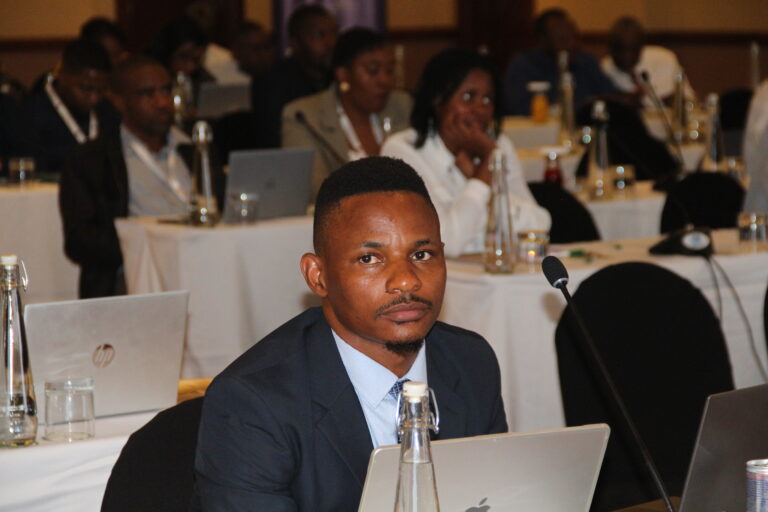
President of the Association of Mine Managers of Zimbabwe (AMMZ), Engineer Abel Makura will be a distinguished speaker at this year’s DIGITALISATION IN MINING AFRICA set to be held from 7-8 May 2024 at The Maslow Hotel in Sandton, South Africa.

Makura will be part of a Panel Discussion on Digitalisation and Labour Productivity Empowering workers to make informed decisions in real time. The panel will focus on

• Minimising the need for workforce downsizing or importing new skills
• Enhancing real-time safety systems for increased worker well-being
• Facilitating instant communication and skill development for personnel

The event aims to galvanize the mining industry in discussions on unlocking the value of digitalisation, exploring a new leadership approach, transforming operations, creating a data-driven culture, and fostering discussion on:

•    Exploring the value of digital transformation in decision-making
      through enhanced visibility and transparency
•    Developing a data-fit organisation 
•    Establishing an end-to-end digitally connected mine for sustainability
•    Embedding innovation in mining for enhanced digital capabilities 
•    Investigating the pivotal role of robotics, AI, sensors, and digital twin 
•    Adopting sustainability leadership in response to ESG requirements 
•    Addressing workforce challenges through preferred technologies
•    Creating an integrated ecosystem for stakeholder collaboration

About Abel Makura

A Mining Engineer with more than 15 years of underground mechanized mining experience in the Platinum Group Metal industry, Makura has a strong bias towards mining production, mine planning and business process improvement. He is currently employed by AngloAmerican Platinum at Unki Mines in Shurugwi as a Business Improvement Manager. He holds a Master of Science in Mining Engineering and a Bachelor of Science Degree in Mining Engineering from the University of Zimbabwe.

Makura is also the President of the AMMZ a technical arm of the Zimbabwe Mining Industry.

RBZ sold digital currency worth 4.8 kgs of pure gold

0

The Reserve Bank of Zimbabwe (RBZ), managed to sell digital currency worth 4.8 kgs of pure gold.

Rudairo Mapuranga

The RBZ on Tuesday received 12 applications to purchase gold-backed digital tokens with an amount of Zwl $5,240,399,573.79 realised by the Central Bank.

Since its inception, the Central Bank has issued 736.52 kgs of gold which is equal to 736,518,865.00 milligrams.

The gold-backed digital tokens, now named Zimbabwe Gold or ZiG, became an approved means of payment for domestic transactions with effect from 05 October 2023 with any transactions going through ZimSwitch and the RTGS system in the same way as Zimbabwe dollars and US dollars being moved between bank accounts, with swipe machines being made available.

The tokens have been available as an investment or store of value for some months, but now if both a buyer and seller have ZiG bank accounts and agree to use the token for payment, they can buy and sell something through those accounts.

Despite an increase in production, Zimplats’ earnings decreased by 105%

0

Despite posting a 9% increase in 6E production and boosting sales by 10% to 320,196 ounces in the six months to December 2023, softening metal prices have dragged the country’s biggest platinum group metal (PGM) producer ZIMPLATS, to losses.

Rudairo Mapuranga

According to Zimplats’ Directors’ Report and Condensed Consolidated Interim Financial Statements (Reviewed) for the half-year ended 31 December 2023, the company made a post-tax loss of US$8.8 million, down from a profit of US$159.6 million, marking a 105% loss in earnings.

Zimplats’ pre-tax profit also decreased by 94% from US$221.5 million to US$14.2 million.

Of the six platinum group minerals that Zimplats produces, the biggest price losses were in palladium, which fell 42%, and rhodium, down 70%. Platinum suffered a 1% decline, while ruthenium decreased by 11%. Gold and Iridium were on the positive side, with Iridium posting a 24% increase, while gold increased by 13%.

Ore mined during the half-year increased by 5% to 4.0 million tonnes from 3.8 million tonnes for the same period last year. This was mainly due to pillar reclamation at Rukodzi Mine in addition to Mupani Mine production output, which increased from 1.1 Mtpa to 1.4 Mtpa.

Tonnes milled, at 3.9 million tonnes, increased by 6.4% compared to the same period last year, mainly due to Third Concentrator Plant mill volume optimization.

The Six Elements (platinum, palladium, rhodium, gold, ruthenium, and iridium) (6E) mill head grade at 3.34g/t was marginally lower compared to 3.39g/t achieved in the same period last year due to an increased contribution of ore from lower-grade mines.

6E production increased by 9% to 327,810 ounces from 300,738 ounces in the same period last year, mainly due to the increase in milled tonnage.

Zulu lithium plant ready to run

0

AIM stock exchange-listed mining and exploration company Premier African Minerals has announced that the Zulu lithium processing plant is scheduled to start operating soon after having run with the primary ore feed.

According to Premier African Minerals CEO George Roach, the plant has now run with the primary ore feed, and the optimization of the new components continues. Roach said over the coming days, plant operations are expected to stabilize as a range of minor issues is resolved by the plant operator and contractor. He said Premier expects the plant to operate continuously, as previously announced, before the end of February 2024.

“Premier is both encouraged and simultaneously frustrated, as much by the fact that the newly installed mill exceeds expectations and by a number of system and control issues that are interrupting operations right now. Premier expects to provide a further update before the end of February 2024,” Roach said.

Premier is under pressure to ensure the plant is running due to the terms of its offtake agreement with Canmax Technologies Co., Ltd, where Canmax purchased in advance US$34,644,385 worth of lithium spodumene concentrate to be sold by Premier (“Advance Purchase Amount”) with the proceeds used to construct and commission the plant at Zulu. The parties agreed to supply the Product for the Advance Purchase Amount plus accrued interest by Canmax following the breach of a first contract agreement by Premier.

Recently, Premier received a notice of election under the Agreement from Canmax Technologies Co., Ltd., following its failure to deliver at least 1,000 tonnes of lithium spodumene per month for the months of November 2023 and December 2023, to have the current outstanding balance owed to Canmax of US$3 million (US$1.5 million per month) of the monthly payment carried forward.

According to Premier CEO George Roach, in accordance with the Agreement, the interest rate for the outstanding balance of the prepayment amount will be increased to 12% per annum with effect from 1 December 2023.

Mine Managers thrilled with Mupani’s automated operations

0

The Association of Mine Managers of Zimbabwe (AMMZ) is enthusiastic about the transformative impact of automation on mining production and safety at Zimplats’ Mupani Mine in Mhondoro Ngezi.

Rudairo Mapuranga

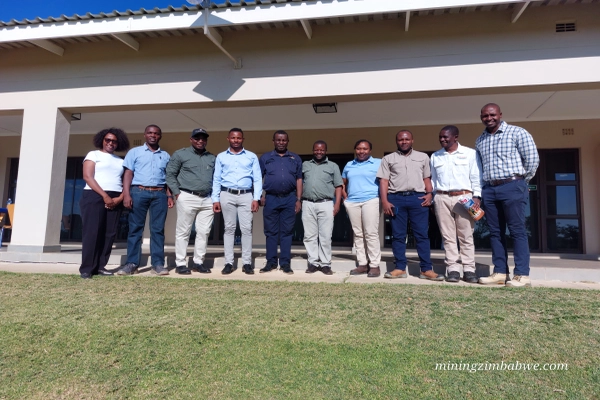
At the first technical visit of 2024 held at Mupani mine on Friday, the AMMZ asserted that technology will revolutionize the mining sector, generating new job opportunities beyond current recognition.

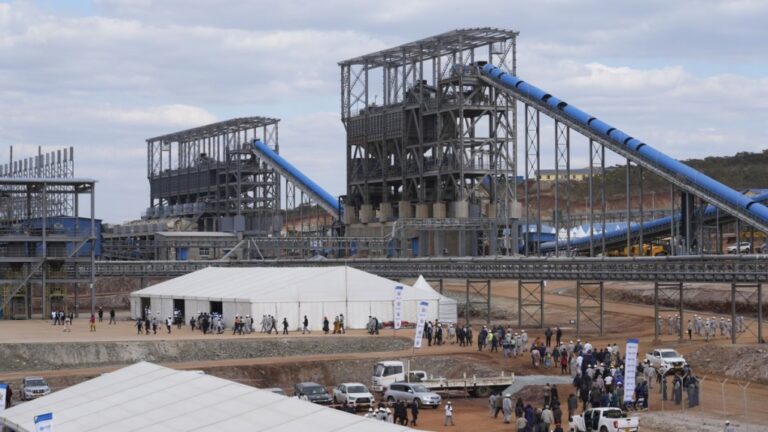
Mupani Mine is the first mine to successfully undertake autonomous mining on a narrow riff pillar in the world, thus giving the AMMZ the reason for information exchange with the mine’s Management.

Speaking to Mining Zimbabwe on the sidelines of the technical visit, AMMZ President Engineer Abel Makura said automation at Mupani Mine would go a long way in helping mitigate the challenge of softening commodity prices through increased production.

“The autonomous dump trucks and the level of technology around them, the operation, and monitoring itself make mining much easier. In terms of technology, it is obvious that when full implementation of all other production units, maximum utilization of available time will be made. And under the current environment of depressed commodity prices, those challenges can be offset by increasing production realized from this noble use of technology.

“Instead of just working hard to produce whatever we have to produce, we are now getting our output from working much smarter, and that is a positive. And we hope that all the learnings that will be gained from the operation of Zimplats can also be put to good use by other operations,” Engineer Makura said.

According to Makura, while there is a widespread belief that automation will lead to job losses and a decrease in employment by mining firms, however automation at Mupani Mine has proven that there is a creation of new roles in mining and automation is increasing jobs than reducing them.

“What I would look at is that jobs are just being transferred. Where the jobs were mainly involving people doing the actual work, the jobs are now transferring to people who are doing the monitoring.

“So it’s work that has been moved from a lower level to a higher level, which is a positive. And for every job that has been replaced by technology, it’s somehow replaced in a different context, and it’s going to assist. Also, look at safety, so it’s not that they are the only providers that are there in terms of providing that LTE technology. It’s an opportunity that would have been created for them. So when they are now involved in that, they also create jobs on the other end. So we wouldn’t say that automation is a threat to jobs. We would take it from the point of view that it’s increasing the number of jobs,” he said.

Also, speaking to Mining Zimbabwe, Association of Mine Surveyors of Zimbabwe (AMSZ) Secretary-General Takunda Paul Mubaiwa said there are benefits in adopting automation. He said the technology goes a long way in creating new duties in mining than taking away jobs.

“We came to explore groundbreaking technology being used by Zimplats’ Mupani Mine so that we can learn from it. As surveyors, we participate in automation, we help in the programming and generation of maps, and anything of automation in mining is centred on surveying.

“The advice to other mines is their benefits in adopting automation, people should continue and endeavour to take technology as it comes. It is there to help, it doesn’t necessarily replace the person per se but it advances in roles and duties and working in a safer environment,” Mubaiwa said.

About the AMMZ

Also known as the technical arm of the Zimbabwe mining industry, the AMMZ is a vehicle for information exchange and dissemination of good practices and seeks to promote the study and growth of Mining and allied disciplines in Zimbabwe.

Fiscal incentives or tax policies for Mining investment in Zimbabwe

0

The Zimbabwean tax regulations concerning income tax, allowable deductions, and exemptions are outlined with clarity Minister of Mines and Mining Development Hon Zhemu Soda has said.

According to the Minister, all capital expenditure related to mining operations is deductible, while assessed losses can be carried forward indefinitely.

Soda said Holders of Special Mining Leases are subject to a 15% corporate income tax rate, with additional profit tax triggered upon reaching specified profitability levels. Moreover, exemptions from certain taxes are possible for approved holders of Special Mining Leases.

He explained that in terms of customs duty, rebates are granted for goods used in prospecting, petroleum exploration, and specific mine development operations. Additionally, VAT deferment is available for mining companies on capital imports for a defined period, subject to set conditions.

To address infrastructure challenges like power supply and transportation hindering mining operations and investment, the Minister said the Zimbabwean government is implementing various strategies.

These include the introduction of solar power plants at mining project sites, such as Blanket Mine, which generates a significant portion of its power needs from solar energy. Additionally, plans to invest in coal-bed methane gas projects for power generation are underway. The government has also introduced Third-Party Access to the national grid, allowing investors to produce and sell power using existing infrastructure. Furthermore, Zhemu said mining companies have the option to directly import power from neighboring countries. These initiatives aim to enhance energy reliability and support sustainable mining operations in Zimbabwe.

Responding to mining Zimbabwe’s question “What fiscal incentives or tax policies do we have in place to encourage mining investment and ensure a competitive environment for foreign companies seeking to invest in Zimbabwe?” this is what the Minister of Mines and Mining Development said.

INCOME TAX

Allowable Deductions/ Expenditure

  • All capital expenditure on exploration, development and operations incurred wholly and exclusively for any mining operations is allowed in full for taxation purposes.
  • Expenditure incurred during a year of assessment on surveys, boreholes, trenches, pits and other prospecting and exploratory works undertaken for the purpose of acquiring rights to mine minerals in Zimbabwe or incurred on a mining location in Zimbabwe, together with any other expenditure that is incidental thereto may be allowed in full unless the taxpayer elects to carry the expenditure forward and allowed against income from mining operations in subsequent years.

Assessed Losses

  • There is no restriction on the carryover of tax losses; these can be carried forward for an indefinite period.

Taxable income of a Holder of Special Mining Lease

  • In the case of a holder of a Special Mining Lease, corporate income is taxed at a rate of 15%.
  • However, holders of a Special Mining Lease are liable to Additional Profit Tax. The tax is payable upon attaining a formula-based level of profitability.

Exemption from Certain Taxes

  • After consultation with the Minister responsible for the administration of the Mines and Minerals Act, the Minister of Finance may declare the holder of a Special Mining Lease to be an approved holder of a special mining lease for the purposes of exemption, wholly or partly, from the following taxes:
    • Non-Residents shareholders tax;
    • Non-Residents tax on Fees;
    • Non-Residents tax on Remittances;
    • Non-Residents tax on Royalties.
  1. CUSTOMS DUTY
    • Rebate of duty on goods for prospecting and search for mineral deposits:

Rebate of duty is granted on goods which are imported by a person who has entered into a contract with the Government for the prospecting and search for mineral deposits.

  • Rebate of duty on goods for use in petroleum exploration or production:

Rebate of duty is granted to the grantee of a special grant issued under the Mines and Minerals Act authorizing the exploration or production of petroleum.

  • Rebate of duty on goods imported in terms of an agreement entered into pursuant to a special mining lease:

Rebate of duty is granted on goods which the Secretary for Mines certifies as eligible for a rebate of duty in terms of an agreement in the Special Mining Lease.

  • Suspension of duty on goods imported for specific mine development operations:

A customs duty suspension is granted to a holder of a mining location number importing specified goods during the project’s life cycle for machinery, construction and erection of facilities for the production and conveyance of minerals.

  1. DEFERMENT OF VALUE-ADDED TAX
    • VAT deferment is granted to mining companies on capital imported for a period of 120 days subject to the conditions set by the Commissioner-General.


PLZ produced nearly 300k tonnes of lithium concentrate in 2023

0

Prospect Lithium Zimbabwe (PLZ) owned Arcadia lithium mine in Goromonzi produced around 280 000 tonnes of concentrate in 2023 and plans are underway to double production in 2024. The company has plans to double production in 2024 but is facing challenges due to softening commodity prices. Despite this, PLZ remains optimistic about its future prospects.

Rudairo Mapuranga

Speaking to Mining Zimbabwe PLZ General Manager Henry Zhu said his PLZ was still working on a 2024 plan but it was being affected by softening commodity prices.

“We produced around 280000 tons of concentrate. We are working on the 2024 plan. But it’s a big challenge because of the low price,” Zhu said.

Following the successful conclusion of a US$377,8 million upfront cash consideration last year under a share sale agreement from Prospect Resources by China’s Huayou International Mining for an 87 per cent stake in Prospect Lithium Zimbabwe, a US$300 million processing plant was built at the mine before the asset started exporting lithium concentrate towards the end of April of last year.

PLZ processing plant can process 4,5 million tonnes of lithium ore per year, producing 450,000 tonnes of concentrate. Currently, PLZ employs over 2 500 local Zimbabweans including contractors and sub-contractors.

The company has used an excess of US$700 million to buy and develop the mine and is expecting to start profiting from its investment in the next 3 years.

On the Corporate Social Responsibility (CSR) front, PLZ is embarking on community health intervention programmes to enhance access to health facilities in Goromonzi and the country at large.

PLZ is also undertaking sustainable environmental management initiatives to minimise lithium mining and processing impacts on the environment.

Mr Henry said his organisation decided to invest in Zimbabwe with the major contributing factor being the enabling investor-friendly policies established by the government.

The policies fast-tracked the acquisition, establishment, and development of the project on record.

Manufacturing of batteries in Zimbabwe

PLZ intends to manufacture Lithium batteries in Zimbabwe as part of its efforts to contribute towards the government’s vision to see the country becoming an upper middle-income economy by 2030.

PLZ director in the general manager’s office Mr Yu Long said they will look into manufacturing lithium batteries in Zimbabwe after the company finishes the process to produce battery-grade lithium.

“As PLZ we will follow the procedure step by step. Firstly, we need to finish the concentrate then we go to another step of making lithium sulphate and we continue up to furthering our activities to the manufacturing of batteries,” Long said.

Speaking at the official commissioning of PLZ’s Arcadia lithium mine processing plant in Goromonzi last year PLZ Dr George Feng said his company was going to fulfil the government’s condition for it to produce battery-grade lithium with works to start construction of the plant in its initial stages.

PLZ head of Corporate Social Responsibility Paul Chimbodza told Mining Zimbabwe that the company was considering creating a lithium-grade manufacturing plant to attract battery manufacturers to come and set up their factories at the source.

“…you may have heard Dr George Feng already alluded that feasibility work has already started to interrogate the process of doing value addition, either in the way of lithium carbonates or lithium sulphate. The aspiration is that with these battery-grade lithium products being readily available in Zimbabwe, we think that it will be easier to attract battery manufacturers to come and set up at the source,” Chimbodza said.

The government of Zimbabwe wants lithium miners operating in the country to work towards producing battery-grade lithium locally and could impose a tax on exports of lithium concentrate in future.

Last year, Zimbabwe banned the export of unprocessed lithium ore to stop rampant extraction and smuggling of the mineral by artisanal miners, ordering that only lithium concentrates could be exported.

It now wants miners to go beyond the production of concentrates, which are shipped for further processing outside the country, mostly to China.

“Obviously, what the government wants is to move up the value chain, but it won’t happen overnight,” the former Minister of Mines and Mining Development Hon Winston Chitando said in an address at an Event.


Liliin Ngono Represents Zim’s Mining Industry at International Graduation Ceremony

0

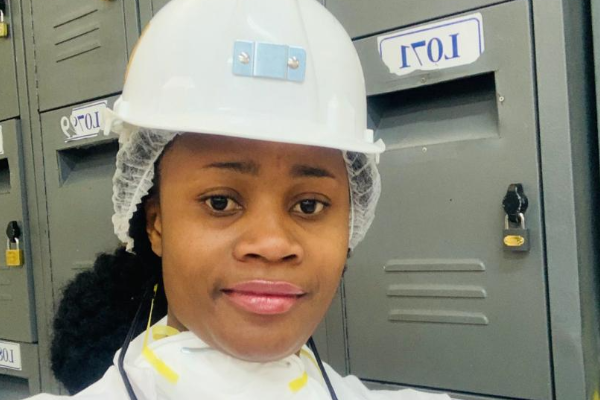
Liliin Ngono, an Integrated Planner at AngloAmerican’s Unki Mine, is set to represent the Zimbabwe Mining Industry at an esteemed international graduation ceremony hosted by Università degli Studi Guglielmo Marconi in Italy, in collaboration with Eaton Business School in the UAE.

The ceremony will see the graduation of 200 global professionals from various sectors and executives hailing from 31 different countries.

Ngono and other fellow graduates will be capped for the International Master of Business Administration specializing in Business Analytics at the ceremony, marking the culmination of their academic journey. This rigorous program equips students with the skills and knowledge necessary to excel in the dynamic field of business analytics, a crucial aspect of modern business management.

Ngono will also have the opportunity to attend a leadership workshop were she will present an abstract of her thesis, adding a technical perspective to the discourse on mining practices. The thesis is entitled “An Evaluative Study of the Applicability of Mining 4.0 Technologies in determining mining value chain capability.”

In addition to the prestigious MBA degree, Ngono and her fellow graduates will also receive a Certified Manager Qualification, a highly regarded credential awarded by the Cambridge International Qualification.

Among the notable graduates sharing the stage with Ngono is Christopher Setuke of Royal Bafokeng.

Furthermore, representing Zimbabwe alongside Ngono is Patience Musonza, the General Manager of Cresta Hotels, and three other women Executives who have made significant contributions to their respective industries in Zimbabwe.

Eureka Gold Mine Shines with Impressive Results

0

Dallaglio Investments, a leading player in the gold mining industry in Zimbabwe, has been making waves at its Eureka gold mine.

The mine, located in Guruve, has been producing impressive results over the past few years, achieving a 93 per cent gold recovery rate at Eureka.

According to the Eureka Mine General Manager, Eng Nelson Banda, the mine started off at 420 kg in 2021, leapt to 1617 kg in 2023, and is forecasted to produce 1660 kg in 2024.

Eureka gold mine was officially commissioned in 2021 after a 20-year hiatus, producing a total of 420 kg of gold, setting the stage for a successful operation. The output for that year was from September to December.

The following year, in 2022, the production skyrocketed to 1420 kg, showcasing the potential of the mine and the expertise of Dallaglio Investment in maximizing its output. This significant increase in production was a result of various improvements in mining techniques and the best technology from its CIL plant, which is rated as one of the best in Africa.

In 2023, the Eureka gold mine continued its winning streak, producing a total of 1617 kg of gold. This steady growth in production over the years has not only solidified Dallaglio Investment’s position in the industry but also proven the sustainability and profitability of the Eureka Mine.

Looking ahead to 2024, Banda said the mine has forecasted to produce 1660 kg of gold.

EUREKA FAST FACTS

  • 1906-1995: various phases of small-scale UG mining (to 4-Lvl; <120m). 12,220oz (380kg) @3.8g/t
  • 1995-2005: Delta Gold. Open pit, Heap Leach operation. Mined to <50m from surface. 1 millions tons was processed @ 1.78g/t yielding 57,228oz (1,780kg) Closed due to gold price & deteriorating stability. Placed on Care & Maintenance in 2003.
  • 2005-2018: Shaft-Sinkers (Mmakau Mining/IDC): Deep drilling for UG mining (22 holes; 9,407m). Installation new shaft down to 2-Lvl. Processed old ROM boulders and re-treated the HL. Placed on Care & Maintenance in 2006.
  • 2018: Dallaglio purchased Delta Gold which owned Eureka Mine from Mmakau Mining and the IDC of South Africa in April
  • 2018 with CTC approval granted in March 2019.
  • Total of 46 RC holes drilled, totaling 4,000 metres and a total of 133 diamond core holes totaling 21,000 metres (21kms).
  • A total Resource (including Inferred) of 16.6 million tons at an average grade of 2.24 g/t, delivering 1,199,080 ounces (to a depth of 650 m).
  • A total Measured and Indicated Resource of 12.9 million tons at an average grade of 2.29 g/t delivering 945,807 ounces.
  • In-pit reserves of 0.75g cut off 6,922,883 tonnes at 1.87g/t totaling 12,923 kgs or 415,468 oz down to a pit depth of 230 metres.
  • The Special Grant has been converted into 53 Mining Blocks and 6 Registered sites
  • 5 competent persons reports have been done since the 1990s, with the latest one completed in 2012 by TWP Projects. Dallaglio have reviewed and verified these reports.
  • The extent of the ore body has only been explored to a depth of 650m (open ended beyond 650m)
  • Eureka will initially be operated as an open-pit mine
  • The plant will have a processing capacity of 100,000 tons/month.

Illegal Miners Threaten Safety at Eureka Gold Mine

0

While they have always been known to be a menace in shutdown mining operations or those under care and maintenance, illegal miners are at it again at Dallaglio-owned Eureka Gold Mine in Guruve, posing a serious risk to themselves, mine workers, communities, and the environment.

Rudairo Mapuranga

On Thursday, the Deputy Minister of Mines and Mining Development, Engineer Polite Kambamura, visited Eureka Mine for a fact-finding mission on how illegal miners are invading part of the mine.

The illegal miners, who reportedly come in large numbers to the mine, are said to be vandalizing security fencing and tailings storage facilities, beating up outnumbered security personnel, and at times going into the open-pit mine soon after blasting.

What is really happening?

According to Eureka Mine General Manager Nelson Banda, the illegal miners who are encroaching into the mine are looking for waste from the mine operations to process at nearby hammer mills.

While to Eureka it will be waste, the miners are now causing serious Safety, Health, and Environment (SHE) risks by going under trucks offloading waste, digging through Tailings Storage Facility (TSF) thereby weakening it, and also going into open-pit operations soon after blasting.

“Our waste is mineralized, that is why it is attracting a lot of illegal miners.

“They are vandalizing our TSF.

“There is a danger of drowning because they are coming through water,” Banda said.

What should be done?

These illegal miners should be stopped from invading any part of the mine, which is creating threats to the environment by vandalizing TSF, which can spill into the Dande River.

These illegal miners under normal circumstances should not be engaged (because they are thieves) but be prosecuted heavily for trespassing into the mine.

How is the matter being handled?

Eureka Mine has taken note that most of the miners who are coming in are doing so due to high levels of unemployment in the country, therefore, the mine believes a diplomatic approach should be employed.

According to Banda, the mine was looking at establishing a project that was going to employ the majority of the local community.

He said the first priority was to engage the community and look at ways of giving them the waste in an orderly and safe manner, at the same time coming up with a long-term project.

According to the Deputy Minister of Mines and Mining Development, Hon Dr. Engineer Polite Kambamura, the government was going to help Eureka engage the community to stop the potential risk caused by these miners.

“We came here to do an assessment and fact-finding. We will be coming back to engage the miners so that we address this issue,” Engineer Kambamura said.