Home Blog Page 300

Machete gang kills artisanal miner in Kadoma

0

While the Police have been working flat out to ensure that the proliferation of machete-wielding criminals who are known for targeting and robbing artisanal and small-scale miners are flashed out, a Kadoma miner has fallen victim to a machete gang who allegedly killed him on Monday.

According to sources from the mining community, the miner only identified as Kilo was allegedly killed at Dhiva Mine Compound, Etina, Eiffel Flats in Kadoma on Monday after he was attacked by a machete gang who wanted to rob him and his colleagues of the ore they had mined.

However, the police have identified Kilo as a member of a machete gang belonging to a group led by one Cleopas Jaison and investigations are currently underway to discover the course of death.

“Police in Kadoma are investigating a case of murder which occurred on 16/01/23 at Dhiva Mine Compound, Etina, Eiffel Flats.

“The victim, only identified as Kilo, died after he was attacked with machetes catapults, knives and chisels during a clash between a group identified as “Magaya and another group allegedly led by Cleopas Jaison.

“The victim allegedly belonged to Cleopas Jaison’s group. The Police have so far arrested Cleopas Magaya (32),” the police said.

Premier to fast-track lithium spodumene concentrates production

0
Diversified mining and exploration junior, Premier African Minerals is working significantly to ensure that the production of lithium spodumene concentrates at its Zulu lithium and tantalum project in Zimbabwe is fast-tracked after the country recently banned the export of raw lithium.
Rudairo Mapuranga
The Zulu project is a large undeveloped lithium-bearing pegmatite in Zimbabwe, comprising 14 mineral claims covering a surface area of 3.5 km2, which are prospective for lithium and tantalum mineralisation.
Zimbabwe is looking forward to ensuring citizens and the government benefit more from its minerals by limiting the export of employment opportunities by making sure that raw minerals are not exported which will create more jobs for the youth.
Premier is currently undertaking practical application of its technical knowledge to ensure fast-track production of spodumene concentrates at its pilot plant operations at the Zulu lithium project.
“Practical application of our technical knowledge to lead the way in successfully implementing novel processing methods to fast-track production of Spodumene concentrates.
“Processing a pilot plant at Zulu lithium. Supporting the DFS pilot plant operations. Expand board and technical skills,” Premier said in a statement.
The government of Zimbabwe hopes to transition the nation into an upper-middle income economy by 2030 — and the mining industry has been slated by the government as a key component to realizing this vision.

Gold buying prices Monday 16 January 2023

Fidelity Gold Refinery (FGR) official gold buying prices Monday 16 January 2023.

SG 90% AND ABOVE US$58.25/g
SG ABOVE 85% BUT BELOW 90% US$57.33/g
SG ABOVE 80% BUT BELOW 85% US$56.71/g
SG ABOVE 75% BUT BELOW 80% US$56.10/g
SAMPLE BELOW 10g BUT ABOVE 5g US$55.18/g
FIRE ASSAY CASH US$58.25/g

NB: Fire Assay cash price is for gold above 100gs and no sample is deducted.
For the Fire Assay Transfer price, a sample of not more than 10g is deducted
A 2% royalty is charged on all deposits (Small-scale Miners)
A 5% royalty is charged to Primary Producers

Cash available. Fidelity Gold Refinery prices will be changing daily in relation to world market prices.

Caledonia announces change to a significant shareholder

0

Caledonia Mining Corporation Plc announces that it received notification on January 13, 2023 from Sales Promotion Services SA, a “significant shareholder” of the Company as defined by the AIM Rules for Companies, of a relevant change in its holding.

Upon the recent completion of the transaction to acquire Bilboes Gold Limited (see announcement by the Company on January 6, 2023), the Company issued 4,425,797 new shares representing 25.64 per cent of Caledonia’s fully diluted share capital. The Company now has three new significant shareholders, as set out in the announcement, and, as a consequence, Sales Promotion Services SA has notified the Company that its percentage interest in the fully diluted share capital has decreased from 4.03% to 3.197%.

Why lithium is popular in EVs despite having a small percentage in battery manufacturing

0

The percentage requirement of lithium per electric vehicle is very low compared to other metals used in the production of electric vehicles.

By Lyman Mlambo

Lithium is required only for the battery, and even then only for two components in that battery – electrodes (which store and release energy) and electrolytes (which enable the flow of current between electrodes, which then powers the vehicle).

However, lithium dominates in these uses, especially in the storage and release of huge amounts of energy. Lithium is also comparatively a lot lighter than other metals, in fact, the lightest of them, and this helps in reducing the weight of the battery. Lithium-based batteries are also less likely to catch fire or explode than other batteries.

Therefore, because of the above characteristics, from the perspective of the EV manufacturers lithium is a strategic metal input that needs to be stocked in significant reserves. This becomes even more important when one considers that globally, lithium is geologically less abundant, with Zimbabwe holding the largest resource in Africa and the sixth largest globally. Due to its relative scarcity, lithium is comparatively more expensive than base metals like copper and nickel, which means it fetches good prices in the market, something attractive to miners.

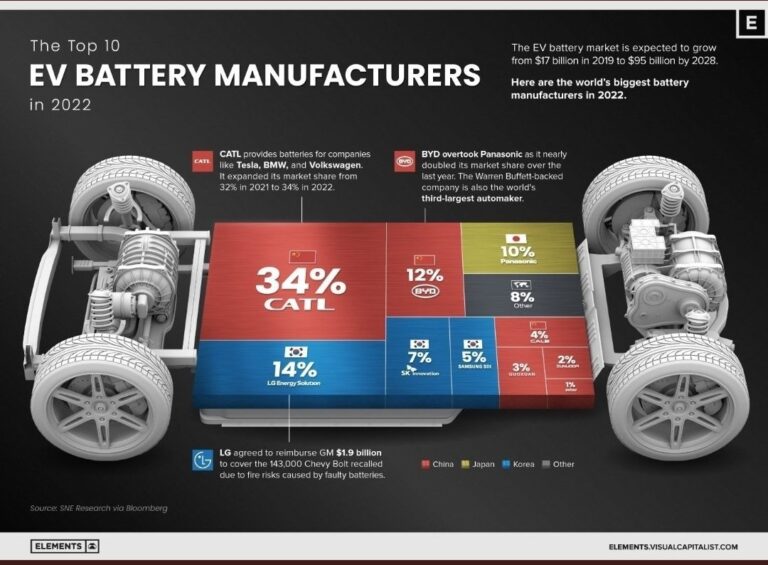
For both lithium miners and EV manufacturers, there is one common attraction – the EV market is expected to continue growing as the green energy transition takes root. Besides this growth, EV batteries need to be replaced more frequently than normal or traditional batteries due to the former’s shorter lifespan. Thus, the strategic nature of lithium in EV manufacturing, and the magnitude and longevity of the EV market going forward are the main explanations for the trend we are seeing.

Adding to the above, lithium has other applications other than in EVs such as the manufacture of grease, ceramics and heat-resistant glasses whose markets are also growing (see Marketsandmarkets Research Pvt Ltd website and the Grand View Research Inc website). The demand in these applications are driven by a global rise in automation hence the increased need for lubrication (in the case of grease), expansion of the building and construction industry (requiring ceramics for tiles, toilets and bathroom facilities), and the global rise in fire incidents which requires improvement in fire safety in domestic, industrial and commercial buildings (in the case of heat-resistant glass). Thus, the search for lithium is made even brisker because of competition in the other applications other than use in the EV industry, which applications are also growing.

This explains why lithium is the most sought-after metal despite the small required input per electric vehicle.


Lyman Mlambo is a Mineral Economics Specialist whose expertise includes artisanal and small-scale mining (ASM), mining fiscal frameworks, mineral commodity market analysis, mineral linkages, sustainable development and minerals development policy.

Caledonia Mining 2022 gold production up

0

Caledonia Mining Corp PLC on Friday said it reached record gold production in 2022, exceeding the top end of its guidance, while it expects 2023 production to perform similarly.

The Jersey-based gold producer whose primary asset is the Blanket mine in Zimbabwe said total 2022 gold production at Blanket exceeded the top end of company guidance to a record 80,775 ounces, up 20% from 67,476 ounces in 2021.

It said this meant it achieved its longstanding production target.

Gold production in the fourth quarter that ended December 31 was also up 13% to 21,049 ounces from 18,604 ounces a year earlier.

Looking ahead, it expects similar levels of gold production at Blanket of between 75,000 and 80,000 ounces in 2023, alongside 12,500 to 17,000 ounces at the Bilboes oxides project, taking group consolidated production to the range of 87,500 to 97,000 ounces.

On-mine cost per ounce across the group is forecast to be around USD900 to USD1,000. Breaking this down, the on-mine cost per ounce at Bilboes oxides is between USD1,200 to USD1,320, while it is between USD770 and USD850 at Blanket.

Gold was priced at just over USD1,900 an ounce on Friday.

“The on-mine cost of the small oxides project at Bilboes reflects the low grade of the oxide material. The oxides project is not expected to be representative of the much larger sulphide project at Bilboes in terms of grade, production levels or cost profile,” said Chief Executive Officer Mark Learmonth.

“Nevertheless, the oxides project is expected to contribute to the group’s cash generation whilst at the same time allowing us to pre-strip to the deeper sulphide material.”

Learmonth added regarding outlook: “Over the last 18 months the company has built an attractive portfolio of assets with the acquisitions of Bilboes, Motapa and Maligreen. Blanket will continue to serve as a solid foundation for this growth, as we look to progress our assets with our long-term goal of becoming a multi-asset gold producer.”

Shares in Caledonia Mining were up 0.5% to 1,166.00 pence each in London on Friday afternoon.

Source: lse

Zimbabwe Defence Industries gets permit to export raw lithium

0

The Zimbabwe Defence Industries (ZDI) has been granted a special permit to export raw lithium by the government, a decision expected to inject life into the firm’s struggling operations, a local daily has revealed.

The development comes after Zimbabwe banned the export of raw lithium to enable value addition and beneficiation in an effort to see the country benefit from the clean energy revolution. However, the export of raw Lithium is on special conditions and the exporter will be issued with a written permit from the Minister.

According to a recently gazetted Statutory Instrument raw Lithium will only be exported in exceptional circumstances justifying the exportation.

“On written application by any party wishing to export samples of lithium-bearing ore or unbeneficiated lithium for assaying outside Zimbabwe; or to a miner or exporter of lithium upon production of written proof satisfactory to the Minister that there are exceptional circumstances justifying the exportation in question and that the lithium-bearing ores or unbeneficiated lithium in question have been valued in terms of section 12D(3) of the Value Added Tax Act,” the Act reads.

ZDI, which has a vast investment portfolio in mining and is reeling under a Western-imposed embargo that crippled the firm’s operations for over two decades, got approval to export lithium in October last year.

The latest development comes at a time when Zimbabwe is experiencing a lithium rush following the random discovery of the lucrative and strategic mineral in some parts of the country, particularly at Sandawana Mine in the Midlands province.

Following the discovery of lithium at Sandawana Mine last year in December, an estimated 5 000 artisanal miners and fortune seekers descended onto the area searching for the lucrative mineral required in energy transition and the manufacturing of cleaner technologies such as electric vehicle batteries.

With an additional extract from Zim Ind

Indian gold refiners struggle as smugglers offer hefty discounts

0

Indian gold refiners have nearly stopped imports of gold dore, a semi-pure alloy, as grey market operators offer hefty discounts to market rates and cut into their slender margins, making business a losing proposition, industry officials say.

Most refiners in the world’s second-biggest consumer of the precious metal have suspended operations and are struggling to honour long-term supply contracts with miners, they said.

“For the last two months Indian prices have been trading at a big discount,” Harshad Ajmera, secretary of the Association of Gold Refiners and Mints (AGRM), told Reuters.

“Refiners can’t offer big discounts as they run operations with wafer-thin margins.”

India’s tax on gold dore is 0.65% lower than the rate on refined gold, so as to make domestic refining viable. But discounts over official prices in the last few weeks have widened to nearly 2% or about $30 per ounce.

Jewellers and bullion dealers were not buying from refiners as they could not offer the same kind of discount available from competing suppliers, he said.

“Our margin is less than 0.5%. How can we match the 2% discount?” asked Ajmera.

Grey market operators, or businesses that smuggle gold from overseas and sell it for cash to avoid the duties, got a boost in July 2022 when India raised its import tax on gold.

Such operators can sell gold at discounts to market prices as they evade the tax of 18.45% on gold, dealers said.

Many Indian refiners are diverting gold ore into refineries in Dubai as they could not sell refined bars at home because of the discounts, said James Jose, managing director of refiner CGR Metalloys.

India relies on imports to meet most of its demand.

The margins of grey market operators are increasing with rising prices, making smuggling even more lucrative, a scenario that can be dispelled only by cutting the import duty on gold to 5%, Jose said.

The AGRM and other trade bodies have asked New Delhi to cut import taxes.

“The government should also increase the import duty difference between refined gold and dore to 1.65%, to make refining viable,” Ajmera said.

India imports gold dore mainly from Ghana and Peru, while refined gold comes from Switzerland and the United Arab Emirates.

Gold demand usually picks up during the wedding season as the bullion is an essential part of the bride’s dowry in India and also a popular gift from family and guests at weddings.

But this year demand is muted as prices have jumped near a record peak MAUc1, further eroding refiners’ sales, said Ashok Jain, proprietor of Mumbai-based gold wholesaler Chenaji Narsinghji.

Mining Weekly
Zambia rationing electricity supply to mines

0

Zambia has started rationing electricity supply to mining firms following reduced power generation after a big drop in water levels in lake Kariba, the chairman of state-owned power utility Zesco said on Tuesday.

Water levels in the lake were down at 1.66% of usable storage on Monday for the Kariba North Bank Power Station in Zambia and the Kariba South Bank Power Station on the Zimbabwean side of the lake, said the Zambezi River Authority, which manages the dam.

The north bank power station has an installed capacity of 1,080 megawatts (MW), while the south bank power station in Zimbabwe has a capacity of 1,050 MW.

Hydropower contributes to more than 75% of Zambia’s electricity generation.

“We requested them to give away 180 MW but after negotiations, we went down to 110 MW,” the utility’s chairman Vickson Ncube told Reuters, referring to mining companies in Africa’s No. 2 copper producer.

Last week, Zesco doubled the number of hours it cut supply to domestic customers to 12 hours from six hours daily as the low water levels in the lake threatened power generation.

Water levels in the lake have fallen due to reduced inflows from the Zambezi river and its tributaries and heavy use by power generation companies in Zimbabwe and Zambia.

Ncube said power rationing was expected to be reduced by the middle of next month as water levels increased and full generation was to likely resume in March.

mining.com