Home Blog Page 301

ZCDC achieves 2.6 million fatality-free shifts

0

The country’s biggest diamond producer, Zimbabwe Consolidated Diamond Company (ZCDC) in its quest to achieve zero harm has gone for over 2.6 million shifts with zero fatalities.

Rudairo Mapuranga

The country’s mining sector through the Chamber of Mines of Zimbabwe (CoMZ) is subscribed to the zero harm mantra and it aims to see the country achieving a fatality-free mining industry.

“Mineral resources are finite and cannot be replaced once mined out, ZCDC attaches significance to the principles of responsible and sustainable mining that promotes environmental rehabilitation to promote economic activity from other sectors after mining.

“As ZCDC, our SHEQ vision is Zero Harm, that is, Zero Property Damage, Zero Occupational Illnesses, Zero Injuries and Zero Environmental Contamination and degradation,” the company said.

Since its inception, ZCDC has not recorded a fatality or serious or disabling injury.

Zimbabwe grants conditional approval for Bikita Lithium’s acquisition

0

The Competition and Tariff Commission (CTC) has granted conditional approval for Sinomine (Hong Kong) Rare Metals Resources Co to acquire Bikita Minerals.

Priscah Chisara

The commission was informed in February 2022 that Africa Minerals (Afmin) and Amzim Minerals Limited (Amzim) would be fully acquired.

The CTC set various requirements before approving the US$180 million transaction between Bikita Minerals and Sinomine (Hong Kong) Rare Metals Resources Co.

It mandated that, if it is economically feasible, Bikita Minerals, its subsidiaries, affiliates, and successors-in-title sell lithium concentrates to any user who may be available in Zimbabwe on non-discriminatory terms and conditions.

Additionally, the company was instructed to commit to producing high-purity lithium from lithium concentrates within five years of obtaining the commission’s ruling.

Sinomine should continue to implement corporate social responsibility initiatives and programs, such as building Zesa’s Tokwe Station, helping to rebuild Birchenough Bridge, and implementing philanthropic social responsibility programs in Bikita that benefit local communities, government agencies, clinics, and schools.

A month after obtaining the commission’s decision, it must also submit to the CTC an implementation plan of these requirements. It must also start a year after receiving the CTC’s decision by submitting an annual compliance report detailing how the requirements here were met.

An experiment to convert coal to graphite underway

0

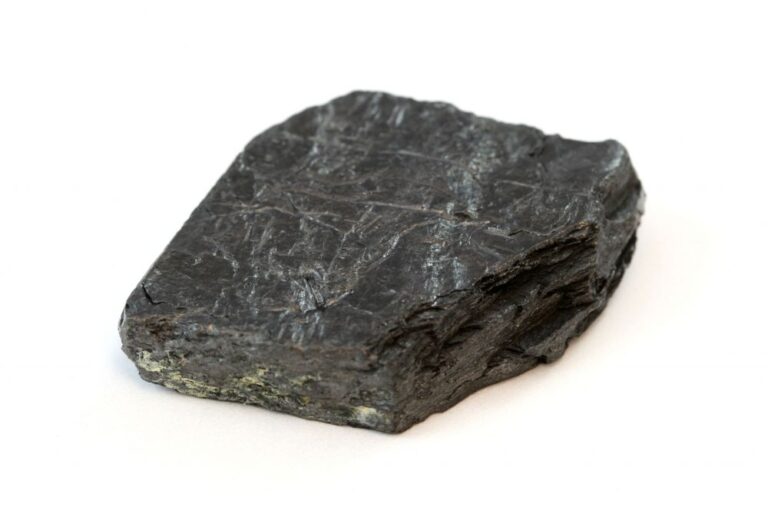
Scientists are a step closer to turning coal into graphite as the world extensively moves from fossil fuels to clean energy to delay climate change.

Anerudo Mapuranga

Students at Ohio University are experimenting on how coal can be converted to valuable and carbon-neutral Elements like graphite and carbon nanotubes. The team has carried out a series of simulations in an attempt to discover if coal at become a carbon-free element to be used during the green energy revolution.

Using the Pittsburgh Supercomputing Center’s Bridges-2 system, the researchers simulated coal and graphite in computer software and recreated the coal-to-graphite conversion virtually. Generations of scientists know that, at least in theory, it is possible to convert coal to graphite if the fossil fuel is put under enough pressure at a high enough temperature.

Pure graphite is a series of sheets made up of six-carbon rings. A special type of chemical bond called ‘aromatic bond’ holds these carbons together.

In aromatic bonds, pi electrons float above and below the rings. These “slippery” electron clouds cause the sheets to slide easily past each other. Pencil “lead”—a low-grade form of graphite—leaves a mark on paper because the sheets slip off of each other and stick to the paper.

Aromatic bonds have another virtue, important in electronic technology. The pi electrons move easily from ring to ring and sheet to sheet. This makes graphite conduct electricity, even though it is not a metal.

Coal, by comparison, is messy chemically. Unlike the strictly two-dimensional nature of a graphite sheet, it has connections in three dimensions. It also contains hydrogen, oxygen, nitrogen, sulphur, and other atoms that might disrupt graphite formation.

Simplified coal

To begin their studies, David Drabold and his team created a simplified “coal” that consisted of only carbon atoms in random positions. By exposing this simplified coal to pressure and high temperature—about 3,000 Kelvin, or nearly 5,000 Fahrenheit—they could take a first step in studying its conversion to graphite.

“To push out the amorphous-graphite paper we needed to do a lot of serious analysis,” said Chinonso Ugwumadu, a doctoral student in Drabold’s group. “Compared to other systems which we have, Bridges is the fastest and most accurate. Our home systems … take about two weeks to simulate 160 atoms. With Bridges, we can run 400 atoms over six to seven days using density functional theory.”

Their results were more complicated than the team had expected. The sheets did form. But the carbon atoms didn’t entirely develop simple, six-carbon rings. A fraction of the rings had five carbons; others had seven.

The non-six-carbon rings posed an interesting wrinkle, in more ways than one. While six-carbon rings are flat, five- and seven-membered carbon rings pucker, but in opposite senses of “positive and negative curvature.”

The scientists might have expected these puckers to ruin the formation of the graphite sheets. But sheets formed anyway, possibly because pentagons and heptagons balanced each other in the simulations. The sheets were technically amorphous graphite because they weren’t purely six-ringed. But again, they formed layers.

Carbon nanotubes

In another series of simulations, Ugwumadu followed up on his work with Rajendra Thapa to study molecules rather than solids. The conditions in these sims caused the sheets to curve in on themselves. Instead of sheets, they formed nested amorphous carbon nanotubes (CNTs)—a series of single-atomic-layer tubes, one inside another.

CNTs have been hot in materials science lately, as they are in effect tiny wires that can be used to conduct electricity at incredibly small scales. Other promising applications of CNTs include fuel cell catalysis, the production of supercapacitors and lithium-ion batteries, electromagnetic interference shielding, biomedical sciences, and nano-neuroscience.

One important facet of the CNT work was that Ugwumadu studied how amorphous wrinkles in the tube walls affect the movement of electricity through the structure. In materials science, every “bug” is also a “feature”—engineers may be able to use such irregularities to tune the behaviour of a given CNT to match the exact requirements needed in a new electronic device.

The group continues to study the conversion of carbon atoms to graphite and related materials.
Vubachikwe Mineworkers lose confidence in shareholders

0

Duration Gold Limited-owned Vubachikwe Mine’s workers say they have lost confidence in the shareholders and its management due to the continued mismanagement resulting in failure to pay salaries and reopening of the Mine.

Rudairo Mapuranga

The workers through Zimbabwe Diamond and Allied Mine Workers Union (ZDAMWU) General Secretary Mr Justice Chinhema said that they are disappointed by the management who “lied” that plans to resume operations rests in the election of workers committee when in actual fact workers don’t determine the reopening of a struggling Mine.

“We note with concern comments by yourselves in which it was reported that the ‘reopening of the mine rests on workers’. The report quoted you saying plans to resume operations at Vumbachikwe mine are at an advanced stage but rest on workers who are required to elect a workers committee. We are shocked and surprised by this statement from you that seek to push a narration that workers can determine the reopening of a struggling mine.

“This is a dangerous path you are choosing because it is on record that management suspended operations to make sure it is safe to mine again after the job action. Elections of the workers’ committee can never be the deciding factor to reopen. Instead, payment of outstanding salaries that caused the job action, sound business management, capital injection and good corporate governance is required for the mine to reopen. Workers are employed to work not to elect the workers’ committee, and all the workers are holding on to your communication that operations are suspended. The first memo from you must uplift the suspension of operations followed by payment of all outstanding salaries in full, a clear work plan and commitment by your management and shareholders that salaries and wages will be paid on time every month including remittance of all statutory employment deductions. This does not require a workers’ committee for it to happen but requires your management to act and do so urgently,” Chinhema said.

Vubachikwe Gold Mine Manager None Kananji had said through the media that plans to resume operations at Vubachikwe Gold Mine in Gwanda are at an advanced stage with the mine management waiting for workers to select a new workers’ committee to ensure that the rights of employees are not undermined.

“Our last communication to the workers spelt out what we need to go to the negotiating table for an immediate restart and they are aware of the expectations,” said Kananji.

Chinhema continued saying that it was difficult for the mine to resume operations as workers are still to be paid outstanding allowances resulting in the workers losing confidence in Duration Gold as a notable owner of one of the oldest gold mines in Zimbabwe.

“The current situation points to lack of strategic direction and we now have the view that the failure to pay salaries on time and other obligations are due to financial mismanagement, and lack of proper management. There is great variance on workers’ welfare and extravagance on the part of the shareholders. To be honest with you manager, we have lost confidence in the shareholders of the company and its management. Workers have been living in abject poverty and facing hardships under the watch of the current management who have failed to find lasting solutions to all problems that affect parties to an employment contract,” Chinhema said.

ZDAMWU also gave Vubachikwe Gold Mine a seven-day ultimatum, “With all the above we are under instructions to demand the following from your management within (7) seven days–

  1. All outstanding salaries be paid in full to everyone owed within the (7) seven days of receipt of this letter.
  2. 2022 back pays and all allowances be paid in full at once by the last day of January 2023.
  3. Duration Gold (Vubachikwe mine) through its shareholders makes a pledge that going forward all salaries will be paid in full at the end of every month.
  4. No employee will lose his/her employment because of anything, instead, the management team should see heads rolling for poor management.
  5. A financial re-capitalization must be made so as to secure the jobs of current workers.

In the event that you fail to address the above within the stated time, or chose to ignore, we are under instructions to immediately consider the process of corporate rescue which we believe is long overdue. As you may appreciate, corporate rescue is meant to resurrect failing entities. In our view, we should not wait until another mine collapses, and jobs lost, but diligence requires that we act now.”

Gwanda-based human rights watchdog Coalition for Citizens Advocates secretary-general Wilbert Ndiweni said that Vumbachikwe mine management was making unfair demands to desperate workers.

“This is a serious violation of workers’ rights and the country’s labour laws regarding wages and salaries. We are appealing to Vubachikwe management to at least show humane concern and avert a possible social calamity by giving these suffering human beings their earnings so that they also restore order in their families which are in abject poverty. We, as an organisation, appeal to the government to intervene at Vubachikwe before a social calamity unfolds.”

Gold deliveries reach the 2022 target

0

Gold deliveries to the country’s sole gold buyer and exporter Fidelity Gold Refinery (FGR) achieved the 2022 projected target of 35 tonnes marking an 18.9 per cent increase from 29.7 tonnes delivered in 2021.

Rudairo Mapuranga

The increase in deliveries is attributed to Artisanal and Small Scale Miners (ASM) whose deliveries increased by 30.3 per cent to 24.1 tonnes from 18.5 tonnes delivered in 2021. Deliveries by large-scale producers were approximately 11.2 tonnes in 2022 as well as in 2021.

However, deliveries during the last quarter of 2022 decreased by 10.3 per cent from approximately 10.7 tonnes delivered in 2021 to 9.6 delivered in 2022.

Experts attributed the improved contribution of small-scale producers to timeous payments to the miners by Fidelity Gold Refinery (FGR), the country’s main buyer of the yellow metal.

In 2021, the Reserve Bank of Zimbabwe announced a 5 per cent incentive for gold deliveries above 20kg by small-scale miners. This was done in an attempt to curb rampant smuggling of the precious metal.

During the period January to November 2022, gold deliveries increased by 31 per cent to 33.3 tonnes from the same period last year. During the period, Artisanal and Small Scale Miners (ASM) contributed 22.9 tonnes while the primary producers contributed 10.4 tonnes.

Gold deliveries also increased by 33.8 per cent during the first 10 months of the year compared to the same period last year, raising the prospect that Zimbabwe might achieve the 35-tonne target for this year.

According to FGR General Manager Mr Peter Magaramombe, the massive increase in deliveries has been necessitated by a host of measures taken by FGR and the Reserve Bank of Zimbabwe (RBZ) including timeous payments and incentives.

“The 5% Gold incentives to the small-scale miners are key, timeous payment to our miners, and incremental good incentives to the large-scale miners,” Magaramombe said.

The 33.784 per cent increase saw 29 460.6532 Kg of gold being delivered by the end of October 2022 compared to 22 024.3507 kgs delivered during the same period last year.

Artisanal and Small-Scale Miners (ASM) have contributed 67.8 per cent of the total deliveries, sending 19 987.6292 kgs compared to 9 473.0240 kgs delivered by the large-scale producers. ASM deliveries increased by 54.3 per cent from 12952.3801 kgs delivered during the same period last year with large-scale producers’ gold deliveries increasing by 4.4 per cent from 9071.97 kgs delivered during the same period in 2021.

Gold deliveries to FGR in the nine months to September 2022 grew by 36 per cent to 25,7 tonnes, from 18,9 tonnes in the same period a year earlier.

According to FGR statistics seen by this publication, overall deliveries stood at a 41.0734 per cent increase to 22290.41 kgs during the period January to August of 2022 compared to 15800.57 kgs delivered during the same period last year.

Large-scale producers increased their gold delivery by 5.025 per cent to 1086.5330 kgs in August 2022 compared to 1034.54 kgs in the same period last year. The Artisanal and Small-Scale Miners (ASM) increased their deliveries by 18.27 per cent to 2263.2531 kgs in August 2022 from 1913.48 kgs in August 2021.

FGR is confident that gold deliveries to FGR will reach 40 tonnes this year as a result of notable expansion projects by Large producers as well as the growth in ASM projects.

BNC in production decline

0

The country’s biggest nickel producer Bindura Nickel Corporation (BNC) has recorded a decline in production during the first half ended 30 September 2022 compared to the same period last year.

Rudairo Mapuranga

The Kuvimba Mining House-owned nickel producer in its Interim Condensed Financial Results for the half year ended 30 September 2022 said ore recovery during the period was also 35 per cent lower compared to the comparable half of 2021 due to lower head grade.

“Nickel in concentrate production for the half year to 30 September 2022 was 1,918 tonnes, which was 25% lower than the 2,553 tonnes produced in the same period last year. The decline was mainly due to the head grade of 1.03% which was 18% lower than for the 6 months to September 2021. Recovery at 81% was 35% lower than in the previous year, in sympathy with the lower head grade,” BNC said.

The nickel producer also said that during the quarter, ore milled was 5 per cent lower compared to the same period of 2021 due to lower mined volumes.

“Ore milled was 230,248 tonnes, which was 5% lower than the 241,325 tonnes milled in the same period last year due to lower mined volumes. The Company’s production performance has been negatively impacted by a decline in the footprint of the high-grade massive resource which necessitated a rapid transition in the mining model from a low-volume, high-grade strategy to a low-grade, high-volume strategy. Unfortunately, the transition is behind schedule due to a delay in the delivery of new underground mining mobile equipment which is a prerequisite to the realization of the new mining strategy. The delay in the delivery of equipment was due to disruptions in the global supply chains, as a result of the protracted effects of the COVID-19 pandemic and the ongoing geopolitical tensions related to the RussoUkrane conflict.

“In line with its new mining strategy, the business continued with its capital expenditure/reinvestment program, with specific emphasis on replacing the dilapidated and obsolete underground mining mobile equipment. The Company is expecting delivery of most of the acquired mining mobile equipment before the end of the calendar year 2022. The new equipment will enable the transition into the new mining strategy, leading to an anticipated upswing in ore volumes and a return to profitability in the second half of FY2023,” said the mining group.

BNC also said that sales volumes during the half year ended 30 September 2022 were lower than the previous sales, selling 1 146 tonnes compared to 2 549 tonnes during the previous half year ended 30 September 2021.

“Nickel sales volume was 2,146 tonnes, which was lower than last year’s sales of 2,549 tonnes. The average LME Nickel price of US$25,542 per tonne was 40% higher than the previous year’s price of US$18,233 per tonne, reflecting the global Increase in Nickel prices.

“The C1 cash cost of US$14,078 per tonne was 56% higher than the previous period’s US$9,045 per tonne, while the C3 All In sustaining cost of US$16913 per tonne was 63% higher than last year’s unit cost of US$10364 per tonne. The increase was attributable to low production arising from the lower tonnage of ore milled and head grade resulting from poor equipment availabilities and the unexpected reduction of higher-grade ore sources. Costs were also affected by the adverse impact on local operating costs arising out of the disparity between the auction rates and unofficial foreign exchange rates that suppliers use in their pricing models, coupled with the high cost of maintaining the old and obsolete mining equipment,” BNC said.

Four illegal Zimbabwean miners’ bodies retrieved in SA

0

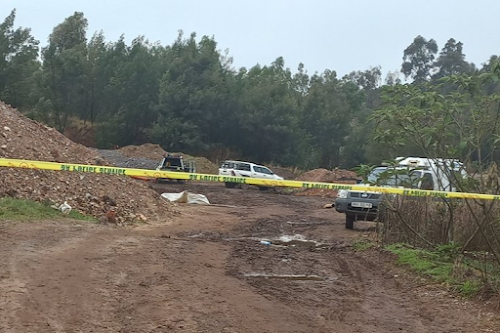
The bodies of eight suspected illegal miners were retrieved in Driekop outside Burgersfort on Saturday night.

The men who were digging for chrome at Ga-Maroga village, died when they were trapped underground from Friday.

“One South African, three Mozambicans and four Zimbabweans were allegedly busy with illegal mining activities when the water from heavy rains in the area, apparently pushed the soil and blocked the only point they were using for entry and exit. They then apparently suffocated,” Limpopo police spokesperson Brig Motlafela Mojapelo said.

He said the police were called on Saturday night and on arrival they found community members had dug a hole and gained access to the miners. Some had started retrieving the bodies.

Limpopo police commissioner Lt-Gen Thembi Hadebe warned community members to stop engaging in illegal mining activities as this was unsafe and against the law.

“We have established a team to deal with illegal mining activities around the province, especially in the areas along the R37 road in Sekhukhune District and many illegal miners have been arrested and mining equipment confiscated,” Hadebe said.

Times LIVE

BNC in impressive Safety record

0

Victoria Falls Stock Exchange-listed nickel producer, Bindura Nickel Corporation (BNC) has continued its resilience in achieving zero harm by recording zero fatalities during the half year ended 30 September 2022.

Rudairo Mapuranga

During the first quarter which ended 30 June 2022, the company recorded zero lost time injuries, however, it then recorded three lost time injuries during the quarter that ended 30 September 2022.

“Safety performance in the first quarter of FY2023 was satisfactory with no LTIs recorded during that period. Safety performance receded in the second quarter with three (3) LTIs and thus a total of three (3) LTIs recorded for the six (6) months ended 30 September 2022. The Board remains focused on ensuring that the workplace is safe and positive employee behaviour is reinforced to eliminate injuries at work,” the company said.

During the year ended 31 March 2022, in terms of safety, health and environment (SHE) the nickel mining giant recorded zero fatalities, two Lost Time Injuries recorded and a new record of 3.1 million fatality-free shifts achieved as at 31 March 2022.

“There was an improvement in the Company’s safety performance during the year, with two Lost Time Injuries recorded compared to five for the previous year.

“The Company achieved a new record of 3.1 million fatality-free shifts by 31 March 2022, the last fatality having been recorded in June 2015. Safety remains a priority for the Board and Management, given the inherently hazardous nature of mining operations.

“The Company has a zero-tolerance policy towards injuries in the workplace. Safety, Health and Environmental (SHE) systems are continually being upgraded and improved to enhance performance. The main area of focus continues to be on instituting and deepening the desired safety culture in order to prevent accidents, in line with the Company’s Zero Harm policy.

“The Company continues to comply with all applicable environmental legislation and remains ISO 14001:2015 and ISO 45001:2018 certified,” the company said.

The nickel mining group also recorded zero COVID-19-related deaths during the year with all employees fully vaccinated against COVID-19 during the year.

“In consonance with the overall national situation, the threat posed by COVID-19 has declined considerably, with the Company ending the year with the pandemic under control. All company employees were fully vaccinated during the year and no COVID-19-related deaths were recorded. The Company has however continued with preventative measures and control programmes to ensure the pandemic remains under control,” the group said.

Zimbabwe bans unbeneficiated Base Mineral Ores

0

Zimbabwe has banned the export of unbeneficiated base mineral ores.

In a Statutory Instrument released yesterday, Mines and Mining Development Minister added base Minerals to raw exports ban hardly a month after banning the export of Raw Lithium.

Unbenficiated “base mineral ore” according to Mines and Mining Development Ministry, means any ore of whatever base mineral that has not undergone processing within Zimbabwe to any extent.

The SI defines “ore” as all forms of minerals or mineral aggregates which in the abstract are of economic value and “Base Minerals” as coal and all other minerals and mineral substances and includes coke and all such slimes, concentrates, slags, tailings and residues as are valuable and contain base minerals. This however does not include precious metals, precious stones, mineral oils and natural gases.

Precious metals in Zimbabwe are gold, silver, platinum and platinoid metals in an unmanufactured state, and include all such slimes, concentrates, slags, tailings, residues and amalgams as are valuable and contain such precious metals;

Precious stones are defined as beryls, diamonds, emeralds, rubies and any other substances that the President has declared to be precious stones in terms of the Mines and Minerals Act [Chapter 21:05].

Statutory Instrument 5 of 2023. [CAP. 21:05] Base Minerals Export Control (Unbeneciated Base Mineral Ores) Order, 2023 in full states:

“No unbeneficiated base mineral ores shall be exported from Zimbabwe to another country except under written permit of the Minister given in either of the following circumstances on written application to him by any miner or other interested person. The export of any unbeneficiated base mineral ore in respect of which the applicant produces compelling reasons to the Minister showing that no such ore is capable of being beneficiated to any extent within Zimbabwe; or the export of samples of any unbeneficiated base mineral ore for assaying outside Zimbabwe, upon production of proof satisfactory to the Minister that such assay cannot be satisfactorily done in Zimbabwe, and that the quantity to be exported for that purpose is necessary for that purpose.”

“The Base Minerals Export Control (Unbeneficiated Lithium Bearing Ores) Order, 2022, published in Statutory Instrument 213 of 2022, is repealed (without, however, affecting the validity of anything done by the Minister under that Order)”.

“To avoid doubt section 5 of the principal Act provides that “An order shall have effect notwithstanding anything inconsistent therewith in any other enactment or any trade or customs agreement to which the State is a party”; and section 6 of the principal Act provides that any person who contravenes or fails to comply with any order or with the terms and conditions of any permit issued to him or her under an order shall be guilty of an offence and liable to—

      • a fine not exceeding level 9 or twice the value of the base minerals in respect of which the offence is committed, whichever is the greater; or
      • imprisonment for a period not exceeding two years; or to both such fine and such

Gold buying prices Friday 13 January 2023

Fidelity Gold Refinery (FGR) official gold buying prices Friday 13 January 2023.

SG 90% AND ABOVE US$56.01/g
SG ABOVE 85% BUT BELOW 90% US$55.13/g
SG ABOVE 80% BUT BELOW 85% US$54.54/g
SG ABOVE 75% BUT BELOW 80% US$53.95/g
SAMPLE BELOW 10g BUT ABOVE 5g US$53.06/g
FIRE ASSAY CASH US$56.01/g

NB: Fire Assay cash price is for gold above 100gs and no sample is deducted.
For the Fire Assay Transfer price, a sample of not more than 10g is deducted
A 2% royalty is charged on all deposits (Small-scale Miners)
A 5% royalty is charged to Primary Producers

Cash available. Fidelity Gold Refinery prices will be changing daily in relation to world market prices.