Home Blog Page 31

Dinson Iron and Steel Achieves SABS Certification as New Steel Products Roll Out

0

Dinson Iron and Steel Company (DISCO) has strengthened its regional footprint after securing certification from the South African Bureau of Standards (SABS) for its reinforcing steel bars, while simultaneously rolling out new products that include steel balls and wire rods, Mining Zimbabwe can report.

By Ryan Chigoche

These milestones come shortly after the company resumed operations on 3 November 2025, following a scheduled shutdown for maintenance and system upgrades. The successful restart set the stage for DISCO to accelerate both product diversification and quality assurance initiatives.

Together, the SABS certification and the introduction of new steel products mark a significant advancement in Dinson’s growth trajectory, reinforcing its position as an emerging industrial hub in Zimbabwe and a key contributor to expanding value-added steel manufacturing across the region.

The SABS certification confirms that Dinson’s steel rebars comply with the South African National Standards (SANS 920:2011) for concrete reinforcement—an internationally recognised benchmark for safety, performance, and manufacturing quality.

The approval places DISCO among a select group of regional steel producers whose products meet stringent global technical standards, boosting confidence among buyers and regional markets.

Commenting on this milestone, DISCO CEO Benson Xu said the certifications reflect its commitment to consistent product quality, robust internal systems, continuous improvement, and adherence to international manufacturing protocols.

“These internationally recognised certifications affirm our commitment to consistent product quality and reliability, robust internal systems and continuous improvement, enhanced customer satisfaction and stakeholder confidence, and compliance with global standards in manufacturing and management.

“For our stakeholders, these certifications serve as a guarantee that Dinson’s steel products are produced under stringent quality controls and that our operations meet the highest benchmarks of professionalism and accountability. This milestone strengthens our position as a trusted industrial partner in Zimbabwe and across the region,” Xu said.

The company has also secured major endorsements from the Standards Association of Zimbabwe (SAZ). Dinson is certified under ISO 9001:2015 for its management systems, while its steel bars have been tested and approved to carry the SAZ Standards Mark. According to the company, both SABS and SAZ assessments are conducted impartially and independently, in line with global best practices.

Meanwhile, the certifications coincide with the company’s expansion into new product lines. Dinson has commenced production of steel balls and wire rods as part of its growth and value-chain development strategy.

Management says the additions will support Zimbabwe’s broader industrialisation agenda by creating opportunities for downstream players to invest in value-added steel products, thereby strengthening the domestic and regional steel ecosystem.

Gold buying prices in Zimbabwe per gram/ ounce, 27 November 2025

0

Gold buying prices in Zimbabwe per gram/ ounce, 27 November 2025, from the official gold buyer and exporter Fidelity Gold Refinery (FGR).

1 oz = 31.1035 g

CategoryPrice ($/g)Price ($/oz)
SG 90% and ABOVE125.773911.89
SG 85% and above but below 90%124.443870.52
SG 80% and above but below 85%123.103828.84
SG 75% and above but below 80%121.773787.47
Sample 5g and above but below 10g119.783725.58
Fire Assay CASH126.433932.42


Note: The Fire Assay cash price applies to gold above 100g, with no sample deduction.

A sample of not more than 10g is deducted for the Fire Assay Transfer price.

Hwange CEO Urges Policy-Level Action to Include Local Suppliers in Major Foreign-Led Mining Projects

0

Hwange Colliery Company Limited (HCCL) has highlighted the need for policy-level measures to ensure local suppliers and contractors are meaningfully involved in major mining projects, Mining Zimbabwe can report.

By Ryan Chigoche

This call comes amid an influx of large-scale projects, particularly led by Chinese firms. While these investments have brought billions into Zimbabwe’s economy, a significant portion of spending has gone toward imported machinery, equipment, and services, leaving domestic suppliers with limited opportunities.

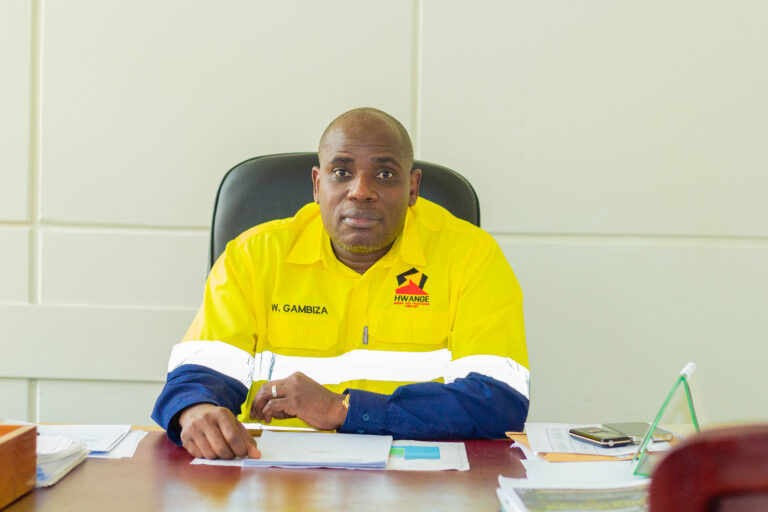
Some listed local mining companies have observed that foreign contractors often purchase imported items even when local alternatives exist. Hwange Colliery CEO Wilson Gambiza says this is not a reflection of local incapacity but an issue that needs attention at the policy level.

In an interview with Mining Zimbabwe, Gambiza acknowledged the expertise of Chinese contractors while emphasizing the importance of including domestic businesses.

“We find that with the influx of Asian investors, the Chinese, they have clinched most of the contracts because they have the expertise of how to build or to construct, to address the needs of the communities,” Gambiza said.

“But I think the issue is related to where the materials are coming from. I would not think it’s an issue which portrays or reflects failure by the locals to supply enough. But I think it’s an issue which needs to be addressed at the policy level, whereby the government needs to put restrictions or legislative measures which can also allow participation of the locals in some of these construction projects. Because with the current scenario, you will find the bulk of the stuff, the Chinese contractors they are bringing it from China. So literally it means they are promoting their home industries.”

Gambiza’s remarks underscore the gap between the potential of local contractors and their current involvement in high-value mining projects.

Imported equipment dominates local mining

The Chamber of Mines reports that around US$2.1 billion of the US$5.4 billion revenue generated in 2023 was spent on imported machinery, equipment, and services, with local manufacturing contributing just 15%.

ZIDA data for Q1 2025 shows that US$2.65 billion of the projected US$4.75 billion investment in the mining sector went toward imported capital equipment, indicating room for policies that encourage domestic sourcing.

“I think there should be a way whereby the government can also try to strike a balance in such a manner that even the locals also participate, and they are also promoted, and also they can participate in the construction projects in the mining industry,” Gambiza added.

Local contractors have proven their capacity

Zimbabwean firms have demonstrated their ability to handle complex mining projects. Mimosa Mining Company’s US$75 million Tailings Storage Facility (TSF-4) is an example: local contractors managed the construction while South African firm SRK handled design. Imported materials were limited to specialised items, keeping most costs in-country.

This shows that with careful planning, procurement, and supportive policies, local contractors can deliver projects to international standards.

Hwange Colliery’s underground project

Hwange Colliery is advancing a US$60 million underground mining venture in partnership with a Chinese firm. While foreign expertise and financing underpin the project, local companies such as Dinson Iron and Steel are involved in specific components.

“We have got another joint venture that we have with Dinson, in which we want to extract the Number Three underground pillars,” Gambiza said.

This demonstrates that even in technically complex operations, local firms can play a significant role. Expanding domestic participation ensures foreign investment benefits Zimbabwean industry.

Currently, Zimbabwe lacks strict local content requirements, and enforcement is inconsistent. Policymakers could consider minimum local procurement or skills transfer thresholds, drawing lessons from South Africa and Botswana. Such measures would encourage foreign investors to source locally, reduce foreign exchange outflows, and strengthen domestic industrial participation.

The rise in foreign investment presents both opportunities and challenges. Gambiza emphasises that without deliberate policy attention, mining inflows may primarily support imports rather than domestic growth.

Success stories like Mimosa’s TSF-4 project, Hwange’s underground operations, and joint ventures with local firms such as Dinson show that Zimbabwean contractors are capable; the key is ensuring policy frameworks allow them to contribute effectively.

Zimbabwe’s Mining Industry Poised for Robust Growth in 2026, Survey Reveals

0

Zimbabwe’s mining sector is set for a significant upswing in 2026, driven by attractive commodity prices and ongoing expansion projects, according to the latest State of the Mining Industry Report presented by Prof. Albert Makochekanwa, Mining Zimbabwe can report.

By Rudairo Mapuranga

While executive confidence has surged, the report underscores that persistent challenges in infrastructure, foreign currency access, and fiscal policy threaten to cap the sector’s full potential.

The comprehensive survey, which gathers views from mining executives for planning purposes, paints a picture of an industry on the rise. The overall mining business confidence index has improved to a positive 8.4, a marked increase from the previous year, reflecting widespread optimism about the year ahead.

The report highlights several key indicators pointing towards a strong performance in 2026:

Surge in Mineral Revenue: Mineral revenue is projected to reach $7.5 billion in 2026, up from an expected $7 billion at the close of 2025 and $5.9 billion in 2024. This growth is attributed to a combination of increased output and anticipated rises in international prices for key commodities like platinum group metals (PGMs), gold, and lithium.

Increased Mineral Output: The overall mineral output is forecast to grow by an average of 6%. Prof. Makochekanwa provided a detailed baseline projection for gold, expecting an increase from 47,000 kg in 2025 to 50,000 kg in 2026, with the potential to reach 53,000 kg if supportive policy changes are implemented.

Record-High Capacity Utilisation: The average capacity utilisation for the industry is expected to climb to 95% in 2026, up from 88% in 2025. Some sub-sectors, notably PGMs and coal, are already operating at 100% capacity.

Profitability and Employment: Executives are generally optimistic about the profitability of their projects, with a measured index of 7. This positive outlook is also expected to translate into more jobs, with employment prospects showing a measured increase of 6.5.

Despite the bullish forecasts, the presentation did not shy away from the significant headwinds facing the industry. Prof. Makochekanwa identified several “key constraints” that mining executives believe require urgent attention:

Power Supply Deficits: Electricity was highlighted as the most critical bottleneck. The mining industry loses approximately 10% of its potential output due to power outages. With the demand for electricity from the sector expected to rise from 750 megawatts to 880 megawatts in 2026, a consistent and adequate power supply was cited as a non-negotiable requirement for growth.

Foreign Currency Shortfalls: Access to foreign currency remains a major concern, with executives pessimistic about prospects for 2026. These shortfalls are estimated to cause a 4% loss in potential output and hamper the industry’s ability to import essential operational inputs.

Fiscal and Investment Environment: The mining fiscal framework is viewed pessimistically, with an index of minus 10. Executives expressed concern that the government may introduce new taxes or increase existing ones. Furthermore, the high cost of doing business, infrastructure gaps, and difficulties in raising offshore capital due to perceived country risk are stifling investment competitiveness.

Prof. Makochekanwa specifically noted that for positive policy statements to be effective, they must be backed by concrete statutory instruments. “Implementers in Zimbabwe just say, ‘can we see where the instrument is?’” he stated, urging policymakers to provide the necessary legal documents to support reforms.

The report also detailed the industry’s efforts in Environmental, Social, and Governance (ESG) and local content development, areas of increasing global importance.

Mining companies reported that they are planning to spend an average of 11% of their revenue on ESG initiatives in 2026. These measures include adopting environmental rehabilitation plans, investing in renewable energy, and implementing reforestation programs. On community investment, companies are currently spending up to 2% of their revenues on Corporate Social Investment (CSI) projects, focusing on infrastructure like schools and clinics, education, health, and sports.

On local content, the report noted a shared view between government and stakeholders that current levels are still low. While mining companies are undertaking initiatives to support local enterprise development, suppliers face challenges competing due to the “proliferation of foreign products,” poor payment turnaround times, and issues with stock management.

Prof. Makochekanwa summed up the sentiment: “The mining industry of 2026 has improved compared to 2025… We are looking forward to all the support to unlock the full potential and maximise the contribution of the sector to the economy.” The success of the coming year appears to hinge on a collaborative effort to address the persistent constraints while capitalising on the favourable market conditions.

Prospect Resources sells Step Aside lithium to Fatima Resources

0

Prospect Resources Limited has completed the sale of its Step Aside Lithium Project in Goromonzi to Fatima Resources Pty Ltd for up to US$2.2 million, marking another strategic transaction for the company in Zimbabwe’s evolving lithium sector, Mining Zimbabwe can report.

By Rudairo Mapuranga

The sale, executed through a Share Sale and Purchase Agreement, transfers ownership of Prospect’s Singapore-registered subsidiary, Promin Resource Holdings Pte Ltd, which holds a 90% interest in the Step Aside Project located 35 kilometres east of Harare. The transaction represents Prospect’s continued portfolio optimisation following their previous sale of the flagship Arcadia Lithium Mine to Chinese battery materials giant Zhejiang Huayou Cobalt for US$378 million in 2022.

The decision to divest from Step Aside comes as Prospect sharpens its focus on the Mumbezhi Copper Project in northern Zambia, signalling a strategic shift toward copper exploration amid changing market conditions for battery metals. Company management noted that the sale allows them to concentrate resources and capital on what they view as a more significant opportunity in the copper space, while also simplifying their corporate structure and reducing overhead costs.

Prospect Resources CEO Sam Hosack commented on the strategic rationale: “We are satisfied with the outcome of this sale agreement with a reputable company with extensive operating experience in Zimbabwe. This transaction offers us both upfront cash return and future upside to subsequent exploration success and value growth at Step Aside.”

The sale agreement is structured to provide both immediate and potential long-term value to Prospect Resources:

The final potential payment of up to US$1.2 million is contingent upon Fatima Resources achieving specific development milestones within 24 months, which may include securing binding offtake agreements, successfully upgrading the project’s Mineral Resource estimate, or completing a future sale transaction valuing the project at more than US$5 million.

The Step Aside Lithium Project covers approximately 100 hectares within the Archaean Harare Greenstone Belt, just 8 kilometres north of the producing Arcadia Lithium Mine. The project has been the subject of extensive exploration between 2022 and 2024, with four phases of mixed RC and diamond drilling programs confirming multiple high-grade lithium intersections across six visible mineralised pegmatites.

Technical work at the site led to the discovery of an additional lithium mineralised pegmatite dubbed “WinBin” in October 2023, with subsequent drilling demonstrating thickened, deep-set lithium mineralisation that connects to an extension of Pegmatite C, forming an arcuate system striking over at least 580 meters that remains open at depth.

Intersection | Lithium Grade | Depth | Pegmatite
63.1m | 1.17% Li₂O | from 74.9m | WinBin
17.0m | 1.54% Li₂O | from 52.0m | WinBin
15.3m | 1.25% Li₂O | from 179.9m | Pegmatite E
13.0m | 1.68% Li₂O | from 75.5m | WinBin
7.4m | 1.28% Li₂O | from 43.6m | Pegmatite E

The project benefits from excellent infrastructure with access to roads, power, and water systems, and is already permitted for mining, pending only environmental approvals. The lithium mineralisation is predominantly spodumene-bearing, with pegmatites running parallel to each other in a north-south orientation.

This transaction continues Prospect’s established “explore-develop-sell” strategy that the company successfully applied with its nearby Arcadia Mine. While Step Aside showed considerable potential, the company decided to pare back activities at the project to minimum holding commitments following the decline in global lithium prices, choosing instead to redirect capital toward its Zambian copper assets.

An industry analyst familiar with the transaction described it as “smart capital allocation in volatile commodity markets,” noting that “Prospect’s ability to monetise non-core projects gives it flexibility to pursue higher-value opportunities.” The deal represents a disciplined approach to portfolio management that allows the company to maintain some exposure to Step Aside’s future upside through the milestone-linked payments while freeing up resources for what management views as more promising opportunities.

The sales process was managed by Nurture Capital Zimbabwe, a Harare-based financial services firm providing asset management, private equity, and corporate advisory solutions across sub-Saharan Africa. Prospect indicated that proceeds from the sale will be channelled directly into advancing ongoing exploration activities at Mumbezhi, including a Phase 2 drilling program, and evaluating other copper opportunities within Zambia.

Zimbabwe continues to establish itself as a significant player in the global lithium sector, with substantial hard-rock lithium deposits making the country a critical node in the supply chain for electric vehicle batteries and energy storage systems. The country has seen growing interest from international investors, particularly Chinese companies that have invested over US$400 million in local lithium projects since 2023.

The government has positioned lithium development as a priority, with the Minister of Mines recently stating that lithium projects would receive priority support, potentially including exemptions under the Indigenisation Policy. With more than 60 lithium exploration licenses issued in the past five years, Zimbabwe is actively working to build its reputation as Africa’s “green metal” powerhouse.

As Prospect Resources turns its attention fully to copper development in Zambia, the future stewardship of the Step Aside Lithium Project falls to Fatima Resources, a private company described as having extensive local operational experience in Zimbabwe. With the mineralised system justifying additional drill testing, according to Prospect’s CEO, the project’s potential remains to be fully unlocked by its new owners.

The transaction demonstrates continued investor confidence in Zimbabwe’s lithium sector despite recent volatility in global lithium prices and showcases the strategic decisions mining companies are making to navigate the evolving battery metals landscape. As Hosack noted: “We believe the future stewardship of Step Aside is in good hands and look forward to seeing just how far the project can continue to grow.”

Caledonia Greenlights Massive Bilboes Gold Project with 1.7 Million Ounce Reserve

0

In a move set to transform its future, multi-listed gold-focused miner Caledonia Mining Corporation Plc has officially sanctioned the development of the giant Bilboes Gold Project, following the completion of a highly positive Feasibility Study, Mining Zimbabwe can report.

By Rudairo Mapuranga

The project, which boasts a robust Proven and Probable mineral reserve of 1.749 million ounces of gold, is positioned to become a cornerstone asset for Caledonia, catapulting it into the ranks of mid-tier gold producers.

“The finalisation of the Feasibility Study and the decision to implement the project is a defining moment for Caledonia in our journey to become a mid-tier gold producer,” said Mark Learmonth, Caledonia’s Chief Executive Officer. “We believe Bilboes will transform Caledonia and significantly change our production profile.”

The economic picture for Bilboes is compelling. Using a conservative gold price of $2,548 per ounce, the project projects a post-tax Net Present Value (NPV) of $582 million and an Internal Rate of Return (IRR) of 32.5%. Perhaps most strikingly, the mine is expected to pay back its initial investment in just 1.7 years from the start of production.

Over its initial 10.8-year life of mine, Bilboes is forecast to produce 1.55 million ounces of gold at an all-in sustaining cost (AISC) of $1,061 per ounce, ensuring healthy operating margins.

The scale of the undertaking is significant, with a peak funding requirement of $484 million. Caledonia has outlined a sophisticated funding strategy designed to minimise equity dilution and protect its shareholder dividend. The majority of the capital is expected to come from non-recourse senior debt, supplemented by internal cash flow from the existing Blanket Mine and other flexible instruments.

First production is targeted for late 2028, with the project ramping up to steady-state operations in 2029. In its first full year, Bilboes is anticipated to produce approximately 200,000 ounces of gold, dramatically boosting Caledonia’s overall output.

Fully permitted and located 80 km north of Bulawayo, the Bilboes project is a major vote of confidence in Zimbabwe’s mining sector. Learmonth emphasised that a project of this scale “should help Zimbabwe to reclaim its position as a major ‘gold destination’ in the eyes of the international investment community,” bringing substantial foreign exchange earnings and tax receipts.

The project also benefits from its proximity to Caledonia’s adjacent Motapa property, a large brownfield exploration site, offering potential for future resource expansion and operational synergies.

With the Front-End Engineering Design (FEED) phase commencing immediately, Caledonia is now full steam ahead on developing what promises to be one of Zimbabwe’s most important gold mines in recent years.

Mine for the People, Not Just Profit – Minister Demands Community Centric Reporting

0

In an effort to ensure the mining industry has solid, data-driven research on how communities perceive their operations, the Minister of Mines and Mining Development, Hon Winston Chitando, has directed the Chamber of Mines to conduct a parallel report to its annual State of the Mining Industry survey, this one focusing entirely on the community perspective, Mining Zimbabwe can report.

By Rudairo Mapuranga

This landmark instruction, delivered at the State of the Mining Industry Report 2026 event on Wednesday, signals a fundamental shift in the government’s approach, placing a mining company’s social licence to operate on par with its economic and technical performance.

Minister Chitando’s mandate challenges the industry to move beyond internal assessments and actively listen to the voices of those most affected by mining activities.

He emphasised that this proposed “state of the community survey” is critical for diagnosing issues, holding poor performers accountable, and ultimately safeguarding the entire sector’s reputation.

The initiative represents a proactive move to bridge the growing trust gap between powerful mining corporations and local populations, ensuring that the wealth extracted from the earth translates into tangible benefits for those on the surface.

Minister Chitando structured his remarks around six pivotal comments that collectively frame a new expectations landscape for Zimbabwe’s mining sector. While acknowledging the Chamber’s organisational excellence and the importance of its annual survey, the Minister quickly pivoted to what he termed “the spirit behind the survey” and the critical question of “what happens after?”

His most significant directive came in his sixth and final point, where he explicitly called for a fundamental expansion of the Chamber’s reporting framework: “It’s very good that you’ve done this to take up the industry survey. But I think at some stage, let’s also have a state of the community survey on how they are affected by mining… Very important that at some stage, we also have the survey… to see what the communities out there think of mining companies.”

Minister Chitando introduced a crucial concept of collective industry responsibility, warning mining companies against complacency: “If you are company A and you believe you are a good social citizen, what is being done by company B, which is not a good social citizen, will change what you are doing as company A… No, it affects you because the social licence is not only local, but it is also national and international.”

This perspective fundamentally challenges the mining industry to evolve from isolated corporate social responsibility projects to establishing industry-wide standards that protect the sector’s collective reputation and social licence.

Zimbabwe’s mining sector stands as a critical economic pillar, with 2024 mineral exports reaching approximately US$6.1 billion, primarily anchored on platinum group metals (PGMs), gold, lithium, diamonds, and chrome. The industry directly employs over 45,000 people, with thousands more engaged in artisanal and small-scale mining operations that supplied 65% of Zimbabwe’s record 36.48 tonnes of gold production in 2024.

The government projects continued growth of 5.9% in 2026, supported by firm global gold prices and strong performance in key mineral sub-sectors. This robust performance makes mining indispensable to Zimbabwe’s economic trajectory, but also underscores why ensuring communities share in these benefits is both an economic and moral imperative.

Zimbabwe’s mining regulatory environment is poised for significant transformation with the pending Mines and Minerals Bill, published in the Government Gazette on 25 June 2025. This legislation aims to replace the outdated Mines and Minerals Act enacted in 1961, with several provisions directly addressing community and environmental concerns.

The proposed bill includes strengthened environmental provisions, requiring “holders of mining rights to work their claims rather than allowing them to preserve their title by paying annual fees” and mandating that “miners participate in funds and make other provisions to meet the cost of restoring the environment when their mining operations come to an end.”

The bill also introduces the concept of “strategic minerals” with special conditions negotiated between the Minister and the State. This classification, likely encompassing lithium and other critical minerals, reflects both the economic importance and the need for heightened responsibility in extracting these resources.

The global mining industry is increasingly recognising that community engagement isn’t optional but fundamental to sustainable operations. The Initiative for Responsible Mining Assurance (IRMA) exemplifies this shift, founded on the belief that “every individual impacted by mining should have a say in how responsible mining is defined and measured.”

This approach acknowledges what industry leaders have increasingly recognised: mining’s social licence depends on meaningful community participation throughout the mining lifecycle, from exploration to closure and rehabilitation.

The International Council on Mining and Metals (ICMM) frames responsible mining as practices that “prioritise environmental stewardship, social responsibility, and ethical governance throughout the entire mining lifecycle.” This includes “avoiding, minimising and mitigating environmental impacts, respecting human rights, ensuring worker safety, engaging with communities, and fostering long-term social and economic development.”

Modern mining operations in other jurisdictions demonstrate how community engagement transforms potential conflicts into partnerships. As the National Mining Association notes, “Responsible U.S. mining means protecting land, water and wildlife, and ensuring that operations have a positive impact on the people who live and work nearby.”

Under the Second Republic, Zimbabwe has increasingly emphasised local beneficiation and value addition as central to its mining strategy. As Minister Chitando stated in another address, “Demand for critical minerals is rising, and we are open to partnerships interested in extraction and local value addition and beneficiation of these minerals.”

The 2026 Budget Strategy Paper reinforces this commitment, noting that “Priority will also be on promoting local value addition and beneficiation through upgrading local processing and refining capacity of minerals into semi-finished and finished products.” This strategic shift aims to foster industrial hubs and develop value chains that maximise domestic economic benefits while reducing reliance on raw mineral exports.

Minister Chitando has highlighted that “under the Second Republic, Zimbabwe encourages sustainable mining practices,” noting that in 2024, President Mnangagwa launched phase one of the responsible mining initiative, which “entails that all mining operations should abide by the laws of the country, particularly those related to the environment and social responsibility.”

The Sabi Star lithium project in Manicaland offers a compelling case study in how modern mining can potentially benefit local communities. By 2026, the project is projected to create between 1,300 and 2,500 direct jobs, representing a 35% growth in local employment. Beyond employment, the operation has stimulated major upgrades in “roads, energy grid, and water systems benefiting both mining and surrounding agricultural communities.”

The project implements advanced environmental practices, including water recycling technologies that reduce water use by 30% and tailings management that reduces waste by 40% compared to conventional approaches. These practices demonstrate how modern mining operations can minimise their environmental footprint while maintaining economic viability.

The integration of satellite and AI monitoring technologies enables “precision mapping of the lithium-bearing zones, real-time surveillance, and resource optimisation,” representing the kind of technological innovation that can make mining more efficient and environmentally responsible.

Minister Chitando’s call for a “state of the community survey” represents more than a simple request for additional data; it signals a fundamental reorientation of how Zimbabwe’s government conceptualises mining success. No longer measured solely by production volumes and export earnings, the industry’s performance must now include community well-being and social acceptance as core metrics.

The Chamber of Mines faces a critical decision: embrace this challenge as an opportunity to strengthen the sector’s social licence and long-term sustainability, or resist and risk increasing regulatory pressure and community opposition. The Minister’s closing reassurance that “we are going to engage to ensure that we have a mining environment which is the right medium for the success of the industry” suggests a partnership approach, but one with clear expectations.

For Zimbabwe’s mining sector, the path forward is clear: listen to communities, measure what matters to them, and transform operations to demonstrate that mineral wealth can coexist with community wellbeing. In doing so, Zimbabwe has the potential to become not just a “tried and tested mining jurisdiction” in economic terms, but a global leader in community-centred mineral development that other nations might emulate.

The minerals beneath Zimbabwe’s soil belong to its people; the industry that extracts them must now prove it serves those same people. Minister Chitando has issued the challenge—the Chamber’s response will shape Zimbabwe’s mining legacy for generations to come.


Gold buying prices in Zimbabwe per gram/ ounce, 26 November 2025

0

Gold buying prices in Zimbabwe per gram/ ounce, 26 November 2025, from the official gold buyer and exporter Fidelity Gold Refinery (FGR).

1 oz = 31.1035 g

CategoryPrice ($/g)Price ($/oz)
SG 90% and ABOVE125.37$3,899.45
SG 85% and above but below 90%124.04$3,858.08
SG 80% and above but below 85%122.71$3,816.71
SG 75% and above but below 80%121.39$3,775.65
Sample 5g and above but below 10g119.40$3,713.76
Fire Assay CASH126.03$3,919.97


Note: The Fire Assay cash price applies to gold above 100g, with no sample deduction.

A sample of not more than 10g is deducted for the Fire Assay Transfer price.

Fidelity Showcases Blockchain Traceability and Responsible Sourcing at Dubai Precious Metals Conference

0

Fidelity Gold Refinery (FGR) used the Dubai Precious Metals Conference 2025 to highlight the responsible sourcing and compliance framework now underpinning Zimbabwe’s gold value chain, positioning the country for greater acceptance in international bullion markets, Mining Zimbabwe can report.

By Ryan Chigoche

Now in its thirteenth edition, the Dubai Precious Metals Conference (DPMC) remains a leading platform for strategic dialogue, policy insight, and market intelligence.

This year’s event comes amid rapid change in the precious metals sector, where surging prices, trade tensions, and digital disruption are reshaping supply chains.

From asset tokenisation to AI integration, the pace of transformation is unprecedented, making compliance, traceability, and responsible sourcing more critical than ever.

Against this backdrop, FPR General Manager Peter Magaramombe presented the Zimbabwean refiner’s initiatives, showing how domestic reforms align with global standards.

He highlighted efforts focused on transparency, risk management, and OECD-aligned due diligence, describing them as part of a broader push to modernise Zimbabwe’s refining sector and strengthen confidence in the origin of Zimbabwean gold.

Magaramombe announced that the FPR Board had approved a Responsible Sourcing and Supply Chain Management Policy, now publicly available on the company website.

The policy signals the refinery’s commitment to global compliance expectations and raising the bar for supply chain governance in Zimbabwe.

In a market where refiners and global exchanges increasingly demand proof of provenance, the origin of gold has become as important as its purity.

Heightened scrutiny over illicit flows, conflict financing, and ESG compliance has prompted hubs such as Dubai to require verifiable records from all upstream suppliers.

For Zimbabwe, demonstrating a clean, traceable, and well-governed supply chain is essential to maintain competitiveness, protect export channels, and secure market confidence.

To meet these expectations, Magaramombe outlined a series of compliance measures implemented across the value chain. FPR has rolled out a blockchain-based mine-to-market traceability system in partnership with Commstack.

This system creates immutable digital records, strengthening verification and reducing opportunities for illicit gold movements.

FPR has also established a fully fledged Compliance Department, led by a Senior Compliance Officer, to oversee risk management processes and ensure adherence to international norms.

As part of its due diligence, the refinery has assessed all upstream suppliers, mapping risks linked to conflict financing, human rights abuses, and regulatory breaches. These assessments are consolidated into an institutional risk register, categorised into low, medium, and high-risk ratings.

Response strategies are guided by an enterprise-wide risk management system, ensuring mitigation measures are proportional to risk.

These include mandatory customer due diligence, verification of source of funds, proof of mining rights, strict anti-money laundering protocols, and detailed customer profiling before onboarding.

FPR’s framework is independently validated through annual onsite inspections by the Financial Intelligence Unit and periodic reviews by external assurance providers, consistently earning positive assessments.

The refinery has also integrated its supply chain due diligence into annual ESG and sustainability reporting, reinforcing transparency across the gold value chain and supporting Zimbabwe’s broader alignment with global responsible sourcing standards.

Magaramombe said these measures collectively position FPR to meet international market expectations, prioritising traceability and accountability while building confidence in the provenance of Zimbabwean gold.

The 2025 conference, themed “The Future of Precious Metals: Tariffs, Tokenisation and Trade Flows,” provided an ideal backdrop to showcase Zimbabwe’s progress.

The event brought together industry leaders, policymakers, financiers, and technologists to explore where geopolitics and tariffs intersect with new mining partnerships, the evolving roles of bullion banks and trading companies, and Dubai’s continued rise as a global hub for precious metals, supported by record gold trade and a growing eastward shift in market influence.

Namib Minerals Advances Major Capacity Expansion at How Mine

0

Nasdaq-listed Namib Minerals is accelerating its operational improvement strategy at How Mine, pressing ahead with a major expansion of its ore-milling capacity, Mining Zimbabwe can report.

By Ryan Chigoche

In its latest business update, the Company confirmed plans to lift milling capacity from 40,500 tonnes per month in 2024 to 55,000 tonnes per month by 2026, an approximately 36% increase in throughput. Procurement of the required equipment is already underway, with commissioning targeted for the second half of 2026.

“This capacity expansion will enable the Company to process higher ore volumes and offset the reduction in grade experienced to date in 2025,” Namib reported.

Namib Minerals is also positioning itself for sustained long-term growth. Its corporate objective is to evolve into a multi-asset, mid-tier gold producer targeting eventual output of 300,000 ounces per year.

The Company emphasises that this is a long-term strategic aspiration, not production guidance, and is not based on a Preliminary Economic Assessment, Pre-Feasibility Study, or Feasibility Study.

Progress toward this vision hinges on the successful execution of mine-restart programmes, expansion projects, and ongoing exploration and development initiatives.

Against this backdrop, Namib is advancing restart preparations across its other assets. At Redwing, enabling works have commenced, marking the first phased step toward returning the mine to production. Dewatering is scheduled to run concurrently with feasibility studies and is expected to take about eight months to reach the targeted mining levels.

Dewatering forms the backbone of the restart sequence, giving the Company access to underground workings, enabling infrastructure refurbishment, and preparing the ground for a phased production ramp-up. In parallel, surface-infrastructure upgrades, including power-supply reinforcement, are being lined up to match the restart timeline.

At Mazowe, Namib is undertaking similar restart activities. The Company is progressing upgrades to power, water, and tailings-management systems while conducting detailed engineering studies aimed at sharpening capital efficiency and optimising the mine-restart pathway.

As previously reported by this publication, Namib engaged WSP to carry out comprehensive S-K 1300-compliant feasibility studies for both Redwing and Mazowe.

Announced on November 10, 2025, the dual-study programme will run for 12 to 18 months and is expected to form the technical backbone of the restart process. Both mines remain under care and maintenance, with redevelopment contingent on completing dewatering and resource-definition drilling.

The ongoing feasibility work will provide the groundwork for reserve conversion, permitting, and future financing discussions—key steps required before production can resume.

To support its growth trajectory, Namib estimates that total capital requirements for its expansion and restart programme will range between US$300 million and US$400 million, with Redwing Mine expected to absorb the largest share.

The Company is pursuing a balanced funding model designed to minimise dilution, prioritising project debt, strategic partnerships, and internally generated cash flows.

Discussions with multiple capital providers are ongoing. Namib stresses that its funding estimate remains preliminary and is subject to feasibility outcomes, engineering refinements, market conditions, equipment costs, and other external risks.