

Home Blog Page 313

Prospecting for lithium in Zimbabwe on the rise

0

It is not a secret that Lithium has attracted world recognition as a significant mineral playing a substantial role in electric cars and other clean tech gadgets, Zimbabwe has not been spared on this development as prospecting for lithium in the country has increased significantly.

According to a government official, although most lithium projects in Zimbabwe are at the exploration stage, there has been a lot of prospecting and pegging of lithium mining claims in Zimbabwe.

“Most projects are still in the exploration stage, however, a few lithium projects are in the mine development stage. We also have noted a lot of pegging and prospecting for lithium though not to the extent of overwhelming our provincial mines offices,” Dr Kambamura said.

It has been reviewed that due to the increase in the world’s appetite for electric vehicles (EVs) demand is expected to rise in the coming years.

A February study from S&P Global Platts Analytics found that “global light duty electric vehicle sales reached a record high of 6.3 million units in 2021, up 102% year on year, with this number expected to rise to 26.8 million units in 2030. The updated 2030 forecast is 23% higher than the earlier forecast, published in June 2021.

As automakers (and the renewable energy sector) scramble for lithium, nickel, cobalt, graphite, rare earths, aluminum, manganese, and copper securing supply may ultimately be a bigger issue than costs.

To produce 20m vehicles Tesla alone needs more than the total volume of lithium and natural graphite produced last year, almost a third of the magnet rare earths, 36% of the cobalt, and so on, this shows that finding new lithium deposits is of importance to sustain the rise in demand of EVs.

Australia Stock Exchange-listed mining and exploration junior Prospect Resources is confident that the exploration of battery and electrification metals such as cobalt, lithium, manganese and nickel in Zimbabwe can bring extremely significant results.

According to a company report signed by Prospect Resources Corporate Development Manager Mr Nick Rathjen, the firm is highly motivated that Zimbabwe is the best mining destination for battery and electrification metals that are targeted towards the world agenda to go green.

“Zimbabwe is highly prospective for targeted battery and electrification metals,” Rathjen said.

Zimbabwe has the potential to supply over 20% of the world’s lithium appetite and the potential ability to supply over half of Europe’s demand for the next 30 years.

Renowned research groups have predicted that the European Union will need about 60 times more lithium than it is currently consuming and 15 times more cobalt for electric vehicles (EV) batteries and energy storage by 2050. It is estimated that the demand for rare earths minerals used in high-tech devices and military applications will increase 10-fold in Europe over the same period.

The European Union will not be able to ditch lithium and raw earth imports due to the world’s adoption of clean energy and the fact that recycling of elements could be deemed a danger to the climate.

Bikita Minerals is currently the only active lithium mine in Zimbabwe with several other lithium projects at various stages of development, establishing its position among the major producers in the world.

Lithium was classified by the government as strategic in helping the country achieve the US$12 BILLION mark by 2023 with the mineral fetching half a billion.

The country also boasts of MIRRORPLEX (Pvt) Limited’s lithium project in Shamva which is postured to become Zimbabwe’s biggest hard rock lithium producer. Mirrorplex has the potential to grow into a world-class lithium mine with Results from 240 Rock Chip samples taken from the exposed Bonnyvale pegmatite body at the Shamva Lithium Project providing high-grade lithium assay results up to 3.13% Li2O and surface sampling at the Loch Ness prospect revealed two more pegmatites containing high Li2O grades up to 4.82% Li2O.

Other lithium projects are Arcadia by Prospect Resources, Zulu, and Kamativi projects which would cement the country’s position in the global lithium market.

Zimbabwe should now focus on value addition by reopening closed factories thus becoming one of the largest suppliers of lithium batteries and clean energy.


This article first appeared in the September 2022 issue of the Mining Zimbabwe Magazine

Of Gemstones leakages and what should be done

0

Zimbabwe has been losing a lot of its coloured gemstones through smuggling with the Minerals Marketing Corporation of Zimbabwe (MMCZ) estimating that 90 per cent of the stones are not benefiting the country.

Rudairo Mapuranga

According to MMCZ General Manager Mr Tongai Muzenda, although there has been a growth in the coloured gemstones industry, the country was not benefiting because the industry is infiltrated by unlicensed dealers who smuggle most of the stones at the same time under paying miners.

He said it was of importance for the government to extend its helping hand to the Artisanal and Small Scale Miners (ASM) through formalization. He also said that various initiatives were being carried out by MMCZ to see that the growth of the gemstone industry is realized.

“The growth is not what we are expecting but there is a lot of mining of gemstones but most of them are being exported illegally, so the country is not benefiting and miners are getting paid very little, they can do much much better. I would want to think that people are getting only 10 per cent of what they can get. To grow this business the government needs to help the ASM grow. There are many initiatives to see the growth of the ASM in gemstones mining, MMCZ has actually visited some of the areas to buy gemstones at a fair value.” Muzenda said.

What’s causing Gemstone smuggling?

The Centre for Natural Resource Governance (CNRG) through a research study titled ‘The Political Economy of the illicit Coloured gemstone industry in Zimbabwe ‘ said much of Zimbabwe’s coloured gemstones are smuggled out of the country because most of the gemstone dealers are unlicensed.

The research also attributed corruption and poor governance as major causes of illicit gemstone trading.

Much of Zimbabwe’s coloured gemstones are smuggled out of the country while most of the gemstone dealers are unlicensed,” CNRG said.

_“The illicit mining and trade of gemstones is attributed to corruption and poor regulation of the sector which is governed under the Precious Stones Trade Act.

_“The Minerals Marketing Corporation of Zimbabwe, which is mandated to regulate the marketing of gemstones, has been far less efficient compared to gemstone marketing systems in neighbouring countries such as Zambia.

_“The authorities have been reluctant to close the loopholes and review the regulatory framework as the current weaknesses benefit those with access to mining and export licences who are invariably politically connected.

_The dealers that are protected by politically connected miners with licences supply foreign buyers who come through Zambia and Mozambique._

_“These actors form part of the international syndicates that supply gemstones to destinations in Asian countries.”

_Foreign illegal dealers mostly from Zambia, DRC, South Africa, Pakistan, China and India are buying the gemstones at a price far below the international market price._

_These gemstone dealers are organised with networks from the communities, borders, and up to the final destination despite the existence of online companies who are registered under Global Online.

_“When compared with gold, gemstones are difficult to value at community or mine level because their value is based on perception; the price is negotiable depending on stone quality, market and the buyer,” the report added.

_“Artisanal miners, who dig for the stones, have little knowledge on the grading of the stones.

_“Valuing requires expertise, and this is lacking among the people who pick these stones.

_“Buyers exploit those who pick these stones by buying at very low prices, for instance, US$3 per kilogramme of aquamarine.

_“Some buyers offer US$500 for a cupful of gemstones._

_“One key informant revealed that once there was a coloured gemstone which was bought for $50 in Karoi and resold for US$12000 in Mozambique.”

“Despite hosting deposits for more than 90% of coloured gemstones found in the region, Zimbabwe has not been able to establish a robust market for the stones.

“Some of the agents withhold the stones and sell to illegal dealers, who provide immediate cash,” the report reads in part.

MMCZ has been accused of being lax in service delivery and processes exports at a snail’s pace which increasingly alienates it from miners and dealers.

In an interview with Mining Zimbabwe, we asked the Portfolio Committee on Mines and Mining Development Chairman Hon Edmond Mkaratigwa if the slow processing of export licenses wasn’t a catalyst for smuggling and what the parliament was doing to ensure MMCZ speeds up the process.

“That is a catalyst for smuggling, opting for other alternative countries by investors and discouragement of investment in those minerals locally. The Committee has not shied away from interrogating those issues. We actually set as our first priority, ensuring efficiency and effectiveness in the sector and we have really surfaced most of these issues, including after getting hard evidence from private practitioners in the sector. It is still appalling to note that there are still such delays as in our approach, those are part of the fundamentals that can be dealt with internally without the need for external resources. A change in work culture is key for national development and that has been emphasised at the outset of the New Dispensation led by H. E. the President Cde. Dr. E. D. Mnangagwa. In our committee following its reconstitution, we identified such gaps and tried much to address that including cutting unnecessary time wasted in some procedures as well as through reduction of over-centralisation and increasing on recruitment. Much has been done in that regard, to the extent of being granted a budget allocation through our intervention.

What should be done?

According to mineral Economist Lyman Mlambo, the following six points are critical in reducing gemstone smuggling in Zimbabwe~

(1) We need to have a gemstone sector policy that covers all gemstones (both precious and semi-precious stones). We only have a diamond policy which leaves out 3 precious and more than 33 semi-precious stones. Policy guides the formulation of legal and regulatory instruments.

(2) We need legal reforms: (a) For a start we need the diamond policy to give birth to the Diamond Act, this has not happened – that would codify KPCS and make the implementation of the diamond policy effective, for example, we have positive provisions such as the Diamond Value Management Centre and the Gemology which were supposed to have been established by end of 2019; (b) we need a whole Gemstone Act – the Precious Stones Trade Act only regulates the trade of two gemstones (diamonds and emeralds) leaving out the rest.

(3) Improve our immigration, customs and port of exit controls. There is too much reliance on the human interface which results in many cases of bribery, exemptions of the VIPs, diplomats, and other politically exposed people, and manipulation of the manual systems. Increased automation will improve checks and tracking, and hence security. We need to improve our surveillance systems at the airports do that planes do not land and take off without detection as has been reported.

(4) Improve transparency and accountability in the sector.

(5) Formalization the ASM sector, in which much extraction and illicit trade of most gemstones other than diamonds are concentrated.

(6) Improve diamond valuation skills in the country and local value addition of gemstones.

What is being done to curb smuggling?

Zimbabwe Miners Federation (ZMF) Secretary for Semi-Precious and Gemstones Mr Privelage Moyo said as formalisation is being done, ZMF and its partners will open up markets in the country’s all provinces.

He said they intend to conduct awareness campaigns to encourage miners to sell their gemstones through the correct channels.

Moyo also said that the Federation has resolved to work on the expedition of the export process and reduce the turnaround time on exports.

“The issue is to have provincial and regional markets being opened. The first one will be opened in the Karoi, Hurungwe area. Then awareness campaigns will be also done concurrently with the opening of the markets,”

“So that at the end of the year sales will be recorded then at the same time, whilst production is optimized then marketing is established. Then also the need for the ease of export, so the turnaround on exports needs to be reduced so that we can see inflows of revenue so that we can surpass a US$50 million mark for the gemstones,” said Moyo.

Students create a breakthrough Mine Ventilation model

0

Three students from the Zimbabwe Schools of Mines have created what could be Zimbabwe’s reliable and affordable mine ventilation system for both small-scale and large-scale mining firms.

Rudairo Mapuranga

The Room and Pillar mine model which was exhibited at this year’s Mining, Engineering and Transport Expo (MINE ENTRA) was designed by three students Ephraim Musekwa, Tafadzwa S. Makata and Melina Moyo.

According to the students, the model was designed to encourage small-scale mines to use artificial ventilation systems like the Exhaust Ventilation system used on the model.

“The Exhaust ventilation system may only use one giant centrifugal fan on one shaft which will be the foul air exhaust shaft. So, this system requires more than one shaft to be in place at an underground mine, one or two shafts for fresh air intake and the other shaft for foul air exhausting,” the team said.

According to the students, the model was designed for various purposes which include, exhibiting how the underground Room and Pillar mine will look like when the overburden is removed, to show the underground mine room and pillar airflow system, exhibiting how the Exhaust Ventilation system works, to exhibit how fresh air strikes from the surface to underground workings, to show all ventilation elements like ventilation walls, ventilation doors, regulators and brattices and to show how fresh air is directed to the bottom of the mine, using the force-exhaust overlap system (auxiliary ventilation) as well as to show how foul air moves from underground to the surface through an exhaust fan.

How does the Exhausting Ventilation System work?

The principle of this system is primarily based on depressurizing the underground mine workings by the way of drawing foul air out of the mine using a single fan located on the surface through a vertical shaft. It regularly does not have any particular component to draw outside air into the underground workings but the negative pressure created underground draws in fresh air through declines or intake shafts.

Benefits of the Exhausting Ventilation System in underground mines

  • The system is relatively easy to work with and does not require much Capex to install. Typically, it consists of a single fan that is connected to a centrally located exhaust point, therefore, the operating cost is low enough and makes the system more economical.
  • The haulage roads, where most travel is done, are kept free from dust, gas, and smoke, hence allowing miners to perform their work in fresh air.
  • In the event of a fire or explosion, exhausting ventilation enables the rescue work to proceed more rapidly, because the fresh air is on the haulage road, which provides an easy route for carrying material and equipment to make mine repairs.
  • Both intake airways and track entries serve as escape ways if stopping lines are well maintained.
  • Greater power savings are possible if mine openings are small. This is due to the potentially greater recovery of velocity pressure through the use of discharge evase (gradual expansion of ducts) on exhaust fans.

According to the students, the Room and Pillar mine model was first off designed by Zimbabwe School of Mines (ZSM) college students as a Group Practical assignment for the Mine Ventilation Module on the second of June 2022. It was a group of 10 students 5 from the Mining class and 5 from the Survey class. They designed it using cardboard boxes and presented the model to the ZSM Mining Lab-technician Mr Dube and our lecturer Mrs Z. Ndiweni. They appreciated the model and tasked the crew to design another model with better material.


This issue first appeared in the September 2022 issue of the Mining Zimbabwe Magazine

Favorsea Committed to Mining Safety

0

Safety in mining is all of our concern and great strides have been made by mining industry employers as well as regulatory bodies to see this through. Globally, the Vision Zero campaign has integrated the approach to prevention under the banner of “safety, health, and well-being” at all levels of work.

With the widespread commitment to mining safety, collision avoidance systems (CAS) by way of proximity detection systems (PDS) are one such way of avoiding harm to people and property in mines. Favorsea Africa plays a pivotal role in the supply of machinery and technologies for both underground and open-pit mining throughout the globe.

In South Africa mining safety regulations have been under scrutiny since 1996 with the inception of the Mine Health and Safety Act (MHSA), and the 2015 amendments to the Chapter 8 regulations – which address the safe use of diesel-powered trackless mobile machinery (TMM). This legislation first necessitates that companies, based on an approved risk assessment, implement an automatic detection system, which can audibly/visually warn operators of an imminent collision (Level Seven Intervention). The second part stipulates that there must be some sort of automatic intervention by the system to prevent a collision if the operator fails to act and that the TMM must failsafe, if necessary (Level Nine Intervention).

With a system that is both easy to use for the operator, and provides real-time visibility and reporting for the back office it exceeds in making the mining environment safer. With Level Nine Intervention control over machinery; it is this intervention that allows for optimal safety controls on site. The system will initially send warning sounds to the operator and eventually automatically slow down the machinery. The system alerts the operator about other vehicles, obstacles, and personnel around it.

With Favorsea Africa‘s mining safety solutions you can address mining safety concerns such as fatigue detection, and blind spot monitoring which prevents operator fatigue and mining accidents and incidents. The Favorsea Africa CAS incorporates GPS positioning, radio frequency (RF) technology and artificial intelligence (AI) camera’s. Multiple radars detect any physical obstruction and relay data about the size and speed of the obstruction or approaching vehicles to the CAS. The software uses an algorithm to determine whether the machines are on a collision path and to take the appropriate action within milliseconds if the operator fails to do so. Favorsea GM Innocent Chimunhu noted that the company could also enable a failsafe mechanism if a client requests it. Further, the system’s parameters (range up to 100 m) for Level Nine and are determined by the risk assessment done on-site. Geofencing can be used in certain areas, for example, in the pit or on an access road to prevent entry to high-risk areas.

Mineworkers and visitors will use GPS tags. Non-mining vehicles will make use of a portable system to allow full functionality of the system on-site.

The CAS can be installed onto older ‘non-intelligent vehicles making the technology more accessible to operators and junior miners who might not necessarily have the capital to buy some of the latest model TMMs but still need to comply with the regulations. Another added benefit is that the system interfaces directly with OEM Canbus. The system has been proven to avoid accidents and incidents in various real-life scenarios: a head-on collision with both trucks accelerating toward each other, one truck accelerating towards a stationary vehicle, trucks approaching an intersection, and a queuing scenario.

As Favorsea Africa recently achieved ISO 9001 certification in Quality, Occupational Health, and Environmental Management – you can rest assured that your investment is in reputable hands and ensures that you are continuing with your daily operations.

Now more than ever, it makes sense and cents to invest in technologies that will keep mining employees as well as mobile equipment safe.


South Africa Office

15 Langa Cres, Zeekoewater 311-Js, Emalahleni, South Africa, email: [email protected]  Tel: 087 897 4981

Possible replacement for rare earths in magnets found

0

Scientists may have discovered a method for making magnets used in wind turbines and electric cars without the rare-earth metals that are almost exclusively produced in China.

A team from the University of Cambridge and colleagues from Austria found a new way to make tetrataenite, a possible replacement for rare-earth magnets, according to a research paper from the university. If the manufacturing process is proven to be commercially feasible, it could loosen China’s dominance of the rare-earth market where it accounts for over 80% of global supply.

US President Joe Biden earlier this year backed efforts to boost output of the critical materials, while the European Union’s foreign service this month said the bloc should diversify supply chains, including for rare-earth metals, away from China. In 2019, the Asian nation warned it could cut exports to hit back in its trade war with Washington.

It could be possible to produce tetrataenite, an iron-nickel alloy, at scale by adding the common element phosphorous, the researchers found. Previously, making tetrataenite — whose magnetic properties approach those of rare-earth magnets — in the laboratory relied on impractical methods, they said.

The researchers are hoping to work with major magnet manufacturers to determine whether tetrataenite could be suitable for high-performance magnets.

“Rare earth deposits exist elsewhere, but the mining operations are highly disruptive: you have to extract a huge amount of material to get a small volume of rare earths,” Lindsay Greer from Cambridge’s Department of Materials Science & Metallurgy, who led the research, said in the paper. “Between the environmental impacts and the heavy reliance on China, there’s been an urgent search for alternative materials that do not require rare earths.”

Mining Weekly

Total Eren in talks with Karo for 300MW solar plant at new platinum mine

0

Tharisa is in talks with French energy company Total Eren for a 300MW solar plant for Karo Platinum, a new mine being developed near Selous.

Land has been allocated for the solar farm and the company will feed excess energy into the national grid, Karo MD Bernard Pryor says.

“We have already allocated the land, just the other side of the main road from our processing plant. They will generate that power and sell that into the national grid. We will have a wheeling arrangement where we can buy it back off the grid at the beneficial rates of solar power generation, which are lower than current power prices that we would otherwise get from the grid,” says Pryor.

Karo’s processing plant will need 30MVA, and the excess power generated will be sold into the grid.

Karo is investing US$391 million to develop the mine, which will produce a projected 194,000 ounces of platinum per year.

Earlier this year, Tharisa signed a separate MoU with Total Eren and its partner Chariot for 40MW of renewable energy for Tharisa’s mines in South Africa.

Last year, Total Eren, part-owned by energy giant TotalEnergies, signed a three-year deal with Chariot to jointly develop renewable energy projects for mining customers in Africa. Total Eren currently operates solar plants in Egypt, Burkina Faso and Uganda.

Total Eren and Chariot have also recently agreed to develop 430MW of green power projects for First Quantum Minerals in Zambia.

While Zimbabwean mining is expanding, ZESA does not have enough power to meet demand, curtailing growth. ZESA boss Sydney Gata has said he has applications for an additional 2100MW from miners alone, almost double what ZESA is currently producing in total.

Karo is the latest in a string of mining companies in Zimbabwe installing their own energy. Zimplats is building a 200MW plant, while French renewable energy firm Voltalia is close to completing a 12MW solar power plant at Blanket Mine in Gwanda. RioZim has also announced plans to build solar plants to feed its gold mines.

“By 2023, we will have over 600MW of power from projects undertaken by the mining sector,” says Mines Minister Winston Chitando.

‘RioZim not in distress despite mine closure’

0

Diversified miner, RioZim, has dismissed the proposition by a workers’ union to place the company under corporate rescue, a form of local bankruptcy protection, saying the company is not “financially distressed” and at any time, can pay its debts.

RioZim general counsel Tawanda Chiurayi wrote to the Zimbabwe Diamond and Allied Minerals Workers Union (ZDAMWU) RioZim, despite the recent placement of its key gold mine, Dalny under care and maintenance, other mining operations remained viable.

Earlier on, ZDAMWU secretary general Justice Chinhema, had threatened to apply for corporate rescue, arguing the ZSE-listed miner was in distress and struggling to pay workers.

Chinhema said, “any mine that fails to pay its workers or that fails to operate in terms of the law to the extent of affecting communities that survive through them will be inviting corporate rescue, which is meant to resurrect failing entities like RioZim.”

RioZim, however, said any suggestion of placing the company under corporate rescue was reckless.

“The company is not financially distressed and at any given time, has the capacity to pay its current debts as they become due and payable within the immediate ensuing six-month period,” Chiurayi said.

“Please note that all salaries payable in Zimbabwe dollars for the month of August 2022 have been fully paid to your members and other employees. The majority of the US dollar salaries have also been paid till August 2022.”

He said production within the group has in the third quarter of 2022 improved, compared to 2021 and the first half of 2022. The company has also implemented a plan that has seen chairs improved gold production at Cam and Motor, Renco and Murowa.

RioZim said the decision to place Dalny under care and maintenance, came after the mine posted heavy losses during the past 18 months. Dalny in the Chakari mining district near the town of Kadoma incurred a big loss of nearly US$8 million and produced only 3kg of gold during the first quarter of 2022.

In the six months to June 2022, about 8kg of gold was produced at the mine against 105kg produced during the same period last year when the mine was fully operational.

Placing the mine under care and maintenance was to avoid an overall “negative impact on the group’s overall performance”.

RioZim said Dalny Mine suffered from unsustainable low grades from its pits, which resulted in the mine suspending operations.

Its underground shafts are currently flooded and will require an extensive dewatering exercise to bring them to mineable conditions.

Chiurayi said RioZim was set to ramp up gold production at Cam & Motor in Kadoma after some challenges experienced during the early stages of commissioning the Biological Oxidation plant were resolved. RioZim invested US$50 million in Cam & Motor and commissioned a US$17 million BIOX to support this investment.

Biological oxidation is the latest technology that ensures better processing of gold ores with high sulphur content. Ores at Cam and Motor Gold Mine contain high sulphur
concentrations and increase cyanide consumption during the leaching process.

The technology uses bacteria to reduce sulphur content before cyanidation. The BIOX plant is one of the key projects expected to get the firm’s turnaround strategy back on track.

“The group invested US$50 million in order to commence and improve production to ensure the mine remained operational,” Chiurayi said.

“You will appreciate that while once the oxide ores ran out, the company had the option of closing Can and Motor and retrenching the workforce. Instead, it took a hard decision of building the BIOX plant so that there would be continued employment for your members and others as well, Chiurayi added.

“With this rather thoughtless action (calling for corporate rescue), you indeed rather jeopardised the future of the company and of the people whose people you profess to take care of. The company has been recently capitalised with the principal shareholder having brought in funds from outside Zimbabwe which has helped the company retool.

During the first half of the year, gold production declined by 30 percent to 393kg compared to 564kg achieved in the same period in the prior year.

The subdued production was mainly attributable to low output at Dalny during the periodcoupled with under capacity utilisation at Cam & Motor after discontinuance of the one step operation to pave way for the resumption of mining  activities at the mine.


Business Weekly

Hwange Unit 7 commissioning to end load shedding – Minister

0

ZIMBABWE expects to end load shedding soon as it prepares to officially commission the 300 megawatts Hwange Power Station’s Unit 7 extension next month.

Energy and Power Development Minister, Soda Zhemu, told Parliamentarians on Thursday that the prevailing supply deficit of between 250 and 300 megawatts would be filled by Unit 7.

“Presently, the electricity deficit is between 250 and 300 megawatts and that is causing the load shedding during afternoon and evening peak,” he said.

Hwange Expansion Power Project

“We expect this to be a thing of the past as soon as one of the units starts working.Load shedding is soon going to come to an end.

“The other unit which we expect to be operational in March or April next year, is going to produce another 300 megawatts. Government is also giving us the opportunity to phase out all the recurring problems.”

Minister Zhemu said as soon as Units 7 and 8 are functional, there will be a need to rehabilitate other units, which are Units 1 and 6.

“Right now we are checking on what needs to be done in these units and we call that detailed project reports.

“If we complete refurbishments, we will be able to produce the installed capacity of 900 megawatts,” he said.

The Hwange expansion project is being financed to the tune of US$1,4 billion and construction began in August 2018 following a ground-breaking ceremony by President Mnangagwa.

Meanwhile, the Government through the Zimbabwe Energy Regulatory Authority (Zera) is encouraging high energy consumers to produce their own power.

“For those companies with machinery that uses a lot of electricity, THE Zimbabwe Energy Regulatory Authority (Zera) is offering them licences to have their own solar power stations so that they can produce their own electricity,” said Minister Zhemu.

Some companies in the mining sector such as Caledonia Mining, have started generating their own electricity.


The Chronicle

Gvt to ban the ownership of metal detectors without a license

0

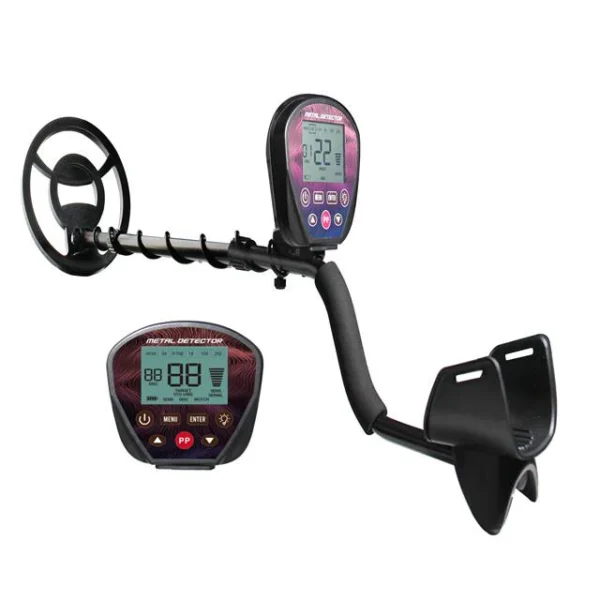
The government is crafting a new law to ban the ownership of a metal detector without a license, a move that has been welcomed as this will stem land degradation and veld fires reportedly caused by illegal gold miners.

Two weeks ago, 10 men were burnt to death in Esigodini while trying to fight a veld fire at Red Rose Farm.

The veld fire is alleged to have been started by illegal miners who clear land to use metal detectors in search of the precious metal.

According to the Environment Management Agency, veld fires in Zimbabwe have so far killed 18 people.

The fire season started on July 31 and ends on November 30.

The increase in deaths can be attributed to the upsurge in fire incidences as by last week Thursday, there were 5 386 recorded fires that destroyed 1 244 227,34 hectares, which is an increase of 58,6 percent compared to the same period last year.

During a memorial service at the farm where 10 lives were lost in Esigodini on Friday last week, the Minister of Environment, Climate, Tourism and Hospitality Industry, Nqobizitha Ndlovu said owning metal detectors will soon be illegal if one does not have a license.

“We met on Wednesday with the different arms of Government such as the CPU, Ministry of Agriculture and Ministry of Mines. It was resolved that owning a metal detector should be licensed by the Ministry of Mines.

It’ll be illegal to own one without a mining license,” said Minister Ndlovu.

The 10 men were recently laid to rest at their respective rural homes.

Following the remarks by Minister Ndlovu, Zimbabwe Miners Federation (ZMF) chief executive officer Mr. Wellington Takavarasha said it is important for the sector to be formalised.

“We have been lamenting about formalisation of the industry because this will help protect particular areas where mining activities happen and also ensure there’s no haphazard mining.

“We need to know who is in a particular area and this is only possible when the industry is formalised,” said Mr Takavarasha.

He said metal detectors are used mostly for alluvial mining and most of those using detectors operate at night to avoid arrest.

Zimbabwe Diamond and Allied Minerals Workers Union (ZDAMWU) secretary-general Mr Justice Chinhema said there is a need to regularise the mining sector.

“We are in agreement with the Government on the need to regulate artisanal miners. We have seen so many bad things happening, pits have been created everywhere including farming areas,” said Mr Chinhema.

He said the Esigodini fire was probably started by artisanal miners as they cleared the land for detectors.

“As ZDAMWU we have been calling for formalisation of all mining activities in order to protect the environment,” said Mr Chinhema.

He said although the organisation has been engaging small-scale miners, more can be done.

“We on our side are engaging the artisanal miners through education and training on safe mining and ways to protect the environment. Government on its part should formalise all the mining activities so that miners are made accountable for their activities,” said Mr Chinhema.

The Chronicle

Association Of Mine Managers of Zimbabwe (AMMZ)

0

The Association Of Mine Managers of Zimbabwe (AMMZ) was formed in 1972 to advance the science and practice of Mining and supporting disciplines such as Survey, Geology, and Metallurgy.

The AMMZ is a platform for information exchange and dissemination on good practices and seeks to promote the study and growth of Mining and allied disciplines.

The Association of Mine Managers of Zimbabwe provides a platform for mining industry professionals to among other things discuss and share information, Mining and Mineral Policy, Technology, Innovation, Safety, Health and Environment, Sustainable Mining, ESG, and Mining Operations. It is the biggest consortium of large-scale Mine Managers in Zimbabwe.

The organization is famed as the top knowledge hub for professional and responsible Mining in Zimbabwe.

THE OBJECTIVE OF THE AMMZ

  1. To be an Association of those concerned with the practical aspects of Mine Management.
  2. To advance the science and practice of mining and allied disciplines in Zimbabwe.
  3. To discuss matters affecting the management of mines and to make recommendations thereon.
  4. To hold meetings of members from time to time for the purpose of interchange and dissemination of knowledge of mining and allied disciplines.
  5. To encourage and promote the study of mining and allied disciplines.
  6. To arrange for the furtherance of the above objects through speakers, films, and other media at meetings of the Association.
  7. To do all things which further the attainment of the above objects or the interests of members and of the mining industry generally.

Get in touch with the Association Of Mine Managers of Zimbabwe (AMMZ)

Location: 20 Mount Pleasant Drive, Mount Pleasant, Harare, Zimbabwe

Call: +263 (242)334517 (242)334507 | +263 782 708 397

Whatsapp: +263 77 430 0662