Home Blog Page 314

Zimbabwe gold buying prices 21 July 2023

Fidelity Gold Refinery (FGR) official gold buying prices Friday 21 July 2023. See the Zimbabwe gold buying prices today.

SG 90% AND ABOVE US$60.03/g
SG ABOVE 85% BUT BELOW 90% US$59.40/g
SG ABOVE 80% BUT BELOW 85% US$58.76/g
SG ABOVE 75% BUT BELOW 80% US$58.13/g
SAMPLE BELOW 10g BUT ABOVE 5g US$57.17/g
FIRE ASSAY CASH US$60.35/g

NB: Fire Assay cash price is for gold above 100gs, no sample is deducted.
For the Fire Assay Transfer price, a sample of not more than 10g is deducted
A 2% royalty is charged on all deposits (small-scale miners)
A 5% royalty is set for Primary Producers

Cash available. Fidelity Gold Refinery prices will be changing daily about world market prices.

The Export Ban on Lithium: Resource Nationalism or Africa’s Bargaining Chip?

0

The Inaugural London Indaba which took place towards the end of June, saw Zimbabwe and Namibia’s decision to ban raw lithium exports as a hot topic of discussion.

By Alexandra Mliswa

Some experts went as far as to comment that the countries were ‘playing with fire’. The basis for this is that the export bans are allegedly against the WTO (World Trade Organization) regulations. This prompted this piece on whether Africa or Zimbabwe in particular, is finally in a position to leverage its mineral resources to Its people’s benefit.

First, it’s important to set the scene by providing some context as to why Zimbabwe’s decision to ban raw or unprocessed lithium has caused such panic. As we are hearing more and more, Lithium is a ‘future-facing’ commodity. This is because lithium is a key component in hybrid and electric vehicle batteries, electronic devices, and battery storage power stations that will help reduce carbon emissions and mitigate the effects of climate change, in what has come to be known as global decarbonization.

Global decarbonization refers to a global move to reduce carbon dioxide emissions by moving away from global dependence on fossil fuels and towards what has been called ‘green’ or renewable energies (solar, wind, biomass, geothermal, et cetera).

It should be clear at this point that Zimbabwe’s ban on raw lithium exports (as part of its beneficiation policy) is perceived as a threat to the global supply in that it would affect the development and supply of “environmental technologies” needed in the fight against climate change.

This sort of thinking leads one to surmise that it is being framed as a ‘threat’ because it provides Zimbabwe and other resource-rich African countries with an opportunity to leverage their natural resources for economic growth and development, which were once simply just taken during the imperialist era.

Simply calling the lithium export ban ‘resource nationalism’ is reductionist and ignores firstly, the reason behind the ban, and secondly, the many possible and much-needed benefits to Zimbabwe as well as other African Nations.

Let us begin with the former. Zimbabwe, home to one of the top 5 largest lithium reserves in the world, banned the export of raw or un-beneficiated lithium late last year (SI 213/2022) in response to trade leaks and deficits of up to €1 billion. While some may argue that there are alternatives to export bans, Zimbabwe’s fragile economy may not have the luxury of experimenting with them.

Secondly, this beneficiation policy may have far-reaching impacts with the potential to revive the Zimbabwean economy. Some of these much-needed benefits include job creation, accelerated industrialization, an increase in government revenue, and the acquisition of technical know-how.

While the African Union has not necessarily supported export bans on minerals per se, it has recognized the value of mineral beneficiation in the AMV (African Mining Vision) -a road map designed to guide African governments in their natural resource management. According to Eunomix, The AMV has identified mineral beneficiation as a way in which African governments can catalyse economic growth and industrialisation. It is at this point that it should be stressed that there is no outright ban on lithium in Zimbabwe, just un-beneficiated or unprocessed lithium and the ban is a means to the end of beneficiation.

The effects of the beneficiation policy remain to be seen but it can be said that if the people of Zimbabwe are to truly benefit government needs to take certain issues very seriously, firstly, ensuring that labour is being sourced locally and that the labour conditions are fair and humane, as well as ensuring there is a real transfer of technical know-how, secondly industrialization must be monitored to ensure that that the buildings and equipment have structural integrity and are future-facing or ‘green’ in line with global decarbonization. Thirdly, the increased revenue must be transparent and accounted for and lastly, responsible and sustainable mining practices need to be adhered to that protect the natural environment and the communities that inhabit them.

AI at the centre of ZISCO resuscitation strategy

0

The use of Artificial Intelligence is at the centre of Zimbabwe Iron and Steel Company (ZISCO)’s resuscitation as the company is posed to use modern technologies to produce high-grade steel, the company body Chairman Engineer Martin Manuhwa told Mining Zimbabwe.

Rudairo Mapuranga

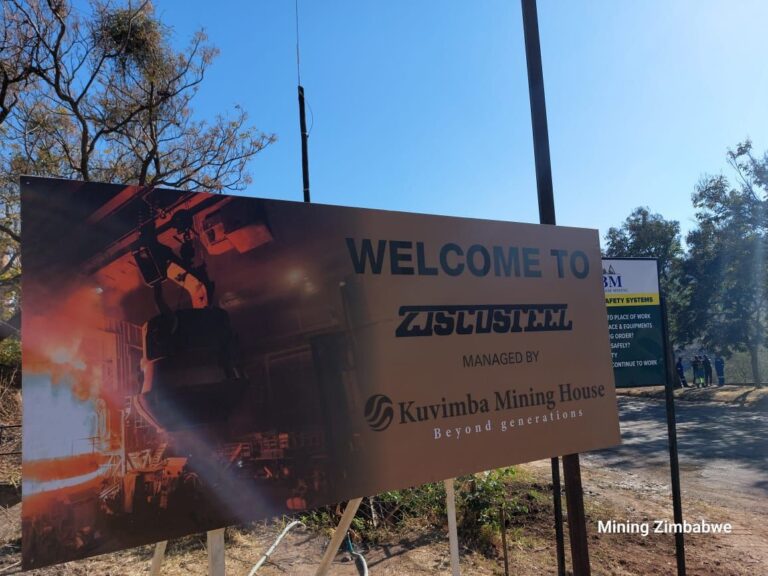
Kuvimba Mining House (KMH) will see through the resuscitation of ZiscoSteel. KMH has previously revived several companies and mines that include Jena Gold Mine, and Shamva Gold Mine among others, it is expected to play a key role in the resuscitation of the giant steel company which used to employ over 5 000 workers during its peak.

According to Engineer Martin Manuhwa KMH is going to invest up to US$300 million to ensure part of the money is invested into research for the adoption of modern technologies.

Engineer Manuhwa said KMH is bringing in new technology that would make Zisco one of the best producers of decarbonised steel in Southern Africa.

“Kuvimba will go into the mining business as a primary phase to finance the steel business which requires up to 300 million. The steel business requires a lot of research in line with the current technologies,” he said.

Engineer Manuhwa said ZISCO was going to use all the sweat of the fourth industrial revolution in its plan for Zisco resuscitation. He said one of the leading Artificial intelligence companies in steel making industry in the whole world. SMS group has been contracted to see through the adoption of modern technologies by Zisco. All over the world, SMS group stands for future-oriented technology and outstanding service in plant construction and mechanical engineering for the metals industry.

The ZISCO chairman also said that the Company was going to team up with tertiary institutions for expertise in metallurgy, industrial processes, and digitalization to create new perspectives for the industry through continuous innovation.

“We are going to use all the sweat of 4th industrial revolution technologies, things like big data analytics, things like virtual reality, augmented reality, Artificial intelligence and all those things in the new equipment that we use are now embedded into new technology so there is nowhere to run away from them. I think we would need to keep abreast of technology this is why SMS of Germany who are the leading steel manufacturers has been contracted to advise on that. We are also going to team up our training school with tertiary institutions, CUT, HIT has expressed interest NUST is already working with us,” Engineer Manuhwa said.

KMH is now on the ground following the completion of feasibility studies and the signing of the necessary contracts that should see the injection of US$300 million in new capital to kick-start the rebuilding of the steelworks.

Commissioning of Binga Coal Mine Plant moved to July 31

0

Contango Holdings has announced the postponement of the commissioning of its coal mine plant in Binga. The formal opening ceremony, originally scheduled for this week and to be commissioned by President Mnangagwa, has been rescheduled to July 31 due to unforeseen circumstances. However, the delay will not affect the company’s operations, as production is already underway.

Contango has recently started production and is considered to be a transformative development in the region. The coal mine is expected to have a positive impact on job creation, community development, and downstream industries.

In a statement, Contango Holdings confirmed the new commissioning date and expressed its commitment to proceeding with its plans. The company also announced a new offtake arrangement with TransOre International FZE, a UAE-based entity managing global commodity supply chains. This new contract will replace the previous agreement with AtoZ Investments (Pty) Ltd and is priced at US$120 per tonne of washed coking coal.

Once steady production is achieved in the third quarter of the year, Contango Holdings expects its operating costs to be around US$45 per tonne of washed coal. The company is also exploring additional options to further reduce these costs and expects economies of scale with larger volumes.

The mining firm has been rapidly assembling machinery in recent months, facilitated by a successful £7.5 million fundraising in October last year. The coal mine plays a crucial role in the government’s plan to grow the mining industry into a US$12 billion industry by 2023, which aligns with Zimbabwe’s broader vision of becoming an upper-middle-income country by 2030.

The project is expected to create employment opportunities for locals, both directly within the mine and within downstream industries. Contango Holdings remains optimistic about the success of the coal mine and its contribution to the region’s economy.

Zisco to establish a comprehensive closure plan

0

In an endeavour to ensure workers and stakeholders including communities are not affected by a sudden closure, Zimbabwe Iron and Steel Company (Zisco) is developing a comprehensive closure strategy that will see through all problems created by a sudden shutdown of the mining value chain company.

Rudairo Mapuranga

The company is looking at closure problems such as financial obligations (debt), environmental rehabilitation, legal affairs and social corporate responsibility expectations.

Mine closure planning involves planning effectively for the after-mining landscape that is all activities required before, during, and after the operating life of a mine that is needed to produce an acceptable landscape economically.

Mine closure planning has to be done at the starting point of the mining operations and needs periodic review and revision during its life cycle to cope with the market due to geotechnical constraints, safety and economic risks, social and environmental challenges.

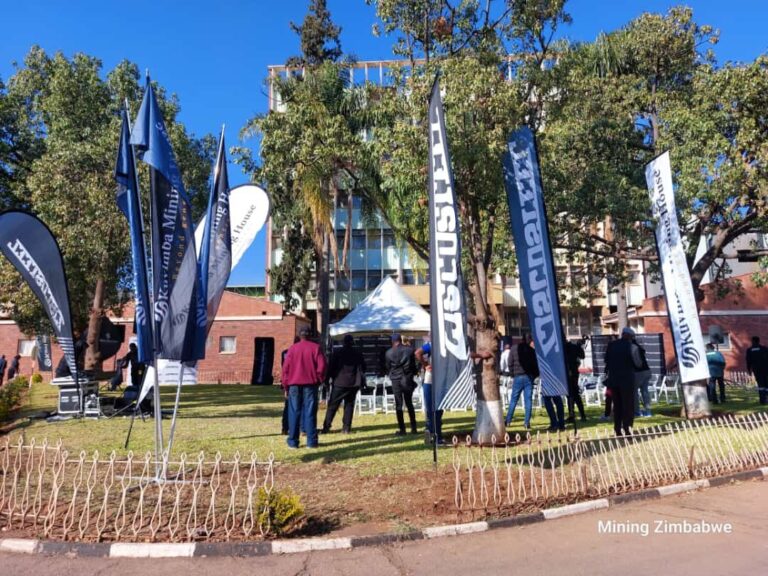
Speaking to the Media on the sidelines of the Zisco Steel Media tour in Redcliff on Wednesday, the company body Chairman Engineer Martin Manuhwa said his company was working to establish a strategic and comprehensive closure plan that will ensure that stakeholders are not affected by an unplanned closure.

“Our approach is from cradle to cradle, so as we design the new systems, we must also have a demolition plan and recycling plan. As Zisco we believe in the circular economy where most of the scrap is recycled. There will be no waste as we go forward, we really believe in the circular plan and we will make a strategic and comprehensive closure plan after the feasibility study to ensure that mine closure minimally affects stakeholders,” Engineer Manuhwa said.

Engineer Martin Manuhwa said part of the closure strategy is to ensure that workers will not be owed money by the company after closure as was the case with the Shutdown of the iron mining, Steel manufacturing and value addition company.

It should be noted that planning for mine closure is a complex process because it encompasses the decommissioning project, land rehabilitation, post-closure monitoring, and the necessary provisions for future land management after the mining cycle is complete.

Closure plan development includes in-house specialists such as senior management, mine engineering, environment, external affairs, legal and financial staff. This internal team, frequently led by consulting specialists to assist in “workshopping” the risks and opportunities presented by integrated closure planning, can come out of the closure planning process with stronger working relationships and a better understanding of the business.

According to Kuvimba, Mining is expected to restart soon to create cash and revenue flows to power the resuscitation. Engineer Martin Manuhwa said the new investor is putting in over US$300 million to start rebuilding ZiscoSteel using modern technologies to produce high-grade steel.

The resuscitation of ZiscoSteel hinges on generating cash from mining operations and investing the proceeds to modernise and rebuild the steelworks. The strategy was accepted by experts as the most realistic way to timely revive the giant steel company

Zisco group chief executive officer Dr Engineer Farai Maronga said his company was a national asset whose revival was crucial to the country’s economy.

“Zisco is an integrated company that started from the mining of iron ore, manufacture of steel and value addition by Lancashire Steel. So the company covers the whole mining value chain showing that it’s pivotal for the country’s economic resuscitation,” he said.

Blow to Moti Group’s plans for Zimbabwe lithium plant as Chinese partner cuts stake

0

The Moti Group has said a Chinese company with which it planned to develop a $1 billion lithium processing plant in Zimbabwe is halving its stake in the venture, dealing the project a potential blow, News 24 has reported.

Moti Group’s Pulserate Investments holds a 10 000 hectare lithium exploration concession in the northeast of the country, Africa’s biggest producer of the metal, according to the US Geological Survey. Earlier this year Moti said it planned to have the Chinese company, which it didn’t identify, increase its stake in Pulserate to 70% and apply for an exemption to Zimbabwe’s ban on lithium ore exports while establishing a battery factory.

The company, “one of the largest Chinese battery manufacturers”, has instead exercised an option to cut its stake to 10% from 20%, Dondo Mogajane, Moti’s chief executive officer, said in a response to queries. Pulserate “is adjusting its plans in line with the changes introduced by the Zimbabwean government regarding lithium mining and processing conditionalities”, he said.

The decision is a setback to Zimbabwe’s plans to develop an industry that will process the metal, which is crucial to the battery storage and electric vehicle industries. Since the ban was announced in December, stockpiles of the material have built up at mines in the country and smuggling of the ore has increased.

Moti, which runs a platinum extraction business in South Africa, will now need to find another partner or raise the money itself to build a processing facility.

Mogajane is a former director general of South Africa’s National Treasury who has been tasked with restructuring the Moti Group as its founder, Zunaid Moti, steps back from active management.

Moti has been tied to a number of scandals and told Bloomberg this year that his reputation was hindering the company’s progress. He spent five months in a German jail in 2018 and 2019 after being arrested on an Interpol diffusion notice issued by Russia in connection with the alleged theft of a pink diamond. In 2012, he was charged with conspiracy to commit murder before the case was thrown out of court.

He is no longer subject to a notice from Interpol and said he was arrested improperly on bogus charges engineered by a disgruntled businessman.

Mogajane is the chairperson of South Africa’s Government Employees Pension Fund, which has R2.3 trillion under management. He’s also a board member at the New Development Bank, a multilateral lender founded by the BRICS group of countries.

Unki production increased 2 percent

0

Despite mining through higher internal waste areas, platinum group metals (PGM) production at AngloAmerican-owned Unki Mine in Shurungwi increased by 2 per cent during the first half year compared to the same period last year, Anglo American Platinum Limited (Amplats) PGMs Production Report for the second quarter ending 30 June 2023 shows.

Rudairo Mapuranga

The mine’s total PGM production during the half year of 2023 was 121 500 ounces compared to 119 600 ounces produced during the period 1 January to 30 June of 2022.

However, Unki PGM production decreased by 11 per cent to 59,000 ounces against 66 300 ounces produced during the comparable period of 2022. The decreased production was a result of mining through planned higher internal waste areas.

The PGM also took a 6 percent decrease during the second quarter of 2023 compared to the first quarter of 2023 where production was at 62 500 ounces.

Amplats owns Mogalakwena Mine, Amandelbult Mine, Unki Mine, Mototolo Mine, Modikwa Mine (jointly owned) and Kroondal Mine (jointly owned).

The whole of Amplats PGMs sales volumes (from production, excluding sales from trading) decreased by 8 per cent to 1,108,700 ounces due to lower refined production.

According to Amplats CEO Natascha Viljoen, total PGM production from own-managed mines decreased by 10 percent to 526,700 ounces with PGM production from Amandebult mine decreased by 19 percent to 147,900 ounces for the quarter. This was driven by short-term operational challenges at Tumela which have since been mitigated, the 2022 closure of Dishaba open pit and Merensky concentrator and continued challenging ground conditions at Dishaba.

She said PGM production at Mogalakwena mine decreased by 7 per cent to 242,400 ounces. She added saying that in line with guidance, the company continued to mine lower grades which resulted in a 7 per cent reduction in 4E built-up head grade to a guided 2.70g/t compared to 2.91g/t in Q2 2022.

Viljoen said Mototolo PGM production increased by 2 per cent to 77,400 ounces, largely due to improved grade. She added saying that Eskom load curtailment deferred own managed mines metal in concentrate production by c.21,500 ounces.

“Our total PGM production was 9 per cent lower compared to the prior period. Production was impacted mainly by short-term operational challenges and infrastructure closures at Amandelbult as well as expected lower grades at Mogalakwena. Despite mining through higher internal waste areas, Unki continues to deliver a stable tonnes output along with Mototolo.

“We delivered lower refined production of 1,073,800 PGM ounces due to our planned asset integrity program at our processing operations.

“While we continued to manage heightened Eskom load-curtailment, it impacted 29 production days for the quarter contributing to a build-up in work-in-progress inventory of c.38,900 PGM ounces.

“We remain on track to achieve our 2023 guidance, with a strong focus on demonstrating our resilience through safe, stable, and capable operations for the remainder of the year,” Viljoen said.

Impala victorious in RBPlat bid battle

0

ZIMPLATS parent company, Impala Platinum (Implats), has emerged victorious in its battle for control of Royal Bafokeng Platinum (RBPlat) after rival company Northam Platinum sold its stake.

In January 2022, Implats made an offer to acquire all outstanding shares of RBPlat, but it faced delays due to Northam’s intention to make a counteroffer. However, Northam’s plans were terminated in April, allowing Impala to move forward with its bid.

The sale of Northam’s 34.5% holding will increase Impala’s stake in RBPlat to 91%. As a result, shares in Northam rose by 8.68% following the announcement. The transaction will see Northam receive 9 billion rand ($505 million) in cash and approximately 30 million Impala shares.

Johan Theron, the spokesperson for Impala, expressed that the sale represents a positive outcome for all parties involved. He stated that Impala’s focus now shifts towards integrating RBPlat into its operations and providing value for its shareholders. Moreover, with the sale of Northam’s stake, Impala now has a clear path to achieving 100% ownership of RBPlat. Their cash-and-shares offer remains open to any remaining investors.

RBPlat owns shallow and mechanized mines, which both Northam and Impala sought to control. These mines are strategically located next to Impala’s own aging and expensive deep-level shafts at the Rustenburg complex. The acquisition of RBPlat will enable Impala to integrate its assets and realize synergies.

Citigroup analysts believe that this deal will remove the investor overhang and further enhance Impala’s ability to maximize the potential of RBPlat. They anticipate that the acquisition will lead to the integration of RBPlat with Impala’s existing assets and the realization of synergies.

For Northam, selling its RBPlat stake could enable the company to pay dividends, implement share buybacks, reduce debt, and strengthen its balance sheet. Although the stake was sold at a loss, RMB Morgan Stanley analysts noted that the price Northam received was attractive due to the decline in platinum metal prices. Northam had originally acquired its RBPlat stake at an average price of 180 rand per share but will now receive 131 rand per share based on Impala’s latest share price.

Analysts also believe that selling the stake will resolve Northam’s balance sheet position and alleviate concerns during the platinum price downturn.

Overall, Impala Platinum’s victory in the battle for control of RBPlat and the subsequent sale of Northam’s stake have significant implications for both companies. Impala can now move forward with its plans for integration and maximizing synergies, while Northam can take steps to strengthen its financial position and benefit from the sale in the long run.

The Association of Mine Managers of Zimbabwe (AMMZ)

0

The Association of Mine Managers of Zimbabwe (AMMZ) is a professional and representative body that brings together mine managers from various mining companies in Zimbabwe. The association aims to promote professionalism, skills development, and knowledge sharing within the mining industry in the country.

Founded 51 years ago, the AMMZ serves as a platform for mine managers to collaborate, exchange ideas, and address common challenges in the sector. It provides a forum for networking, capacity building, and continuous professional development. The association is an affiliate of the Chamber of Mines of Zimbabwe.

One of the key objectives of the AMMZ is to foster the highest standards of safety and health in mines. The association provides resources, training programs, and guidance to its members on best practices in mine management. By promoting a culture of safety and adhering to international standards, the AMMZ aims to reduce workplace accidents and ensure the well-being of mine workers.

Another crucial aspect of the AMMZ’s role is to support sustainable mining practices in Zimbabwe. The association recognizes the need to balance economic development and environmental conservation. It encourages its members to adopt responsible mining practices that minimize the negative impact on the environment, promote reclamation of land, and support biodiversity conservation.

The AMMZ also actively engages in industry research and knowledge sharing. It organizes seminars, conferences, and workshops where mine managers can learn from experts, share experiences, and stay updated on the latest trends and technologies in the mining sector. By fostering a culture of continuous learning, the association contributes to the professional growth and development of mine managers in Zimbabwe.

Overall, the Association of Mine Managers of Zimbabwe plays a vital role in the mining industry. It brings together professionals, promotes safety and health, advocates for sustainable mining practices, and facilitates knowledge sharing. Through its efforts, the association contributes to the growth, efficiency, and sustainability of the mining sector in Zimbabwe.

Popularly known as the technical arm of the Zimbabwe Mining Industry, the Association’s current President is Eng Elton Gwatidzo Deputised by Eng Abel Makura…

Zimbabwe gold buying prices 19 July 2023

Fidelity Gold Refinery (FGR) official gold buying prices Wednesday 19 July 2023. See the Zimbabwe gold buying prices today.

SG 90% AND ABOVE US$60.00/g
SG ABOVE 85% BUT BELOW 90% US$59.37/g
SG ABOVE 80% BUT BELOW 85% US$58.73/g
SG ABOVE 75% BUT BELOW 80% US$58.10/g
SAMPLE BELOW 10g BUT ABOVE 5g US$57.14/g
FIRE ASSAY CASH US$60.32/g

NB: Fire Assay cash price is for gold above 100gs, no sample is deducted.
For the Fire Assay Transfer price, a sample of not more than 10g is deducted
A 2% royalty is charged on all deposits (small-scale miners)
A 5% royalty is set for Primary Producers

Cash available. Fidelity Gold Refinery prices will be changing daily about world market prices.