

Home Blog Page 318

Graduates urged to join ASM

0

In an effort to improve the artisanal and small-scale mining (ASM) sector as well as finding new opportunities for mining graduates, the government through the Ministry of Mines and Mining Development is advising graduates to join the ASM.

Rudairo Mapuranga

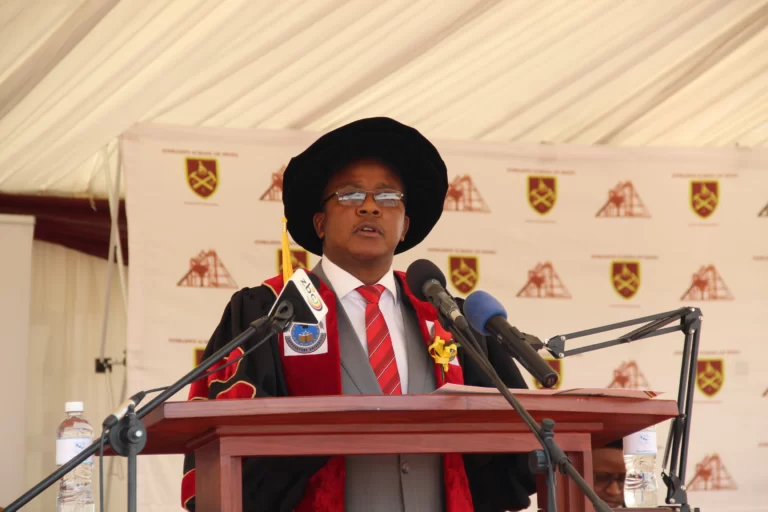
Speaking at the Zimbabwe School of Mines (ZSM) 28th, annual graduation and prize-giving ceremony themed “Skilled practitioners for the attainment of the US$12 billion mining industry” which was officiated by the Deputy Minister of Mines and Mining Development Hon Dr Polite Kambamura, the Permanent Secretary in the Ministry of Mines and Mining Development Mr Pfungwa Kunaka said graduates should make a difference in society through professionalizing the ASM sector as they have the skills and knowledge to help in the government’s drive to formalize and professionalize the largely informal sector.

“The government is looking forward to professionalise and formalise the artisanal and small-scale mining sector, it is therefore of importance for graduates to join this sector to improve standards in the sector, at the same time creating own employment,” Kunaka said.

Speaking at the same event, a senior lecturer at the school Mr January said the nation was looking forward to benefiting from intellectual properties, therefore, it was important for graduates not to wait to be employed by big mining firms but also join the ASM to improve production systems in the sector.

“The nation is looking upon you to use your intellectual capacities to increase production where you will be employed and those who will be unemployed I urge you to think outside the box and partner with the artisanal and small-scale miners and improve the production system and safety systems in those operations and you will be greatly rewarded financially or intellectual as experience should be your desired weapon for national growth and empowerment,” January said.

Zimbabwe School of Mines Student Representative Council (SRC) President Tanaka urged graduates who are yet to be employed to join ASM.

“There are those of you who will not know their destinations because they will be unemployed. I challenge you to venture into the small-scale and artisanal sector and not to fold your hands because if you do so, poverty shall strike you like a vagabond. Collectively from your various departments of expertise plus a mining claim, you’re already a miner, ” he said.

Payment of royalties with minerals effective 1 October 2022

0

Miners operating in Zimbabwe will have to pay some of their royalties in refined metal rather than cash effective 1 October 2022, President Mnangagwa has said.

Zimbabwe has abundant reserves of minerals such as gold and platinum group metals (PGM), but power supply problems, a lack of ancillary industries to support mining and currency fluctuations have prevented it from profiting from a resource boom.

“Starting this October, the government now requires that part of these royalties come as actual refined mining product,” Emmerson Mnangagwa wrote in a column in The Sunday Mail.

He said the policy would target four main minerals – gold, diamonds, PGMs and lithium.

Mnangagwa said the aim was to build a national reserve of precious metals and critical resources to benefit the current population and future generations.

Dinson Iron project to fetch US$10 billion annually

0

The Manhize iron and steel project west of Furtherstone will generate an annual revenue of US$10 billion, it has been revealed.

Rudairo Mapuranga

Speaking at the ground breaking ceremony of the first phase of the plant, the Minister of Mines and Mining Development Hon Winston Chitando said the iron and steel project which has a life of mine of over 100 years which fetch an annual revenue of US$10 billion for the country, contributing significantly to the upper middle income economy.

“This park will process 10 million tonnes of carbon steel annually which at today’s price, we are talking of around US$10 billion per annum.

“Also we are witnessing phase 1 of the park which is producing over 600 thousand tonnes of carbon steel by the third quarter of next year and this will impact to the US$12 billion mining industry,” Hon Winston Chitando said.

As outlined in the National Development Strategy 1 (NDS1), some of the strategies being employed to grow the mining sector include attracting funding, enhanced exploration, opening of new mines, re-opening of closed mines, expansion of existing mines as well as improve levels of local mineral beneficiation.

This integrated Iron and Steel manufacturing plant will be designed to manufacture carbon steel by the chemical reduction of iron ore using an integrated manufacturing process. The iron from the blast furnaces is converted to steel in a Basic Oxygen Furnace (BOF) as well as in Electric Arch Furnaces (EAF).

Speaking at the same event, the President Mnangagwa said the the project which will employ over 10 thousand employees is important to the second Republic as its mantra is to see infrastructure development which will be aided by steel from the project.

“Steel production is quite critical in the development of any nation, particularly in infrastructure development. This project therefore dovetails well with the Second Republic’s massive infrastructure development drive as we seek to revamp and modernize our infrastructure for the benefit of our people. This project, in addition to the ZISCO Steel project which is set to be revived, will produce steel not only for the domestic market but will also service the whole Southern African region and global markets thereby generating foreign currency through exports,” President Mnangagwa said.

Dinson Iron and Steel Company (DISCO) Steel Plant is one of Tsingshan Group of China’s mining projects in Zimbabwe. Tsingshan Group is one of the second Republic’s biggest investors with various other projects such as Afrochine Smelting (Pvt) Ltd in Selous, Mashonaland West which is into chrome smelting and Dinson Colliery (Pvt) Ltd in Hwange, Matebeleland which is into coke production. All these projects are inter-linked as both the ferrochrome and coke are required in the steel production.

Mnangagwa commissions US$1 billion Mhanhize iron and steel project

0

President Emmerson Mnangagwa yesterday commissioned phase 1 of Dinson Iron and Steel project in Mhanhize which will have an annual turnover of US$600 million.

Rudairo Mapuranga

The Dinson Iron and Steel Company (DISCO) Steel Plant is one of Tsingshan Group of China’s mining projects in Zimbabwe. Tsingshan Group is one of the “second Republic’s” biggest investors with various other projects such as Afrochine Smelting (Pvt) Ltd in Selous, Mashonaland West which is into chrome smelting and Dinson Colliery (Pvt) Ltd in Hwange, Matebeleland which is into coke production. All these projects are inter-linked as both the ferrochrome and coke are required in the steel production.

Speaking at the ground breaking ceremony for the phase one of the project, President Mnangagwa said the project is a game changer and will contribute significantly to economic revival and the achievement of the upper middle income economy.

“I am informed that Capital Investment for this Phase 1 of the project is about USD1 Billion and is expected to have an annual turnover of over USD600 Million per annum. The project is set to employ over 2000 employees during the first phase. At full throttle, the Steel company itself is expected to employ more than 10 000 workers directly while it will create employment for millions of Zimbabweans indirectly through the upstream and downstream industries,” Dr Mnangagwa said.

The President said, the project is in line with the second Republic’s drive to make Zimbabwe a massive infrastructure hub.

“Steel production is quite critical in the development of any nation, particularly in infrastructure development. This project therefore dovetails well with the Second Republic’s massive infrastructure development drive as we seek to revamp and modernize our infrastructure for the benefit of our people. This project, in addition to the ZISCO Steel project which is set to be revived, will produce steel not only for the domestic market but will also service the whole Southern African region and global markets thereby generating foreign currency through exports,” Mnangagwa said.

Speaking at the same event, the Minister of Mines and Mining Development Hon Winston Chitando said the coming in of Mhanhize iron and steel project is in sync with the US$12 billion milestone which focuses on exploration, opening of new mines, expansion of existing ones as well as value addition and beneficiation for the mining sector to fetch a US$12 billion annual revenue by the end of 2023.

“As outlined in the National Development Strategy 1 (NDS1), some of the strategies being employed to grow the mining sector include attracting funding, enhanced exploration, opening of new mines, re-opening of closed mines, expansion of existing mines as well as improve levels of local mineral beneficiation.

“This integrated Iron and Steel manufacturing plant will be designed to manufacture carbon steel by the chemical reduction of iron ore using an integrated manufacturing process. The iron from the blast furnaces is converted to steel in a Basic Oxygen Furnace (BOF) as well as in Electric Arch Furnaces (EAF),” Chitando said.

Minister of State for Mashonaland East Province Senator Apollonia Munzverengi said the province is a clear testimony of the country’s commitment towards value addition and beneficiation of minerals.

“As outlined in the National Development Strategy 1 (NDS1), some of the strategies being employed to grow the mining sector include attracting funding, enhanced exploration, opening of new mines, re-opening of closed mines, expansion of existing mines as well as improve levels of local mineral beneficiation. This project is a clear testimony of our commitment towards value addition and beneficiation of our country’s minerals. I would like to congratulate you, Your Excellency’s visionary leadership which is anchored around growing the mining sector economy to attain the Nation’s Vision of a prosperous and inclusive Upper Middle-Income Economy by the year 2030,” Minister Munzverengi said.

This integrated Iron and Steel manufacturing plant will be designed to manufacture carbon steel by the chemical reduction of iron ore using an integrated manufacturing process. The iron from the blast furnaces is converted to steel in a Basic Oxygen Furnace (BOF) as well as in Electric Arch Furnaces (EAF).

Miners stranded as Bindura provincial office closes for a meeting

0

Miners and prospective miners across Mashonaland Central Province were left stranded at the Bindura Mines and Mining Development offices as the Provincial office closed for a meeting at 12 pm today.

The miners, some coming as far as Muzarabani a distance of over 200km from Bindura, received the shock of their lives when they visited the office only to find it closed with no prior notification.

According to the miners who were stranded at the office not knowing what to do, the office did not write any notice to miners informing them that the office will be closed early today.

“We came as far as Muzarabani just to find that the Mines office is closed. How can we work like that, at least they should have notified us that the office will be closed today,” the miners said.

“Imagine going to a supermarket or bank only to be told they have closed for a meeting. That’s seriously undermining us, yet we play a pivotal role in foreign currency generation in the country,” said another lamented.

When contacted by this publication, the Mashonaland Central Deputy Provincial Mining Director Mrs Mitchell Ngadya said the offices were closed because they were conducting a meeting.

“We are not allowed to speak to the Media but we were closed because we were having a meeting,” she said.

As the country is headed towards the deadline of the 12 billion dollar mining industry it is not clear why a whole Mines office opted to completely stop business instead of using skeletal staff until their meeting was concluded.

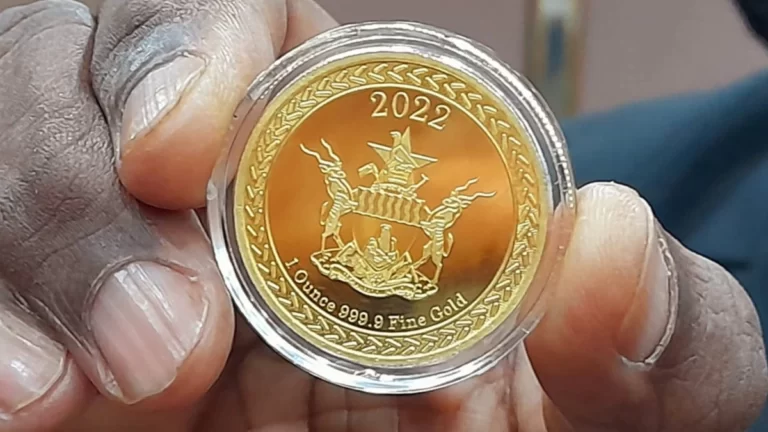
MOSI-OA-TUNYA GOLD COIN PRICE 05 OCTOBER 2022

0

MOSI-OA-TUNYA GOLD COIN PRICE 05 OCTOBER 2022

CURRENCYSELLING PRICE
USD1,800.59
ZAR31,808.19
BWP23,723.22
AUD2,773.98
GBP1,573.81
EUR1,805.65
ZWL1,170,375.58

BREAKING: How Mine gold robbery suspects caught

0

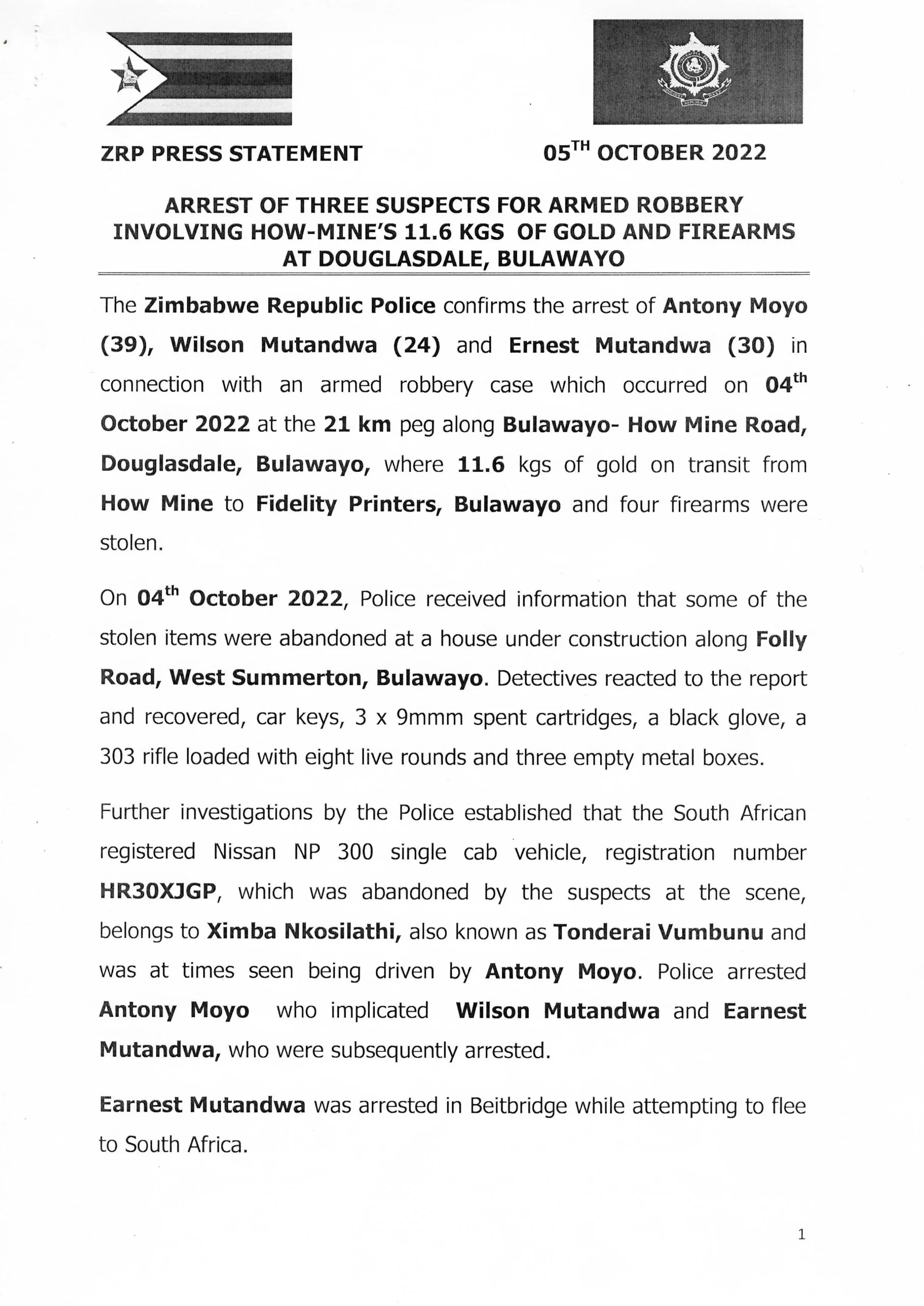
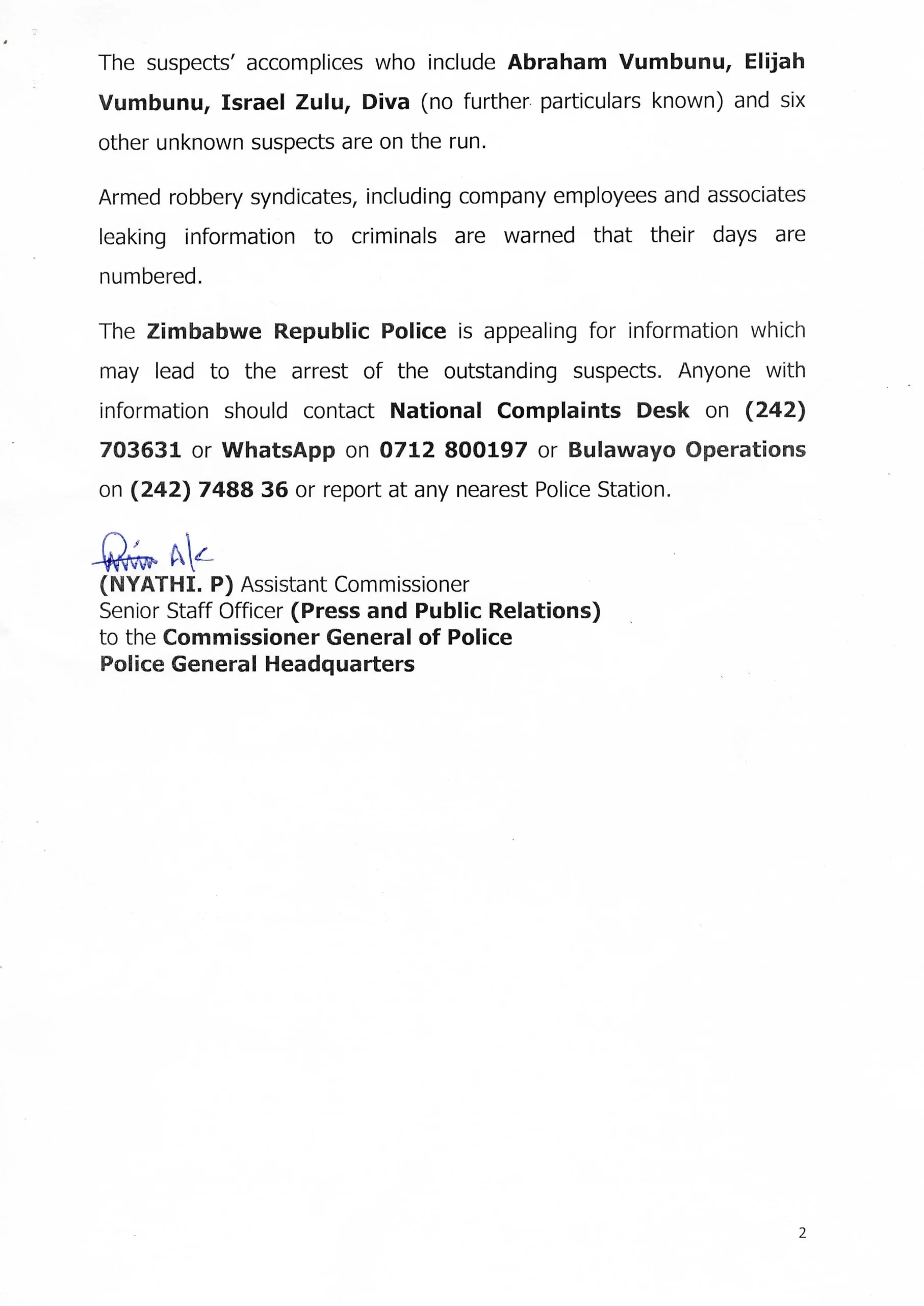
The Zimbabwe Republic Police has arrested three suspects in connection with the theft of 11,6 kg of gold belonging to How Mine.

In a statement, Police said that Antonio Moyo (39), Wilson Mutandwa (24) and Enerst Mutandwa (30) are in Police custody.

How Mine robbery 1 How Mine robbery 2


Gold buying prices Wednesday 5 October 2022

Fidelity Gold Refinery (FGR) official gold buying prices Wednesday 5 October 2022.

SG 90% AND ABOVE US$52.37/g
SG ABOVE 85% BUT BELOW 90% US$51.54/g
SG ABOVE 80% BUT BELOW 85% US$50.99/g
SG ABOVE 75% BUT BELOW 80% US$50.44/g
SAMPLE BELOW 10g BUT ABOVE 5g US$49.62/g
FIRE ASSAY CASH US$52.37/g

NB: Fire Assay cash price is for gold above 100gs and no sample is deducted.
For FireAssay Transfer price, a sample of not more than 10g is deducted
2% royalty is charged on all deposits (Small-scale Miners)
5% royalty is charged on Primary Producers

Cash available. Fidelity Gold Refinery prices will be changing daily in relation to world market prices.

BME raises safety bar with high current detonator testing

0

Blasting and explosive solutions provider, BME is once again pushing the boundaries of safety with its world-class initiation system, this time testing the resistance of its AXXIS Titanium electronic delay detonators (EDDs) to high current AC voltages.

“There are a number of different voltages that underground mines employ for their various machinery and equipment,” said Tinus Brits, BME’s Global Product Manager – AXXIS™. “The tests we carried out with an independent research partner were able to show that the AXXIS Titanium™ EDD is very resistant to high current AC voltages.”

The Department of Minerals Resources ARP1717 certification is relevant to this aspect of blasting providing a foundation for the safety levels expected from blasting equipment, said Bennie van Nieuwenhuizen, quality manager for AXXIS™.

“In line with our innovation focus and our commitment to safety, the tests we conducted were to push the boundaries even further in the interests of safe blasting and mining,” said Van Nieuwenhuizen. “We were therefore interested in characterising the response of our detonators at far higher currents and voltages than the standards require.”

The context for these tests is that EDDs are typically deployed in mining environments where the range of energy levels is difficult to predict – as every mine will have their own preferred power supplies. In some mining applications, EDDs are used near electrical wires or electric initiation systems.

“This gives rise to the risk that the EDDs could be exposed to high voltages and currents due to human error or equipment failure,” said Andries Posthumus, AXXIS™ product development manager. “It is therefore important that EDDs should have resistance to initiation when unintentionally exposed to high voltage and current.”

He highlighted that the AXXIS Titanium™ EDD consists of an encapsulated electronic module, with an electronic printed circuit board that is over-moulded with a plastic material in a proprietary shape.

The area closest to the explosive part of the detonator forms a friction fit, as the detonator tube is tapered to the bottom. This forms a seal mechanism, isolating the electronic components from the pyro-technic head and base charge.

The testing protocol required specialised high-power inputs, so BME partnered with the National Electrical Test Facility (NETFA), said BME electronic engineer Hendrik van Niekerk.

“The tests involved a high current AC voltage source consisting of a live node, connected through a resistor to the one wire of the detonator, and the neutral node to the other wire of the detonator,” said Van Niekerk. “A remote contactor was used to start the AC exposure, while we measured the voltage with a high voltage probe and measured the current level with a current probe.”

The test levels were pushed to extreme levels not expected in normal operating conditions and in all
the samples tested, no initiation occurred.

“We were pleased with the results of the tests, which showed that BME continues to operate at the
highest levels of safety,” said Brits. “Our innovative approach ensures that our ongoing research and
testing finds new opportunities for safe and efficient blasting.”

Small-scale mining sector records 100 deaths

0

MORE than 100 people died in mining accidents recorded across the country in the smallscale mining sector since January this year.

The figure excludes accidents that happened at big mines.

Addressing safety and health officers attending the ongoing Safety and Health at Work (SHAW) 2022 conference in Victoria Falls, Mr Winston Maenzanise, a director in the Ministry of Mines and Mining Development, said there has been a sharp increase in mine fatalities in the last five years.

He said the major causes of the accidents, especially in the informal mining sector, include improper mining methods, lack of defined mining methods, use of improper equipment and operating machinery under the influence of alcohol.

“More than 75 percent of the accidents recorded involve illegal miners who are usually nomads in nature as they move from one place to another at a very alarming rate,” said Mr Maenzanise.

He said in 2020 there were 84 accidents and 93 deaths.

In 2021, 68 people were killed in 51 accidents and 47 of the deaths were a result of collapse of ground while nine died from inhaling gas and 12 from shaft accidents.

This year, nine fatal accidents have been recorded in illegal mines and 18 in registered mines, causing 107 deaths.

Some of the accidents were attributed to disregard of regulations and use of improper equipment.

“Illegal miners lack competence levels and have no safe mining methods training. They also do not hold blasting licences. Some of the accidents across board were a result of lack of proper and defined mining methods,” said Mr Maenzanise.

He said some operations use windlasses beyond 30 metres despite the law stipulating that they should be used only up to 30 metres.

They also use nylon ropes which usually snap while others rely on human effort on windlasses that usually have no locking mechanism and have poor mine support.

“Some, especially illegal miners, have shafts too close to each other while also working on back filled areas and also use explosives without knowledge,” said Mr Maenzanise.

He said there is a need for miners to acquire skills and knowledge through training.

“Winches and hoists should be used for shafts deeper than 30 metres and these should be fitted with a locking mechanism and using steel rope instead of nylon ropes with proper mine support. Shafts should be at least 40 metres apart, avoid pillar robbing and avoid working in back filled areas,” said Mr Maenzanise.

He said mining areas should also be well ventilated and miners should invest in gas monitors while adhering to four-hour re-entry periods.

Some of the fatalities were recorded in Mzingwane River in Matabeleland South and Battlefields in Mashonaland West where illegal miners carry out operations on rivers.


The Chronicle