

Home Blog Page 319

Premier African Minerals shares plunge 40%

0

Shares in Premier African Minerals plunged 40% on Monday after the company declared force majeure at its Zimbabwe lithium mine, citing a defect at its processing plant.

A Premier statement said the plant could not produce sufficient spodumene concentrate to meet the conditions of its offtake agreement with China’s Canmax Technologies.

Chinese lithium battery company Canmax last year provided $35 million for the construction of a pilot plant at Premier’s Zulu lithium project in exchange for the annual supply of up to 50,000 metric tons of spodumene concentrate.

Premier said it issued a force majeure notice to Canmax on June 25 because milling problems at its recently completed plant had affected production plans. The plant contractor was working to resolve the problem, it added.

“The company is unable to deliver product within the stipulated dates as set out in the agreement,” Premier said.

Triggering a force majeure clause in contracts allows certain terms of an otherwise legally binding agreement to be ignored because of unavoidable circumstances.

The two parties are negotiating possible changes to the current agreement, Premier said, adding that Canmax has proposed to convert its $35 million cash injection into debt or shares. Canmax is also a 13.38% shareholder in Premier.

A Canmax representative was not immediately available for comment.

Hinting at a growing rift between the companies, Premier said it was reconsidering its exclusive relationship with Canmax, having received approaches from competing lithium processors in China and Europe.

“To date, Premier has resisted serious review of any of these approaches in the light of the agreement with Canmax. However, in the context of the current stage of discussions with Canmax in respect of the amended agreement, Premier will now engage with these other interested parties,” it said.

Premier African Minerals Limited

Premier African Minerals Limited is currently developing a portfolio of strategic metals and mineral projects located across Africa.

Premier is an emerging tungsten producer from the RHA Tungsten Mine and is advancing the sizeable Zulu Lithium and Tantalum Project in Zimbabwe. In addition, the Company has an interest in MN Holdings Limited, the owner and operator of the Otjozondu Manganese Mining Project in Namibia.

The Company has accepted a share offer by Vortex Limited (“Vortex”) for the exchange of Premier’s entire 4.8% interest in Circum Minerals Limited (“Circum”), the owners of the Danakil Potash Project in Ethiopia, for a 13.1% interest in the enlarged share capital of Vortex. Vortex has an interest of 36.7% in Circum.

Premier has a long history of project discovery, acquisition and development across Africa and the Company is managed by a dedicated team of professionals which have a strong track record is project development and value creation.
London company secures a 2-year option on Gold project in Matabeleland

0

Kavango Resources, a London-based metals exploration company with a focus on Southern Africa, has announced its acquisition of an exclusive two-year option for a gold exploration project in Matabeleland, Zimbabwe.

The Nara project is comprised of 45 contiguous gold claims which Kavango believes can potentially host a bulk mineable gold deposit.

The project area has held historic high-grade underground mining and continuous surface small-scale mining and custom milling over the last three decades. From this, there have been approximately 150,000 to 250,000 metric tonnes of tailings generated. This presents a separate opportunity for potential near-term revenue generation as well. Kavango will have full access to the project area to conduct field due diligence including but not limited to surface mapping and geochemistry, geophysics, surface drill testing, underground sampling, underground drill testing, and assessing the commercial potential for processing the tailings through a comprehensive exploration program. Before deciding to exercise the option to acquire the Nara project, Kavango will complete its exploration programme.

“The greenstone belts in Zimbabwe host prospective rocks for bulk-mineable gold deposits, according to Kavango’s internal review and analysis. Many of these belts share notable similarities with some of Australia’s most prolific gold-producing regions.

“Zimbabwe has a strong tradition of mining. However, exploration and investment have been severely limited over recent decades. In 1980, Zimbabwe produced more gold than Australia, but the country has yet to experience the bulk-mining boom Australia did midway through that decade.

“We believe this presents a significant opportunity for Kavango and a commercial discovery,” comments CEO Ben Turney.

Nara Project Option Terms

Kavango has entered a 2-year exclusive binding option to buy outright 45 gold claims in Matabeleland, Zimbabwe (the “Nara Project”). The 2-year option period will allow Kavango to perform an appropriate exploration program to assess the Nara Project’s potential.

To exercise the Option, Kavango has agreed to pay the holder of the current claim (the “Vendor”) US$ 4 million cash (the “Acquisition Price”).

Kavango has agreed to pay an option fee to the Vendor of up to US$220,000 over the 2-year option period, split into 4 individual payments of US$55,000 each payable at the start of each half-year of the option period (the “Option Payments”).

In the event Kavango exercises the Option, any Option Payments paid to the Vendor will be deducted from the Acquisition Price.

Kavango will commit to spending US$ 1 million on exploration at the Nara Project over the 2-year option period, with a minimum exploration spend of US$500,000 in the first year. Should Kavango not exercise the Option, Kavango will turn over all exploration data to the current operator of the stamp milling operation at the Claims (the “Current Operator”), together with recommendations (where possible) on future development.

Kavango has the right to exercise the Option at its sole discretion, subject to the Company being up to date with the Option Payments and spending commitments. Kavango has the right to cancel the Option at any point during the option period and to exercise the Option at any time during the option period.

Govt taking measures to support iron and steel industry

0

Zimbabwe’s government is actively supporting the iron and steel industry to boost local production, scrap metal processing, and infrastructure development at lower costs, Chief Director in the Ministry of Industry and Commerce Dr Douglas Runyowa has said.

Rudairo Mapuranga

Speaking at the inaugural ceremony of the Strategic Leadership Association for Zimbabwe Engineering Iron and Steel industry (Slazeisi) Dr Runyowa said the government is working on the achievement of higher levels of economic productivity through diversification, technological upgrading and innovation, with a focus on high value-added and labour-intensive sectors.

“In order to achieve the targets set out in NDS1, the Government is working on the achievement of higher levels of economic productivity through diversification, technological upgrading and innovation, with a focus on high value-added and labour-intensive sectors; and The process of rebalancing the economy and reverse the structural regression is central to stimulating inclusive and sustained growth pattern that enables more people to benefit from higher productivity levels in more advanced segments of the economy.

“Government is taking deliberate efforts to support the Iron and Steel and General Engineering Industry in order to achieve the following:-

  1. Increased availability of locally produced iron and steel products; and
  2. Increased processing of scrap metal,” Dr Runyowa said.

He said that the government has created strategies to resuscitate the iron and steel industry through His Excellency Emmerson Mnangagwa’s open-for-business mantra.

“The following strategies are being implemented in order to resuscitate the  iron and steel and general engineering industry:-

  1. Secure investors in the iron and steel industry
  2. Resuscitate steel foundries and use of modern technologies in the sector;
  3. Process scrap metals into new steel products;
  4. Strictly controlling scrap metal exports to ensure adequate throughput to domestic foundries;
  5. Promotion of manufacturing of steel billets from scrap metal;
  6. Facilitate the increased supply of coal and electricity to the iron and steel industry;
  7. Enhance coke production for local foundries; and
  8. Resuscitate the machine tools and accessories manufacturing subsector” he said.

Speaking at the same event SLAZEISI Chairperson Canaan Dube said his Association was taking measures to create a vibrant, dynamic and competitive sector anchored on smart and strategic value chain linkages that fully embrace adaptive and smart technologies to the local industry so as to produce world-class iron and steel products.

He said Slazeisi was going to fetch an annual revenue of over USD6 billion annually by 2026 and the same time directly employ 50 000 people by the same year.

“Our vision is to be a vibrant, dynamic and competitive sector anchored on smart and strategic value chain linkages that fully embrace adaptive and smart technologies to locally and sustainably produce world-class value-added engineering, iron and steel products and services, thereby generating USD 6 Billion annually and employing 50,000 people by “2026” and to be the preferred provider of high quality and globally competitive value-added engineering, iron and steel products and services for the domestic and regional market through the use of smart, sustainable and locally adapted technologies to create employment for the nation and improve the country’s Gross Domestic Product,” Dube said.

Key pillars for success

  1. A strong primary and secondary steel production cluster with adequate capacity to supply globally competitive products to supply the down-stream industry
  2. Use of locally adaptive but globally competitive technologies for value addition throughout the value chain
  3. Identification of attractive and strategic value chains with great impact at the sectorial level and the creation of dynamic and functional value chain linkages to produce globally competitive value-added engineering, iron and steel products.
  4. Securing viable funding for value chains with strong business cases and establishing innovative and dynamic ways of minimizing risk and exposure of investment funders and businesses by creating and guaranteeing a business-friendly environment –ENABLING ENVIRONMENT
  5. A strong and dynamic human capital base to produce competent and adequate skills for the strategic value chains of the sector
  6. Strong and dynamic sector representation and support pillars for advocacy, marketing, business support network and benchmarking
  7. Establishment of a dynamic, inclusive and effective implementation strategy with the participation of key stakeholders like firms, professional bodies, sector representative bodies, MSMEs, R&D, Academia, Energy and Power Suppliers, Technology Suppliers, Government Departments; Funding Institutions, etc. The Result Oriented Implementation Strategy shall be underwritten by Sector Strategy Implementation Coalition Agreements.
  8. A Business-Friendly Operating Environment Based on Business-Friendly Policies
  9. Monitoring, Evaluation and Review of Sector Strategy Implementation

Strategies to meet the targets

  1. Establish stable and sufficient primary steel and other basic materials production capacity to meet the present and future needs of the sector –To address the SCARCE RAW MATERIALS & FOREX NEEDS FOR IMPORTING THE SAME
  1. Establish a well-defined, transparent and Local Scrap Value Chain that ensures maximum utilisation of local scrap for the local industry to increase capacity utilization of subsectors such as primary steel production and foundries. SCRAP EXPORTS A HOT ISSUE
  2. Import Substitution and Exports promotion for engineering, iron and steel products and services: LOW EXPORTS & HUGE INFLUX OF IMPORTS –EXPORT CONSTRAINTS A HOT ISSUE
  3. Strengthening and Capacitation of Industry representing institutions for advocacy work; performance monitoring and review: ENABLE GOOD GOVERNANCE AND SYNERGIES
  4. Establish robust and inclusive funding facilities for CAPEX and Working Capita for the attractive and strategic local engineering, iron and steel value chains: OBSOLETE TECHNOLOGY AND LACK OF WORKING CAPITAL THROTTLING COMPETITIVENESS AND CAPACITY UTILISATION
  5. Human capital development through synergies with training institutions and technology suppliers to enhance competitiveness: LACK OF INNOVATION; R&D AND COLLABORATION BETWEEN INDUSTRY AND TRAINING AND ACADEMIC INSTITUTIONS
  6. Inclusion of MSMEs and Formalization of the EIS Informal Sector:

Zimbabwe gold buying prices 26 June 2023

Fidelity Gold Refinery (FGR) official gold buying prices Monday 26 June 2023. See the Zimbabwe gold buying prices today.

SG 90% AND ABOVE US$58.65/g
SG ABOVE 85% BUT BELOW 90% US$58.03/g
SG ABOVE 80% BUT BELOW 85% US$57.41/g
SG ABOVE 75% BUT BELOW 80% US$56.79/g
SAMPLE BELOW 10g BUT ABOVE 5g US$55.86/g
FIRE ASSAY CASH US$58.96/g

NB: Fire Assay cash price is for gold above 100gs and no sample is deducted.
For the Fire Assay Transfer price, a sample of not more than 10g is deducted
A 2% royalty is charged on all deposits (small-scale miners)
A 5% royalty is charged to Primary Producers

Cash available. Fidelity Gold Refinery prices will be changing daily in relation to world market prices.

Shamva Mine Explores New Technology Options to Cut Costs

0

Shamva Mine utilises pneumatic powered equipment for drilling, including various techniques like Underhand stoping and long-hole stoping as well as underground development General Manager Gift Mapakame told journalists at a Media Tour held at the gold mine recently.

The Kuvimba Mining House (KMH) owned mine also handles subsequent blasting operations with Underground Bulk Emulsions, which are handled using portable emulsion pumps.

However, according to Mapakame, Shamva Mine is currently exploring technology options to replace pneumatics as it appears costly to run. The decision to explore new technologies is supported by statistics that show an increasing cost of operations due to the use of pneumatics.

“Shamva Mine utilizes pneumatic powered equipment for drilling. This is inclusive of Underhand stoping and long-hole stoping as well as underground development.  Subsequent blasting operations are carried out with Underground Bulk Emulsions which are handled using portable emulsion pumps. The mine is currently exploring technology options to replace pneumatics as it appears costly to run” Mapakame said.

Shamva Mine’s decision to explore new technologies is strategic, considering the current economic climate in Zimbabwe.

Moreover, the mining company’s decision is also a reflection of the global trend towards sustainability. Industries worldwide are moving towards more environmentally-friendly options, and Shamva Mine’s decision aligns with this trend. The move away from pneumatic-powered equipment is likely to reduce the environmental impact of mining operations and contribute to the global effort to reduce carbon emissions.

As Zimbabwe’s economy struggles, the move to cut costs is a strategic one to stay viable in the long run.

Manhize a complete mining value chain project, Chitando

0

The Minister of Mines and Mining Development Hon Winston Chitando has labelled the Dinson Iron and Steel project in Manhize as a complete mining and comprehensive value addition project which is in line with the US$12 billion mining industry.

Rudairo Mapuranga

Speaking at the handover ceremony of a mining lease to Dinson Iron Steel Company at Zimbabwe Mining Development Corporation (ZMDC) on last week Chitando said the project is almost a whole mining ecosystem on its own.

“The Dinson project is really a typical example of a mining and a comprehensive value addition project which is almost an ecosystem on its own. If you look at the minerals involved, the value chain from coal up to coke, the value chain of iron ore, limestone, and ferrochrome it is really a typical example of a Consolidated value addition program which is in line with our US$12 billion target,” Hon Chitando said.

The Dinson Iron and Steel Company (DISCO) Steel Plant is one of the Tsingshan Group of China’s mining projects in Zimbabwe. Tsingshan Group is one of Zimbabwe’s most prominent mining investors with various other projects such as Afrochine Smelting (Pvt) Ltd in Selous, Mashonaland West which is into chrome smelting and Dinson Colliery (Pvt) Ltd in Hwange, Matabeleland which is into coke production. All these projects are interlinked as both ferrochrome and coke are required in steel production.

The coming of Disco has been dubbed as an accomplishment of another milestone towards the successful development of the mining sector and the national economy at large. According to the Minister of Mines and Mining Development, Hon Winston Chitando, “This is another step forward as we work towards the achievement of a USD12 billion mining industry by 2023 and ultimately feed into the national vision of Zimbabwe becoming an Upper-Middle Income Economy by the year 2030.”

About Dinson Iron and Steel project

The investment span of the project is from exploration to mining, beneficiation, and value addition. Therefore, covering the entire iron and steel value chain which will result in the creation of jobs, infrastructure development of participating provinces, generation of foreign currency and eventually contributing to the economy of Zimbabwe.

DISCO (Pvt) Ltd was granted a Mining Special Grant Certificate (SG7126) in March 2021 which gave them the permission to explore and mine iron ore along the Mwanesi Range.

DISCO Pvt Ltd Company is going to invest a total of US$ 1 billion for the whole project. This amount will be invested for a period of 5 to 7 years. However, this amount can be doubled depending on other emerging business opportunities. On the other hand, DISCO is going to attract other supporting partners within the zone which will see an escalation of the envisaged investment.

This integrated Iron and Steel manufacturing plant will be designed to manufacture carbon steel by the chemical reduction of iron ore using an integrated manufacturing process. The iron from the blast furnaces is converted to steel in a Basic Oxygen Furnace (BOF) as well as in Electric Arch Furnaces (EAF).

The Basic Oxygen Furnace will be utilized for high tonnage production of carbon steel while the Electric Arch Furnace will be targeted for low tonnage speciality steel. In the Basic Oxygen Furnace process, coke-making and iron-making will precede steelmaking as the main feedstock for the furnaces.

Platinum exports expected to decrease 37%

0

Revenue from Zimbabwe’s platinum exports is expected to plummet by 37% to US$413,1 million this year as a result of falling commodity prices and power issues that have disrupted production in the mining sector, a government official has said.

The Southern African nation has been battling a serious power crisis, which worsened after output at the hydroelectric power station was rattled by low water levels on Lake Kariba.

As a result, power outages have over the past months been grounding industries for up to 18 hours a day, triggering extensive production costs.

However, electricity supply is expected to improve drastically in the third quarter as Hwange Unit 7 was successfully synchronised with the national grid last month, while Unit 8 is currently undergoing test runs, which have seen a reduction in power outages in the past weeks.

These two units have a combined 600 megawatts installed capacity.

“Our projections to 2030 also reflect that trend where platinum production will be declining in the near future,” Mines and Mining Development permanent secretary Pfungwa Kunaka told the Zimbabwe Independent this week.

“Challenges such as electricity shortage and fall in commodity prices appear to be the factors that will negatively impact on production and lead to lower output.

“This notwithstanding in terms of platinum reserves and output, Zimbabwe is a force to reckon with, standing at number three behind South Africa and Russia. Our export revenues reached US$660,9 million in 2022 and (are seen declining) to US$413,1 million in 2023.”

According to the Chamber of Mines of Zimbabwe 2022 annual report, platinum output is expected to increase to 16 000 kilogrammes this year, while palladium is seen reaching the 13 600kg mark.

“The anticipated increases are expected to emanate from ongoing capital projects across active players while in the medium to long term, new projects including Karo Resources, Todal and GDI (Great Dyke Investments) are expected to boost PGMs (platinum group metals) production,” it said.

The three PGM operations of Zimplats, Mimosa Mining Company and Unki Mines continued to operate at (near) full capacity utilisation in 2022.

Karo Resources officially commenced construction operations during the year, while Todal advanced the development of the project in the same period.

PGMs production for 2022 increased across most of the metals in the basket. Platinum achieved 15 480kg, palladium (12 927kg), rhodium (1 366kg) and ruthenium (1 362kg).

Key matters for the PGMs industry included upward review in royalty for platinum from 2,5%, to 7% and export tax on unbeneficiated PGMs.

The developments also came as Zimbabwe is expected to be the biggest beneficiary of platinum shortages later this year, with the global market projected to suffer a short supply of 983 000 ounces, the largest deficit since the 1970s, according to the World Platinum Investment Council (WIPC).

Analysts see the supply deficit as a way to shore up prices, a development that could work in favour of Zimbabwe, the world’s third-largest producer after Russia and South Africa, which anticipates increased output this year.

The price of platinum on the international markets continues to rebound, as traders worry about the projected deficit in the second half of this year.

WIPC has cited a number of market developments during the first quarter of 2023, which in aggregate, the council contends will have a significant negative impact on market balances, hence its deficit outlook for the year.

The government has been encouraging foreign investment in the mining industry to boost production and generate much-needed forex revenue for the country.

Zim Independent

Two bodies retrieved at Ran Mine

0

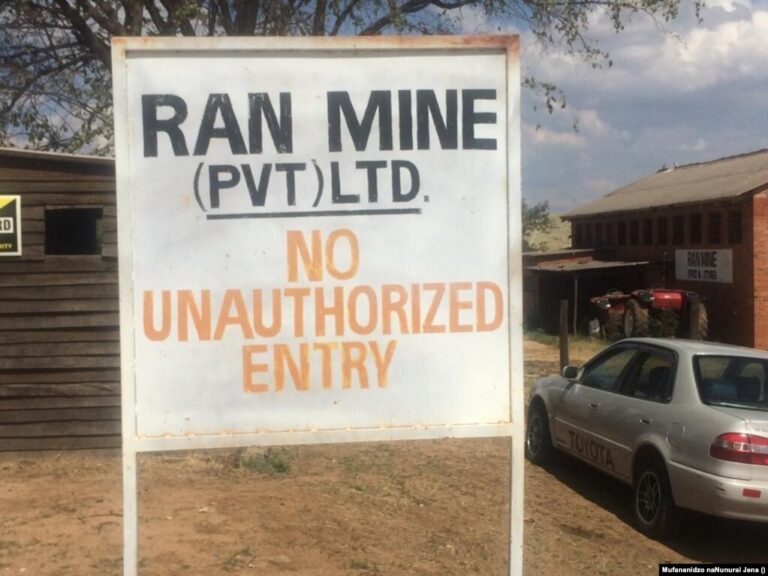
The Zimbabwe Republic Police (ZRP) has said that two bodies have been retrieved following the mine collapse incident at Ran Mine in Bindura on Thursday.

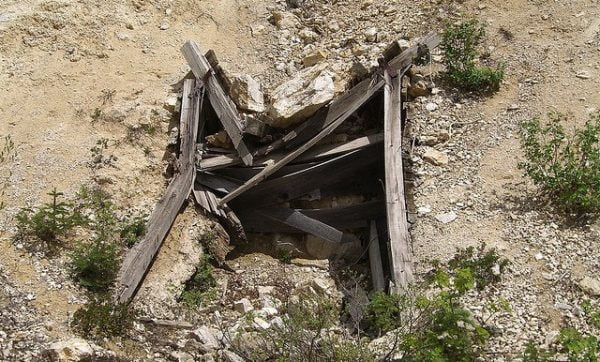
Updating the nation on the incident that happened on June 24th 2023, Police said the rescue team successfully retrieved the bodies of two artisanal miners who were trapped in the collapsed shaft. However, it is now being suspected that five other miners remain trapped, with the rescue team working to access the area where they are presumed to be.

“Update on mine trapping incident at Ran Mine, Bindura. On 24/06/23, two bodies of the trapped artisanal miners were retrieved. It is being suspected that five other artisanal miners remain trapped in the mine,” the Police said on its Twitter page.

According to Zimbabwe Miners Federation (ZMF) Mashonaland Central Chairperson, Christina Munyoro, the trapped individuals might have dug through supporting pillars, leading to the fall of ground.

Ran Mine was closed 13 years ago and retrenched workers remained behind to informally mine for residual gold.

In 2020 Dozens of informal miners were trapped underground after blasting some of the pillars which led to the collapse of the disused gold mine.

The Ran Mine tragedy is not an isolated incident, as mine accidents in Zimbabwe have been on the rise with the country recording 125 accidents and 139 fatalities during the first three quarters of 2022. The figures are of great concern to the government, which has been working to establish more stringent penalties for mines that fail to uphold safety and health standards.

In 2019 Zimbabwe recorded a total of 116 accidents with these resulting in 182 fatalities, recording an increase in accidents in 2020 recording 158 accidents however with a visible decrease in fatalities recording 169 fatalities. In 2021, the country recorded a decrease in both accidents and fatalities as compared to the previous year with 121 accidents and 139 fatalities. As at 30 September 2022, the country recorded 125 accidents and 139 fatalities.

6 trapped at Ran Mine, rescue team unable to access the area

0

Between four to six illegal miners are feared dead after a shaft they were working in collapsed at Ran Mine in Bindura on Thursday with the rescue team unable to access the area where the miners are trapped, it has been revealed.

Rudairo Mapuranga

Speaking to Mining Zimbabwe, Zimbabwe Miners Federation (ZMF) Mashonaland Central Chairperson Ms Christina Munyoro said the illegal miners might have dug through supporting pillars leading to the fall of ground.

“The information we have gathered so far points that 4-6 people are trapped underground. The rescue team seem not to find a way to go to the area where these people are trapped. We will continue to pray that a miracle happens but at the same time accept that the unthinkable might have happened,” Ms Munyoro said.

In 2020 about 40 illegal miners were trapped at Ran Mine after a disused mine shaft collapsed.

Mine accidents in Zimbabwe have been on the rise with the country recording 125 accidents and 139 fatalities during the first 3 quarters of 2022, a government official said.

Speaking at the National Mine Rescue competition at Jena Mine in Silobela last year, Deputy Chief Government Mining Engineer said the Mine Rescue Association should up its sleeves to help the Artisanal and Small scale miners who have contributed to the majority of the fatalities.

He also said that the office of the Chief Government Engineer was also taking the responsibility of reaching the zero harm squarely and would work closely with the Mine Rescue Association.

In 2019 Zimbabwe recorded a total of 116 accidents with these resulting in 182 fatalities, recording an increase in accidents in 2020 recording 158 accidents however with a visible decrease in fatalities recording 169 fatalities. In 2021, the country recorded a decrease in both accidents and fatalities as compared to the previous year with 121 accidents and 139 fatalities. As at 30 September 2022, the country has recorded 125 accidents and 139 fatalities.

“I note with great concern that the years 2019 to date, witnessed some serious increase in mine accidents and fatalities.

“These figures are unacceptable with an expectation of a vision of establishing a zero accident potential for all mines of Zimbabwe. Mine safety must be treated as a top priority by the entire workforce.

“In Zimbabwe, nearly one miner dies every week on an average over the last five years, 139 killed over the last nine months of 2022 indicates the disturbing trend,” He said.

The Deputy Chief Government Mining Engineer said the government was working to establish very deterrent penalties on mines that do not uphold safety and health standards.

“I understand your association has noted the adverse impacts of these losses whilst you will be taking the responsibility squarely on your shoulders, the Chief Government Mining Engineer is in the process of putting in place deterrent penalties to make compliance a better option.

“We must not allow situations of this nature where occurrences of mine accidents take one life and cause loss of millions of dollars.

“My office has been running around the country to do awareness campaigns with small-scale miners and believe the message has sunk in the small-scale mining sector. They have since taken it upon themselves to try and copy you the big brother with the assistance of the Zimbabwe School of Mines,” he said.

Zimbabwe has been plagued with mine disasters over the last few months, often resulting in the death of scores of miners. Most of the mine accidents have occurred at illegally run disused mines, with a few happening at legally-run small scale mines.

Women participation, professionalism highlighted Young Miners yield day in Mberengwa

0

In an endeavour to ensure that Young Miners contribute significantly to the US$12 billion mining industry, the participation of women together with formalisation and professionalisation of the small-scale and artisanal mining industry were key takeaways at Young Miners Forum (YMF) 13 Anniversary, Awards and Field day held at Clifton 15 Gold Mine in Mberengwa last week.

Rudairo Mapuranga

Speakers at the Event highlighted the importance of professionalising the ASM sector at the same time including female participation to build a world-class ASM industry which would lead to the attainment of the US$12 billion industry.

Speaking to Mining Zimbabwe on the sidelines of the field day YMF CEO Payne Farai Kupfuwa said his organization was continuing to rewrite and redefine the ASM to a professional industry that has government confidence in economic resuscitation.

“The idea behind the Young Miners field day was inspired by Agriculture field day where we identify a successful young miner and invite other young miners to learn how to run a successful mining venture. We are continuing with rewriting and redefining the small-scale mining narrative as we continue to advance and upscale youth entrepreneurship in the small-scale mining industry by formalising and professionalising the sector. We are moving in line with the attainment of the US$12 billion mining economy, we also have young miners who are focusing on the value chain, beneficiation and equipment supply,” Kupfuwa said.

YMF patron Ms Mupawaenda speaking at the event said her organisation was determined to empower women in the whole mining value chain as this would bring sustainable growth and development of the industry.

“As YMF we are pledging not to leave anyone behind especially young women by having promotional workshops to inspire and encourage them to consider mining as a career, to give them support as they enter into the sector, to find ways to encourage those who are already involved to get formalised by registering their companies, to buy claims, EPOs, to support each other and for the male young miners to work together with the female young miners in order to achieve our 2023 sustainable mining economy valued at 4US$12 Billion,” she said.

Mr Ronald Mugangavari, Director and CEO of Clifton 15 Gold Mine, served a speech to aspiring mining entrepreneurs on the aspect of formalization and growing big in the sector. He applauded the YMF CEO, Mr Payne Kupfuwa, for facilitating a platform that improves and helps the young miners achieve their dream.

Zimbabwe Women in Mining Association (ZAWIMA), was represented by Mrs Kundai Chikonzo Midzi, who applauded the female award winners for a job well-done in their endeavours in the mining industry, urging the participation of more women in the sector and their astonishing role in value addition.