Home Blog Page 34

Premier Says Interim Zulu Audit Supports Shift to New Xinhai Flotation Plant

0

London Stock Exchange–listed mining and exploration company Premier African Minerals Limited has released an update on the ongoing technical audit of the Zulu Lithium Project, confirming that interim results from the independent engineering review support the company’s decision to proceed with the acquisition and installation of a new 15–20 tonnes-per-hour Xinhai flotation plant, Mining Zimbabwe can report.

By Rudairo Mapuranga

The interim Audit Report, delivered by a third-party engineering team, examined the entire Zulu Lithium processing plant, assessing both the existing flotation circuit and components that may be incorporated into the revised configuration. According to Premier, the preliminary findings are now being jointly reviewed by the company and the original equipment manufacturer (OEM) of the current flotation plant.

Once the OEM completes its analysis and both parties agree on the key conclusions, Premier says it will issue a further detailed update.

While still under review, the Audit Report in its current form reinforces the board’s earlier decision, announced on 30 October 2025, to move ahead with the immediate acquisition, installation, and commissioning of the Xinhai Technology Processing EPC flotation plant.

The company said the new plant offers the strongest pathway toward achieving consistent commercial-grade lithium concentrate at stable recoveries—something that the existing plant has struggled to deliver since initial commissioning.

Premier is also awaiting the OEM’s final position on whether the current flotation plant can be reconfigured to operate as a supplementary circuit alongside the Xinhai plant.

The company confirmed it is engaged in ongoing discussions with several potential lenders and alternative offtake funders regarding possible financing solutions tied to the prepayment amount, including interest, owed under the Canmax Offtake Agreement.

However, Premier cautioned that progress on any refinancing or restructuring arrangement remains contingent on Zulu demonstrating continuous and consistent production at the required grade and tonnage levels.

“There can be no guarantee that these discussions will result in a successful outcome,” the company said, adding that any eventual agreement would need to be secured on terms acceptable to both Premier and its financiers.

Managing Director Graham Hill said the interim audit findings include “practical suggestions” for improving the stability and performance of the existing plant, particularly regarding its flotation configuration.

Hill noted that the auditors concluded that the overall process design is appropriate and that Zulu’s ore is “definitely amenable” to the selected processing route.

“The Audit Report will be extremely valuable in helping us ensure that the current flotation plant can ultimately serve as a supplement to the Xinhai Flotation Plant,” he added. “However, our immediate priority is the Xinhai Flotation Plant, as it offers the strongest assurance of achieving the earliest possible commercial production.”

The Zulu Lithium Project, located near Fort Rixon in Zimbabwe, has long been positioned as Premier’s flagship asset. However, repeated delays in achieving stable production have led to increasing scrutiny from investors and a restructuring of the company’s approach under new operational leadership.

The installation of the Xinhai flotation plant marks Premier’s most decisive step yet toward overcoming these long-standing technical bottlenecks and bringing Zulu into full-scale commercial output.

Sandawana Mines Ploughs $475,000 into the Community

0

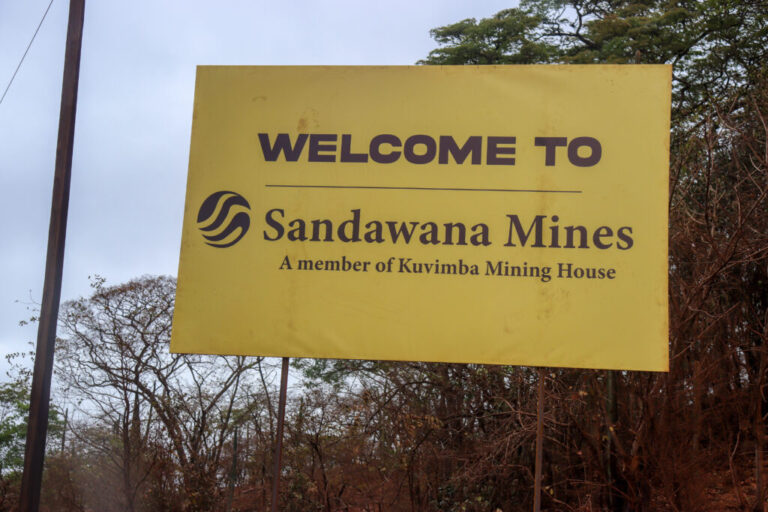
MBERENGWA – In a powerful demonstration of its commitment to sustainable development, Sandawana Mines has disclosed an investment of approximately $475,000 in Corporate Social Responsibility and Management (CSRM) in 2025, targeting critical infrastructure, social cohesion, and community welfare in the Mberengwa district, Mining Zimbabwe can report.

By Rudairo Mapuranga

The detailed breakdown of these initiatives was a central pillar of the address by General Manager William Gambiza during the recent Sandawana Mines Build, Operate, and Transfer (BOT) update meeting held at the mine on Wednesday.

Sandawana Mines Ploughs $475,000 into the Community 2

The gathering, which also covered production updates, served as a platform for the company to reaffirm its role as a “good corporate citizen” and to showcase its tangible contributions to the communities that host its operations.

The most substantial portion of the CSRM expenditure, close to $400,000, has been dedicated to a critical infrastructure project: the repair and upgrade of the 60-kilometre gravel road connecting the mine to the main highway at Beitbridge. Gambiza reported that this project is now 75% complete, following three months of intensive work.

He provided a vivid picture of the scale of this undertaking, noting the deployment of a dedicated fleet of road equipment, including graders, compactors, excavators, loaders, tippers, and a water bowser. This is not a mere stopgap measure but a serious, long-term investment in the region’s transport infrastructure, which benefits the mine and the local communities equally. Furthermore, Gambiza announced that the company is already mobilising equipment to commence work on another 53-kilometre section from Yorks to Sandawana, fulfilling a commitment made in a previous stakeholder meeting.

Beyond roads, the mine has addressed the fundamental need for clean water. A significant part of the $475,000 fund was used to drill three solar-powered boreholes, each reaching a depth of 100 meters to ensure a guaranteed water supply for the community. This initiative moves beyond temporary solutions, providing a sustainable and modern water source powered by renewable energy, which Gambiza described as “part of modernising the rural communities.”

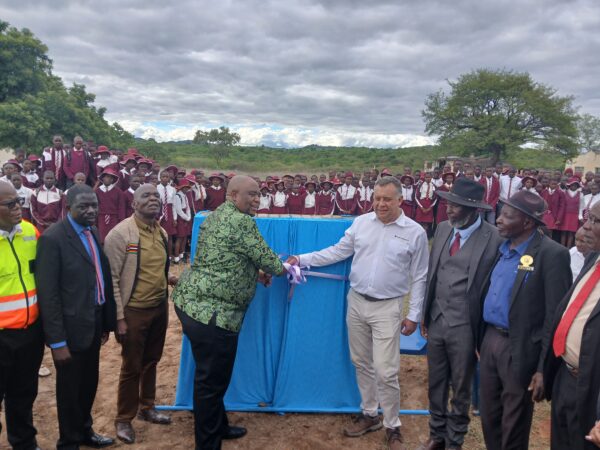
The mine’s CSRM strategy extends far beyond physical infrastructure into direct support for social institutions. A key example is the renovation of a classroom block at the Tjepvute Secondary School, whose roof was destroyed by strong winds. Gambiza explained that restoring the roof was urgent to provide a “secure learning environment” for students, especially with the rainy season and year-end examinations approaching. The commitment extends further, with plans to assist with painting, replacing doors and frames for safety, providing water, and installing tiles.

The mine also operates through local partnerships, reinforcing community structures. Gambiza highlighted support for RIDA, a local organisation, by repairing its road maintenance equipment and providing fuel. This empowers a local entity to continue maintenance work independently, creating a sustainable model for upkeep beyond the mine’s direct involvement.

Perhaps the most nuanced and impactful initiative discussed was the launch of the inaugural “Culture Exchange Day” on March 27, 2025. Gambiza candidly revealed that this event was launched following “previous adverse reports” about relations between local employees, villagers, chiefs, and the Chinese nationals working at the mine. The event was designed as a proactive intervention to bridge cultural gaps and foster mutual understanding.

The results, according to Gambiza, have been transformative. “Consequently, we are reaping the fruits of such timely interventions as the mine has not recorded a single previous case since launch,” he stated. This success has been so significant that the Culture Exchange Day will become a permanent fixture in the mine’s annual calendar, with plans to expand it to include wellness and sporting programmes. This represents a strategic investment in social capital, which is often as critical as financial investment for the long-term stability of a mining operation.

Gambiza urged all stakeholders to “guard against malicious social media reports that seek to derail the social cohesion we enjoy and achievements made to date.” This statement reflects the modern challenges faced by corporations, where online narratives can quickly undermine years of painstaking community engagement and tangible investment.

He framed the mine’s commitment through the concept of a “social licence to operate”—an unwritten contract that goes beyond legal permits and is granted by the community based on trust and demonstrated benefit. Sandawana Mines, he asserted, “jealously guards its hard-earned social licence secured through working together with all its various stakeholders.”

The comprehensive CSRM update at the BOT meeting made it clear that Sandawana Mines views its responsibilities as extending far beyond the mine’s fence line. The $475,000 investment in roads, water, schools, and social programmes is a concrete manifestation of this philosophy. By tackling the real and pressing needs of the Mberengwa community—from the daily commute on a dusty road to the education of its children and the very social harmony of the area—the mine is strategically weaving itself into the social and economic fabric of the region.

This holistic approach to community development is not merely charitable; it is a core strategic imperative. For a project of the scale and longevity of the planned lithium concentrator, a stable, supportive, and prosperous community is not just a nice-to-have—it is the essential foundation upon which a “sustainable future,” as promised by its owners, is built.

Man sentenced for 5 years for Less than a Gram of Gold

0

The recent sentencing of Tafadzwa Matsika, a 45-year-old man from Ruwa, to five years in prison for possessing just 0.096 grams of gold exposes not only the government’s strict enforcement against illegal mining but also systemic failures within Zimbabwe’s mining licensing process, Mining Zimbabwe can report.

By Ryan Chigoche

While law enforcement is critical to protecting national economic interests, cases like Matsika’s reveal the unintended consequences of bureaucratic delays that leave would-be miners without legal avenues to operate.

Matsika was arrested on August 20, 2025, at the Greencroft mine compound after mine officials received reports that he was illegally panning for gold on Chisi, a local cultural day.

Security personnel tracked him to a nearby compound, where they found the tiny packet of toasted gold. With no license to his name, he was detained and later sentenced, despite the negligible quantity.

This case highlights the practical challenges that many small-scale miners face when the legal system is slow to provide access to permits.

The Ministry of Mines and Mining Development has long struggled with a backlog of mining license applications, with some applicants reportedly waiting years before receiving permits.

One of the biggest bottlenecks is a severe shortage of vehicles at provincial offices, which are used for ground verification of mining titles.

In Mashonaland West, for instance, the Ministry reportedly operates with only one cartographer. Combined with limited vehicles, fuel, and other field resources, this staffing shortage leaves thousands of applications pending and pushes would-be legal miners into operating without permits.

As previously reported by Mining Zimbabwe, the backlog is substantial, with reports indicating around 15,000 pending applications from 2021.

While the Ministry has attempted to address this by sending dedicated teams to provincial offices, underlying constraints such as insufficient staff, funding, and outdated procedures have limited progress.

The government has sought to modernise the process through the digital Mining Cadastre Information Management System (MCIMS), designed to allow online submission of geographic coordinates and other requirements.

Although promising, the system’s rollout has been slowed by power outages, limited field equipment, and funding gaps.

The consequences of these delays are clear. Miners unable to obtain legal permits may resort to illicit mining or trade, even for tiny amounts of gold.

This not only exposes individuals like Matsika to harsh penalties but also contributes to unrecorded gold leaving the country, resulting in lost revenue.

Without timely and accessible licensing, enforcement alone cannot curb illegal mining and may even drive more miners underground.

Why This Matters — and What Needs to Change

  1. Licensing Delays Promote Illicit Activity
    When people cannot access legal permits, they may resort to illegal mining or trade — even in tiny amounts of gold. Matsika’s case is a stark example: a man jailed for less than a tenth of a gram, seemingly because he had no way to become properly licensed.

  2. Revenue Leakages
    Illicit gold production bypasses formal channels, meaning the government loses out on taxes, royalties, and proper accounting of mineral resources. Streamlining licensing would allow more miners to operate legally and contribute to the national coffers.

  3. Modernisation Is Not Yet Enough
    The new cadastre system is a positive step, but unless the Ministry addresses capacity limits (staff, funding, infrastructure), backlogs will persist. Without fully functional systems, bureaucratic reforms remain on paper.

  4. Justice Should Be Balanced with Practicality
    Punishing people for gold possession makes sense in principle, but punishments must be proportionate and paired with policies that allow legal access. Otherwise, enforcement alone will drive more miners underground.

Streamlining the licensing process is essential not only to formalise small-scale mining but also to reduce smuggling and ensure that all gold production is properly recorded.

The Ministry must prioritise clearing backlogs, strengthening cartography and verification teams, and fully implementing the digital cadastre system.

Only then can Zimbabwe create a mining sector where miners easily operate legally, revenue is accounted for, and cases like Matsika’s, jailed for less than a gram of gold, become the exception rather than the rule.

Kuvimba’s Sandawana Mines Set to Begin Construction of Zimbabwe’s Largest Lithium Concentrator Plant

0

Kuvimba Mining House (KMH) has announced that its lithium entity, Sandawana Mines, is poised to begin construction of a major lithium concentrator plant within the next four to six months, a move set to establish the operation as the largest of its kind in Zimbabwe, Mining Zimbabwe can report.

By Rudairo Mapuranga

The update was delivered by Kuvimba Mining House Group Chief Executive Officer, Trevor Barnard, at the lithium mine in Mberengwa. He addressed the community and stakeholders, including government and traditional leaders, acknowledging that the project had taken “a lot longer than what we planned initially,” but assuring them that it was now on a clear path forward following the finalisation of partnership agreements.

Barnard outlined an ambitious schedule, targeting the commissioning of the processing plant for the first or second quarter of 2027. He described Sandawana as “one of the best, if not the best, lithium resource in Zimbabwe,” highlighting the high purity and superior grade of the lithium concentrate already being produced, which he stated exceeds international standards.

A cornerstone of the announcement was the reaffirmation that Sandawana Mine will be the only lithium operation in Zimbabwe wholly owned by the nation. “This mine will belong to Zimbabwe and it will produce lithium for Zimbabweans,” Barnard stated, drawing a clear distinction from other lithium projects in the country with foreign equity holders.

The project will be executed through a Build, Operate, and Transfer (BOT) model. Under this structure, Kuvimba’s partners—the Chinese metals giants Zhejiang Huayou Cobalt Co. and Tsingshan Holding Group Co.—will finance, build, and operate the concentrator plant. In a unique arrangement, these firms will not hold any equity stake in the mine itself. They will recoup their investment and operate the plant for a period, during which they will train local personnel, before the entire operation is transferred back to Kuvimba Mining House.

Once fully operational, the mine is expected to produce over half a million tonnes of lithium concentrate annually. The long-term plan includes further beneficiation to produce lithium sulphate, in line with government policy.

With the commercial agreements now finalised, the company’s immediate focus is on completing the conditions precedent, with Cabinet approval being the most critical. Upon receiving the green light, the first visible steps on the ground will be earthworks, levelling and compacting the site for the processing plant, followed by foundation work and the installation of large-scale equipment.

Barnard concluded by reiterating Kuvimba’s commitment to its community promises, assuring stakeholders that despite the delays, all undertakings would be honoured as the project moves into its crucial construction phase.

All Set for AMMZ AGM as Industry Leaders Converge in Victoria Falls Tomorrow

0

The Association of Mine Managers of Zimbabwe (AMMZ) is all set to open its Annual Conference and General Meeting (AGM) tomorrow, with the two-day event bringing together senior mine executives, technical specialists, policymakers, equipment suppliers, and service providers from across the country’s mining sector.

By Ryan Chigoche

The AGM and Conference will be held in Victoria Falls at the Elephant Hills Resort, a venue that has become a preferred setting for high-level mining events.

Building on last year’s theme, which focused on Smart Mining, this year’s meeting will run under the theme “Sustainable Mining in a Changing World,” underscoring AMMZ’s continued emphasis on technology-led efficiency, improved safety culture, and responsible resource extraction.

Over the past few years, AMMZ has consistently structured its conferences around modernisation and resilience—a pattern that reflects broader global mining trends.

This event remains one of the most important fixtures on Zimbabwe’s mining calendar, largely because it brings decision-makers and solution providers into a shared space.

This convergence allows equipment suppliers and service companies to engage directly with mine managers, showcase new technologies, and present solutions designed to enhance productivity, improve ventilation systems, reduce downtime, and meet tightening environmental and safety standards.

Throughout the two-day event, delegates will participate in technical presentations, panel discussions, and knowledge-sharing sessions that cover productivity optimisation, digitalisation, safety leadership, and ongoing operational challenges in both underground and surface mining.

By bringing these discussions together, the AGM creates a practical platform for mine managers to explore strategies that strengthen operational resilience and position their operations for sustainable growth in 2026 and beyond.

Participants will also reflect on key developments from 2024/25, including regulatory updates, progress on major capital projects, and lessons learned from diverse mining operations across the country.

These reflections provide an opportunity for industry leaders to benchmark experiences, identify sector-wide challenges, and align on strategic approaches that can be applied across the sector.

With Zimbabwe’s mining industry undergoing rapid transformation, the insights and resolutions emerging from the AGM are expected to guide how mine managers respond to evolving operational demands and leverage emerging opportunities to drive long-term growth.

MMCZ Warns Rail Inefficiencies Undercutting Zimbabwe’s Mineral Export Competitiveness

0

Zimbabwe’s mineral exporters are grappling with rising logistics costs as persistent weaknesses in the national rail system force much of the country’s bulk cargo, including coal, onto far more expensive road transport, Mining Zimbabwe can report.

By Ryan Chigoche

The Minerals Marketing Corporation of Zimbabwe (MMCZ) states that this shift is steadily eroding the competitiveness of local producers in international markets.

Commodities that depend on the efficient movement of large tonnages are feeling the greatest strain.

With the rail network unable to carry sufficient volumes, exporters have little option but to rely on long-haul trucking, a move that sharply increases the delivered cost of their minerals.

Speaking after the corporation’s annual general meeting last week, MMCZ marketing manager Mr Gumisai Nenzou said transport bottlenecks were weakening the viability of shipments destined for overseas buyers.

He noted that low-value, high-volume minerals are most exposed to these rising logistics pressures.

“We see this as a challenge, especially when we look at low-value commodities such as coal and chrome. We have a lot of overseas markets that are looking for these products, but because of the challenges with our infrastructure to move the required volumes, that places us at a competitive disadvantage when we look at logistics costs,” Nenzou said.

He added that heavy reliance on road transport complicates compliance with strict maritime loading schedules.

Trucks often struggle to meet tight vessel turnaround times at ports such as Beira, increasing the risk of missed loading windows. When this happens, exporters face penalties for unutilised cargo space, further squeezing margins.

Zimbabwe’s rail problems stem from decades of underinvestment and operational decline at the National Railways of Zimbabwe (NRZ).

However, efforts to rebuild the system are underway.

The NRZ has secured a US$115 million Afreximbank loan for new locomotives and, in September 2025, signed a US$533 million agreement with China Railway International Group (CRIG) to modernise and rehabilitate key corridors.

Current projects include lifting speed restrictions and upgrading the Pachipanda–Mutare and Chikwalakwala lines.

In line with the government’s push to restore rail capacity, coal producers in Hwange have also begun acting on a directive to help revitalise NRZ infrastructure.

Plans are now in progress to refurbish the strategic railway line linking the Hwange coalfields to domestic and regional markets, a move expected to ease pressure on the roads and improve coal evacuation efficiency, Mining Zimbabwe can report.

Despite these logistical challenges, Zimbabwe’s mineral exports remained resilient during the first nine months of the year.

Volumes rose 45 per cent above budget to reach 3.84 million tonnes, while export earnings edged up to US$2.6 billion—a slight 0.7 per cent increase compared to the same period in 2024.

Platinum group metals (PGMs) continued to dominate export earnings, contributing more than US$1.22 billion, boosted by improved processing and a 54.5 per cent surge in prices.

Ferrochrome exports also strengthened, reaching 328,442 tonnes worth US$272.8 million, supported by firm Asian demand. Coke exports added US$142.6 million.

Lithium remained one of the fastest-growing export categories, though producers faced weaker global prices. Spodumene shipments reached one million tonnes, a 27 per cent rise in volume, while export earnings fell 11 per cent to US$386.9 million due to softening international markets.

Zimbabwe Must Embrace Lean Carbon Strategy to Power Up and Cut Diesel Dependency

0

As Zimbabwe moves into a new era of mineral-led economic growth, the country faces a pressing question: how can it drive energy access rapidly enough to fuel industrial activity while staying within carbon ambitions?

By Rudairo Mapuranga

A fresh regional perspective argues that a temporary, controlled rise in emissions, dubbed a “lean carbon” strategy, may be the best bet for nations like Zimbabwe to break free from energy poverty without being locked into dirty infrastructure.

In a recent opinion piece, Louis Strydom, Director of Growth and Development for Africa and Europe at Wärtsilä Energy, contends that African countries should be allowed a small, time-bound “carbon overdraft” to ensure reliable power to industries and households. This controversial yet pragmatic argument comes at a time when Zimbabwe, with 22-hour power cuts just two years ago and still reliant on costly imported electricity, is aggressively seeking solutions to stabilise the grid and enhance local production.

Zimbabwe currently produces a fraction of the energy it needs. This underpowering has led mines, farms, and SMEs to rely on diesel generators, which are expensive and highly polluting. Studies cited by Strydom show that self-generation in Sub-Saharan Africa, mostly via diesel gensets, accounts for about 6% of installed capacity, with the cost per kWh running between USD 0.30 to 0.70, several times more than grid supply (grid electricity cost for mining in Zimbabwe is USD 0.14 per kWh).

“A clean sentence in a strategy does not change the physics of a failing system,” Strydom writes, cautioning against idealism that fails to address urgent reliability needs.

Strydom’s proposition moves away from extreme orthodoxies, neither “no fossil” nor “gas or nothing”, and instead calls for flexible, modular power plants that can run initially on diesel or heavy fuel oil (HFO) but are built to switch to natural gas or cleaner fuels as infrastructure matures.

For Zimbabwe, this approach could support the country’s mines, smelters, and industrial parks without forcing the country to wait for gas infrastructure, which remains limited due to poor regional connectivity and the absence of viable LNG import terminals nearby.

This “lean carbon” pathway consists of three key elements:

  1. Dual-fuel power plants – facilities that can start generating immediately using HFO or diesel but must be technologically capable of switching to gas when pipelines or supply become viable.

  2. Declining fossil use – while fossil fuels initially supplement renewables, their usage must taper over time as solar, hydro, and storage capacity expand.

  3. Strict covenants and deadlines – implementation of hard compliance measures in PPAs and energy policies to prevent fossil lock-in and ensure timely conversion to cleaner energy.

Zimbabwe has long argued for a “just energy transition”, one that acknowledges historical inequality in emissions and the country’s right to develop. Despite contributing just a tiny fraction to global greenhouse gases, African nations still face pressure from global financiers to skip all fossils entirely. Strydom notes that Africa produces only 4% of global CO₂, while holding 17% of the world’s population.

Yet Zimbabwe, like many African nations, must balance the need for affordable power with the ambition to transition cleanly. The reality, according to Strydom, is that waiting for future technologies while people sit in the dark is not climate policy—it is development deferred.

In practical terms, scaling up modular, dual-fuel power plants, particularly reciprocating engine technology that pairs well with renewables, could help Zimbabwe reach universal access while preparing to cut emissions once gas or hydrogen becomes viable.

Mining and manufacturing are the nation’s biggest drivers of electricity demand. Zimbabwe’s largest energy consumer, Zimplats, has already embarked on building its own 185MW solar plant. Kuvimba Mining House, Mimosa, and Prospect Lithium Zimbabwe have likewise registered plans to generate renewable energy for operations.

But the gap persists, particularly for small-scale and mid-tier miners who cannot afford solar farms and instead rely on generators. Under the lean carbon model, government and energy developers could procure flexible, grid-stabilising power assets that maximise renewables while providing reliable baseload.

To implement a lean carbon system, Zimbabwean energy regulators and ministries should:

  • Set clear timelines for emissions peaking and gas conversion across all thermal assets.
  • Mandate gas-ready design in new thermal tenders.
  • Reward hybrid solutions that push renewables without sacrificing grid stability.
  • Ensure policy continuity that de-risks early-stage investments in storage and transmission upgrades.

International financiers are slowly shifting from outright bans on fossil projects to conditional support for hybrid, transition-enabled power systems. Zimbabwe can seize this momentum to secure funding that doesn’t trap the country in pollution.

As Strydom concludes, Africa does not seek permission to pollute. It seeks permission to end energy poverty quickly while peaking emissions early. That bargain—a small, temporary hump in emissions—may be the most realistic way to sustain Zimbabwe’s mining-driven economy while charting a credible path to net-zero.

Central Banks Demand to Keep Gold Prices Climbing – Goldman Sachs

0

Goldman Sachs has indicated that central banks likely continued significant gold purchases in November, extending a multi-year trend of reserve diversification as countries seek protection against growing geopolitical and financial risks.

By Ryan Chigoche

The Wall Street firm estimates that central banks acquired around 64 tonnes of gold in September, up sharply from about 21 tonnes in August, reflecting ongoing efforts to hedge uncertainty in global markets.

The firm reaffirmed its bullish outlook on gold, projecting that prices could reach $4,900 per ounce by the end of 2026, with further upside possible if private investors increasingly turn to the metal to diversify portfolios.

Spot gold traded near $4,068 per ounce on Monday, marking a 55% gain so far in 2025. This surge has been driven by safe-haven demand, strong inflows into gold-backed exchange-traded funds, and expectations of additional U.S. interest rate cuts.

Other major financial institutions are signalling similar optimism. HSBC has raised its 2025 average gold price forecast to $3,455 per ounce and sees the potential for prices to reach $5,000 per ounce in 2026, citing central bank demand and ongoing geopolitical tension.

Bank of America has lifted its 2026 target to $5,000 per ounce, with an average around $4,400 per ounce, while Deutsche Bank highlights a continued safe-haven bid supported by potential global shifts in reserve currencies.

ANZ projects gold could reach $3,600 per ounce by the end of the year amid persistent macroeconomic uncertainty.

The sustained global demand for gold is also reflected in regional mining output. Countries with significant gold production, including Zimbabwe, have seen notable increases this year.

For instance, gold deliveries in the first nine months of 2025 rose 37% compared to the same period in 2024, with small-scale miners contributing the majority of output.

Total gold deliveries for the first ten months have already surpassed 37 tonnes, keeping the industry on track to meet annual targets, supporting foreign currency inflows, and strengthening mining sector performance.

The combination of aggressive central bank buying, persistent geopolitical risks, and rising mining output underpins a positive outlook for gold in both global and local markets.

Analysts suggest that while structural demand for gold remains strong, sustained production growth and supportive mining policies will be key to ensuring that regions rich in gold continue to benefit from high prices.

Gold buying prices in Zimbabwe per gram/ ounce, 19 November 2025

0

Gold buying prices in Zimbabwe per gram/ ounce, 19 November 2025, from the official gold buyer and exporter Fidelity Gold Refinery (FGR).

1 oz = 31.1035 g

CategoryPrice ($/g)Price ($/oz)
SG 90% and ABOVE123.373,837.24
SG 85% and above but below 90%122.073,796.80
SG 80% and above but below 85%120.763,756.06
SG 75% and above but below 80%119.463,715.62
Sample 5g and above but below 10g117.503,654.66
Fire Assay CASH124.033,857.77


Note: The Fire Assay cash price applies to gold above 100g, with no sample deduction.

A sample of not more than 10g is deducted for the Fire Assay Transfer price.

In This Age, Respect Has to Take a Leading Role: A New Mantra for Global Mining

0

In a world where responsible mining is increasingly non-negotiable, the key to a sustainable future may lie not just in stricter policies, but in a single, powerful principle: respect, Chancellor Chidziva, the Deputy Provincial Mining Director for Matabeleland South, said in his address at The Mining Show in Dubai, Mining Zimbabwe can report.

By Rudairo Mapuranga

“In this age, respect has to take a leading role,” he stated, anchoring a vision that assigns responsibility to everyone, from global corporations and governments to the smallest artisanal miners.

His insights, shared across two panel discussions, outlined a pragmatic path forward built on this foundational idea.

On the panel for shaping mining policy, Chidziva argued that the industry is moving beyond the “traditional way” of using tax breaks and penalties to enforce compliance. The new driver, he explained, is market-led responsibility.

“The market now is demanding responsibly sourced materials,” Chidziva stated. “If your operations don’t comply… that on its own will disqualify you.”

This shift, he noted, “removes the burden from government” and places the onus on companies to act as respectful stewards of the environment. “It is the duty of everyone, in as much as we’re chasing profits, but it is also your duty to safeguard the environment for the future generations.”

He expanded this call for respect into a plea for global standardisation, arguing that mining the same mineral in Zimbabwe, Brazil, or Kenya should be governed by similar, respectful standards. This ensures a level playing field where the planet’s health is valued equally everywhere.

Chidziva turned his principle of respect toward one of Africa’s most pressing issues on the second panel: artisanal and small-scale mining (ASM). He called it a “harsh reality” that cannot be wished away, especially with rising gold prices.

The traditional response of neglect or crackdowns, he suggested, is fundamentally disrespectful. Instead, he outlined a strategy built on recognition and support.

“Governments can only begin by recognising the fact that we’ve got that sector,” he said. By bringing miners into the formal economy through policy, infrastructure, and technical support, we show respect for their livelihood and their safety.

He detailed Zimbabwe’s model of “gold service centres,” which provide artisanal miners with milling services, formal gold buying, safe equipment, and expert guidance. This approach, he explained, respects miners enough to equip them for success, ensuring they can mine “productively, safely and in an environmentally friendly way.”

Chidziva’s presentations converged on a single, powerful idea: the era of mining as a purely extractive industry, answerable only to its bottom line, is over. The new era must be built on respect.

This means respect enforced by the market for the environment, and respect enacted by governments for the people whose lives depend on the sector. By making respect take a leading role, the industry can forge a sustainable path that balances economic growth with the unwavering responsibility we all share for the planet and each other.