Home Blog Page 346

Muzarabani-bound oil driller released from Tanzania

0

EXALO #202, the oil and gas drilling rig that is on its way to kick off crucial test well drilling at Invictus Energy’s Muzarabani oilfields, which has been stuck in Tanzania, has been released following the completion of clearing procedures and documentation.

Rudairo Mapuranga

Invictus Energy Limited, the Austria Stock Exchange-listed company that is exploring for oil and gas in the Muzarabani-Mukuyu area has confirmed that the company is now mobilizing for the transportation of the drill rig from Tanzania.

“Invictus is pleased to confirm that following the completion of clearing procedures and documentation, the Exalo Rig 202 has commenced mobilisation from Songo Songo Island in Tanzania to Cabora Bassa.

“The rig and associated equipment will arrive over the course of June and commence rig up to drill the first of two wells in the Company’s upcoming exploration campaign in the Cabora Bassa Basin.

“The long lead items, including the casing, have begun arriving at the Company’s supply base in Harare and are being prepared for deployment to the Mukuyu-1 wellsite.”

According to Invictus Managing Director Scott MacMillan, “The commencement of the rig mobilisation marks another milestone in the project as we prepare to commence drilling the Mukuyu-1 well, the first well in our potentially play opening two-well exploration campaign in the frontier Cabora Bassa Basin.

”The enlarged SG 4571 licence provides us with a basin master position encompassing the entire Cabora Bassa Basin in Zimbabwe.

“Subject to making an opening discovery with one of our first two wells, it potentially could provide us with future discoveries on a large scale within the basin which will be transformational for the Company and the Republic of Zimbabwe.“

The Company has been advised that the pre-gazettal administration process to increase the SG 4571 permit area by sevenfold has been completed and awaits publishing in the Government Gazette.

Invictus’ 80% owned subsidiary Geo Associates (Pvt) Ltd (“Geo Associates”) and the Sovereign Wealth Fund of Zimbabwe (“SWFZ”) have executed a Heads of Agreement (“HoA”) to increase Special Grant 4571 (“SG 4571”) licence area from 100,000 hectares to 709,300 hectares which is detailed in the ASX release on 28 March 2022.

The Company has committed to drill a second well in the campaign to test the newly identified basin margin play which was matured through the CB21 Seismic Survey completed in November 2021. Details of the second well will be provided once the gazettal process has been completed. Geo Associates and the Republic of Zimbabwe will also conclude the Petroleum Production Sharing Agreement (PPSA) which will encompass the legal and fiscal provisions to govern the project and the development of any discovered resource.

Under the HoA the SG 4571 licence and application area will be amalgamated with the SWFZ’s MSC003 Cabora Bassa South Reserved Area to cover the entire Cabora Bassa Basin in Zimbabwe.

The Mukuyu-1 wellpad construction is nearing completion following the finalisation of civil works including pad levelling and compaction, water supply and reservoirs. The concrete footings for the rig will be poured for curing ahead of the arrival of the rig to the wellsite.

The Mukuyu-1 well will test multiple stacked targets within the greater Mukuyu structure which is independently estimated to contain 8.2 Tcf + 247 million barrels of conventional gas-condensate (gross mean unrisked) – see Independent Prospective Resource Estimate on 1 July 2019 and #Cautionary Statement on Prospective Resources.

The Company is awaiting an updated Independent Prospective Resources Estimate incorporating the new CB21 Seismic results which will be released when completed.

Government happy with ZMF Developmental Projects

0

The government has commended the Zimbabwe Miners  Federation (ZMF) for its contribution to the mining sector and its developmental projects, including the recently launched FS vehicle loan scheme.

Prince Sunduzani and Rudairo Mapuranga

Speaking at the launch of ZMF’s special purpose vehicle FS mining’s vehicle loan scheme targeting small scale miners, Mines and Mining Development Minister Winston Chitando, said the leadership shown by the ZMF in the country’s quest to ensure mining develops the country and benefits its people.

The vehicle loan scheme is meant to empower small scale miners and cushion them from the hassles of acquiring vehicles so that they can use their time more productively at their establishments.

“I’m very pleased today to state that the ZMF has transformed over the last few months, great work has been done and I say great work to ZMF. I’m therefore confident to say that, ZMF you have made the government proud, you have made HE proud. ZMF you are important towards the achievement of the US$12 billion and we are proud that this organisation has transformed to be well organized under the leadership of Madam President Henrietta Rushwaya,” Chitando said.

This scheme is among many other schemes provided by the institution to its members with more programmes to empower the youth and women in the pipeline.

ZMF President Ms Henrietta Rushwaya said they have so far imported 40 vehicles of different ranges with 150 more expected in Harare soon.

“We are doing everything overboard there are no shortcuts. All the vehicles have been paid for and will have their duty as per the country’s laws. We are doing everything by the book.

We are working towards empowering our miners and we have many other projects in place that we are soon going to roll out in the coming months,” she said.

Two years ago, ZMF signed a motor vehicle and mobile mining machinery on flexible payment terms with Fiore international. The signing of the deal saw Ali Japan786 committing to bring in vehicles for distribution to the small-scale miners.

Small scale Miners will get vehicles of their choice payable in 3monthly instalments.

The scheme aimed at capacitating small scale miners in their quest to ramp up production in line with the Government’s vision of growing mining to a US$12 billion industry by 2023.

Norton miners back to work as police reign in Maziga

0

The situation in Norton has normalised and miners are back in operation after police reigned in the notorious Maziga group which had unleashed a reign of terror in the area.

Prince Sunduzani

According to a source, following interventions by the police, the situation has calmed and miners in the Norton area have resumed operations.

Miners had halted operations in fear of the terror group, which was going around terrorizing miners and dispossessing them of their equipment and in some cases their gold.

The Zimbabwe Miners Federation (ZMF) had warned of a repeat of what happened when MaShurugwi were active, leading to a drop in gold production.

The federation called for police intervention to quell the Maziga threat.

According to the source, police made a number of arrests and are currently conducting operations meant to completely weed out the rogue elements, and restore law and order in the area.

“The situation is normalizing following what was happening here in Norton. The Police acted on the issue and made arrests and are currently doing operations in the area. We had a meeting with all the relevant authorities, the neighbourhood watch committee, the community and the police were present. They gave us the situation on the ground and said that investigations are still ongoing,” said the source who spoke on condition of anonymity.

The ZRP could not be reached for comment.

Last week it was reported that 21 illegal gold and chrome miners were arrested at the Mutubva Chrome mining site in Norton.

The arrests were made on May 27 under police’s ‘Restore Sanity’ operation aimed at curbing cases of robberies and murders in Norton, allegedly committed by the illegal miners.

The Maziga terror group had made a comeback on a revenge mission that caused havoc in the Norton mining community.

ZMF to launch vehicle purchase scheme

0

The Zimbabwe Miners Federation (ZMF) through its Special Purpose Vehicle called FS Mining (Pvt) Ltd has put into action a strategic vehicle purchase scheme which will be launched on Thursday.

Rudairo Mapuranga

Two years ago, ZMF signed a motor vehicle and mobile mining machinery on flexible payment terms with Fiore international. The signing of the deal saw Ali Japan786 committing to bring in vehicles for distribution to the small-scale miners.

Small scale Miners will get vehicles of their choice payable in 3monthly instalments.

The scheme aimed at capacitating small scale miners in their quest to ramp up production in line with the Government’s vision of growing mining to a US$12 billion industry by 2023.

According to ZMF Chief Executive Officer Mr Wellington Takavarasha, the FS Mining Vehicle Purchase Scheme launch event will be held at the ZRP Golf Club.

“The Zimbabwe Miners Federation, through its Special Purpose Vehicle called FS Mining (Pvt) Ltd, will be officially launching the FS Mining Vehicle Purchase Scheme on the 9th of June 2022 at the ZRP Golf Club. This scheme is meant to benefit the ZMF members,” Takavarasha said.

The Mines and Mining Development Minister Hon Winston Chitando who is also the ZMF patron will grace the FS Mining Vehicle Purchase Scheme launch on Thursday together with top government officials, miners and ZMF stakeholders.

“May I take this opportunity to invite you to this very important function which will be attended by the Minister of Mines and Mining Development, Honourable Winston Chitando who will be the Guest of Honour. The function will also be attended by top government officials, miners and ZMF stakeholders,” Takavarasha said.

23 year old dies in Mine Accident

0

In a worrying trend of poor safety of small scale mines, A 23-year-old miner died in a mine-related accident in fort Rixon, barely two weeks after seven died at Bucks mine in Colleen Bawn.

Prince Sunduzani

The miner was reported to have been trapped about 7 meters in the mine shaft at Charhon Mine.

This is yet another case which exposes poor safety measures and the risk related to small scale mining, which has continued to claim the lives of miners across the country.

The Zimbabwe Republic Police (ZRP) confirmed the incident which occurred earlier this week, saying, “Police at ZRP Fort Rixon received a report of a mine accident in which a 23-year-old man died after he was trapped in an approximately 7-metre deep mine shaft at Charhon A2 Mine.  Investigations are in progress.”

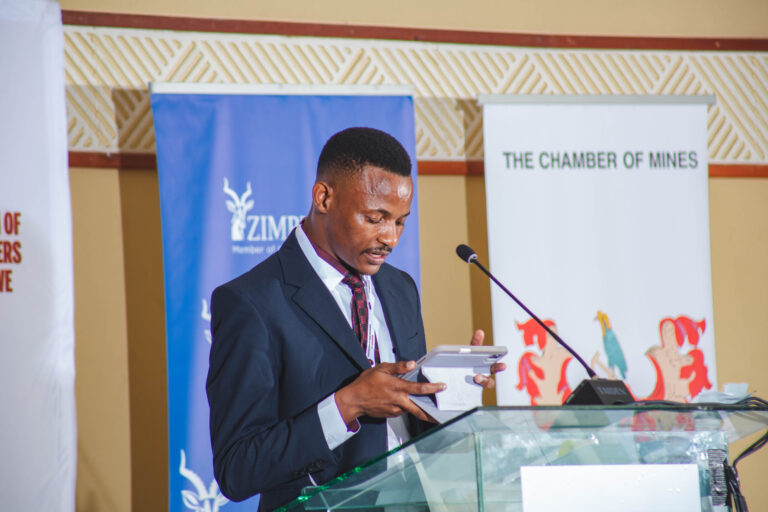
The Zimbabwe Miners Federation (ZMF) President Henrietta Rushwaya, on the backdrop of this spate of mine accidents, made a clarion call to delegates at the just ended Chamber of Mines annual general meeting to help capacitate small scale mines in providing a safe working environment for ASMs.

“We also face a lack of human capital and use unqualified personnel, which has resulted in a lot of lives being lost and this is actually a cause for concern.

Honourable Minister, with the involvement of big mines, we would like to make a request that they also help small-scale miners with human capital that will teach the sector how proper safe mining is carried out,” she said.

The rudimentary processing practices and unregulated activities, often performed at informal mine sites, make artisanal mining a magnet for occupational health and safety risks.

Often lacking proper technical training and access to finance for safety equipment, it is common to find artisanal miners foregoing basic safety measures while working in poor conditions to obtain gold.

ZMF calls for the completion of Mines and Minerals bill

0

In an endeavour to see the growth and development of the Artisanal and Small-Scale Mining (ASM) sector under her watch, Zimbabwe Miners Federation (ZMF) President Ms Henrietta Rushwaya has called on the Justice Ministry to complete the amendment of the mines and minerals bill to ensure that mining policies beneficial to ASM progress.

Rudairo Mapuranga

The mining sector has been calling for the government to speed up the amendment of the Mines and Minerals act which has taken over a decade to disadvantage the small-scale miners who at times are outlawed and arrested despite their economic contribution significance.

Speaking at the 2022 Chamber of Mines Annual Conference last week, Rushwaya said the delay in tabling the act before parliament negatively affects the ASM sector.

“Honourable Minister can you bring this matter to the Justice Minister that the Attorney General’s office is delaying unnecessarily in ensuring that policies to do with mining are put in place and this is greatly affecting our sector,” she said.

President Emmerson Dambudzo Mnangagwa speaking at the inaugural 2021 Mining Industry Sector Awards at State House early this year called on the Minister of Mines and Mining Development Hon Winston Chitando and the Chairman of the Portfolio Committee on Mines Hon Edmond Mkaratigwa to speed up the amendment of the Mines and Minerals Act for the achievement of the US$12 Billion mining sector.

The President said the snail’s pace at which the amendment of the Mines and Minerals Act has been moving is against the work ethics of the second Republic.

“The amendment of the Mining and minerals act has rather taken too long Hon Minister (Winston Chitando). And this is against the expectation and work ethics of the second Republic. The amendment process must be speeded up to capture the interest of the various mining stakeholders and best practices in the sector,” the President said.

Rushwaya said the new mineral policy should take a leaf from Tanzania and Zambia’s handling of the small-scale and artisanal mining sector to come up with robust legislation that has the capacity to oversee a transformation of the ASM sector.

“There are case studies which have been carried out in Tanzania where they have primary mining licenses issued specifically to indigenous Tanzanians.

“In Zambia, they have got a three-tier system where you have artisanal mining licences which are issued to miners who occupy and use less than 5 hectares of land. We have a small-scale mining license and a large-scale mining license which is actually issued to the three different participants,” she said,

Rushwaya said in the short term if the delay of the amendment persists, it was important for the Ministry of Mines and Mining Development to issue a statutory instrument that empowers ASM growth and development.

“Our expectations from the government are that we should have a statutory instrument that empowers miners, and that we migrate from Environmental Impact Assessment to Environmental Management Processes.

“We are also looking to the strengthening of the Artisanal and Small-Scale Mining desk to a department that focuses on the ASM sector,” Rushwaya concluded.

VI holdings GDI Exit: Time to remodel the Darwendale Platinum project

0

In light of VI holdings’ exit from the Great Dyke Investments, there is a need to remodel the project technically and financially and to look for partners in the European and eastern bloc with the financial muscle to back the project to fruition, an expert has said.

Prince Sunduzani

Russia’s Vi Holdings exited from Great Dyke Investments, leaving the future of what is supposed to be Zimbabwe’s biggest platinum project at risk.

According to reports, the state mining vehicle, Kuvimba Mining House Ltd, is taking over the 50% shareholding in a platinum project owned by Russia’s Vi Holding NV and plans to make further mining acquisitions.

The exit of Vi Holding from Darwendale Platinum, which would cost about $3 billion to develop and become Zimbabwe’s biggest platinum mine, brings to an end 16-years of Russian involvement in the project.

According to Mining expert and former Chairperson of the Institute Of Mining Research at the University of Zimbabwe Professor Lyman Mlambo, the exit of Vi Holdings from GDI implies further financial woes for GDI and there is a need for a pragmatic solution to the project which will include scaling the project to manage costs.

He said the leaving of  VI holdings might affect the USD3 billion platinum sector contribution to the USD12 billion mining industry target by 2023 as it is anchored on big projects such as GDI and others like Karo Resources.

“Obviously GDI will have to be remodelled both technically (mining and processing methods) and financially so that the costs for development, mining, processing and other costs including logistics and marketing become lower. That would also mean scaling down the whole project. GDI was expected to reach full throttle in 2023 (according to the original plan) at which point its operations would result in almost doubling the whole platinum sector’s production and employment levels as it intends to produce more than 800,000 ounces and employ about 8,000 people. This is obviously no longer possible as it stands, and targets and deadlines are going to be further missed,” he said.

Professor Mlambo noted the need to fill the financial gap as Kuvimba might not have the financial muscle to back a project of such magnitude.

GDI had planned to mine the first ore in 2021 and at its peak produce 860 000 ounces of platinum. This would have made it the biggest mining venture in Zimbabwe.

It missed a series of fundraising deadlines, and the collapse of funding proposals under sanctions on Russia put on a lid on the project.

In 2020, GDI announced that the African Export-Import Bank (Afreximbank), the lead arranger for project funding, had completed due diligence on the project, allowing the company to start raising capital.

“I think we need to seriously market the project to other countries in the eastern bloc and some European countries that have warmed up to Zimbabwe in the hope of getting another big partner. The funding gap needs to be filled and as I said, Kuvimba or any local investor cannot do that. It could help if the project could also be made transparent in terms of the beneficial owners, the original terms of the agreement, etc in order to allay fears which have repelled the interest of big close companies such as Implats (in SA) in the past,” Mlambo concluded.

Small scale miners could lean on big scale miners

0

THE Zimbabwe Miners Federation (ZMF) says cooperation between large and small-scale miners will go a long way in boosting output and the mining industry’s overall contribution to the economy.

The mining industry is one of the major economic centerpieces expected to drive the country towards an upper middle income economy status by 2030.

It is against this background that the Government envisions a US$12 billion mining industry by next year buoyed by minerals such as gold, platinum, diamond, chrome ferrochrome, chrome and lithium.

Last year, the mining industry earned the country US$5,2 billion up from US$2,7 billion in 2017 and the figure this year is projected to reach US$8 billion.

Addressing delegates at the just ended Chamber of Mines of Zimbabwe (CoMZ) annual conference in Victoria Falls, ZMF president Ms Henrietta Rushwaya whose organisation represents the interest of artisanal and small-scale miners said: “In many parts of the world, artisanal and small-scale miners (ASM), and large scale miners (LSM) operate in neighbouring concessions and sometimes on the same.

“ASM activities are increasingly in contact with LSM operations, making the probability for conflict— as well as the potential opportunity for cooperation between the two—greater than ever before.”

Responding to questions from this paper following her presentation at the CoMZ conference, Ms Rushwaya said their relationship with LSM was cordial, adding that ASM have a lot to learn from the primary producer.

“Cooperation between the two entities will go a long way in ensuring that the sector increases from the current 3,4 percent growth and will also go beyond the US$5,2 billion mineral exports which make 83 percent of the country’s total national exports.

“We have a lot to learn from the LSM especially when it comes to corporate governance, skills transfer, health and safety just to mention a few,” she said.

“We need to enter into tribute agreements with tittle holders in order to mine at their designated claims; we also need to tap into their experience and expertise when it comes to health and safety and this is only achieved through identification and minimisation of hazards that include environmental and equipment based factors.”

Of late, some miners affiliated to ZMF lost their lives following an accident at a mine in Gwanda, Matabeleland South province.

“Recently, we had an accident which claimed seven lives at Rany mine and the Duration Gold Mine (Vumbachikwe) highly skilled Proto Team risked their lives by going down 240 metres to recover the bodies.

“Such efforts are applaudable and show a sense of unity of purpose. As part of formalization the LSM will also train our ASM members on various mining aspects as part of skills transfer.

At the CoMZ conference, the ZMF president highlighted that the major challenges hindering sustainable mining activities by artisanal and small-scale miners include lack of financial and technical resources.

She said ASM find it difficult to meet the criteria for loan facility or overdrafts adding that players in the sector were also constrained by lack of formalisation.

And this limited ASM potential to effectively participate in the mainstream economy. Other setbacks are to do with lack of geological information, marketing barriers, unskilled labour force and the use of rudimentary tools.

As part of ZMF’s strategy to uplift artisanal and small-scale miners, Ms Rushwaya said her federation was going ahead with strategic partnerships with local and foreign investors as well as creating a Special Purpose Vehicle to run with ASM projects.

In April this year, ZMF, which is a non-profit-making organisation, announced the establishment of an independent company, FS Mining (Pvt) Ltd, to run and manage its projects.

FS Mining, which is a Special Purpose Vehicle, will be running and managing ZMF projects particularly in relation to issues to do with investment protection and funding programmes for small-scale miners.

The small-scale mining industry has been recognized by the Government as a critical sector that was contributing significantly to the development of the economy.

Last year, Zimbabwe’s total gold deliveries reached 29,6 tonnes from which over 18 tonnes was the contribution by players in the small-scale mining industry.


Business Weekly

Coal supply under threat amid viability challenges

0

As Zimbabwe prepares to commission two electricity generators at the Hwange thermal plant in the next few months, concerns have been raised over the capacity of coal producers to adequately meet demand in light of unviable coal prices.

The first unit is expected to be commissioned in November this year, six months after the initial target as COVID-19 induced disruptions delayed the delivery of some of the equipment. The second will come on line during the first quarter of 2023.

The two units, with a combined production capacity of 600 megawatts (MW), almost 65 percent of the existing capacity are expected to significantly reduce power rationing.

Zimbabwe contracted China’s Sino Hydro to build two more units at Hwange for US$1,4 billion.

The coming on-stream of the new units will push demand for coal up with analysts and industry players raising concerns over the capacity of miners to produce enough.

The price of coal is currently pegged at US$29 per tonne and is paid in local currency using the interbank rate. With most production inputs, such as explosives, fuels, and consumables being paid in US dollars, the price has become unviable.

“The issue of the viability of the coal producers is critical otherwise we will end up having the idle capacity (of the power plant),” said a senior executive of a coal mining company, who declined to be named because is not allowed to talk to the press.

“Most of our expenses are in US dollars, fuels, consumables, and now labour but we are paid in local currency at the interbank rate, which is significantly lower than the widely used parallel market exchange rate. We have the capacity but with the current pricing structure, that capacity will be not fully realized,” the executive added.

Hwange power plant consumes about 90 percent of locally produced coal. Makomo Resources, Hwange Colliery Company Ltd (HCCL) and Zambezi Gas are major suppliers of coal to the power plant. Apart from Zambezi Gas, Makomo, currently under judicial management and HCCL have of late been facing operational challenges

In 2020, Government set aside an agreement requiring ZESA to pay half of the coal supplies in foreign currency. The power utility and coal miners had agreed that 50 percent of coal be paid in foreign currency to support the miners, which needed hard currency to sustain operations in light of forex shortages that were prevailing at the time.

ZESA is being paid in foreign currency by some exporters, particularly mining companies and the deal entailed coal miners be partly paid in forex to support operations.

This relates to continuous recapitalization and procurement of spares, fuel, and consumables.

“ZESA is paying foreign currency to import power but it can’t pay local coal producers viable prices,” Carlos Tadya, an analyst with a local research firm said. “The authorities should start dealing with the price issue so that we can fully realize the impact of the new units.”

Energy and Power Development permanent secretary Engineer Gloria Magombo did not immediately respond to messages seeking comment on Tuesday.


Business weekly

COMMENT: Kamandama sad chapter must never be forgotten

0

Following the worst mine disaster in the country’s history, 50 years ago, Hwange Colliery Company (HCC) has remained true to its “reputation repair strategies” which include compensation and commemorations held to honour the miners on June 6 every year.

As scholar Steven Van Hook said in a 2010 publication, a crisis can be turned into an opportunity for good public relations.

A total of 427 miners died following a series of underground gas explosions while in a 5kmtunnel shaft at the then Wankie Colliery’s Number 2 shaft known as Kamandama.

It is a disaster that is difficult to forget.

However, 50 years is a very long time. Companies can easily forget or lose the historical significance of post crisis management.

The Kamandama Mine disaster commemorations held on Monday proved that while HCC has been holding commemorations consistently, the company according to widows “only remembers us once a year”.

Speaking to our news crew, Ms Senzeni Phiri, who lost her husband when her son, Mr Tapedza Makava was only two years old, said: “Before this day, we did not get anything, the company just gave us money every June, the last amount was $20 000.

“Other things we get once in a while include pots, plates and cups.”

Mr Makava added: “I struggled with my education because my mother wasn’t employed. In fact, I was a beneficiary of the Kamandama Mine disaster until the age 18 years after which my mother had to struggle with my education.”

Mr Hilton Papenfus, whose father was a manager at HCC when the explosions killed him, said: “I came here with my wife Gillian, my sister who was 12 years when the incident struck and my son.

We come all the way from South Africa to remember my father.

It is a way of reconnecting with my father and making sure we do not forget him.

Let us continue doing this so that future generations do not forget.”

These are real victims of the Kamandama Mine disaster.

For 50 years, they have carried the wounds of losing bread winners.

They have had to eat, sleep, dress, go to school and access medical care without their fathers and husbands.

Their cry for monthly allowances or increase in the annual payment is not unreasonable.

These widows must be remembered everyday and not for only one day.

Because the crisis is national, Government can assist where it can.

For example, the widows can get farms.

Indeed, HCC has done well to continue with commemorations for 50 years.

We must never forget Kamandama!

Zimbabwe’s story is incomplete without mention of this sad chapter in our history.


The Chronicle