Home Blog Page 355

Effective marketing needs an all out budget – Mkaratigwa

0

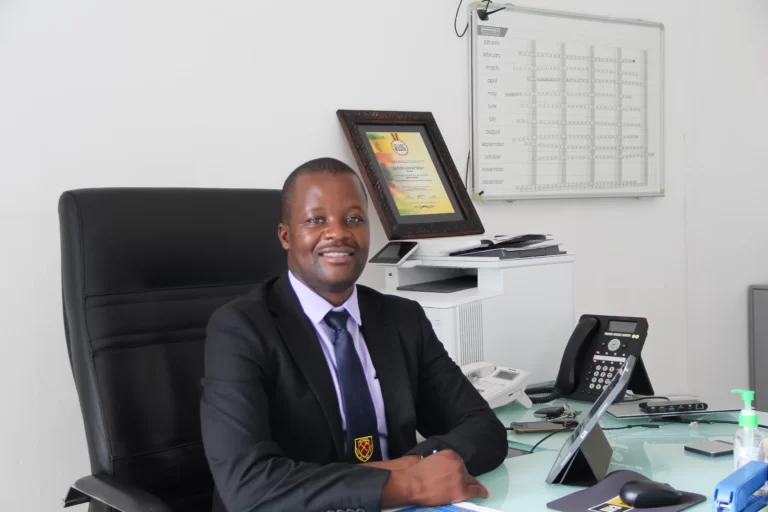
Parliamentary Portfolio Committee on Mines and Mining Development chairperson, Edmond Mkaratigwa has praised the quality innovation at the on-going Investing in African Mining Indaba in Cape Town.

Mkaratigwa said the inspiring event depicted an all-out budgetary support from exhibitors which resulted in a stellar event.

“The pitch and presentation this year depicted high level of standard and the attendance was awesome. The exhibition hall had amazing booths and characterized by a touch of latest and evolving technology innovations. As a benchmark we can only be challenged, inspired and motivated at the same by the prospects of investment spin-offs that we can derive as a country from such forums if we up the game. It entails serious and focus and budgetary support,” he said.

Mkaratigwa however inferred that Zimbabwe needs to invest more into marketing to in order to make it more effective.

“It looks like our marketing needs more revamping and we need to invest more in it to make it even more effective. We need to be more sophisticated at it because in this case it is a combination of both national strategy and business. So, the composition of personnel should be reflective and if it means we tailor make the training, we have the capacities to do so.

“We also cannot use the same methods for a changing environment, we have to be flexible and constantly self-evaluating for continuous improvement. That is what I think are the key issues but at the same time I concluded that a lot of efforts are ongoing and the government has been creating the platforms for further networking for marketing. There was evidence of a balance of regional and international operators and investors pointing to the need to brace up and be innovative in our approach while incentivizing our critical mining sector if we are to rise up and be competitive in the same space that everyone is fishing,” Mkaratigwa concluded.

Investing in African Mining Indaba is the largest mining investment event in Africa. With a proven track record of bringing together Ministers, senior Government representatives, Mining Companies, Mid and Junior Miners, Investors, professional services as well as mining equipment and service providers, Mining Indaba is the place to meet everybody who’s anybody in the African and global mining industry. It is the must-attend event that drives the mining industry forward, provides attendees with an unmatched access to the entire value chain and the most influential players in African mining for four days of high-quality content, deal-making and networking opportunities.

Mining Zimbabwe is a Media Partner of the Mining Indaba which has seen us distributing the May issue at the world-class event.

Invictus prepares for drilling tests

0

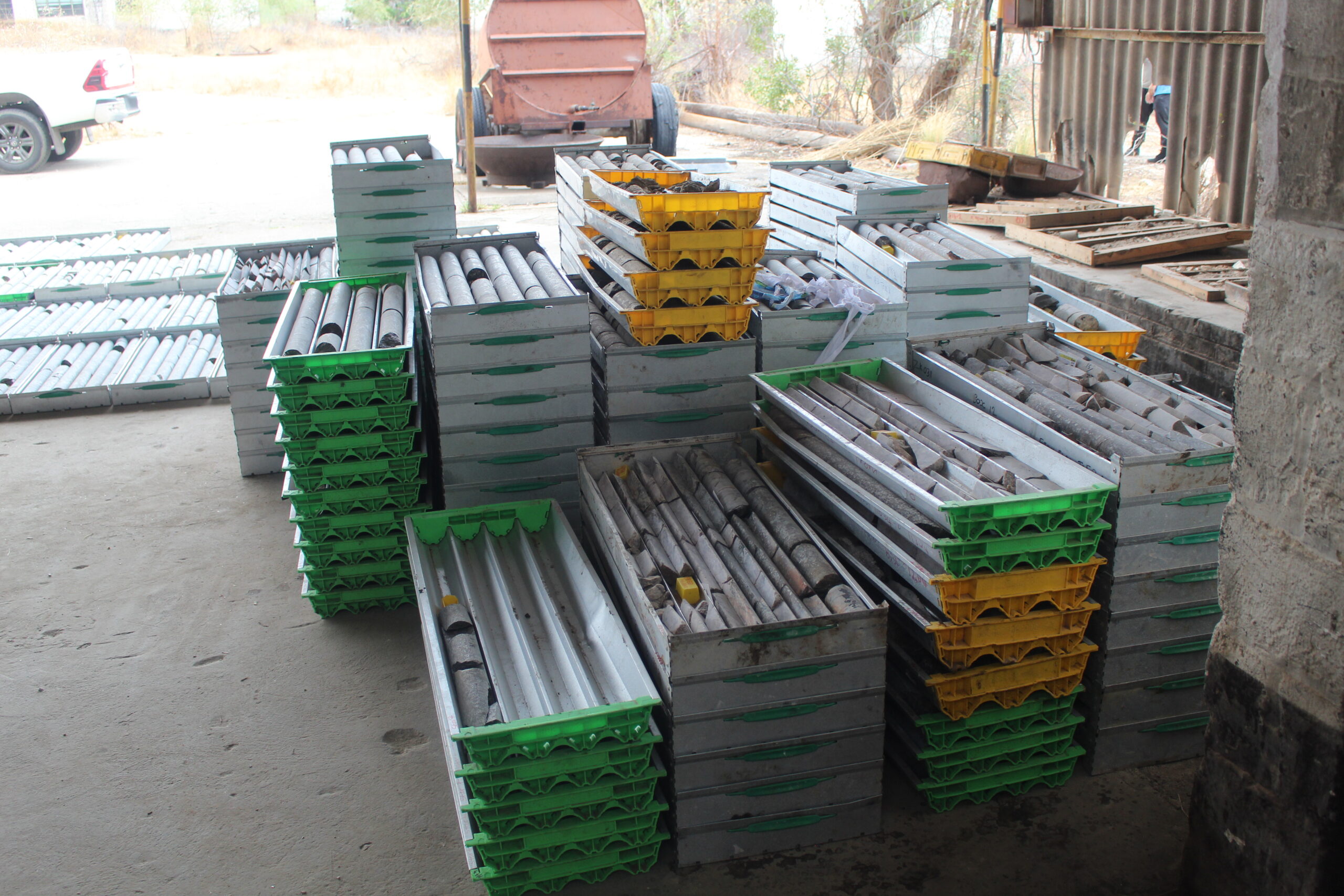
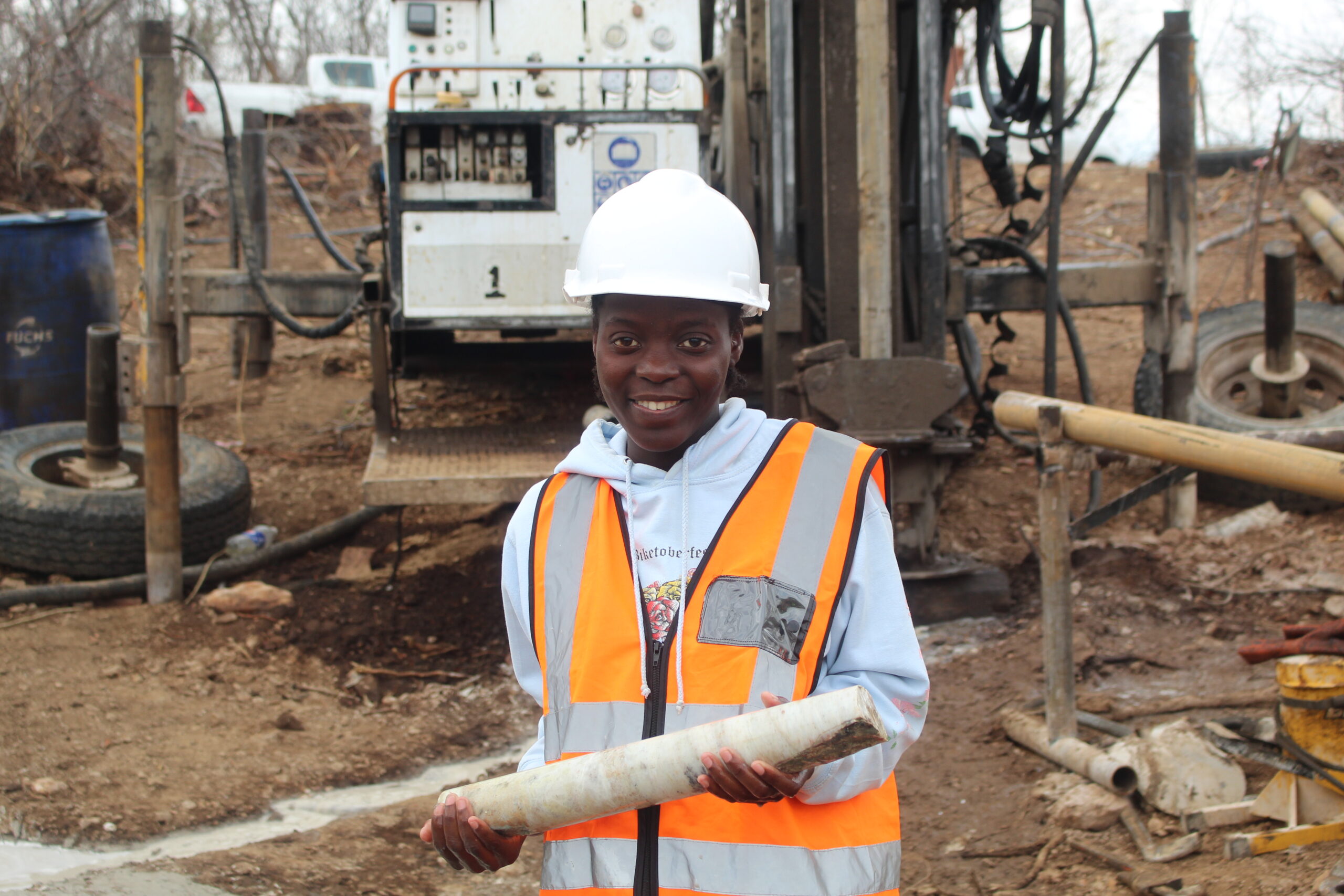
INVICTUS Energy has started constructing the site for its first exploratory well in Muzarabani where it is prospecting for oil and gas.

This is being done in preparation for drilling, which is expected to start in July this year, as the company enters a crucial phase in the development of the prospect.

The exploratory wells will give a better idea of the full extent of the oil and gas reserves in the Muzarabani prospect following the collection of more than 800 km of 2D seismic data in 2021.

The initial exploration work by Invictus has suggested the existence of a substantial amount of oil and gas reserves.

In an update, the company said: “Invictus Energy has commenced construction at the Mukuyu well site in Zimbabwe. The Mukuyu structure is independently estimated to contain 8.2 trillion cubic feet+ 247 million barrels of conventional gas-condensate.”

Invictus has contracted Exallo Drilling to provide drilling services while American company Baker Hughes was tied up for well services, which include cementing, drilling fluids, tubular running, installation of wellhead equipment and project management.

Invictus managing director, Scott Macmillan, recently said the project was on course.

“The (drill) rig is mobilising in May and should arrive in Zimbabwe around mid-June, it depends on transit from Songo Songo in Tanzania,” he explained.

A second exploration well is also expected to be sunk at a newly discovered site.

“In addition to Mukuyu, there’s a basin margin play; it is a typical East African rift play; it is entirely separate from Mukuyu. We are mobilising a rig and there is only a small incremental cost to drilling this as well.”

American company Mobil once conducted limited exploration work in the area in the 1980s, which excluded drilling.

In 2020, the Zimbabwe government classified the Muzarabani project as one of the priority development projects, which would aid the country’s pursuit of its economic development agenda.

Zimbabwe is aiming to transform into an upper-middle Income economy by 2030.


NewZiana

EU energy crisis, can Zim claim stake in lucrative gas sector?

0

With Russia-Ukraine conflict raging on, European countries have set eyes on Africa as an alternative supplier of gas and oil, with observers suggesting this could provide an opportunity for Zimbabwe to tap into the multi-billion sector.

The EU heavily depends on energy from Russia, the largest supplier to the bloc.

Russia, which holds the largest gas reserves in the world produces about 17 percent of global natural gas and supplies about 30 – 40 percent of the gas to Europe.

With countries such as Zimbabwe registering gas and oil discoveries, analysts say time could be ripe for the exploration and production to be sped up. Economists and energy experts believe such global changes are usually rare to come by.

In the latest research developments, EU members are now rapidly moving in the African direction, ultimately aiming at cutting the dependency due to sharp political and economic differences that have emerged connected to the Russia – Ukraine war.

Generally, EU is closely coordinating with Algeria, Angola, Equatorial Guinea, Egypt, Nigeria and Mozambique and analysts say its time Zimbabwe also presents itself as a new kid in the lucrative oil and gas sector.

Local economist, Mr Tinevimbo Shava said; “The country needs to realise that such a tectonic shift in global markets happen maybe once in a decade or two and in order to benefit the country needs to get pre-production agreements in place to secure markets.”

Invictus Energy, the Australian company exploring gas and oil locally, expects to start drilling its prospect by July.

Mobil, in the late 1980s, got the ball rolling with a seismic shoot in Muzarabani and the US company did not go ahead to test the licence in the Cabora Bassa Basin, leaving its underground information neglected. However, Invictus plans to tackle this oversight, potentially transforming Zimbabwe as new markets are presenting themselves.

“The rig is mobilising in May and should arrive in Zimbabwe around mid-June, it depends on transit from Songo Songo in Tanzania,” Invictus managing director, Mr Scott Macmillan, explained recently. Following some initial maintenance, drilling should begin in July.

The Muzarabani structure – now known as Mukuyu, after the fig tree – may hold more than 8 trillion cubic feet (227 billion cubic metres) of gas. In addition, it may have another 290 million barrels of condensate.

“With our close proximity to Beira, we could leverage on that and put forward our name in order to cash in on the deals that are currently being signed by our neighbours. Muzarabani is also close to Mozambique, making it cheap to construct a pipeline from there to connect with Mozambican ports for exports,” Shava added.

Statistics show that last year, Algeria and Nigeria were the only two African suppliers of gas to the European Union, accounting for 17 and 4 percent of the EU’s natural gas imports, respectively. The other major players in the region are Egypt, Libya, Equatorial Guinea and Angola.

While countries in sub-Saharan Africa have gas reserves, they have not had the interest from abroad and investment needed for the industry to open up access to Europe, according to Al Jazeera.

Three pipelines currently bring natural gas from Africa to Europe; the Transmed, which allows the export from Algeria to Italy (via Tunisia), the Medgaz, which connects Algeria to Spain under the sea, as well as the Greenstream, more modest in capacity, which connects Libya to Sicily according to media reports.

Energy expert, Lennon Magwadza said; “The country definitely has gas, that has never been in doubt. We have evidence of it from the Exxon Mobil research. It is the oil component that we are doubting is viable but as of gas it is given and we need to cash on the opportunity that has arisen.”

In April, many foreign firms with high exploring ambitions turned to Africa. Angola and Italy have already signed a declaration of intent to develop new natural gas ventures and to increase exports to Italy, according to a statement from the Italian Foreign Ministry.

“We have reached another important agreement with Angola to increase gas supplies. Italy’s commitment to differentiate energy supply sources is confirmed,” Foreign Minister Luigi Di Maio said in a statement posted on his social media pages soon after the end of a two-and-half-hour long visit to Luanda.

Di Maio also wrote that the Italian Prime Minister, Mario Draghi, wanted to add Angola and the Congo Republic to a portfolio of suppliers to substitute Russia, which provides about 45 percent of Italian gas.

The deal was described as “an important agreement that gives impetus to the partnership between Italy and Angola in the fields of renewables, biofuels, LNG and training in  technology and environment.”

The foray follows the signing of agreements with Algeria and Egypt in recent weeks. Algeria is currently Italy’s second-largest supplier, providing around 30 percent of its consumption.


Business Weekly

Gold deliveries up 88%

0

Gold deliveries to the country’s sole buyer and marketer, Fidelity Printers and Refiners (FPR) rose 88% to 10.176 tonnes in the first four months of this year from 5.4 tonnes delivered during the same period last year
lured by high commodity prices.

FPR acting general manager, Peter Magaramombe, said the company was engaging the authorities with the view to
deal with high taxes, low retention levels and investment to ramp up production.

“The gold deliveries have reached 10.176 tonnes by the end of April from 5.44 tonnes during the same period while the gold deliveries for the month have jumped 79% to 2.481 tonnes in April this year from 1.384 tonnes delivered during the same period last year, ” Magaramombe said.

He said Zimbabwe should capitalise on good international gold prices to ramp up production.

“There is a huge need to ramp up production following the firm commodity prices on the international market,
” Magaramombe said.

Of the 10.176 tonnes delivered during the reviewed period, small scale miners delivered 6.571 tonnes against big mining houses’ 3.605 tonnes.

With pricing firming due to Russia-Ukraine war and global inflation, large scale miners expected to get large export revenues thereby ramping up production.

Experts project large scale miners to give small scale miners a run for their money following good global gold prices.
The Chamber of Mines of Zimbabwe CEO, Isaac Kwesu, said various miners were riding on the current strong mineral prices hence strong investments are needed.

“Miners should capitalise on firm prices to ramp up production in order to get significant export revenue that can
be reinvested into the mining houses operations, ” Kwesu said.

He said there was still a long way to go to achieve an average of 8.3 tonnes per month to reach 100 tonnes a year, although the output was fairly good.

Zimbabwe’s gold export receipts went up 42% to US$1.7bn during 2021 from US$1.2bn earned during 2020 due to improved gold output and firm prices.

Gold deliveries to FPR soared 55% to record 29.6 tonnes in 2021 from 19.05 in 2020 on the back of timeous payments and incentives given to yellow metal producers.


Business Times

Rio Zim slips into the red

0

Listed miner RioZim Limited, swung to a loss of ZWL42bn in the 12 months to December 31,2021, from a profit position of ZWL$453m reported in the previous year, largely due to subdued gold production.

Overall gold production for RioZim, which operates Renco Mine, Dalny Mine, One-Step Mine, Cam & Motor Mine, plunged 7% in the period under review.

Production at One-Step Mine, fell 18% to 351 kilogrammes (kg) in 2021 from 427kg reported in the previous year.

The low gold output was attributed to lower grades which dropped from the prior year.

At Cam & Motor Mine, there was no gold production during the year as the mine continued with the construction of its BIOX Plant Project throughout the year.

Output at Renco Mine stood at 561kg in the reviewed period , which was 3% lower than 580kg produced in the prior year as increased power cuts throughout the year decreased plant throughput.

Dalny achieved a 6% growth in gold production achieving 209kg of gold from
198kg produced in the prior year.

The growth in gold production was due to increased plant throughput as plant improvements carried out during the year successfully stabilised the plant.

More so the company also took a significant hit in the diamond business as production for the group’s associate, Murowa Private Limited, declined 28% to 414 000 carats from 579 000 carats produced in the prior
comparative year.

RioZim board chairman, Saleem Beebeejaun, expects the group to return to profitability this year following the commissioning of the Bio X plant last month.

“Production is forecast to increase at Cam & Motor after commissioning of the BIOX plant which will turnaround the group to profitability and a positive working capital position. The group forecasts to discontinue the haulage of low grade ore from One-Step to the Cam & Motor plant and migrate mining operations to the high grade Cam & Motor pits, which will result in cost savings and contribute positively to the profitability and cash flows for the group,
” Beebeejaun said.
He added:
“…The future cash flow forecasts are dependent on the level of gold production from this BIOX plant. Therefore,
whilst production is budgeted to increase going forward, there is a material uncertainty that the budgeted production
levels will be achieved.”

Beebeejaun said Murowa is focused on the completion of its Project Crown Jewel which entails increasing the current processing plant capacity to move to a ‘low grade high volume’ strategy in order to sustain production as it is currently processing low grades.

Despite having subdued production, revenue for the group increased 84% to ZWL$5.8 bn from ZW$3.1bn achieved in the previous year due to the depreciation of the local currency against the United States dollar.

Contributing to the revenue was the base metals business which generated ZWL$381m albeit operating under care and maintenance throughout the period.

About 210 tonnes of matte, 78tonnes of PGMs and 21tonnes of copper were produced from the refinery.

The company also reported that engagements with potential financiers for the 178MW solar project were ongoing albeit at a slower pace due to the complexities brought about by the Covid-19 pandemic.

For the 2 800MW Sengwa Power Station the company has put up various financing options to attract potential investors into the project.


Business Times

Empress Nickel generates $381 million in 2021

0

RioZim base metals refinery, Empress Nickel Refinery (ENR) generated a total revenue of ZW$381 million in 2021 as the operations were under care and maintenance throughout the year.

Rudairo Mapuranga

ENR has been RioZim’s best performer, contributing an average of 77 percent of the group’s revenue with RioZim confident that it will increase the refinery’s capacity.

According to RioZim through its Financial Report for the year ended 31 December 2021 the Kadoma based refinery’s revenue for the year was partially used to fund the care and maintenance costs. The company also said that it was engaging various stakeholders to identify sources of raw material to feed the Refinery to normal production capacity.

During the year, the refinery produced 210 tonnes of matte, 78 tonnes of PGMs and 21 tonnes of copper.

“The Refinery operated under care and maintenance throughout the period 210 tons of matte, 78 tons of PGMs and 21 tons of copper were produced. Revenue of ZW$381 million was generated during the year from the projects at the Refinery which partially funded the care and maintenance costs. The Company continues to engage various stakeholders to identify sources of raw material to feed the Refinery to normal production capacity and our stakeholders will be kept appraised,” the company said in a statement.

The Zimbabwe stock Exchange listed diversified mining company has been exploring various ways to upgrade ENR as the plant is a strategic asset with potential to contribute significantly to the economy.

The company has been exploring various methods of upgrading the refinery so that it is also able to beneficiate lithium concentrate in light of the huge investor appetite to exploit lithium in the country.

Lithium has become a much-sought after mineral not only in Zimbabwe, but also across the globe as the automotive industry moves towards electric cars, which, among other things, use lithium batteries.

According to energy experts, global supplies of lithium used to make EV batteries will fall short of projections for demand to more than triple by 2025 if prices do not rebound to fund expansions. Value addition is therefore important as it will bring more investment into lithium mining and exploration.

Lithium’s vital role in electric-vehicle batteries means automakers, miners and investors are racing to figure out how much supply the world will need in the coming years and also how much it’s going to get.

Mining Zimbabwe distributes issue 55 at Mining Indaba 2022

0

Mining Zimbabwe is distributing issue 55 at Investing In African Mining Indaba event currently happening in Cape Town, South Africa.

The award winning magazine’s issue of May 2022 features exciting articles including Mines and Mining Development Minister‘s and Kuvimba Mining House’s Chief Executive Officer Interviews and many investment related articles.

“We are excited to be distributing the May 2022 issue at a world stage. As you know Investing in African Mining Indaba is a place where the world heavy weights in Mining connect, network and billion dollar deals are striked. We saw this as an opportunity for us to tell the Zimbabwean story and demystify some misconceptions associated with Zimbabwe Mining helping interested parties make informed decisions,” Timelison Media Managing Director said.

Sungiso expressed gratitude to advertisers and sponsors who partnered the country’s top Mining publication in making the journey possible.

Advertisers in the issue included Smart Building Solutions (SBS) who are on the cover page, Redan Bulk, Halsted Brothers, Glenrise, Fams forwarding and Management services, Blanket Mine, Posrunna Solar, Oriental Mining and Technical services, Blackbox Investments, Firstlink Insurance brokers, Headouph, CT Bolts, Combined technical services, Tandamanzi drilling, Zimoco and Nashy Mining.

Mining Indaba returned to the CTICC, Cape Town from 9-12 May 2022. The mining community will be looking to the future with the overarching theme: ‘Evolution of African Mining: Investing in the Energy Transition, ESG, and the Economies.’

It’s the place where the industry moves forward. From global leaders to new challengers and industry heavyweights to evolve African mining. Whilst powering new strategies, critical dialogues and deal-making transforming the energy transition, ESG, and the economies.

Not one but three Heads of State and one Prime Minister are confirmed to address the industry. The President of South Africa, H.E. Cyril Ramaphosa, President of Botswana H.E. Mokgweetsi Masisi and the newly elected President of the Republic of Zambia H.E. Hakainde Hichilema, and the Prime Minister of the Democratic Republic of Congo H.E. Jean-Michel Sama Lukonde Kyenge will share their visions for the future directly to the Mining Indaba community.

Zimbabwe’s Mines and Mining Development Minister is also expected to address delegates at the stellar event.

Minerals Marketing Corporation (MMCZ) is exhibiting at the event which has so far seen thousands of global players attending.

The magazine along with top Mining publications is placed on the Media Centres across the Indaba and is available for free to everyone in attendance.

Investing in African Mining Indaba: Ramaphosa’s key note address

0

This Mining Indaba is taking place at an important moment in the global recovery from the effects of the COVID-19 pandemic.

Across the world, almost every industry is having to adapt to new circumstances, confront new challenges and be prepared to seize new opportunities.

The mining industry in Africa is no different.

As it responds to the effects of the pandemic, the mining industry also needs to manage the risks and potential benefits of rapid technological change, shifting market demand, climate change and geo-political uncertainty.

Like all other industries, the pandemic caused significant disruption to mining operations.

But once again, the industry has shown its resilience.

In South Africa, mining registered growth of 11.8 per cent in 2021, the highest across all industries. Last year the sector recovered production to almost pre-COVID levels.

This was the result of significant collaboration between the Department of Mineral Resources and Energy and the Minerals Council South Africa, including efforts to keep the sector operational during the hard lockdowns in the pandemic’s early stages.

After more than 150 years, mining remains a critical pillar of our economy.

Mining is a significant contributor to export earnings, it is an important source of foreign direct investment, and directly employs nearly half a million people.

And we expect mining’s significance and contribution to our economy to grow.

Like many other parts of our continent, our country is abundantly blessed with vast mineral deposits that form the basis of the most important applications used in society and economies today.

Mining companies see the potential in South Africa.

At the fourth South Africa Investment Conference earlier this year, investments valued at around R46.5 billion were pledged towards mining and mineral beneficiation.

Despite the great prospects for South African mining, we face significant challenges.

It is a matter of grave concern that South Africa has fallen into the bottom 10 of the Fraser Institute’s Investment Attractiveness Index rankings.

We are currently standing at 75th of 84, which is our worst-ever ranking.

This ranking underlines the fundamental reality that South Africa needs to move with greater purpose and urgency to remove the various impediments to the growth and development of the industry.

We understand very clearly the need to fix to the regulatory and administrative problems.

We need to clear the backlog of mining and prospecting rights and mineral rights transfer applications, put in place a modern and efficient cadastral system, and implement an effective exploration strategy.

We understand very clearly the need to significantly improve the functioning of our railways and ports, and the vital importance of ensuring a secure and reliable supply of affordable electricity.

These tasks are at the forefront of our economic reconstruction and recovery efforts.

Since the last Mining Indaba, we have made significant headway in driving a programme of policy reform for the network industries that are inextricably tied to mining and its operations.

This programme is being coordinated through Operation Vulindlela, an initiative of the Presidency and National Treasury, working in partnership with the Department of Mineral Resources and Energy and other departments.

An important area of progress is regulatory reform to facilitate new electricity generation by the mining and other sectors.

Regulations have been amended to allow companies to invest in new generation capacity of up to 100 MW without needing to apply for a license.

We are working to further cut red tape for the registration of projects, to accelerate environmental approvals and to strengthen the capacity of Eskom and municipalities to link such projects to the grid.

According to the Minerals Council South Africa, around 4,000 MW or R65 billion of such electricity generation capacity investment is in the pipeline.

South Africa’s energy landscape is being fundamental transformed to introduce greater competition, more diverse energy sources and greater energy security into the future.

The unbundling Eskom into separate entities for transmission, distribution and generation is on track, and is set to be completed later this year.

Operation Vulindlela is working with the Department of Water and Sanitation to implement a turnaround plan for the issuing of water use licenses, something that is critical to mining operations.

We are working towards a target of 80 per cent of all applications being resolved within 90 days.

On Transnet, the publication of the White Paper on National Rail Policy outlines our plans to revitalise rail infrastructure and to enable third party access to the freight rail network.

We have heard the calls from the industry for private operators to be allowed to operate the country’s dedicated coal, iron ore and manganese lines.

We hope that such proposals will be discussed at the Indaba, drawing on the experiences of other countries.

Working together with the industry and other stakeholders, we are strengthening the capacity of our security services and law enforcement agencies to tackle illegal mining, cable theft and general damage to infrastructure.

We value our ongoing collaboration with the Minerals Council South Africa to resolve these and other challenges facing the industry.

According to companies surveyed by the Minerals Council if these regulatory hurdles could be resolved, they would be prepared to increase their investments by 84 per cent over the next five years, over and above existing capital investments.

We are committed to mobilising the necessary resources and providing the necessary incentives for a new wave of exploration, particularly of the minerals required for the global energy transition.

The recently-released Exploration Strategy and Implementation Plan lays out South Africa’s plans to move to future strategic metals such as copper, nickel, cobalt and rare earths.

As a world leader in platinum group metals, South Africa is perfectly poised to take advantage of the growing demand for such metals.

At the same time, we must continue to expand the production of some of the minerals that have been the mainstay of our mining industry, and for which there is still much demand.

We are keen to harness the opportunities of the hydrogen economy.

Last week, I attended the launch by Anglo American of the world’s largest hydrogen-powered mine haul truck.

This truck will be powered by an entire ecosystem of hydrogen production centered around the mine itself.

We aim to be not only an important hub for the production and export of green hydrogen, but also of green ammonia, green iron and steel, and sustainable aviation jet fuel.

South Africa’s Hydrogen Strategy is aimed at stimulating and guiding innovation along the value chain of hydrogen and fuel cell technologies.

This will not only sustain demand for PGMs but also position South Africa to derive benefits from supplying high value-added products.

As a continent that has such a rich abundance of resources, Africa needs to beneficiate its mineral endowments for the benefit of the current and future generations.

Mining has an important role in South Africa’s just energy transition.

In our onward march towards a low-carbon future it is critical that our efforts are both realistic and sustainable.

We have resuscitated the successful Renewable Energy Independent Power Producers Procurement Programme, with plans to substantially upscale investment in wind and solar power.

We are diversifying our energy mix under the Integrated Resource Plan.

We have supporting legislation to mitigate and adapt to climate change.

In line with our just transition efforts, we are in the process of mobilising international finance as part of the effort to ensure that affected communities and existing industries are supported.

It is clear that as our reliance on coal is reduced, pathways towards new economic activity needed to be created for workers in affected industries.

As we confront the reality of energy insecurity and the development of new energy sources, it is critical that South Africa, like all developing economies, be given the necessary developmental space.

Countries on the African continent need to be able to explore and extract oil and gas in an environmentally-responsible and sustainable manner.

These resources are important for energy security, for social and economic development, and for reducing energy poverty on the continent.

It is important that as we undertake a just energy transition, we adhere to the principle contained in the UN Framework Convention on Climate Change of common but differentiated responsibilities and respective capabilities.

The growth and development of mining in South Africa will not be possible unless the working and living conditions of mineworkers and mining communities are improved.

It is important that mining companies engage with labour in the spirit of partnership and cooperation.

It is vital that mine safety and the health of workers becomes the industry’s foremost concern. On this there can be no compromise.

I wish to comment the mining sector for the financial and logistical support it has given to the roll-out of South Africa’s COVID-19 vaccination programme.

As of the start of May, more than 75 per cent of mineworkers were fully vaccinated, and 66 per cent were partially vaccinated.

Drawing on its extensive experience with managing other communicable diseases such as TB and HIV, the mining sector has been able to manage the pandemic carefully and systematically.

The partnership between government and the Minerals Council of South Africa stands as a fine example of how the private sector can support a nation’s development agenda.

In undertaking its vaccination programme, the mining industry has also demonstrated its responsibility to the communities in which its operations are located.

It is important that this commitment is sustained in all areas of development, including through the effective implementation of Social and Labour Plans, responsible environmental practices and local procurement.

The future of mining on the African continent holds great promise.

It holds great promise for investment, for industrial development and for growth.

We have a shared responsibility – as governments, as mining companies, as labour and as communities – to realise that promise.

As the government of South Africa, we are firmly committed to fulfil our responsibilities and to remove all impediments to the growth, sustainability and prosperity of the mining industry.

We are firmly committed to ensuring that mining occupies its rightful place as an industry of the future.

I thank you.

ISSUED BY THE PRESIDENCY OF THE REPUBLIC OF SOUTH AFRICA

Zambia ends legal spat with Vedanta over seized copper mines

0

Zambia has agreed to end legal action against billionaire Anil Agarwal’s Vedanta Resources Ltd. as President Hakainde Hichilema seeks to revive mining output in the southern African country.

Vedanta’s Konkola Copper Mines was placed under provisional liquidation in 2019 after the previous Zambian government alleged that the company had lied about expansion plans and paid too little tax. KCM denied any wrongdoing. Now Hichilema is seeking to attract investment to one of the world’s biggest copper producers by repairing damaged relationships with mining companies.
Any solution at KCM has to include Vedanta, which remains a co-shareholder in the operation with the government, Hichilema told reporters at the Investing in African Mining Indaba conference in Cape Town on Monday.

“Vedanta and ourselves agreed that we suspend litigation, by-and-large as a partial way of resolving the matter,” he said. “The outcome I wouldn’t predict, but there will be a resolution of Konkola Copper Mines.”

Rebooting production at KCM is central to Hichilema’s ambitions to raise annual copper output to about 3 million tons in a decade, from about 800,000 currently.

Vedanta reiterated in December that it was ready to invest about $1.5 billion in reviving KCM and making it a world-class asset, while warning that the mothballed operations are on the verge of collapse.

Hichilema said his government will seek to end “excessive litigation” in mining after former President Edgar Lungu’s administration took an increasingly aggressive stance with the industry.

The president’s investment drive received a boost this week after First Quantum Minerals Ltd. approved a $1.25 billion project to expand its Kansanshi copper mine in Zambia.

The government’s overtures toward Vedanta may make it easier for Zambia to find a buyer for Mopani Copper Mines Plc, which it recently bought from Glencore Plc. Selling those assets is less complicated than resolving the challenges at KCM, and potential buyers are being sought, said Hichilema.

Bloomberg

Sibanye bides time on battery metals push as asset prices soar

0

Sibanye Stillwater Ltd. chief executive officer Neal Froneman plans to resume battery-metals acquisitions within two to three years, once inflated asset valuations come down.

The veteran dealmaker wants to make the metals that are key to powering the electric-vehicle revolution a third pillar of Sibanye’s operations, alongside gold and platinum-group metals. While the miner bought lithium and nickel assets in the U.S. and Europe last year, both metals have surged over the past 12 months, making deals less appealing.
“You’re probably aware that right now there’s very frothy nickel and lithium prices that affect valuation,” Froneman said in an interview from Johannesburg. “When prices resume more realistic levels, you can probably expect some activity.”

A gauge of lithium prices more than doubled in the first four months of this year after surging 280% last year. The rally in lithium prompted Tesla Inc. CEO Elon Musk to appeal for more mining investment to close the widening gap between supply and demand.

Sibanye will focus on opportunities in North America and Europe, positioning the South African miner for markets that will drive demand for EVs, the CEO said. Finland’s Keliber Oy lithium project, in which Sibanye has a 30% stake, could start producing battery grade metal as early as 2024. Increasing its presence in those regions will also help persuade investors to rerate the company, which is being held back by issues in its home country, Froneman said.

South African mining companies not only face the challenges of the world’s deepest platinum and gold deposits, but are grappling with electricity shortages, community unrest and crime.

“We are suffering the consequences of bad policies, inequality, poverty,” said Froneman. “All these things are now really creating a lot of difficulty for companies like ourselves to operate.”

Still, the company won’t seek to acquire assets at any cost and will be “patient” in its pursuit of new deals, Froneman said.

“We will look at smaller transactions and we’ll look at large transactions,” Froneman said. “We can buy operating assets and we can also buy assets that need to be turned around.”

Bloomberg