

Home Blog Page 432

RBZ tables Fidelity shareholding deal

0

Zimbabwe’s central bank has tabled a shareholding agreement for its subsidiary, Fidelity Printers and Refiners (FPR), almost eight months after a proposal to unbundle the company into two entities was announced.

The Reserve Bank of Zimbabwe (RBZ) wants to unbundle FPR into two entities — gold refining and printing and minting.

Under the proposal, RBZ wants to retain the printing and minting business but would dispose of its 60% shareholding in the gold refining unit.

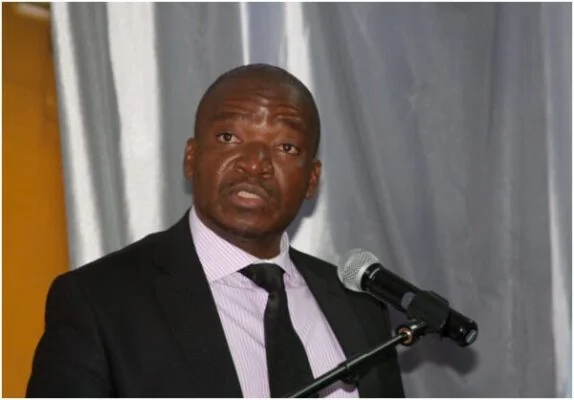
RBZ governor John Mangudya (pictured) told Business Times this week an agreement on shareholding had been submitted and the deal would be concluded by the end of the third quarter.

“We have made significant progress on the FPR unbundling as we have submitted an agreement of shareholding to the relevant parties and they are going through them so that they will give us feedback on the issue,” Mangudya said.

Under the proposal, big mining houses have been offered a 50% stake in the gold refining unit, while the small-scale miners and FPR gold buying agents were offered 7% and 3% respectively.

The proposal follows the model of Rand Refinery, South Africa’s biggest refinery, which is owned by the five largest gold miners — AngloGold Ashanti, Gold Fields, Harmony, Sibanye Gold and DRDGOLD.

Mangudya said the unbundling of FPR is designed to partially privatise the gold refining business by allowing private players to acquire a stake therein and in the process secure and endear the private sector’s interests in the production and marketing of gold in Zimbabwe.

RBZ is expecting  that the gold producers’ compliance levels in the trading of gold will significantly increase the output due to the fact that gold dealers will be part of the decision-making process in gold trading.

The privatisation of FPR comes after lobbying from some players in the mining business.

Large scale miners’ representative arm, Chamber of Mines of Zimbabwe  CEO Isaac Kwesu said: “Some of our members are confirming the development but we only wait to hear from them if they have agreed or not.

“We don’t tell them to agree or turn down the offer but it is best for them to do so.”

Gold Miners Association of Zimbabwe chief executive officer, Irvine Chinyenze  said progress has been made in the unbundling processes.

However, there was a need to bring in more players in the gold buying sector to promote competition in the sector, he said.

“The unbundling process is going on smoothly but we need  more players in the buying of gold to be competitive and give the miners a good run  for their money,” Chinyenze said.

Among the country’s biggest gold producers are RioZim and Caledonia Mining.

FPR started refining gold in 1988, and at its peak producers from abroad sent in their gold for refining at its Msasa refinery. However, FPR has not used most of its installed capacity to refine 50 tonnes of gold per year.

With more gold expected through the formal channels, experts believe FPR full capacity will be reached by 2022.


Business Times

Zim dollar slightly eases against US$

0

THE Zimbabwe dollar has slightly weakened to 85,63 against the United States dollar at this week’s foreign currency auction platform conducted on Tuesday.

Last Tuesday, the exchange rate at the auction was $85.50.

A total of US$46 million was allotted this week, according to the Reserve Bank of Zimbawe (RBZ) with the bulk of the allotment channelled towards raw material procurement followed by machinery and equipment.

The Apex Bank said a total of US$8,7 million was allocated to the Small to Medium Enterprises auction against US$37,3 million that was allocated to the main auction.

The main auction received a total of 402 bids from which 370 were accepted while 32 were disqualified. The SMEs auction received 588 bids with 544 accepted and 44 disqualified, it said.


The Chronicle

Mines and Minerals Act unpacked

0

The Mines and Minerals Act (Chapter 21:05) (the Act) is the principal Act regulating the mining industry in Zimbabwe. 

There are several regulations and other Acts that apply. In this article an overview is given of the Act. Space permitting specific issues or parts of the Act will be dealt with in future.

Arrangement of the Act

The Act is arranged into twenty seven parts (27) from Part 1 to Part XXVII. Each part is made up of related sections. The key parts are explained below.

Preliminary Issues

These are covered in Part 1, sections 1 to 5 and cover aspects such as the Act’s short title, that rights to minerals are vested in the President.
It also includes how mining rights are acquired with respect to all minerals, mineral oils and natural gases. The interpretation section contains definitions of key words used in the Act.

Establishment and functions of the Mining Affairs Board (“MAB” or “the Board”)

Part 11, comprising sections 6-13, covers the establishment and functions of the MAB and that the Board shall exercise and perform the powers, functions and duties conferred and impose upon it by the Act. Broadly, the MAB deals with the granting of mining rights, their withdrawal or cancellation, approving certain mining agreements and transactions. The composition of the MAB is addressed.

Register of approved prospectors

Part III, made up of sections 14-19, applies. Prospecting means searching for a mineral deposit. The Secretary in the Ministry shall establish and maintain a register of approved prospectors. Details will include the prospectors, application to be an approved prospector, expiry of registration (5 years) and its renewal, cancellation or suspension.

Acquisition and registration of mining rights

Part IV, comprising sections 20-62, is of interest to many. Basic mining rights involve the right to prospect for mineral deposits, the right to carry on mining operations on a claim and leasing. 

The holder of mining rights is entitled to the exclusive right of mining any ore or deposit of any mineral which occurs within the deposit of any mineral which occurs within the vertical limits of the area covered in the mining location.

Any adult person who is a permanent resident of Zimbabwe or any duly appointed agent of such person may take out one or more prospecting licences on payment of prescribed fees.  According to section 23 a prospecting licence shall be valid for two years. Sale of prospecting licence is forbidden.

Section 26 covers land that is open to prospecting which includes all State and communal land, certain private land, certain land held under any enactment and requiring title from the State. 

Other sections cover the discovery of minerals or precious stones, registration of blocks, numbering of locations, pegging of sites, registration of sites, cancellation of certificate of registration of block or site and lost certificates of registration.

Mining leases

Part VIII, made up of sections 135-157, applies. In terms of section 135(1) the holder of a registered mining location or contiguous registered mining locations may make written application to the mining commissioner for the issue to him of a mining lease in respect of a defined area within which such mining location or locations are situated. The MAB decides on the application and its decision is final and without appeal.

Section 142(3) covers the conditions to be met for the application for a mining lease to succeed. Section 150(1) covers the rights enjoyed by the holder of a mining lease.

Special mining leases

Part IX, comprising sections 158 to 168, applies. Section 159(1) defines conditions for a special mining lease, essentially a minimum foreign currency investment and that the output therefrom should be principally for export. The special mining lease is approved or refused by the President upon recommendations by the MAB and Minister.

Rights of claim holders and land owners

Part X, being sections 169-196, applies. This part covers mining rights in respect of a registered block of precious metal reef claims.

Preservation of mining rights

Part XI, consisting of sections 197-221, applies. The part deals with aspects such as first inspection certificate, second inspection certificate and subsequent inspection certificates.

Royalty

Part XIV, comprising sections 243-254, is applicable. Royalties are charged on mining output. According to section 244(1) the miner of a registered mining location shall pay royalty on all minerals or mineral bearing products won from such location which have been disposed of by him or on his behalf, whether in Zimbabwe or outside during any month at rates set from time to time.

Payment to local authorities

Part XV, being sections 255-257 applies and deals with payments made to local authorities with respect to mining.

Abandonment and forfeiture

Part XVI, or sections 258-273, deals with abandonment of unregistered locations, registered blocks or sites, forfeiture of precious metal claims, of precious stones blocks, of mining leases or mining locations.

Registration of transfers, hypothecations, options, tribute agreements and conditions governing mining rights on reserved ground

Part XVII, being sections 274-282, applies. This is a key part of the Act and covers areas such as registration of transfer of mining locations, registration of hypothecation of mining location, hypothecation in respect in respect of loans granted to State and registration of tribute agreements, etc.

Approval of tribute agreements

Part XVIII, being sections 283-290 is applicable. In terms of section 284 every tribute agreement should be examined and approved by the MAB or Mining Commissioner.

Special grants

Part XIX, comprising sections 291-296, applies. In terms of section 291 (1) special grants to carry out prospecting or mining operations are issued by the Secretary and rights thereto are in terms of section 294(2).

Special grants for coal, mineral oils and natural gases

Part XX, being sections 297-307, applies. According to section 298 — rights to mine coal, mineral oils or natural gases may only be acquired under special grant. The special grant is approved by the President.

Some areas not covered

Many other parts of the Act have not been covered due to space considerations.

Disclaimer

This simplified article is for general information purposes only and does not constitute the writer’s professional advice. Due to the numerous laws involved frequent changes are inevitable. To be compliant organisations and individuals are advised to consult adequately.

Godknows Hofisi, LLB(UNISA), B.Acc(UZ), CA(Z), MBA(EBS,UK) is a legal practitioner/conveyancer with a local law firm, chartered accountant, insolvency practitioner, registered tax accountant, consultant in deal structuring, business management and tax and is an experienced director including as chairperson. He writes in his personal capacity. He can be contacted on +263 772 246 900 or [email protected].

US$1,8 million steel project fails to take off

0

THE planned US$1,8 million steel manufacturing plant in Bulawayo through a joint venture agreement between Primetone Investment, a local company and an Asian group companies, Kanku International, has failed to take off due to funding challenges.

In February 2019, a delegation from Kanku International in India visited the site of the proposed project in Kelvin Industrial Site and announced their strategic partnership discussion to build the steel manufacturing plant.

Speaking by telephone yesterday, one of Primetone Investment directors, Mr Kudzai Mumvuri, said the planned project has fallen by the way side.

“We had some challenges with those guys (Indian investors), they failed to raise part of the money that was required and they left,” he said.

“However, by the end of this year because we have found an investor locally, we will be able to bring what is required and then start the project sometime next year.”

It is hoped that if the latest project plan materialises, the proposed enterprise would create 250 jobs. Mr Mumvuri said when they were mobilising equipment for the plant, some of the equipment that was at the project site was stolen, further delaying plans to kick-start the investment.

“The other hurdle that we also encountered for the project is that when we were also trying to look for the equipment, thieves broke into the place and stole all the copper pipes and copper gadgets,” he said.

“That stripping also had an impact on the project.”

It is hoped that the coming on board of this new steel producing company would bring a lot of benefits in the engineering, iron and steel sector and the country at large. Following the demise of the Zimbabwe Iron and Steel Company (Zisco) in 2008, the country is spending US$1 billion per year on steel related imports.

In addition, the closure of Zisco has also had some negative repercussions on the engineering, iron and steel sector, construction industry as well as the downstream industries.

Some of the companies have either scaled-down or closed operations as a result of the demise of Zisco, then the country’s largest integrated steel manufacturing plant in Africa.

At its peak in the late 1990s, Zisco employed 8 000 workers, producing one million tonnes of steel annually.

The Government, which is seeking a strategic partner to revive operations at the Redcliff-based steel plant, last month announced that it had extended expressions of interest on investors willing to invest in the defunct company due to the Covid-19 disruptions


The Chronicle

PPC Zimbabwe declares US$4,4mln dividend

0

PRETORIA Portland Cement (PPC) Zimbabwe has declared a US$4,4 million gross cash dividend for the financial year ended 31 March 2021.

In its integrated report for the period under review, the holding firm noted that the economic environment in Zimbabwe was greatly affected by the Covid-19 pandemic.

“The resulting lockdowns increased unemployment and impacted operations, negatively influencing volumes in the financial year 2021.

“Nevertheless, PPC Zimbabwe recovered from the slow start to trade slightly above planned volumes for most of the year, declared and paid a gross cash dividend of US$4,4 million,” said the holding company


The Chronicle

Hyperinflation chomps down PPC profits

0

CEMENT manufacturer PPC Africa suffered a major dent to its profitability as a result of the 75% depreciation of the Zimbabwean dollar against the South African rand, the company has revealed.

In its summarised consolidated financial statements, PPC revealed that the hyperinflationary environment in the country had affected the company’s overall performance

“The impact of hyperinflation accounting and the 75% depreciation of the Zimbabwean dollar against the South African rand reduced PPC Zimbabwe’s contribution to the group’s financial performance,” the company said.

“In light of the prevailing economic conditions affecting the value of the Zimbabwean dollar, PPC Zimbabwe is focused on cash preservation and maximising US dollar EBITDA [earnings before interest, taxes, depreciation, and amortisation].

“The business is financially self-sufficient and declared and paid a cash dividend to PPC of US$4,4 million in December 2020.

“Subsequent to the year-end, a further dividend of US$2,6 million was paid to PPC”

The cement manufacturing entity said it had received a further US$11,2 million  during FY 2021 from the Reserve Bank of Zimbabwe as the central bank settles the  debt from legacy funds.

It said despite the challenging economic environment and the impact of COVID-19-related lockdown restrictions on sales, PPC Zimbabwe cement volumes increased by approximately 10%, supported by ongoing infrastructure projects.

“PPC implemented price increases in local currency to offset input cost inflation and the devaluation of the local currency.”

It said despite the recovery in cement demand in most of its markets, PPC was mindful of the prevailing uncertainties around the COVID-19 pandemic and its impact on economic activity.

“PPC will remain focused on improving cost competitiveness and cash generation.

“It will take the necessary strategic and operational measures to ensure that it can continue to serve its customers, protect its employees, and implement strategic initiatives to ensure financial sustainability through all demand cycles.


Newsday

Diamond Firm ZCDC Under Parliament Scrutiny

0
THE Parliamentary Portfolio Committee Mines and Mining Development queried the existence of the Zimbabwe Consolidated Diamond Company (ZCDC) as a state-controlled entity during a hearing on its controversy-laden operations Monday.
The committee members argued that ZCDC’s existence was confusing as it was not a parastatal because its formation was made through a Companies Act and not an act of Parliament.
ZCDC was formed following the March 2015 Government decision to consolidate all diamond mining companies in Zimbabwe to form a wholly owned government company.
The arguments started after ZCDC chief executive officer Mark Mabhudhu described it “an entity formed through the ministry of Mines and Mining Development and wholly owned by government of Zimbabwe.”
However, Zanu PF Uzumba-Maramba-Pfungwe legislator Simbaneuta Mudarikwa sought an explanation over how it was created from the ZCDC management.
“Can you explain to us how you were created. Were you created by an Act of Parliament or through a Statutory lnstrument(SI)?” said Mudarikwa.
Mabhudhu told the committee that it was a creation of the Companies Act and not an act of Parliament as required for all state enterprises.
An unsatisfied Mudarikwa then said: “Basically, this means that ZCDC is not a government institution. All government companies are created through an Act of Parliament or if it was created through Zimbabwe Mining Diamond Company (ZMDC) which they used to tell us, there must be board minutes to confirm this company was created through ZMDC. So as they stand now, this is an illegal institution which is not supposed to be there.”
“There is no provision in the Act where a ministry forms a company and put officers from the ministry to run it and call it a government institution.”
an overwhelmed Mabhudhu referred members of the committee to the Mines ministry saying: “It is inappropriate for me to dwell in that area as my role is to run the operations of the company and make money for the organisation. In accordance to corporate governance,  management may not have a legal standing to deal with these questions. We may escalate the matter to the parent ministry so that we get the facts correct.”
But MPs could have none of it as they kept demanding answers, with Zaka Central MP Davison Svuure immediately chipping in with demands for a clear answer on the issue.
“Before we go deep with the discussion, are we dealing with a legal entity? That part needs to be clarified  otherwise we will be discussing something that has no premise.”
Zanu PF Magunje MP Cecil Kashiri also said the committee needed to know and understand whether ZCDC was a private or public organisation so that it could move on with the hearing of the meeting.
At one point, Mabhudhu admitted after Mudarikwa’s request for an answer regarding the court judgment where companies which were banned from mining diamonds in Marange successfully challenged the formation of ZCDC.
He revealed that one such companyy, Mbada Diamonds contested the consolidation winning the case.
The ZCDC was established as a merger of DTZ-OZGEO, Marange Resources, Kusena Diamonds, Diamond Mining Company and Gye Nyame, when Anjin and several other diamond miners were de-licensed by the government and barred from operating in Marange, in Manicaland province, for alleged impropriety.

Padenga pours US$50m into gold mine

0

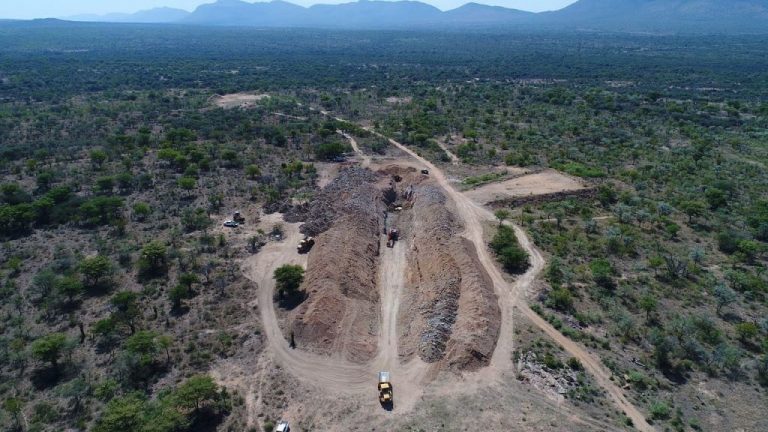
VICTORIA Falls Stock Exchange (VFEX) listed company, Padenga Holdings Limited, has invested US$50 million in Eureka Gold Mine with the Guruve-based mining project set for opening this month.

Eureka was forced to shut operations after running into viability problems two decades ago with capital shortages at the centre of the mine’s troubles.

Through its gold subsidiary, Dallaglio, Padenga has committed to resuscitate the mine in partnership with the Government.

Speaking recently in Victoria Falls, Padenga Holdings board chair, Mr Themba Sibanda, said the company has a long-term commitment to Zimbabwe and support for the Government’s Vision 2030.

He said the company was also angling on diversifying into mainstream agriculture as he appealed to Finance and Economic Development Minister Professor Mthuli Ncube to facilitate the undertaking.

“Our first results as a listed company in June 2011 reported turnover of US$19,7 million. Ten years later we migrate to VFEX and our last published results for the year ended December 2020 showed group turnover of US$71,4 million,” he said.

“Through its gold mining subsidiary Dallaglio Investments, Padenga is investing US$50 million into rehabilitating Eureka Gold Mine.

“This mine is due for commissioning this month and once in full production, will be a significant contributor to the gold produced in this country and the attendant export earnings.”

Eureka Mine is one of the many projects being resuscitated as the Government targets a US$12 billion mining economy by 2023, anchored on 100 tonnes of gold, alongside platinum group of metals, hydrocarbons like oil and gas, coal, gold, lithium, chrome and ferrochrome as major contributors. Other key projects include Shamva Gold Mine, which was commissioned last year and Blanket Mine installation of a new US$60 million shaft in Gwanda.

Mines and Mining Development Minister, Winston Chitando recently said the US$12 billion target was achievable if producers get improved access to alternative sources of financing such as loans.

The mining sector continues to play a significant role in the country’s economic development, contributing 60 percent of export receipts in 2020. Padenga expects its listing on VFEX to boost its gold venture and balance fortunes on its traditional crocodile skins businesses.

The company started as a small crocodile farm in Kariba in 1965 and was acquired by Innscor Africa in 1998. Over the last two decades Padenga has grown rapidly despite challenging circumstances, which forced the company to move away from the “once viable, simplistic and happy ‘go lucky’ approach to farming practices of yesterday, to more advanced scientifically supported farming methods,” Mr Sibanda said.

He said their strategy, while extremely challenging to implement operationally, has proven beneficial, with Padenga continuing to push the envelope of precision farming, earning the company the three-time exporter of the year award.

This put Padenga in the league of a small group of premium crocodilian skin suppliers globally known for their ability to produce premium grade crocodilian skins.

Padenga listed on Zimbabwe Stock Exchange (ZSE) in 2010 after being demerged from Innscor Africa.


The Chronicle 

RBZ incentives spur gold deliveries

0

THE country’s gold output last month increased by 75 percent to 2,924 tonnes from 1,668 tonnes in May on the back of incentives availed by the Reserve Bank of Zimbabwe (RBZ).

Latest statistics released by Fidelity Printers and Refiners (FPR), which is the country’s sole gold buyer, indicate that last month’s output was 107 percent above 1,409 tonnes achieved in June 2020.

For the six months period to June, small scale miners and primary producers’ output was 9,954 tonnes compared to 10,611 tonnes during the corresponding period last year.

Zimbabwe Miners Federation chief executive officer, Mr Wellington Takavarasha, whose organisation represents small-scale miners said:

“On average, small scale miners produced 1,7 tonnes of the 2,924 tonnes produced last month.

“The increase may be attributed to the incentives the Reserve Bank through FPR has put in place and also some improvement in the cash flow, thus, their (FPR) price was now commensurate with the international market price.”

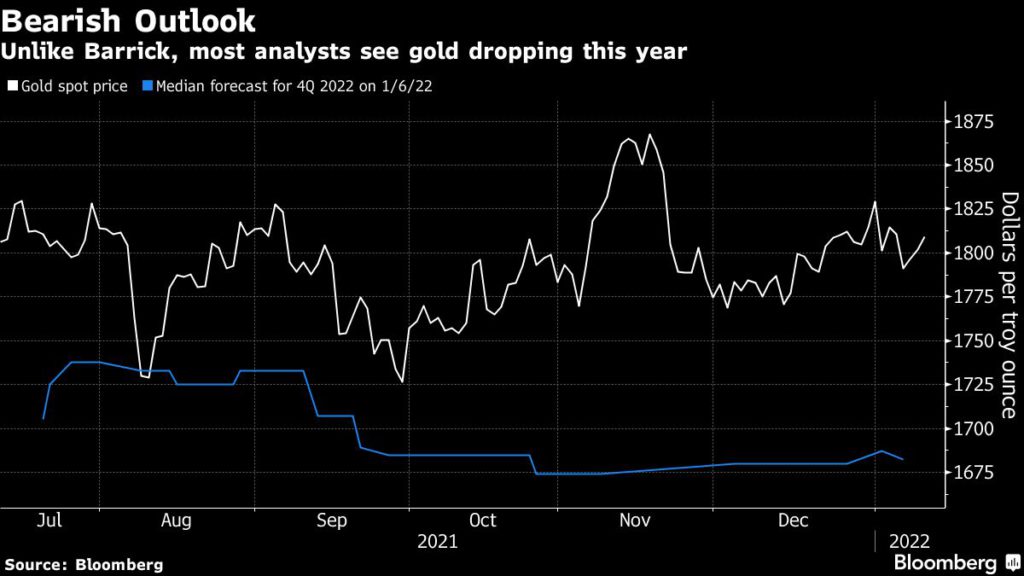
On the international market, gold price is presently fluctuating between US$55 and US$58 per gramme.

Of the 9,954 tonnes produced during the six months ended June 30, 2021, a total of 4,801 tonnes came from the small-scale miners while 5,153 tonnes were delivered by large-scale miners.

During the same period last year, small-scale miners delivered 6,049 tonnes while primary producers contributed 4,561 tonnes. Smuggling, however, remains a major setback with the most gold believed to be smuggled into neighbouring South Africa and Dubai.

In the first quarter Treasury report for the period ended March 31, 2021, major drawbacks for the mining sector included unstable power supply, heavy rains, which culminated in the flooding of shafts, working capital challenges and subdued demand for some minerals.

In the last three years, Zimbabwe’s annual gold production has declined from 33,2 tonnes achieved in 2018 to 19,052 tonnes in 2020.

In 2019, stakeholders in the mining sector set a target of 40 tonnes but delivered 27,66 tonnes. ZMF maintains that the 40-tonne target is still achievable if all stakeholders make concerted efforts to support production and plug leakages.

The yellow metal is one of the sub-sectors that the Government is pinning hopes on towards the US$12 billion mining strategy by 2023 launched by President Mnangagwa in 2019.

Under the US$12 billion milestone, gold is expected to contribute US$4 billion from about US$2,7 billion contribution to the fiscus


The Chronicle

illegal mining endangers villagers

0

Illegal gold miners in Umguza District are putting the lives of villagers and livestock in danger by using prohibited lethal chemicals such as mercury in search of the precious mineral.

Boitumelo Makhurane

According to scientific studies, mercury is detrimental to human health as exposure can lead to skin disease, infertility and birth defects.
When inhaled, the chemical can also cause lung cancer.

Mercury is used for gold amalgamation in artisanal mining.

The chemicals pose a threat to the health of animals, humans and aquatic life. Gold panning activities are also causing siltation, an accumulation of fine soil that is blamed for diminishing water supplies in the dams that serve the city. Popularly known as “omakorokoza”, the gold panners have ramped up their illegal activity in the city’s catchment areas.

Matabeleland North Environmental Management Agency (EMA) provincial manager Mrs Chipo Mpofu-Zuze said loss of cattle was rampant in Bubi and Umguza districts where most of the illegal activities are taking place.

“The abandoned sites are characterised by severe land degradation, with huge open pits which are a death trap to human beings and animals. Farmers continue to lose cattle to illegal miners who dig pits resulting in cattle falling into those pits,’’ she said.

Mrs Mpofu-Zuze urged villagers to stop abusing the environment, warning those conducting illegal activities that the law will soon catch up with them.

Villagers in Umguza District have raised concern saying they are losing a large number of their livestock as water sources are already polluted with dangerous chemicals such as mercury.

Mr Thembani Thebe, one of the villagers, said he lost two of his cattle as they were drinking in a pit that illegal miners were operating from.

He said the pit is not fenced around and this will cause more people to lose their cattle.

“I have lost two of my cattle that were drinking from the mining pits. I found them lying there after two days of searching. The pit is not secured. making it more dangerous to our children and livestock,” said Mr Thebe.

He said they reported the issue to EMA.

Last month, Bulawayo City Council (BCC) deployed rangers on a full-time basis at its water catchment areas to safeguard the city’s supply dams from being contaminated by toxic chemicals such as cyanide and mercury, following an upsurge in illegal gold panning activities.

Between January and May, council rangers apprehended 229 panners and handed them over to the police.


The Chronicle