Home Blog Page 437

RioZim technically insolvent

0

Gold miner, RioZim Limited, is technically insolvent with a staggering negative working capital of about ZWL$1bn, creating uncertainty in its ability to continue as a going concern.

RioZim’s current assets stood at ZWL$2.8bn in the reviewed period compared to a current liabilities value of ZWL$3.8bn, meaning current liabilities exceeded current assets by ZWL$1bn.

The financial position effectively means RioZim could find it difficult to pay off its obligations as they fall due.

Its loss in the six months to June 30, 2021, widened to ZWL$1.5bn from ZWL$77.4m  reported in the same period last year.

In its financial statements for the six months to June 30, 2021, published last week, the miner said its operations were significantly impacted by rain-induced power cuts and plant breakdowns in the first quarter.

“These factors ordinarily indicate the existence of a material uncertainty on the group’s ability to continue as a going concern and that it may be unable to realise its assets and discharge its liabilities in the normal course of business,” the miner said.

The company, however, said there were other factors which support the appropriateness of the going concern assumption in the preparation of the financial statements.

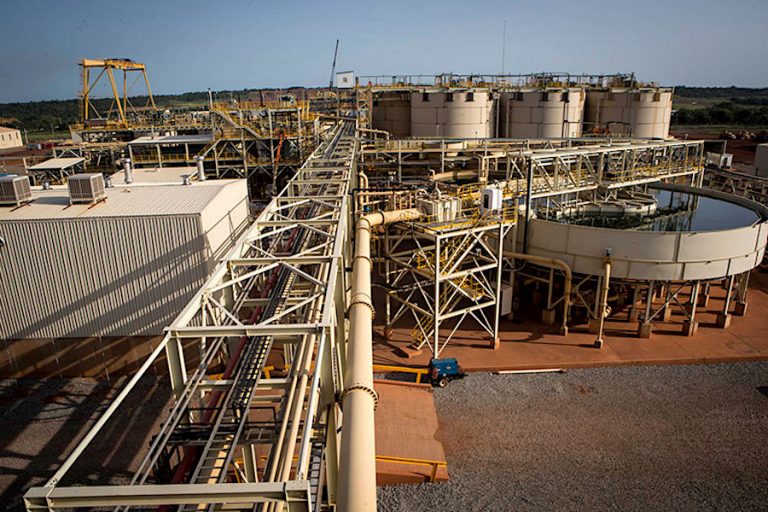
It said the group had secured funding to complete the BIOX project at Cam & Motor mine during the period.

It said installations of equipment and various components of the BIOX Plant were at an advanced stage at period end and continued subsequent to period end.

RioZim said commissioning of the Project is scheduled for Q4 2021.

Production is forecast to increase at Cam & Motor mine after commissioning of the BIOX Plant which will improve profitability and the working capital position of the group, it said.

“The group is in the process of installing generators at its mines to complement inadequate power supplies from the power utility. This will increase plant uptime and gold production,” it said.

RioZim said installations of an induction furnace which was purchased during the period at ENR were ongoing as at period end.

“The induction furnace will enable the Refinery to increase production through treatment of low-grade material from its dumps which will contribute positively to the working capital of the group,” it said.

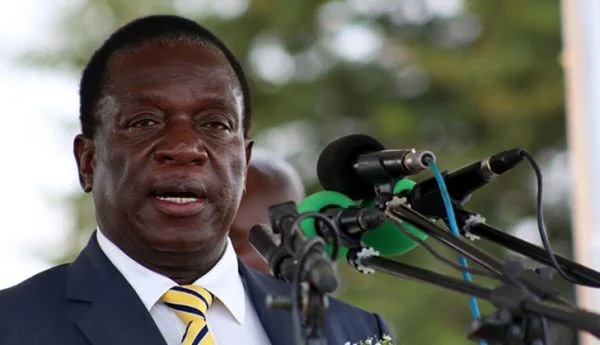
RioZim chairperson Saleem Beebeejaun (pictured) said the promulgation of Statutory Instrument 127 of 2021 by the Government also added complexities on the pricing of local inputs, which despite the intended purpose, resulted in increased operational costs for businesses.

The overall effect of the Covid-19 pandemic and a difficult operating environment adversely impacted the operating results of the group for the half year period,” Beebeejaun said.

Production went down 4%  to 0.56 tonnes in the reviewed period   from 0.58 tonnes reported in prior year due  to the rain-induced power outages and plant breakdowns experienced in the first quarter of 2021 which stifled plant throughput across the group’s mines.

Beebeejaun said: “Cam also experienced persistent rain induced breakdowns on the plant which also negatively affected plant throughput. Consequently, gold production for the period fell by 9% to 0.181 tonnes compared to the prior period’s 0.199 tonnes.”

Revenue for the group, however, grew to ZWL$2.6bn in comparison to ZWL$616.4m due to a direct result of the depreciation of the local currency against the United States dollar.


Business Times

Afrochine completes coke oven battery construction

0

Chinese firm, Afrochine Dinson Colliery, has completed phase one of the construction of its coke oven battery in Hwange.

At a post Cabinet briefing Information Publicity and Broadcasting Services minister, Monica Mutsvangwa said: “…the construction of the foundation for the targeted coke oven battery at the Afrochine Dinson Colliery Plant in Hwange is complete.”

Business Times can report that works on the US$30m Afrochine Dinson Colliery plant started two years ago.

But, progress at the plant, which is set to become the biggest and most advanced coke oven in Zimbabwe,  was stalled by the outbreak of Covid-19.

Afrochine is a subsidiary of Chinese steel producer, Tsingshan Group.

With the first phase already completed, Mutsvangwa said the second phase of the construction was progressing well.

Upon completion of the second phase, the company is targeting to produce about 400tonnes of coke per day and also 500 000t per year.

In April this year, Afrochine’s parent company Tsingshan, completed the construction of two furnaces in Selous.

The company is also planning to commence construction of a third coke battery and a power station in the Hwange area.

Tsingshan who has been operating in Zimbabwe for 10 years is a top player ranked number 329 on the Global 500 Fortune companies’ index, and number 84 in the top 500 Chinese enterprises, and number 14 in Chinese private enterprises 500.

Tsingshan’s project is expected to transform Zimbabwe and potentially the rest of Africa given its huge economic multipliers on rail and road, logistics, power generation, and transmission.

In 2019, President Emmerson Mnangagwa, launched the US$12bn mining strategy and as the sector is expected to contribute about $20bn by 2023.


Business Times

Zimbabwe Biggest Mining Exhibition, a must attend

0

The Zimbabwe International Trade Fair (ZITF) last week announced dates for the 25th edition of the Mining, Engineering and Transport Exhibition (Mine Entra) for early November in Bulawayo.

Rudairo Mapuranga

The event which will be held from November 3 to 5 provides a platform for players in the mining sector to engage with equipment suppliers and service providers creating an enabling environment for the growth and development of the mining industry.

Our trade publication the Mining Zimbabwe Magazine will be distributed free to all visitors at the expo carrying the advertiser’s message to critical players in the mining industry.

The mining sector is projected to be the country’s leading industry for economic resuscitation with the government coming up with the mining roadmap where the industry is expected to contribute annual revenue of US$12 billion by 2023 subsequently leading the country to achieve an upper-middle-income economy by 2030.

The MineEntra is therefore significant in bringing captains of the industry under one roof to discuss and deliberate the way forward in the achievement of the US$12 billion mining vision.

This year’s expo will feature an interesting and varied product mix appealing to large and small-scale mining operations.

The expo will help to explore, extract, expand and sharing of mining visions through the Women in Mining Conference and the Young Professionals Forum which will highlight opportunities for both women and youths It will also include the display of mining equipment, chemicals and protective clothes as well as insurance and security services which are needed by miners.

The following are the reasons miners and suppliers should attend without fail:

1)      One of the best channels to gain exposure

The Mine Entra event gathers influencers and decision-makers from all over the world into one location. This, therefore, becomes an advantage for both miners and equipment suppliers in Zimbabwe as they will be exposed to international standards of doing business. The MineEntra can also be the go-to marketing channel for mining companies (especially juniors) to promote their stock thus advancing the US$12 Billion mining roadmap. Trade Publications like Mining Mining

2)      Get in front of decision-makers face to face

The MineEntra is the only mining marketing exhibition channel in Zimbabwe where prospective miners and suppliers are given the opportunity to meet with multiple decision-makers face to face.

3)      Promotion

At Mine Entra, exhibitors can be given the opportunity to give a presentation to these decision-makers making it easy for them to promote their ideas and products without strain.

4)      Meet and connect with prospective customers

The Mine Entra exhibition allows exhibitors to meet and connect with prospective customers in person instead of communicating with them over the phone. This improves relationships between miners and suppliers thereby strengthening their bond.

5)      An opportunity to learn about new developments

The country’s biggest mining exhibition and conference is a place for suppliers to announce and display their latest innovations and developments, exhibiting at the Mine Entra gives an opportunity for suppliers to make new sales and connect with new and existing customers.

6)       An opportunity to Rapidly expand database of sales leads

While skimming through the internet and social media might help in coming up with a database, it often gives companies thousands of unqualified phone numbers. The Mine Entra Exhibition becomes the only platform in Zimbabwe to give you qualified leads. Exhibiting at the Mine Entra has the potential to give exhibitors hundreds of visitors per day at their exhibition booth.

7)      Optimise sales and lead generation strategy

The Mine Entra is an excellent opportunity for companies to expose their sales team to hundreds of different prospects in a short period, it gives companies a quick experience that allows them to rapidly test new sales tricks and marketing strategies in a very responsive environment. It gives suppliers the opportunity to try different sales pitches on prospects and quickly learn which ones work and which ones don’t.

8)      Learn what competitors are doing right

Exhibiting at the Mine Entra allows companies to observe what their competitors are doing right and apply their tactics to their own businesses. Great businesses are aware of their competitors, and trade shows are one of the best opportunities to connect with competitors and understand their sales strategy, their pricing, and the reasons for their success.

9)      Strengthen and brand establishment

The MineEntra gives companies the opportunity to strengthen their brands through face to face meetings, learning about their competitors and optimizing sales and leads strategies.

10)   Close deals with new customers during the show

Suppliers have the opportunity to close deals with miners during the MineEntra exhibitions because most miners will be there  solely to find new equipment and better deals.

Mining sector to grow by 11% this year

0

The mining industry is expected to have an 11 per cent growth output in the second half this year, after seeing production fall across key minerals in the first quarter.

Vongai Mbara

Delivering a State of the Nation Address at the Fourth Session of the Ninth Parliament, President Emmerson Mnangagwa said the mining sector is expected to swing into an 11 per cent growth due to new innovative programs in the sector.

“The mining sector this year is expected to grow by 11% as a result of robust programs which encompass increased exploration and expansion projects, resuscitation of closed mines and opening of new ventures as well as mineral beneficiation and value addition,” said the President.

This comes as Government pushes for a US$12 billion mining sector by 2023.

Last year, overall production fell by 4,7 per cent due to the negative impact of the Covid-19 pandemic and other challenges while production fell across key minerals in the first quarter.

Volume declines over the 12 months to December 2020 were recorded in gold, lithium, high carbon ferrochrome ore and copper while platinum, palladium, rhodium, diamonds and cobalt registered expansion.

However, with new mining policies, provisions and projects, the government believes that an 11% growth in the mining sector is achievable this year.

Coal Giant targets to produce 200 000 tonnes a month

0

Zimbabwe’s biggest coal producer, Hwange Colliery Company Limited (HCCL) is targeting to produce not less than 200 000 tonnes of coal per month, the company’s Managing Director Dr Charles Zinyemba has said.

Rudairo Mapuranga

Through the company’s Condensed Interim Financial Results For the half-year ended 30 June 2021 Dr Zinyemba said Hwange Colliery performance continues to improve due to established funding support, as a result, the firm is expecting operations to stabilize with immediate consistent production of 200 000 tonnes a month.

“A lot of work has gone into stabilisation of the business. With the Company being under reconstruction, it has been challenging to obtain both working capital and long-term financing for the business. It is however pleasing to note that as the Company’s performance continues to improve, funding support in the form of lines of credit to the business from local banks and regional financiers has likewise been established. As a result, the operations are expected to stabilise within the next 6 to 12 months. The immediate target is to consistently produce at least 200 000 tonnes a month.” Dr Zinyemba said.

During the period under review, the company’s revenue increased by 38 per cent from ZWL 2.19 billion in 2020 to ZWL 3.03 billion in 2021 on an inflation-adjusted basis. This was largely due to a combination of an increase in high-value coking coal sales and regular product price adjustments in line with market value.

The Company’s gross profit increased by 139 per cent to ZWL 851.60 million in historical terms compared to the same period last year. Net loss for the period under review decreased from ZWL 991.75 million to ZWL 538.76 million in historical terms.

The net loss is a result of ZWL 258.05 million exchange loss on foreign legacy debts and deferred tax of ZWL 441.15 million during the period under review.

The Company’s production increased by 51 per cent during the period under review, with the main challenges having been foreign currency to import spares and consumables. The sales volumes however increased by only 23.7 per cent compared to 2020 mainly as a result of the influence of Covid-19 on the market and logistics, as well as the reduced thermal coal offtake. Going forward, the Company has targeted to increase coking coal production and sales which will in turn increase capacity to discharge obligations to creditors as well as create a positive balance sheet in the medium term.

Hwange Colliery experienced a fatality-free shift record as at 30 June 2021. A successful Covid-19 awareness and vaccination program, for both workers and the greater Hwange Community, was run by the Company.

RioZim Diamonds Production Down 4%

0

RZM Murowa, a subsidiary of RioZim has recorded a 4% drop in output in the half-year ended June 30, 2021, due to technicalities associated with the migration of mining activities.

Vongai Mbara

The mining group produced 564 kg of gold for six months, which was a 4% decline from the same period prior year’s production of 586 kg.

The depressed production was mainly attributable to the rain-induced power outages and plant breakdowns experienced in the first quarter of 2021 which stifled plant throughput across the Group’s mines.

Presenting the group’s half-year results, RioZim chairperson Saleem Beebeejaun said the lowered production also prompted the widening of losses.

“The group’s associate produced 240 000 carats for the six-month period, representing a 4% decline from the comparative period’s 250 000 carats,” he said.

“The low production volumes are a result of processing low-grade ore from the K2 pit throughout the period after migration of mining.”

Although no figures were provided, RZM Murowa revealed they sold more diamonds during the period despite the depressed output. Their share of profit from the associate rose to $252,9 million from the prior period’s share of loss of $5,3 million.

It added that its Crown Jewel project which seeks to boost the plant processing capacity to sustain its operations pit is progressing well despite challenges and delays being experienced as a result of the COVID-19.

Gold prices have remained relatively consistent with the same period prior year prices and averaged US$1 777/oz, a 4% increase against US$1 713/oz.

“Revenue generated during the period was $2,6 billion in comparison to $616,4 million in the same period the prior year. The marked increase in revenue was a direct result of the depreciation of the local currency against the United States dollar.

“Resultantly, the lower production achieved led to a loss of $1,5 billion compared to the same period prior year’s loss of $77,4 million,” Beebeejaun said.

He added that going forward, the company will be focusing on the completion and commissioning of its BIOX Plant Project before the close of the financial year as the project remains a key priority for the group.

Terex Trucks changes name to “Rokbak” in Volvo Brand Transition

0

Terex Trucks is now Rokbak, in a move that removes the Terex name from the articulated truck line Volvo Group purchased in 2014.

Marcia Doyle

“Now is the right time for us to carve a brand new name for our business,” says Paul Douglas, Rokbak managing director.

Under the Rokbak brand, Volvo Group subsidiary Volvo Construction Equipment is offering two models, the 30.9-ton RA30 and the 41.9-ton RA40. Coming in new colors and livery, Volvo says, the two units offer better fuel economy, lower emissions, improved safety and greater durability than the previous Terex Truck models, TA300 and TA400.

Improvements include Tier 4 engines, a new transmission on the RA30, the introduction of Haul Track telematics and an emphasis on operator comfort and safety. The RA30’s ZF transmission has a 4,000-hour oil change, and the RA40’s Allison transmission comes with a 6,000-hour oil change. In addition, the RA40’s transmission has adaptive shifting and drop-box two-speed ratios, helping the truck maintain optimum momentum, Volvo says.

The Haul Track telematics offers information such as machine location, hours, engine speed and idle time, machine operating parameters, fuel consumption and system fault code alerts.

Wide pivoting steps and service platforms provide safe and easy access to the cab.

“We already have a very healthy order book for the new brand, and we want to further expand our reputation, dealer network and market share,” Douglas says. “We’re still the same skilled, experienced, and passionate team, committed to making rock-solid haulers every day. But we also have a clear vision for where we want to go and who we want to be.”

Rokbak has quite a legacy. Volvo traces the machine’s lineage back to 1934 when Euclid Road Machinery built what Volvo calls the world’s first off-road truck, the Model 1Z. The trucks have been made in Motherwell, Scotland since 1950. General Motors bought Euclid in 1953 and renamed its earthmoving division “Terex,” from the Latin “terra” (earth) and “rex” (king). Terex became independent of General Motors in 1987, was bought by North West Engineering in 1992, forming Terex Corporation. Volvo Group bought the off-road truck line from Terex in 2014 and marketed it until now as Terex Trucks.

“It’s important for us to preserve the heritage, expertise and relationships that have been built up over the years,” says Melker Jernberg, president, Volvo CE and executive vice president, Volvo Group. “We didn’t want to start changing everything about what made Terex Trucks so successful in the first place. It was crucial to allow the company to run with the same autonomy that it always has. As Terex Trucks rebrands to Rokbak, we see continuation of the company’s strong tradition, shaking up the industry and doing things in their own way.”

Prospect identifies a number of exploration targets

0

Prospect Resources has discovered a number of exploration options that might significantly expand the Arcadia Resource.

Shantel Chisango

Speaking to Mining Zimbabwe, Prospect Resources Managing Director Mr Sam Hosack stated that identifying these exploratory targets puts Prospect on the right track to keep funding exploration projects going.

“We are going to fund further exploration so we can realise some value from our skills and knowledge,” said Hosack.

Furthermore, Hosack mentioned that the initiative of sponsoring exploratory projects is only for a short term period.

“This is a plan for the short term future,” said Hosack.

Speaking on the Arcadia project, mining will be carried out by hydraulic, track-mounted backhoe excavators, with ore and waste hauled by off-road dump trucks, according to the business plans.

“It is planned that the company mining will be performed by hydraulic, track-mounted backhoe excavators with ore and waste hauled using off-road dump trucks.”

The company went on to say that open-pit mining method is the most convenient and economic extraction, due to the shallowness of the ore body.

Currently, Prospect’s Arcadia project is deemed as Africa’s most advanced lithium development making it the only independent, shovel-ready project globally without offtake locked up as well as one of the world’s premier hard rock lithium assets.

About Prospect Resources

Prospect Resources Limited (ASX: PSC, FRA:5E8) is a battery minerals company with a focus on lithium in and around Zimbabwe, with the flagship project being the 87% owned Arcadia Lithium project, located on the outskirts of Harare in Zimbabwe. Its Arcadia Lithium Project represents a globally significant hard rock lithium resource. The project is being rapidly developed by Prospect’s experienced team, with the focus on near term production of petalite and spodumene concentrates.

Gvt should decriminalize gemstone possession, Moyo

0

In order to benefit significantly from the country’s semi-precious stones and to witness the growth of the industry, the government of Zimbabwe should decriminalize possession of the stones, Zimbabwe Miners Federation (ZMF) Secretary for Gemstones and semi-precious stones Mr Privelage Moyo has said.

Rudairo Mapuranga

Speaking at a workshop organized by the Zimbabwe Environmental Law Association (ZELA) in Bulawayo,  Moyo said although there is no law that directly speaks for the semi-precious stone industry, there is a need for the government to look into the sector and come up with a law that directly regulates the semi-precious stone industry.

Cutters and traders are reportedly experiencing harassment and unlawful arrests by the police for the possession of semi-precious stones without a licence yet there is no law in the country that specifically address the coloured gemstone industry.

Moyo said it was of importance for the government to come up with a semi-precious stone act to decriminalise the possession of coloured gemstones at the same time curbing smuggling of the stones.

“Government should decriminalize the trading of gemstones so that precious stones are traded through the formal market. This, in turn, will curb the smuggling and leakages of gemstones to other countries,” Moyo said.

The ZELA organized workshop agreed that for the coloured gemstones sector to grow and develop, there is a need for the country to come up with a gemstone policy to guide the producers and investors into the gemstone industry.

Women miners should form syndicates as this would make it easier for them to access information, funding and markets for gemstone production.

The Gemology Centre should be established in Mashonaland West and not in Mutare given that most of the gemstones are produced in Mashonaland West Province.

There is a need to support women to actively participate in the cutting and polishing of gemstones mined in Zimbabwe. This will create more jobs and wealth for the country.

Government departments CSOs need to work together to address the challenges faced by women miners in the gemstone sector.

Privelage Moyo is credited for guiding and assisting miners in identifying semi-precious stones.

Women turn-to artisanal mining to fund agriculture

0

In an effort to fight against poverty induced by the lockdown pandemic and economic woes the country is experiencing women in the villages of Kadoma have rushed into artisanal mining to fund their farming businesses.

Anerudo Mapuranga

Mining is considered as key to national development and economic resuscitation with the government of the view that mining has all it takes to fund agriculture that the country becomes the breadbasket of Africa again.

The women mining using hard manual labour equipment said they have sought the refuge of the hard and risk artisanal mining because they have no other option to raise capital for Agriculture because farming has not been profitable to fund itself of late.

“We have decided to fund our farming businesses through mining, at least with mining we will not be waiting for aid and government inputs scheme. The prices we are getting from our agriculture output are insignificant for farming to fund itself, artisanal mining, for now, is the only solution.” Mbuya waKupa an artisanal miner said.

The women who go for their mining adventures with their children said there would get a maximum of 1 gram of gold on a good day and artisanal mining has been sustainable in funding their farming business.

“We come to work with our children because that is what we have. We are here only during this season, during the rainy season we go for farming. The maximum gold we get a day is a gram.”

The women also said that artisanal mining was hard as men would want to elbow them away from their mining areas and some would want to steal from them.

The Zimbabwe Environmental Law Association (Zela) has been urging the government to enact laws and policies which promote gender parity and protect women in mining.

“Gender mainstreaming across the mining value chain is of paramount importance. The government should enact laws and policies and ensure adherence to Section 17 of the Constitution which calls for gender parity in all spheres.

“The government should support women in mining with the requisite tools to resuscitate their businesses, failure of which could result in some of them failing to continue with their mining operations, thus, plunging them deep into poverty,” Zela said in a statement sometime this year.

The organisation is of the view that the Covid-19 pandemic had negatively affected women run or owned businesses the most, therefore, urged the government to speed up the formalisation of artisanal miners.

“The government should thus ensure it brings finality to the formalisation of artisanal mining. Delays in formalising and regularising artisanal miners continue to affect the sector players whose contribution to the growth and development of Zimbabwe’s economy cannot be overemphasised.”