

Home Blog Page 436

ZMF, experts welcome the RBZ initiative to register gold miners

0

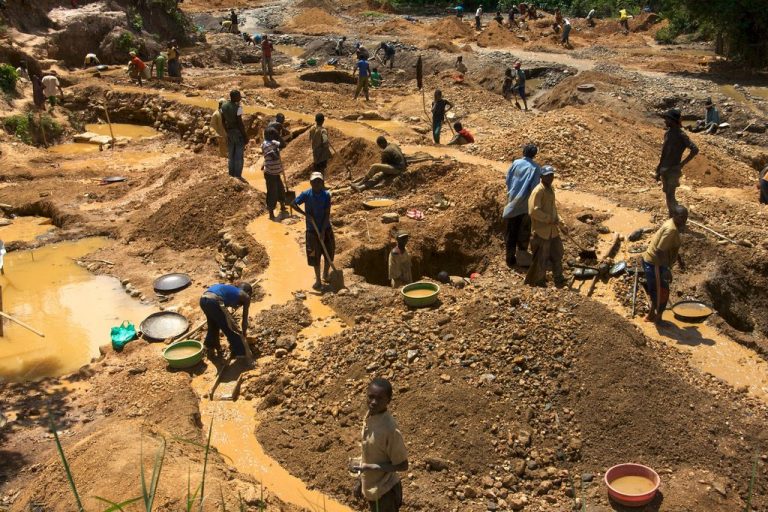
The Zimbabwe Miners Federation (ZMF) has welcomed the Reserve Bank of Zimbabwe’s initiative to register all Artisanal Small-scale Gold miners.

This was after RBZ governor Dr John Panonetsa Mangudya told the National Assembly Portfolio Committee on Environment, Climate and Tourism that all artisanal miners will soon be required to be registered as part of efforts by the government to formalise their operations, curb illegal gold dealing and protect the environment.

The ZMF President Miss Henrietta Rushwaya said the ZMF embraced the announcement and further encouraged the government to decriminalise gold possession.

“We embrace and welcome the pronouncement made by the central bank governor Dr Mangundya with regards to the registration of ASM in relation to ensuring that we live and operate within the confines of Zimbabwean law.

“As ZMF we are saying it is a welcome move and we would also further want to urge the government to decriminalize gold possession and as such by registering ASM I’m sure this will enable them to diligently help them carry out their activities without even being afraid of getting arrested by those that have been tormenting our miners out there in the bush with regards of not being in possession of requisite documentation,” Rushwaya said.

Engineer Clever Sithole – Head Gemologist, (DAI–USAID Invest/ Afghanistan) commended the move saying it promotes sustainable and responsible mining and is the key to unlocking capital funds.

“It is a very commendable move by the RBZ and government. It ensures that sustainable and responsible mining takes place. Also, it helps unlock the crucial needs of capital funds and retooling costs for Artisanal and Small Scale miners.

“ASMs usually have issues in obtaining collateral to source loans hence if RBZ intervenes through formalisation this will guarantee ASM to obtain funding from banks and other lending institutions.
“Issues to do with exploration and business continuity will be addressed. Also, ASM claims dispute resolution will be addressed via formalisation. Formalisation will also help to alleviate the issues around sustainable mining where compliance issues such as obtaining EMA certificates. Miners will be able to conduct their businesses in a more legal way,” Sithole concluded.
Rushwaya urged Miners to go in their numbers when FPR starts the registration exercise and ensure they mine safely.
“We are saying our small-scale miners should go out in their numbers when FIDELITY start the registration exercise and they should ensure that they also mine safely and should make sure that they reclaim everywhere where they will have mined and make the environment conducive for both human beings and animals,” Rushwaya concluded.
Under the new envisaged registration system, the miners’ biometric details would be captured and the miner would be issued with a registration number. Registered miners would also undergo training on environmentally friendly mining methods and land reclamation. Dr Mangudya said a statutory instrument on the requirements for registration was being crafted and would be gazetted soon.

Gold Trade Act [Chapter 21:03] prohibits gold possession without relevant permits. According to the gold trade act

(1) No person shall, either as principal or agent, deal in or possess gold, unless—
(a) He is the holder of a licence or permit; or
(b) He is a holder or tributor; or
(c) He is the holder of authority, grant or permit issued under the Mines and Minerals Act [21:05] authorizing him to work an alluvial gold deposit; or
(d) He is the employee or agent of any of the persons mentioned in paragraphs (a), (b) and (c) and is authorized by his employer or principal to deal in or possess gold in the lawful possession of such employer or principal;
and deals in or possesses gold in accordance with this Act and the licence, permit, authority or grant, if any, held by him.

2) In any proceedings against a person for an offence under subsection (1), the burden shall lie upon such person of proving—
(a) that he falls within one of the exceptions provided in subsection (1); and
(b) that he dealt in or possessed gold in accordance with this Act and the licence, permit, authority or grant, if any, held by him.
(3) Any person who contravenes subsection (1) shall be guilty of an offence and liable to—
(a) a fine not exceeding level nine or twice the value of the gold that is the subject matter of the offence, whichever is the greater; or
(b) imprisonment for a period not exceeding five years; or to both such fine and such imprisonment.
[substituted by Act 22 of 2001, with effect from the 10th September 2002.]

This Act however is in direct contradiction with Fidelity Printers and Refiners (FPR)’s regulation that when selling to the latter one only needs their National Identity card with no questions asked.

The biggest deterrent to gold submissions was unregistered miners fearing arrest if they attempt to sell to the state entity leading to a thriving parallel market. The move by the RBZ will likely see more gold being channelled towards the government coffers as miners will be free to take their gold to Fidelity buying centres without fear of arrests. It will also see ASM miners operating freely without fear of losing valuable equipment from Police raids.

Caledonia to list on Vic Falls stock exchange (VFSE)

0

Caledonia Mining Corporation is pursuing a listing on the newly established Victoria Falls Stock Exchange (VFSE).

Such a listing is conditional on market conditions and the implementation of positive proposals made by Zimbabwean authorities in respect of improved payments in dollars for gold produced at the company’s Blanket gold mine in the country.

The VFEX was established as a subsidiary of the Zimbabwe Stock Exchange in 2020, with the aim of kickstarting the offshore financial services centre – which has been earmarked for the special economic zone establishment at Victoria Falls.

VFEX is open to foreign and domestic investors, and all transactions will be denominated in dollars.

Caledonia says the VFEX listing will allow the company’s shareholders and Blanket’s employees to participate more easily in the company’s stock.

The miner expects the listing to take place before the end of the year and will be effected by a placing of depositary receipts to raise about $3-million.

The proceeds of the placing will be used for general corporate purposes.

Caledonia CEO Steve Curtis says he welcomes the step towards a more liberal financial environment which is embodied in the proposed benefits attaching to a listing on the VFEX.

About Caledonia Mining Corporation

Caledonia Mining is a profitable cash generative gold producer with a strong growth profile. Caledonia’s primary asset is the Blanket Mine in Gwanda. By 2022 the Company plans to increase its annual production to 80,000 ounces.

The Company pays a quarterly dividend of 12 cents a share. The dividend has been increased 5 times and is a 75% cumulative increase from 6.875 cents announced in October 2019.

Caledonia is committed to evaluating investment opportunities and has entered into two option agreements to acquire the mining claims over Glen Hume and Connemara North in Zimbabwe.

Source: Mining Weekly additional editing by Mining Zimbabwe

Caledonia impresses again, 23 percent production increase

0

Zimbabwe-focused gold producer, Caledonia Mining Corporation has reached record production of 16 710 ounces at its Blanket mine in Gwanda spiking confidence that indeed the gold sector has what it takes in the achievement of the US$12 Billion mining roadmap.

Rudairo Mapuranga

The 16 710 ounces produced during the quarter ended June 30 2021 represents an increase of about 23.8 percent on the 13 499 ounces produced in the corresponding quarter of 2020.

The company announced that gold produced for the first half of 2021 was 29,907 ounces, approximately 7.8 percent above the 27,732 ounces produced in the first half of 2020.

Caledonia earlier this month said it maintains its 2021 full-year production guidance of 61,000 to 67,000 ounces and remains on track to hit the target of 80,000 ounces from 2022.

During the quarter the company announced the operation of its central shaft at its linchpin Blanket Gold Mine, the group has poured US$67 million using internal cashflow initiatives into Blanket Mine’s five-year central shaft sinking project.

Commenting on the announcement, Caledonia Mining Chief Executive Officer Mr. Steve Curtis said the company remains committed to achieving its goals towards making Blanket mine a world-class mine.

“Having got off to a slow start to the year, for production to be 7.8% above the first half of 2020 and 23% ahead of the corresponding quarter is an outstanding achievement and leaves us well placed to meet our full-year guidance.

“During the quarter we also announced that Central Shaft was operational; this has been a huge feat by the team. We are currently working hard to achieve the expansion and we remain on track to hit our 80,000-ounce target in 2022.” Curtis said.

Caledonia Mining is one of the mining companies expected to contribute significantly to the President’s vision 2030 with the economy achieving an upper-middle-income earner simultaneously leading mining to become a US$12 Billion industry by 2023.

Gold is expected to rake in US$4 billion a year, platinum US$3 billion, diamonds US$1 billion, while chrome, iron, steel, and coal will contribute US$1 billion. Lithium is expected to contribute US$500 million while other minerals will contribute US$1,5 billion.

Riozim Director resigns, new non executive director appointed

0

Diversified Miner, RioZim Limited last month appointed Mr Mr. Manraj S. Bindra as a Non-Executive Director with Mr Iqbal Meer ceasing to hold the office of Director with effect from the 8th of June 2021.

Anerudo Mapuranga

In a statement the company said, “The Board of Directors of RioZim Limited is pleased to announce the appointment of Manraj S. Bindra as a Non-Executive Director with effect from the 18th of June 2021.

Manraj is a qualified Chartered Accountant and Fellow Member of the Institute of Chartered Accountants of England and Wales. He is also an Associate Member of the Institute of Chartered Accountants of India and an Associate Member of the British Institute of Management.

Manraj is currently the Managing Partner of MSB Consultancy, Dubai and has vast experience in finance spanning from 1976 having served in various roles including, being the Chief Financial Officer of Al Shamsi Holdings and Finance and Administrative Manager of National Development Trust Limited.

The Board of RioZim Limited also wishes to announce that Mr Iqbal Meer ceased to hold the office of Director of RioZim Limited with effect from the 8th of June 2021. The Board, Management and Staff of RioZim Limited would like to thank him for his valuable contribution to the Company.”

About RioZim

RioZim was incorporated on August 29, 1956 as Rio Tinto Southern Rhodesia Ltd. It was set up initially to develop and mine the Empress Nickel deposit in the Midlands and was the first mining operation to be set up outside Europe by Rio Tinto plc.

RioZim separated from Rio Tinto plc in 2004 and became a wholly owned Zimbabwean company that produces gold, coal, toll refines nickel and copper. The company is listed on the Zimbabwe Stock Exchange (ZSE). Since its breakaway from Rio Tinto plc, RioZim has had an eventful number of years in which it launched new vision, mission and value statements as well as having some of its operations certified for quality and adherence to world class standards in occupational health, safety and environmental management.

South Africa’s coal export line remains partially closed after derailment

0

A 208-wagon coal train derailed in South Africa over the weekend partially shutting a rail line that links mines to the Richards Bay export terminal, state-owned freight firm Transnet said on Tuesday, hampering exports at a time of high coal prices.

The coal train derailed on Saturday near Vryheid in the northern part of the country’s KwaZulu-Natal province, the second derailment on the coal line this year, Transnet said.

“Though the frequency is not high, these derailments have severe consequences for the South African coal value chain, our customers, Transnet and the South African economy at large,” Transnet said.

Transnet, which operates nearly three-quarters of Africa’s rail network, the bulk of it in South Africa, said one of the rail lines was declared safe but was running at a reduced speed.

The second line would remain shut as remaining wagons are cleared and the line repaired, the state logistics firm said.

No casualties or injuries were reported due the derailment.

Thermal coal prices have surged to multi-year highs boosted by strong demand on the back of rebounding global economies and supply constraints, with local coal producers growing frustrated at logistics disruptions preventing them from taking advantage of the higher prices.

South Africa exported 70.2 million tonnes of coal through the terminal last year, with India and Pakistan being the largest importers.

Reuters

CHART: Study predicts over 400% increase in copper, lithium, nickel battery demand

0

BloombergNEF has upped its predictions for annual demand for lithium-ion batteries by more than a third from its previous forecast on the back of expectations for rapid growth in the passenger vehicle segment.

BNEF predicts annual demand for lithium-ion batteries will pass 2.7 terawatt-hours per year by 2030 – a 35% increase from the analytics company’s forecast made last year. Passenger vehicles will represent 72% of the overall market as sales race to 14 million by 2025 from just over 3 million last year.
BNEF expects China to extend its lead in the battery supply chain — particularly processing and refining. The country accounts for almost half of new lithium hydroxide projects coming online this year and has 55% of the world’s nickel sulfate market and 80% of the global market for cobalt sulfate, according to the report.

The Asian nation also accounts for 95% of the world’s manganese sulfate production and almost all of the graphite used in producing materials for anodes. Despite its dominance in the supply chain, the electric car market is expected to grow fastest in Europe with Germany expected to represent 40% of total sales by 2025 versus 25% for China.

“Diversifying the global supply chain would require significant investment from regions such as Europe and North America.”

Chemistries

BNEF says automakers wary of rising raw materials costs could switch to lithium iron phosphate (LFP) batteries, which are significantly cheaper to manufacture but come at the expense of lower range. This would enable the electrification of transport to continue unabated, says the firm:

“LFP’s share of stationary storage deployments in 2030 jumps to 53% in this outlook from 23%, at the cost of the highest nickel chemistries.”

Lithium

BNEF believes lithium carbonate and hydroxide should be sufficiently supplied until at least 2025, but hydroxide could face a shortage by 2027, as demand for high nickel chemistries surges:

“One key risk is that some 35% of the projected supply growth from now until 2025, will come from integrated spodumene-to-hydroxide converters in Australia.

“These projects are expensive and have a history of delays. Should the commissioning of these Australian converters be delayed there may be a shortage of hydroxide by 2025.”

Lithium prices have been on a tear this year, with carbonate climbing 71%, hydroxide 91%, and spodumene feedstock 58%. BNEF expects all prices to continue their rally but gradually plateau as more supply comes online through 2022.

Nickel

The nickel sulfate market is expected to remain balanced in the medium term and in the near term prices should hover around the $18,000 a tonne mark:

“Domestic demand in China was relatively low as some automakers are shifting to LFP chemistries. This will have limited impact in the adoption of nickel-rich battery cathode chemistries, and as such, the nickel sulfate market may slip into a 128,000 metric ton deficit as early as 2024.

“At the start of the year, BNEF predicted that the nickel market will move into a two-tier system for nickel pricing to further incentivize investment into additional Class 1 battery-grade nickel supply. At the end of the first half of 2021, there have been no concrete developments toward this much-needed change in the dynamics of pricing in the nickel market.”

Cobalt

BNEF expects the cobalt market to move into a small surplus of around 3,300 tonnes this year on the back of increasing large-scale and artisanal mining production. The DRC is responsible for some two-thirds of global output, which is predicted to rise to about 166,434 tonnes in 2021.

From above $50,000 a tonne in March, a two year high, cobalt metal prices could average $45,000 per tonne by the end of the year:

“With the market projected to be relatively in surplus this decade, BNEF expects prices will hold at an average of $44,000 per ton up to 2025.”

Manganese

Manganese production in top producer South Africa in April more than tripled as covid disruptions eased, but BNEF says mining operations in the country are plagued by challenges associated with haulage, electricity reliability and port operations.

The manganese battery supply chain will experience the strongest growth through 2030, with the market increasing in size by a factor of more than 9. Manganese sulfate prices have risen 30%, from $867 per tonne in January to $1,128 in June, and are expected to continue to strengthen over the course of the year:

“With the manganese sulfate market currently projected to be in a deficit, prices are likely to rise to support new refinery projects in order to meet demand by 2024.”

Graphite

Graphite demand from lithium-ion batteries, according to BNEF, is set to grow by 37% year on year to just under 447,000 tonnes in 2021, increasing fourfold by the end of the decade.  Commercial vehicles will represent the fastest growth, with year-on-year demand doubling in 2021

Mining.com

Hope fades for trapped Shurugwi miners

0

CHANCES of finding three trapped gold miners alive are now very slim, more than a week since a tunnel they were working in collapsed in Shurugwi.

The three have been trapped underground since last Sunday.

The Shurugwi District Civil Protection Unit on Friday stopped the search for the panners due to unstable ground.

Chief engineer in the Ministry of Mines and Mining Development Engineer Michael Munodawafa said they had regrouped to work on new strategies of working through the unstable ground.

“The rescue operation had been going on from Sunday to Friday before they reached an unstable ground level. It became dangerous for the rescue team to continue digging. So they are now attempting other ways or channels of reaching them,” he said.

Eng Munodawafa said chances of finding the trio alive were now very slim.

He said the three entered the mine while their four colleagues remained outside.

“At around 4am there was a huge sound as the ground collapsed. Entrance into the tunnel was closed and there hasn’t been any form of communication with the three since Sunday. The other four then looked for assistance,” said Eng Munodawafa.

He said from January to date, 22 illegal miners have lost their lives when shafts and tunnels caved in countrywide.


The Chronicle

ZMDC to dilute stake in mining assets

0

The Zimbabwe Mining Development Corporation (ZMDC) is planning to reduce its shareholding in mining assets across the country as part of a privatisation drive.

ZMDC operates Sabi Gold Mine in Zvishavane, Jena Gold Mine in Silobela, and Elvington Gold Mine in Chegutu, Mhangura Copper Mine, Alaska, Sandawana and Kamativi. It has a stake in Great Dyke Investments.

It also has significant interest in graphite mining and other minerals.

However, most of the mines have remained idle for years.

Recently, ZMDC roped in Chandiwana at Sabi Mine and Kuvimba Mining House in some of its other mines.

“With partnerships there is much more gain. This is the strategy we are taking on all our subsidiaries. In a nutshell, the stake turns to gain more in the sense that an asset is being sweated with increased production,” ZMDC general manager, Blessed Chitambira, told Business Times.

The government has been aggressively pushing for partial privatisation of ZMDC’s mining assets as it seeks to improve the state mining arm’s operational efficiencies.

ZMDC was established in 1982 to create a vibrant and versatile mining powerhouse necessary to transform Zimbabwe’s mineral wealth to world-class standards.

However, ZMDC has been struggling to the extent that there has been uncertainty on its ability to continue as a going concern.

Analysts said real investment remains key to sweat value on ZMDC’s mining assets.

They said partnerships were key as ZMDC has for years struggled to fund operations of its units.

ZMDC has also been struggling to attract suitors because its struggling mining assets had remained unattractive and most under-mined yet with the capacity to drive the country’s economic growth.

Zimbabwe has been losing billions of dollars in potential revenue due to the past non-functionality of the mines which are mostly owned by ZMDC.

It is estimated that ZMDC has the capacity to contribute 50% of Zimbabwe’s gross domestic product.


Business Times

Shamva targets 3500kg output

0

Gold miner Shamva Mine is targeting to produce 3 500 kilogrammes (kg) annually once fully developed.

Mines Minister Winston Chitando

Currently, Shamva Gold Mine, which was officially re-opened last year by President Emmerson Mnangagwa, is producing about 65kg a month, which translates to about 780kg a year.

Shamva is a subsidiary of Kuvimba Mining House which last year injected fresh capital into the business, after Metallon Corporation, who previously owned it, suspended operations owing to mounting debts.

Kuvimba said Shamva Mine has the potential to be one of the leading gold producers in Zimbabwe.

“The most exciting prospect lies within Shamva Gold Mine. A detailed exploration programme to delineate the resource at Shamva was concluded.

“The plan is to exploit this resource via a mega open pit mine with pre-feasibility study which was conducted indicating a viable large scale long life line.

“Once fully developed, Shamva Gold Mine has the potential to become the largest gold mine in Zimbabwe by output and will target an annual production of 3 500kg of gold per annum,” Kuvimba said.

Government controls about 65% shareholding in Kuvimba while local and international investors hold the remainder.

The government shareholding has been structured in a way that benefits special interest groups identified by the government.

These include the Sovereign Wealth Fund of Zimbabwe, a statutory fund which is now being fully implemented for the future benefit of the Zimbabwean citizenry and the pensioners.

The Insurance and Pensions Commission holds a 5% stake in Kuvimba.

The Deposit Protection Corporations also holds 5% shareholding in Kuvimba while about 7% shares are held by the Public Service Pension Management Fund.

The National Venture Funds holds 7.5% shareholding in the company.

The balance is held by private sector investors including management.

Mines and Mining Development Minister, Winston Chitando (pictured) said Shamva Gold Mine is expected to be one of the main drivers in Zimbabwe’s goal to achieve
a US$12bn mining economy by the year 2023.

With the opening of a new mine in the first quarter of 2023, Shamva is expected to contribute 5% of the US$12bn mining industry vision as the government is banking on mining and agriculture as providing impetus to stimulate economic resuscitation.

Business Times

New proposal to levy miners 5 percent

0

Zimbabwe’s governing party, Zanu PF, wants mining companies to be levied 5 percent of their revenues to fund development of communities where they conduct their business, a senior official has revealed.

“As a party, this is what we want to see in our policy,” Zanu PF secretary for economic empowerment, Dr Mike Bimha told Business Weekly newsletter in a telephone interview this week.

“As the ruling party we give direction (policy formulation), but as it is now, we cannot compel anyone to comply since it is still a party policy.”

The party recently launched the new indigenisation and empowerment policy-2020-2030, which seeks mining companies, excluding artisanal miners, not participating in community share ownership schemes to establish corporate responsibility programmes.

About two thirds of the funds will go towards community development programmes in the district where the company is operating while the remainder will be equally shared among other districts in the same province, Dr Bimha said.

Levying companies for the purposes of development is in line with the Government’s devolution agenda.

Devolution refers to the cascading of powers and responsibilities to lower levels of governance by the central Government and in Zimbabwe a key feature of this is the creation of provincial councils that will become the authority in the running of affairs in the country’s regions.

Section 301 of the Constitution provides for Intergovernmental Fiscal Transfers from central to provincial and local tiers of Government to support devolution.

It is anchored on the overriding objective of promoting sustainable, representative, accountable and inclusive governance. It recognises the right of communities to manage their economic affairs and further their own development as well as encouraging the equitable sharing of local and national resources.

The model of devolution will facilitate investment in various districts at growth points.

Implementation of devolution emphasise regional economic development. This, therefore, entails the development and tracking economic activities at district and provincial levels; hence the need for developing and monitoring of Gross Domestic Product (GDP) statistics at district and provincial levels. Provinces will be required to co-ordinate and monitor the development of such statistics in the respective jurisdictions with technical assistance of the relevant Government agencies.

The national GDP will be disaggregated to the provincial level for competitiveness purpose.

The provincial management of the economy entails working closely with the private sector to capture data and understanding their requirements.

President Mnangagwa’s administration discarded the previous indigenisation policy, which forced foreign-owned businesses to cede 51 percent shareholding to black indigenous people, arguing it was scaring investors.


Business Weekly