Home Blog Page 443

Indigenous mining equipment suppliers, miners call for government protection

0

A proudly Zimbabwean machine engineering, steel fabrication, mining, farming, and lifting equipment company, Yagden Engineering has called on the government to support local mining equipment manufacturers and suppliers as this will reduce externalisation of funds as well as smuggling and the creation of employment.

Rudairo Mapuranga

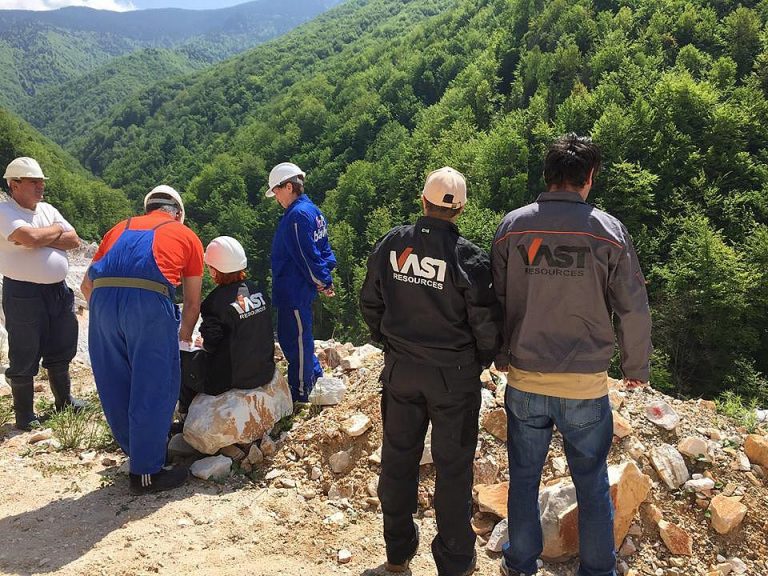
Speaking to Mining Zimbabwe at a site visit by Mines and Mining Development Portfolio Committee Chairperson Hon Edmond Mkaratigwa on a fact-finding mission on challenges local equipment suppliers are facing, Yagden Director, Mr Wayne “Mukwasha” Williams said the government should protect mining equipment suppliers, as well as miners from cheap and substandard and reject equipment which is dumped on the country.

“There are equipment suppliers who have flooded the market with cheap and substandard mining equipment thereby prejudicing miners of the real value to their investment.

“Many small-scale and artisanal miners in the country are buying this cheap equipment which becomes absolute three months down the line,” Wayne said.

According to Kudakwashe Mbondiya (2016) sited by Torque Mude (2016), the Changfa generators and mining compressors (Chinese products) are not reliable because they are not strong and always need to be rested at regular intervals when using them.

He also expressed disdain for Changfa generator which he says requires a lot of water for cooling when started.

Due to this, Wayne called for the government to address the uncertainty caused by substandard equipment in the sector which he said delays work and promotes smuggling of minerals.

The Yagden Director also said that some equipment suppliers are in the habit of lending artisanal miners cheap equipment as a way of getting all the minerals produced by the miners at a very low price.

“All equipment should have serial numbers which are traceable by the government.

“The government should be able to track all the mining equipment in the country so that they know where mining activities are taking place and where the gold is being sold.” He said.

Positive in buying local Buying local keeps money circulating within the local economy. Studies have shown that local businesses recirculate a greater share of every dollar as they create locally owned supply chains and invest in their employees.

Local retailers are believed to return 72 per cent of their revenue into the local economy, compared to just 14 per cent for national chain retailers. Money circulating through the local economy benefits everyone who is a part of each transaction. This, therefore, means that if mining firms buy equipment from local manufacturers, money circulating within the economy will be able to sustain many people.

According to Norton Miners Association Chairperson, Mr Privelage Moyo, the country, because it was not promoting local businesses, transactions happening are benefiting other nations leaving us in abject poverty.

He said that miners in Zimbabwe are working for other countries as what they are digging underground is benefiting the east and western countries because the miners are investing a lot in their equipment“As a country let alone as the mining sector, we are putting all our effort and power in the labour but at the end, our output is benefiting other countries like China. Our minerals go towards their country’s industries to which they dictate the buying price and in turn, they manufacture equipment whose price they peg and engage their Chinese people supported by their banks to come back again to our African countries to trade again the very machines and accessories from our minerals and scoop the revolving foreign currency back to their nations.

“As a country due to ignorance of ministries, we are only surviving on peanuts and crumbs that’s why we cannot afford a budget surplus of foreign currency. We have industries which are ghost houses as there is no support and ministries are not sharing ideas on what’s required so that citizens may take up those tasks.

“Everything world over is advanced from someone’s design by its automobile industry.

In our mining sector equipment and consumable are being imported and being sold by the very manufacturers at our huge expense.

Most of the equipment you will realise that it consumes a big chunk of our earnings through imports yet all the raw materials are available locally and let alone profits from their trade find their way back to their mother countries.

If as a starting point we cut the Chinese in the trade we save a bit for our country’s earnings.” he said.

As long as the government prioritises foreigners first before citizens, it spells doom for our country, citizens are first and should be considered first in all, then complimentary support should come from the country’s friends being “the foreigners”.

Relying on foreign equipment even in the small-scale sector breathes dependence and mediocrity upon the country and it kills innovation.

What miners think the government should do

Moyo said it was of greater importance for Ministries to start working together to curb the prejudice brought by shameless businesses from other countries who are dumping their cheap equipment on the country.

“This is why we were calling up Ministries to join hands and start working together. They are some advantages of Ministries being independent but, on the ground, regarding production and development, they are outweighed by disadvantages.

“As miners, we feel our line Ministry is being sidelined by other ministries that are allowing and authorising Chinese and other foreign nationals who are manufacturing substandard mining equipment and machinery in their countries to be retailers in our country at the expense of our local business people.” he said.

According to Moyo, Ministries should promote homegrown ideas and products. Hammer Mills and many other products used in the small scale and artisanal mining sector should be produced locally as a way of promoting all small businesses in the country to grow.

“All that the Ministries can do is to expose its staff or institutions to developed countries and learn production modules which adds value to our country.

“We have many informal engineers in Mbare who are trying very hard to come up with the mining industry equipment, machinery and consumable requirements but not even one ministry cares about their growth although they are somehow producing usable equipment from scrap metal and proving to be useful and much better than that of the Chinese,” Moyo said.

What needs to be done?

The first thing the government should do is to convince and make Zimbabweans understand the merits of what is currently produced locally while ensuring citizens that which is produced locally is sustainably produced as per the trending market demands.

The government does not necessarily need to target and discourage foreign-owned companies but should prove to miners that the equipment produced in the country can satisfy the market in all its respects.

The Mines and Mining Development Portfolio Committee and the Ministry of mines should have adequate data and a market-driven plan for establishing startup packages for our small scale and artisanal miners.

The move is achievable through convincing data and optimum business models that can be tested in the country.

The advantage of local manufacturers is that they can be linked up with local financiers without challenges and they can easily give other associated services like empowering training to upcoming businesses as part of the package.

What is the government doing?

According to the Chairperson of the Parliamentary Portfolio on Mines and Mining Development Hon Edmund Mkaratigwa, the government will soon roll out a program that will support equipment suppliers by encouraging miners to buy local.

Mkaratigwa said the government through the Mines Portfolio committee was going to create a pilot project to support its ideas.

“The main plan is to have local suppliers prove themselves to be innovative and complementary to the mainstream government plans and targets and our support is always there.

“YAGDEN for example possesses vast experience and knowledge derived from already tried ideas in the field and that can be brought to the fore for trial in sampled areas for a start at a national level. They need that opportunity because their work is huge and potential can be harnessed for the broader good of their business and the Zimbabwe vision at large.” Hon Mkratigwa said.

What equipment suppliers should do?

According to Mkaratigwa some equipment suppliers should move from being backyard small equipment suppliers to renowned equipment manufacturers and should also be innovative enough to explore the corridors that are being exploited by the Chinese to put a balance in the industry.

“On the other hand, equipment suppliers should consider those who are just starting up, a gap that is currently being exploited by foreign manufacturers. That will enable companies to grow quickly and build up capacities for supplying to large mining firms.

The issue is about building brands and maintaining standards as well as being ambitious.

“They need support but they should find entry-level onto the broader mining market by being innovative and being prepared to cooperate where possible.

The industry needs to come together to discuss and start to build their relevance in the sector. Moving from being backyard small scale manufacturers to renowned names.” He said.

The Mines Portfolio chair also said that the committee stands to support equipment manufacturers because the US$ 12 BILLION mark is achievable through reliable machinery and equipment in line with the adage “the workman is as good as his tools.”

How to curb leakages caused by foreign suppliers?

According to Hon Mkaratigwa, to limit leakages caused by foreign suppliers who lease mining equipment and consumable to artisanal miners to exploit them and loot the resources is by promoting local suppliers of such equipment and encourage artisanal miners to engage them.

“The main way to limit such leakages is promoting local suppliers of such equipment and the whole matter can start from there.” he said.


This article first appeared in Mining Zimbabwe magazine


Arcadia crushing circuit now operational, production next week

0

Arcadia lithium pilot plant crushing circuit in Goromonzi is now operational with production expected to begin within the coming week Prospect Resources announced on Tuesday.

Anerudo Mapuranga

The Australia Stock Exchange-listed mining concern took delivery of the pre-assembled pilot plant crushing equipment last month indicating a major milestone for the Arcadia project.

“A big milestone for the #Arcadia #pilotplant. The crushing circuit is operational, with production to start within the next week!” the company said.

The company Managing Director Sam Hosack commending on the development on Twitter said:

“Commissioning is always the most challenging and rewarding part of a project, tackling arising issues and having the commitment to deliver on your goals. Safely and confidently let’s get that technical petalite product stockpile built.”

The operation of the pilot plant will allow for the accumulation of knowledge during design, mitigating the scaling issues that peer lithium producers have experienced on account of a too-rapid growth in supply

Prospect will first focus on producing petalite, which is technical grade and spodumene, (chemical) grade lithium samples.

In mid-April Mr Hosack said the project remained on time and on budget with a target to ship high purity petalite by the end of June 2021.

“The pilot plan forms a critical part of our project development and market integration strategies and we look forward to providing key customers with high-value petalite product to complete their qualification requirements.

“Prospect is generating spodumene samples via an experienced third party laboratory, as downstream lithium chemical customers only require 2kg spodumene samples to qualify,” Mr Hosack said.

Arcadia represents a globally significant hard rock lithium resource and is being rapidly developed by Prospect’s team, focusing on near term production of high purity petalite and spodumene concentrates.

Arcadia is one of the most advanced lithium projects globally, with a definitive feasibility study, offtake partners secured and a clear pathway to production.

Coal miner Hwange survives on real estate

0

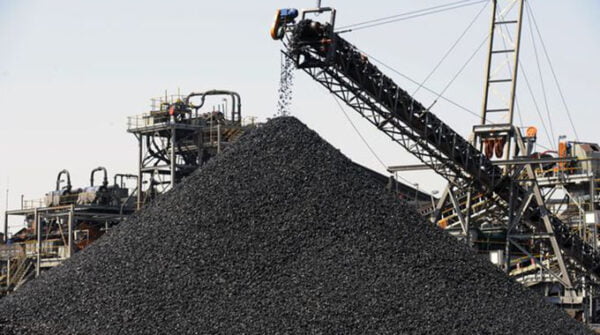
LISTED coal miner Hwange Colliery Company Limited (HCCL) says its estates division reported a 712% increase in revenue last year, with real estate accounting for 80% as other streams suffered from the effects of Covid-19-induced restrictions.

Besides coal mining, HCCL has interests in estate and medical services.

Its estates division consists of real estate, retail, hospitality and education.

In a statement accompanying financial results for the year ended 31 December 2020, HCCL revealed that revenue from the estates division in the period under review increased by 712% from ZW$32.5 million in 2019 to ZW$263.2 million in 2020.

Real estate accounted for 80% of revenues as other streams suffered from the impact of Covid-19-induced restrictions, it said.

HCCL said total costs in 2020 were 794% higher than in 2019 at ZW$269.2 million as a result of the increase in expenses on labour, power and legacy cost adjustments.

The net loss for the year for the year was ZW$4.1 million compared to a profit of ZWL$2.3 million in the previous year.

“Actions to improve the division’s performance will include increasing commercial space by engaging in BOOT (build–own–operate–transfer) arrangements with potential investors; stringent debt collection to boost cashflows; refurbishment of retail facilities to improve customer experience; and diversification of product ranges,” says the firm.

“Planned projects were slowed down mainly by Covi-19-induced restrictions. The division undertook the Zimbabwe Open University Hwange Campus project and undertook major repairs on employee housing.”

Overall, the loss-making miner reported an inflation-adjusted net profit of ZW$1.6 billion during the year 2020, down 77% compared to the same period in 2019.

The gross profit and net profit decreased from ZW$1.9 billion and ZW$6.9 billion to ZW$1 billion and ZW$1.5 billion, respectively.

Revenue, however, increased by 13% from ZW$3.954 billion in 2019 to ZW$4.468 billion in 2020 on an inflation-adjusted basis.

Production increased by 22% during the period under review, with the main challenges having been shortages of diesel and foreign currency to import spares and consumables as well as the negative effects of the Covid-19 pandemic.

The sales volumes, however, increased by only 10% compared to 2019 mainly as a result of the influence of Covid-19 on the market and logistics as well as the reduced thermal coal offtake.

“Going forward, the company has targeted to increase production and sales. For this, some significant capital is required and this will in turn increase capacity to discharge obligations to creditors as well as create a positive balance sheet in the medium term,” HCCL administrator Dale Sibanda said.

During the period under review, Sibanda said focus was on increasing production and sales of high coking coal.
Coking coal sales increased by 6.5% from 223 662 tonnes in 2019 to 238 112 tonnes in 2020.

“The coking sales volumes were however limited by washing capacity constraints as the HMS (heavy media separation) plant was antiquated and needed retooling. The plant was completed and the plant was commissioned in April 2021,” he said.

Total coal mined by opencast operations was 1.1 million tonnes, a 46% increase in production from the previous year.

Total coal from HCCL’s JKL pit was 353 143 tonnes, a 121% decrease in production from 2019, while at Chaba Mine, the Contractor Zhong Jian mined a total of 750 893 tonnes, a 145% increase in production from 2019 done by the previous contractor, Mota Engil.

A total of 658 031 tonnes of coal was delivered to Hwange Power Station during the course of the year, an 18% increase from previous year. Deliveries to the power station were however negatively affected by plant challenges in the power station and limited stockholding space, he said.

In the outlook, Sibanda said HCCL targets to increase the volume of high value and margin coking coal to 100 000 tonnes per month by end of 2021. It also expects to fully capacitate its opencast mine by addressing all bottlenecks in the mining process.

The coal miner said the development of the option area and Lubimbi coalfield is planned for the medium term.

“The company has therefore started community engagements at Lubimbi in preparation for the mining process. The company is also looking at the prospects of electricity generation at Lubimbi to complement the mining process.

Preparatory work towards the mining option area has likewise begun,” Sibanda said.


NewsHawks

Ministry of Mines national team in joint effort to clear title backlog

0

Ministry of Mines and Mining Development is on a national tour clearing all application backlogs ensuring that miners mine formally, the Mines Minister Hon Winston Chitando has said.

Rudairo Mapuranga

According to the Minister, the second republic has attracted huge investors who have an appetite for investing in the mining sector as a result the provincial offices found themselves in a huge backlog due to the increase in mining application.

The Minister said the country has a backlog of 15 thousand application while his Ministry has managed to issue over 20 thousand mining certificates a clear indication that the President’s mining roadmap is clearly achievable.

“Every day we are moving towards the US$12 Billion. At the beginning of this year, we had a backlog of 15 000 mining application, it means we have more miners investing in the industry. We also have seen over 20 000 new mining locations being issued.”

 “We will make sure that we exceed the US$12 Billion industry ensuring that all these new mining locations contribute,” Minister Chitando said.

Minister Chitando said the Ministry is going to make sure that before the end of the year the backlog in mining application is cleared as his leadership is geared to see the growth and development of the mining sector to a US$12 Billion industry.

“We want to make sure that by the end of the year, the backlog is cleared,” said Chitando.

Miners have been complaining over delays in the processing of mining licenses, with applications reportedly dating back to 2018.

The Ministry of Mines and Mining Development has been dragging its feet in issuing out mining licenses, with miners citing corruption at provincial mines offices throughout the country.

Clearing the backlog on mining licenses is a roadmap to formalization and regularization of the mining sector a commendable move leading to the achievement of the US$12 Billion industry by 2023.

The government of Zimbabwe launched the USD12 Billion Economy by 2023 in October 2019 as part of the broader macroeconomic roadmap towards an Upper Middle-Income Economy by 2030.

 The USD12 billion mining industry represented a 344% increase in mining revenue. According to the roadmap, the multi-billion-dollar industry will be driven by gold, platinum, diamond, chrome, iron ore, coal, lithium, and other minerals.

Through US$12 billion roadmap, the President has put a target of US$4 billion for gold producers while platinum and diamonds are expected to weigh in US$3 billion and US$1 billion, respectively. Chrome, Nickel, and Steel are expected to generate US$1 billion, coal and hydrocarbons are also expected to produce US$ 1 billion. Lithium is expected to produce US$0.5 billion while other minerals are forecast to produce US$1.5.

Scott promises to deliver 37 tonnes of gold in 2021

0

The National Gold Buyers Association (NGBA) an affiliate of the Zimbabwe Miners Federation (ZMF) through its chairperson Mr Pedzisai Scott Sakupwanya has pledged to deliver 37 tonnes of gold to the country’s sole gold buyer and exporter Fidelity Printers and Refiners (FPR) in 2021.

Rudairo Mapuranga

Mr Sakupwanya promised the Minister of Mines and Mining Development Hon Winston Chitando at the ZMF one day conference held in Kadoma on Saturday that his association was working flat out to meet the gold target set by His Excellency President Emmerson Dambudzo Mnangagwa for the gold industry to become a US$4 Billion sector by 2023.

The NGBA chairperson also urged gold buyers to stop the selling of the yellow metal on the parallel market and to stop smuggling as the association was going to employ measures to

“Honorable Minister through your support, we want to deliver more gold to Fidelity and as an association, we pledge to deliver 37 tonnes this year. We are urging all buyers to desist from going to the black market or engage in the smuggling of gold,” Mr Sakupwanya said.

Despite gold deliveries to Fidelity taking a knock in 2021 as compared to the previous five years, Mr Pedzisai ‘Scott’ Skupwanya through his Better Brands Jewellery company has delivered 980 kgs of gold in February way over half of the gold the sole yellow metal buyer received during the month.

Official figures from Fidelity show that gold deliveries continued to decline in 2020 dropping by 31 per cent to 19,052 tonnes due to a host of reasons including smuggling and subdued performance by producers in the sector.

The figures show that deliveries declined to 19,052 tonnes last year from 27,66 tonnes a year earlier, In 2018, the country delivered 33,2 tonnes of the yellow metal.

The Reserve Bank of Zimbabwe (RBZ) has recently adjusted gold prices up and offered increased incentives to gold buyers in a move aimed at improving deliveries to the country’s sole gold buyer and exporter.

The RBZ move has come after ZMF led by its President Ms Henrietta Rushwaya held a highly successful meeting with the central bank and Fidelity advocating for price increases to near international prices.

According to statistics in 2016, Zimbabwe’s gold mining sector as a whole, consisting of both artisanal and small-scale mining (ASGM) and large-scale gold mining (LSGM), contributed 2.6% of gross domestic product (GDP), 18% of exports, 28% of mining output, and 1% of government revenues (royalties only) and employed 7.1% of the labour force.

Accurate slope monitoring through wire mesh and netting

0

The use of wire mesh or safety netting can often limit the ability to capture detailed measurements of a rock surface resulting in poor or inaccurate information regarding the movement of the slope.

SiteMonitor4D from 3D Laser Mapping uses unique market-leading technology to combat this problem. When steeply sloping rock faces break into fragments and release rock debris, close-fitting wire mesh and netting is often anchored to the slope face. Vegetation can take root and cause an obstruction to systems trying to measure movement on the slope face itself. SiteMonitor4D can work around these obstructions by using a unique function to record multiple targets for each measurement. This precise and high-accuracy laser ranging is based upon echo digitisation and online waveform processing.

This technology, alongside the small footprint of LiDAR, enables measurements of the wire mesh (first target) and the slope (last target) to be returned. SiteMonitor4D software automatically filters these measurements so that only data from the slope face is analysed.

Unstable rock faces can be monitored extensively, without the need to compromise existing safety measures achieved through applying wire mesh or netting. “SiteMonitor4D can resolve rock fall accumulation and debris movement behind the mesh which can often indicate slope instabilities, even on slopes with over 60% of their surface covered in mesh” commented Dr Sarah Owen, LiDAR Systems Engineer at 3D Laser Mapping. Monitoring through wire mesh doesn’t have to be a nearly impossible, time-consuming task – a SiteMonitor4D system from 3D Laser Mapping can be used for automatic, accurate slope monitoring with ranges up to 4km away from the slope face.

If you want to carry out detailed, automated slope stability analysis and want to find out more – please get in touch via the contact details below. 3D Laser Mapping employs a team of monitoring specialists who would love to discuss your challenges with you

Villagers stumble on diamonds in South Africa

0

A community near Ladysmith in Kwa-Zulu Natal is jubilant after discovering a field full of the precious stones.

Hundreds of community members have flocked to the area, carrying mining tools and buckets in search of riches. A viral video of a man calling his family telling them to burn all the old furniture, with a handful of precious stones has left many in stitches. In the video, he tells a family member that it’s their turn to eat in Dubai.

The KZN government has also weighed in on the diamond rush, saying it has noted with concern the ‘illegal’ mining taking place in KwaHlathi outside Ladysmith.

KZN Premier Sihle Zikalala said the Department of Minerals and Energy has promised to dispatch teams to the area where hundreds of people have gathered in the belief they have found diamonds.

Zikalala said a team from the Council for Mineral Technology and the Council for Geoscience would include a geologist and would focus on establishing what items exactly had been discovered at KwaHlathi.

Social media users have expressed concern over the government’s involvement saying the diamonds belong to the struggling community.

“Once there’s a DIAMOND RUSH, all hell will break loose. The whole world will descend on that area. The area will be turned into one big crime scene.”  KayaFM

KwaZulu Natal diamond rush: experts head to Ladysmith to inspect site

0

Experts are expected to head to the KwaZulu-Natal town of Ladysmith, where crowds of people have gathered to search for diamonds.

KZN Premier Sihle Zikalala said the Department of Minerals and Energy has promised to dispatch teams to the site.

“These teams include the department’s enforcement and compliance unit to conduct an inspection of the site,” Zikalala said.

Videos and images circulated on social media at the weekend with ’illegal miners’ claiming to have discovered diamonds. However, many think the stones could be quartz crystals.

Zikalala said a team from the Council for Mineral Technology and the Council for Geoscience would include a geologist and would focus on establishing what items exactly had been discovered at KwaHlathi.

He added that he was concerned by the reports of illegal mining activity at KwaHlathi, where the “diamonds” were found.

“Images and videos have been circulating on social media where some involved in the illegal mining are seen celebrating in belief that they had struck it rich,” he said.

Zikalala said they were concerned about the images showing that some people from as far afield as neighbouring towns and provinces were flocking to KwaHlathi.

“We are worried that, if not brought under control, the situation could result in chaos and a possible stampede. We call for order and calm and urge all those involved to cease their operations and vacate the site so as to allow the DMRE (Department of Mineral Resources and Energy) to conduct a proper inspection of the site and of what has been discovered there,” he said.

Zikalala warned that the illegal mining activities could be in violation of the Covid-19 regulations.

“It is also very concerning that, in the wake of a looming third wave, we have so many people gathered in one spot, not maintaining social distancing and also not wearing masks. This could prove to be a super-spreader and might put at risk many people including those who are not part of the mining,” he said.

The KZN government would work closely with the SAPS, the DMRE, traditional communities, traditional leadership and the local and district municipalities to bring calm to the area and to ensure that the relevant information filtered through to community members. — IOL

Two illegal gold panners die in Gwanda

0

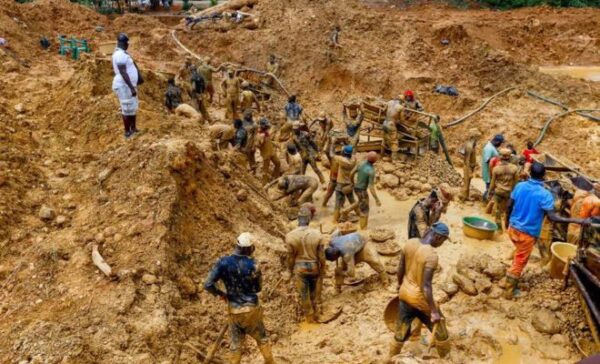
TWO illegal gold panners died in separate mine accidents in Matabeleland South Province, police have confirmed.

Acting Matabeleland South provincial police spokesperson, Assistant Inspector Thabani Mkhwananzi said the incidents occurred on Friday and Saturday at Bolo Mine and Bina Mine in Gwanda.

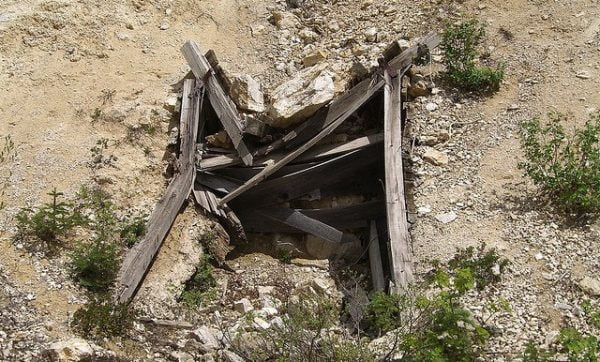
“I can confirm that we recorded two mine accidents that occurred at Bolo Mine and Bina Mine in Gwanda. In the first incident, Lenin Nyoni (42) was illegally panning at a disused mine shaft which is 20 metres deep. While he was inside the shaft collapsed trapping him inside.

“Nyoni called out for help and other panners who were in vicinity pulled him out. He was ferried to the Gwanda Provincial Hospital where he was pronounced dead upon arrival,” he said.

Asst Insp Mkhwananzi said in the second incident an illegal gold panner died after he was struck by rocks while working in a shaft in Bina Mine area in Gwanda.

He said the now deceased Cleopas Ndlovu (32) from Spitzkop North in Gwanda was working with two others when the shaft collapsed and rocks fell on him.

“I can confirm that we recorded a sudden death case which occurred in Bina Mine area. The now deceased was illegally panning for gold with his two counterparts. They went down into a three-metre deep and while they were working in it the shaft collapsed and some rocks fell on Ndlovu’s back and head.

“His colleagues managed to pull him out of the shaft and he was rushed to hospital where he was pronounced dead upon arrival,” he said.

Asst Insp Mkhwananzi urged members of the public to desist from engaging in illegal gold panning activities as they were endangering their lives.

He said the province continued to record fatal mine accidents, most of them as a result of negligence.

“As police, we would like to urge people to desist from engaging in illegal mining activities, those who wish to engage in mining activities should regularise their operations. People should also stay away from disused and closed mines as they will be endangering their lives.

“We further urge mine owners and managers to ensure that their workers have safety clothing at all times. The equipment also needs to be frequently assessed to ensure that it’s in good condition. It’s imperative that miners operate in safe environments with the necessary precautionary measures,” he said.

The Chronicle

BREAKING: Kunaka leaves Fidelity

0

Fradreck Kunaka has left the country sole gold buyer and exporter Fidelity Printers and Refiners (FPR).

Sources at the institution said the now former General Manager Kunaka left over a week ago after six years at the helm of the institution.

Kunaka’s departure also follows the silent departure of the entity’s Public Relations Officer Ms Chelesani Moyo.

His departure is part of an internal overhaul at the soon to be restructured company to create two units—gold refining and printing and minting.

The central bank will wholly own the printing and minting business and retain 40% shareholding in the refining entity.

Using a three-year average delivery of gold to Fidelity Printers, the central bank will offer 50% shareholding in FPR to the large-scale gold producers, 3% to major FPR gold buying agents and the balance of 7% to the small-scale producers through their representative bodies.

More to follow…