Home Blog Page 48

Government Steps Up Oversight as 2025 Responsible Mining Audit Looms

0

Zimbabwe’s government is intensifying oversight of the mining sector as it prepares for the 2025 Responsible Mining Audit, aimed at ensuring mines operate responsibly, sustainably, and in line with regulatory standards, Mining Zimbabwe can report.

By Ryan Chigoche

This was highlighted by Chief Government Mining Engineer (CGME) Michael Munodawafa at the ZITF Mine Entra Main Conference in Harare.

The Responsible Mining Audit (RMA) was launched in May 2023 by the President of the Republic of Zimbabwe to ensure that mining operations comply with legal, environmental, and social standards.

Since its inception, the RMA has revealed mixed levels of compliance. While some miners have aligned with regulations, others continue to violate laws on environmental protection, labour standards, and operational safety.

Munodawafa observed that many miners initially prioritised short-term gains over planning for the future, environmental protection, and community welfare.

“Some miners were so relaxed that they forgot their obligations to the environment, employees, and local communities. Miners, be prepared, as my team and I will be visiting all mines across the country in the coming weeks,” Munodawafa told delegates, signalling a nationwide push for stricter compliance.

“The audits are designed not just to enforce regulations but also to guide miners toward responsible and sustainable practices,” he added.

The audits have already revealed measurable progress.

In 2023, 424 mining and related operations were inspected, with 128 suspended for gross non-compliance, representing 30% of sites visited.

In 2024, inspectors visited 728 mines, suspending 161 operations, or 23%, showing that miners are gradually aligning with regulatory requirements.

Conducted by a team of 12 Mining Technical Auditors (MTAs) alongside representatives from the Department of Immigration, Ministry of Health, Ministry of Mines, and Ministry of Labour, the audit is designed to promote responsible mining practices, protect communities, and safeguard the environment.

The government’s approach combines enforcement with guidance, fostering a culture where miners are encouraged to comply not only for legal reasons but also for the long-term benefit of their operations and surrounding communities.

“We want miners to act responsibly not just because of the law, but because it makes sense for their business and communities,” the CGME emphasised.

As Zimbabwe’s mining sector grows, the 2025 Responsible Mining Audit is poised to serve as a critical benchmark for ensuring that long-term planning, environmental protection, and community development remain central to industry progress.


Gold buying prices in Zimbabwe per gram/ ounce, 16 October 2025

Gold buying prices in Zimbabwe per gram/ ounce, 16 October 2025, from the official gold buyer and exporter Fidelity Gold Refinery (FGR).

1 oz = 31.1035 g

CategoryPrice ($/g)Price ($/oz)
SG 90% and ABOVE127.74$3,973.16
SG 85% and above but below 90%126.39$3,931.17
SG 80% and above but below 85%125.04$3,889.18
SG 75% and above but below 80%123.69$3,847.19
Sample 5g and above but below 10g121.66$3,784.05
Fire Assay CASH128.42$3,994.38


NB: Fire Assay cash price is for gold above 100g, no sample is deducted.

A sample of not more than 10g is deducted for the Fire Assay Transfer price.

Adopting Robust ESG Framework No Longer Optional for Mining Firms – Kuvimba CEO

0

Adopting a robust Environmental, Social and Governance (ESG) framework is no longer optional but a fundamental requirement for mining companies seeking to remain competitive and access international capital markets, Kuvimba Mining House Group Chief Executive Officer Travor Barnard said.

By Rudairo Mapuranga

Speaking at the mining conference during the prestigious Mine Entra exhibition in Bulawayo, Barnard emphasised that companies now need comprehensive ESG policies not just for regulatory compliance but as a strategic imperative for long-term viability. He stated unequivocally that the global financial landscape has fundamentally shifted, making ESG integration non-negotiable for any mining operation seeking growth capital.

“There’s no way that a company nowadays can access capital without having a proper sustainability and ESG framework in place,” Barnard told industry delegates. “It just doesn’t happen anymore. This is about much more than just compliance — it’s a gateway to accessing capital, managing risk effectively, and gaining a competitive advantage in an increasingly discerning global market.”

The KMH CEO’s comments come at a critical juncture for Zimbabwe’s mining sector, which is seeking to attract substantial foreign investment while navigating growing international pressure to adopt sustainable mining practices. Barnard, who leads one of Zimbabwe’s largest mining conglomerates, positioned ESG not as a bureaucratic burden but as a core business strategy that directly impacts a company’s bottom line and social license to operate.

Barnard detailed how ESG encompasses three critical pillars for modern mining operations: environmental stewardship through responsible resource management and emissions control; social responsibility through community engagement and fair labour practices; and governance through transparent reporting and ethical business conduct. He explained that these elements collectively form what investors now consider essential minimum standards for any credible mining operation.

The CEO outlined practical frameworks that mining companies can adopt, including the Global Reporting Initiative for comprehensive sustainability reporting, the United Nations Sustainable Development Goals for aligning with global priorities, the Carbon Disclosure Project for climate impact management, and the Science-Based Targets initiative for measurable emissions reduction goals. He emphasised that these frameworks provide the structured approach needed to transform ESG principles from abstract concepts into actionable business strategies.

“If you don’t include sustainability and ESG principles in your strategic intent, you’re not going to win,” Barnard asserted, highlighting that companies that treat ESG as an afterthought rather than a foundational business element risk obsolescence in an increasingly sustainability-focused global mining industry.

Under Barnard’s leadership, Kuvimba has embedded sustainability into its corporate vision “to create a better and sustainable future for Zimbabweans,” with the understanding that long-term profitability is inextricably linked to responsible environmental management, positive community relations, and transparent governance structures.

The shift toward ESG-compliant mining represents both a challenge and an opportunity for Zimbabwe’s mining sector, which contributes significantly to the national economy. As international financiers and development institutions increasingly tie funding to demonstrable ESG performance, Barnard’s message serves as both a warning and a roadmap for mining companies seeking to thrive in the new era of responsible resource extraction.

His address at Mine Entra signals a broader transformation within Zimbabwe’s mining industry, where ESG considerations are rapidly moving from peripheral concerns to central business priorities that directly influence investment decisions, operational practices, and ultimately, a company’s ability to compete in global markets.

Local Content Rating System Touted as Key to Upholding Responsible Sourcing in Mining Sector

0

In the thrust of responsible sourcing, Buy Zimbabwe, a local organisation promoting domestic production, is advancing the introduction of a Local Content Rating System aimed at ensuring that more of the revenue generated by the mining industry is retained within the country, Mining Zimbabwe can report.

By Ryan Chigoche

This was revealed by Buy Zimbabwe General Manager, Alois Burutsa, at the 28th edition of the ZITF Mining, Engineering and Transport Expo held recently in Bulawayo.

The push for a Local Content Rating System, first proposed in 2023, comes amid worrying statistics showing that out of the US$6 billion in revenue generated by the mining sector last year, US$2.7 billion was spent by mining companies on suppliers.

However, only about US$540 million of that amount was directed to local suppliers — roughly 20 per cent.

What is more concerning is that even within that US$540 million, a significant portion actually goes towards imports from South Africa and other countries, as many local suppliers rely heavily on foreign-manufactured products.

This means that Zimbabwean manufacturers are not benefiting as much as intended from mining procurement, undermining the goal of strengthening domestic value chains.

In light of this, Burutsa proposed the imminent introduction of the Local Content Rating System as part of the solution, alongside stronger policy interventions and increased collaboration between government and the private sector.

“I’m going to put a few proposals that will help us solve some of those problems. Local content rating. You see, I mentioned earlier that there’s US$540 million that went to local suppliers. But if you dig deeper, you may actually find that most of that US$540 million actually went outside again, because local suppliers go to the mines and say, ‘I’m a local supplier, and I’ll get the product.’ But guess what? Those products will come from across the border — South Africa to China — and they import those products. Therefore, we are not actually supporting our local manufacturers. So there’s a need for local content rating,” Burutsa said.

To operationalise the system, Buy Zimbabwe, which is the designated Local Content Rating agent in the country, plans to establish a Local Content Rating Portal to list certified products and guide local procurement across industries.

“Soon we plan to have a local content rating portal to list our products, and we’d like to work with the mining sector to say, whenever you’re doing your purchases, if you’re going to give an order to a local manufacturer, ask them if they have a local content rating certificate, so that you are sure that this product is indeed made in Zimbabwe.”

In the meantime, several major mining companies such as Zimplats, Mimosa, and Blanket Mine have taken steps to empower local suppliers through Local Enterprise Development programmes.

However, there are growing calls for more miners to adopt similar initiatives to ensure that a greater share of Zimbabwe’s mining revenue remains within the national economy. Policy support has also been identified as a key factor in making such initiatives sustainable.

Burutsa further emphasised the importance of responsible sourcing within the mining sector, explaining that the concept seeks to ensure that economic value from mining activities circulates within the local economy before flowing out of the country. He likened this to a “spiderweb” model, where the benefits of mining spread across domestic industries and communities.

However, it is important to acknowledge that the mining industry operates under global price constraints, meaning miners are essentially price takers who sell their commodities at prices determined by international markets.

This reality, Burutsa noted, makes it difficult for companies to prioritise local suppliers purely out of obligation, as he stressed that local procurement must be driven by competitiveness, with local manufacturers producing goods that are cost-effective, high quality, and efficient enough to meet the sector’s needs.

The proposed Local Content Rating System is seen as a practical step toward bridging the gap between miners and local manufacturers, creating a transparent framework that promotes responsible sourcing while enhancing domestic industrial capacity.

Mimosa Secures US$15 Million to Boost Local Suppliers

0

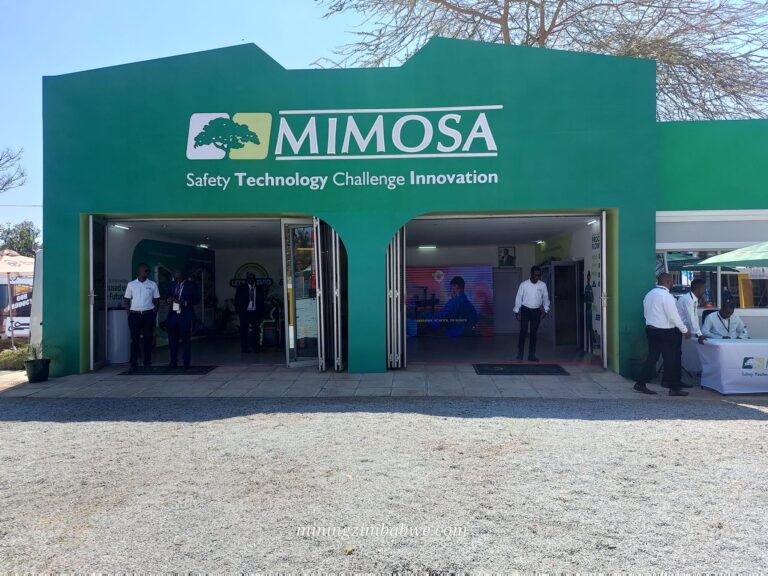
Zvishavane-based platinum producer Mimosa Mining Company has partnered with local banks to raise about US$15 million to support its Local Enterprise Development (LED) programme, in a bid to strengthen local supply chains and promote domestic manufacturing, Mining Zimbabwe can report.

By Ryan Chigoche

The initiative is part of the company’s long-term strategy to empower local suppliers who provide consumables such as personal protective equipment (PPE), machinery components, and chemicals to the mining industry.

The fund will enable small and medium-scale enterprises to access financing and improve their production capacity to meet industry standards.

Speaking during the recent Mine Entra Conference, Mimosa’s Head of Finance and Administration, Mr Edmore Tafirenyika, said the mining sector was making progress in promoting local participation and supplier growth.

“There have been a few strides that we have made in the mining sector in trying to promote local competency. And most importantly, issues around Local Enterprise Development (LED) have been key,” he said.

Through partnerships with CBZ Bank and two other local banks, Mimosa has created a revolving fund that will finance supplier development.

Each financial institution contributed about US$5 million, bringing the total facility to US$15 million. The fund will not only support LED programmes but also provide direct assistance to local suppliers.

Several companies have already benefited from the initiative, with Mimosa purchasing products made in Zimbabwe as part of its backward integration strategy.

The miner is also finalising a new LED project involving community tailors in Zvishavane who will produce PPE locally — items that were previously imported.

In addition to bank partnerships, Mimosa has committed a further US$5 million from its own resources to support LED projects over the next five years.

The company believes such programmes will help develop competitive local manufacturers and gradually reduce reliance on imported consumables.

Mr. Tafirenyika emphasised the need to focus more on domestic production to enhance competitiveness and sustainability within the mining value chain.

“It will be very desirable that we turn as much as we possibly can towards local manufacturing, towards locally producing our own critical mining consumables. That way, it not only puts us on the map but also goes a long way in reducing the overall cost of our mining operations,” he said.

The LED initiative underscores Mimosa’s commitment to inclusive economic growth, community empowerment, and industrial development, aligning with national goals to increase local content and build resilient mining-linked industries.

Mining Zimbabwe Releases Edition 82 at Mine Entra 2025

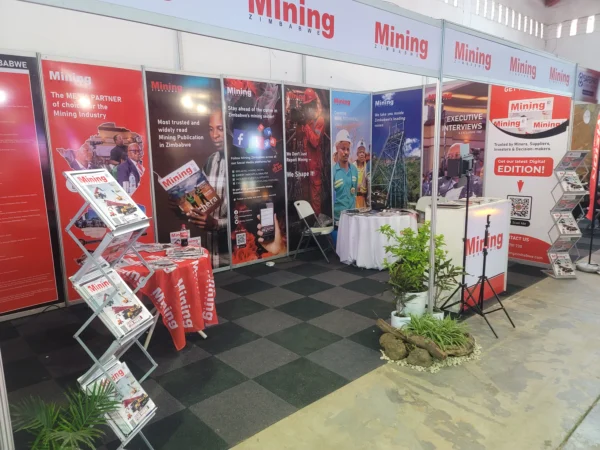
Mining Zimbabwe has officially launched Edition 82 of its flagship Magazine at Mine Entra 2025, Zimbabwe’s premier mining exhibition held at the Zimbabwe International Exhibition Centre in Bulawayo.

The latest edition, unveiled at Stand 4C04, has already generated significant interest among mining professionals, suppliers, and policymakers attending the three-day event. Visitors to the Mining Zimbabwe stand received free copies of the publication, which continues to serve as the nation’s leading source of credible mining news, insights, and industry analysis.

Edition 82 features in-depth coverage of Zimbabwe’s evolving mining landscape, including updates on major projects, policy developments, and innovations driving the sector beyond extraction. Key highlights include exclusive interviews with industry leaders, reports on mineral production trends, ESG progress, and coverage of the Association of Mine Managers of Zimbabwe’s latest initiatives.

Speaking at the launch, Timelison Media’s Managing Director, Mr Keith Sungiso, said the release of Edition 82 marks another milestone in the publication’s commitment to providing authoritative and engaging content for the mining industry.

“Mine Entra provides the perfect platform to connect with the heartbeat of Zimbabwe’s mining sector,” Sungiso said. “Through this edition, we aim to celebrate the achievements of our miners, promote responsible investment, and showcase the innovations shaping the future of mining.”

The magazine also spotlights local suppliers, technology providers, and service companies playing a vital role in the mining value chain, reinforcing Mining Zimbabwe’s mission as the media partner of choice for the industry.

Attendees at Mine Entra 2025 described the new edition as both informative and visually engaging, reflecting the publication’s ongoing evolution in design, depth, and digital reach.

Edition 82 is now available in print and online through the Mining Zimbabwe website and digital distribution platforms, ensuring broader access for readers across Zimbabwe and beyond.

Minister Ncube Commissions US$300,000 Gold Milling Centre in Shurugwi, Hails Zimbabwe-China Partnership

0

The Minister of State for Midlands Provincial Affairs and Devolution, Hon Owen Ncube, has commissioned and handed over a US$300,000 gold milling and processing centre to artisanal and small-scale miners in Shurugwi District, marking a significant step in the government’s drive to formalise the informal mining sector, Mining Zimbabwe can report.

By Rudairo Mapuranga

The facility, funded by Cheng-Xi Chengetai Investments, a company recognised for promoting responsible mining practices in the Midlands Province, is equipped with three round mills, a jaw crusher, three hammer mills, water reservoirs, an administration office block, and other support infrastructure.

Speaking at the event, Minister Ncube commended the Zimbabwe-China bilateral mining agreements, describing them as a catalyst for economic empowerment and responsible development.

“Let me applaud the Chinese for honouring and adhering to the investment provisions and requisites as provided within the Zimbabwe-China bilateral mining agreements,” Ncube said. “This will help in transforming our communities’ livelihoods and also complement the government’s empowerment initiatives.”

The Minister highlighted the centre’s direct impact, noting it will provide accessible and affordable milling services to over 5,000 beneficiaries, boost the local economy, and create jobs. He reiterated the government’s commitment to formalising the informal mining sector and empowering youth to participate meaningfully in national development.

“The commissioning of this centre marks a significant milestone in our efforts to promote local economic empowerment and responsible mining practices,” Ncube said.

To illustrate the critical role of small-scale miners, the Minister noted that in the first nine months of 2025, this sector delivered 24.5 tonnes of gold to Fidelity Gold Refinery, out of a national total of 33 tonnes.

He also urged other corporates to emulate Cheng-Xi’s Corporate Social Investment Programmes and issued a warning to drug peddlers, including celebrities and high-profile individuals, that the law will catch up with them. The commissioning is seen as a key pillar in achieving the nation’s Vision 2030 objectives.

This project highlights a growing trend of partnerships between government and private industry to develop mining infrastructure. The table below summarises the core details of the newly commissioned facility:

Caledonia Maintains Dividend, Advances Bilboes and Motapa Projects to Drive Long-Term Value

0

Caledonia Mining Corporation is prioritising the funding of its major growth projects over immediate dividend hikes, despite the recent surge in gold prices, assuring shareholders that this patient approach will lead to significantly larger payouts in the future, Mining Zimbabwe can report.

By Rudairo Mapuranga

This strategy was confirmed by Caledonia Executive Director Victor Gapare during a media briefing in Harare on Tuesday. The company recently declared its quarterly dividend of US$0.14 per share for Q2 2025, maintaining a consistent payout level that has been in place since October 2021.

Gapare directly addressed the question on investors’ minds: why hasn’t the record-high gold price translated into a fatter dividend cheque?

“You’re absolutely correct. It’s a gold price,” Gapare acknowledged. “If you’d spoken to us a couple of months – less than a couple of months ago, we were in a very different situation.”

He explained that the recent influx of free cash flow is a “very recent occurrence,” and the company’s immediate priority is financing the construction of its large-scale Bilboes project, which requires an investment of “quite a few hundred million dollars.”

The capital for this transformative project, Gapare stated, will come from a combination of free cash flow and carefully considered financing that avoids diluting the value for existing shareholders.

“We want to continue paying – we can’t be too aggressive in terms of increasing that,” he said, outlining the company’s core financial formula. “That graph… is all about dividends, the reinvestment of all those dividends… but also not diluting. So that’s our formula, and if we’re going to create value for our shareholders, we want to try and do both of those.”

Gapare offered a clear vision of the reward for this patience, tying it directly to the completion of the Bilboes mine.

“The important message is, once Bilboes is built, we’re going to be significant – I think you’ll see a big improvement in terms of dividend distributions,” he assured. He noted that the company’s shareholders, including pension funds, value consistency but “obviously, they would want it bigger.”

Caledonia’s dividend history underscores its reputation as a reliable income stock. The current US$0.14 per share rate was established in October 2021, representing a 104 per cent increase from just two years prior. The company has paid a dividend every quarter since 2014, building a track record that began with its inaugural payout in 2012.

The message to shareholders is one of disciplined growth: forgo a short-term gain for a more substantial, long-term return. The steady US$0.14 dividend is not a ceiling but a foundation, with the promise of a “big improvement” once Bilboes is built and begins generating significant cash flow.

Freddy Chikwiri Elected ZINIRE Vice President, Positioned for Future Leadership

0

The Zimbabwe National Institute of Rock Engineering (ZINIRE) has elected Freddy Chikwiri as its new Vice President. The election, conducted by the institute’s full council, formally designates Chikwiri as the President-in-waiting, slated to assume the top office in two years, Mining Zimbabwe can report.

By Rudairo Mapuranga

The decision concludes a period of strategic restructuring following the recent transition that saw Mr. Omberai Mandingaisa elevated from Vice President to President. The council also filled other critical executive positions, electing Mr. Adias Mudzovaniswa as Treasurer and Mr. Ambition Mubvumbi as Secretary-General.

The election of the Vice President is a cornerstone of ZINIRE’s governance, explicitly designed to ensure stability and continuity. In his new role, Chikwiri will work directly under the guidance of President Omberai Mandingaisa, gaining invaluable experience and institutional knowledge to prepare him for the future leadership of the institute.

President Mandingaisa welcomed the newly elected executive, emphasising the importance of a unified team. “I am pleased to welcome Freddy, Adias, and Ambition to their new roles on the executive. This team represents a blend of experience and fresh impetus that is crucial for driving ZINIRE’s mandate forward. Our structured succession plan ensures that our strategic goals for enhancing mine safety and rock engineering standards remain uninterrupted,” Mandingaisa stated.

The newly elected Vice President, Freddy Chikwiri, brings a wealth of experience to the role. His election is seen as an endorsement of his technical expertise and leadership capabilities within the rock engineering community.

“I am honoured by the trust placed in me by the council,” said Chikwiri. “My focus will be to understudy President Mandingaisa diligently and to collaborate closely with the entire executive to advance the critical work of ZINIRE. We have a clear mandate to reduce mining accidents and promote engineering excellence, and I am committed to contributing to that mission.”

The newly solidified executive team faces a formidable agenda. Top of the list is the ongoing battle against Fall of Ground (FoG) accidents, which account for nearly 60 per cent of mining-related injuries and fatalities in Zimbabwe. The institute is expected to intensify its efforts, particularly in the Artisanal and Small-Scale Mining (ASM) sector, through the development of simple, compatible technologies and enhanced safety workshops.

With a clear succession path now established and a full executive committee in place, ZINIRE is poised to usher in a new era of focused leadership aimed at safeguarding the nation’s miners and strengthening the technical foundations of the mining industry.

Planet Gold Advocates for Explicit Inclusion of Artisanal Miners in Mines Bill

0

The Planet Gold Zimbabwe project has revealed that it is actively lobbying for the explicit inclusion and definition of artisanal miners within the forthcoming Mines and Minerals Bill, arguing that the current draft overlooks a key demographic that forms the “backbone of rural gold production,” Mining Zimbabwe can report.

By Rudairo Mapuranga

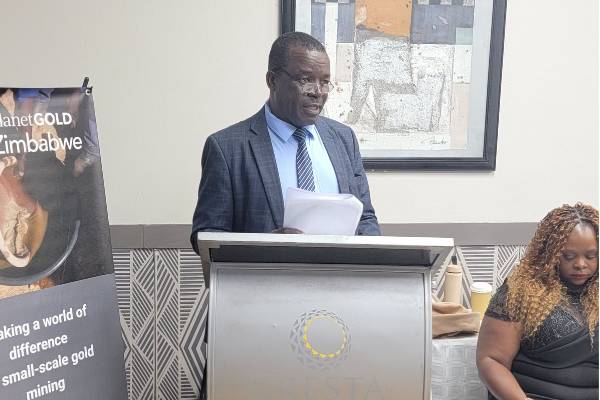
The call was made by Planet Gold Zimbabwe Project Manager Nyaradzo Mutonhori during an address at the Mine Entra 2025 conference, where she outlined the project’s comprehensive strategy to transform the artisanal and small-scale gold mining (ASGM) sector.

Speaking under the conference theme “Beyond Mining, Sustaining the Future of Mining,” Mutonhori detailed the four pillars of the Planet Gold Zimbabwe project: formalisation, finance, technology transfer, and knowledge-sharing. She identified the ongoing legislative reform as a critical juncture for the sector’s future.

While acknowledging that the new Mines and Minerals Bill “takes important steps forward towards recognising small-scale mining,” Mutonhori highlighted a significant omission.

“It remains silent on the specific identity and realities of artisanal miners,” Mutonhori stated, emphasising that this group continues to operate without a clear legal status despite its vital economic role.

To address this gap, Mutonhori announced that the project, in collaboration with the Zimbabwe Miners Federation (ZMF), has formally “proposed an explicit inclusion and definition of artisanal miners within the bill.”

“In parallel, we advocated for the establishment of a transitional system,” she added, pointing to a structured pathway intended to bring these miners from the informal margins into the regulated economy.

The push for formalisation was positioned as the foundational step for the project’s other objectives. Mutonhori explained that without legal recognition, artisanal miners struggle to access the financing and technology needed to modernise their operations.

On finance, she outlined collaborative work with Fidelity Gold Refineries and the banking sector to “unlock innovative financing models.” The goal is to demonstrate the business case for mercury-free technologies, thereby helping financial institutions see artisanal miners “as legitimate entrepreneurs who can drive rural economic growth.”

The technology transfer component aims to set up demonstration sites and training programmes for mercury-free processing equipment, proving that these methods are not only “environmentally sound but also more profitable.”

Finally, through knowledge-sharing and capacity-building, including specialised mining academies for women and youth, the project seeks to ensure the sector’s transition is “inclusive and community-driven.”

Mutonhori framed this multi-pronged approach as essential for positioning Zimbabwe as a regional leader in proving that artisanal and small-scale gold mining “can be both profitable and sustainable.”

She concluded with a rallying call for collective action from government, industry, and development partners to “build a future where mining is not only about extraction, but about empowerment, innovation, and shared prosperity, leaving no one behind.” The success of this vision, however, appears inextricably linked to the first step: granting artisanal miners a clear and legitimate place in Zimbabwe’s law.