

Home Blog Page 484

Gold smuggling: Root causes that urgently need addressing

0

Gold smuggling is currently the topical issue in Zimbabwe after the arrest of a local man who was caught with R11 million at OR Tambo airport. According to Home Affairs Minister Kazembe Kazembe, Zimbabwe is losing $100 million worth of gold every month through international smuggling rings.

Whilst smuggling is cancer that needs to be uprooted gold mining in Zimbabwe has myriad challenges that need to be dealt with to minimise or stop gold smuggling.

The Fidelity monopoly hurting the industry

Zimbabwe has one sole gold buyer of gold, Fidelity Printers and Refiners (FPR). Fidelity as it is popularly known in the mining circles at times fails to timely pay gold miners. As early as last year one of the country’s biggest miners RioZim stopped production due to delays in payments for deliveries to Fidelity, which left the company unable to meet its operational expenditures. RioZim in June 2020 said it was owed US$2.46 million and 65.48 million Zimbabwe dollars (US$2.6 million) by Fidelity for gold deliveries. RioZim also temporarily halted production and sued Fidelity and the central bank for $92 million over late payments in 2018. Metallon in 2019 was forced to put its mines on care and maintenance because of the unsustainable costs of running them without proper compensation for its proceeds from the government of Zimbabwe. Where payments were received the company claimed, they would only amount to a third of the total owed. Between 2016 and 2019, Metallon lost US$82m and Metallon
claimed for US$132m for the lack of profit and procurement, including interest.

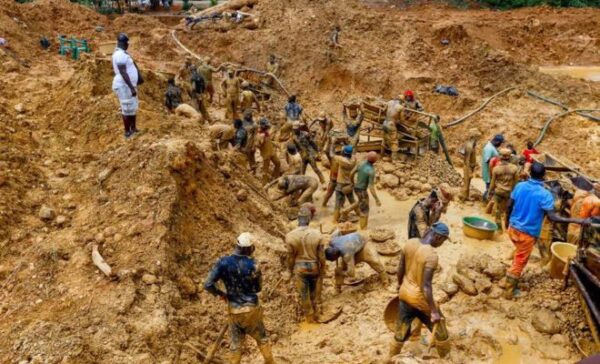
The sole buyer is also known for going for days to weeks without paying small-scale miners who are heavily reliant on the payments. As I write this, Mutare and Bulawayo miners have reported the entity has no cash to pay for submissions. This leads to ASM shunning the country’s buyer leading them only submitting a small portion of their bullion to Fidelity. The rest of the gold is channelled to alternative markets creating a fertile market for illegal buyers who in turn smuggle the metal out of the country.

Formalisation, formalisation and formalisation

For one to be recognised as a legal miner they have to be issued with a mining title from the Ministry of Mines and Mining Development (MMMD). Usually, when one applies for a mining title they are ready to start mining. In gold-rich areas like Mashonalandwest, Midlands, Mashonaland Central getting a mining title is currently taking between 4 – 6 years with some having to re-apply after paperwork goes missing. This leaves many miners with no alternative but to mine illegally whilst awaiting a visit from the MMMD inspectors.

Mining illegally makes it difficult for one to transport their gold to the country’s sole gold buyer as miners fear arrests from the Minerals Flora and Fauna Unit (MFFU), a section within the Zimbabwe Republic Police that is mandated to monitoring and curbing illegal activities particularly that involves precious resources such as minerals.

These types of illegal miners will sell to unregistered buyers who frequent the mines. What is most concerning about such practice is that majority of ASG miners in Zimbabwe mine illegally therefore it is a possibility that the bulk of the gold produced is likely not getting into government vaults depriving the country of much-needed revenue.

The MMMD must process applications to a month tops. It is totally baffling that the country is losing over US$100million monthly yet the Mines Ministry continues to be underfunded and resulting in a snail pace to formalise miners. Excuses from MMMD of an influx of mining title applications without urgently addressing the matter continuously leads to chaos in the gold mining industry.

Capacitate Mines Ministry and increase branches

We were shocked when we visited the Chinhoyi Ministry of Mines office by the state of geological maps of the province. Some staffers at the Ministry use personal laptops as the ministry lacks the necessary equipment. In a province with an area of 57,441 km² and over 4000 applications the office only had two vehicles. Yes, Just two vehicles! If inspectors have to visit a claim at Chilimba over 6hours away it means in two days only that place can be served whilst more and more applications keep on pilling.

Mining has drastically increased across the country and there are no signs of slowing down. Government has to increase branches to improve efficiency in service delivery.

Gold trade Act and what’s on the ground – disastrous

The gold trade act (Chapter 21:03) regulates the trade and dealings in gold. It generally prohibits the possession of gold by unauthorized persons. This is disastrous as it is estimated that there are between 500,000 and 1,5 million artisanal and small scale miners operating in zimbabwe and of these only 16% are registered according to the mines and minerals regulation act Chapter 21;05. whilst 84% remain unregistered according to Zimbabwe Economic Policy Analysis and Research Unit (ZEPARU). It simply means the precious mineral is mainly in the hands of the unregistered.

Even local alternative buyers pay better

Some buyers are known to be buying at a price higher than Fidelity and pay cash on the spot. This drives miners (legal and illegal) to these buyers. Sometime this year a Bindura buyer (whom we shall refer to as Josh) recently was reported to be buying at US$60/g whilst Fidelity was buying at US$49/g equating to more than US$11 000 more per kg! This means miners (legal and illegal), licenced and unlicensed buyers who buy gold from miners will naturally flock to Josh and guys like him for higher returns. Logically there is no way Josh and buyers like him will sell at a loss to Fidelity. One can automatically assume buyers like Josh are the major proponents of smuggling the metal out of the country.

Not all areas have registered buyers

In an interview with Mining Zimbabwe Mines and Mining Development Dep Minister Hon Polite Kambamura said in Makaha, the area has small scale mining activity taking place but there is no Fidelity Agent near the area or nearby Mutoko centre. The miners are therefore expected to board a bus to Marondera the capital of Mashonaland East province 148km away. Surely can we expect a miner to go that far to sell only a gram of gold?

Gold smuggling an African problem

Billions of dollars worth of gold are being smuggled out of Africa every year through the United Arab Emirates in the Middle East – a gateway to markets in Europe, the United States and beyond – a Reuters analysis has found.

Customs data shows that the UAE imported $15.1 billion worth of gold from Africa in 2016, more than any other country and up from $1.3 billion in 2006. The total weight was 446 tonnes, in varying degrees of purity – up from 67 tonnes in 2006.

Much of the gold was not recorded in the exports of African states. Five trade economists interviewed by Reuters said this indicates large amounts of gold are leaving Africa with no taxes being paid to the states that produce them.

In a nutshell, gold smuggling is a problem that is prevalent and the common factor in gold-producing African countries are restrictive policies on gold trade.

Conclusion

Although citizens should be concerned about the increasing rate of gold smuggling, they should also scrutinize the reasons leading to the practice becoming prevalent. Like the late legendary Music Icon, Dr Oliver Mtukudzi said “Wongorora Chikonzero chaita musoro uteme”, a lot needs to be done to curb smuggling.

Fidelity official gold buying prices Tuesday 11 May 2021

Fidelity Printers and Refiners (FPR) official gold buying prices Tuesday 11 May 2021

SG 90% AND ABOVE US52 958.72/kg
SG ABOVE 85% BUT BELOW 90% US52 071.15/kg
SG ABOVE 80% BUT BELOW 85% US50 887.71/kg
SG ABOVE 75% BUT BELOW 80% US50 295.99/kg
SAMPLE BELOW 10g BUT ABOVE 5g US51 479.43/kg
FIRE ASSAY CASH US53 254.58kg

EXCHANGE RATE 84.5282

  • NB*Fire Assay cash price is for gold above 100gs and no sample is deducted.
  • For Fire Assay Transfer price, a sample of not more than 10g is deducted
  • 2% royalty is charged on all deposits (Small-scale Miners)
  • 5% royalty is charged on Primary Producers

Cash available. Fidelity Printers and Refiners prices will be changing daily in relation to world market prices.

Visit us: at No. 1 George Drive, Msasa, Harare, Email: [email protected], Telephone: +263 242-486670, +263 242-486694, +263 242-487131, +263 242-447810-5


Rushwaya distances herself, ZMF from arrested smuggler

0

Zimbabwe Miners Federation (ZMF) President Ms Henrietta Rushwaya has distanced herself and the ZMF from  Tashinga Nyasha Masinire who has made headlines after being arrested for possession of smuggled gold worth R11 million (equivalent to US$782 636.85) at OR Tambo Airport in South Africa.

Social Media and online news outlets were awash with articles stating Masinire is Zimbabwe Miners Federation President Henrietta Rushwaya’s aide and driver.

Mining Zimbabwe reached out to Rushwaya who said Masinire ceased to be in the employ of ZMF after tendering in his resignation on the 28th of August 2020.

“For the record Tashinga Masinire stopped working for the ZMF as a driver in August in 2020 and for people to be seen now wanting to associate him with Zimbabwe Miners Federation or myself, in particular, is a bit unfortunate”.

“He tendered in his resignation and it will be folly for people to want to attach him to this organisation or to my persona as the President of the Zimbabwe Miners Federation”.

“As the Zimbabwe Miners Federation President I clearly and categorically state that Tashinga Masinire was no longer an employee or ZMF neither was he still my driver and any action taken against him should not be in any way associated with us,” Rushwaya concluded.

Masinire was arrested on Saturday for smuggling gold valued at R11 million (equivalent to US$782 636.85) at OR Tambo airport in South Africa. He was granted R100,000 bail early today by a Kempton Park Regional Court in that country.

He is facing charges of contravening the South African Customs Act 91 of 1964 and Precious Metals Act 37 of 2005.

Zimbabwean gold smuggler granted bail in South Africa

0

A man arrested on Saturday for smuggling gold valued at R11 million at OR Tambo airport has been granted bail by a Kempton park court in South Africa.

The alleged gold smuggler named in court as Tashinga Nyasha Masinire was granted R100,000 bail with stringent conditions.

Masinire conditions prohibit him from departing South Africa and he has to report at the nearest police station three times weekly.

He was remanded to July 1, 2021.


Chinese accused of illegal rare earth mining in northern Myanmar

0

Environmental groups in the north of Myanmar say a surge of illegal mining for rare earths has occurred in Kachin State close to the Chinese border since the coup on February 1.

Activists have complained about a rapid influx of Chinese workers since the country’s political turmoil erupted and that many trucks are lugging fertilizer bags loaded with minerals from illegal mines in Pangwa and Chipwi townships across the border.

China gets significant imports of medium and heavy rare-earth minerals from Myanmar. Irrawaddy, a news website run by long-time Burmese exiles in Thailand, said the Global Times quoted Chinese customs data showing that imports of rare earths rose by 23% in 2020 to around 35,500 tons.

Irrawaddy quoted an activist saying the number of trucks carrying rare earths had risen from one to two a day to 10 to 15 and the material was crossing the border “easily” despite the Covid-19 alert.

A spokeswoman for TANK, the Transparency and Accountability Network Kachin, said there had been an influx of Chinese miners and trucks carrying the rare earth material were leaving “day and night”.

The group says there are around 10 rare earth mines near Zam Nau, an area controlled by the New Democratic Army Kachin, a local militia aligned the the Myanmar military, which has deterred state mining officials from intervening.

More than 20 villages have reportedly suffered polluted water and soil because of illegal digging. Environmental groups say the Chipwe River turned red on two occasions due to mining waste.

Given that the Kachin Independence Army is currently fighting government forces (and has been since the ceasefire was broken in 2014), this controversial exploitation of local resources – which includes vast amounts of jade and timber as well – appears likely to continue.

On Monday May 3, the KIA appeared to have a small victory, when its troops shot down a military helicopter while conducting strikes in Momauk, where there has been fighting for several weeks. The Myanmar army is seeking to recapture Alaw Bum base on a hill on the Chinese border. It is is strategically important for areas between Bhamo and Myitkyina.

Battle for Kachin States’ resources, notably jade

Many analysts say this fighting is a battle for control of resources – but more likely jade than rare earths. The size of the jade industry dwarfs almost any other in Myanmar, except perhaps the drug trade from the Golden Triangle, which UNODC says could top US$40 billion a year.

An investigation by the London-based anti-corruption NGO Global Witness – Jade: Myanmar’s “Big State Secret” – estimated the the jade industry was worth up to $31 billion in 2014 alone – equivalent to nearly half of the entire country’s GDP.

Yet the proceeds were secretly controlled by notorious military figures and drug lords, it said, while local people got little benefit. This is widely known.

There has been speculation that Aung San Suu Kyi wanted to reform the jade sector, which has also been plagued with rampant drug use and regular tragedies, generally caused by landslides at mining sites, which have claimed hundreds of lives.

Groups in Kachin State had been calling for the NLD government to freeze licences and take control of the sector to end the huge social and environmental costs.

The struggle over jade is perhaps the major driver of armed conflict between the Myanmar army and the Kachin Independence Organisation and its military wing the KIA. They want the state’s jade riches shared and managed so they can have a lasting peace.

Cost of the coup

Meanwhile, the cost of the February 1 coup for ordinary citizens and companies that invested in Myanmar continues to soar.

Up to 25 million people – half the country – could drop into poverty by the end of the year because of the impact of the Covid pandemic and the political crisis, the UN Development Programme warned on Friday.

A study at the end of last year, showed that 83% of households reported that their incomes had been cut almost in half due to the pandemic.

The number of people living below the poverty line is estimated to have increased by 11 percentage points due to socio-economic effects of the pandemic. And the deteriorating rights and security situation since the coup is expected to drive the poverty rate up by a further 12 percentage points this year.

Foreign investors have been hammered as well.

On Tuesday May 4, Norway’s telecom giant Telenor said it had written off the value of its Myanmar operation in light of the country’s deteriorating security and human rights situation. “We have fully impaired Telenor Myanmar with an amount of 6.5 billion Norwegian krona ($783 million),” the company said.

Asian Times Financial With reporting by Reuters

Lithium exploration in Fort Rixon excites Govt

0

LITHIUM exploration underway at Fort Rixon, Matabeleland South is set to heighten Government’s measures of using the mining sector as leverage to reach its target of a US$12 billion economy in the extractive industry.

The Government recently gave an Exclusive Prospecting Order (EPO) to mining giant Premier African Minerals to commence the exploration process on lithium and tantalum. When mining eventually starts, it is expected that the mineral will rake in US$1, 4 billion in eight years.

Fort Rixon is largely known as a gold mining area but the subsequent discovery of other minerals in the belt, has necessitated the need for more investment. The Ministry of Mines and Mining Development has positioned parts of Fort Rixon, Gwanda and Insiza as prime areas for the mining of lithium among other minerals such as bismuth, arsenic, chrome and nickel.

Envisaged mining of lithium is expected not only to open the economy but to be an example of a public-private partnership to bring investment in the country, according to Mines and Mining Development Minister, Winston Chitando.

“The exploration of lithium by Premier African Minerals started in March. This is one mineral that is going to be a game-changer in the country. The Government is on a path to increase the mining sector’s contribution to the economy and availing such investments will bear fruit,” said the minister in an interview last Friday.

The minister who is on a charm offensive to reach out to would-be investors, told Sunday News Business that there has been an overwhelming response for lithium.

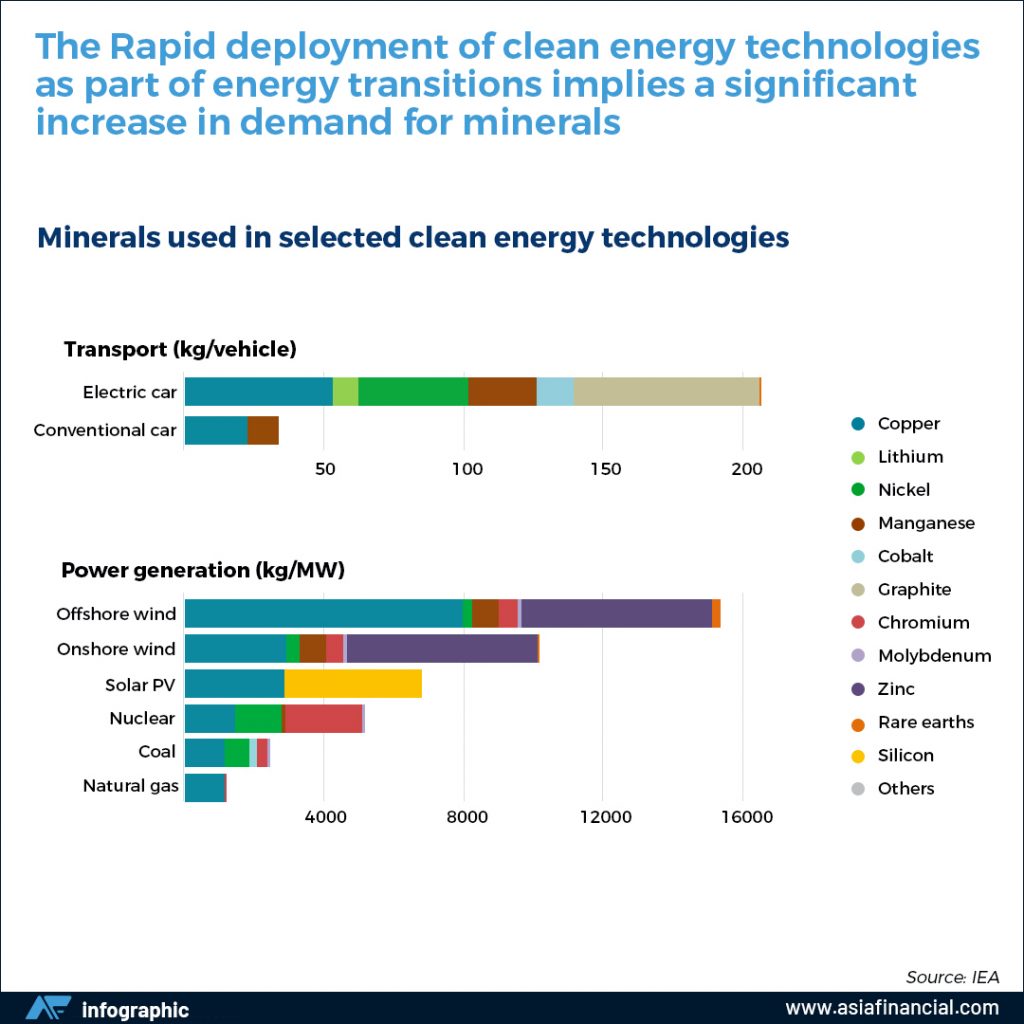
“Of course the responses to our call for investment have been encouraging. Zimbabwe is going to be the next biggest supplier of lithium. Lithium is in demand in the automotive and mobile phone industries as it is used in batteries to improve efficiency. The mineral is of high demand to electric car manufacturers worldwide.”

A statement from Premier African Minerals on the start of the lithium exploration process, indicates that the company is committed to bringing value.

“I am deeply appreciative of the Zimbabwe government for the granting of this substantial EPO and Premier will reciprocate with mobilisation for the commencement of the definitive feasibility study (DFS) on the Zulu deposit, which has an estimated completion time of 14 months, ” Premier African Mines chief executive Mr George Roach said on the company’s website.

Minister Chitando said successful ventures in lithium mining will boost the Government’s confidence to have the sector achieve US$12 billion. Mining is currently contributing about eight percent of GDP. An average of 6,2 percent was recorded to the GDP between 2009 and 2015 and 8,4 percent from 2016 to 2018, figures from the Ministry of Finance and Economic Development show.

Meanwhile, Minister Chitando said the Government was not backtracking on its “use it or lose it” policy in mines.

“Those who are not fully utilising mining claims have to know that they will eventually lose. The goal is to maximise production by working with competent and progressive mines,” he said.


The Sunday News

No more digging – a new environmentally friendly way of mining

0

Researchers from The University of Western Australia, Australia’s national science agency CSIRO, the Technical University of Denmark and the University of Exeter have developed a new mining technique that uses electric fields to extract metals from hard rock ore.

The technique could replace the traditional method of digging which results in significant costs to the environment.

Digging methods are currently used in 99 per cent of mining activity, often resulting in significant environmental degradation and huge quantities of solid waste.

Global estimates of waste are of the order of 100 gigatonnes per year, significantly larger than any other form of waste generated by humans.

The new technique is published in Science Advances. It is now being further developed and refined with support from the Minerals Research Institute of Western Australia.

Professor Henning Prommer from UWA’s School of Earth Sciences and CSIRO said the technique worked by installing electrodes within the ore body and applying electric currents that could induce the transport of electrically charged metals such as copper through rocks by a process called electromigration.

“The metals are extracted within the ore body, instead of the traditional means of having to dig them out and milling huge amounts of material, a technique which traditionally has placed huge pressure on the environment,” Professor Prommer said.

“Traditional methods of excavating ore material result in a large amount of solid waste brought to the Earth’s surface which needs to be disposed of, whereas this new method dramatically decreases wastage”.

Professor Henning Prommer

Professor Andy Fourie from UWA’s School of Engineering said the new technique held immense possibilities.

“It will not only improve mining outcomes, it will help us shift towards a more sustainable way of mining,” Professor Fourie said.

The researchers have tested the technique in laboratory experiments and through computer modelling.

After successfully extracting copper from some very tight rock samples they are confident the idea will also work in the field, not only for copper but also for a wide range of other metals.

“This is really exciting because we can use intermittent power sources such as solar and wind to extract minerals,” Professor Prommer said.

Source: University of Western Australia

BREAKING: Zimbabwean arrested with R11 Million gold at OR Tambo

0

A Zimbabwean national was arrested yesterday at OR Tambo International airport in South Africa for being in possession of 23 pieces of smuggled gold worth R11 Million.

The 33-year-old man is expected to appear at Kempton Park Regional Court on Monday.

According to a South African radio station, South African Serious Organised Crime Investigation team known as “The Hawks” spokesperson Lieutenant Colonel Philani Nkwalase said they arrested the suspect on Saturday.

The suspect failed to declare any luggage in their possession and did not have any documentation or permits that authorises them to transport the yellow metal.

“He allegedly failed to declare any items and did not have any permits or licences to be in possession or transport gold and the Hawks were called to effect the arrest and further investigation,” Nkwalase said.

He said the suspect had travelled from the capital city Harare to Johannesburg, South Africa.

The suspect faces charges of contravening the South African Customs Act. The suspect is alleged to be a Zimbabwean national.

Zimbabwe is losing at least US$100 million worth of gold every month, which is being smuggled out of the country through porous borders with the Government in the process of rolling out measures to plug the leakages.

This is a developing story more to follow…


Anglo American investors approve spin-off of South African thermal coal

0

Anglo American plc said on Thursday shareholders had approved the spin-off of its South African thermal coal business into a new company, paving the way for its listing in Johannesburg and London next month.

If the transaction meets all other approvals, Thungela Resources Limited is expected to be listed on the Johannesburg Stock Exchange and on the London Stock Exchange on June 7.

Anglo is shifting away from assets that mine the most polluting fossil fuels and is also looking to exit from its Colombian thermal coal mine.

Reuters

Petroleum production, paradox of plenty

0

Imagine winning a million-dollar lottery but instead of rolling around in opulence and glamor for eternity, you plunge into perpetual poverty.

Oil has been referred to as “the black gold”. It is a priceless resource with a huge impact on a nation’s economic, environmental and social structure. The discovery of oil is capable of altering the dreams of many a country at national and community level. Upon the discovery of oil and gas, developing countries usually look to foreign investment from developed countries. By so doing they risk undermining their permanent sovereignty but proceed nonetheless because a developing country that has just struck oil often lacks the expertise, technology and financial capacity to run a capital intensive oil and gas extraction and production project.

The discovery of oil and gas, therefore, frequently forces sovereign states to enter into host government agreements with capable multinational corporations. These agreements may take the form of service agreements, joint-venture agreements or production sharing agreements. Properly managed, the oil industry is capable of spawning a host of advantages, including but not limited to, lucrative employment opportunities for local communities, attraction of public and private international project financing institutions, transfer of expertise and skills to the local people, more revenue and development of infrastructure.

However, in other countries the very discovery of this black gold has led to the collapse of the economic, social and political fabric. 

This strange phenomenon is known as the “resource curse” or “the paradox of plenty”. This theory basically denotes that countries that are rich in natural resources tend to have poor economic growth, higher poverty levels, political conflict and decaying social structures as compared to countries with little or no natural resources.

Venezuela is the perfect embodiment of the resource curse. Despite having the largest oil reserves in the world (over 300 billion barrels in reserves), the majority of its people continue to wallow in abject poverty. 

Oil wells have also been in the middle of conflict as recently observed in Mozambique and as witnessed, not too long ago, in Syria and Iraq where ISIS successfully assumed control over oil fields and started producing oil for trade on international markets. 

Other notable examples of oil driven conflict include the Baku-Tbilisi-Ceyhan (BTC) crude pipeline bombing in the skirmishes between Armenia and Azerbaijan as well as the sabotaging of the Royal-Dutch Shell Company’s pipelines by insurgents in Nigeria.

In countries like Nigeria and Ghana the curse has reared its ugly head in the form of devastating environmental impact with a huge economic effect on the local people. In the Nigerian communities of Goi, Oruma and Ikot Ada Udo as well as the western region of Ghana, local residents have complained of serious air and water pollution which has suffocated their traditional economic activities like fishing and farming. This is not surprising because oil extraction can turn into an environmental curse due to oil spills, gas flaring or hydraulic fracturing (fracking) resulting in air and water pollution. To the host communities, the discovery of oil has become a curse instead of a blessing, which should not be the case.

The resource case has also been linked to the “Dutch disease”. This emanates from the situation in the Netherlands around 1959 where the discovery and subsequent exploitation of oil and gas led to currency appreciation and a crumbling of other sectors of the economy as they could not co-exist with the powerful and valuable black gold.

Gloom, however, is not always the case. Progressive models have led to proper development and utilisation of the resource. Countries like Norway and Canada have successfully circumvented all these negative impacts associated with the discovery of oil through efficient, transparent and effective economic planning. 

The Saudi Arabian government owned company, Saudi Aramco, is arguably the most profitable company in the world. World class infrastructure is ubiquitous in the oil rich United Arab Emirates. These models can be replicated to the extent there are positives and lessons to be learnt. One of the steps that may be incorporated is the idea of effective Environmental Impact Assessments at inception of investment ideas.

Environmental Impact Assessments

At every stage of oil and gas exploration, exploitation and production it is always important to factor in public participation through Environmental Impact Assessment procedures (“EIAs”). EIAs are an international environmental law practice that emerged through instruments like the Rio Declaration, ESPOO, the UNCLOS convention and the Aarhus Convention. Cases like the Pulp Mills arbitration between Argentina and Uruguay have inducted this principle into customary international law. In terms of this principle, the public must be informed and consulted concerning proposed activities that may have a significant impact on their livelihood.

On the investor’s part, due diligence helps to mitigate the effects of the activity or may be used as a defence in future litigation. This has become even more important in light of the advancement in jurisprudence by the Dutch and English courts in cases such as the Akpan v Royal Dutch Shell plc/SPDC (Nigeria) and The Bodo Community v The Shell Petroleum Development Company of Nigeria Ltd. In these cases, it was held that an investor can be sued in its home-country (Netherlands/UK) by local communities (Nigerians) on the basis of the law of the host state (Nigeria). Shell has since agreed to pay hefty compensation packages of around £55m to compensate aggrieved Nigerians from the affected Bodo community. For the government, EIA may be a portrayal of democracy, good governance and fulfilment of state responsibility, while for the concerned citizens it signifies empowerment of their voices.

It is commendable to note that Zimbabwe has also domesticated this principle in its legislative framework. Section 73 of the Constitution of Zimbabwe provides for the constitutional right to environmental protection which is in line with the Paris Agreement. Further, the Mines and Minerals Act (s159) as well as the Environmental Management Act (s99ff) contain provisions that provide for the procedure and requirements of proper EIA. The framework already exists and simply needs to be complied with.

It should never be the case that the discovery of the rich black gold spells doom and suffering for the people of a host state. The so-called curse can be avoided by a coming together of all stakeholders. All other sectors of the economy can still function viably. The discovery of oil, if that be the case, should be a blessing and not a curse.

Takudzwa Takunda Mutevedzi is a lawyer. He is currently studying towards an LLM degree in Oil, Gas and Mining Law at an energy University in the United Kingdom. He writes in his personal capacity and can be contacted on [email protected] or Takudzwa Takunda Mutevedzi on LinkedIn.