Home Blog Page 509

Premier African Minerals cuts liabilities by US$1,4m

0

ZIMBABWE-focused mining group, Premier African Minerals, has reduced its liabilities by US$1,4 million in the period after June 2020 as it seeks to boost mining operations including its tungsten and tantalum projects in Matabeleland.

In April this year, the company announced that it had entered into a secured

US$200 000 loan agreement and related subscription agreement aimed at augmenting working capital reserves.

Premier indicated in a latest report for six months to June 2020, that it recorded an operating loss of US$0,649 million but was committed to reducing debts as well as restricting capital expenditure to focus on acquiring cash generative assets.

The mining group, among its objectives, has resolved the Exclusive Prospecting Order granted at Zulu and tantalum project or RHA Tungsten equity and funding is resolved or seek a potential disposition of the above assets. The RHA Tungsten mining project is in Kamativi.

“It is important to note that in the period post-June 2020, Premier has significantly reduced its overall liabilities by US$1,4 million through a combination of debt conversion and other settlement agreements and this assists in positioning the company to achieve the objectives set above,” said the mining group.

Premier said the operating loss for the half year period under review was mainly due to the costs associated with maintaining the listing status, which is made up of administrative fees, retainers to advisors and essential Premier operational expenditure.

Recently, the group announced that it was in discussions with the National Indigenisation and Economic Empowerment Fund (NIEEF) to agree on alternative financing options.

NIEEF, a partner of Premier African Resources in the RHA Tungsten mining project, owns 51 percent shareholding.

Premier exclusively owns the plant and equipment at the Kamativi mining operation and the group has pointed out that the mineral claims were ceded as security under the plant rental agreement by RHA to Premier.

In Matabeleland South Province, the mining group also owns the Zulu lithium and tantalite project.

HWANGE Colliery emerges from the woods

0

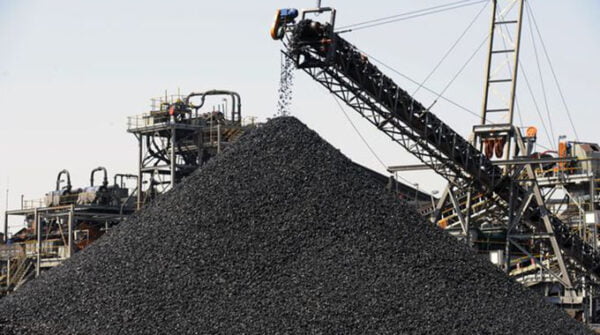
HWANGE Colliery Company Limited (HCCL) is emerging from the woods after the Government placed the firm under administration last year.

Once the country’s largest coal miner, HCCL was last year suspended from the Zimbabwe Stock Exchange in 2019 after it was placed under administration in terms of the Reconstruction of State-Indebted Companies Act (Chapter 24:27).

In a statement, accompanying HCCL interim financial results for the six months ended June 30,2020, the administrator, Mr Bekithemba Moyo, said: “It is interesting to note that prior to the company being placed under administration, it was making losses for a sustained period.

“The company however, had a net loss position of ZWL$992 million for the period under review compared to the net profit of ZWL$3,5 million for the same period in 2019 due to an exchange loss of ZWL$1 billion on legacy foreign creditors.”

Total legacy foreign creditors for the firm presently stands at US$20 million and the challenge is expected to persist until the debts are fully settled, he said.

“Revenue increased by 28 percent from ZWL$827 million in 2019 to ZWL$1 billion for the six months under review on an inflation adjusted basis and on a historical basis it increased by 916 percent from ZWL$70 million to ZWL$709 million.

“This was largely due to a combination of an increase in high value coking coal sales as well as frequent adjustments to product prices in line with changes to the interbank rates,” said Mr Moyo.

HCCL’s total output rose by 84 percent to 596 876 tonnes due to increased production by the contractor from 325 114 tonnes last year. Mr Moyo said their focus was now on increasing output based on own mining activities as that would not be only cheaper but reliable.

“Total production increased by 84 percent from 325 114 tonnes in 2019 to 596 876 tonnes for the period under review.

“This was largely due to an increase in production by the contractor. Our target going forward is to ensure that production is skewed to own mining as it is not only cheaper but more reliable particularly given cash flow challenges that dogged the company in the recent past,” he said.


The Chronicle

TALKS are underway to review coal pricing model

0

TALKS are underway to review the coal pricing model to make it more sustainable following an outcry from coal producers, a senior official has said.

The coal producers recently complained that the product price was too low and did not reflect the high cost of production.

A tonne of coal is being sold for US$30 while on the regional market it is fetching between US$38 and US$47.

Speaking in an interview recently Mines and Mining Development Minister, Winston Chitando, said efforts to ensure sustainable pricing for coal was underway with an announcement on the review due this month. “Government is committed to ensuring that there is a sustainable pricing model, discussions are underway between the coal producers and the relevant Government departments,” he said.

“I would like to assure coal producers that very soon there will be an announcement by the relevant authorities on a long term pricing mechanism to ensure that there is sustainable delivery of coal not only to power stations but also other various users like coking plants and industry. So, I’m very confident that by the end of October that will be sealed so that we have a long term sustainable pricing for coal,” said Chitando.

He said the coal mining industry played an important role in the economy and was focused towards the US$12 billion mining industry by 2023.

“As you are aware coal producers are expected to play a critical role in enabling the country to attain a middle-income economy by 2030. We will continue to support these players especially with the various Government and private sector projects underway such as construction of power stations and coking plants. The demand for coal is growing and as such our producers must be capacitated to meet the increased demand,” said Minister Chitando. He said he was confident the mining sector will achieve the US$12 billion economy by 2023.

President Mnangagwa has also stressed the need to utilise available resources such as the land and minerals to drive economic growth.

According to the chairperson of Coal Producers Association, Mr Raymond Mutokonyi, the producers want a cost reflective price model. Members of the coal producers association are Hwange Colliery Company, Makomo Resources, Zambezi Gas and Galpex also known as Coalbrick Mine.

The Chronicle

Two soldiers in court for gold theft

0

Two ZNA soldiers stationed at Manyame air force base appeared in court yesterday for Contravening section 379 ARW section 391 (2) of Mines Act Chapter 21:05. The accused allegedly stole gold ore belonging to Maxen Manuel Syndicate in Mazoe.

The accused Taurai Towo (34) a corporal with force number 72541 and Tinashe Tembo, a sergeant with force number 72634 are employed by the Ministry of Defence but were working part-time at Maxen Manuel Syndicate of Cosmos 18-21 Mine (Reg No 32054-67) Eskbank farm in Mazoe. They were remanded out of custody and will appear again in court on 18 October 2020.

It is alleged that Towo and Tembo together with another security guard Themba Mudzengerere who is still at large connived with Tamuka Gandiwa (20), Promise Chivhorovhoro and Cosmas Kafudzaruwa (29) and stole 1 100kgs of gold ore which was packed in 55x 20kgs sacks and went to sell it to Morebetterdays Milling company. They shared the proceeds.

The allegations are that On 29 September 2020 Towo locked the main shaft using three locks securing 55 x 20 KGS of gold ore which was left in the shaft. He thereafter locked the main entrance in the presence of Tembo, Themba Mudzengerere, an Oswell Security guard who is still at large and the mine supervisor Dannie Chesa. Towo remained with the keys and was left guarding the mine in the company of accused two and Themba Mudzengerere.

The three then connived with accused Gandiwa, Chivhorovhoro and Kafudzaruwa, and stole 1 100kgs of gold ore which was packed in 55 x 20 KGS sacks and went to sell it to Morebetterdays Milling Company.

On 30 September 2020, the mine supervisor Dannie Chesa and other workers reported for work and accused one unlocked the main entrance gate to allow them in, in order for them to commence work. Accused number one went on to unlock the main shaft and the mine supervisor Dannie Chesa went inside first. He discovered that 55x 20 kgs sacks of gold ore were missing.

A report was later made leading to the arrest of the five accused persons. USD 90 was recovered from Gandiwa while USD 130 and 5 kg gold ore was recovered from Kafudzaruwa.

Zimasco set to resume operations

0

THE country’s biggest ferrochrome producer, Zimasco is set to resume production after the company had temporarily halted production in April this year.

Zimasco General Manager (Marketing and Administration) Clara Sadomba confirmed the development in an interview.

“We are restarting production for the fourth quarter as demand from our customers in the global marketplace is set to return in the fourth quarter going into quarter one for 2021. We are therefore restarting our furnaces as normal,” Sadomba said.

While the company is set to resume production, Sadomba added, “The cost challenges that face ferrochrome production in Zimbabwe have been well documented many times and we are hopeful that the authorities will assist the industry in dealing with these.

In April this year, Zimasco said the company was halting operations after the effects of Covid-19 on its markets in Europe, Asia and China have had an adverse impact on their local operations.

“Please be advised that Zimasco will temporarily halt its smelting operations as a response of the curtailment/stoppages of stainless steel production that has happened in the mainly stainless steel making regions of Europe, Asia and China within the last few months.

“In efforts to slow down the spread of Covid-19, many governments have introduced severe restrictions which means that many stainless steel mills across the world have had to stop or significantly reduce production,” the company said then.

Zimasco’s Kwekwe smelter has an operational capacity of 180 000 tonnes of ferrochrome per year.

Zimbabwe has 15 ferrochrome operations concentrated mainly in the Midlands Province.

The country holds the world’s second-largest known chrome ore deposits, after South Africa.


NewZimbabwe

ZESA tariffs up 50% again, another hike ahead

0

Zimbabwe’s energy regulator has allowed the state power company to increase tariffs by 50% from Thursday while another hike by the same margin would come into effect next month.

The Zimbabwe Electricity Transmission and Distribution Company (ZETDC) had already raised tariffs by 50% on Sept. 23 to bring its rates in line with inflation running above 700%.

The increase would hit residents whose salaries have lagged inflation, while businesses could pass on the cost to consumers.

Zimbabwe Energy Regulatory Authority (ZERA) said in a letter to ZETDC that the government had okayed the “outstanding tariff adjustments.”

ZERA chief executive Edington Mazambani confirmed the increases.

Last year in October, the power company hiked the average electricity tariff by 320% in a bid to ramp up production and improve supplies.

Zimbabwe has managed to keep the lights on since March after businesses were either shut or cut production after a government imposed lockdown to curb the COVID-19 pandemic.

Reuters

Sand mining spirals out of control

0

Large swatches of land around the country are being disembowelled by illegal sand miners who are trying to keep up with demand from various mushrooming housing developing schemes.

The ever-increasing demand for housing in every part of the country has spurred construction activity. But while this is a welcome development in reducing the housing backlog, it is fuelling sand poaching.

Pit and river sand are inherently crucial materials in any construction work.

However, much of these materials are being sourced illegally. Even the dead no longer know any peace as graveyards that stand in the way of poachers are now being desecrated like never before.

At Zinyengere graveyard in Epworth, sand poachers have destroyed several graves, with remains being tossed into a nearby dam.

“It is a sorry state. Graves have been opened by these sand poachers and some of the remains are being thrown into the nearby dam. The dam happens to be the source of water for drinking and other domestic use for this community,” said Douglas Utete, secretary for Zinyengere Development Association (ZDA).

ZDA chairperson Joel Mupfudza claims that most areas under construction in Epworth and Hopley are yet to be regularised by the Harare City Council and the Epworth Local Board.

“More than 30 graves were tempered with by sand poachers in illegal sand extraction. The challenge is people are just allocating themselves stands, and this is fuelling rampant sand poaching activities in the area,” he said.

The Sunday Mail Society and ZDA officials were recently manhandled by angry sand poachers after visiting the desecrated cemetery.

“What is it that you want to ask us? We saw you taking pictures. Just wait and see what we are going to do to you. I will kill and bury you in this cemetery,” charged one of the sand poachers who was armed with stones and a machete.

Rodney Mupfudza (41), a local resident, said people generally fear the dreaded sand gangs.

“Last year I almost lost my life when they charged towards us wielding machetes. This was after we approached them together with ZDA on an awareness campaign to fight sand poaching. We had to run for dear life,” he said.

It is believed that the sand poachers have also attacked police details in the past.

“The sand poachers have become a menace. They randomly dig pits and are a law unto themselves. They attack anyone who tries to stop them, even the police if they are not armed,” bemoaned Dr Wilton Mhanda, Epworth Local Board’s town secretary.

Although most jurisdictions have legal limits on the location and volume of sand that can be extracted, illegal sand mining is flourishing in many parts of the world.

While the menace has been in existence since time immemorial, authorities reckon it has now gone out of hand. Environmental Management Authority (EMA) has since launched a blitz to curb the vice. Sand poaching is a crime under Statutory Instrument (SI) 3 of 2001.

It is outlawed under (SI) 7 of 2007 Environment Management Act (Environmental Impact Assessment & Ecosystems Protection) Regulations.

“A total of 19 offenders have since been issued with tickets for vending sand or having sand sourced through poaching. Also, 17 Environmental Protection Orders (EPOs) were issued to prohibit sand vending,” revealed EMA environmental education and publicity manager Amkela Sidange.

Chaos

Hyde Park Cemetery in Bulawayo once faced a similar predicament a couple of years back. The situation only normalised after authorities were forced to take action by angry residents who besieged the Bulawayo City Council offices for recourse.

Sand poachers, who are often armed with picks and shovels, invariably leave a trail of unreclaimed pits in their wake, which pose a danger to both humans and animals. Unfortunately, residents and industrial companies subsequently use some of the disused pits as dumpsites for all sorts of waste. It is, however, feared the pits would become dangerous deep pools when the rainy season begins.

Pressure

EMA is ratcheting up pressure.

They are currently conducting raids on both sand vending sites and those in possession of sand sourced through poaching.

Without taking action, the consequences could be dire. Instream mining and sand poaching tends to lower the stream’s bottom, which may lead to bank erosion, including flooding.

Depletion of sand in the streambed and along coastal areas also causes the deepening of rivers and estuaries, including the enlargement of river mouths and coastal inlets. According to Sidange, there is need for a systematic approach to sand abstraction.

“ . . . to that end, EMA is calling upon local authorities to designate sand abstraction sites which they should manage, and ensure sand abstraction is done in a regulated manner from registered sites to prevent poaching, and without harming the environment,” she said.

Sand poaching and mining are some of the main activities that are blamed for land degradation.

A recent survey done by EMA shows that a total of 11 163 ha of land and a stretch of 1 555km of riverine ecosystems have been degraded countrywide due to illegal mining activities.

The survey identified degraded mining hotspot areas in order to guide decision-making and regulations.


The Sunday Mail

Calls for transparency in mining contracts grow louder

0

THE surge in mining activities around the country has ignited calls for the Government to prioritise contract transparency within the extractive industry to avoid speculation and illicit trade of minerals that has seen the country losing revenue.

Stakeholders in the industry are advocating for a move that will improve the monitoring and evaluation of mining contracts as the Government targets a US$12 billion mining economy by 2023.

Under the contract transparency concept, mining companies and individuals who constitute the bulk of the artisanal and small-scale sector have to accept to publicly reveal the full text of any contract, licence, concession or other agreement governing the exploitation of oil, gas and mineral resources.

Failure to account for contract transparency, according to an academic researcher Dr Samukele Hadebe, has fuelled under-development in mining communities and left the country reeling in losses from an industry that is seen as the bedrock of economic development.

“African economies are hemorrhaging as billions of dollars are lost through illicit financial flows out of the continent. Without doubt much of these financial resources are from the extractive industries through mis-invoicing, tax evasion and outright smuggling. Zimbabwe is no exception. Historically, there have been deep concerns over the lack of transparency in the management of revenues arising from mineral extraction,” said Dr Hadebe.

He said the contract transparency issue was a problem that has seen developing countries rich in mineral resource being in perpetual loss.

“This concern derived from the paradox that those countries that are richly endowed in mineral resources tend to have some of the poorest communities. While profits from the country’s natural wealth skyrockets the poverty within communities deepens,” observed Dr Hadebe.

The proposed Mines and Minerals Bill is seen as the biggest step in addressing the mining contracts debacle.

“The country has to adopt provisions for contract and online register of contracts in the proposed Mines and Minerals Bill to provide for performance monitoring of mining contracts,” said Mr Tafadzwa Chikumbu, programmes manager at Transparency International Zimbabwe. The Mines and Minerals Bill must provide for parliamentary oversight of mining contracts be in line with section 315 (c) of the Constitution to ensure transparency and accountability in the negotiation of contracts.”

Mines and Mining Development Minister Winston Chitando, in an interview on Friday, said the Government is seized with the concerns coming from the industry and were fully considering implementing a system that spells out details of how mines permitted to operate are structured.

“The commitment by the Government to turn mining into a US$12 billion economy is real. In that course there is a need for all stakeholders in the mining sector to address problems that have always made the industry fail to achieve its goals.”

Publish What You Pay (PWYP) Zimbabwe coordinator Ms Joyce Machiri said transparency in the industry will ensure that there was total community participation in revenue generation and distribution from the lucrative mining sector.

“Transparency and accountability are key facets of just, equitable and sustainable exploitation of natural resources, which entail community sharing revenue from the extraction of finite natural resources, said Mr Machiri.

“The benefit-sharing campaign on transparency and accountability is critical.”

Even the Zimbabwe Council of Churches, who were co-hosts of the 2020 Zimbabwe Alternative Mining Indaba, said it was high time that the Government reins in on companies to disclose the nature of their contracts.

“The issue of transparency is one that benefits the nation. We need to create trust between the mining industry and the communities they live in. For effective monitoring of mining activities to be successful, information has to be availed,” said the ZCC president Bishop Lazarus Khanye.

Mr Dot Moyo, a small-scale miner in the gold-rich Inyathi area said while not much was known about contracts disclosure, it was good it was generating interest in the industry.

“Few of us knew about this. But I am positive that as the campaign draws wider, small scale miners will also get to understand what contract transparency means for the industry and the future of our operations,” said Mr Moyo.

The contracts, as experts in mining law, explain, are an important element in the legal framework on rights and obligations of all parties involved in the exploration and production of oil, gas and minerals. Contract transparency is a topical issue in the local mining industry since the time the New Dispensation committed to redress imbalances in mines.

Over the years, a lot of disgruntlement has arisen around the issuance of mining claims and licences, with some miners claiming unfair trade practices by those who would have covertly got permission to mine. Finance and Economic Development Minister Professor Mthuli Ncube, is on record saying the Government was in full support of pursuing transparency within the mining industry by joining the Extractive Industries Transparency Initiative (EITI). He said that in his 2019 budget speech.

The views of investors, market watchers and lobbyists in mining, during the ninth edition of the Zimbabwe Alternative Mining Indaba which was held last year, were hinged on how both the large-scale companies and emerging small-scale mines can turn around the fortunes of the industry by abiding to contract disclosure and accountability, without prejudicing the country.

This comes in the wake of the Ministry of Mines and Mining Development’s bold aim to curb all speculative mining activities, mineral leakages and reclaim unused mines that are kept for speculative activities.

Worldwide, disclosure of mining contracts has pushed more than 20 oil and petroleum companies to lead in the adoption of the practice.

Despite the growing moving in favour of contract transparency, there was still substantial pushback from companies against contracts disclosure.


The Sunday News

ZMF, MMCZ outline training programmes for Chrome miners

0

THE Zimbabwe Miners Federation (ZMF) together with Minerals Marketing Corporation of Zimbabwe (MMCZ) have outlined training programmes for artisanal and small-scale chrome miners in a bid to boost their production capacity in the post-COVID-19 pandemic outbreak.

Zimbabwe’s artisanal and small-scale chrome miners have been hard hit by adverse effects of Covid-19 pandemic with a few that are still operating reportedly being paid as low as US$20 per tonne. The artisanal and small-scale miners were before the Covid-19 pandemic being paid US$88 per tonne by local buyers for their deliveries.

In a statement, ZMF spokesperson Mr Dosman Mangisi said the chrome sector has been hard hit by the effects of the pandemic.

“We wish to notify the chrome mining industry that the sector has been hit hard by the Covid-19 global pandemic. This has resulted in prices crashing due to imposed regulations internationally on travel bans. Therefore, the sector is not looking good especially on prices. The prices are going down and there is an unfair practice where prices are pegged at US$20 per tonne. Production is relatively low and the chrome mining industry is not looking very encouraging,” said Mr Mangisi.

MMCZ general manager, Mr Tongai Muzenda said they were working tirelessly to revive the sector and they would be rolling out training programmes.

“MMCZ is working tirelessly to bring the sector into the picture. In collaboration with ZMF we have lined up training programmes for artisanal and small-scale miners in the chrome industry. The training programmes are in place and these trainings will give us a better way forward in order to get a market value,” said Mr Muzenda.

He said there were unfair activities that have been taking place in the minefields.

“MMCZ want fairness in the chrome mining and market. In the mine fields there are activities of buying and selling, but we would want fairness in the chrome sector. Therefore, chrome miners’ views are welcomed on board, in order to shape a vibrant Zimbabwean chrome industry,” said Mr Muzenda.

He added: “The organisation also notes these challenges in the wake of the current prevailing international pandemic Covid-19, which has paralysed economies world over, through a number of restrictions in order to curb the spread of this viral disease. Countries world over had put travel bans, restrictions, hence affecting us as Zimbabwe. We are therefore looking forward to help grow the sub-sector of chrome mining in the country. The success of chrome miners is the success of MMCZ also.”


The Sunday News

Government stops Task Mine rescue operations

0

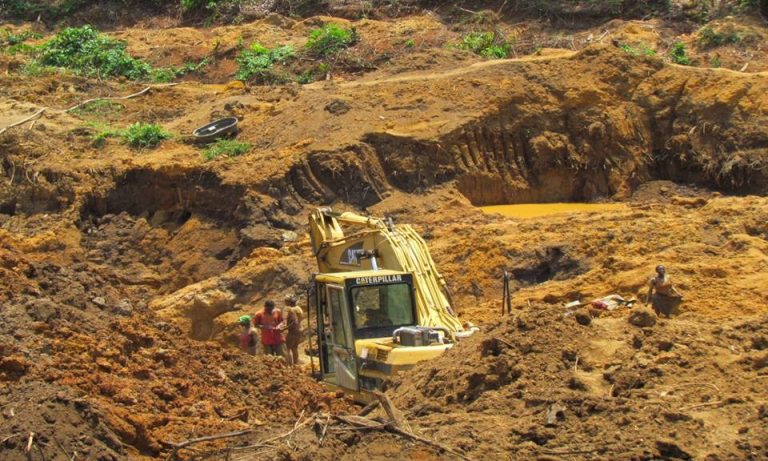
The government has stopped the ongoing rescue operations at Task Mining Syndicate where five miners have been trapped underground since the 8th of September 2020.

Yesterday Chegutu District Development Coordinator Mr. Tomu accompanied by the Police reportedly instructed all the rescue work to cease and all access points to the accident scene sealed. When contacted for comment Tomu confirmed that he had visited the embattled Mine with the Police.

“Yes, we did ask for the halting of operations as we were instructed by the Mines Ministry. It is best you contact the Mines Ministry for comment”.

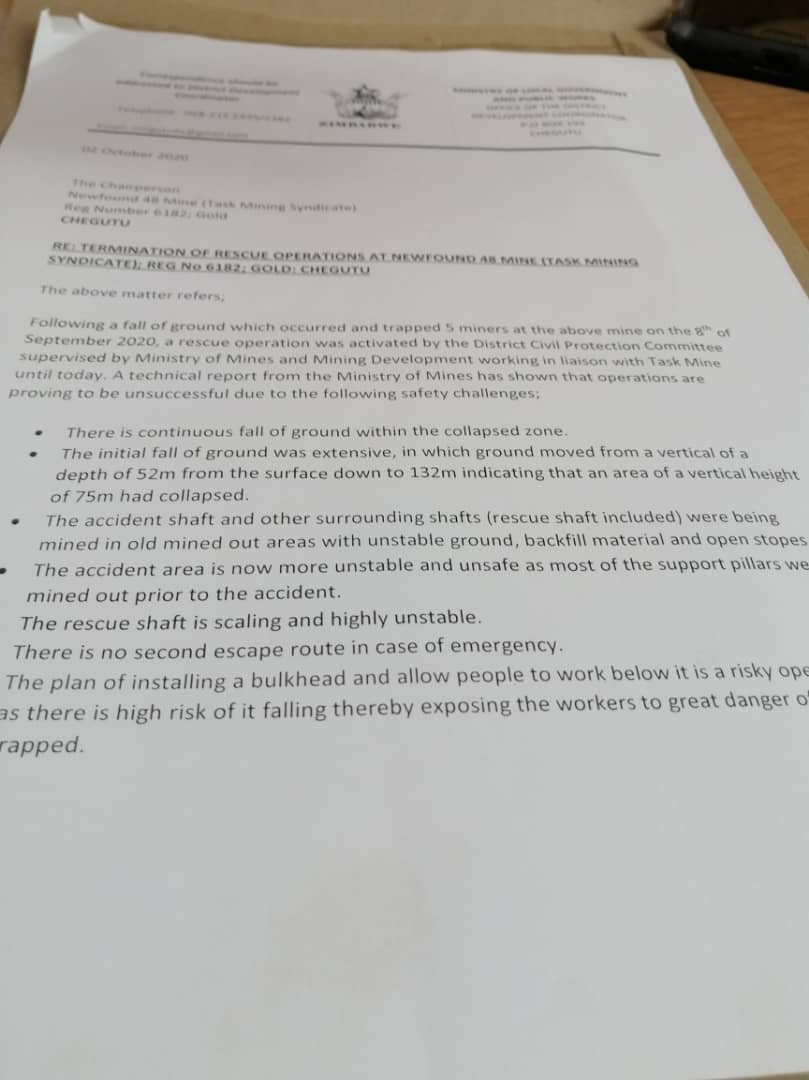
Part of the documents Tomu handed over read:- Following a fall of ground which occurred and trapped 5 miners at Task Mining Syndicate on the 8th of September 2020, a rescue operation was activated by the District Civil Protection Committee supervised by the Ministry of Mines and Mining Development working in liaison with Task Mine until today. A technical report from the Ministry of Mines has shown that operations are proving to be unsuccessful due to the following safety challenges (see doc one and two).

Meanwhile, families of the trapped miners have written to the DDC and Mines Ministry appealing for more time. In a letter signed by five representing each missing miner, the families asked for 14 more days to retrieve the missing family members.

The families said rescuers have assured them there are close to reaching the miners and 14 days should be enough to reach the “Task Five”.  The family representatives also lamented the lack of rescue equipment and lack of incentives for rescuers is making the efforts much slower.

[pdf id=8587]

Parliamentary Portfolio Committee on Mines Chairperson Hon E Mkaratigwa commenting on the issue said;

“The DA has acted in his capacity as the District Civil Protection Committee Chairperson but it is not customary for us as Zimbabweans not to scale up efforts to rescue our relatives and in particular citizens in danger as the government. All options should be exhausted and if there is a willingness, then there is a way that we can exploit and rescue these people”.

“The approach to these issues should be participatory and consultative also with the affected people because usually, they also have initiatives that can be tapped into. The only challenge is this is an emotional incident and people have to remain objective also, put heads together and act within the shortest possible time. I am very much convinced that the Ministry of Mines should invest more in risk and emergency management to ensure that they are always prepared and able to reduce deaths. The Portfolio Committee’s attention has really been drawn to this matter and we will deliberate and put pressure on the government to ensure that the milky cow continues to produce with lesser hindrances”.

“We should not create another disaster in trying to reduce another and with such approaches, we can cause more emotional damage and hopelessness to the families, relatives, friends and coworkers of the trapped.
The Civil Protection Directorate falls under the domain of the Portfolio Committee of Local Government so we have also been consulting on way forward”.

“Our message as a Committee is, those miners have to be rescued as that will create more confidence especially among these vulnerable miners although disaster risk reduction, preparedness, quick response and rescue are what we need going forward”.

The trapped Miners are Constantino Dzinoreva (47) based in Chegutu, Charles Mutume (31) Based in Zvimba, Shingai Gwatidzo (20) from Mhondoro and brothers Crynos Nyamukanga (44) and under-aged Munashe Christian (17) from Zvimba.