

Home Blog Page 523

Great Dyke in job creation drive

0

At least 450 people have been employed at Great Dyke Investments (GDI)’ US$2 billion Darwendale platinum project which is now at mine construction phase including two portals which are at different stages of completion.

The mining firm intends to employ  4 000 employees when operating full throttle by 2022. Of those employed, 70 are full-time workers of the Russian mining behemoth, while the remainder are engaged by sub-contractors who are partaking in the mine construction works.

This is a culmination of a deliberate strategy by President Mnangagwa’s administration that identified job creation as one of its key result areas.

Speaking during a tour of their operations on Thursday, GDI chief operating officer, Munashe Shava, said the miner has registered extensive progress and is confident they are on course to get to full production and have a concentrate plant in 2022.

The timing will see GDI coming on stream to feed into the 2023 mining sector milestone, which seeks to attain US$12 billion in annual exports up from US$2,7 billion attained in 2017.

“As you can see, we are at different stages of construction for the two mining portals that will anchor our phase one,” said Mr Shava.

“In terms of employment, we now have about 70 full time GDI employees and a further 380 or so who are with our contractors. The reason why the bulk of them are from contractors, is our business is to mine and process platinum, we are not yet at that stage, at the moment we are still working on the portals.

“So these services we are making use of is not something that we will continue to require in the life of the mine. But these numbers are set to multiply as we get into production where we will need about 4 000 employees,” he said.

To achieve this, President Mnangagwa is on record saying Zimbabwe will pursue an open for business strategy that will drive private sector investment and thus increase job creation.

Mining and agriculture have been identified as major sectors to spearhead quick economic turnaround.

The Darwendale Platinum Project is poised to transform Zimbabwe to top global Platinum Group of Metals (PGMs) producers. Current bankable feasibility studies on the back of extensive exploratory work have shown that the two mining portals currently under construction, have the potential to produce the equivalent of at least 70 percent of Zimbabwe’s biggest platinum producer — Zimplats.

Accommodation facilities
GDI is in advanced discussion with various stakeholders, among them Chegutu Rural District Council with a view to get land on which to construct accommodation facilities that will cater for the employees.

Mr. Shava said the mine has been getting tremendous support on this front and is confident that construction work of the accommodation facilities will commence soon.

With the mineral-rich concession having been pegged on land that was housing resettled farmers, there are negotiations to have the farmers moved again and one has already been affected by work on the two portals and a further 24 are set to be affected as well_The Sunday Mail

illegal diamond dealers remanded in custody

0


The two Mozambicans — Zacarias Wilstine and Mamodou Boye, and their Congolese counterpart Hassane Kane — were remanded to September 14 when they briefly appeared before Mutare magistrate Prisca Manhibi.

THE three foreigners detained in Mutare last month over illegal diamond deals were yesterday further remanded in custody as the Portuguese interpreter hired by the State to facilitate trial would only be available after a fortnight.

“We have secured a Portuguese prosecutor and he said he will only be available on September 14, he is in Harare,” prosecutor Chris Munyuku told the court. The trio’s lawyer Chris Ndlovu, however, rapped the State for taking long to secure a Portuguese interpreter to facilitate the trial of his clients.

The three were nabbed after the Zimbabwe Anti-Corruption Commission raided their hideout in Greenside, Mutare, on August 6 after receiving a tip-off that they were working inconnivance with two locals to steal diamonds from Anjin Diamond Mine in Chiadzwa and selling the precious stones on the black market. Their alleged accomplices Isaac Nhamo and Shadreck Pungurume have already been granted $25 000 bail each_NewsDay

New platinum mine on course

0

The first phase of the new platinum mine being developed by Great Dyke Investments on its Darwendale concessions is on course, with the box cut for the second portal being opened last month.

The box cut was done in January.

A box cut is a single rectangular hole made on the surface as the opening of new shafts and provides a secure and safe entrance to an underground mine.

Great Dyke is a joint venture between Russia’s Vi Holdings and Zimbabwe’s Landela Mining Venture (Pvt) Limited and is investing US$3 billion into the new mine.

Already, over US$25 million has been spent in the development of the mines this year, with over US$110 million invested in total since exploration began.

Under the first phase, Great Dyke will develop two mines, a concentrator, engineering workshops, storerooms, staff change rooms, portal offices, and fuel storage.

On Thursday, management explained developments so far.

“The development of the second portal begun in July and we hope that by end of December both portals would have been excavated, supported and constructed,” said Great Dyke mine manager Mr. Paidon Chiwaka.

The plan is for both mines to be developed and producing by 2022.

Great Dyke’s chief operations officer Mr. Munashe Shava said the mine had begun processes to obtain international certification as an integrated business management system so as to be certified for safety, health, and quality within nine months.

From a strategy point of view, getting this certification for such a project is critical as it demonstrates commitment to excellence.

Great Dyke is working with relevant Government departments to relocate the households that have been affected by the development of the mines and will build houses for its staff, with 4 000 people expected to be employed when the first phase is completed.

When fully operational, the two mines will produce up to 4 million tonnes of ore annually.

Platinum is expected to contribute US$3 billion to Government’s target of a US$12 billion mining industry by 2023, with Great Dyke a critical contributor_The Heral

Lubu coal gets offtakers

0

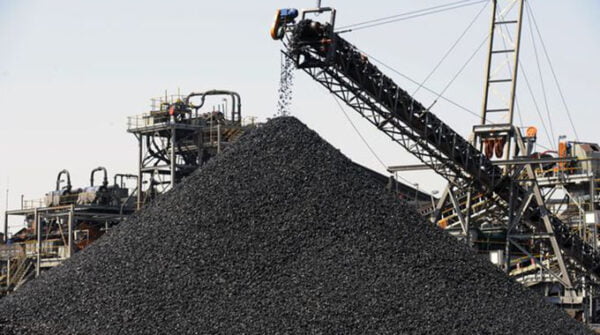
London listed natural resource development company, Contango Holdings Plc, has signed two offtake agreements for coal products produced at the company’s Lubu Coalfield Project in Zimbabwe (‘Lubu’).

Contango, which signed another offtake agreement with South Mining a few weeks ago, this week announced a second agreement with CoalZim Marketing (Pvt) Limited (‘CoalZim’).

These formalised agreements will allow the miner to move forward with development at Lubu, according to Carl Esprey, executive director of Contango Holdings.

Esprey said as a result of the offtake agreements, and more that will follow, Lubu is expected to be in a position to deliver first production and revenues within six months.

The offtake agreements demonstrate “the strong demand for the high-quality coal products produced at Lubu,” according to Contango management.

The latest agreement will see CoalZim, a coal sales and trading company based in Harare, purchase an anticipated 2 000 tonnes of 28CV metallurgical coal per month from Monaf, subject to contract and appropriate standard and quality coal testing.

Pricing of the offtake remains subject to contract, negotiation and prevailing market conditions, however, this is a higher value product and it assumed a sales price (delivered to Harare) of between US$100 and US$120 per tonne of coal is achievable based on discussions.

Contango has previously cited expected combined contract mining and processing costs of US$15 per tonne for Lubu coal. Transport costs to Harare are expected to be circa US$15 per tonne.

In addition to CoalZim and South Mining, Contango is negotiating with additional customers, ahead of the anticipated commissioning of Lubu in Q4 2020.

Commenting on the developments, Esprey, said: “The delivery of another Letter of Intent (LOI), within 10 days of securing our first agreement with South Mining, further highlights the strong demand dynamics for our coal products within Zimbabwe.

“As previously reported, I am confident that commercial negotiations can be finalised with CoalZim and South Mining, as well as the additional coal offtake partners we are currently in discussions with, and this process is likely to move quickly once the Covid-19 related travel restrictions ease further in Zimbabwe,” said Esprey.

Coal remains a dominant energy mineral for Zimbabwe. The country boasts of vast reserves of coal particularly in the north-west and southern parts of the country.

Contango coal project dovetail with the mining sector’s ambitious US$12 billion economy by 2023, of which the coal sector is expected to contribute US$1 billion_Business Weekly

Treasury channels  $1.0 billion cushion to mining

0

TREASURY channeled $2.5 billion in direct support to Government ministries and departments as part of interventions to mitigate against the impact of the deadly Covid-19 on the delivery of public service.

Finance and Economic Development Minister, Professor Mthuli Ncube, revealed this during his virtual address to the 55th Annual Meetings of the Boards of Governors of the African Development Bank (AfDB) and the 46th Annual Meetings of the African Development Fund, which ended Thursday.


He told delegates the country remains under lockdown following the outbreak of the deadly pandemic in China early this year, which has seen Zimbabwe recording nearly six thousand confirmed cases, including 4 872 recoveries and about 155 deaths. Besides loss of life, Covid-19 has destabilised the economy through supply chain disruptions in trade, tourism, productivity, supply chains and other global integration mechanisms. The situation has also dampened public service delivery as frontline workers face transmission risks, which requires increased resources towards preventive measures.

“To this end, direct support amounting to ZWL$2.5 billion went to various ministries/departments,” said Prof Ncube. He explained that the funding has been directed towards aspects such as: Covid-19 risk allowances, additional employment coats from recruitment of additional staff to fight the pandemic, capacity building and training of health personnel, procurement of health and laboratory equipment including consumables, procurement of personal protective equipment, rehabilitation and construction of isolation centres, drilling of boreholes by DDF as well as production of face masks and sanitisers by higher learning institutions.

Over and above these resources, and in line with the regional bank’s crux indaba under the theme: “Building Resilience for a Post-COVID-19 Africa” the government of Zimbabwe has also unveiled a ZWL$18.2 billion Stimulus Package, amounting to 28.6 percent of the 2020 National Budget. The Package is aimed at scaling-up production levels across all sectors of the economy, addressing the constraints faced by a large section of small-scale industries and improving health facilities.

The package was allocated as follows: agriculture sector support ($6.1 million), working capital fund for industry ($3.0 billion), mining sector facility ($1.0 billion), SME support fund ($0.5 billion), tourism support fund ($0.5 billion), liquidity from statutory reserves ($2 billion), health sector support fund ($1.0 billion), broad relief measures ($1.5 billion), Covid cash transfer ($2.4 billion), as well as arts and sport grant ($0.2 billion)_The Chronicle

Unki donates ventilators, ICU equipment to Gweru Hospital

0

Midlands based platinum miner Unki mine has donated a newly equipped ten-bed intensive care unit (ICU) to Gweru provincial hospital, as part of its efforts to limit the impact of Covid-19 at the workplace and in host communities.

The donation includes ventilators, ICU beds, oxygen equipment and the installation thereof, personal protective equipment, multiparameter monitors and other medical equipment.

The Unki mine team had previously built and equipped a casualty ward at the hospital and refurbished the laundry room and children’s ward. The establishment of the ICU forms part of Unki’s $2-million investment, to date, in Covid-19 measures.

Further, the mine’s polymerase chain reaction testing laboratory, which was recently licensed to do Covid-19 tests, is being used to test Covid-19 samples from employees, contractors and the Shurugwi district hospital.

In addition, Unki has provided food support to vulnerable groups and drilled and equipped 17 boreholes to improve access to water in the Shurugwi district.

Speaking at the handover ceremony, Unki chairperson James Maposa said that, in addition to the health impact of Covid-19, the virus has had a devastating economic impact on countries around the world, and Zimbabwe is no exception.

“I believe the mining industry will have a crucial role to play in our economic recovery efforts. We will continue to play our part in supporting our employees, contractors and the broader economy.” Mining Weekly

16 mining concessions repossessed

0

Mines and Mining Development Minister Winston Chitando has announced that the government has repossessed 16 mining concessions which were lying idle across the country as it has started implementing the “use it or lose it policy”.

The 16 concessions are part of the 213 mining concessions earmarked for repossession in the first phase.

The government has also reclaimed 21 000 hectares of mining land following failure by owners to pay inspection fees.

The Mines and Minerals Act empowers the Government to repossess unused mining concessions to prevent speculative holding of valuable assets.

The law also promotes investment, job creation and ensure broader access to mining assets by allowing those ready to mine to file claims and obtain concessions.

In this exercise, small claims are consolidated to make viable mining concessions that are then allocated to genuine investors willing to start mining operations. Government is working towards transforming the mining sector into a $12 billion industry by 2023.

The mining sector is a critical foreign currency earner as it contributes about 70 percent of the country’s forex earnings and the projected growth by 2023 represents a huge jump from the US$2,7 billion achieved in 2017.

By 2030, Government expects that the mining industry will be generating more than US$20 billion.

In an interview in Gweru yesterday, Chitando said 16 mining concessions had been repossessed since the exercise started.

Minister Chitando reiterated that the $12 billion mining industry by 2023 target was achievable.

“We have started the process of repossessing all concessions which are not being worked on as they are subjected to use it or lose it. As of today, we have repossessed 16 across the country. There are 213 concessions earmarked for repossession under the first phase,” he said.

Minister Chitando said the mining concessions will be allocated to other companies willing to immediately work on them.

He said the $1,4 billion lithium project in Kamativi Matabeleland North was well on course.

Zimbabwe Lithium Company, through its wholly-owned subsidiary, Jimbata, had targeted to resume production at the mine last year but the deadline was missed because of the legal battle.

“The $1,4 billion project is on course and in the next two months, we shall be releasing operation strategy. The government wants mining projects across the country to start moving as we move towards achieving the $12 billion mining industry,” he said. ZimDaily

BREAKING: RBZ addresses late gold payments

0

The Reserve Bank of Zimbabwe (RBZ) governor Dr. J.P Mangudya has committed to settle the outstanding payments of gold submissions beginning next week.

This was after he met with the Zimbabwe Miners Federation (ZMF) officials as they voiced their concern over the late payments. Gold miners are going for weeks without payment after submitting their yellow metal prompting others to halt operations or turn to the parallel market.

ZMF President Ms. Henrietta Rushwaya said the governor apologised and has committed to begin settling the owed amounts.

“We just came out of a meeting with the RBZ Governor and he has apologised and committed that outstanding FPR Bullion Payments will be done starting next week. Any inconvenience that has arisen out of this is sincerely regretted”.

“Let us continue sending our Bullion to Fidelity and if we experience payment challenges thereafter, kindly feel free to raise the alarm through our ZMF Secretariat for engagement with FPR/ RBZ”. she continued.

Rushwaya apologised for the inconveniences caused by the late payments saying, “Once again as ZMF we sincerely apologise and regret the suffering the payment problems have caused in the past 2 weeks. We are really sorry,” she concluded.

Gold miners for the past weeks have not been paid after submitting their bullion to the country’s sole gold buyer Fidelity Printers and Refiners (FPR). This has heightened the chances of the yellow metal being channelled to the ever liquid parallel market.

Recently FPR General Manager attributed the shortage of foreign currency at FPR to the Covid-19 pandemic which has seen international flights restricted hindering the consistent transportation of hard cash.

The government has been hailed for hiking gold buying rates which are currently the most attractive on the local market. However, liquidity challenges will see miners shunning the otherwise brilliant move.


ZMF meets RBZ to address late payments

0

This morning, Zimbabwe Miners Federation (ZMF) President Ms. Henrietta Rushwaya will meet the governor of the Reserve Bank of Zimbabwe (RBZ) in an endeavor to address the issue late payments by the country’s sole gold buyer and exporter, Fidelity Printers and Refiners (FPR).

Of late, Small-scale and artisanal miners have expressed concern over late payment for gold delivered to FPR, saying the development will cripple production of the yellow metal.

FPR is struggling to import cash by air transport to pay for gold deliveries due to restrictions caused by the Covid-19 pandemic.

Gold is one of Zimbabwe’s biggest foreign currency earners, having accounted for US$1,3 billion in annual forex receipts in 2019, translating to close to a third of total export earnings. The small-scale mining sector, which accounts for more than 60% of gold deliveries to FPR, last year produced 17 tonnes of gold while major gold mines produced 10 tonnes.

In total, the country’s gold output fell 17% in 2019 to 27,66 tonnes, down from 2018’s 33,29 tonnes, according to the central bank, contributing about 37% to mineral exports, down from 43% recorded in the previous year.

The decline was attributed to electricity shortages, gold leakages, and inadequate equipment for small-scale miners.

In April this year, small-scale miners extracted 0,728 tonnes of gold while primary producers delivered 0,735 tonnes, resulting in a 31% decline in total to 1,46 tonnes from 2,12 tonnes produced in April 2019.

In February, gold deliveries fell 34% to 1,403 tonnes from 2,136 tonnes during the same period in 2019. Again, in March gold deliveries dipped 32% to 1,77 tonnes.

Cumulatively, gold deliveries have plunged 17% to 7,18 tonnes in the first four months of 2020 from 8,63 tonnes extracted during the same period in 2019. The decline was attributed to bottlenecks in imports caused by Covid-19, as governments moved to combat the spread of the virus.

Last year, President Emmerson Mnangagwa launched a strategic roadmap to propel the country’s mining sector to a US$12 billion mining industry by 2023.

However, the ambitious target is under threat due to the Covid-19 pandemic and policy inconsistency.

Under the mining roadmap, gold is expected to contribute US$4 billion, platinum US$3 billion, while chrome, iron, steel, diamonds, and coal contribute US$1 billion. Lithium is expected to contribute US$500 million and US$1,5 billion would come from other minerals.


South Africa ministry OKs AngloGold asset sale but blocks delisting

0

South Africa’s mines ministry has approved AngloGold Ashanti’s (JSE: ANG) (NYSE: AU) sale of its last remaining assets in the country to rival Harmony Gold (JSE: HAR) (NYSE: HMY), on the condition that it does not delist from the Johannesburg stock Exchange.

AngloGold announced the sale of its remaining asset in the home country earlier this year for $300 million. The portfolio included Mponeng, the world’s deepest gold mine, and the company’s last underground operation in South Africa.

The company said at the time it would consider moving its primary listing on the JSE after leaving the country. Earlier this month, however, it said that was no longer a priority amid the covid-19 pandemic.

Harmony’s acquisition of AngloGold’s operations in South Africa is expected to help the miner sustain growth and replace capacity. Most of Harmony’s output in the country currently comes from its Masimong and Unisel mines, which are running out of ore.

The Department of Mineral Resources and Energy (DMRE) corroborated on Wednesday the approval of the proposed transaction.

“The Department can confirm that an application in terms of Section 11 of the MPRDA has been received and was approved on 24 July,” the DMRE told Reuters via email.

AngloGold said on Wednesday it had not yet received all necessary approvals, adding it was still in talks with the government.

The sale would mark the miner’s exit from South Africa to focus on more profitable mines in Ghana, Australia and the Americas.

The company, which recently lost Kelvin Dushnisky as chief executive, was born out of the mines bought and built by Anglo American (LON: AAL), the mining giant founded by the Oppenheimer family more than a century ago.

End of an era

The company was the dominant gold miner for decades but progressively became weaker as it closed and sold old mines in South Africa, in favour of offshore investments.

Harmony’s chief executive officer, Peter Steenkamp, has repeatedly said that South Africa is its main investment target.

South Africa’s gold industry, however, continues to face mounting challenges, including geological and safety aspects of extracting ore from the world’s deepest mines.

Harmony is betting on recreating the successful strategy applied after it bought Anglo’s Moab Khotsong mine in 2017. Half of that money has already been paid back, Steenkamp said.