

Home Blog Page 523

Vale hires banks to sell coal assets in Mozambique

0

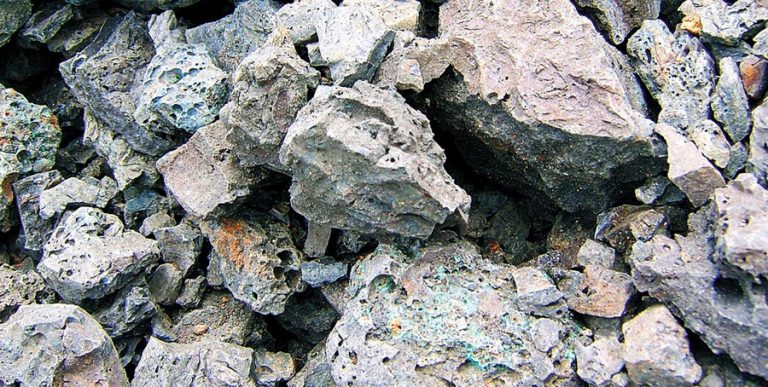
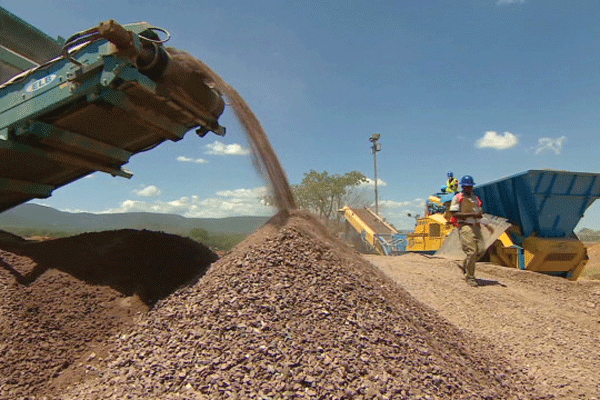
Vale SA has hired investment banks Barclays Plc and Standard Chartered to sell its Mozambique metallurgical and thermal coal mine and port project, three sources said on Thursday, as the Brazilian miner works to become carbon neutral by 2050.

Vale joins top miner BHP and others who are keen to shed coal, burnt to produce electricity, as global investors ditch holdings in polluting fossil fuels.

Vale, the world’s second-biggest iron ore miner, on Thursday agreed to buy out its minority partner in the loss-making Moatize coal mine and Nacala Corridor rail and port projects in Mozambique ahead of a planned sale.

THE OPERATIONS ARE EXPECTED TO REACH 15 MILLION TONNES A YEAR IN THE SECOND HALF AND 18 MILLION TONNES A YEAR IN 2022, ACCORDING TO VALE

It is unclear what the assets might fetch, the sources said, declining to be identified as the discussions are confidential.

Vale, Barclays and Standard Chartered declined to comment.

In 2019, Vale slashed its valuation of the assets due to technical and operational issues.

The miner’s coal division posted a loss of $213 million in adjusted earnings before interest, tax, depreciation and amortization in its most recent quarterly result.

The operations are expected to reach 15 million tonnes a year in the second half and 18 million tonnes a year in 2022, according to Vale.

Vale and its advisers are expected to target companies in India and China, including state-backed metals trader China Minmetals Corp as well as India’s JSW Steel Ltd and state-owned Steel Authority of India Ltd

China produces and consumes about half of the world’s coal and is planning to allow more provinces to start building coal power plants starting in 2023.

A diplomatic row has resulted in an effective ban on China’s imports of Australian coal, meaning the country is eager to find other sources of import, one of the sources said.

India is the world’s second-largest coal importer after China.

(By Jeff Lewis, Clara Denina and Helen Reid; Editing by Lisa Shumaker) Reuters

Gold’s allure set to continue

0

Uncertainty around the global economy will not only support gold as an asset class but also drive consumption of the precious metal, especially in emerging markets, according to the latest Gold Outlook 2021.

This follows gold being one of the best-supported asset classes in 2020 as a combination of high risk, low-interest rates and a rising gold price boosted it.

All these factors resulted in gold, when compared to other asset classes, having one the lowest drawdowns, which is a measure of an asset’s value at its peak against its lowest point in a year. By investing in gold, investors limit losses and manage volatility risk in their portfolios. The use of gold as a defensive asset was not the only factor driving interest in the metal.

Over the past year, the gold price has surged from $1 522 per ounce (oz) to its current price of around $1 833/oz.

Emerging gold

Stephán Engelbrecht, a fund manager at Anchor Capital, notes that emerging markets are great consumers of gold, making particular reference to India. 

He says any increase in demand would be driven by the jewellery market and to a lesser extent the need for computer chips and processors. He stresses, however, that gold as a store of value is by far its greatest utility.

“We seriously doubt that greater demand from jewellery and industrial use will be enough to drive the gold price higher if interest rates were to rise,” he says.

This view is backed by the report.

“Investors’ preference for physical and physical-linked gold products last year further supports anecdotal evidence that this time around, gold was used by many as a strategic asset rather than purely as a tactical play.”

Low-interest rate boost

Krishan Gopaul, market intelligence manager at the World Gold Council believes the low-interest rate environment removes the opportunity cost of investing in gold.

“Going forward, we believe that the very low level of interest rates worldwide will likely keep stock prices and valuations high. As such, investors may experience strong market swings and significant pullbacks,” says Gopaul.

He says these drawbacks could potentially occur if vaccination programmes are not distributed on time or are less effective than anticipated.

Central banks remain on course to become net purchasers of gold, but are not expected to reach the levels achieved in 2018 and
2019.

“There are good reasons why central banks continue to favour gold as part of their foreign reserves which, combined with the low-interest rate environment, continue to make gold attractive,” says Gopaul.

Meanwhile, after a fall in mining in 2020, the report expects the sector to become active again.

“Even if potential second waves impact producing countries, major companies have introduced  protocols and procedures that should reduce the impact of stoppages compared to those seen in the early stages of the pandemic,” says Gopaul.

He adds: “China and India are the two largest markets for gold, accounting for an average of 52 percent of annual consumer demand over the last five years (to the end of 2019).

“As such, continued economic recovery in these two countries will have a significant impact on consumer demand.” — Moneyweb.

Gold Panner Kills Friend In Fight Over Food

0

AN illegal gold panner has been arraigned in court accused of murdering his colleague in a brawl over food.

Wilbert Mutemeri (43) of Chikondoma Village, Kenzamba, was on the run since committing the heinous act on 25 August 2020.

He was finally arrested last week.

Mutemeri appeared before Chinhoyi magistrate Melody Rwizi Thursday and was remanded in custody to 26 February 2021.

The State claims that on the fateful day at Chiofa Village, Chief Magonde, Kenzamba, Mutemeri and the now deceased, No Muzhona were at an illegal gold panning site where they were prospecting for the precious mineral.

The two started quarrelling over responsibilities of buying food, with Muzhona accusing Mutemeri of being stingy.

The court further heard that Mutemeri became angry, picked up a one-metre-long log which he used to violently assault Muzhona once on the head and four times all over his body.

Court was further told Muzhona collapsed and died instantly.

Mutemeri immediately fled the scene, only to be arrested five months later.

Tendai Tapi prosecuted.


NewZimbabwe

Sibanye-Stillwater exceeds PGM, gold production guidance

0

Sibanye-Stillwater (JSE: SGL) (NYSE: SBGL) announced that it’s South African PGM operations exceeded by 9% the upper limit of its revised 2020 annual guidance of 1.35 – 1.45 million 4Eoz.

According to the company, the second half of 2020 had an outstanding performance despite the ongoing implementation and observance of covid-19 protocols. PGM production in South Africa reached 918,678 4Eoz for H2 2020, which was 40% higher than the output registered in H1 2020.

BMO CAPITAL MARKETS RESEARCH EXPECTS SIBANYE-STILLWATER’S STRONG PERFORMANCE TO CONTINUE INTO 2021

In a press release, Sibanye-Stillwater said that the lower production in the United States was a direct consequence of the second wave of covid-19 in Montana.

When it comes to gold, production from the company’s operations in South Africa, excluding DRDGOLD, reached 809,941oz, which means that the revised guidance of 756,000oz – 788,000oz was surpassed by 3%. Similar to what was witnessed at the PGM operations, the second half of the year performed better than the first half with 406,321oz produced, a 48% increase from the previous period.

“The manner in which the initial threat of covid-19 was handled at our operations in H1 2020 and the subsequent, safe return to normalised production levels by year-end was extremely pleasing,” Neal Froneman, Sibanye-Stillwater CEO, said in the media brief. “In the absence of unexpected disruptions, the Group is well-positioned to deliver a much more consistent and significantly improved operating result for 2021.”

In the view of BMO Capital Markets Research, the South African miner’s strong performance should continue into 2021 given the strength of PGM and gold prices. The firm estimates PGE prices will be 20% higher at $2,410/oz for 4E PGM basket and 14% higher at $1,835/oz for gold.

“We expect a near doubling of group adjusted EBITDA in H2/20 to $1,920M ($990M in H1/20). Positive momentum in PGM basket prices has continued into 2021 with spot rhodium prices now >$21,000/oz (compared with an average price of ~$11,140/oz in 2020) and spot palladium prices at >2,300/oz. Therefore, we are also forecasting the company to continue generating strong earnings in 2021, albeit this assumes limited further covid-19 related restrictions at their operations,” BMO said in an analysis of Sibanye’s results.

Mining.com

Zesa Announces Load Shedding Timetable

0

Zimbabwe Electricity Supply Authority (ZESA) Holdings has announced that the country will experience power shortages due to a fault at one of the country’s major power plants.  The fault will therefore result in the power utility engineering load shedding between 4 pm and 9 pm.


In a statement released on Thursday, Zesa Holdings disclosed that a technical fault is choking operations at Hwange Power Station. “The technical fault will result in load curtailment of about 200mw during the evening peak period of 1600 hours to 1900 hours,” said Zesa adding that efforts to restore normal supplies are underway.


‘The bucket is leaking’: Zambia opposition leader denounces debt-funded Mopani deal

0

Zambia’s main opposition party leader Hakainde Hichilema criticised the government’s deal with Glencore on Thursday, comparing the economy to a leaky bucket broken by debt.

The state mining investment arm ZCCM-IH agreed on Tuesday to take on $1.5 billion in debt in exchange for full control of Mopani Copper Mines, previously majority-owned by Glencore.

“You are filling the economy with more debt, expensive debt, there’s no compensating growth. Where is the money going? It’s going. The bucket is leaking,” Hichilema, president of the United Party for National Development (UPND), said in a TV interview.

Zambia became Africa’s first pandemic-era sovereign default in November, and its debt burden is a key issue for the public, who will head to the polls in a general election on Aug. 12. Hichilema is the main challenger to President Edgar Lungu.

Lungu has framed the Mopani deal as a boon for workers and a success for his strategy of greater government control over mining assets. Glencore sought to shut the mine last year due to covid-19 disruptions and lower copper prices.

“What is wrong with government acquiring shares in the mines, especially when the investor was not keen to pump in resources?” he said on Thursday.

ZCCM-IH says the $1.5 billion is guaranteed by Mopani, not by the government, and is therefore not sovereign debt. It was unclear how the International Monetary Fund (IMF), to which Zambia has applied for a financing arrangement, would classify the loan.

Under the deal terms, Glencore will retain buying rights to Mopani’s copper, and ZCCM-IH will repay the loan principal by giving Glencore creditors 3% of Mopani’s gross revenue from 2021-2023 and between 10% and 17.5% of gross revenue from then on.

Glencore declined to comment.

(By Chris Mfula and Helen Reid; Editing by Hugh Lawson) Reuters

Murowa diamonds raises community development standards

0

The government has always been advocating for mining houses to aid in community development in the areas they are operating in as part of the repelled Indegenousation and Economic Act which forced miners to give 10 per cent of mining shares to the community.

Rudairo Dickson Mapuranga

RioZim’s medium-scale diamond miner RZM Murowa has shown that communities in areas with mineral deposits’ living standards must be transformed for the better through Corporal Social Responsibility.

RZM Murowa’s operations impact six communities – Mutambi, Mhototi, Murowa, Indaba and Davira and Sese. The middle scale diamond miner works consultatively with the local communities through a five-year Communities Action Plan with the programmes directly benefitting and impacting close to 50,000 people.

The diamond miner strongly believes that the success of the mine lies in the community, therefore it needs the support of communities to operate a successful business.

Its sustainable development programmes focus on long term sustainability as compared to short term relief or philanthropy. These programmes are anchored on five impact areas namely education, economic empowerment, community health, agriculture and infrastructure development.

RZM Murowa respects the traditional and cultural values of the community. Through commute rosters and internal codes of conduct, we minimise the potential for social and economic fragmentation in these communities. The mine’s employment policies give preference to locals and focus on keeping the local economy secure and strong.

EDUCATION PROGRAMS

It is a fact that Zimbabwean communities value the importance of educating their children as a springboard to a better future. From a business perspective, continued investment in education is part of RZM long-term vision. Over the years, the mine has built classrooms, supported science departments, renovated and equipped a physics laboratory and also provided supplementary feeding for Primary School learners. Its contribution to an improved learning environment has seen an increase in pass rates in the schools in the communities.

RZM Murowa donates textbooks to primary and secondary schools in the above-mentioned communities contributing to the school in the communities achieving a 1:1 child to a textbook ratio in core subjects at Primary school level. In 2015 the Business launched an Educational Assistance Programme which has seen orphans and vulnerable children attend Primary and Secondary School. Over 100 disadvantaged students benefit from the programme annually.

The diamond miner donated computers to Baradzanwa Primary School taking the 270 learners and 9 teachers into the digital age. The donation is in alignment to new developments in the educational sector that promote the use of Information Communication Technologies a rarity in rural Zimbabwe.

RZM Murowa introduced mine tours to expose rural learners to the mining environment and some of the career opportunities that exist in the industry. This has helped the learners look beyond some of the traditional professions and inspire them to take up technical vocations.

HEALTH

RZM Murowa has done considerable work to improve health in its communities over the years. The activities include the provision of infrastructure to improve access to clean water and improved sanitation facilities. It also includes building clinics, assisting in the development of hospitals and facilitating funding for a medical doctor to attend at community clinics once every two weeks.

Communities have not been spared from the effects of the Covid-19 pandemic. The miner intervened through the provision of screening equipment and face masks to neighbouring community clinics. The mine also renovated an Isolation Centre at Lundi Rural Hospital in the Midlands Province and donated Covid-19 PPE and prevention consumables to the Zvishavane District Covid-19 Taskforce to aid the fight against the disease.

The Mutambi Clinic is a health facility built by RZM Murowa and is now used as a referral centre by other clinics. The clinic was fully equipped, electrified with a solar system as back-up and supplied water. The diamond miner assisted in the completion of a new maternity waiting room and supplied water to the building. RZM Murowa refurbished Murowa Health Centre providing electricity, equipment, plumbing and supplies and provided drugs for the clinic.

The youth continually face various challenges including dealing with the impacts of HIV and AIDS. To further strengthen the focus on youth awareness, RZM Murowa purchased multimedia equipment for the Murowa Youth Centre.

INFRASTRUCTURAL DEVELOPMENT PROGRAMS:

Investing in community infrastructure has always come as second nature for RZM Murowa. The mine’s efforts to date include partnering with local and national government in the maintenance of community and urban roads.

Other infrastructure development initiatives undertaken include the construction of Factory Shells, electrification of health centres and schools, water reticulation, bridge and road construction.

In 2016 Murowa diamonds handed over Jimu Bridge to the community and a year later in 2017, completed the construction of Mhike Pipe Drift Bridge across the Muchekwachekwa River. Both projects created much-needed employment for over 150 community members. The bridges enable safer passage and access for not only mining operations but for students and community members during the rainy season.

FOOD SECURITY

The dry, harsh weather conditions in the communities resulted in the Company paying particular attention to food security programmes. An agricultural training programme has been conducted in partnership between RZM Murowa, the community and the Agricultural Technical and Extension Services Department (AGRITEX). To date close to 3,000 community members have received training to ensure food security.

The capacity building programmes complement other investments, such as micro-irrigation schemes, crop production, epi-culture, livestock enhancement and dip tank construction. In 2014, the mine launched the small grains programme which trained farmers in the growing of sorghum and finger millet / rapoko. AGRITEX provided technology transfer and capacity building to the smallholder host farmers whilst RZM Murowa provided funding for the whole project.

The programme is currently benefiting over 1,500 farmers with an expected averaging yield of 3.6 tonnes per hectare. To ensure the sustainability of the project, the host farmers are required to pass on to the seed bank twice the amount of seed originally issued for subsequent redistribution to new project host farmers.

WATER RESOURCES

Water is a precious resource for local farming families, especially in the arid climate experienced in the area. Communities need clean water for drinking, sanitation and other essential needs such as developing micro-irrigation projects.

The Company has constructed and rehabilitated boreholes and has provided water to schools, clinics and other amenities. Under the community micro-irrigation programme, RZM Murowa has been able to provide additional water sources with systems designed to minimize water waste. The desilting of community dams has helped to increase water holding capacities of inland dams and weirs. The supply of water facilitates flourishing market gardens and crop production in the communities.

LOCAL ECONOMIC DEVELOPMENT

RZM Murowa believes that helping local people to develop their own businesses is a very practical way of driving long-term employment and sustainability. The diamond miner pays particular attention to local employment and procurement, capacity building, skills transfer and the formation of small to medium businesses.

The company is also very active in supporting entrepreneurs with business training and business incubation programmes. Developing small businesses is what will drive the economy of the future. Equipping these ventures with skills they need for their continued growth and survival will do much to create employment and ensure the sustainability of the region.

23 students selected from the community, pioneered a vocational skills training programme in garment making and steelworks at the Murowa Business Centre Factory Shells. The training runs in partnership with the Zvishavane Vocational Training Centre.

The students sat for qualifying examinations in June 2020 and performed beyond expectations. This creates an opportunity for the company to carry forward sustainable development through skills development in the community.

LOCAL EMPLOYMENT

RZM Murowa actively favours local employment contributing to the welfare of communities. The pool for local employment mirrors the company’s immediate community footprint and covers four wards in Mazvihwa and two wards in the Chivi District. Over the years more than 3,000 people have been direct beneficiaries of local employment programme. This policy has seen the rapid transfer of skills into the communities, enabling new businesses and other initiatives.

Indeed the diamond miner’s innovative and a practical approach sets it apart from other medium-scale miners, its wok is indeed aligned to the country’s socio-economic development blueprint and in line with the sustainable development goals.

Zim’s opportunity to be one of Rare Earths biggest suppliers getting wasted

0

There are fears that Zimbabwe will soon regret her potential to become one of the world’s largest rare earth elements (REE) supplier if the issuance of  Exclusive Prospecting Orders (EPOs) continued to be delayed.

Rudairo Dickson Mapuranga

The delays by the Ministry of Mines and Mining Development and the President to grant EPOs to exploration companies have led to a situation where the quantity of minerals in the country is speculatively quantified.

This means that some metals like rare earth which have become famous in the manufacturing of high-tech products such as smartphones, chips, aircraft engines and new energy production will soon become unpopular before the country benefits.

According to RioZim Chief Geologist Mr Patrick Takaedza, Zimbabwe speculatively has the potential to become the leading rare earth elements, global producer.

“REE are mainly found in what we call Carbonatites or Alkali Ring Complexes in association with other minerals mainly vermiculite and phosphate. We have these in Zimbabwe,” Takaedza said.

The RioZim Chief Geologist also said that mines such as Shawa Carbonatite, Chishanya, Dinhidza and Dorowa can diversify to REE mining as this can be a way to yield foreign currency for the country.

“Shawa is already MIÑIÑG vermiculite so they can as well diversify to REE even as a bi-product. Dorowa too. Dorowa is a govt entity and is mining phosphate. There is also potential to diversify into REE.” Said Takaedza.

According to Takaedza, there is potential that combined exploration and mining efforts in these various Carbonatites can potentially yield substantial resources of REE. How much Resource it remains open and speculative though until all the pre-requisite resource work has been completed.

It should be noted that from Mining, the mines will need to beneficiate by flotation, gravity, magnetic, or electrostatic separation then Acidic or Alkaline chemical treatment then separation by solvent extraction or ion exchange, SCF, bio-sorption, electron extraction then finally purification and refining. This won’t be an easy and cheap process therefore investment in this sector should be prioritised.

Only China currently can purify and refine rare earth and transform them into precious minerals, magnetic powder and other high-value products. The US reportedly ships some of its rare earth productions to China for processing.

This means that ore mined every year from rare earth mines must be shipped to China, refined into compounds and products and then sold back to the United States.

Recently China has asserted its dominance of the world’s rare earth sector with the global industry moving to adopt the country’s metal and alloys standards as its own. This came as China continues to battle US sanctions by withholding its rare earth exports leading to emergency measures in the US.

Zimbabwe has been tipped to invest in rare earth as a way to balance Chinese control to become an alternative supplier as this might create a world status for the country.

However, Parliamentary Portfolio Committee on Mines and Mining Development chairperson Hon Edmund Mkaratigwa said it was not wise for the country to invest in rare earth as a way to balance the trade as this might create tension for the country.

“It’s international politics and if we look at who Zimbabwe is to the US and China, I think we can start to resolve the challenge. We are to a greater extent currently restricted from trading directly with the US as the government of Zimbabwe. Further, what does trading military-related metals to the US mean to our international relations? That is international politics that may need political solutions beyond economic approaches alone. But it is doable as long as it serves our interests as a country.” Mkaratigwa said.

Hon Mkaratigwa said the country needed to invest in the rare earth sector with global business and profit-making in mind not only as to fill a void created by China-US trade wars.

“It’s usually not about filling the void but making business sense in all investment endeavours. The main question is why should we release ours when China is speculating with theirs? Without going too far into matters beyond us at the moment, I can say we need investors and those are the biggest barometer of whether investing in the rare earth minerals is making business sense at the moment without us just being exploited for less returns for the country and it’s people today as compared to, for example, by what we may get if we hold on to them today. At the same time, are these rare earth minerals easy to extract and separate from other minerals and something like that, which goes on to technologies and resource accountability? He said

The United States has been planning to rebuild a rare earth supply chain independent of China. President Trump signed an order in September this year to speed up its development. The United States recently turned to Australia, the world’s second-largest rare earth producer and signed an agreement with Blue Line to cooperate with Australia company Lynas to build rare earth processing plant in Texas.

Zimbabwe, therefore, needs to speed up rare earth elements mining before the world attempts to ban towards cleaner minerals as the US President-elect, Joe Biden is promising a “green revolution” the position of rare earth development in his plans is still unclear as rare earth processing is highly toxic.


This issue first appeared in the January 2021 issue of Mining Zimbabwe Magazine

A new era for Diamonds ahead

0

Besides being famous for making beautiful jewellery and for industrial use (extremely effective at polishing, cutting, and drilling) researchers have identified diamonds as advanced functional devices in microelectronics, photonics, and quantum information technologies as well as an ultra-wide bandgap semiconductor to more effectively power the electrical grid, locomotives and even electric cars.

Rudairo Dickson Mapuranga

United States’ Lawrence Livermore National Laboratory Scientists published a study in Applied Physics Letters showing that diamonds have superior carrier mobility, breakdown electric field and thermal conductivity, which are significant properties to power electronic devices.

Following this study, an international team of researchers have certified the importance of diamonds in the tech industry by conducting a study proving that strained diamonds may take a lead in photonics, microelectronics and quantum information technologies.

This means that the use of diamonds can now be shifted to electricity generation and thereby promoting the rise of diamond prices and markets.

Dr. Lu Yang, an Associate Professor in the Department of Mechanical Engineering (MNE) at City University of Hong Kong (CityU) who was one of the heads of the study told the media that a new era for diamonds was approaching the global trend.

“I believe a new era for diamonds is ahead of us,” Dr. Lu Yang said.

In semiconductors, the bandgap is known to be a crucial property and a broad bandgap facilitates the operation of high-frequency or high-power devices.

The big bandgap and tight crystal structure of diamonds creates a problem to “dope,” an easy or common way to control semiconductors’ electronic properties during production. This makes it difficult for diamonds to be used as industrial applications in electronic and optoelectronic devices.

Dr. Lu and his colleagues, however, discovered that nanoscale diamonds can be elastically twisted using an unexpected large local strain. They demonstrated that elastic strain engineering could be used to change the physical characteristics of diamonds thereby becoming essential in microelectronics, photonics, and quantum information technologies.

The team firstly microfabricated single-crystalline diamond samples from solid diamond single crystals. The samples were in a bridge shape about one micrometre long and 300 nanometres wide, with both ends wider for gripping.

The diamond bridges were then uniaxially expanded in a well-controlled way under an electron microscope. Under controllable and continuous loading-unloading cycles of quantitative tensile tests, the diamond bridges exhibited a large and highly uniform elastic deformation of around 7.5 percent strain across the entire gauge section of the sample, instead of deforming at a localized region in bending. And they recovered their original shape after unloading.

Demonstrating the effect of elastic straining between 0 and 12 percent on the electronic properties of diamond, the researchers carried out density functional theory (DFT) with its simulation results indicating that the bandgap of diamonds generally decreased as the tensile strain increased, while the largest bandgap reduction rate decreased from around 5 eV to 3 eV at about 9 percent strain along with a certain crystalline orientation.

The team’s findings represent an early step in realizing deep elastic strain engineering of microfabricated diamonds. The research effectively proved that it is possible to change the band structure of a diamond, and more significantly, such changes can be reversible and continuous, enabling a range of applications, such as strain-engineered transistors, micro/nanoelectromechanical systems

As indicated by Dr. Lu, these findings are an early step in achieving deep elastic strain engineering of microfabricated diamonds proving that indeed a new era for diamonds lies ahead.


This issue first appeared in the January 2021 issue of Mining Zimbabwe Magazine

Fidelity official gold buying prices Thursday 21 January 2021

Fidelity Printers and Refiners (FPR) official gold buying prices Thursday 21 January 2021

  • SG 90% AND ABOVE $53.42/g
  • SG ABOVE 85% BUT BELOW 90% $52.52/g
  • SG ABOVE 80% BUT BELOW 85% $51.33/g
  • SG ABOVE 75% BUT BELOW 80% $50.73/g
  • SAMPLE BELOW 10g BUT ABOVE 5g $51.93/g
  • FIRE ASSAY CASH $53.72/g


Cash available. Fidelity Printers and Refiners prices will be changing daily in relation to world market prices.


Contact FPR

No. 1 George Drive, Msasa, Harare, Email: [email protected]Telephone: +263 242-486670, +263 242-486694, +263 242-487131, +263 242-447810-5