Home Blog Page 525

Tensions Flare Between Local Miners, Chinese Investors

0

Mounds of black chrome shimmer along the highway that runs through this area, as mine workers labour near heavy machinery marked with Chinese writing.

The workers toil about 5 kilometers (3 miles) from the road, at a mine belonging to Hilary Sibanda, 44, a former teacher. It features gullies, water pits and towering deposits of chrome ore.

An excavator, driven by a Chinese national known as Frank, rumbles about, then stops. He has found something. Four Zimbabwean men who work with Sibanda gather to finger the chrome samples the excavator has unearthed. Sibanda grins.

“Today the chrome is close to the surface,” says Sibanda, who walks with the gait of a younger man and wears a serious demeanor. “Good news for me. The deeper [the Chinese] excavate, the higher the cost for me.”

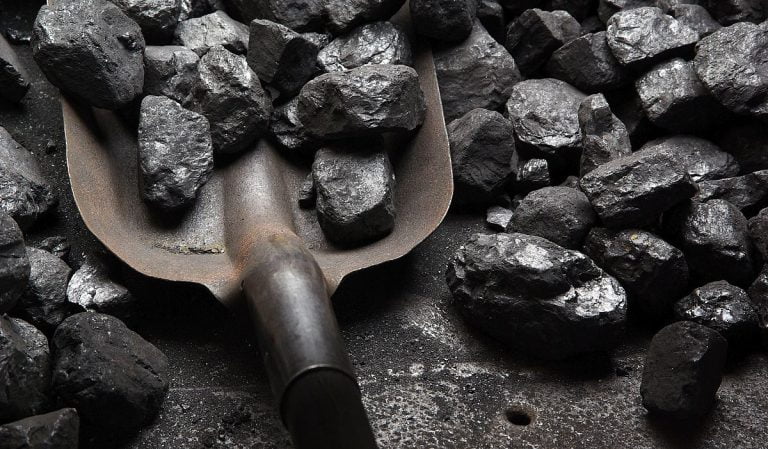
Zimbabwe boasts the world’s second-largest chrome reserves, behind South Africa, and most of this mining occurs along the Great Dyke, a 550-kilometer (342-mile) stretch that runs the length of Zimbabwe. Chrome, a blackish mineral, is used to produce stainless steel.

The Chinese are major shareholders in the Zimbabwe Mining and Alloy Smelting Company, known as ZIMASCO, one of the country’s largest chrome-mining companies. They also invest heavily in gold, platinum, and diamonds, giving them outsize influence over Zimbabwe’s vast minerals industry.

Chinese miners partner with small-scale chrome producers in the Mapanzure area of Zvishavane and across the country. Locals, who usually do not own their own mining machinery, depend on the Chinese for equipment. In exchange, Zimbabwean miners say, they must sell ore back to their Chinese partners – or risk losing the relationship.

Critics also point to complaints about environmental practices and labor abuses that have long shadowed the Chinese involved in Zimbabwe’s minerals industry.

For their part, Chinese miners say they treat local partners fairly and just want to make a living.

Tensions swelled in late June when the Chinese manager of a mining company in central Zimbabwe shot two local employees in a wage dispute. Video of the shooting prompted a national uproar, and the Zimbabwe Environmental Law Association called it “part of a systematic and widespread pattern of labor rights violations by Chinese companies and investors in the extractive sector.”

In a statement on Twitter, a spokesperson for the Chinese Embassy said that the nation’s government was “highly concerned about the case.”

“Any possible illegal acts and persons who violate the law should not be shielded,” the statement said.

“This country is currently not a good destination for foreign investment, and this is not a secret,” says Chief Mapanzure, whose name is Collen Chimhofu, head of this area in the city of Zvishavane, 394 kilometers (245 miles) south of Harare, the capital.

“The Chinese are our all-weather friends and naturally the ones available to work with chrome miners. That lack of competition obviously is a major disadvantage for local miners.”

China has become one of the main buyers of Zimbabwe’s chrome. Wellington Takavarasha, chief executive officer of the Zimbabwe Miners Federation, says Chinese nationals are responsible for 90% of the investment in the country’s mining industry overall.

“Unlike other nationals, who question a lot about the investment climate, the Chinese get in and invest,” he says. “This is not unique to the chrome sector. It’s across the board.”

Takavarasha says he has talked with the Chinese Embassy about charges of inhumane and unfair business practices. The conversations, he says, are ongoing.

For every 1,000 tons, a claim owner – who has access to the ore but must renew his title to the mine annually – takes 15% to 30%, and the rest goes to Chinese miners. Sibanda gets 30%, but he sells that to his Chinese partners at what he says are artificially low prices. His partners, who supply him with mining equipment, end up with all the chrome.

Sibanda says he feels trapped.

“This makes them more powerful over us, even though the claim is mine,” he says, adding that he barely clears a profit. “I can’t explore other buyers [because] that would make this deal go sour. I just must stick with them.”

Another hitch is Sibanda’s lack of a mining certificate. Mining without certification is illegal, but Sibanda says he has done nothing wrong.

He says he was contract mining for ZIMASCO when the government forced that company to give up 50% of its chrome fields, which included those he worked on. As a result, he had to reapply for his certificate. That was three years ago.

Li Lifeng manages a Chinese-owned chrome-washing plant along the Zvishavane-Gweru highway near Mapanzure, and passersby can see hills of chrome in his compound. He has worked at the Mapanzure site for over a year now.

Lifeng says if he pays more for chrome, he’ll go out of business. He has already whittled his operations and put a hold on chrome purchases and mining activities.

Prior to this pause, Lifeng bought chrome at $25 to $30 per ton. In recent years, the government-owned Minerals Marketing Corporation of Zimbabwe has paid more than $100 per ton to local miners.

Gasoline shortages and Zimbabwe’s hyperinflation have left Lifeng frustrated.

“Everything is expensive and inaccessible in this country, so asking for a price increase is not viable,” he says. “It’s the reason I have put a hold on buying chrome. We are considering shutting down all operations for a while. The price we give them is fair.”

Onesimo Moyo, permanent secretary in the Ministry of Mines and Mining Development, says his agency is working with the Ministry of Finance and Economic Development on a structure to finance small-scale miners in the nongold sector. He also says the government wants to speed up certification for miners in general.

Sibanda says that although he is unhappy with the prices he gets, at least he is mining. For now, that will suffice.

“These partnerships ensure we have bread and butter, and we will utilize them,” he says. “When our options widen, we will jump at that chance.”

Small-scale gold miners still paid 100% forex

0

Small-scale and Artisanal miners gold miners will still receive their gold payment from the country’s sole gold buyer and exporter in 100 percent forex.

Contrary to the reports disseminated earlier that all exporters will now be subjected to foreign currency retention threshold of 70 percent following the success of the auction-based system in improving foreign currency availability for producers.

Small-scale and artisanal miners will be paid in foreign currency 100 percent, technically gold producers are not exporters as this is done by Fidelity.

Fidelity Printers and Refiners (FPR) General Manager Mr. Fradreck Kunaka has confirmed that no new arrangements are in place in terms of what gold miners get from the sole gold buyer and exporter.

“Nothing has changed as yet the same arrangements are still in place,” Kunaka said. “However, gold companies will still cede some of their foreign currency earnings to the state at a retention threshold of 70/30”

As from May 2020, Small scale gold miners have been paid 100 percent of their deliveries to Fidelity Printers and Refineries in foreign currency as the government seeks to curb gold leakages into the parallel market.

Previously, the state was offering small scale and artisanal miners up to 55 percent of their earnings in foreign currency with the remaining 45 percent paid in local currency at a fixed exchange rate.

This led to most artisanal miners opting to sell their gold produce on the black market where they would get their earnings wholly in foreign currency.

Currently, small-scale miners have been lamenting about late payments from Fidelity raising fears of the yellow metal’s return to the always liquid parallel market.

Miners chase a slice of China’s growth

0

China’s need for raw materials to feed its fast-growing economy will result in more tie-ups with large, international mining houses, senior industry executives said at Reuters Mining Summit this week.

Suppliers such as Phelps Dodge Corp. (PD.N) and Inco Ltd. N.TO, respectively the world’s second-largest copper and nickel producers, have held talks with Chinese users desperate for metal to fuel economic growth set to top 9 percent this year.

“The Chinese are already concerned about sourcing raw materials. They are looking worldwide for opportunities to invest,” said Steve Whisler, chairman, and CEO of Phelps Dodge.

This could lead to conflict with Japanese metals producers also keen to participate in a booming world market that has seen prices race to their highest levels in several years, he said.

“They are going to be competing for the same raw materials throughout other parts of the world,” Whisler said. “The Chinese aggressiveness in this sector has resulted in the Japanese rethinking how aggressive they need to be.” China consumes about a fifth of the world supply of copper, which rose to a record high MCU3 of $3,336 a tonne in April.

Minmetals Corp., China’s largest metals trader, last week agreed to a deal worth up to $2 billion to secure copper from Chile’s Codelco, the world’s largest producer of the metal — a deal that Codelco’s chief executive, Juan Villarzu, said has sparked interest from other companies.

STAINLESS STEEL

Peter Jones, Inco’s president and chief operating officer, said his company had recently been approached by three stainless steel producers, including one large Chinese player.

About two-thirds of the world’s nickel is used to add sparkle and shine to stainless steel, although in China, only about 40 percent of nickel is used for this purpose.

“One of the biggest worries in the stainless steel industry right now is access to supply,” Jones said at the summit, held at Reuters offices in New York.

“It makes sense for us to have some sort of tie-up with major consumers,” Jones said.

He added Inco was considering investing in a Chinese plant to process stainless steel scrap, which he said accounted for between 46 percent and 47 percent of the nickel used in stainless steel worldwide.

“We have a recycling business in Pittsburgh and we’re looking very hard at whether doing something in China like that, to service the stainless steel industry, makes sense.”

POWER SHORTAGES

China’s production of some metals will be limited in the short term by the country’s power shortages, some executives said, offering opportunities for foreign suppliers to meet rising consumption.

“China has a lot of challenges on the energy side. They need a lot of energy for their growth,” said Bernt Reitan, group president for global primary products for Alcoa Inc. (AA.N), the world’s top aluminum producer.

Donald Lindsay, president and CEO of Teck Cominco Ltd. TEKsvb.TO, the world’s largest zinc miner, noted that China last year became a net importer of the anti-corrosive metal.

“The zinc refining industry consumes a lot of power, and there are power shortages in China, so there might be a period of time when they don’t devote their scarce power to that,” he said, but added the country had the resources to eventually supply its own zinc needs.

RUSAL, the Russian company that ranks as the world’s No. 3 aluminum maker, is also seeking to grow supplies to China, but the company wants only to pursue long-term supply deals.

Bruce Markowitz, president of RUSAL America Corp., said the often volatile Chinese market was better suited to traders.

“In China, we have a few key customers, where we have business month-in, month-out, year-in, year-out. We’re looking for more of that ilk of business,” Markowitz said_Reuters

De Beers cuts diamond prices after covid-19 curbs demand

0

De Beers has finally decided to cut the price of its diamonds in a bid to spark sales after the coronavirus pandemic paralyzed the industry.

De Beers, the world’s no. 1 producer, told customers that it is cutting prices for larger stones by almost 10% at its sale starting this week, according to people familiar with the situation, who asked not to be identified as the details are private.

A spokesman for De Beers declined to comment.

The Anglo American Plc unit, along with Russian rival Alrosa PJSC, had previously tried to defend the value of the gems as the pandemic hammered the sector. With jewelry stores closed, cutters and polishers stuck at home and global travel at a standstill, the entire diamond industry ground to a halt.

In the second quarter, De Beers and Alrosa sold a combined $130 million in rough diamonds, down from $2.1 billion a year earlier.

De Beers lowered the price of rough diamonds bigger than 1 carat, a size that would normally yield a polished gem of about 0.3 carat in size, the people said. The company held the price of smaller stones as there is very little demand for them and lowering prices by a similar amount would be unlikely to spur demand, they said.

Before the price cut, De Beers had made major concessions to their normal sales rules — allowing customers to renege on contracts and view diamonds in alternative locations. Still, smaller rivals were selling at a 25% discount, eating into the company’s market share.

The cuts show the company believes there is now demand, albeit at a lower price point. Most big diamond cutters and polishers haven’t bought any material amount of stones since February and their inventories are running low.

The ultimate recovery of the industry will depend on consumers returning to jewelry stores. While demand has recovered in China, the U.S. remains the most important market, accounting for nearly half of all sales_Bloomberg News

Glencore makes U-turn to back artisanal mining of cobalt

0

Glencore Plc, the top cobalt producer, backed a new initiative to support informal miners in the Democratic Republic of Congo as the industry tries to reassure carmakers about ethically mined supplies of the battery metal.

The company, which has long argued that the auto industry is best served by buying cobalt from its industrial mines rather than from informal miners, said Monday that it has joined the Fair Cobalt Alliance. The group aims to end the use of child labor at mining sites and improve working conditions in Congo. It’s also backed by major Chinese cobalt refiner, Zhejiang Huayou Cobalt Co.

Glencore is joining the FCA at an important time for the cobalt industry. Earlier this year, Tesla Inc. agreed to buy the metal from Glencore’s Congo mines as it seeks to avoid a future supply squeeze, yet battery makers are increasingly looking to engineer out the metal given it’s high price and concentrated output in one country.

“The FCA is a vehicle for businesses all along the supply chain to collaborate with the DRC government and civil society to transform the artisanal mining sector into a source of fair, safe and responsibly mined cobalt,” said David Brocas, Glencore’s head cobalt trader.

Almost three-quarters of the world’s cobalt comes from Congo, where Glencore owns two of the largest mines, and demand is forecast to surge in the coming years, driven by electric-vehicle sales. Still, groups such as the Organisation for Economic Co-operation and Development have warned about the risks from the informal sector, where independent miners dig by hand and production from Congo’s artisanal mines often gets mixed in with industrial output.

Glencore has long positioned itself as the leading source of responsibly mined cobalt. It already has supply deals with China’s GEM Co. and BMW AG, and, unlike some rivals, has avoided buying from artisanal supply. The company has no current plans to change that policy_Bloomberg News

Congo grants new export ban waivers for copper, cobalt, tin

0

Democratic Republic of Congo on Saturday gave mining companies an indefinite waiver to an export ban on cobalt hydroxide and carbonate, as well as tin, tungsten, and tantalum concentrates after meeting the country’s biggest miners in Kinshasa.

The mines ministry also announced an export ban waiver on copper concentrate, but said the duration of that waiver was still to be determined, with companies expected to submit proposals a week from now.

Congo, the world’s leading producer of cobalt and Africa’s biggest copper producer, banned exports of copper and cobalt concentrates in 2013 to encourage miners to process and refine the ore in the country.

But insufficient smelting capacity has driven it to repeatedly issue waivers, the most recent of which was set to expire on Saturday.

“After a long debate, the mines minister Professor Willy Kitobo Samsoni, decided … to grant an indefinite waiver for cobalt hydroxides and carbonates, the tin concentrates of Alphamin, and concentrates of 3Ts [tin, tungsten, and tantalum],” the ministry said in a statement.

Alphamin, which runs a tin mine in Congo’s North Kivu province, did not immediately reply to a request for comment.

The decision will come as a relief to cobalt, copper, and tin mining companies in Congo as well as smelters and refiners in Zambia, which process copper from Congo, and in China, where much of Congo’s cobalt is processed.

In January, China’s state-owned mining company CNMC launched Congo’s first large-scale smelter, the Lualaba Copper Smelter (LCS), capable of processing 400,000 tonnes of copper concentrate and producing around 120,000 tonnes of copper blister per year.

But even at full capacity, LCS cannot process all Congo’s copper. Congo produced 765,000 tonnes of copper concentrate in the first half of the year alone, the central bank said, up 13.4% year-on-year.

Miners whose copper concentrate is incompatible with LCS must “rapidly” develop their own smelting capacity on-site, the ministry statement said, adding all copper miners at the meeting accepted the importance of on-site processing.

Congo produced 38,816 tonnes of cobalt in the first half of 2020, up 6% year-on-year according to the central bank. Production of “3Ts” concentrates – tin ore cassiterite, tungsten ore wolframite, and tantalum ore coltan – plunged, however.

Glencore, the biggest industrial cobalt miner in Congo, declined to comment on the decision_Reuters

Rio chiefs lose millions over aboriginal site blast

0

Rio Tinto’s (ASX, LON, NYSE: RIO) top bosses will pay millions of dollars for the destruction of two ancient caves in Australia as the group has decided to cut short-term bonuses of some senior executives following an internal review.

Chief executive Jean-Sébastien Jacques will lose almost $5 million (£3.7m) in bonuses and the head of the iron ore business, Chris Salisbury, will see his bonus trimmed by at least $1 million, according to an internal report released on Monday.

Other managers, not at the executive level, might also lose their bonuses, the document says. The board’s non-executive directors also agreed to donate 10% of their 2020 director fees to the Clontarf Foundation, a non-Indigenous organization that supports Aboriginal education and employment.

CHIEF EXECUTIVE JEAN-SÉBASTIEN JACQUES WILL LOSE ALMOST $5 MILLION (£3.7M) IN BONUSES

Rio Tinto destroyed two rock-shelters in Juukan Gorge in the Pilbara region of Western Australia on May 24 while carrying out work to expand its iron ore operation.

The company proceeded with the blasting despite having received five separate reports on the significance of the sites, both archeologically and to the local Puutu Kunti Kurrama and Pinikura (PKKP) people, since 2013.

Three mining options that would have avoided damaging the sites were rejected in order to access about 8 million tonnes of high-value ore, Jacques told an Australian Parliamentary committee earlier this month.

The internal review, launched in June, concluded that Rio Tinto “failed to meet some of its own internal standards and procedures in relation to the responsible management and protection of cultural heritage.” It also found that the company failed its own aspirations towards working with Indigenous groups.

“Pocket change” penalty

Jacques was due to receive an annual bonus of $3.1 million (£1.7m) and a long-term performance bonus of $1.8 million (£1m) in 2021. The CEO earned £5.8 million ($7.6 million) in 2019 including salary, benefits, a bonus and stock awards, according to Rio Tinto’s latest annual report.

Salisbury would have received a bonus of $1.1 million this year, and the global group executive of corporate relations, Simone Niven, was expected to receive around $960,000 (£525,000).

Rio Tinto stopped short of firing any executives, drawing criticism from investor groups and stakeholders who accused the company of failing to take full responsibility for the demolition of sacred sites.

RIO TINTO STOPPED SHORT OF FIRING ANY EXECUTIVES, DRAWING CRITICISM FROM INVESTORS WHO ACCUSED THE MINER OF FAILING TO TAKE FULL RESPONSIBILITY FOR THE DEMOLITION OF SACRED SITES

The Australian Centre for Corporate Responsibility, which represents institutional investors, said in a statement the review was “highly disappointing” and “little more than a public relations exercise.”

“Tens of thousands of years of cultural significance get blown up and all that goes to show for it is $7m of lost remuneration,” the body’s CEO James Fitzgerald said.

He said that was “pocket change for these highly paid executives” and that Jacques and Niven should lose their jobs.

The Australian Council of Superannuation Investors said the review “does not deliver any meaningful accountability” and an “independent and transparent review would have given investors greater confidence that [the] accountability applied was appropriate and proportionate.”

“Remuneration appears to be the only sanction applied to executives,” the council’s chief executive, Louise Davidson, said. “This raises the question – does the company feel that £4 million (about $7m) is the right price for the destruction of cultural heritage?”

Rio Tinto said it would add a new social performance function to monitor its approach to community and heritage practices. It also plans to include processes to escalate heritage issues to senior management_Mining.com

Fidelity gold buying prices Tuesday 25 August 2020

0

Fidelity Printers and Refiners official gold buying prices Tuesday 25 August 2020.

SG 90% AND ABOVE $55.93/g
SG ABOVE 85% BUT BELOW 90% $54.99/g
SG ABOVE 80% BUT BELOW 85% $53.74/g
SG ABOVE 75% BUT BELOW 80% $53.12/g
SAMPLE BELOW 10g BUT ABOVE 5g $54.37/g
FIRE ASSAY CASH $56.25/g

Cash available. Fidelity Printers and Refiners prices will be changing daily in relation to world market prices.


Contact FPR

No. 1 George Drive, Msasa, Harare

Telephone: +263 242-486670, +263 242-486694, +263 242-487131, +263 242-447810-5

Coal investment in the country a misplaced priority, says lobby

0

A MINING rights watchdog says the country’s addiction to coal was not healthy for citizens adding this did not only go against Zimbabwe’s own policies and strategies but globally agreed frameworks also.

In a statement, Centre for Natural Resources (CNRG) said coal investment in the country was a misplaced priority.

“Coal extraction and burning not only has serious environmental impacts on land, water and air, but has social impacts on the human population too, resulting in many succumbing to chronic diseases such as tuberculosis,” the lobby group said.

“Further, coal has been singled out as the major contributor to global warming through high carbon emissions.

“In Zimbabwe, communities that host coal mining companies have nothing to show despite a gloomy environment that is coupled with extensive damage of flora and fauna.

“This creates an ecological debt that investors will not bear the burden but the communities.”

CNRG went on to say Zimbabwe should maximise and take action on its renewable energy potential which is not only eco-friendly but also sustainable.

“Zimbabwe should halt coal related investments and focus on tapping the renewable energy potential, such as solar energy,” CNRG said.

“This entails civil society lobbying for the central government to allocate more financial resources towards financing renewable energy, as reflected in the national budgets.

“The government must show political will in implementing policies and frameworks that promote affordable low carbon renewables to the people and priority should be given to mining companies that are willing to invest in low carbon emissions.”

The lobby group also said Corporate Social Responsibility has been a problematic issue between local communities and extractive industries.

“In most instances, little developments that have taken place serve to benefit the interest of the corporates to allow for the easy transportation and extraction of the precious resources,” it said.

“Whilst a lot of environmental degradation will be taking place affecting the local communities there is very little if any to show for the resources – hence the term privatising profits whilst externalising the cost to the community.

“Mining firms are causing land and water pollution and destroying road networks but also failing to plough back to the communities impacted by their businesses.”

For instance, the Hwange community has suffered much harm at the hands of the HCCL and other mushrooming coal mining companies.

In a petition directed to Zimbabwe Zhongxin Coking Company (ZZCC), the community expressed concern on the effects of pollution caused by shunting trucks carrying coke from the plant to external markets.

Villagers indicated that the dust has affected the Lukosi Irrigation Scheme and yields have gone down over the years.

The dust also affects Lukosi primary school and Lukosi hospital and there are similar concerns about water pollution on Deka River by the mining companies that discharge effluent into the water body, killing livestock and fish downstream.

There is also a need for communities that host coal sites need to be sensitised on the Climate Change Response Strategy and National Renewable Energy Policy so they put pressure on the central government to implement the its own renewable energy policies and international commitments_New Zimbabwe

Lafarge cement pollutes Mabvuku air

0

Greyish dust covers what would normally be green tree leaves as well as other surrounding surfaces in what serves as testimony to the environmentally toxic activities caused by Lafarge- a cement production plant- in Mabvuku.

From a distance, even on a scorching Zimbabwean summer day, a white cloud of excessive dust emitted from the plant can be seen hovering over the residential area.

This has made life here “an unbearable living hell” according to the residents. Cement dust hovering above Mabvuku residential area, a result of emissions from Lafarge’s cement making plant.

“We are strangers to fresh air and we never open our windows for ventilation to prevent dust from settling on furniture and linen, says Kelvin Nhatau (27), who was born and raised here.

“If I skip a day without cleaning the house, all things are bound to turn grey.”

The problems do not end there as Lafarge’s activities come with more than air contamination but also tormenting noise pollution.

“We also have noise produced from the plant to grapple with daily. There is no rest, it’s only that we have adapted but during our first days here getting some sleep was very hard,” he added.

With the United Nations Environment Programme (UNEP) reporting that air pollution kills over six million people each year through strokes, lung cancer, heart attacks and respiratory diseases, the industrial activity has presented a health dilemma for most of Mabvuku resident

From a distance, evident low visibility conditions from dust emitted by Lafarge cement plant Seventy-eight year-old Eunika Kanhukamwe who has been staying in the area since 2001 expressed discomfort over the emissions saying they have made her cough since the day she moved into Mabvuku.

“I always have a mild cough and this has been the case since moving here back in 2001,” she says.

In a show of penitence for the business negative impact on the environment, residents say the former owners of the plant before Lafarge took over two decades ago, would parcel out pints of milk to each household to mitigate effects of inhaled dust

“Back in the day when the plant was under Circle Cement, we would get portions of milk three times a week among other development initiatives carried out in the neighbourhood, as show of admittance to the health risk they were exposing us to, Nhatau revealed.

Although medical scholars have dismissed claims that milk can mitigate respiratory challenges for a myth, residents feel hard done by Lafarges careless conduct.

“Ever since Lafarge took over, we have barely seen any form of development they have brought to this community. We have dust roads around this area but no attempt whatsoever has been made to at least x them.

“If infrastructural development is too much to ask for, how about at least supplying us with dust masks to protect us from the dust they feed us every day and night,” lamented Nhatau.

Further illustrations by Mabvuku residents detailed how removing the dust that would have settled on windscreens of vehicles after a few days can leave one cringing over the thought of impact the same dust would have within the human respiratory system.

Water alone, they say, could not clear o the settling dust calling for a homegrown solution of sprinkling vinegar on the screen to clear it off.

Meanwhile, Lafarge was last week ordered to stop operations following complaints led by residents to the Environmental Management Agency (EMA) over dust emissions at the plant.

The agency observed that the plant was repeatedly discharging dust emissions that are abnormal and generating fugitive dust from the kiln stack and the surrounding plant. To that end, an order was served to Lafarge to cease operations at the kiln stack until all areas of concern have been rectified to the satisfaction of the agency, EMA environmental education and publicity manager Amkela Sidange sai

According to Sidange, operations only resumed following laborious meetings with the cement maker which came up with strict conditions.

Following rigorous engagements and considerations, the agency has since made a variation to the order by allowing Lafarge Cement to resume kiln stack operations but under very strict conditions; and to comply with the conditions of the initial order served.

One of the conditions is that Lafarge should submit to the agency after every 14 days, returns detailing the daily average concentration of dust emissions from the kiln following the commencement of the operations, including fall out dust at locations to be set up in consultation with the agency,” she said.

But residents who spoke to this publication say there was never a sign of stopped operations at the plant.

“Not at any time last week do we remember that noise muting or that chimney emitting little to no dust, it was business as usual, said a group of women residing a few meters away from the plant in unison.

Despite the allegations, Lafarge said in a statement: We received a directive from the authority to stop operations earlier in the week and we immediately complied. After this, EMA officials came to our site to conduct investigations after which the directive was reviewed subject to the company fulfilling a set of conditions.

A report by the International Association for Medical Assistance to Travellers (IAMAT) says

Zimbabwe’s air quality is considered moderately unsafe per the World Health Organization’s guidelines.

The report attributes Zimbabwe’s poor air quality to mining, cement and steel industries, fertilizer manufacturing, vehicle emissions, and waste burning.


263Chat