Home Blog Page 527

Policy inconsistency a hindrance to US$12 Billion Mining Industry

0

The Chamber of Mines of Zimbabwe (CoMZ) has bemoaned policy inconsistency by the government saying this can scuttle efforts to attain the envisaged US$12 billion mining industry economy by 2023.

Benard Rinomhota

Towards the end of last year, the government launched a strategic road map to achieve the targeted US$12 billion mining industry economy.

At present, the mining sector, which is the major centrepiece of the economy contributes close to  US$4  billion to the fiscus.

Under the US$12 billion mining road map, gold is expected to contribute US$4 billion, platinum US$3 billion while chrome, iron, diamond, and coal will contribute US$1 billion.

Lithium is expected to contribute US$500 million while other minerals are anticipated to account for US$1,5 billion.

CoMZ president Mrs. Elizabeth Nerwande-Chibanda said achieving the envisioned result was not an easy task and thus a more coordinated and organised approach on the legal regulatory at fiscal and monetary policy should be embraced.

“It’s not easy and we have been lobbying with the government in all the areas that we feel that there have been hiccups.

“And l must say since December 2019, we have had very good liason, we have been consulted on a lot of policy issues.

“But lately there has been a bit of disappointment where we have seen a lot of policy inconsistency, so we keep engaging the government.

“And we say it (US$12 billion) cannot be attained for as long as there is policy inconsistency,” she said.

The CoMZ president said the capital shortage has also remained as one of the issues that have seen some expansion projects being put on hold by different mining firms.

“We are also aware of the inadequate foreign exchange retentions, uncompetitive prices for the surrender portion and gold has suffered a lot.”

In May this year, Fidelity Printers and Refiners announced a new gold trading framework where large scale producers are now being paid 70% of the sale proceeds in forex through their Nostro accounts while remaining 30% in local currency.

With such a payment model, the miners have said they are limited to accessing the much-needed foreign currency for procuring mining consumables.

Mrs. Nerwande-Chibanda also pointed out that power supply is still fragile to support operations by the mining sector.

“However, because of the little demand given most factories having closed, we saw quite a gap of recovery but this problem hasn’t been quite solved totally,” she said.


This article first appeared in the August 2020 issue of the Mining Zimbabwe Magazine

ORDER! Portfolio Committee on mines Chairperson’s update

0

During the interview with Mining Zimbabwe Magazine previously, I hinted at our commitment to keep updating the mining community regarding the Parliamentary Portfolio Committee on Mines and Mining Development business.

By Edmond Mkaratigwa

The Portfolio Committee henceforth referred to as the Committee is concerned with the delays in completion of the Draft Mines and Minerals Amendment Bill. That Bill was returned to Parliament by The President of the Republic of Zimbabwe, His Excellency Cde E. D. Mnangagwa. By way of background, along with the separation of powers doctrine continuum of practice, Zimbabwe’s parliamentarianism is located on the extreme hybrid side known as Semi-Presidentialism. In this New Dispensation, the Select or Portfolio Committees as delegates of the Committee of the Whole House are fighting to regain parliament’s space that had become over-stepped by the former executive.

In brief, the Bill was returned to Parliament without the Presidential Assent because of a number of reasons. Those include the need for our laws to align with aspirations of the New Dispensation as articulated in the Vision 2030 strategy. Further, the interim milestone of achieving the US$12 billion mining sector target by 2023 is to a greater extent tied to the imperative legal framework. As a result, the Committee held an inquiry on 14th July 2020 seeking an explanation on the progress made towards completion of the Draft Mines and Minerals Amendment Bill that is anticipated to give further impetus to the fight against corruption and towards addressing mining title disputes which are a reflection of lack of transparency and accountability in the sector.

That Inquiry has been a follow-up on resolutions that were arrived at in Kariba in 2019. There the Committee together with its stakeholders agreed to have completed working on the Mines and Minerals Amendment Bill by 20th October 2019. The work is supposed to lead to the Use It or Lose it Principle but no significant strides have been made regarding finalising the draft Bill. It appears the Bill is being overtaken by other newer Bills in terms of prioritisation hence the Committee is unhappy with the slow pace and level of seriousness with which the Bill is being treated. Having noted the snail’s pace with which the process is moving, the Committee even established a Steering Committee to ensure agreed deadlines would be met according to schedule but alas, the yields are not pleasing due to limited successes on the part of government’s drafting organ that is mainly citing human resource inadequacy.

The Committee is engaging its stakeholders once more with the intention of revitalising the target, recommitting and guaranteeing that clogs are removed along the way towards achieving the mining sector vision which should progressively inspire more confidence to investors for the public good.

Parliament is ready and the President in his State of the Nation Address during the Official Opening of Parliament chanted the legislative agenda through which Parliament as the midwife in that regard is itching to have the long-awaited Bill finalised. The Committee has therefore rescheduled another planning Indaba to make sure that this time around the frustrations witnessed to date do not happen again. Last week the committee engaged its stakeholders through a workshop that was held in Mutare and success in having the Bill brought back to Parliament is all the committee expects to yield. Our approach as a Committee has been that of communication, negotiation, and continuous engagement on the aspect of the Bill and other issues such as corruption and inefficiency which appear to be untimid. Adequate time, room, and lenience has been extended to key stakeholders and thenceforward behold the Committee is now flexing its muscles.

Parliament as an agency made up of the agents (parliamentarians) is usually as strong as its membership. The agents are in addition as powerful as their host institution, institutional limitations, and flexibilities, as well as the competing principals’ support mechanisms and disincentives. The main principals for parliamentarians are the electors as well as the different delegator agencies. Both groups agree that one of the primary foundation blocks for Zimbabwe’s economic development lies to a greater extent in the mining sector. Many times the Committee has also noted and reiterated the need for urgent implementation of the Computerised Cadastre System whose key is the Bill that the Committee is also pushing among other advocacy groups. That Bill has the potential to promote both small scale and large scale miners as well as peggers who are complementarily the backbone of the mining industry in Zimbabwe.

The institution of Parliament as the agency has supported the Committee to the extent that when budgets had dwindled and during the initial COVID-19 lockdown period, it was given the green light to always sit while most of the committees’ business was in suspension. There is again a time when Parliament’s Budget was dwindling and the Committee on Mines’ business and in particular resources for public inquiries on the Mines and Minerals Amendment Bill were set aside and the draft program was already approved. Those are the inconveniences suffered by the Committee and Parliament as the main Committee. Such bounded rationality is common with agents but the cost is cascading to the electorate and to the dignity of the whole House which this Committee among others should redeem through continuous initiative and reverting to other more effective and coercive options at its disposal exceedingly above mere verbose and perceived babelism.

Parliamentarianism is an old concept but with the new challenges and demands placed on parliamentarians as agents of the masses who form part of the electors and appointors, old traditions may act like the biblical new wine in old skins which may not always remain sustainable. The economic challenges facing the country like the king’s business further requires haste and the Committee has gathered momentum to succeed in this collective national ambition to grow the economy. The importance of the urgent development, approval, and operationalisation of this law cannot be overemphasised. Its significance is being echoed in all platforms. The significance includes the notable room for protecting private property rights of both large scale and growing or former small scale mines which we hope are not static but transitioning, and the regulation of often adverse farmer miner property rights relationship.


This article first appeared in the August 2020 issue of the Mining Zimbabwe Magazine

MMCZ to appoint gemstone agents

0

The Minerals Marketing Corporation of Zimbabwe (MMCZ) is set to appoint mineral agents for semi-precious stones to empower small-scale miners to extract and trade in the gemstones while also boosting the mining sector’s contribution to the fiscus.

Benard Rinomhota

The mining sector contributes about 70 percent of Zimbabwe’s export earnings.

Recently, the government announced that it was liberalising gemstones trading to allow individuals and corporates to participate in the buying and selling of the semi-precious stones.

In an interview, MMCZ general manager Mr. Tongai Muzenda said the individuals and corporates would be appointed as agents of MMCZ.

“We have received applications from individuals and corporates who have shown expression of interest to participate in the trading of colored gemstones as agents of MMCZ.

“We are now at the stage where we are looking at appointing the agents before they can start trading,” he said.

Such semi-precious stones include heliodor, aquamarine, tourmaline, amethyst, goshenite, and iolite.

The gemstones, which are used in the manufacturing of jewellery and decorative purposes are strewn all over the country in areas such as Gutu, Mutoko, Hurungwe, Karoi, Zvishavane, Mutare and Rusape, among others.

“The agents are expected to start purchasing the gemstones working together with the producers before the end of the year,” said Mr. Muzenda.

It is envisaged that MMCZ would be buying the coloured gemstones within the specified Special Grants and selling them to Minerals Marketing Corporation.

Over the years, it has been observed that the country was losing millions of dollars in potential revenue through well-orchestrated international trafficking syndicates smuggling the semi-precious stones to neighbouring countries like Mozambique and Zambia.

Moreso, it is expected that the decision to liberalise the trading of the minerals would add impulsion in curbing corruption while bringing transparency in the gemstones market.

Already, the Zimbabwe Miners Federation, the mother body of small-scale miners in the country has agreed on joint efforts with MMCZ to roll out an outreach program to curtail rampant leakages of the semi-precious minerals.

The country is endowed with vast deposits of gemstones with a value estimated at US$20 billion.


This article first appeared in the August 2020 issue of the Mining Zimbabwe Magazine

Miners detained for travelling after curfew

0

Some small-scale gold miners in Maramba, Mashonaland East were earlier this month detained for hours by police for travelling at night despite the mining sector being exempted from the national lockdown regulations and the curfew order.

On July 21, President Mnangagwa announced further strict national lockdown measures and imposed a curfew to curb the spread of the rising cases of Covid-19 pandemic, while exempting essential services from the lockdown measures and curfew.

Such essential services include the mining sector from which registered miners fall and to promote their activities during the national lockdown and curfew period, all registered miners are required to obtain exemption letters from the Ministry of Mines and Mining Development.

The curfew now runs from 8 pm to 6 am.

Speaking to Mining Zimbabwe, the small-scale miners who spoke on condition of anonymity said despite carrying exemption letters from their parent ministry, they were detained by the police for travelling at night on mining business.

“We were transporting our mining consumables from Harare to Maramba in Mashonaland East on Sunday, but because our truck developed a mechanical fault while in Harare, we ended up travelling at night.

“While we did not encounter any challenges along the way, trouble started when we got to Mutawatawa Business Centre where we were detained by the police for travelling at night,” said one of the miners.

He said police at Mutawatawa Business Centre detained them from 8 pm to around 2 am. At the time the curfew was from 6 pm to 6 am.

Another small-scale miner who suffered the same fate said chances are high that there are also fellow miners around the country who are facing the same predicament and called on the law enforcement agents to take into consideration that the mining sector falls under the essential service.

“If more investigations could be done, you would find out that there are also fellow miners elsewhere across the country who have faced the same predicament as us. We are, therefore, making a clarion call to the law enforcement agents not to detain us for moving around at night on mining business as long as we carry with us proper documentation,” said the miner.

Contacted for comment, national police spokesperson Assistant Commissioner Paul Nyati said the country is under national lockdown and curfew order, and thus the miners prior to their night movements at night, should seek clearance with local police.

“Remember, the country is under national lockdown and curfew order. Should there be any issues, genuine issues must be redressed with their respective local Officer In Charge and local Officer Commanding District prior to their travelling at night,” he said.

Meanwhile, the deadly contagion which was detected in the country in March has as of Tuesday killed 80 people from over 4 000 confirmed cases.

Under the strict lockdown measures, public gatherings for social, religious, or political purposes remain banned with funeral gatherings also remaining curtailed. The measures are expected to be reviewed once the situation improves.


This article first appeared in August 2020 issue of the Mining Zimbabwe Magazine
Redcliff artisanal miner clubbed to death in gold rush

0

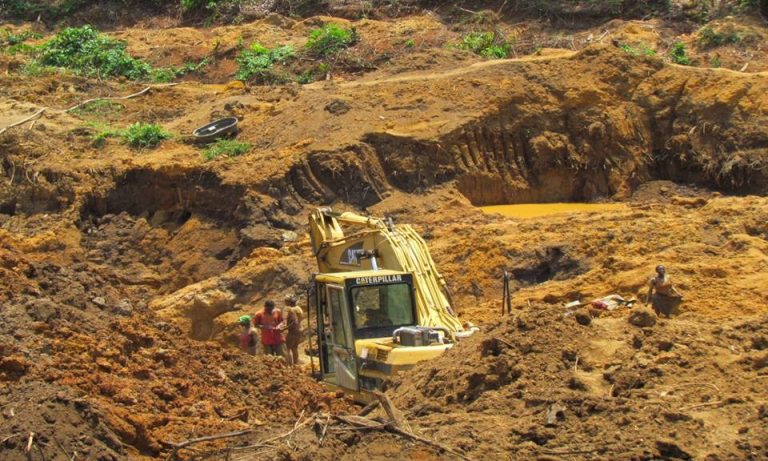
An illegal artisanal miner from Redcliff died after he was severely beaten by a gang of machete-wielding gold panners who are believed to have been working with a mine owner in Banacort, Redcliff resettlement areas.

It has been gathered that the now deceased Willard Sibanda (20) was part of a mining Syndicate which was prospecting for gold at a mine in the resettlement areas.

The now deceased and his mining syndicate are believed to have been illegally mining at a gold
mine believed to be owned by one Bhebhe following a gold rush.

The Midlands Observer has established that tragedy struck after Sibanda’s gang members left him at
the mine to look after their loot and also continue prospecting.

It was while Sibanda was still alone that a group of machete-wielding artisanal miners pounced on
the now deceased.

Sources said he was beaten into unconsciousness that’s when the gang which is still at large fled from the scene.

Police in the Midlands is currently seized with the matter.

Midlands Provincial Police Spokesperson Joel Goko confirmed the tragedy to The Midlands Observer, and indicated that investigations are currently underway.

“The death of Willard Sibanda has reached our attention and the police are out there looking for these criminals who are still at large,” Goko said.

A source who narrated to tragedy to this publication said it was heartbreaking that Sibanda had to
die in such a way.

“Willard was with my brothers the day he was attacked, my two brothers had left him at the mine
while they went to process the gold on their return that is when they found the young Willard
unconscious laying on the ground,” a source said.
Uncategorized (5)

The Midlands Observer gathered that rescue effort where made by Sibanda’s mining syndicates
who had found him lying on the ground.

They took him to Torwood Clinic before he was transferred to Kwekwe General Hospital.

“The boy was then taken to Gweru General Hospital where he could not get any treatment, the doctors at Gweru told them that the boy was supposed to be transferred to Bulawayo where he could get a specialist since he was hit on the head but unfortunately, the hospital had no fuel which then forced the family of the deceased Willard to buy fuel on their own,” the source said.

He eventually died before he could get treatment.

Efforts to get a comment from the mine owner one identified as Bhebhe proved fruitless as his number was not reachable.

Meanwhile, the family members of the deceased have vowed to get justice for Sibanda.
Sibanda was buried this week at Bonacort_Midlands Observer 

Petrolzim boss Katsande caged 30 months

0

SUSPENDED Petrozim Line (Pvt) Ltd general manager Cathrine Katsande has been jailed 90 months by a Harare magistrate.

This followed her conviction for awarding tenders worth close to US$2 million to Kaltrade (Pvt) Ltd for the supply of equipment that was never delivered, a court heard recently.

Katsande was facing seven counts of fraud and is jointly charged with Kaltrade (Pvt) Ltd.

Ncube sentenced Katsande to 90 months imprisonment of which 60 months were suspended on condition of 5 years good behaviour.

She was left to serve effective 30 months behind bars.

Kaltrade Pvt Ltd was fined $53 000.

During trial, Katsande denied the charges saying everything she did was above board and contended that failure by Kaltrade to deliver the equipment had nothing to do with her.

Prosecutors proved that on seven separate occasions between January 2013 and September last year, Katsande fraudulently and in connivance with a private company, awarded it various tenders for equipment that was immediately paid for, but never delivered_New Zimbabwe


Mining sector spurs TSP progress

0

IMPROVED production and increase in mineral prices has heightened the Government’s confidence to have the sector achieve the US$12 billion mark in the next three years.

In the country’s economic blueprint, the Transitional Stabilisation Programme (TSP), mining is targeted to reach an all-time high contribution to the Gross Domestic Product (GDP) by 2023. The sector is contributing about eight percent of GDP. In reaching the US$12 billion goal, the extractive industry would have recorded a 344 percent increase from the US$2,7 billion achieved in 2017, according to Finance and Economic Development Minister Professor Mthuli Ncube.

In presenting the outline of the progress on economic and structural reforms in the country on Thursday last week, Prof Ncube said the Government’s goal to grow the industry was realistic. In his top lists of achievements so far, since the TSP launch, the Minister said new mines were being opened, citing the construction of platinum mines along the Great Dyke and coal concessions in Hwange.

“A US$4.2 billion Great Dyke Investments Platinum Mine is already under construction, US$4 billion Karo Resources Mhondoro-Ngezi Platinum Project ahead of schedule. Arcadia Lithium Mine is being developed. Coal production new coal mines opened,” said Prof Ncube.
Production of gold and the recent increase in deliveries by both large scale and artisanal and small-scale miners has seen the Government placing an ambitious target of 100 tonnes by 2023. So is diamond and platinum production.

“Platinum output is targeted to reach 69 350 tonnes driven by expansion of existing capacities and new investments. The diamond output is expected to reach 12 million carats,” said Prof Ncube.

Gold was in the lead in terms of mineral value and was expected to contribute US$4 billion by 2023. Platinum production was earmarked to rake in US$3 billion, chrome, diamond, coal and hydrocarbons (US$1 billion). Lithium and other extractives would contribute US$2 billion.

Mines and Mining Development Minister Winston Chitando announced that the Government was moving on with the “use it or lose it” policy so as to encourage entities to fully utilise their concessions. He said, in an interview with Sunday Business that the Ministry was processing over 200 concessions and the aim was to push for production.

“Currently we have 213 concessions being handled. This is under the lose it or use it concept,” he said.

Meanwhile, authorities have also made revelations that the Covid-19 pandemic had wreaked havoc in the mining sector.

The industry, even though poised for growth, depended on world markets that suffered depreciated mineral output and a decline in commodity prices_The Sunday News

Gold myth: Panners dig up 1949 grave

0

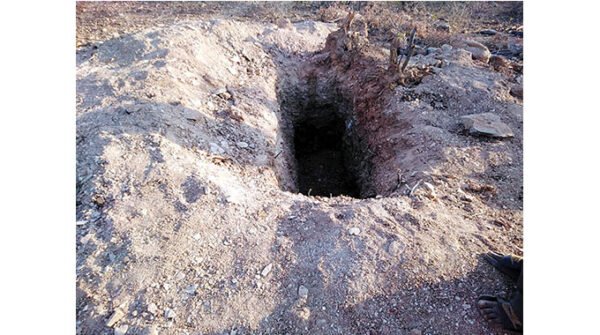
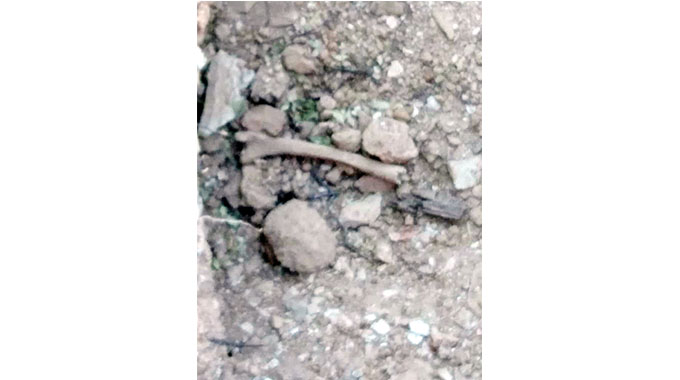
SUSPECTED gold panners recently dug up a man’s grave in Esikhoveni area in Umzingwane District, Matabeleland South province where they left human remains scattered following a long-held community myth that the deceased was buried with his treasure, among them gold.

The incident took place in the dead of the night last week and was discovered in the morning by a villager who was passing by the place and the remains were re-buried last Wednesday. It is not known whether they got what they were looking for as no arrests have been made so far, with police saying they were still carrying out investigations into the case.

Matabeleland South police spokesperson Chief Inspector Philisani Ndebele confirmed the incident to Sunday News on Friday.

He said the dug-up grave was discovered in Esikhoveni by a local who was passing by and saw that there was freshly dug earth and scattered human remains.

The scattered human remains

A report was made to the police who attended the scene where it became apparent that the grave had been tampered with by suspected gold panners.

“It is true that there is a case of that nature where suspected gold panners dug a grave believed to be a white man’s in search of gold. The dug-up grave was discovered by a local villager and a report was made to the police. We are treating the case as tampering with a grave but no arrests have been made so far. Investigations are still in progress,” said Chief Insp Ndebele.

He referred further questions to the District Development Coordinator, Mr. Peter Mahlatini, who said the grave according to the village head a Mr. Mabhena was known to belong to a white man who died more than seven decades ago. He confirmed the community held myth that the white man was said to have been buried with his treasure including gold which most likely prompted the gold panners to defy both African tradition and morals concerning the dead. Mr. Mahlatini also pushed the theory that the gold panners could have used their gold detector machines and suspicion is high that they could have detected and followed a trail of the coffin’s handles.

“The grave is not in a homestead. It is close to a functional mine and according to the village head – a Mr. Mabhena it belonged to a white man who died around 1949. The gold panners could have believed the long-held community myth that the white man was buried with his treasure including gold or could have used their detectors and whatever they (detectors) told them, they could have followed that. After consultations with the relevant stakeholders we re-buried the remains on Wednesday,” said Mr. Mahlatini.

Umzingwane Member of Parliament Retired Brigadier-General Levi Mayihlome said he was apprised of the incident.

“I was told of the incident. I couldn’t attend the proceedings because of Covid-19 but it’s an unfortunate incident where people go to those lengths looking for treasure,” he said_The Sunday News

Illegal brick moulders give Hwange torrid time

0

ILLEGAL brick moulders are wreaking havoc in Hwange Town where they are mining clay soil causing serious land degradation.

The activity has been going on for some years and reportedly escalated as many residents have resorted to brick moulding for a living. The worst affected areas are near Don Bosco Technical College, Truck Stop and Empumalanga where the Hwange Local Board (HLB) treatment plant is under threat.

The Don Bosco and Empumalanga sites are under HLB while the Truck Stop area is under Hwange Colliery Concession.

Some of the affected areas are set aside for housing projects. The illegal brick makers allegedly steal coal dust from Hwange Colliery Company mine sites which they mix with clay soil to make the bricks, with a ready market in Hwange, Victoria Falls and as far as Bulawayo where they sell them for US$0.10 cents per brick and about US$300 for 10 000 bricks.

Besides causing land degradation and deforestation, there is also a looming health hazard as the illegal brick moulders use sewer water from the defunct sewer plant and Kalope Stream in Empumalanga. Concerned residents have called upon the HLB to come up with a land rehabilitation plan and also regulate the activity.

“We are greatly disturbed by the increasing illegal brick moulding activities at Empumalanga treatment plant, Don Bosco and behind Truck Stop. This is causing alarming rates of land degradation and what is more disturbing is that some councillors, council officials and other senior people are also involved. Truck Stop is notorious for criminal activity and we fear that can happen in Empumalanga. Council should come up with a land rehabilitation plan and regulate brick moulding,” said Greater Whange Residents Trust coordinator Mr. Fidelis Chima.

There are concerns about lack of sustainable land use in the coal mining town.

Matabeleland North Environmental Management Agency (EMA) provincial manager Mrs Chipo Mpofu-Zuze said some offenders have been fined . She implored the local authority to enforce its by-laws to protect the environment.

“We have done inspections and issued out tickets to some of them because they had no authority to dig around and mould bricks. They should have an environmental management plan from the local authority. Some approached EMA saying they had no other source of income and they have regularised their activities. We approached Hwange Local Board, Hwange Rural District Council and Hwange Colliery Company ordering them to act and rehabilitate the land or designate land for such activities. The RDC has designated some land and seven groups of villagers each with around 35 households have received permits and are moulding bricks legally,” she said.

Responding to emailed questions, the HLB bemoaned resistance by the illegal brick makers but said efforts are being made to address the situation.

“The HLB is concerned about the rampant clay soil poaching activities being perpetrated by some unscrupulous individuals in the bushy areas of Empumalanga suburb for the sole purpose of brick moulding and the alarming rate of land degradation. Council acknowledges the prevailing economic challenges which could be one of the major reasons exacerbating the illegal activity. It has resulted in massive deforestation and proliferation of open pits which are becoming a danger to both human beings and animals with their existence being more hazardous during the rainy season. Furthermore, they are using sewer water from the defunct Empumalanga sewer plant that finds its way to Kalope stream and causing serious health hazards to adjacent communities in the event of a waterborne disease outbreak.”

The local authority said the Urban Councils Act does not permit developments such as soil abstraction within an urban area.

“HLB has penalised clay soil poachers through the Environmental Impact Assessment Protection Regulations Statutory Instrument (SI) 7/2007 in a bid to curb the illegal practice. However, council security has met resistance and hostility from the poachers while carrying their duties. We are working with HRDC and we are consulting various stakeholders including EMA, the District Development Coordinators office and security forces to help deal with illegal brick moulders.

“The local authority is currently in the process of amending its by-laws which will enable it to come up with stringent regulations. Allegations about council officials and councillors being involved in clay soil poaching and brick moulding activities haven’t come to our attention. If these allegations are true, such actions are unfortunate and regrettable as we expect council officials to be on the lead against such activities,” said the HLB.

The council environmental management committee is investigating the issue while the council is also working on rehabilitating some of the degraded areas.

Glencore strategy to underpin cobalt prices post covid-19

0

A year ago Glencore announced it was halting operations at its Mutanda copper-cobalt mine in the Congo, breathing life into a market that was trading at levels 70% below its peak, hit 18 months before.

Given that Mutanda is the world’s largest cobalt mine and responsible for around a fifth of global output in a market of just 135kt per year, market reaction was muted. Congo dominates world cobalt production and Mutanda was responsible for 60% of the Swiss commodities giant’s annual output.

GLENCORE HAS PLACED A STRATEGIC FOCUS ON FORWARD SELLING ITS BUILT-UP HYDROXIDE STOCKS

While mine output has been largely undisturbed in the Congo during covid-19, most of the material is shipped through the South African port of Durban, which had been in lockdown for extended periods earlier this year.

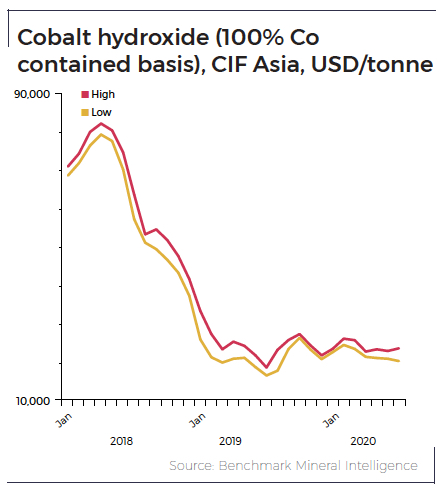
Benchmark Mineral Intelligence, a battery supply chain and price discovery agency, reports cobalt hydroxide (crystalline form produced at mines containing 20–40% cobalt) prices averaged $21,475 a tonne (100% Co, CIF Asia) in July, up 26% from the same month last year.

Benchmark says ongoing logistics problems led to a lack of material on the spot market in China. That caused a jump in payables and prices north of $23,000 a tonne for immediate delivery of cobalt going into August.

Source: Benchmark Mineral Intelligence

While disruptions along the Congo-South Africa-China route may ease over the rest of the year and more abundant supply could put pressure on prices again, a new report suggests Glencore’s strategy (similarly employed in the zinc market where the company also holds sway over a chunk of the market) could underpin cobalt prices over the medium term.

Roskill, a London-based metal and mineral research firm, says Glencore has signed several agreements with downstream lithium-ion cathode, cell and original equipment manufacturers customers, including Tesla, Korean giants Samsung and SK Innovation, and European battery manufacturer Umicore.

Glencore has placed a strategic focus on forward selling its built-up hydroxide stocks, as well as future production from Katanga in the DRC (which is still operating) and cobalt metal from Murrin Murrin in Australia (which is destined for BMW).

Roskill expects that Mutanda, in the south of the country near the Zambian border, will remain under care and maintenance for the next two years at least. This will allow Glencore to complete optimisation studies around the transition from oxide to sulphide ore and provide enough time for the market to recover.

Mutanda also produces around 200,000 tonnes of copper per year and when cobalt was trading at its highs in 2018, the battery raw material accounted for around half of the revenues from the operation_Mining.Com