Home Blog Page 539

Baron Dube sentenced to 10 years

0

Notorious gold dealer, Baron Dube (44) of Habane Extension Township in Esigodini has been sentenced to an effective 10 years in prison for killing a member of a rival gang following a dispute at a mine.

Bulawayo High Court judge Justice Maxwell Takuva on Tuesday convicted Dube of murder after he fatally shot Prince Antony Bvundura (22) in September 2018.

In passing sentence, Justice Takuva said Dube was a bully who was motivated by greed.

“In the first place, you had no right to be at that mine which you claimed the owner tasked you to manage. There was a gold rush at the mine and you were driven there by greed because you are a bully,” Justice Takuva said.

He expressed concern over the prevalence of violence among miners saying the courts have a duty to protect the sanctity of human life through passing deterrent sentences.

“Recently violence among miners is on the rise. The court has to pass sentences that will dissuade the would-be offenders as crimes in the mining areas have become a danger to society. People like you have to be removed from society. A young man lost his life due to your greed. Imprisonment is the right thing for you and therefore you are sentenced to an effective 10 years imprisonment,” ruled Justice Takuva.

He reminded Dube of his automatic right of appeal against both conviction and sentence at the Supreme Court.

Dube, who was out of custody on $2 000 bail, fatally shot Bvundura in September 2018 in the heat of a fight over a mining claim at Block 13 Atlas Mine in Esigodini.

He used a Voere 458 calibre rifle.

The shooting happened at a mine belonging to Mr. Tendai Musanangura and Dube said Mr. Musanangura had granted him the authority to occupy it. Mr. Musanangura however denied granting the authority.

Dube, who was being represented by Mr. Leopold Mudisi of Mutendi, Mudisi and Shumba Legal Practitioners had told the court that the firearm accidentally discharged after he stepped on a rock and fell down while fleeing from a mob, which was throwing stones at him while baying for his blood.

“I fell down while trying to run away from the illegal gold panners who were chasing me and in the process, the revolver, which was stashed in my shorts accidentally discharged after I fell into a pit. I didn’t realise that I shot a person until the following day when I was approached by police while trying to fill up the pits, which had been dug by the illegal gold panners,” he said.

Dube had denied that he opened fire at his rivals during violent skirmishes, claiming he was the victim. He also denied that there was a gold rush at the mine.

Under cross-examination, Dube failed to justify why he had to arm himself since he purported that his intention was not to fight anyone.

Upon his arrest he was found with a gun loaded with seven rounds of ammunition. Newsday

Government moves to plug under-declarations of mineral exports

0

In an effort to plug under-declarations of mineral exports, customs and excise officers will soon undergo training on how to evaluate minerals a government official has said.

Mines and Mining Development Minister said his ministry and that of Finance and Economic Development, under which the Zimbabwe Revenue Authority falls, were discussing how to equip customs officers so they are able to detect possible under-declarations of exports.

“We are discussing with the Ministry of Finance on the way we can have this intervention and in due course, we will overcome this challenge,” he said while responding to journalists in Beitbridge on Monday.

Zimbabwe has been losing billions of dollars in mineral wealth smuggling and through under-declaration of minerals which some experts in the banking and mining sectors said were some of the many methods used to externalise foreign currency.

Chitando, alongside the Zimbabwe Consolidated Diamond Company officials, were touring a multi-million exploration camp in Beitbridge which was established by Alrosa, a Russian diamond firm, and ZCDC to investigate the presence of diamonds.

It has already been established there are indeed diamonds on 15 special grant areas in Maitengwe and Beitbridge, which form the Malipati Diamond Project.

Deliveries of gold at Fidelity Printers and Refiners has dropped over the last two years, plunging by 73% in September to close at 1,36 tonnes from 2,8 tonnes in the comparative period in prior year owing to rampant smuggling.

This year’s gold deliveries are expected to end the year at 25 tonnes, nine tonnes less than what was delivered in 2018 when prices were much lower than this year.
More than 34 tonnes were delivered in 2018.

A high-profile court case involving suspended Zimbabwe Miners Federation president Henrietta Rushwaya over charges of attempting to smuggle gold bars weighing 6kg to Dubai, the United Arab Emirates, has sparked debate in the country over leakages of the precious minerals and how much smuggling is costing the country.

Many customs officers based at Beitbridge Border Post told NewsDay that they did not know all the minerals the country exported and only rubber-stamped documents presented for exports.

Newsday

Foreign investors pressure Zim to end gold Monopoly

0

Gold mining investors are pressuring Zimbabwe to change a law forcing producers to sell their output to the central bank, which partly pays them in local currency that’s worthless outside the country.

That law is making it hard to raise capital for investment projects, according to B2Gold Corp. and Caledonia Mining Corp., which are considering acquiring assets in Zimbabwe. B2Gold Chief Executive Officer Clive Johnson said the Canadian company has held talks with the government about changing the rules to unlock investment.

While mining investment is key to rebooting Zimbabwe’s collapsing economy, the nation suffers from an acute shortage of dollars. As the rally in bullion generates more interest in the industry, the government is “weighing its options” on whether to grant investors gold-trading licenses, said Deputy Mines Minister Polite Kambamura.

“The ability to handle gold sales is critical to a company like ours,” said B2Gold’s Johnson. “It’s an issue that would have to be clarified first for one to buy some assets and build some gold mines.”

Zimbabwe currently forces large scale gold miners to sell their bullion to Fidelity Printers and Refiners Ltd. It pays them 70% in dollars and the remainder in local currency.

Payment delays of up to two weeks by Fidelity Printers and Refiners have impacted on producers, according to Chamber of Mines of Zimbabwe CEO Isaac Kwesu. Gold output in the southern African nation fell 30% in the first 10 months of 2020 from a year earlier. Existing mines require almost $400 million in fresh capital, the industry lobby group said.

To justify building new mines, Jersey-based Caledonia would need to take charge of its gold sales, said CEO Steve Curtis, whose company is interested in buying one of Zimbabwe’s largest gold operations.

“Those are the conversations the authorities have to get their heads around if you want an industry to be invested in,“ Curtis said in an interview. “That legislation, if they get rid of it, the level of investment would no question be up.”

Bloomberg

Gemstone miner holds mini-auctions to address market demand

0

United Kingdom Gemstone miner Gemfields has progressed with the planning of a series of five small and sequential emerald auctions in November and December to address market demand for specific grades and to supplement its longstanding direct sales programme for the lowest qualities produced by its Kagem mine in Zambia.

These mini-auctions comprise a selection of grades that are typically offered at Kagem’s auctions of higher-quality emeralds.

The miner on November 10 reiterated that its auctions scheduled for this year had been severely impacted by the many travel, quarantine and congregating restrictions put in place to mitigate Covid-19 contagion.

Having planned to host five regular-format auctions in May, June, August and two in December, the miner has only been able to host one regular-format auction in February in Lusaka, Zambia, yielding $11.5-million from the sale of commercial-quality emeralds.

However, as part of the mini-auctions, selected lots have been made available for in-person and private viewings by customers in Tel Aviv (Israel), Singapore and Jaipur (India).

Subsequent to the conclusion of the viewings, the auctions take place on an online auction platform specifically adapted for Gemfields and enabling customers from multiple jurisdictions to participate in a sealed bid process.

The first mini-auction was successfully completed on November 6 with all four of the offered lots sold.

Gemfields product and sales MD Adrian Banks says the first of five sequential online mini-auctions saw all four of the offered lots successfully sold. “Prices were robust and, in some cases, comfortably exceeded bids received in pre-Covid-19 auctions.”

The remaining four mini-auctions will be concluded on November 12 and 27, as well as on December 4 and 11.

Gemfields expects to announce the final and aggregated results of the five mini-auctions on December 11.

Gemfields’ typical auction schedule includes five to six auctions a year – two of mixed-quality rubies and three to four of emeralds (split between higher quality and commercial quality). However, because of a reduced number of auctions this year, Gemfields reports that no ruby auction revenue is expected this year.

As reference, in 2019, Gemfields’ six auctions accounted for 93% of total group revenue (about $200-million out of some $216-million) with $120-million of revenue derived from two ruby auctions and $80-million derived from four emerald auctions. The average number of lots offered at Gemfields’ emerald and ruby auctions to date is 24 and 72 respectively.

As previously announced, Gemfields holds sufficient rough gemstone inventory to be able to host one auction of each of mixed-quality rubies, higher-quality emeralds and commercial-quality emeralds.

Given their reduced size, sales from the five mini-auctions are not expected to materially affect Gemfields’ ability to host three larger auctions using available inventory.

Further, and subject to market conditions and Covid-19 developments, Gemfields expects to host two larger auctions – one each of mixed-quality rubies and higher-quality emeralds – in the first quarter of 2021.

Meanwhile, in terms of gemstone output, Gemfields reports that principal operations at both the Kagem emerald mine and the Montepuez ruby mine have been suspended since March and April, respectively.

However, the miner hopes that mining operations will resume by March 2021, subject to market conditions and Covid-19 developments.

About Gemfields

Gemfields Group Ltd is a natural resources company incorporated in Guernsey and headquartered in London, United Kingdom, and is a supplier of responsibly-sourced coloured gemstones. The company specializes in the mining, processing and sale of coloured gemstones, in particular emeralds and rubies.

Mining weekly additonal reporting by Mining Zimbabwe

ZMF to educate ASM on safety in mining

0

Zimbabwe Miners Federation (ZMF) Mashwest Regional representative Dr. Chiedza Chipangura, has indicated that ZMF is planning to educate artisanal and small-scale miners (ASM) on safety in mining.

By Precious Chikuruwo

Speaking to Mining Zimbabwe Chipangura emphasised the need to protect miners from hazards associated with mining.

“As ZMF we are planning to educate all miners on safety precautions when working in mine shafts. We want to protect our miners, as well as our environment, therefore, we are going to plan a workshop, where we invite rescue teams and educate our miners

She further added that it is within the interest of everyone that the operation at Task Mine Syndicate be stopped in the meantime considering that the environment is not safe to work.

“The operation at Task mine Syndicate was put on hold by the Ministry of Mines as a way protecting the residence of the Task Mine Syndicate and also the rescue team “.

The ZMF Regional representative went on to add that the shaft mine beside Task Mine Syndicate called Zuvarabuda has been using heavy machines such that it had an impact on the Task Mine Syndicate therefore safety measures must be considered.

“A neighbouring mine of Task Mine Syndicate called Zuvarabuda has been using heavy machinery therefore recently it has been reported that the Zuvarabuda mine collapsed but luckily no one was below, after this incident the operation at Task Mine Syndicate was been stopped as it was also showing signs of collapsing once again”.

Dr. Chiedza also said that the Task Mine Syndicate issue is complex to such an extent that it involves cultural norms.

“As ZMF we have helped the community in giving them funds to buy cattle to perform traditional rituals they insisted were necessary though there are land disputes between Chief Zvimba and Chief Nangezi. Following the accident of the Task Mine chairman Mr. Timothy Masviba, which is highly believed to have been the victims’ spirits sending a message, it is alleged one of the miners is having nightmares of the dead victims’ spirits asking him why they haven’t exhumed their bodies like the first one” said Chipangura.

Dr. Chiedza concluded that as ZMF they are going to do anything possible to help the victims’ families and miners at large.

Police urge the public to venture into mining legally

0

Zimbabwe Republic Police (ZRP) in Nkayi has urged the public to venture into the mining industry through the proper right channels after three suspects were arrested for selling liquor illegally to gold panners at a local farm.

In a statement, ZRP was adamant in urging the public to practice mining legally for it is an offence to the state.

“Members of the public are advised to follow legal procedures to venture into the mining industry.”

Police further added that about a hundred illegal gold miners have since vanished from the area.

A study by the Environmental Management Agency (EMA) has revealed that illegal mining has damaged a total of over eleven hectares of land while degrading over one thousand kilometres of riverbank ecosystems in the country.

The illegal miners’ activities are causing rampant degradation to the environment and have become a threat to socio-economic development.

EMA also encouraged people to take a stand in curbing environmental crimes as the land is jeopardized in the process.

Speaking to Reuters, Zimbabwean’s Miners Federation (ZMF) Spokesperson Dousman Mangisi said, “There is nothing that can be done to lessen gold rushes in Zimbabwe, all we can do is to mobilize and register illegal miners so that they can mine legally.”

In the book ‘A call to halt destructive Illegal mining in Zimbabwe-2017’, Dalu and Wasserman say the problem of illegal gold mining is fast spreading through the Eastern Highlands and other parts of the country, as hundreds of artisanal gold miners swarm to the area, tearing up natural forests and plantations.

WATCH: Dave Darling a Ngezi miner speaks about Rock Crystal mining

0

Dave Darling a veteran Zimbabwean miner in the video below speaks about Rock crystal mining. The rock is the first of its kind to be found in Zimbabwe.

Rock crystal can be found in some form in any geological environment that allows the formation of quartz in general. Large, well-formed and transparent crystals can be found in some pegmatites, in alpinotype vugs, and hydrothermal veins.

Prospect commences pilot plant to produce high purity petalite & spodumene

0

Prospect Resources Limited, African Lithium Developer has announced that it has secured long-lead equipment items and is commencing the pilot plant project at the Company’s Arcadia Lithium Mine (“Arcadia”) to produce high purity petalite and spodumene samples.

In a press statement Prospect’s Managing Director Sam Hosack said the plant is expected to produce bulk samples of 500tonnes of petalite and 120tonnes of spodumene concentrate on customer qualification.

“Our current key focus is to operate a pilot plant to replicate the Arcadia flowsheet to produce high purity petalite and spodumene. The pilot plant delivers a number of key objectives for customers, project finance parties, and investors in de-risking the Arcadia project. It is a major milestone that we have secured the long-lead purchases.”

He further added that the processing technology has the ability to produce high purity products at planned volumes and samples are to be sent to current and potential offtake partners in H1 2021.

Furthermore, the design of the pilot plant is based on flotation test work done by ANZAPLAN and scaled up to a pilot plant size by the Beijing General Research Institute of Mining & Metallurgy (BGRIMM) using proven flotation technology solutions.

Front End Engineering and Design (FEED) will be undertaken using information gathered from the pilot plant which will determine the phasing, scale of growth and nominal capacity of the Arcadia project.

It is planned that FEED will be completed in H1 2021, which will include a period of operational observation and modifications, improvements or enhancements identified during the piloting phase will be adequately incorporated into the FEED study.

Prospect will utilize its existing shed facility to house the pilot plant, a number of the key equipment items such as milling and crushing have been sourced in the country, further simplifying the execution plan.

US$1 Billion ready for Selous Platinum mine

0

Bravura Holdings has $1-billion available for the development of a platinum mine in Zimbabwe, its country manager said.

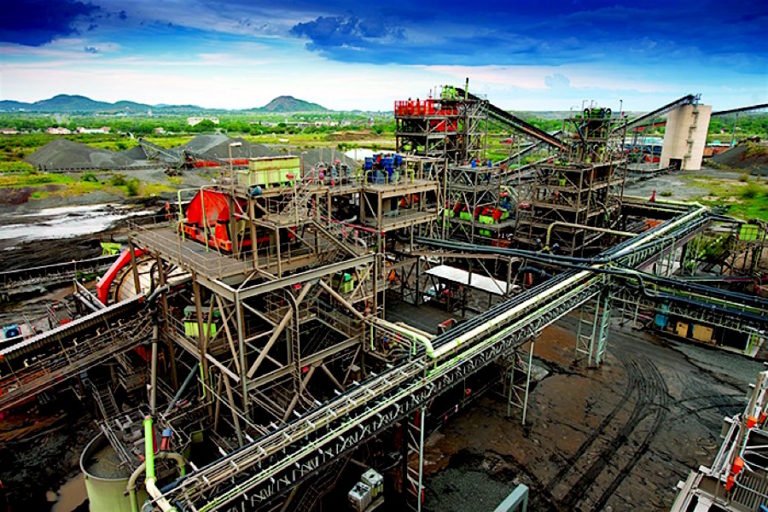
The 3 000 ha concession where it plans to dig the mine is in Selous, 80 km south of Zimbabwe’s capital Harare and close to existing platinum mines.

“From where we are now, we will go to resource definition, after that we will go to resource modelling, after mine development and then mine construction,” Lionel Mhlanga, Bravura’s manager in the southern African country, said in an interview at the mine on November 6. “Those are all things that should happen in the next 18 months.”

Bravura is one of a number of little-known companies that have secured platinum concessions in Zimbabwe as the government seeks to kick start its stagnant economy. Still, established platinum miners haven’t announced plans to expand their operations. While Zimbabwe has the world’s third-largest platinum group metal reserves, investors have been deterred by frequent changes to mining laws and currency policies.

In addition to Bravura, Russian and Cypriot companies have announced plans to invest in Zimbabwean platinum mines.

Peters owns Aiteo Eastern E & P Company, Nigeria’s biggest domestic oil producer, but has little experience in mining.

Still, the group also intends to explore mining lithium, rare earth minerals and tin in Zimbabwe, Mhlanga said.

It’s also seeking to mine cobalt in the Democratic Republic of Congo, copper in Zambia, gold in Ghana and iron-ore in Guinea, he said. Namibia and Botswana could also be options for the company, he said. Mining Weekly

Rare, precious diamonds discovered in Zimbabwe

0

EXTENSIVE resource definition and quantification works being undertaken by a Russian firm, Alrosa, at the Malipati Diamond Project in Matabeleland South, has revealed a rare and high-value species of diamonds that have potential to change the face of Zimbabwe’s gem industry.

The successful exploitation of the resource could be a game-changer in terms of accelerating development and job creation for Matabeleland South and Masvingo provinces, in particular. It could also go a long way in revitalising provincial economies in line with the Government’s devolution thrust.

Alrosa, the Russian diamond behemoth, is the world’s largest gem miner with an annual turnover of more than 35 million carats, is exploring for diamonds in Matabeleland South having signed a diamond investment deal that gave birth to Alrosa Zimbabwe.

They are partnering State-owned diamond miner, the Zimbabwe Consolidated Diamond Company (ZCDC). Alrosa has already moved on the ground for exploration works, which includes Aero-magnetic surveys and it is from these works that the miner has seen potential for Type II diamonds.

The Type II diamonds have no Nitrogen impurities within their build and often fetch much higher prices and are between one and two percent of the world’s total diamond resource base.

Speaking after a tour of the project by Mines and Mining Development Minister Winston Chitando on Monday, ZCDC board chairman Mr Wellington Pasipamire said although there is still a lot of work to be done in terms of resource definition, there is evidence for a compelling resource.

The tour was also attended by Alrosa Global deputy chief executive Mr Vladimir Marchenko.

“There is a very interesting discovery of what they call the Type II diamond, which is a rare occurrence, which is free of nitrogen and exhibits high value in the market,” said Mr Pasipamire.

“Ordinarily you get your Type I diamonds, which have nitrogen and carry less value. So, as a kimberlite pipe we are confident that probably we will extract something out of this project,” said Mr Pasipamire.

He, however, noted that there is no case for easily accessible alluvial diamonds and the said mineralisation is of rather “capital intense deep-seated kimberlitic deposits”.

This has still not deterred project development as Alrosa has the requisite financial wherewithal to finance commercial exploitation. So far, the investor has been given access to seven special grants (SGs) but there are discussions to further increase these to 40 SGs.

This has in turn excited parties to the joint venture against the background of the 10 million carats target under the mining sector’s US$12 billion milestone.

“If you look at the capabilities of Alrosa and them being the biggest diamond player, they have sufficient capacity to deploy the capital expenditure that is required for projects of this nature.

“Generally, you don’t venture into a complexly risky project of this nature without having done the necessary risk assessment and capital deployment parameters.

“As ZCDC in partnership with Alrosa, we are very optimistic that it is very possible to achieve the 10 million carats (annual target). Remember we are not just looking at this project alone with the Alrosa team, we are forecasting on 40 special grants in the totality of the Alrosa project.

“So, when you look at the actual valuation of each of those special grants, I think it is very humble for us to estimate 10 million carats (annually), it’s just a conservative estimate but we are headed for victory in terms of that threshold.”

Minister Chitando said such projects are a culmination of investment attracting strategies by President Mnangagwa such as the relaxation of the previously stringent indigenous regulations.

“The ‘Zimbabwe is open for business’ mantra came up with amendments to the indigenisation regulations which previously was 51 (percent for locals) and 49 (percent for foreigners) and it really did not work in terms of attracting foreign direct investment,” said Minister Chitando.

“So that was amended and it enabled us to have a huge inflow into the country and the US$12 billion we are talking about is on the basis of huge foreign investment,” he said.

Chronicle