

Home Blog Page 538

Ten miners buried alive in Mutasa

0

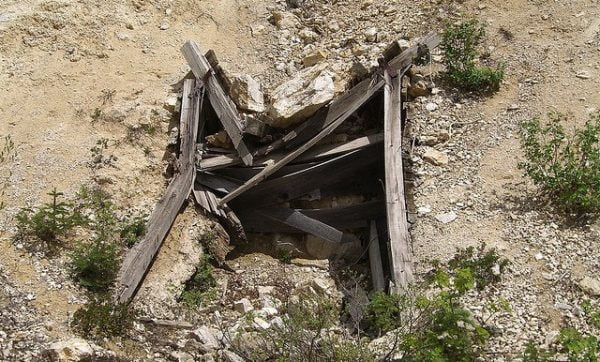
Ten gold miners are feared to have been buried alive at Premiere Mining area along Mutare river in Mutasa District, Manicaland.

Permanent secretary in the Ministry of Information, Publicity and Broadcasting Services Mr Nick Mangwana on his twitter account yesterday said “Ten illegal gold miners are feared to have been buried alive at Premiere Mining area along Mutare river which is owned by Zimgold fields a privately owned company in Mutasa District, over the weekend. So far two bodies have been retrieved from one of the shafts” read the tweet.

Year-in, year-out, lives are lost in Zimbabwe’s mining sector, with corruption and inadequate monitoring of mining activities by the government cited as major causes.

For instance, since 2018 several accidents have been recorded; including the flooding of Battlefields mine in Kadoma, which killed 28 people and the collapse of Eldorado mine in Chinhoyi, killing 11 men in two separate incidents.

Other accidents include the collapse of Shurugwi’s Wonderer mine, trapping over 50 artisanal and illegal gold miners underground and the Nugget gold mine collapse in May, which killed eight people, as well as the blast at Mazowe mine in which eight people died.

Again, in February this year, two miners died after a shaft collapsed at the Globe and Phoenix Mine in Kwekwe District, 200 km southwest of the capital Harare.

In May this year, another worker at Vumbachikwe Mine died after he allegedly fell during a blasting exercise when he was alone underground.

Last year, a man died in Gwanda at Berwick 3 Mine when a shaft he was working in collapsed.

Platinum giant Zimplats also recorded one fatality towards the end of the first quarter of 2019 at one of its mines, Mupfuti Mine.

On September 8, 2020, five artisanal miners got trapped underground at Task Mine in Chegutu and as of today four remain underground and only a single body was exhumed.

Zimbabwe Miners Federation (ZMF) Manicaland regional rep Judith Shadaya when contacted for comment said she had no knowledge of the unfortunate incident

Fidelity official gold buying prices Tuesday 17 November 2020

0

Fidelity Printers and Refiners (FPR) official gold buying prices Tuesday 17 November 2020

SG 90% AND ABOVE $54.25/g
SG ABOVE 85% BUT BELOW 90% $53.34/g
SG ABOVE 80% BUT BELOW 85% $52.13/g
SG ABOVE 75% BUT BELOW 80% $51.52/g
SAMPLE BELOW 10g BUT ABOVE 5g $52.74/g
FIRE ASSAY CASH $54.56/g
EXCHANGE RATE  ; 81.6741


Cash available. Fidelity Printers and Refiners prices will be changing daily in relation to world market prices.


Contact FPR

No. 1 George Drive, Msasa, Harare, Email: [email protected]Telephone: +263 242-486670, +263 242-486694, +263 242-487131, +263 242-447810-5

MMCZ pledges to work with small-scale miners

0

Minerals Marketing Corporation of Zimbabwe (MMCZ) has emphasized the vitality of small-scale-miners cooperation with mining authorities for the mining industries to be a success.

By Shantel Chisango

Addressing miners at a MMCZ small scale miners training held yesterday at the HICC, MMCZ boss, Mr. Tongai Muzenda said the mineral marketer’s mandate is to work with miners to attain a productive mining sector.

“As MMCZ, we do not exist to disrupt mines activities but rather to work together with miners to produce results in the mining sector,” he said.

In addition, Muzenda stated that the MMCZ is looking into making gemstones viable in the market, the mineral marketer will educate miners on the value of the minerals.

“Currently we are in a bid to make minerals such as gemstones viable on the market so we will educate miners on how valuable they are so they can start mining them on their own and benefit from it as well.”

Meanwhile, MMCZ is engaging with small scale miners from all around the country to allow easy and viable mining in the sector.

In his presentation, Muzenda pointed out that there is need to take small-scale mining seriously for it contributes 1,3 to 20 million jobs worldwide while a further 80-100 million make living from it.

3.7 million people in Africa are currently engaging in small scale mining while 30 million heavily depend on it.

Small scale miners have pleaded with the Mines Ministry and the MMCZ to capacitate them and not sabotage them in the industry taking preference of foreign investors over them.

“It is very much disappointing that our mining authorities do not consider our needs neither do they appreciate us being active in the industry, rather they take preference of foreign people over us. So as small-scale miners we are pleading the ministry to recognize us and start treating us as well,“ said one of the small-scale miners.

In response to MMCZ’s presentation on relieving miners of their grievances, another small-scale-miners asked the MMCZ if they have been taking action in implementing what they promise miners.

“What are you currently doing to make sure that as small-scale miners we get the capacitation you say you will provide because it is pointless to talk without any action being taken on the ground?” said the miner.

He further urged miners to engage with MMCZ concerning the grievances they are facing as well as come up with suggestions on how to overcome them.

Mines and Mining Development Minister, Winston Chitando who was also in attendance applauded the MMCZ for standing on behalf of the government in engaging with miners for the betterment of the mining sector.

“It is a noble intervention that MMCZ has done on behalf of the government for small-scale miners contribute heavily to the success of the economy,” he said.

He further added that the mining industry is on schedule in playing a pivotal role in the attainment of the 2030 vision.

Moreover, the government is looking at measures in which it can capacitate small-scale-miners in their industry, he said.

The Mines Ministry according to Chitando next year will establish a Minerals Commodity Exchange to assist miners in selling their minerals, and it will be established all over the country.

MMCZ has been hailed for following through on their promise this time around as they have been known to cancel events at the last hour. The training commences in Karoi a gemstone-rich area today.

Chrome Miners Push for Market Revamp

0

ZIMBABWE is pushing to transform its mining industry into a US$12 billion sector by 2023.

There is an interesting mix of minerals on which this target is being projected, including chrome.

But, for Norton Miners’ Association chairperson and small-scale miner Privelage Moyo, the vision might be hard to achieve.

There are a plethora of challenges facing the chrome mining subsector, Moyo told Standardbusiness last week.

When he joined chrome mining two years ago, he expected his new venture to be a stroll in the park.

But he soon found the going tough.

He says he found himself in a sector that was drowning in challenges like lack of government support, predatory buying and low prices.

In addition, the sector did not have a value addition and beneficiation policy.

Chrome miners have also been affected by lack of weighbridges, mining equipment and under-capitalisation.

These challenges have dampened the spirits of many miners like Moyo, and some of them have shifted to gold and gemstones mining.

“Government needs to put a task force together to only focus on the mining of chrome.

“Its focus will be on production, pricing and marketing.

“I am aware of the existence of the Minerals Marketing Corporation of Zimbabwe (MMCZ), but I am sure they need to rise to the occasion,” he said.

Moyo said pricing was a huge challenge.

Chrome miners are at the mercy of buyers and smelters, and they are calling for constant updates on pricing to help them plan.

“Knowledge of markets is crucial to miners as it gives them local or foreign options,” he said.

Moyo said if local markets and depots are created close to miners they would be happy to deliver their ore, or allow buyers to come to inspect their output.

He said, for now, buyers were hunting for chrome, which they purchase at low cost from miners.

He said the government should establish chrome markets like what has happened in diamonds.

“If the above issues are not addressed, the US$12 billion targets will remain a pipedream. We need to focus on the ease of doing business in mining because bureaucracy is affecting business,” Moyo said.

“Government needs to commit and grow an industry one at a time.

“If they want earnings in mining, then more focus must be deployed until it starts bearing results, then move to the next.

“Zimbabweans are ready for economic growth, but the government is not.

“Mining titles are not easy to get. The (Mines) ministry has manpower and mobility challenges.”

Moyo said if the government wanted to know what could derail the US$12 billion target, authorities must visit provincial mining offices to see backlogs of applications for several permits that have not been processed.

He said sometimes important documents go missing, thereby delaying production.

Zimbabwe boasts of the world’s second largest known chrome ore deposits, with 900 million tonnes of untapped ore.

The global reserve is estimated at about 7,5 billion tonnes.

South Africa has the largest proven reserves.

Zenzo Hove, the secretary of the Rhonda Miners Association, said most small-scale miners relied on manual mining methods, which affects production.

“We don’t have access to modern machinery. “Most rich claims are held by very big companies, but they are mostly lying idle.

“Some companies hold the rich claims for speculative purposes,” he said.

“That’s why you find sometimes miners end up loading trucks manually by hand.

“Artisanal small-scale chrome miners cannot afford open cast mining due to lack of those machines and financial muscle.”

The miners have also been affected by lack of electricity, which affects important works like de-watering shafts.

An alternative would be to use diesel-powered generators, but this is more expensive.

Preferential treatment given to Chinese investors in chrome mining, as well as the presence of too many middlemen, is worrying small-scale miners.

Moyo said lack of an open market was also another challenge.

“This does bring the entire mining effort to zero as buyers will be offering very low prices disregarding production costs,” he said.

“China is an ideal market but due to self-funding, the miner cannot afford to wait for a long period to be paid, hence they are forced to sell to predators.

“Government must also put weighbridges along the Great Dyke and railway sidings.

“We have been selling chrome using estimates for tonnage because in our area (Mataga or Ngungubane railway siding) there are no weighbridges.

“Big companies must be forced to either give five-year tributary agreements to small-scale miners or complete ceding of claims to locals.

“In our case as Rhonda Miners Association, we can improve production greatly if we get access to lines of credit.

“We can play our part in achieving the goal if we get enough capacitation.”

A chrome miner, Rumbidzai Vutete, said the government should come up with a chrome policy.

“It appears we still have no traction regarding our chrome policy,” Vutete.

“We need it to enable us to address all our issues.”

Martin Chitohwa, a researcher, opines that for Zimbabwe’s chrome sector to achieve sustainable growth, the government should stop heavy reliance on a single market and end the monopoly of MMCZ.

MMCZ, a government agency, is charged with supervising the sale of all minerals produced in the country except gold and silver.

Chitohwa said most problems faced by chrome miners would not be solved if Zimbabwe continued with its reliance on a single market.

Zimbabwe sells its chrome to China.

“As long as MMCZ remains restricted, predatory pricing by buyers who only sell to the single market will continue to take advantage of the situation,” he wrote.

“Buyers from other markets are available and more can be made available if there is a policy change that can allow MMCZ to be circumvented. This policy change can be temporary to allow capital built-up by local producers since proceeds will be repatriated back into Zimbabwe,” he opined.

He said a committee could be put in place to work closely with the funders and local banks.

Mines parliamentary portfolio committee chairman Edmond Mkaratigwa said in a bid to boost production in mining, last year they advocated for government to financially capacitate the Mines ministry.

“As a committee, we want to see increased production. Currently, we are working on the national budget and last year we prioritised human and material resourcing,” he said.

This year the country projects to produce 1,2 million tonnes of chrome. Standard

ZMF donate food to Task victims families

0

Zimbabwe Miners Federation (ZMF) yesterday visited affected families of the victims of Task Mine shaft collapse on behalf of Fidelity Printers and Refiners (FPR) to deliver food essentials to use during this pandemic. The families are currently camped at the mine waiting for the exhumation of their loved ones’ remains which are currently trapped underground.

By Shantel Chisango

ZMF regional rep Chiedza Chipangura said the funds used for buying the goods were donated by Fidelity Printers and Refiners.

“On behalf of Fidelity Printers and Refiners, as ZMF we have come to distribute goods to all the families who were affected by the Task Mine collapse,” said Chipangura.

Chipangura further added that ZMF will continue trying to help affected families despite the economic challenges crippling the country.

“We know things are hard because of the pandemic but we will try by all means possible to help where we can.”

She further added that it is their desire that the trapped bodies underground be exhumed as quickly as possible effect though it is taking longer than expected.

“If wishes were horses, we would have exhumed the bodies quickly but unfortunately it is not that simple for there are many things to consider such as the safety precautions that need to be adhered to,” she said.

Actions speak louder than words, and one of the affected families, Supreme Dzoreva said he was grateful for the action that ZMF and FPR did for them for they shown the government’s love for its people.

“I feel relieved that the government actually thought of us, this is something really important to us for it has shown that the government cares for its people and that we are not alone,” he said.

The ZMF entourage included ZMF SG Morgan Mugawu, Chegutu Miners Association Chairman Innocent Nicks, ZMF CEO Wellington Takavarasha, Norton Miners Association Chairman Privelage Moyo among others.

It has now been close to three months since the trapped bodies have been underground and only the body of Shingai Dzinoreva has been exhumed to date.

Caledonia to finish Central Shaft Project before the year ends

0

Gold producer Caledonia Mining Corporation has announced the work at Central Shaft Project to be completed before this year ends despite being three months behind schedule.

In an interview with Tim Blythe, Caledonia Chief Executive Officer (CEO) Steve Curtis said equipping of the shaft will be finished before this year shuts down for they are already behind in terms of progress.

“We are behind schedule but the equipping will be finished in Q4 before the end of this year’s Christmas shutdowns.”

The company has been performing exceptionally well amid the covid-19 pandemic and the restrictions which came with it.

Gross revenues of $25.4-million were recorded a 27% increase on the $20-million achieved in the third quarter of 2019.

The company also managed to produce 15 155 oz of gold, up from the 13 646 oz produced during the comparative period in 2019.

The CEO also said this year has been a fruitful year mentioning the great cooperation from the authorities in Zimbabwe and South Africa making it a profit cash generation.

Despite the increase in production at the mine, the company dealt with the problem of electricity in Zimbabwe causing them to use diesel generators which are costly.

“Diesel generators were used a little bit more than the usual due to electricity issues in Zimbabwe.

He said the company will take full commission of the shaft in the first quarter of 2021 following all the safety precautions.

“Full commissioning of work at Central Shaft will start and it will be a structured and very organized programme with all safety precautions being considered.”

The company has set to produce 80 000 ounces of gold by the year 2022.

Another dividend will be announced in January 2021.

Prospectors Association suspends Dzingwe

0

Zimbabwe Prospector Association suspended its outspoken President Mr. Samson Dzingwe.

In a letter dated 3 November 2020 seen by Mining Zimbabwe, the letter confirms that you are suspended from holding the office of the President for Zimbabwe Prospectors Association from today (03 November 2020) until further notice while an investigation is done into several suspected misconduct, abuse of office and violation of our constitution. The letter does not clarify the exact reasons why Dzingwe was suspended or the specific charges against him.

Dzingwe was suspended in a meeting which was attended by the Vice President –Frank Chatyoka, The Secretary General Timothy Chizuzu, the Treasurer-Simon Chinyemba, Committee members-Edward S Fundira, and
Abraham Phiri.

Below is the contents of the letter in full.

Dear Mr. Dzingwe

This letter confirms that you are suspended from holding the office of the President for Zimbabwe prospectors Association from today until further notice while an investigation is done into several suspected misconduct, abuse of office and violation of our constitution.

The executive met and agreed on your suspension on a meeting which you were invited but did not attend without an apology to the executive.

The said meeting was attended by the Vice President –Frank Chatyoka, The Secretary GeneralTimothy Chizuzu, the Treasurer-Simon Chinyemba, Committee members-Edward S Fundira, and  Abraham Phiri.

We can add to these issues as appropriate in light of our investigation.Your suspension does not mean that we have already decided that you have done or not done an action or behavior that is of misconduct. We will not keep you suspended for longer than is necessary for us to carry out the investigation and decide on action to be taken, if appropriate. We can lift the suspension at anytime.

While you are suspended you must not carry out any of Association’s duties. You must cooperate with our investigation. You may need to be called for interviews or other meetings related to the suspension or matters under investigation.

Mines Ministry determined to deal with hurdles in the Mining sector

0

The Mines Ministry has promised to deal with all hurdles in the mining sector that limits progress and growth for miners and the country’s economy.

By Shantell Chisango

Speaking at the 2021 pre-budget expectations of the mining sector in Zimbabwe held at Crown Plaza, the Chairman of the Mines Committee Portfolio, Honorable Mkaratigwa said the Mines ministry is determined to remove all backlogs in the mining industry.

“Mines Ministry is committed to clearing all backlogs that deter the industry from soaring as well as the country’s economy from developing.”

He further added that miners are required to get licenses from Environmental Impact Assessment (EIA) to help curb land degradation.

“EIA is a legal requirement in Zimbabwe in terms of the Environmental Act (EMA Chapter 20:27) as read with Statutory Instrument 7 of 2007 a tool used to define, quantify and evaluate the potential and known impacts of human activities on ecosystems at the earliest stage of project development.

“Miners, therefore, need to cooperate with the legal system so that we avoid arresting illegal miners in the long run.”

Furthermore, during the meeting, a member of the mines portfolio committee asked Mines Portfolio Committee chairperson Hon Mkaratigwa how the ministry is planning to achieve the twelve million budget considering the massive leakage of minerals in the country.

The chairman responded saying there is much being done by the ministry such as arresting miners found on the wrong side of the law as a way to reduce leakages in the country.

In addition, Zimbabwe Environmental Law Association (ZELA) member Mr. Mberikwazvo told the Mines Ministry to present measures to grow mining revenue as well as ask for resources to improve governance capacity.

Zimbabwe is rich in many minerals and there is a need to have a mining-model sector so as to avoid mining minerals which have less value on the market, said Pact Manager, Mr. Motive Mungoni.

ZMF has proposed to assist in achieving the 12 billion mining project

0

Zimbabwe Miners Federation (ZMF) has proposed to the mining ministry to assist in the success of achieving the 2023 twelve billion mining industry.

Speaking at the 2021 pre-budget expectations of the mining sector in Zimbabwe held at Crown Plaza, ZMF CEO, Mr. Wellington Takavarasha said ZMF has been engaging with the mines ministry on how they can assist in reaching the twelve billion mining industry by 2023 target.

“We have been meeting with the Mines Ministry proposing ways in which the twelve billion target can be achieved through the cooperation of the ministry with artisanal small-scale miners for most of the gold comes from small scale miners.”

ZMF chairman further added that the ministry must formalise small scale miners for this target to be possible.

“Ministry of Mines needs to be serious with the issue of formalizing miners without licenses for the number of miners with licenses is outnumbered by those without.

“There are over 1.5 million illegal miners whereas a minimum of thirty thousand miners are registered, small artisanal miners must be brought into the game to make this goal achievable, he said.”

Making reference to Zambia and Tanzania mining sector which receive mining grants from their ministry, Takavarashe requested that ZMF be assisted with mining grants to help them capacitate small-scale miners with educational awareness campaigns.

“ZMF needs mining grants just like Federation Mining of Tanzania (FEMATA) to empower small scale miners in contributing to the increase of the country’s revenue through forex.”

The Chairman of the Mines Committee Portfolio, Honorable Mkaratigwa added that the twelve billion budget is possible if all mining sectors come together to cooperate in revenue increase through forex from minerals.

“Mining sectors in the country need to come together so that this goal can be achieved and that the revenue of the country can increase.”

Shortage of capped fuses hits Zimbabwe, the alternative is simpler & cheaper

0

The mining industry has been hit by an acute shortage of capped fuses. The industry is screaming. The few suppliers who still have the product have doubled their pricing from an average of $1.80 to a minimum of $3.50. The most affected are the small scale miners who have remained stuck with the safety fuse despite their counterparts, the large scale miners having moved over to the cheaper and more effective products on the market.

By Moshen Jena

Why the small-scale mining industry still relying on the safety fuse system when it is inherently unsafe and better alternatives are available on the market still remains a mystery. Why we are still importing a product all the way from Peru and yet they are alternatives being manufactured locally and in the region again boggles the mind. For the experts in the field of explosives engineering, this shortage is a golden opportunity to start robust and candid discussions around the use of safety fuse.

Other countries such as South Africa, have gone a step further and banned the use of the safety fuse in favour of modern products such as the shock tube. The product found on the market is imported all the way from South America because major explosives suppliers locally have stopped manufacturing and closed their local plants.

The Capped Fuse system has commendably served the mining industry for well over 120 years. Invented in the 19th century by William Bickford, an English rope maker, the fuse replaced earlier and less reliable methods of initiating Gun Powder which had caused many accidents in the mining industry. With time, newer and better initiation methods such as the electric detonators, electronic detonators, detonating cord and shock tube (invented by a Swedish Scientist Per Anders Person) have emerged replacing the capped fuse system in many mining operations.

Looking at the array of available initiation systems, the shock tube is touted as the best alternative to the caped fuse. To the Explosives Engineer, a choice between the capped fuse and shock tube is a case of simplicity vs safety, cost-effectiveness and efficiency. The caped fuse is simple to use and the knowledge of using them has been passed from generation to generation of Makorokoza (as the small scale miners are referred to). There is an insatiable demand for the capped fuse and cartridge combination on small scale miners market.

On the other hand, the shock tube is safer to use, reliable, cheaper (40% cheaper) and gives better results compared to the fuse. The downside of the shock tube is that it is not as simple to tie up. Again, when they were first introduced to the mining industry, Shock Tubes were considered to be a superior product and therefore priced at a premium. Now because of their widespread use and the increase in the number of plants manufacturing the product, their prices have gone down and hence considered to be the cost-effective alternative to the fuse.

Despite all these benefits and widespread acceptance in the large scale mines, to the small-scale players in Zimbabwe, the safety fuse still remains a dictator, eclipsing the shock tube and other initiation systems. It is not a secret that the small scale mining industry has historically been extremely conservative and it has been difficult to bring miners to experiment with technology. The reasons for this technophobia are many and varied, one can spend the whole day pointing fingers. But the 21st century dictates its terms and to stay afloat, traditional mines need radical changes. The miners need to embrace newer technologies to remain competitive.

To stimulate the Miner’s appetite, here is a brief discussion on how the two systems work.

Caped Fuse System

capped fuse


Fuse and igniter cord system

Fuse and igniter cord system


A capped fuse is a length of safety fuse with a detonator attached at one end and an igniter cord connector attached to the other end. The fuse burns and only explodes when it gets to the detonator end. The fuse is initiated by means of an igniter cord.

The igniter cord is a flexible cord-like, incendiary comprising of a copper wire core and covered with a plasticised incendiary composition and waterproofed with a thin layer of polyethylene. An open flame (from a match or lighter) sets the igniter cord alight and the open flame travels to the capped fuse. The detonator end of the capped fuse then initiates the cartridge or fracture explosives.

The shortcomings associated with the capped fuse system are: Igniter cord is impact sensitive, it is inaccurate causing misfires and out of sequence firing, it produces large quantities of noxious fumes, it introduces fire hazards (due to the open flame) and the system is not 100% waterproof.

Shock Tube system

Shock Tube systems

Shock Tube systems

The Shock Tube (Nonel system) is a narrow bore hollow plastic tube containing a light dusting of an explosive mixture of HMX and Aluminium powders at a core load of 15mg/m. HMX is a powdered high explosive developed by the British military and mixed with paint grade fine aluminum as a sensitizer.

The Shock Tube system is highly insensitive to initiation by heat or impact and requires an intense, high-impulse shock to initiate the reaction. Shock-tube systems use a small detonation in an almost empty plastic tube to transmit the initiation signal at approximately 2000m/s throughout the blast pattern. The plastic Shock Tube is composed of one or more layers of plastic, which are designed to enhance the tensile strength and abrasive resistance of the tubing.

Many shock-tube system configurations are available from most explosive manufacturers. Hole-to-hole and row-to-row timing can be introduced by using a combination of surface and in-hole units or a combination of dual-delay detonators with both an in-hole delay and a surface delay on the same unit.

With proper training and product support from the suppliers and experts in the field, the Miners are set to benefit through the reduction in the cost of initiation systems, reduction in the amount of noxious gases produced as the fuses burn and better product performance.

Calls for genuine improvements in mine safety being made by Governments and the Mining Industry, and the widespread acceptance of the Shock tube system have seen major manufacturers of the Capped fuse system gradually phasing out the product focussing more on the newer technology. This leaves out the industry laggards having to rely more on small-time players in the far East and Western hemisphere who cannot guarantee consistent supplies into the future.

The safety fuse has served the mining industry well and still remains a hero that deserves a “mausoleum” (in an Explosives heroes acre of course), but perhaps like other icons, this is the time to hand over power to the younger generation of initiation systems. Our Miners need to be educated on the alternative technological options available so that they can make informed and profitable decisions. The time to act is NOW.


For more information on explosives please contact Moshen Jena on 0782504066