Home Blog Page 540

Mnangagwa to launch new coking project in Hwange

0

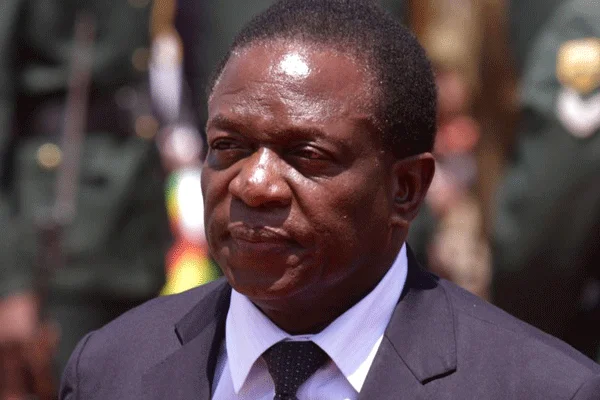
MATABELELAND North is poised for major economic transformation with President Mnangagwa expected to visit Hwange where he will officially open South Mining New Coking Project and tour other coal mining companies on Thursday and Friday.

The President will visit Zimbabwe ZhongXin Coking Company (ZZCC), Afrochine’s associate Dinson Colliery, Jinan Coking Coal Project and South Mining Coking Coal Project.

On Thursday, he will get a briefing on the coal and hydrocarbons sector overview at Western Areas before the tour and ground-breaking ceremony. After the tour, President Mnangagwa will officially launch the South Mining New Coking Project after which he will visit JinAn/Tutu Coking Coal Project and Hwange Colliery Company’s Chaba Mine.

On Friday, the President will tour Dinson Colliery, ZZCC Coke Plant, Zambezi Coal and Gas Mine and Makomo Resources. He will wrap up his visit by touring the US$10 million 300MW Zimbabwe ZhongXin Electric Energy (ZZEE) power plant where a signing ceremony will be conducted.

Once complete, the ZZCC coal-driven power station on the outskirts of Hwange, will contribute 300MW into the national grid. The project is being done in phases of 50MW with the first phase to be completed in October 2020.

On completion the power plant will consume 300 000 tonnes of coal annually and ZZCC has applied to Government for a Coal Special Grant (CSG) in order to enjoy economies of scale once the firm starts producing coal to support its operations.

Matabeleland North Provincial Affairs Minister Richard Moyo yesterday confirmed President Mnangagwa’s visit.

“The President will be in Hwange on Thursday and Friday to tour colliery mines and the district. His visit will obviously activate us to do more in terms of speeding up the implementation of developmental projects and spur economic growth in our province,” he said.

Minister Moyo yesterday met traditional chiefs in the province and updated them on progress of several developmental projects being undertaken by Government to uplift lives of the local communities.

Some of the notable projects include the Gwayi-Shangani Dam project, the construction of Lupane Provincial Hospital and Elitsheni Government Complex, rehabilitation of roads linking Bulawayo with Nkayi, Tsholotsho and Victoria Falls and the expansion project at Hwange Thermal Power Station Units 7 and 8.

The project will cost $1,5 billion and is expected to deliver an additional 600 megawatts; 300W from each unit, on top of the average of 450MW the old power station is able to generate.

Upon completion the project, which was launched by President Mnangagwa two years ago, is expected to add 600MW into the national grid by 2022.

The scheme is one Zimbabwe’s power projects financed under a loan facility from China Export Import Bank. State power utility Zesa Holdings, through its generation arm, is implementing the project.

Minister Moyo said although the projects were stalled by Covid-19, Government was committed to completing them without further delay.

“The Gwayi-Shangani Dam project has been progressing well before it was stalled by the national lockdown due to Covid-19. However, there has been tremendous progress with eight metres of the dam wall have been constructed including grouting of all areas covered by concrete,” he said.

“The dam apron has been completed and material is onsite. We remain grateful to Government for its commitment to the completion of the project with Treasury having released an additional $200 million.”

Minister Moyo said a 10km stretch on the Bulawayo-Nkayi road has been widened. He, however, said the major setback on the project was that part of the prime road surface has been damaged by motorists.

“We have finished rehabilitating a 2,2 km Gwayi stretch on the Bulawayo-Victoria Falls road and it is now open to traffic. The Ministry of Lands, Agriculture, Water and Rural Resettlement is working with Arda and has identified an investor to expand Bulawayo Kraal Irrigation Scheme to 15 000 hectares since we have abundant water from Zambezi River,” he said.

Elitsheni Government Complex in Lupane is almost complete with a few outstanding works in terms of electrical connections.

Minister Moyo said Government has so far disbursed more than $52 million devolution funds to 10 local authorities in the province between last year and the first quarter of this year.

Government, through the Department of Social Welfare, is also targeting to assist 71 464 households in the province in terms of food security, including 51 880 vulnerable households under the drought mitigation programme.

“Government remains seized with the need to ensure food security especially against a backdrop of a poor 2019/20 agriculture season. To this end, a total of 1 570 able-bodied vulnerable households are under the food-for-work programme and they are receiving a total of 78, 5 tonnes of maize per month,” said Minister Moyo.

“To complement Government programming in the Food Security Cluster, World Food Programme has targeted 19 584 beneficiaries in Binga, Bubi, Hwange, Nkayi and Tsholotsho districts.”

Minister Moyo said Matabeleland North continues to record an influx of investors in the mining sector with Hwange district accounting for the majority of investments.

“We have four coke and battery companies which are South Mining Expansion Project, Tutu Investments, Dinson Colliery, a subsidiary of Afrochine and ZZCC which has a thermal power station project in Bubi. Bubi Gold Centre is one project which has the potential to help boost our provincial economy,” he said.

The Ministry of Mines and Mining Development in conjunction with the Finance and Economic Development ministry is looking for investors to fully capacitate Bubi Gold Centre.

Under the Winter Wheat Programme, farmers in Matabeleland North planted 489 hectares against a targeted 500 hectares with an expected harvest of 3 423 tonnes of wheat.

“Government is slowly opening up the economy from the lockdown, Victoria Falls tourism sector has started partial reopening after 100 days of inactivity. However, strict adherence to Covid-19 Containment and Prevention measures has to be enforced,” said Minister Moyo.

Chronicle

Editor: Gold retention review – The light at the end of the tunnel

0

Fidelity Printers and Refiners boss Mr Fradreck Kunaka confirmed that Zimbabwe’s most popular Mining institution will soon review the price of the yellow metal as part of a broader scope to attract more deliveries into the formal channels.

(Extracted Editor’s note from Miningnewsweek 13 July 2020 Edition)

If done right this should be the correct remedy for curing gold leakages that have according to Finance Minister Professor Mthuli Ncube seen Zimbabwe losing 30 tonnes (30 million grams) to 34 tonnes (34 million grams) yearly. With yesterday’s international going rate of US$58.05, 30 tonnes is US$ 1,7 billion whilst 34 tonnes is a whooping USD1,97 billion that the country is losing through smuggling mainly to Dubai via South Africa yearly.

Deploying the Gold Mobilisation Task Force to counter gold leakages whilst producers are clearly unhappy with the current pricing is a total waste of State resources and a five-star recipe for collusion and corruption. Getting the buying price right will automatically fix challenges in the Industry.

We hope the authorities get the gold retention prices right this time which will be a huge leap in the right direction of President Mnangagwa’s 12 Billion Mining Industry by 2023.

Like always we welcome your contributions. Please visit our various social media channels and stay updated with the latest news and current affairs in Zimbabwe Mining.

If you would like to contribute please write to us at [email protected].


This article first appeared in the July 13 Issue of Mining Zimbabwe weekly (Mining Newsweekly)

Miner dies after bucket full of ore fell down the shaft onto him

0

A 32-year-old mine worker in Matabeleland South died in a mine shaft accident after being hit on the head by a plastic bucket full of gold ore on last week on Wednesday.

Announcing on their Twitter page the Zimbabwe Republic Police tweet read that “When the timber supporting the bobbing dry machine lost position and forced the bucket down”.

The bobbing dry machine (Ndrayi) is also known as Overhead gear is a manual Lifting hoist that small-scale miners use to hoist ore, tools, and miners to and from the surface.

Some small-scale shafts are known to go to depths of over 60 metres like the Gadzema shafts at Gaint mine also known as Danangwe Youth in Mining Chegutu.

Mineral exports drop

0

Zimbabwe’s mineral exports marginally dropped by 3% to US$799,6 million in the first four months of the year, largely weighed down by gold as well as nickel ores and concentrates, data gathered by Mining Zimbabwe Magazine shows.

By Dumisani Nyoni

Data gathered from the Zimbabwe National Statistics Agency (ZimStat) show that during the first four months to April this year, the country exported minerals worth US$799,6 million, down 3% compared to the same period last year.

Gold, which is one of the country’s biggest foreign currency earners, fell 7% on prior period to US$289 million while nickel ores and concentrates tumbled 32% to US$102 million.

Other minerals that recorded a drop include ferrochromium by 24% to US$59m, chromium ore by 27% to US$13m, bituminous coal by 21% to US$1,2 million, and refined copper by 12% to US$517 383.

Increases were recorded in nickel mattes which raked in US$267 million, diamond (US$43m), unwrought platinum (US$18m), granite (US$5,8m), gypsum and anhydrite (US$85 377) as well as niobium and tantalum at US$996 745.

The country’s mining sector is currently under immense pressure brought about by the COVID-19 pandemic which has disrupted the supply chain.

The sector lost more than US$200 million in revenue during the first 30 days arising from a total lockdown in the country due to COVID-19, according to the Chamber of Mines of Zimbabwe (CoMZ).

Mineral production for the second quarter of 2020 is expected to decline by about 60% compared to the first quarter, with revenue losses exceeding US$400 million.

Gold and platinum are expected to have a loss of about US$160 million while potential revenue loss for nickel, ferrochrome, coal, and diamonds for the second quarter of 2020 is estimated to exceed US$100 million.

“Most mining companies are facing reduced productivity and production due to scale down of operations on the back of lockdown in transit and buyer countries,” reads CoMZ’s report titled Economic impact of COVID-10 on the mining industry: Proposals for intervention measures.

CoMZ said the situation had been exacerbated by difficulties in securing inputs for production and replacement capital due to widespread lockdown in source markets.

Artisanal and small scale miners, who account for more than 60% of gold delivered to Fidelity Printers and Refiners (FRP), are operating under unfavourable conditions.

For instance, FPR the country’s sole gold buyer pays them a fixed rate of US$45 per gram which is not responsive to gold price movements on the international market.

They also face electricity shortages coupled with inadequate equipment.


This article first appeared in the July 2020 issue of Mining Zimbabwe Magazine

Coal projects stalled by the global lockdowns

0

Progress on the development of coking coal projects in Hwange District is being slowed down by the Covid-19 pandemic as equipment and skills needed to implement the projects are locked-down outside the country.

Benard Rinomhota

Some of the companies developing coking coal plants told Mines and Mining Development Minister Winston Chitando during a recent tour of their plants that the global pandemic has stalled progress on their investments.

The fact-finding mission on the operations of the colliery companies also saw Minister Chitando being accompanied by his Finance portfolio counterpart Professor Mthuli Ncube.

The two government officials visited five firms namely Afrochine’s subsidiary Dinson Colliery, Zimbabwe ZhongXin Coking Company,  Jinan Coke Plant Project, South Mining Coking Coal Project, and Zambezi Gas.

In separate briefings to the two ministers, officials from the companies stressed how Covid-19 had impacted on their operations.

Dinson Colliery general manager Mr. Frank Gao said progress on the development of their coking coal plant had been put in hold due to the adverse impact of Covid-19.

“We have since stopped operations because most of our skills required to do the engineering work at the plant here are locked-down in China. We are not certain as to when things will normalise. Also, we have plant equipment that is supposed to be brought here for the project but we cannot ship it because of the lockdown, so the project is slowed down,” he said.

The government has identified the coal mining industry as one of the major minerals with the potential to contribute towards the US$12 billion mining industry economy by 2023.

South Mining general manager Mr. Chenji Li said his company was the only entity producing Ferro-silicone chrome in the country.

“We have suspended most of our projects which include coke and coking plants because of the Covid-19 pandemic. We are also establishing a thermal power plant from the coal concession we secured from the government and all such projects are on hold because of Covid-19,” he said.

Zambezi Gas operations director Engineer Menard Makota aid his organisation as a coal producer was operating at low capacity because of low coal uptake in the market.

“The Covid-19 pandemic has affected us mainly as some customers like Zimasco, South Mining have slowed down the uptake of coal and some have closed down.

“But most importantly, there are delays in the shipment of equipment, for instance, the shipment of equipment for our second pit is in the waters (parked), so we have already started doing the letters to have the clearing sooner,” he said.

Meanwhile, a majority of the coal processors are now opting to mine their own raw materials citing depressed supply from Hwange Colliery Company, Zambezi Gas, Makomo Resources, and Galpex.


This article first appeared in the July 2020 issue of Mining Zimbabwe Magazine

Parallel market gold buyers trounce Fidelity

0

The country could still be losing a significant amount of gold through smuggling despite having recently unveiled a new trading framework of the yellow metal aimed at mopping up more gold into the formal system.

Bernard Rinomhota

On May 26, Zimbabwe’s exclusive gold buyer, Fidelity Printers and Refiners announced the new trading framework where it was now buying the bullion from artisanal and small-scale miners at a flat rate of US$45 per gram.

Before the new trading framework, FPR was paying small and large-scale gold producers 55% forex retention and 45% in local currency.

In addition, under the recently pronounced trading guidelines, large-scale miners are now being paid 70% of their gold sale proceeds in hard currency while 30% in Zimbabwe dollars.

Contributing during a Parliamentary debate in June, National Patriotic Front legislator for Kwekwe Central Mr. Masango Matambanadzo highlighted that the parallel market was buying gold at prices ranging between US$50 and US$52/g against a flat rate of US$45/g that FPR was paying.

“Fidelity, the company that buys gold is buying at US$45/g and they are competing with the black market.

“The black market is competing and it is a dangerous animal in this country.

“Today (Wednesday june 15) the black market is buying at US$50 and US$52/g.

“How can the country’s economy stabilise as you (monetary authorities) are not going to get gold,” he said.

Of late, the Government has expressed concern over the gold leakages as the country was losing its yellow metal through the informal market that was smuggling the contraband to neighbouring countries like South Africa, where it was fetching relatively favourable prices.

In an interview, an official from the Zimbabwe Miners Federation (ZMF) who spoke on condition of anonymity said:

“Let’s have the government paying gold sale proceeds according to the economic fundamentals of the London Bullion Market exchange rate. That’s very important because those rates are going up every day.

“We don’t want a situation where the government imposes a flat rate, we want a situation where we have a win-win situation between the government and the gold producers”

Asked to comment on what the parallel market was paying prior to the new gold trading framework, the official said ZMF does not talk about the black market rates.

“But ZMF wants to support the Government in coming up with rates that are commensurate with the situation palatable to the economic fundamentals.

“In 2004, the government rates beat the parallel market rates and we are saying let’s come back to that,” said the official.

The ZMF official also highlighted that contrary to parallel market dealers, FPR has not been paying prompt cash for gold sales.

“The parallel market is offering prompt cash, so we need the government to incentivise those operations…if you go to South Africa for example, and whatever l do, whether l deal with a dealer under the table, that gold will go to the Reserve Bank of South Africa.

“So whatever happens in the market, let’s have that gold come to Zimbabwe because gold is a reserve asset.”

Gold sub-sector contributes about 70 percent of Zimbabwe’s mineral export earnings.

Last year, the country earned about US$1,3 billion from gold export receipts, and under the US$12 billion mining economy by 2023, the yellow metal is expected to contribute US$4 billion.


This article first appeared in the July 2020 issue of Mining Zimbabwe Magazine

ZMDC needs US3million to capacitate gold operations

0

The Zimbabwe Mining Development Corporation (ZMDC) needs close to US$3 million to capacitate all its gold operations dotted across the country it jointly owns with the small-scale miners.

Benard Rinomhota

ZMDC general manager Mr. Blessed Chitambira revealed this during a recent field day tour of Bubi Gold Milling Centre in Matabeleland North province by the Minister of Mines and Mining Development Minister Winston Chitando and his counterpart Finance Minister Professor Mthuli Ncube.

The field day tour also saw the two ministers accompanied by other government officials touring Breakfast Gold Mine, a joint venture operation owned by Bubi Small-scale Miners Association and ZMDC.

“We need close to US$3 million to capacitate all our joint venture gold operations that we own together with the small-scale miners.

“Out of the initial 10, we then partially capacitate five and this one (Breakfast Gold Mine) is one of them.

“When l say, we ‘partially capacitated’ what it means we provided them with a compressor, and a generator; but still there is more that is required,” said Mr. Chitambira during a site visit of the mine.

The gold mine, Mr. Chitambira said is presently producing 20 tonnes of ore per week and the target is to have the mine produce 60 tonnes.

“We want this mine because it has got the capacity to produce 60 tonnes, 20 being waste and 60 being ore,” he said.

The ZMDC boss said the small-scale miners at the mine need to be equipped with modern technology such as a hoist as at the moment the miners are operating with rudimentary hoist.

“We need to put a proper hoist that they require and also we need to equip them with a ladder as they go deeper like this mine is currently 60 metres deep,” said Mr. Chitambira.

ZMDC is a government-owned mining company with a number of assets in different mining sub-sectors across the country.

The parastatal is also looking forward to establishing 20 gold milling centres across the country to boost the production of the yellow metal by small-scale miners.

And the Bubi Gold Milling Centre, is a pilot project by the government officially commissioned by Vice President Dr. Constantino Chiwenga in 2019.

The concept of gold milling centres is an initiative aimed at increasing production and delivery of the yellow metal by players in the small scale mining industry.

At present, the small-scale miners account for the bulk of the gold produced in Zimbabwe.

Last year, Zimbabwe produced 33,2 tonnes of gold against a target of 40 tonnes and the projections were missed largely because of power constraints, among others.


This article first appeared in the July 2020 issue of Mining Zimbabwe Magazine

ZMDC begins coal and methane gas exploration in Lupane

0

The Zimbabwe Mining Development Corporation (ZMDC) has started coal and methane gas exploration in Lupane, Matabeleland North province.

Benard Rinomhota

A few years ago, the government allocated the parastatal, which recently underwent restructuring two Special Grants to explore coal and methane gas.

Mines and Mining Development Deputy Minister Engineer Polite Kambamura said ZMDC has begun exploration work after securing a partner under a joint venture agreement.

“ZMDC found investors for the SGs (Special Grants) and have since signed a joint venture agreement and now the investor is doing exploration.

“The investors for the methane gas project are Sakunda Energy and a South African company,” he said.

Eng Kambamura would not be drawn into commenting much on the time frame of the exploration work in Lubimbi.

However, he said the project is a massive investment that would significantly transform Zimbabwe’s economy in sync with Vision 2030 where the government aims to achieve an upper-middle-income economy status.

Contacted for further comment, ZMDC general manager Mr. Blessed Chitambira said he was not authorised to talk to the Press.

“I am not allowed to talk to the Press,” he said.

It is estimated that Zimbabwe has 40 trillion cubic feet of potentially recoverable gas in the Lupane-Lubimbi area.

The development of the Lupane coal-bed methane gas project has the potential to boost the country’s energy generation capacity.

Zimbabwe requires an additional 9 000MW of electricity to achieve an upper-middle-income economy by 2030 and currently, the country’s demand for power hovers around 2 000MW.

Of late, the World Bank has urged the government to develop a clear strategy to extract the gas in Lupane

Besides power generation, there are other investment opportunities which are available in the core and downstream industries from coal-bed methane including the production of a variety of chemicals, fertiliser manufacturing, and gas-to-liquids producing diesel, specialist lubricants, and waxes.

Due to the estimated vast reserves of methane gas in Matabeleland North, companies such as Discovery Investments and China Africa Sunlight Energy are at various stages of implementing initiatives to extract the greenfield resource. However, potential investors have been saddled by challenges such as funding constraints and statutory fees.

For example, China Africa Sunlight Energy’s  US$2,1 billion coal and coal-bed methane gas project in Gwayi hangs in the balance due to funding limitations.

On one hand, Discovery Investments recently indicated that its planned multi-million dollar methane gas investment is in abyss as government has invoiced the investor US$16 million in ground rental fees.


This article first appeared in the July 2020 issue of Mining Zimbabwe Magazine

The three that matter, connive and collide

0

Different concerns continue to be raised on the nature of corporate social responsibility (CSR) or corporate social investment (CSI) practices in Zimbabwe.

By Edmond Mkaratigwa (MBA in Energy and Sustainability and Chairperson of the Parliamentary Portfolio Committee on Mines and Mining Development) & Albert Maipisi (PhD in Disaster Management).

The local communities living in mining areas for long feel that they deserve better from investing organisations yet some investors have the view that every person should eat out of their perspiration. Surprisingly sometimes when engaging communities living in mining communities, they usually fail to initiate and suggest new models that can address their concerns yet they advance that they are suffering from the negative effects of existing extraction works. They appear stuck within the intellectual dictatorship of history and experience than forging a more reasonable way forward that surpasses current arrangements. Others appear caught-up in the thicket of endless activism, complaining, challenging, and negotiation against the status quo and for something newer, bigger, better, and difficult to particularly define.

Without qualms with any of the approaches, it becomes necessary to think through the aspect of corporate social responsibility or investment which falls within the domains of philanthropy, social licensing, and the different branches of sustainability. There are narrowly three stakeholders to this debate. The first category comprises owners of capital visibly represented through business corporatism. The second cluster belongs to popular politics which is rooted in bureaucracy whose branches are divided through social corporatism that has given rise to the concept of different ministries of government. The third and final grouping is what is formed of the people and is called the community, which is composed of those who live around the mining areas, civil society organisations and individuals who may be local or external but mainly sympathetic to the referred communities.

The owners of capital represented by the business corporatists may hail locally although that has been very rare with bigger mining companies. Business corporatists have vastly been locals and to a larger extent nationals with the broader base-level employees being predominantly from local mining communities due to lesser technical skills-set job demands. Some owners of capital and corporatists mostly end up being part of the politics. Also, the community is part of the politics while part of the bureaucracy is part of the community, capital, politics, and business corporatists. These groups that belong to the different institutions of society can benefit from each other if they work together in good faith which is often difficult hence whereas they all matter, they also connive and collide in order to achieve their diverse interests.

Lacking amongst them to a greater extent is dialogue yet their ultimate interests are the common good of society that starts with the realisation of individual ambition. Oftentimes the three appear to be fighting. The community sometimes accuses politics and capital owners of conniving against them while the owners of capital can also assume that politics and community are conniving to collide against them. Demands made by the community (with support from the civil society) to and through politics to the owners of capital are sometimes not premised on science than normative means of judgment on what the communities deserve. For example, if they demand employment for their children, it is not always given that these children will be employed long enough to raise their own kids and that they will get salaries that will cause a significant change in their lives and lifestyles. On the other hand, the push on government by communities to create jobs for their children can weaken the negotiation power of government against target potential capital towards the country.

Communities usually do not have large scale equipment and machinery to exploit resources for themselves locally without extra-community investment support yet in their incapacity envy those who exploit, then raise their voices to politics for support. That is the ordinary thinking. It becomes very needful thereafter and after previous experiences, for capital owners, community, and politics to dialogue around corporate social responsibility and investment in advance and have the arrangement institutionalised to avoid future ambushes from and against the three that matter, connive and collide. In other instances, the social corporatist (bureaucrat) is further not fully proofed from conniving with the owners of capital against other owners of capital as they can also become owners of capital directly or indirectly leading to a collision between two or more other owners of capital and sometimes in collaboration with politics. Such is unacceptable in deontological ethics but that is happening consequentially until they are caught in tracks or a trail of evidence is discovered and that is usually possible where any of the three that matter collide.

Another interesting category of the community are the working class from the different mining communities now dispersed throughout the world. They always say they left their communities many years ago and until now they see no significant change hence the companies in the areas are ungrateful and not ploughing back hence the communities should join hands and demand. Those stand up against politics and owners of capital or want to join hands with politics for the sake of their communities. The only question that is of significance is why that part of the community only see gaps in their communities yet they also are to a greater extent not doing much for their community. If these three that matter can join hands, there is high potential for community development in the country as that part of the community is anticipated to be more enlightened to contribute towards the formulation of new initiatives. Most of the communities where mines are located have the elderly and youths hence there is mostly recycling of interventions they have experienced before without newer initiatives or the communities solely rely on the capital owners with support from their business corporatists with minimum contribution from communities in developing programmes as one can only contribute what they know and imagine.

Jobs are often cited as the biggest contribution of capital owners to society but the challenge is whether the employment opportunity will leave someone more resilient than vulnerable. The world is changing and with modernisation and increased access to information, people’s views of life are shifting. In mining communities where mines have temporarily closed, former workers have been found to be going back to the mines to exploit and the employability loyalty of those who have tasted that life may be difficult to tame again in the future. Those anticipations are normal because in the husbandry of man there is no fallow. It means the mind of those will become more inclined towards owning capital than to be business corporatists whenever mining operations would resume. Of course, enforcements will be made through social corporatists (politics) but the mindset will never be cleansed since the mind is not elastic which will return to its original position after a stretching experience.

Where that exists, again, one who once belonged to the category of capital owners and then reverts back to become a business corporatist can easily connive with the community to collide with the capital owner (new employer). These challenges are being witnessed were former mine workers of a once closed mine are demanding for claims in the mines they have been working in and then become (temporary) owners during the period of its closure That is more visible where the community or business corporatists had been left without employment and livelihood certainty and then negotiations with new investors who will have to take over the mine ensue later. With impatience towards other companies that are not mining but holding on to resources with no or delayed benefits to communities, the communities and other capital owners are further demanding from and through politics (and social corporatists), the authority to exploit the idle resources; hence the three that matter, connive and collide requires agile action for inclusive and sustainable development of the country to be achieved.

Published ideas are entirely views of the authors as academics and cannot be attributed to their current positions.


This article first appeared in the July 2020 issue of Mining Zimbabwe Magazine

The requirements for the management of tailings facilities in Zimbabwe

0

Following the much-publicised 2019 Brumadinho tailings dam disaster in Brazil, where a tailings facility collapsed releasing 11.7 million cubic metres of toxic mud and killing more than 200 people according to BBC reports; the management of tailings storage facilities, (“TSFs”) has come under increasing international scrutiny.

By Methembeni Moyo 

The Investor Mining and Tailings Safety Initiative prompted by the Brumadinho disaster set in motion a global tailings review by the International Council on Mining and Metals (ICMM), the United Nations Environment Programme (UNEP) and the Principles for Responsible Investment (PRI), to ensure the adoption of global best practices on TSFs and to establish an international best standard. Zimbabwe is no exception. Zimbabwean miners, especially major miners, will be expected going forward to adhere to and implement international best practices and ensure that TSFs are managed in a way that will ensure the safety of mine workers, communities, and the environment. Indeed, some of Zimbabwe’s mines were part of the global tailings review carried out in 2019. Zimbabwe’s mine safety and environmental management laws are not as sophisticated and up to date with international norms and standards with regards to TSF management as other jurisdictions. However, even within the current legal and regulatory framework, Zimbabwe’s mine safety laws do provide for the management of TSFs and importantly also provide an opportunity for miners to implement their own rules which may be at par with international best practice.

In this article, I discuss the TSF safety and management requirements in terms of the Mining (Management and Safety) Regulations, Statutory Instruments 109 of 1990, (the “Mining Safety Regulations”) and the scope for mining companies to make their own TSF management rules that will pass international muster.

TSF management in terms of the Mining Safety Regulations

Section 25(1) of the Mine Safety Regulations requires that every TSF be constructed under the supervision of a competent person and in such a manner as not to endanger life or limb or to cause damage to property and be provided with an adequate penstock, spillway or some other suitable installation.

A competent person is described in section 1 as a person who has had adequate training and experience to enable him to perform the required duty or function without causing avoidable danger to himself or any other person. Section 25(2) requires a competent person to inspect a TSF every three days to ensure that there is no danger of breach or collapse. Section 25(3) requires any foreseen possibilities of breach or collapse to be reported to the mine manager and appropriate action to minimize the effect of a potential breach or collapse to be taken immediately. All inspections and reports made with regards to the management of TSFs, in terms of section 25(4) are required to be recorded and countersigned for by an official of the mine every seven days. Sections 26 and 27 reiterate the requirement for TSFs to be properly designed, constructed, and maintained. These sections further require miners to make modifications, additions, or alterations to TSFs where necessary to ensure TSF structural integrity and to take precautions against flooding.

Can miners do more?

In light of the growing global scrutiny of TSFs and the development of international best practices, what can Zimbabwean miners do to ensure that its mines are compliant with both local laws and international standards?

The Mining Safety Regulations allow for a mechanism whereby miners can make additional management and safety rules and ensure that those rules have the same force of law as the regulations themselves. Section 10(1) of the Mining Safety Regulations states that If a mine manager wishes special rules not inconsistent with the regulations, made by him for the maintenance of order and discipline and the prevention of accidents at such mine, to have the same force and effect as the regulations, the mine manager shall send such rules through an inspector or the Chief Government Mining Engineer who shall submit them to the Minister of Mines and Mining Development, (the “Minister”) for his approval.

Section 10(2) states that If the Minister approves the special rules submitted to him, the manager concerned shall be notified accordingly and the rules may then be posted up in a conspicuous place and shall take effect after they have been so posted up for fourteen clear days. Sections 10(3) and 10(4) provide for the mechanism for the rejection by the Minister or the objection to the special rules by an interested party. In terms of section 10(5), when, and as long as, special rules made in terms of section 10 of the Mining Safety Regulations are posted up as required, they shall until they are revoked or altered by the Minister, have the same force and effect as the Mining Safety Regulations and any person who contravenes or fails to comply with such rules shall be guilty of an offence and liable to the penalties specified in the Mining Safety Regulations. Accordingly, in terms of section 10 of the Mining Safety Regulations, miners have the option to make special rules with regards to the maintenance and monitoring of TSFs which will have the same force of law as the regulations. Should miners feel that the Mine Safety Regulations are inadequate, they may implement additional rules and further ensure that such rules have the legal force of regulations.

Conclusion

Notwithstanding that Zimbabwean mining safety laws are not regularly updated, the Mining Safety Regulations provide an opportunity for Zimbabwean miners, particularly those with significant TSF exposure, to make special rules with regards to the monitoring and maintenance of TSFs. Making special rules gives miners the peace of mind that employees will respect any additional rules with regards to TSF management with the same reverence as they would the regulations themselves. Secondly, by implementing special TSF management rules, should a TSF failure occur, the miner can show that it took every step necessary to be compliant and even went a step further by ensuring that international standards were used at the mine by implementing special rules that are as legally binding as the regulations. Ultimately, miners have to consider whether the cost and administrative drawbacks of further regulation by using the special rules mechanism is necessary to minimize the risk of a TSF failure occurring, and to mitigate the liability of the mine should a TSF failure occur.


You can get in touch with Methembeni Moyo on [email protected]