Home Blog Page 548

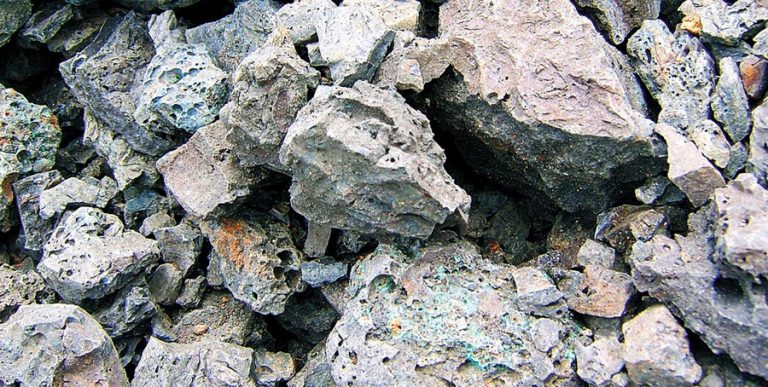
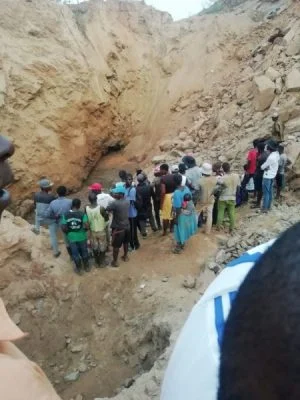
Reckless chrome mining activities creating extensive land degradation in Zvishavane

0

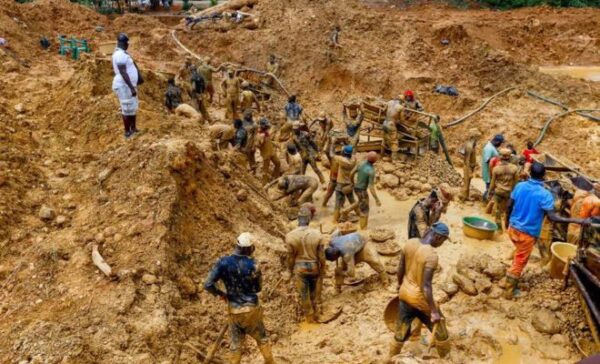
Communities in Mapirimira Zvishavane have lamented the degradation of their community’s environment and infrastructure by the chrome mines that include Asia Ferry and Bhunday operating there.

By Shantel Chisango

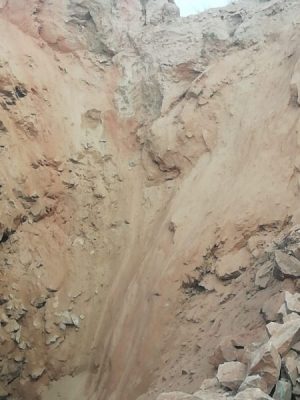
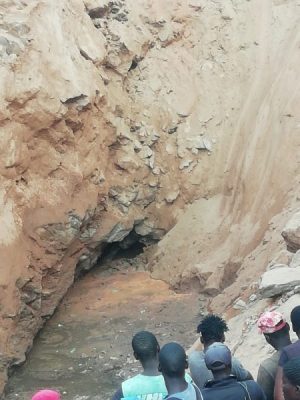
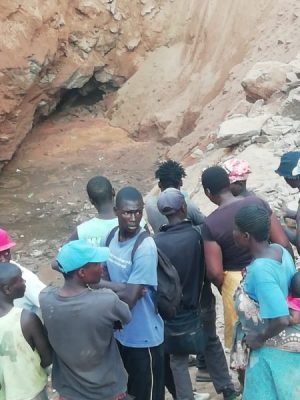
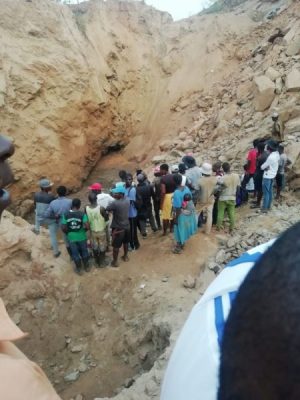
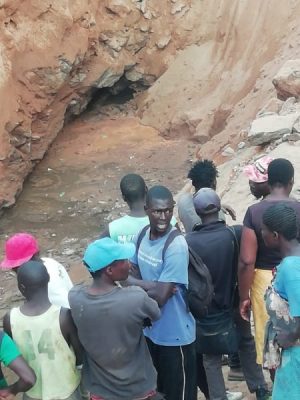
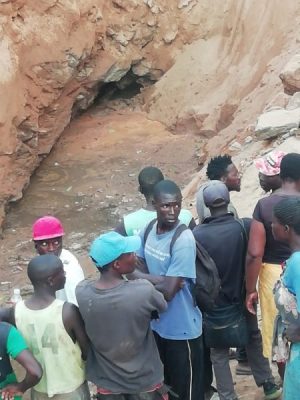
Mapirimira ward complained that the chrome mining companies operating there are reckless with their environment and infrastructure for they abandon the pits leaving them open, posing serious health risks and death to livestock and people.

Chrome mining companies in Zvishavane have been well known for leaving pits open without closing them to keep the environment from harm.

It is unfortunate that businesses turn a blind ear and do nothing about it when communities confront mining companies, reminding them of the danger they would bring to them if they are reckless with their environment and infrastructure.

Speaking to ZELA, the Mapirimira community added that when they engaged with Asia Ferry about their grievances the company did not attend to them due to financial instability.

“We visited Asia Ferry to tell them of our problems but unfortunately they did not attend to us because they said the company was financially breaking.”

The Mapirimira community stood together to confront Asia Ferry over the extensive damage chrome companies are doing on infrastructure, making Asia Ferry attend to their problems.

In reality, the host mining communities feel unable to require these companies to rehabilitate the areas where chrome extraction would have been done.

The Indigenisation and Economic Empowerment (IEE) Act enables indigenous Zimbabweans to engage in mining activities through share ownership schemes, such as the Group Share Ownership Trust (CSOT).

In the communities where they operate, companies use Corporate Social Responsibility (CSR) to receive a good social license that, sadly, most mining companies, particularly in the chrome field, seldom return to communities citing low prices and rising operating costs.

Zim dumps minerals marketing system

0

Zimbabwe will in February adopt the free-on-board (FOB) and cost, insurance and freight (CIF) arrangements in selling minerals and metals, dumping the ex-works system as it moves to make miners realise more from minerals and metals.

Under the current ex-works marketing basis, miners sell their minerals and metals to buyers at the mine.

But, under the new arrangement, miners will now, through Minerals Marketing Corporation of Zimbabwe (MMCZ), ship their minerals and metals to the ports.

The new critical arrangement would also mean that the government gets more revenue from the sale of metals and minerals away from the mines, MMCZ general manager Tongai Muzenda said.

MMCZ is the country’s marketer and export agent for all minerals and metals, excluding gold.

Muzenda told Business Times that for a start, the FOB contract will initially be rolled out for chrome, manganese and granite.

He said the metals and minerals will be shipped to the different ports in the Southern African region where sales will take place.

“Over the years, we have been selling our metals and minerals on an ex-works basis, meaning we have been selling at mine and your prices at mine are much lower than away from the mine,” Muzenda told Business Times this week.

He added: “What we want to do is to have a minimum (price) of FOB, meaning (we need to sell minerals) from ports in Southern Africa. We even want to do better and do CIF to the customer.

“This development will happen next year, the latest we expect to roll out the FOB arrangement is February next year.

“We will start with products such as chrome, manganese and granite because these are what form the bulk of our mineral exports. We however cannot do F.O.B for small quantities, like for diamonds and gemstones, those we have to sell abroad, say in New York and Hong Kong.”

Apart from miners getting better prices and the government poised to get more revenue from the sale of metals and minerals, the MMCZ is also set to get better commission from the new contract, Muzenda said.

It is understood that local buyers were paying chrome miners as low as US$20 per tonne, way below the market prices.

The chrome mining sector has been largely dominated by Chinese companies since traditional players such as Zimbabwe Alloys started struggling. The local buyers are now said to be resisting the proposed FOB marketing system, maybe because they are likely to lose business.

Muzenda, however, said selling minerals to profitable markets such as New York, had been frustrated by the sanctions imposed on Zimbabwe by the United States.

MMZC was in 2008 placed under sanctions by the US Department of the Treasury’s Office of Foreign Assets Control as one of the entities which it said was “contribute to the undermining of democratic procedures and institutions in Zimbabwe.”

Muzenda said MMCZ would assume the transport and related costs from the producers to the destination ports.

“What we want to do is we want to work with the producer, as MMCZ we will find the financing, actually we have already got transporters willing to work with us. We don`t want to prejudice the miner, we just want the producer to have better value than they are getting now without them incurring more costs.”

Business Times

Zimbabwe gold deliveries to plunge 35 percent

0

Gold deliveries to the country’s sole buyer Fidelity Printers and Refiners (FPR) are expected to plunge 35% this year due to increased smuggling and the negative impact of the Covid-19 pandemic.

Gold is the country’s single largest generator of foreign currency and, resultantly, inflow of foreign currency into the country is expected to take a knock by year-end and the first quarter of 2021 on low deliveries.

FPR had projected gold output to reach 35 tonnes this year after it increased fuel allocation to the miners.

But at the end of October, miners had delivered 16.12 tonnes. With two months to year-end, FPR now expects deliveries to reach 18 tonnes, the lowest national output since 2015.

Last year, miners delivered 27.6 tonnes, reflecting a 35% decline.

“We are only left with two months to end the year, we are hoping to reach about 18.5 tonnes for the year 2020 excluding gold from PGM sources,” FPR general manager Fradreck Kunaka told Business Times. 

Cumulatively, the country’s bullion export receipts retreated 23% to US$697m in the first 10 months of this year from US$906.7 m earned during the same period last year.

Zimbabwe was on track during the first half of the year when the country’s export earnings for the half year went up 2,6% to US$476.2m from US$464m earned during the same period last year due to the review of foreign currency retention threshold and increased fuel allocations this year. However, rampant smuggling began in July when Fidelity delayed payments by up to eight weeks, forcing miners to opt for alternative markets.

Miners bemoaned the lack of working capital due to delays in payments by Fidelity.

Last month, Chamber of Mines of Zimbabwe chief executive Isaac Kwesu said the fall in gold deliveries was inevitable due to the fact that production cycle was disturbed due to delay in payments hence there was no working capital to support production. He advocated a payment within seven days to improve production.

Experts said the instability in the gold sector has eroded the gold export revenue that the government urgently needs to keep the country’s struggling economy afloat.

Mining experts advised that President Emmerson Mnangagwa’s government should give artisanal mining cooperatives legal standing, pay gold producers at world prices and strengthen mining dispute resolution.

In a recent report on Zimbabwe’s gold subsector, miners blamed FPR’s flawed centralised gold buying scheme and called for the law to bring complicit powerful politicians to book as they are believed to be sponsors of machete gangs’ violence in the Midlands Province and in Mazowe, Mashonaland Central Province.

The report said the development of the gold sector was crucial if the government was to salvage prospects for Zimbabwe’s economic recovery from decades of economic stagnation.

RBZ governor John Mangudya said FPR’s monopoly in the buying and marketing of gold will stay, warning that liberalisation would see annual output plummeting to less than five tonnes owing to rampant smuggling.

“We all know that the last time the gold was liberalised, production dipped to four tonnes and we were disqualified from London Bullion Market Association because we were below 10 tonnes so we have got history we know the experience,” Mangudya said.

“Miners should market their gold through FPR as it refines miners’ gold and store it as a national asset and reserve asset. But if we do what we did in 2008 thereabout whereby we liberalised, we will go back to four tonnes again.”

Gold contributes 38% of the country’s export receipts.

Gold prices have not dropped radically during the worldwide pandemic as the yellow metal prices ranged between US$53,000 per kilogramme to US$63,000 per kilogramme during the reported time.

When the world gold prices are around US$61,000, FPR pays gold producers between US$45,000per kg and US$53,000 per kg, a practice that encourages smuggling and erodes industrial mining profits, leading companies to close.

Gold Miners Association of Zimbabwe chief executive Irvine Chinyenze said deliveries and export receipts will not improve as miners will look for an alternative market due to payment delays.

“I think it is high time the political figures and powerful business people become frank with themselves to stop that rot as long as they control these syndicates the anti-smuggling unit is toothless,” Chinyenze said.

Experts say gold mining, especially small scale, was greatly affected by lockdown regulations as social distancing needs to be observed.

The country reviewed forex retention levels to 70% in July from 55% in 2019.

Zimbabwe is targeting 100 tonnes of gold per year by 2023, a figure which is expected to help the sector to earn US$12bn yearly if forex retention threshold, fundamentals and funding issues are addressed.

Gold is expected to lead the charge with US$4bn.


Business Times

Zimbabwe Gold Smugglers Estimated to Ship $1.5 Billion a Year

0

More than $1.5 billion of gold is smuggled out of Zimbabwe every year, depriving the cash-strapped economy of crucial foreign-exchange revenues, according to research organization International Crisis Group.

The gold is illegally shipped from the southern African nation’s small-scale mines, often to the bullion-trading hub of Dubai, ICG said in a report Tuesday. Some of those artisanal mines are plagued by violent gangs that have political connections, it said.

Smuggling is flourishing under a Zimbabwean law that forces miners to sell their precious metal to a unit of the central bank.

“Zimbabwe’s centralized gold-buying scheme underpays producers, a practice that encourages smuggling and erodes industrial mining profits, leading companies to close mines,” ICG said. “Idle industrial mines become targets for intrusion by artisanal miners.”

Payments to small-scale miners are “considerably lower” than the spot price of gold, pushing them to look for more lucrative markets, according to ICG. The organization didn’t say how it estimated the size of illegal gold shipments.

Zimbabwe’s mining sector is key to rebooting an economy suffering from acute shortages of fuel and food, as well as dollars. Official gold exports fell 23% to less than $700 million in the first 10 months of this year as output slumped, according to central bank figures.

“As government, we are working to minimize the costs of smuggling,” said Deputy Minister of Mines Polite Kambamura.

Minister of Home Affairs Kazembe Kazembe told the state-owned Chronicle newspaper in September that gold smuggling could amount to at least $100 million a month. Kazembe didn’t respond to calls seeking comment.


Bloomberg News

BREAKING: Deadly mine collapse in Bindura

0

Dozens of miners were trapped at Renmine in Bindura today after a disused mine shaft collapsed while they were underground.

Former ZMF regional rep Mr Victor Rupende confirmed the development and said the actual number of trapped miners is currently unknown.

“It is true there has been a tragic accident here in Bindura. The actual number of the trapped artisanal miners underground is unknown. So far six badly injured miners with broken limbs have been rescued,” said Rupende.

Freda Rebacca mine engineers are reported to be on site coordinating rescue efforts.

ASM industry is currently under scrutiny as mine accidents surge.

This is a developing story…


Inyathi Man killed for gold ore theft

0

The Zimbabwe Republic Police (ZRP) on their social media handle said that a 29-year-old man died after he was assaulted for suspicion of stealing gold ore at a mine in Inyathi by a gang of seven men.

BY PRECIOUS CHIKURUWO.

“Police in Inyathi are looking for a group of seven male adults who fatally assaulted a man (29) after suspecting him of having stolen some gold ore from their mine on 19/11/20. The group assaulted the victim using logs and took him to their mine where he later died,” read the tweet.

The seven later fled the scene.


ZMF AGM to deliberate on USD 12 Billion mining vision

0

The Zimbabwe Miners Federation (ZMF) is looking forward through its Annual General Meeting (AGM) to reflect on the threats and opportunities affecting the contribution of small-scale and artisanal miners to the national fiscus, the Federation’s spokesperson Dosman Mangisi has said.

Rudairo Dickson Mapuranga

The ZMF General Councilors yesterday held a Special General Council meeting reflecting on its AGM to be held in December as well as pondering on Rural District Council levies, Exclusive Prospecting Orders (EPOs) and the shortages of explosives.

Speaking to Mining Zimbabwe, Mangisi said the meeting focused on how the small scale and artisanal mining sector in Zimbabwe can contribute towards the mining industry achieving USD 12 billion industry by 2023 by analyzing the opportunities and threats in the sector as well as how ZMF can provide solutions in the growth and development of the sector.

“The meeting deliberated on the coming AGM and on mitigating the USD12 BILLION mining sector, with the participation of the small-scale miners to support the Minister’s vision. The USD 12 billion rests in the hands of ZMF and the Chamber of Mines. We are looking at the threats, opportunities, and how best we can tackle the challenges to make sure the USD12 billion is achievable.” Mangisi said.

Last year the President of Zimbabwe Emmerson Dambudzo Mnangagwa unveiled the USD12 billion road map with aims at developing the mining sector in Zimbabwe to a USD12 billion industry by 2023.

 The mining sector is already Zimbabwe’s biggest foreign currency earner. Experts and the government are of the view that the sector is the leading horse towards the revival of the economy.

The small scale and artisanal mining sector has also been hailed for contributing significantly to the country’s foreign currency earnings with the small scale gold sector predicted to contribute over 12 percent of the country’s total export earnings.

ZMF through its Special General Council meeting has outlined that its AGM should deliberately focus on the growth and development of the mining industry through emphasising on the formalization of the sector first step being the payment of the organization’s membership fees and also trying to bring miners together in pondering shortages of equipment and consumables in the mining industry.

Fidelity gold buying prices Wednesday 25 November 2020

0

Fidelity Printers and Refiners (FPR) official gold buying prices Wednesday 25 November 2020

SG 90% AND ABOVE $51.78/g
SG ABOVE 85% BUT BELOW 90% $50.91/g
SG ABOVE 80% BUT BELOW 85% $49.75/g
SG ABOVE 75% BUT BELOW 80% $49.17/g
SAMPLE BELOW 10g BUT ABOVE  $50.33/g
FIRE ASSAY CASH $52.07/g
EXCHANGE RATE 81.8151


Cash available. Fidelity Printers and Refiners prices will be changing daily in relation to world market prices.


Contact FPR

No. 1 George Drive, Msasa, Harare, Email: [email protected]Telephone: +263 242-486670, +263 242-486694, +263 242-487131, +263 242-447810-5

Shamva’s Gold Rush: A Recipe For Child Sexual Exploitation

0

As the sun sets marking the end of another day, the mining town of Shamva suddenly comes to life. People from all walks of life including illegal gold miners, some already intoxicated ll-up the numerous nightspots in the town enjoying their daily harvests.

The night clubs in Shamva are already buzzing with sounds of Zimdancehall, popular music genre in Zimbabwe at the moment in preparation for another fruitful business day as small scale miners popularly known as Makorokoza start trickling from every corner ready to spend their hard-gained cash on young girls who could be seen standing on every dark corner of the town in search of ‘clients’.

One striking feature about most clubs in Shamva is that their bigger population of ladies are young girls below the age of 16.

Here, sex is on sale all year. Seven days a week. As in all markets of this kind, sellers and buyers favour the darkness of the night.

The young girls are not deterred by age or being surrounded by older people as they chase the greenback which of late has been scarce in Zimbabwe but in abundance in Shamva such that a visitor to the area would easily think he/she is in some other country due to its negligible exchange of hands without hassle.

Scantily dressed young girls could be seen gyrating at blessers in reference to Makorokoza’s habit of spending cash on women, wiggling their bottoms as if their lives depend on it.

In effortless rhythm, they seductively dance in front of their ready-to-attack male counterparts. Within minutes, one of the “blessers disappear” from the night club in the company of a young girl into the nearby bush for some business that anyone can guess is transactional.

For these girls, business blooms during weekends as the miners take a break from their exhausting sedentary lifestyle of spending hours digging deep into the earth for the precious mineral.

“I can handle 10 clients a night, USD $20 with a condom and US$15 without a condom,” says one the minors.

She, like the rest of the children, is scared to be seen out in the open, so her business thrives in the darkness.

She says she has been in the game for quite a while, enough to be called a “professional sex worker”  Across the road, a few old women who are also in the trade, linger in search of other customers and blame the minors for snatching their customers.

“They should go back to school, they are taking us out of business. We now have to scrap hard for a living because all our clients prefer young blood,” a lady identified as Charlene tells this reporter.

Yes, she is right, these girls must be in school. But, one after the other, these teenagers tell similar stories.

The death of a parent or the wickedness of loved ones robs them of their innocence, dignity, and ambition.

Lisa (no real name, 15) says she has never been to school. She has been living on the street since her mother died.

This girl left her family home in Mutoko where she was staying with her aunt. She started by selling onions at night with her friends, then ended up selling her body.

“When I was 8, my parents sent me to one of their cousins. One day, accusing me of stealing US$5, which I did not do, my aunt beat me violently.
“Blood was owing from my nostrils. So I decided to run away from home and ended up at Wadzanai market where I saw girls my age who had the same difficulties. I spent the night with them under tables at the market place’ Lisa says.

Unfortunately, at 14, she fell pregnant and has a one-year-old baby who she says she is struggling to cater for. In the end, she is forced to engage in sex work. During the day she sells vegetables, but at night she indulges in prostitution to support herself. A double life her family is far from imagining.

“I have no news from my parents. I did not go to my aunt’s house where they left me”. As in all markets, prices are negotiable. With or without a condom and depending on the time spent with the client.

One of the men who occasionally pry on the kids, Tonde* (not real name) says they lure the girls with money from their gold sales and often demands unprotected sex, which exposes the minors to sexually transmitted infections and teen pregnancies.

“I’m 32 years old and an artisanal miner here. I know this place well. When I want to have fun, I choose a girl. I approach her with greetings and express the need to make love to her. Automatically, she gives me the price and we go to a place nearby,” he says.

“We spend the night in lodges with some older guests. With them, the fare goes from $50 to $70 we sometimes pay them half of the amount we make” he adds.

Sadly, most of the girls end up married o early or alone with unwanted pregnancies and are forced into at that tender age but mostly face gender-based violence due to lack of control.

Statistics show that In Mashonaland Central Province, child marriage is ranked at 50%, and this makes it the highest in the country.
Chief Busha, who is one of the three traditional leaders in Shamva and Murehwa Districts working to end child marriages, told this publication recently that gold has become a big enabler of teen pregnancies and child marriages.

“We have gold in this area and that has become a big problem for us because at a time most children are lured by mukorokoza. They are promised heaven on earth and in the end, they get married at a very early stage.

“In turn, they contract sexually transmitted infections and some drop out of school which leave them vulnerable to the harsh reality of the world,” he said
Rozaria Memorial Trust, an organisation engaged in the promotion of well-being and defence of human rights, in particular, those of children and women, is on the ground trying to offer a second chance and a new life to the girls who are victims of sexual exploitation.

The Trust is a temporary support system for these girls who are victims of sexual exploitation, abuse, tracking, economic exploitation, and the worst forms of gender-based violence in and around Murehwa and Shamva districts.


263Chat