Home Blog Page 549

Small-scale miners making a difference

0

For those who are not familiar with the Mining industry if one hears about Small-scale miners or Makorokoza as they are mostly referred to, usually the first thing that comes to mind is violence, revelling, and alcohol abuse. Some are known to go as far as buying alcoholic beverages for everyone in drinking spots and bars where they will be drinking.

Little is spoken about the actual small-scale mine owner. These are the ‘Corporate’ or ‘CEO’s’ of mine claims.

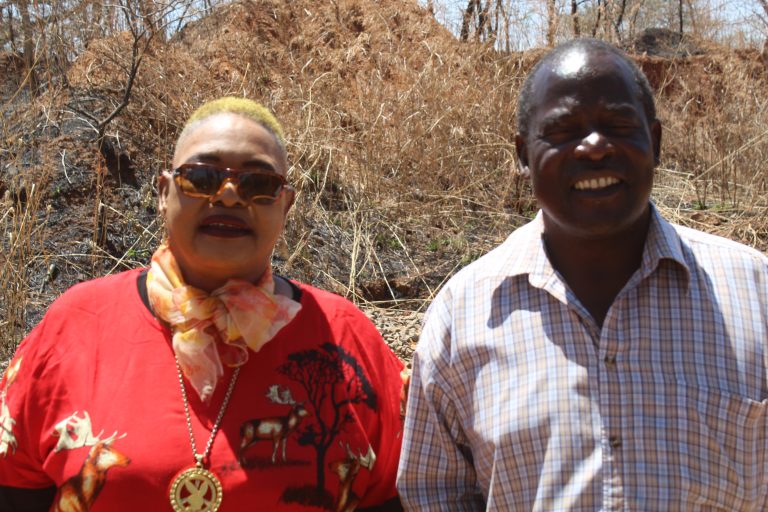
Mining Zimbabwe met with small-scale gold miners, Mr. Fletcher Mbizo and Ms. Sheila Mabasa at Moflegosh mine in Norton. Their mine is a unique example of small-scale miners making a difference in the community they are operating from.

They began operations at his mine in 2010 after getting a special grant. As it is with most beginners they did not have enough to properly finance operations so they resorted to seeking sponsors and throughout the years worked with a number with most withdrawing when the going got tough.

“We got a special grant from the council and after that, we started looking for sponsors. Since then we have worked with various sponsors some of whom sponsored us well but it is very difficult to find someone with adequate funds to sponsor. Those who came usually with-drew when problems arose” Fletcher Mbizo said.

Years later Moflegosh mine has drastically improved with mines in the vicinity and beyond also benefiting from it. The mine now has an operating horticulture site that supplies Norton with fresh produce. The mine also operates Custom Milling and has cyanidation tanks that are used to process minerals by many mines in the Norton area and beyond.

Norton like Harare has challenges with a consistent supply of clean water. Moflegosh mine has made life easy for inhabitants of the Norton Police camp by supplying water for general use. Mining Zimbabwe witnessed Police officers busy weeding, watering their gardens using the water from the mine.

Another beneficiary is Mr. John Mushonga who grows various horticulture produce for sale. Mushonga was offered the land that was not in use at the mine by the pair which has created further jobs as Mushonga employs three people.

Fletcher said, ”In regards to agriculture we have done the best we can. We have allowed people to farm on the piece of land we are currently not using and we provide a constant supply of water for irrigation and other uses”.

Mushonga grows and supplies Norton with tomatoes and vegetables using drip irrigation from water supplied by Mbizo. The site is well known for fresh produce and maize contributing to the needs of Norton residents. Mushonga is now resident on-site with his family.

“I am into Horticulture and am thankful for the land I have been given for producing agricultural products. I produce tomatoes, vegetables, and lots more irrigating with water from the mine. The mine has helped me, my family and workers and we have been constantly supplying Norton with fresh produce for years”.

Fetcher and Sheila hope to expand Moflegosh mine which they say will create more jobs for the community. They said to have an improved output the government must provide equipment and much-needed expertise.


Article first appeared in the Mining Newsweek (Mining Zimbabwe Weekly) in the 18 May 2020 Edition

Chinese owned companies neglecting Covid-19 regulations

0

Several Chinese-owned mining companies in Zimbabwe are reportedly not fully providing their employees with personal protective equipment (PPE) to protect them from COVID-19, a new report has revealed.

By Dumisani Nyoni

In its latest COVID-19 mining sector and communities’ situational report, the Zimbabwe Environmental Law Association (ZELA) said the Chinese mining companies’ compliance levels with safety and health standards were very low.

All the six surveyed mines were found wanting.

ZELA said in Marange diamond fields, Anjin Investments which used to be a joint venture between Anhui Foreign Economic Construction Group Company, ZMDC, and the military through a self-company is back in operation, although the current shareholding structure is not clear.

According to community monitors, there are some changes in terms of management and its operations as the company is said to be involved more in exploration than mining activities at this point.

“However, the plant department is said to be operational. It was reported that social distancing requirements in terms of the law are not being observed as workers are working in close proximity,” reads part of the report.

“It is reported that there are no regular safety and health meetings as required by law before commencing work on a daily basis as the Chinese do not believe in that.”

Workers reported that no efforts were being made by managers to educate workers on social distancing at the mine sites or living quarters.

“The Chinese management is not enforcing such requirements. As for transportation, workers are ferried in overcrowded open trucks to their workstations from offices. For accommodation, the Chinese have better accommodation facilities, while the rest of the workers stay in fours per room, with some using bunk beds which defeat physical distancing.”

“Some workers complain about the poor condition of toilets at the mine, while ventilation in some rooms is said not to be up to standard. Workers are said to be given sub-standard disposable masks which are not the recommended N95 and not suitable for mining and some workers are not using the masks,” it said.

ZELA said the masks were used over and over again and end up being dirty.

“Complaints of inadequate and poor-quality safety shoes and work suits were also reported. Reports of employees working without contracts were also received.  However, temperature checks are conducted.”

At Zimberly Investment Hwange, another Chinese-owned company, ZELA said when the 21-day lockdown was declared workers at the mine in Hwange did not have access to running water to wash hands, no PPE and there were no toilets.

In terms of accommodation at the mine, five workers would share a small room which defeats the idea of social distancing.

ZELA had prepared to file an urgent Court Chamber Application seeking an order compelling the company to provide workers with adequate safety, health, and sanitation facilities.

Following some monitoring visits from the Hwange representative of the National Miners Workers Association of Zimbabwe and the threat of legal action, the company took steps to provide PPE to workers.

“The last inspection conducted showed that the company is now complying with some the COVID-19 measures including provision of PPE and social distancing. However, some workers are worried about the sub-standard quality of the PPE provided by the companies,” the report reads.

“The situation at this mine requires constant monitoring. Government’s lowering of standards on the quality of masks may also present problems to mine workers as it can be used by mining companies to justify the provision of poor-quality masks”

The report notes that at Hwange Coal Gasification Company, workers were being transported in a lorry, overcrowded, and with no social distancing. Even at the workstation, no social distancing of workers was observed.

The mine did not even provide adequate water points at the mine for promoting sanitation and handwashing. Water for washing hands was being rationed.

South Mining, a Chinese coal mine operating in Hwange is reported to have very poor safety and health standards for workers.

“During the 21-day lockdown period, workers at the mine complained that they were ferried to work in a bus without observance of social distancing as they will be crowded on the bus. This was also the case at their workstations where they worked in close proximity,” reads the report.

On Sunrise Chilota Cooperation, ZELA found out that when the lockdown was announced exempting coal mining companies, workers at Sunrise Chilota Cooperation were ordered to camp at the mine site.

Five men were sharing a small room and did not have access to toilets. The company did not provide workers with personal protective equipment and clothing. The Chinese managers told workers that if they do not stay at the mine site they would lose their jobs, ZELA said.

In Mutoko, Chinese granite mining companies namely Dingmao and Longrui also did not have adequate personal protective equipment.

“Only a few workers were given work suits. This exposes workers to contracting or spreading COVID-19 beyond the workplace,” it said.

As of 14 May 2020, Zimbabwe had 37 COVID-19 confirmed cases, four deaths, and thirteen recoveries.

Globally, more than 302 000 people had succumbed to the disease from 4,44 million confirmed cases.


Article first appeared in the Mining Newsweek (Mining Zimbabwe Weekly) in the 18 May 2020 Edition

Zimbabwe should adopt mineral ‘safeguarding system’

0

The local government and Mining laws should be amended to create room to safeguard economic development and resuscitation through mining, Zimbabwe Prospectors Association Secretary-General Timothy Chizuzu has said.

By Rudairo Dickson Mapuranga

Speaking to Mining Zimbabwe, the innovative mining professional said some Zimbabwean laws are now archaic and they should be amended to suit our time. He went on to say that Chegutu Council’s decision to cancel all mining claims at Lambourne farm to pave way for residential stands is backward and visionless.

“Some of our laws are archaic and we still have room to amend them. However, councils should also see this and try to be more developmental minded. The decision to forfeit mining claims by the Chegutu Council is un developmental.” Chizuzu said.

Chizuzu went on saying that it was important for the country to adopt some of the measures in the United Kingdom mineral policy which focus on safeguarding the country’s minerals by protecting areas where mineral sterilisation might occur and that the urban councils before turning land into residential stands should engage experts, taking into consideration that residential areas have no meaningful development to the national fiscus.

“Councils should engage all stakeholders and mineral experts to do due diligence and evaluate what will be a most profitable use of land and I would like to encourage all leaders, local councils and national leaders to think beyond themselves when making decisions that promote sustainable development and that bring real value to the economy and the people at large,” Chizuzu said.

He also said that it was high time local governance become innovative to know that most towns in the country were developed due to mining and Agriculture resources.

“Access to mineral resource data and information is necessary. Accompanying mineral safeguarding policies should be formulated to manage planning applications for development before creating residential areas. Taking note that most towns like Kadoma, Kwekwe, Zvishavane came to being because of mining we need to focus much on building our economy, and mining will create more economic linkage if managed well”, he said.

Mining Zimbabwe contacted the Chegutu mayor his worship Henry Muchatibaya who said the council made plans and invited all stakeholders to meetings regarding the allocation of stands for housing and there was no objection.

“We have what we call masterplans. When we made master plans we invited all stakeholders for consultation meetings detailing our plan and no one objected. Our master plans are of 10km radius and there now just awaiting approval from the highest offices since there was no objection”.

When contacted, former Lambourne farm owner, Mr James Lambourne said he spent over $300k for exploration at the farm and it is rich in quality Limestone which is of high economic value.


Article first appeared in the Mining Newsweek (Mining Zimbabwe Weekly) in the 18 May 2020 Edition

Eight reasons why gold forex retention should be revised upwards

0

THE Reserve Bank of Zimbabwe (RBZ), through its February 2019 monetary policy statement, reduced the 70/30% gold retention threshold to 55/45% for all miners, a move which was, however, described by miners as unprogressive in many ways.

By Dumisani Nyoni

For instance, the miners argued that the service providers and input suppliers were demanding forex which the central bank was depriving them of. In this article, we will discuss at least eight reasons why gold retention should be revised upwards.

Inputs readily available in forex

Miners who spoke to Mining Zimbabwe said the central bank should revise gold retention upwards as all inputs were readily available in forex.

“Imagine using US$300 input cost; sell your gold for US$200, the other US$100 is given in RTGS at 1:25. If you want to buy forex in order to break even at the prevailing parallel market rate, you are already running at a deficit. Most small-scale miners are shouldered out as they cannot buy the same inputs they would have used,” one miner said.

“All inputs are in forex, those in RTGS are rated at the parallel market rate that leads simply to a serious loss or dealing with the parallel market,” another one said.

In its latest COVID-19 mining sector and communities situational report, the Zimbabwe Environmental Law Association (ZELA) said in Mberengwa, equipment suppliers and lessors where miners hire pumps, compressors and jackhammers hiked prices.

In Shurugwi prices of hiring pumps and compressors have gone up from USD 50 per day to USD 80 per day.

Demoralises miners

Miners said the decision by the apex bank to impose a 55% retention threshold was akin to killing the goose that lays the golden eggs. For instance, in 2019 following the introduction of the 55% retention threshold, Zimbabwe failed to meet its gold production target of 40 tons it had set for the year.

The country’s gold output fell 17% in 2019 to 27.66 tonnes, down from 2018’s 33.29 tonnes, according to the central bank, contributing about 37% to minerals exports, down from 43% recorded in the previous year.

The decline was attributed to the unpopular foreign currency retention threshold, among other challenges, according to Deputy Minister of Mines and Mining Development Polite Kambamura.

Kambamura said the threshold was demoralizing gold miners.

At the time, Zimbabwe Miners Federation spokesperson Dosman Mangisi also concurred that “the reviewing downwards of the thresholds impacted negatively on the mining sector because it made it difficult for miners to procure supplies, plant, and equipment, most of which is imported.”

Helps curb gold smuggling

With the 70% forex retention, a range of between 20 and 30 tonnes of gold was said to have been smuggled to South Africa in 2018.

What more with the 55%? It means tonnes and tonnes of gold are finding their way to South Africa and other countries offering better prices.

As such, there is a need for the government to come up with smart ways discouraging smuggling of gold and one of them is offering miners at least 80% or 100% foreign currency retention threshold, miners say.

US$ is a stable currency

Miners also argue that US$ is a stable currency compared to the RTGS which is not stable. When the RTGS dollar was introduced, late February 2019, the Reserve Bank of Zimbabwe put an official rate of RTGS$2.5: US$1. Now the rate is standing at RTGS$45: US$1 in the parallel market and RTGS$25: US$1 at the official exchange rate.

“It is not easy to plan with RTGS because the currency is not stable. It loses value now and then,” another miner said.

Service providers demand forex

Many service providers are demanding forex payment, making the life of a miner who gets 45% in local currency, difficult.

“The other reason simply put is that milling charges and milling ores are as well in forex or gold. You will find out that milling and transport charges cost more than the cost of production itself (explosives, diesel, food and other related costs),” a miner said.

In Mberengwa, ZELA said equipment suppliers and lessors where miners hire pumps, compressors and jackhammers, hiked prices. In Shurugwi, prices of hiring pumps and compressors have reportedly gone up from US$50 per day to US$80 per day.

Workers need to be paid in forex

Recently, the Zimbabwe Diamond and Allied Minerals Workers’ Union wrote to the government seeking to be allowed to bargain for salaries in line with the forex retention threshold.

The union asked to be exempted and be allowed to demand salaries or wages in line with what the employers are retaining, meaning out of the paltry 55% forex retention, a certain percent should now go towards wages.

This, miners said, was not feasible unless the government reviews the retention threshold upwards.

Fuel easily available in forex

ZELA said access to fuel continues to be a challenge because suppliers are only accepting bond notes in cash, while Fidelity Printers and Refiners, the gold buying government arm, is making payments in US dollars and bank transfer.

“Fuel can only be purchased by exchanging the US dollars or bank balance for bond notes. As a result, the cost of fuel is high,” reads part of the report.

Small-scale gold miners need forex to buy fuel, JCBs, compressors, generators, and spare parts among other requirements. Miners need fuel for generators and other machines for dewatering processes. Hence, without enough forex, mining business is curtailed.

High forex demand

The central bank recently declared that the United States Dollar can now be used to pay for goods and services in local transactions as part of measures to deal with the coronavirus (Covid-19) epidemic.

However, this automatically gave rise in demand for forex and the gold industry in Zimbabwe is much driven by foreign currency, one miner opined.

Therefore, it is economically prudent for the central bank to give miners full value for their product, lest the sector collapses.

Miners also argued that the exchange rate is not practical considering that it’s paid electronically and that all major mining requirements are transacted by the greenback.


Article first appeared in the Mining Newsweek (Mining Zimbabwe Weekly) in the 18 May 2020 Edition

Zim Platinum output rises

0

Zimbabwe’s platinum production in the first quarter of 2020 rose five percent to 118 00 ounces from 113 000 ounces recorded in the same period last year, latest data shows.

The increase is largely due to improved output from the country’s major miners. Zimbabwe, which is home to the world’s second-biggest known deposits of platinum after South Africa, has three platinum-producing mines – Zimplats, Mimosa and Unki.

But, despite the rise in output in the first quarter, the country’s supply of the mineral to the global market is forecast to decline by four percent to 438 koz this year.

This is due to the effects of the Covid-19 lockdown, both in Zimbabwe and South Africa where much of the country’s output is refined.

“Mining operations have received a dispensation to continue limited production over the lockdown period, but with country’s output dependant on South African refineries, logistical challenges remain,” a global industry representative body said.

Zimbabwe’s platinum output growth has been averaging 2,3 percent (387 000 ounces) in the last seven years, with only 2016 recording the highest output at 490 000. – New Ziana.


Two Kalgold mine employees test positive for Covid-19

0

Two employees at South Africa’s Harmony Gold Mining Company’s Kalgold gold mine, in the North West of that country, have tested positive for Covid-19.

The individuals, both of whom were asymptomatic, were identified as positive through the company’s testing process, which is conducted in collaboration with the Department of Health.

Both individuals have been isolated and are receiving medical care and the process of tracing possible contacts is underway, with all of those identified either self-quarantining or quarantining at a company facility for 14 days.

In a statement on May 20, Harmony confirmed that its routine screening and testing at the mine would continue in line with its Covid-19 Standard Operating Procedure.

The majority of Kalgold’s 600 employees have been tested for the virus so far.

Mining at Kalgold has largely been suspended, but the plant continues to operate and employees who have tested negative for Covid-19 have returned to work.

Kalgold’s production contributes 3% of Harmony’s overall production.

In compliance with regulation and/or agreement, the departments of Health and Minerals Resources and Energy, the National Institute for Communicable Diseases and Minerals Council South Africa have been informed.

Mining Weekly

Gold prices fall

0

Gold futures fell from a four-week high as a promising study for an experimental coronavirus vaccine curbed demand for the metal as a haven.

Moderna Inc. said its vaccine tests yielded signs it can create an immune-system response in the body. The news boosted US stocks to the highest since early March, while the dollar and treasuries fell. Bullion had gained as much as 1,1 percentage earlier after Federal Reserve Chairman Jerome Powell warned in comments aired Sunday that the US economic recovery could stretch through until the end of next year and depend on the delivery of a vaccine.

“Gold prices shed some gains, reflecting some reversal of safe-haven flows amid hopes of a vaccine,” Daniel Ghali, a TD Securities analyst, said in an emailed message. Inasmuch as a vaccine is an ultimate remedy for the economic problems that lie ahead, it would negate the need for a prolonged period in which the Fed and other central banks would provide unprecedented amounts of stimulus.”

Dismal economic data and fears over new infections have driven recent gains in gold, even as investors are encouraged by businesses reopening across major economies.

That’s fuelled bets that bullion could reach an all-time high as massive stimulus measures push holdings in bullion-backed exchange-traded funds to a record. Gains have also been driven by US-China tensions and speculation over the possibility of negative US interest rates.

– Bloomberg.

Threat of coal mining at the Mapungubwe world heritage site

0

Most developing countries face acute tensions between socio-economic development and environmental protection. Any opposition to the proposed development, on environmental or heritage grounds, is seen as a threat to the creation of employment and the growth of the economy.

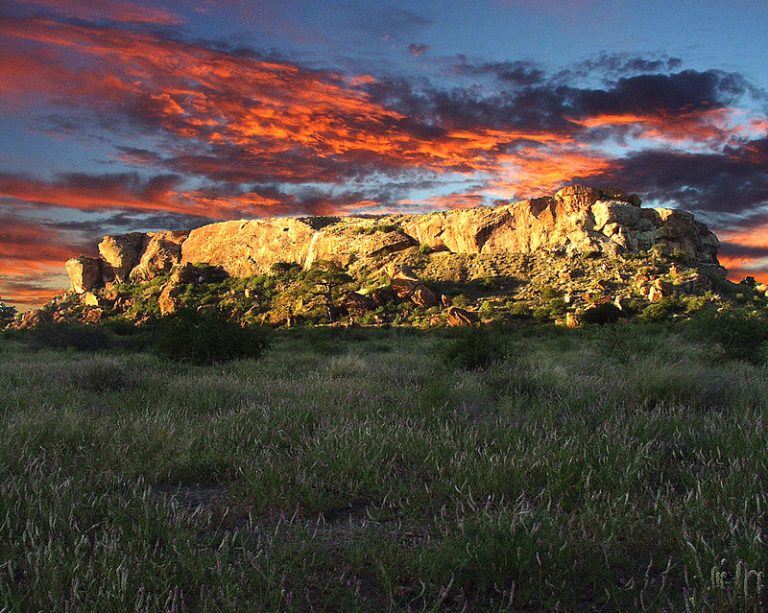
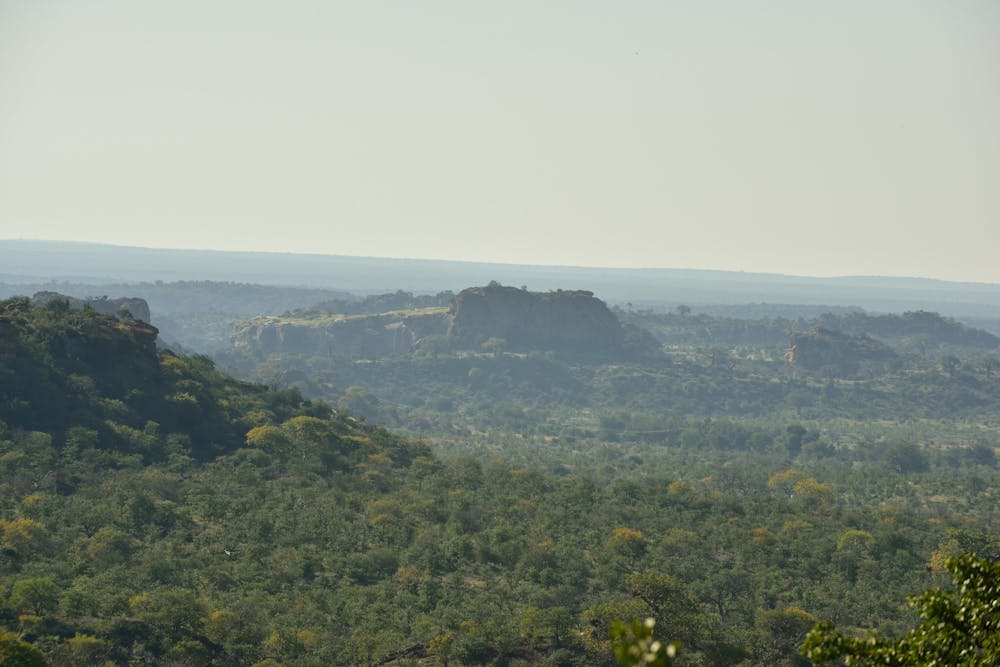
The Mapungubwe Cultural Landscape, a UNESCO World Heritage Site since 2003, is caught in this tension.

An area of about 28,000 hectares, it lies near the confluence of the Limpopo and Shashe rivers and is a meeting point of Botswana, Zimbabwe, and South Africa. It is a landscape characterised by three capital cities of archaeological significance (Shroda, Bambandyanalo, and Mapungubwe Hill) and their satellites.

Since its “rediscovery” on New Year’s Eve in 1932, the landscape has been extensively surveyed and excavated by archaeologists. The focus was particularly on the rich Iron Age of this region, between the 1200s and the 1400s. Through these efforts, we have come to know of a complex society that had extensive networks that provided a significant source of wealth.

But the Mapungubwe Cultural Landscape is increasingly being threatened by mining activities. This was not unexpected, as there were two existing diamond mining operations and various coal mining applications when the landscape was listed for its international importance.

A view of the Mapungubwe landscape, home to a wealth of cultural riches. South African Tourism/Flickr, CC BY

Challenges with mining in the area became particularly evident following the confrontation between the Save Mapungubwe Coalition and Coal of Africa, now MC Mining. The legal battle exposed the inefficiency of South Africa’s heritage laws, arising from severe fragmentation between different government departments. It also made felt the “absence” of the World Heritage Committee in the active management of a listed site and exposed the perpetuation of a warring “us and them” scenario with little middle ground or hope of lasting resolution.

It and my own studies into mining in the area – showed me we need a new approach to the bigger problem.

Fragmented governance

National and international heritage laws played a secondary role in the approval of Coal of Africa’s application for the mining licence. The approving authority, the department of mineral resources, decided on the application seemingly without adequately considering the comments from the departments of environmental affairs, water affairs, and arts and culture.

This effectively meant more attention was paid to mineral resources than heritage value. It highlights the low value of heritage laws, national or international.

Years later, the revised buffer zone for Mapungubwe has still not been approved. The existing mining applications continue to be a threat to the Mapungubwe landscape, particularly in the absence of a framework within which they are to be reviewed and decided on.

A missing-in-action UNESCO

The UNESCO World Heritage Committee should have done more to protect the legitimacy of their decision to inscribe the Mapungubwe Cultural Landscape.

The Mapungubwe Interpretation Centre to familiarise visitors with the site. South African Tourism/Flickr, CC BY

The international body should have ensured that the site’s buffer zone was approved as per recommendations from the International Council on Monuments and Sites. This was never done. The committee sent two missions to South Africa to help resolve the “conflict” arising from the licence being granted, but never took responsibility to ensure a fully operational buffer zone when inscribing the site.

Had they done what was recommended, legal wrangling over mining rights would have been avoided.

A problem with the laws

Another concern is that heritage in the Mapungubwe area has been used as a convenient weapon to fight any form of mining.

Coal of Africa’s licence was approved for activities located at a fair distance from the core of the site. In my view, the significance of the inscribed area was not directly affected.

But the structure that should have been a commenting authority in the mining application, the Limpopo Provincial Heritage Resources Authority, has been all but dysfunctional for many years. This has left a decision-making void. The national South African Heritage Resources Authority has stepped in and made decisions, but their legality is questionable.

The mining company had followed the requirements of the heritage laws by appointing an independent scholar to undertake an impact assessment. Wrangling among archaeologists led to a second report, increasing hostility.

Governments are generally mandated to create enabling opportunities for economic development to help address various social matters, paving the way for the “new”. Heritage managers are mostly interested in keeping the “old” in place.

An “us and them” syndrome fuels difficult relationships that generally exist between government, developers and heritage managers. This has, for many years, led to the rhetoric of “war”. The middle ground between the factions is rarely considered.

And when community interests are put in the picture, things become even muddier because they tend to be conveniently used by the “warring” parties. One side promises employment opportunities while the other seeks the assistance of communities in the protection of “their” heritage resources. With the high rate of unemployment, it is evident which side will be best positioned to win the argument.

A BBC 4 insert shows the Mapungubwe landscape and tells a brief history.

A lasting solution

What these three issues around the Mapungubwe case illustrate is that it’s not as simple as just supporting mining or opposing mining. The reality is that not all heritage can be adequately safeguarded, as every part of the world has been an “active cinema” from which various human activities have been performed.

What South Africa needs is to have a sensitivity map for heritage covering the whole country. Such a map will highlight areas of high heritage sensitivity which should then be used to inform the nature of recommendations and decisions we take to protect our rich archaeological past.

Without a clear single framework within which decisions are made, the ongoing challenges with the management of heritage resources in the country will continue to exist and heritage resources will forever be threatened.

Source: The Conversation

RioZim gold production slumps 41%

0

LISTED diversified mining concern, RioZim has recorded a 41 percent decline in gold production in the first quarter ended March 31, 2020, from its local operations on the back of erratic power supplies.

In a trading update for the period under review, RioZim said: “Power supply continued to be erratic during the quarter, which negatively impacted volumes across the company’s operations.

“This was, however, abated towards the end of the quarter as power supply improved. As a result of erratic power supplies, the company’s gold production fell by 41 percent compared to the same quarter in 2019.”

The gold price was, however, favourable averaging US$1,562 per ounce, which was 17 percent above the average price for the same period last year of US$1,336/oz, said the company.

For gold, the diversified resource group owns Cam and Motor, Dalny and Renco mines while for other minerals, RioZim operates Empress Nickel Mine.

At Cam and Motor Mine, it said mining activities were all concentrated at One Step Mine during the quarter with the company hauling ore to the Cam and Motor plant.

The ore resources at One Step are of significantly lower grades compared to the Cam ore resources.

“The effect of processing the low-grade ores resulted in production dropping by 62 percent compared to the first quarter of 2019 when production was from higher grade Cam resources,” it said.

During the quarter under review, the mining group said progress on the US$17 million Biological Oxidation (BIOX) project presently under development was significantly hampered by acute funding challenges.

“Foreign currency availability remains a stumbling block to the timeous commissioning of the project.

“The company is however in discussions with various stakeholders for possible funding of the project.

“In the meantime, every effort will be made to ensure that the project gets completed,” said RioZim.

Upon completion, it is hoped the BIOX plant would go a long way in ensuring the group beneficiates its precious minerals by processing pure oxide ores to make good grades and high recoveries, which in turn would generate more foreign currency when exported.

At Danly Mine production was erratic for the greater part of the quarter with supplies only improving towards the end of the quarter. Consequently, output fell by 52 percent compared to the same period in 2019.

“Renco recorded a nine percent growth in production volumes compared to the first quarter of 2019.

“The growth in production was attributable to improved plant availability and reduced load shedding during the quarter.”

On the base metal business, the mining group said the Empress Nickel Refinery (ENR) remained under care and maintenance throughout the quarter.

On the diamond operation, it said production at the group’s associate Murowa Diamonds (Private) Limited was subdued at 61 percent of first-quarter 2019 production.

“The lower volumes were attributed to the inconsistent power supply during the period. There have been no significant disruptions to production as a result of the Covid-19 pandemic across the group.

“However, the threat to the group’s raw material supply chain, which is predominantly imports, remains a key business risk as stringent cross border controls continue to be enforced in various countries.”

The group predicts that metal price volatility may also have a negative impact on its going concern into the future as commodity markets continue to suffer despite the gold price remaining stable and showing a positive upward trend since the outbreak of the pandemic.

The company said its operations remain significantly exposed to the negative impacts of Covid-19.

“The future therefore remains highly uncertain and the full impact is currently impractical to quantify in monetary value terms.”

On the outlook, RioZim said the challenging operating environment coupled with the impact of Covid-19 continues to put pressure on the group in the second quarter.

“The company, however, continues to mitigate the effects of these problems as best as possible to remain viable in the midst of these challenges.

“Engagements with the Central Bank will continue for an upward review of the company’s foreign currency retention for the company to meet its operational requirements and successfully deliver its BIOX plant in the set timelines,” said the company.

Post Covid-19, resuscitating Zimbabwe’s economy means reforming its mining policies

0

The Covid-19 crisis is wreaking havoc worldwide, as months of shutdown severely affect both supply and demand sides of economies.

By Methembeni Moyo

According to a Washington Post article, the world’s biggest economy, the United States lost 20.5 million jobs in April with the unemployment rate now at a staggering 14.7%, the worst since the Great Depression era. South Africa, Zimbabwe’s most important trading partner, and Africa’s biggest economy is forecasting that it could contract by more than 6% this year. If the Covid-19 crisis can have such dire effects on developed economies, one can only wonder the effect it has had and will continue having on Zimbabwe’s already fragile economy.

Many countries are looking into different fiscal strategies and policies to mitigate the economic effects of the Covid-19 crisis. South Africa for example recently announced a R500 billion, (about US$27billion) economic support package to combat the negative effects of COVID-19 on its economy. Some of the economic support package will be raised from its internal state coffers while other funds will be sourced from international finance institutions such as the World Bank and the International Monetary Fund, (IMF). Zimbabwe, on the other hand, does not have the fiscal policy flexibility, borrowing power nor the balance sheet to implement such measures. In the context of such economic devastation and the need for extensive economic stimulation and protection, what can Zimbabwe do to resuscitate its economy post-Covid-19?

Mining policy reform – a low hanging fruit

Mining is an essential foreign currency earner for Zimbabwe. It is no surprise that mining companies were allowed to operate even during the strict lockdown. Mining revenue is absolutely vital to Zimbabwe’s economy. However, the mining sector is grossly underinvested.

Zimbabwe’s geological potential is world-renowned. It has a variety of base metals, precious metals, precious stones, and recently, even potential for oil and gas. In addition, Zimbabwe’s internal security is stable in comparison to other resource-rich nations. The Southern African country has a highly educated workforce that is not unionised and hungry to work. Zimbabwe has a dedicated mining tertiary institution, the Zimbabwe School of Mines, and other universities that churn out skilled graduates yearly. Furthermore, Zimbabwe is serviced by good infrastructure, and markets are accessible by road through ports in South Africa and Mozambique. Yet Zimbabwe’s most important industry perpetually underperforms. Zimbabwe’s mining laws and investment policies are just not attractive, and one might argue they are a deterrent to mining investment. Drastically reforming Zimbabwe’s mining policy, therefore, is the low hanging fruit that must be plucked to resuscitate Zimbabwe’s devastated economy post-Covid-19. If Zimbabwe could emphatically and sincerely reform its mining laws, mining investors would flock to Zimbabwe. A mining boom could be on the horizon, and world-class mining operations such as Unki, Zimplats, and Mimosa would be the norm and not the exception. This leads us to the questions of what are the challenges faced and the reforms needed?

Challenges and required reforms

The policy challenges facing Zimbabwe’s mining industry are numerous. The most topical are exchange control policies. The uncertainty of exchange control laws, the requirement to sell some foreign currency to the central bank, and the difficulties in repatriating foreign currency earnings deter large scale mining investment and even to an extent local medium and small scale mining investment. Zimbabwe’s mining laws are balkanised and
outdated. We do not have a modern mining code that brings together under a single code the most important aspects of mining that must be covered by a mining code such as exchange control, royalties, local content and procurement requirements, export, beneficiation, and fiscal incentives.

The most significant challenge is policy uncertainty. Mining projects have a long gestation. Mining projects may take up to as long as 10 to 20 years to develop from exploration to discovery and full production. Mining investors accordingly need to be assured that the fiscal laws that govern the mining project will remain stable for most of the life of mine otherwise it would be impossible to attract the type of capital required to develop large operations.

Accordingly, Zimbabwe needs a modern mining code, that gives investors long-term security and fiscal certainty.

The Zimbabwe Investment Development Agency Act – a step in the right direction

The recently enacted Zimbabwe Development Agency Act, (ZIDA Act) which incorporates under a single umbrella the Zimbabwe Special Economic Zones Authority, the Zimbabwe Investment Authority and the Joint Ventures Unit which regulates PPPs, is certainly a step in the right direction. Although specific regulations to the ZIDA Act have yet to be promulgated, the ZIDA Act provides some important investor protections and incentives, such as protection from arbitrary expropriation, the facilitation of the ease of doing business and the applicability of some fiscal and non-fiscal investor incentives to some projects. The ZIDA Act is evidence that the government is capable of crafting much needed modern investor-friendly laws and should apply the processes, principles, and political will that went into the crafting of the ZIDA Act to the much-needed reform of Zimbabwe’s mining laws.

Conclusion

Despite its much-touted mineral prowess, Zimbabwe’s mining industry remains somewhat dormant. Future prospects are not promising either. The momentum gained from the coming of a new administration late in 2017, the repeal of the indigenisation laws (51% local ownership), and the promise of “Zimbabwe is open for business mantra” has waned. Mining investors have begun to look elsewhere for mining opportunities, in places such as West Africa where modern mining codes and competitive investment policies are fuelling a mining boom.
Zimbabwe policymakers have to understand that mining investors have a choice if policies are not conducive, investors will go where policies make sense. Zimbabwe’s rocks are phenomenal yet its mining laws do not match its immense geological potential. In a post-Covid-19 world, no country can afford to continue in business as usual mode. Brave and drastic measures will be required to revive economies devastated by the pandemic. Zimbabwe does not have the financial capacity to stimulate economic growth nor can it borrow more money while it is struggling with the debts it already has. Zimbabwe does, however, have great mining potential. All that is needed is emphatic
policy reform. In the short-term, the liberalisation and stabilisation of exchange control laws could stop the bleeding. In the mid, to long-term, a modern overhaul of Zimbabwe’s mining laws could be unavoidable.

Zimbabwe’s economic fortunes are inextricably linked to its mining industry. Reforming the mining industry will be quintessential to resuscitating the economy post-Covid-19.


About the Author:

Methembeni Moyo
Methembeni Moyo

Methembeni Moyo is a lawyer focussed on facilitating investment into Zimbabwe, particularly in mining. He is based in Johannesburg and can be reached at
[email protected]